
Geography Vocabulary 3 Terms 41 60 Plate Tectonics
Geography Vocabulary #3 Terms 41 -60
Plate Tectonics Plate tectonics is theory that Earth's outer shell is divided into several plates that glide over the mantle, the rocky inner layer above the core Divergent—pull apart Convergent—come together Mountains, volcanoes, landslides and tsunamis Transformative—slide against https: //www. youtube. com/watch? v=1 -Hw. PR_4 m. P 4
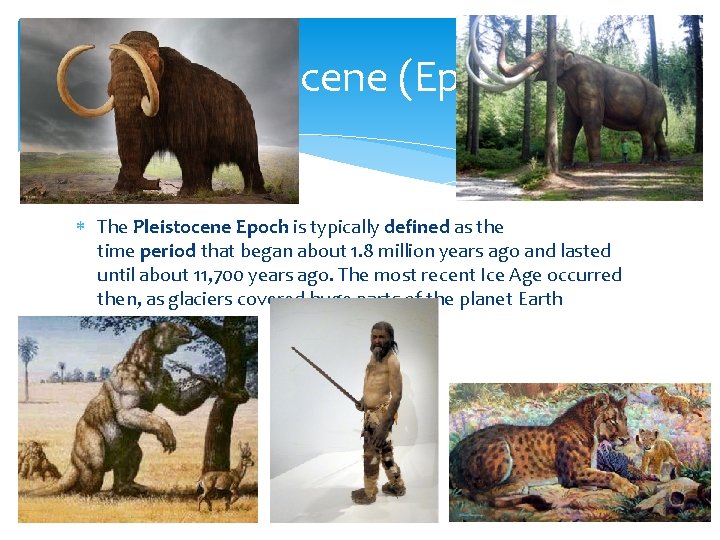
Pleistocene (Epoch) The Pleistocene Epoch is typically defined as the time period that began about 1. 8 million years ago and lasted until about 11, 700 years ago. The most recent Ice Age occurred then, as glaciers covered huge parts of the planet Earth
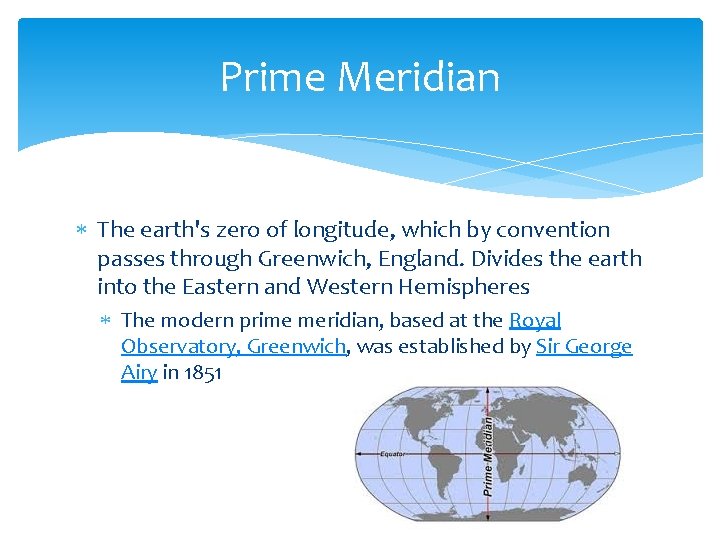
Prime Meridian The earth's zero of longitude, which by convention passes through Greenwich, England. Divides the earth into the Eastern and Western Hemispheres The modern prime meridian, based at the Royal Observatory, Greenwich, was established by Sir George Airy in 1851
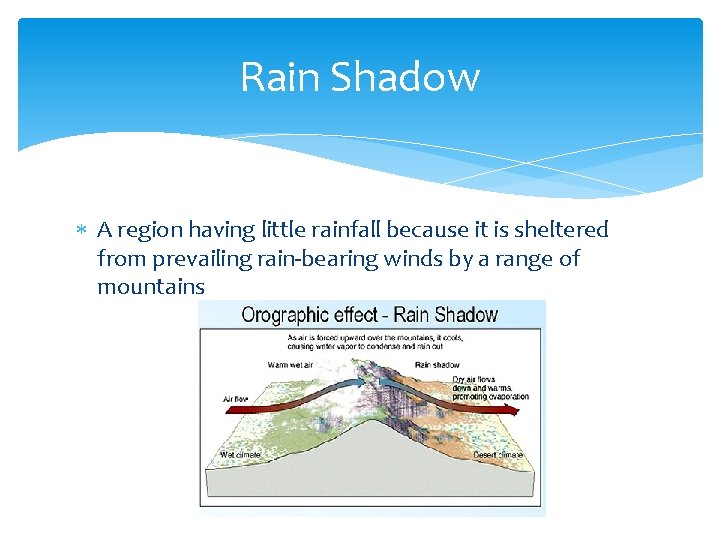
Rain Shadow A region having little rainfall because it is sheltered from prevailing rain-bearing winds by a range of mountains
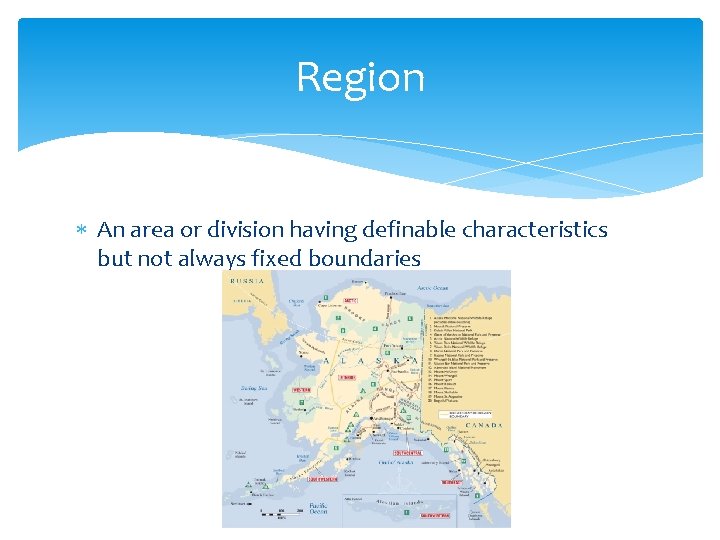
Region An area or division having definable characteristics but not always fixed boundaries
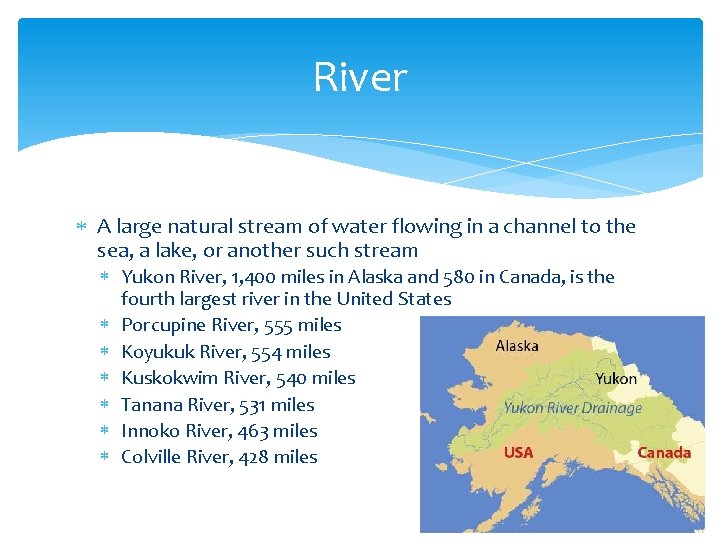
River A large natural stream of water flowing in a channel to the sea, a lake, or another such stream Yukon River, 1, 400 miles in Alaska and 580 in Canada, is the fourth largest river in the United States Porcupine River, 555 miles Koyukuk River, 554 miles Kuskokwim River, 540 miles Tanana River, 531 miles Innoko River, 463 miles Colville River, 428 miles
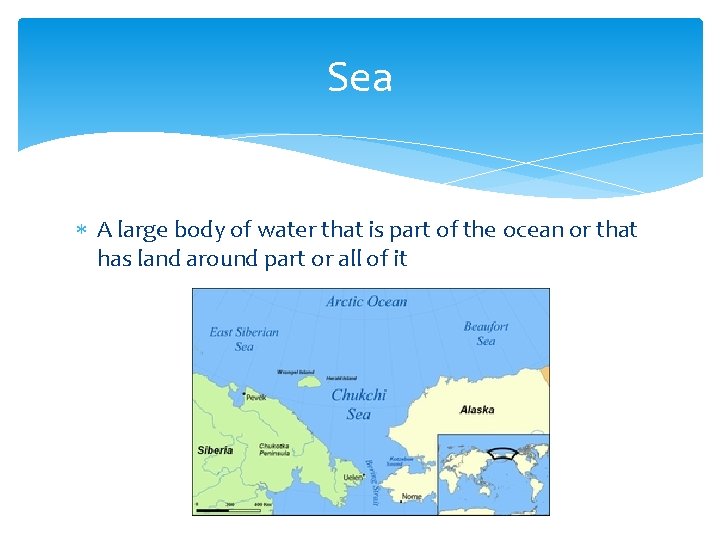
Sea A large body of water that is part of the ocean or that has land around part or all of it
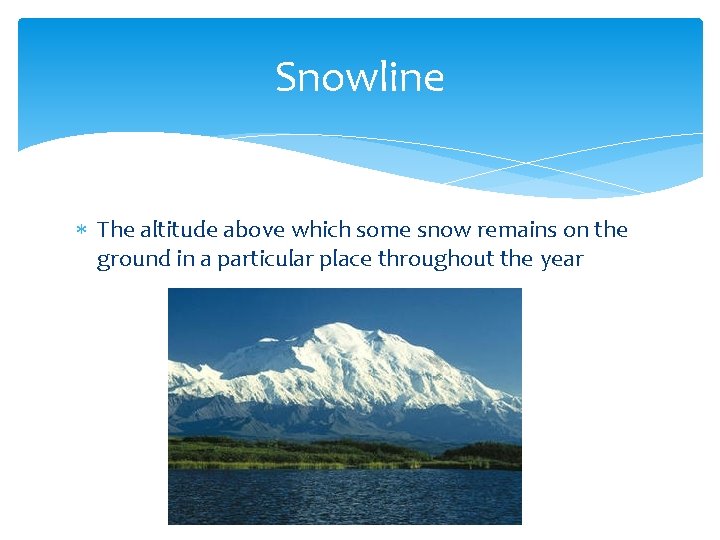
Snowline The altitude above which some snow remains on the ground in a particular place throughout the year
Sustainable Yield The amount of any resource that can be harvested without harming the yield of that resource from year to year
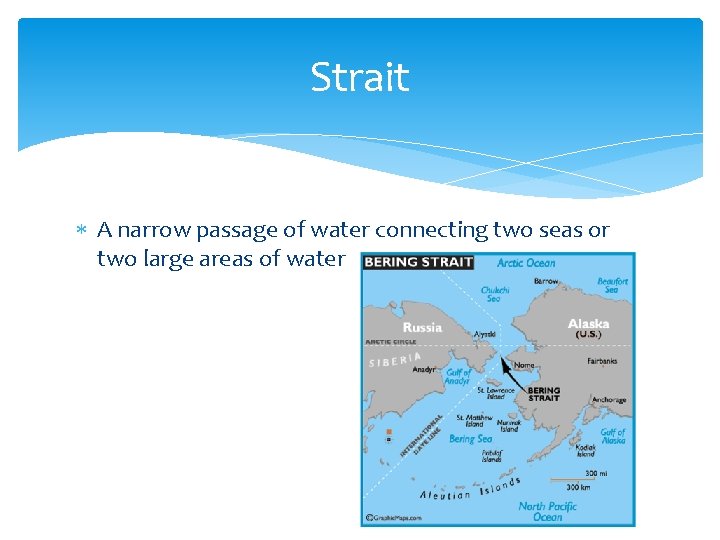
Strait A narrow passage of water connecting two seas or two large areas of water
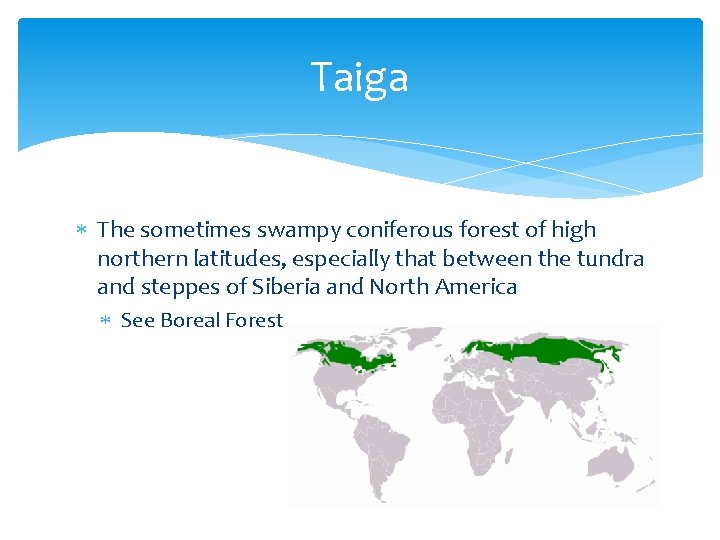
Taiga The sometimes swampy coniferous forest of high northern latitudes, especially that between the tundra and steppes of Siberia and North America See Boreal Forest
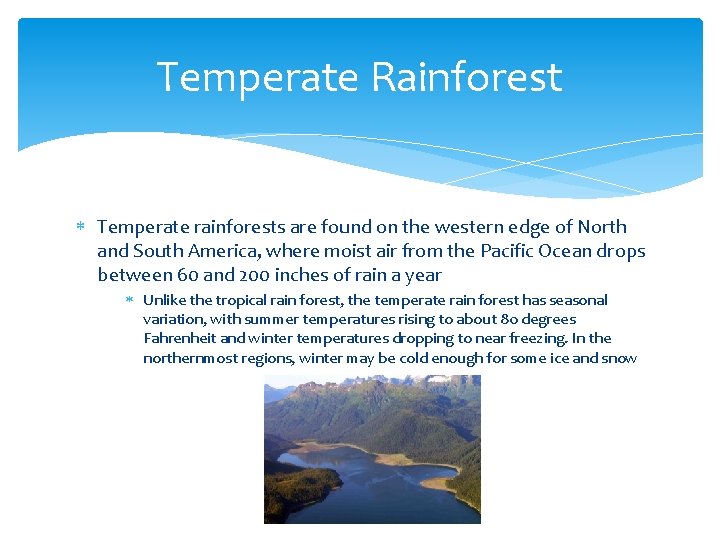
Temperate Rainforest Temperate rainforests are found on the western edge of North and South America, where moist air from the Pacific Ocean drops between 60 and 200 inches of rain a year Unlike the tropical rain forest, the temperate rain forest has seasonal variation, with summer temperatures rising to about 80 degrees Fahrenheit and winter temperatures dropping to near freezing. In the northernmost regions, winter may be cold enough for some ice and snow
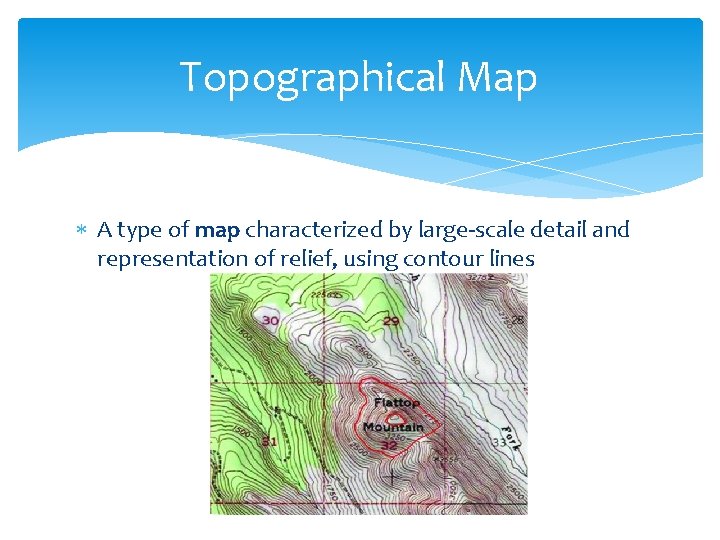
Topographical Map A type of map characterized by large-scale detail and representation of relief, using contour lines
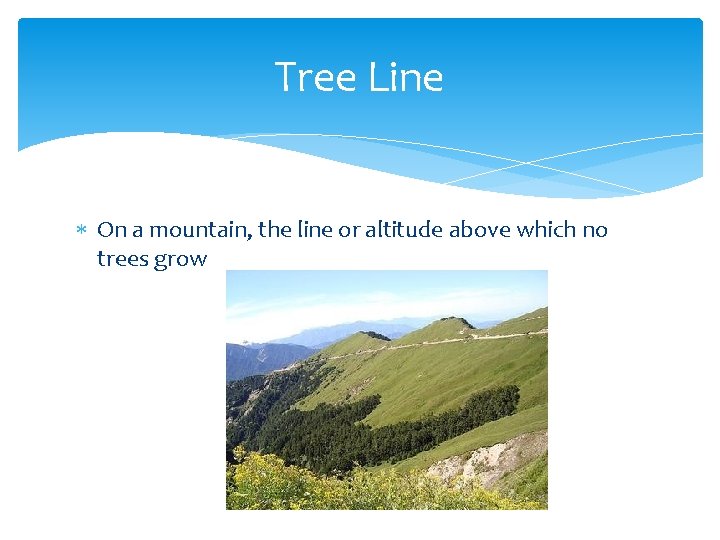
Tree Line On a mountain, the line or altitude above which no trees grow
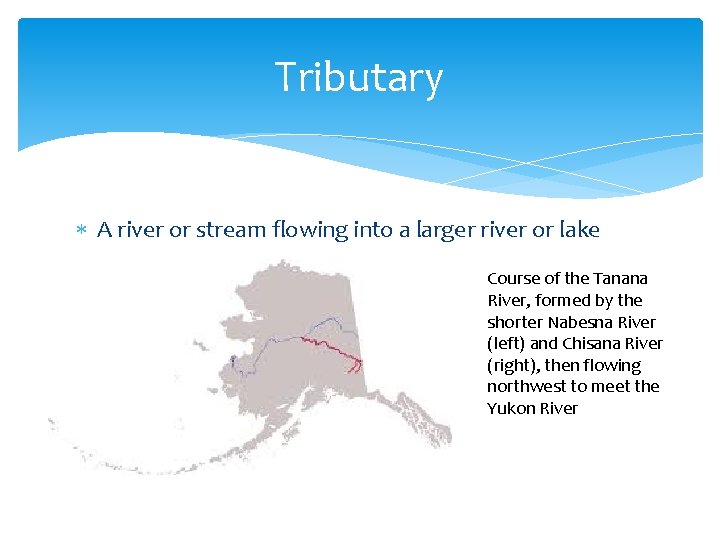
Tributary A river or stream flowing into a larger river or lake Course of the Tanana River, formed by the shorter Nabesna River (left) and Chisana River (right), then flowing northwest to meet the Yukon River
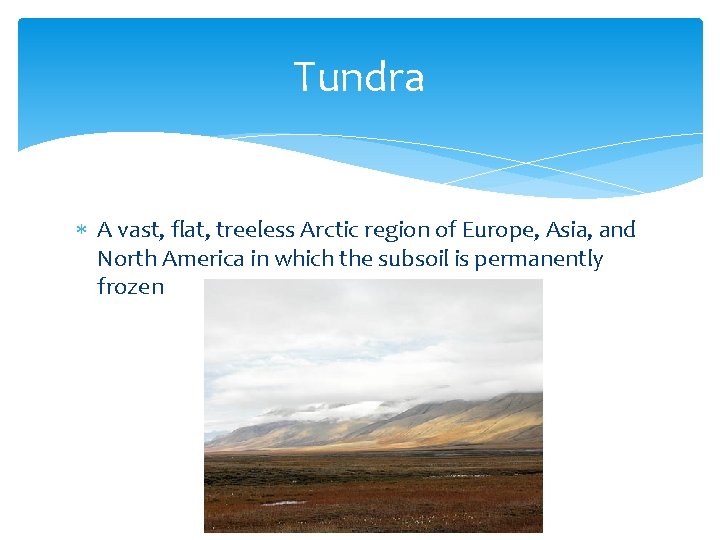
Tundra A vast, flat, treeless Arctic region of Europe, Asia, and North America in which the subsoil is permanently frozen
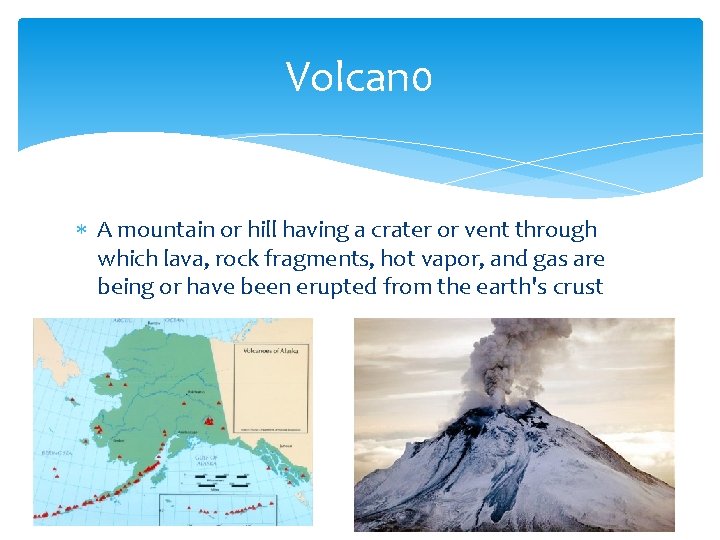
Volcan 0 A mountain or hill having a crater or vent through which lava, rock fragments, hot vapor, and gas are being or have been erupted from the earth's crust
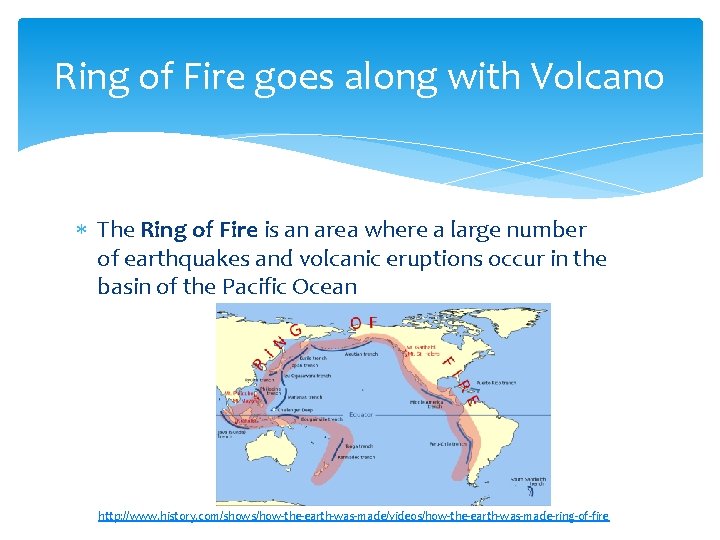
Ring of Fire goes along with Volcano The Ring of Fire is an area where a large number of earthquakes and volcanic eruptions occur in the basin of the Pacific Ocean http: //www. history. com/shows/how-the-earth-was-made/videos/how-the-earth-was-made-ring-of-fire
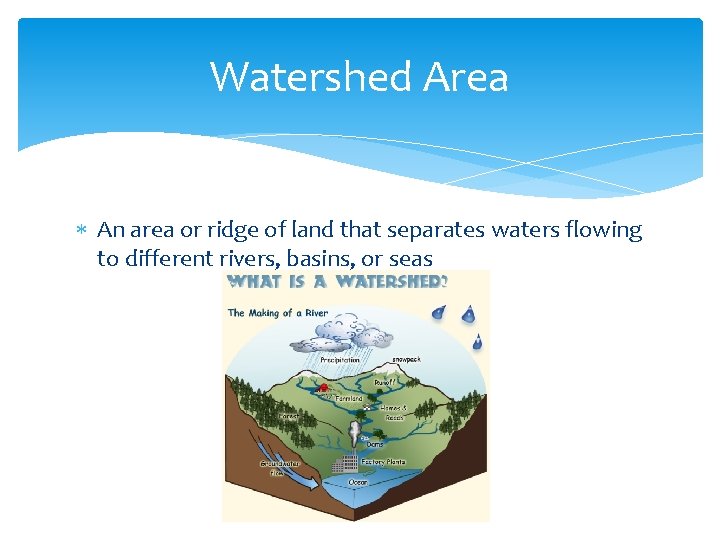
Watershed Area An area or ridge of land that separates waters flowing to different rivers, basins, or seas
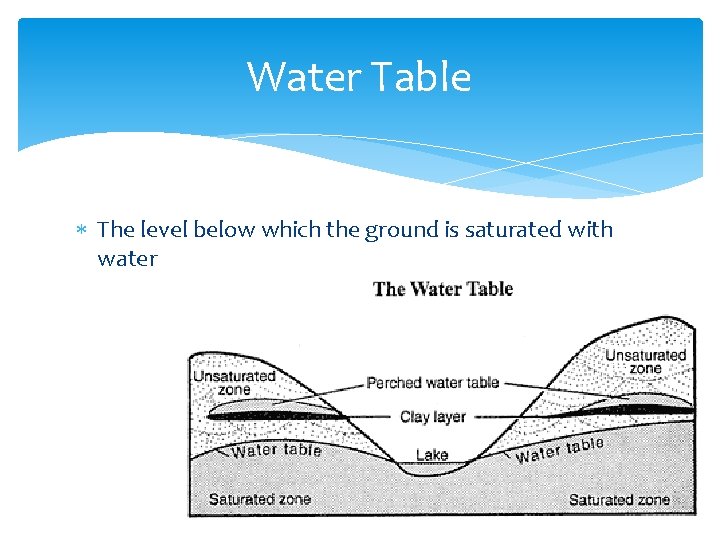
Water Table The level below which the ground is saturated with water
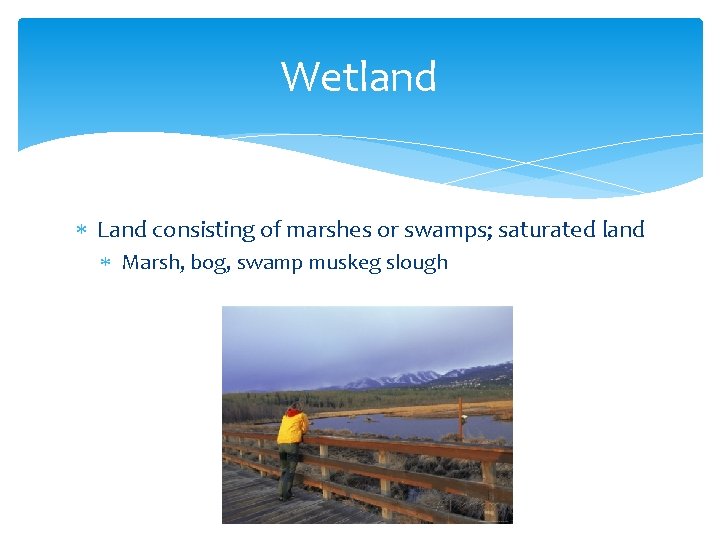
Wetland Land consisting of marshes or swamps; saturated land Marsh, bog, swamp muskeg slough
- Slides: 22