
Geography of South Asia Physical The Indian Subcontinent
Geography of South Asia Physical
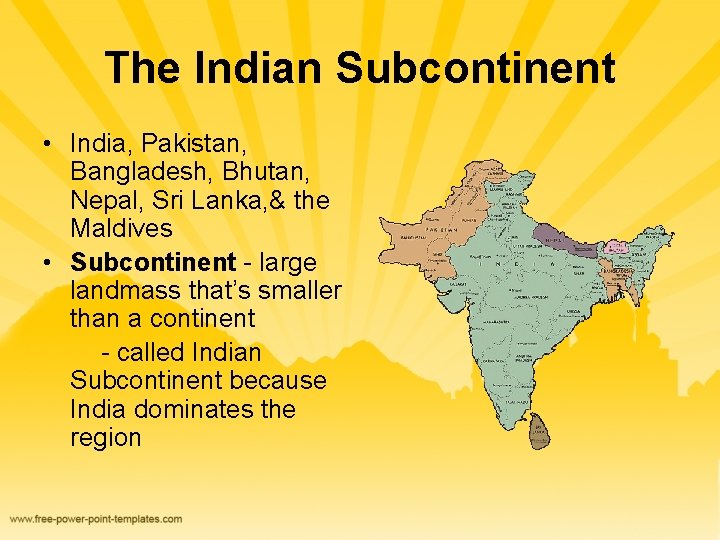
The Indian Subcontinent • India, Pakistan, Bangladesh, Bhutan, Nepal, Sri Lanka, & the Maldives • Subcontinent - large landmass that’s smaller than a continent - called Indian Subcontinent because India dominates the region

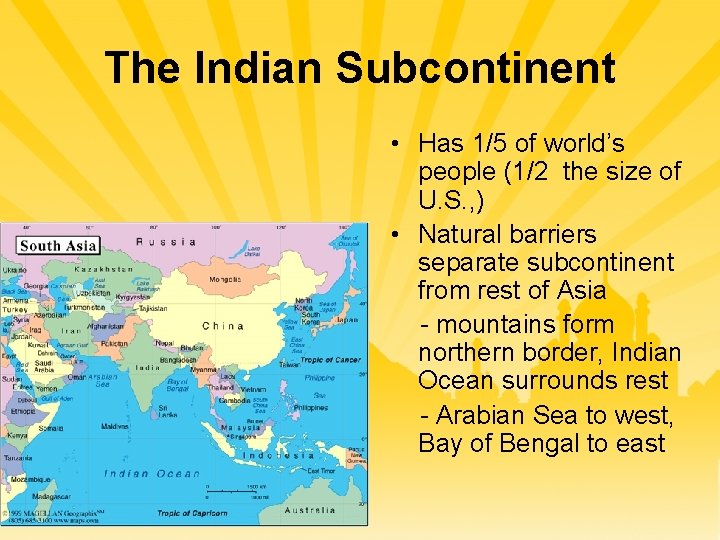
The Indian Subcontinent • Has 1/5 of world’s people (1/2 the size of U. S. , ) • Natural barriers separate subcontinent from rest of Asia - mountains form northern border, Indian Ocean surrounds rest - Arabian Sea to west, Bay of Bengal to east

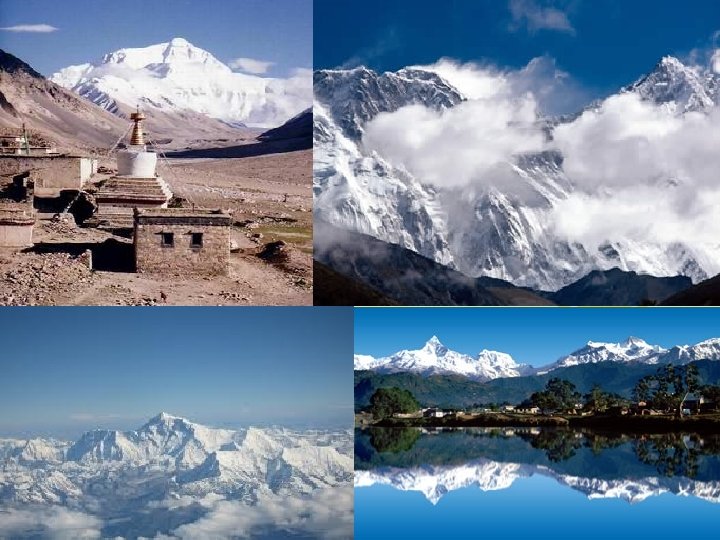
Mountains • Himalaya Mountains — 1, 500 -mile-long system of parallel ranges - Includes world’s tallest mountain—Mt. Everest - Forms barrier between Indian subcontinent and China
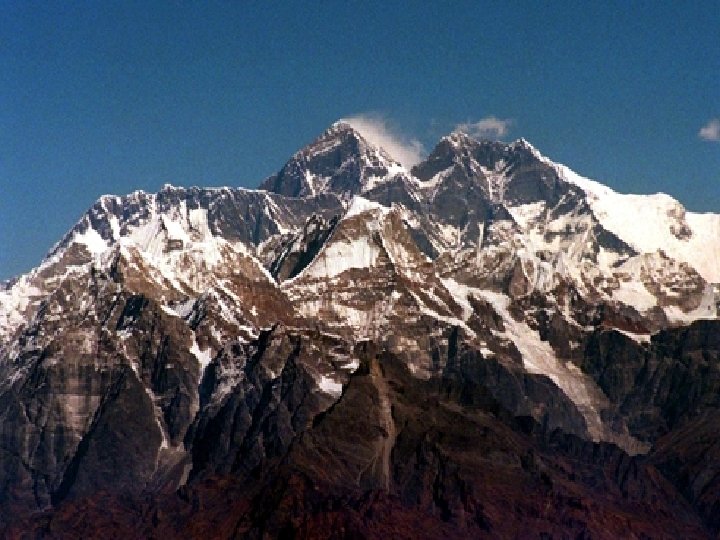
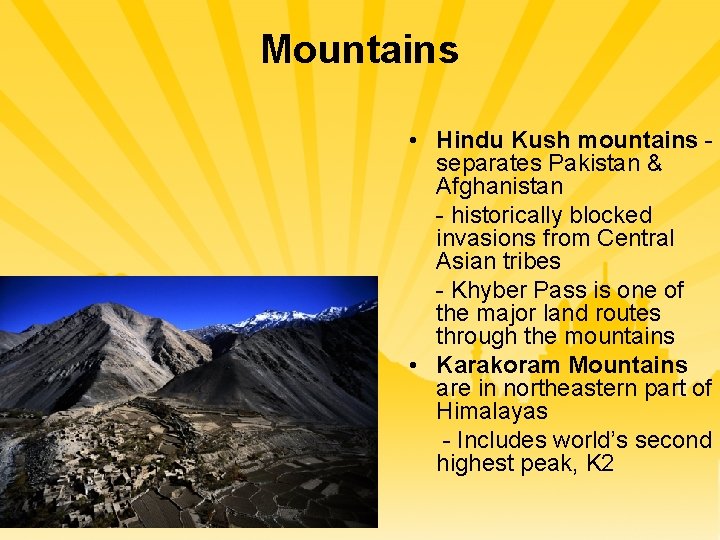
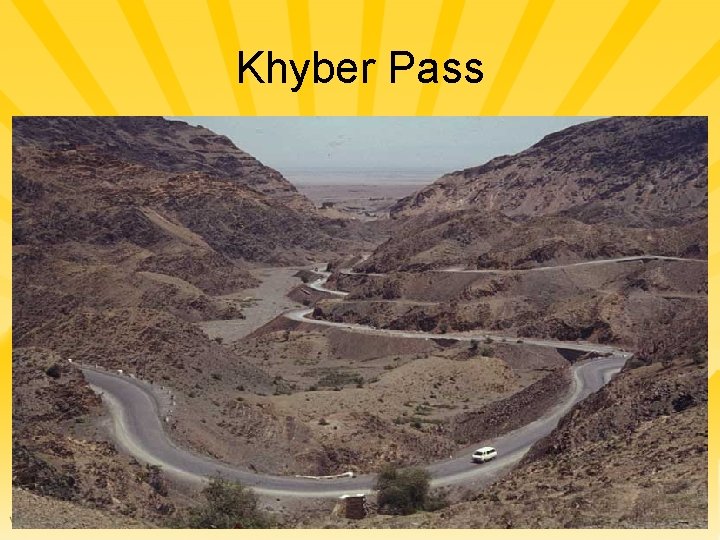
Mountains • Hindu Kush mountains separates Pakistan & Afghanistan - historically blocked invasions from Central Asian tribes - Khyber Pass is one of the major land routes through the mountains • Karakoram Mountains are in northeastern part of Himalayas - Includes world’s second highest peak, K 2
Khyber Pass
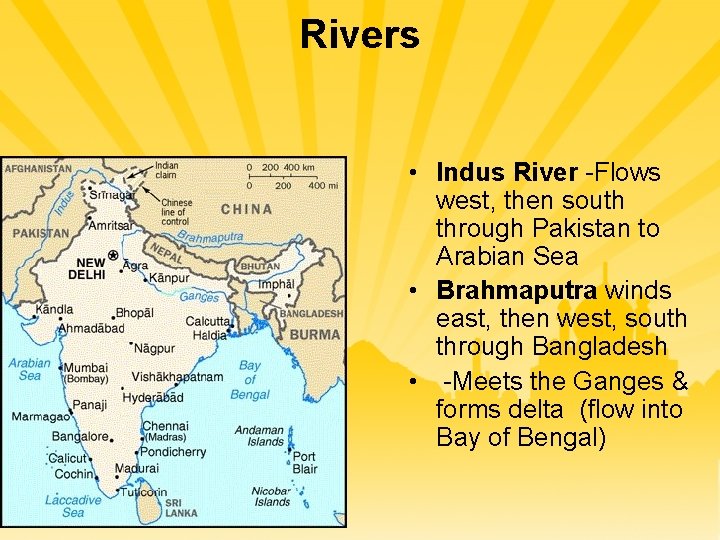
Rivers • Indus River -Flows west, then south through Pakistan to Arabian Sea • Brahmaputra winds east, then west, south through Bangladesh • -Meets the Ganges & forms delta (flow into Bay of Bengal)
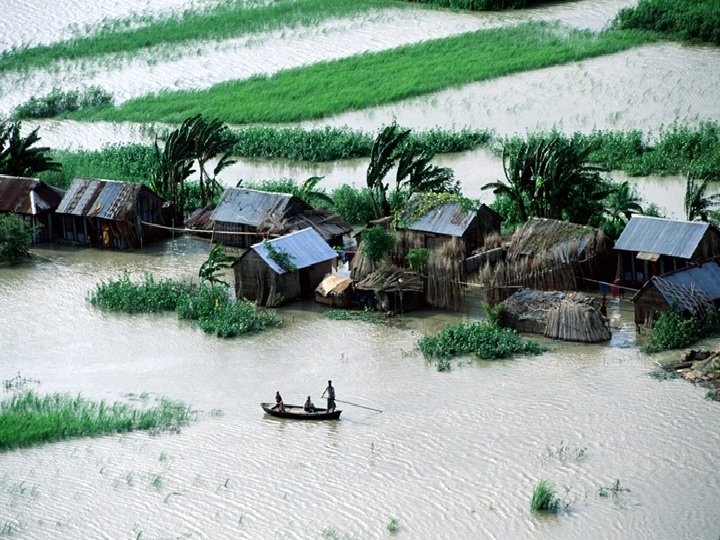
Rivers • Feni River - flows from Chittagong Hills to Bay of Bengal -floods during wet season due to monsoon rains - Cyclones bring storm surges—high waters that swamp low areas -1980 s - Bangladesh built South Asia’s largest estuary – a broadened seaward end of a river • used large population’s unskilled workers to build dam (abundant resource)
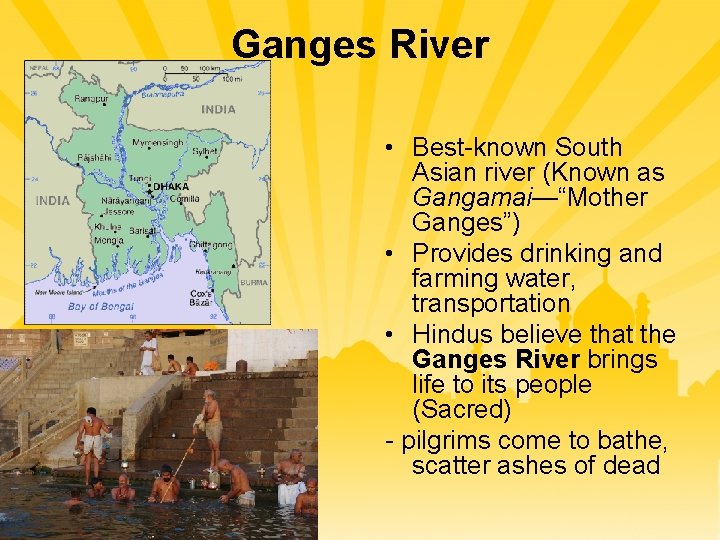
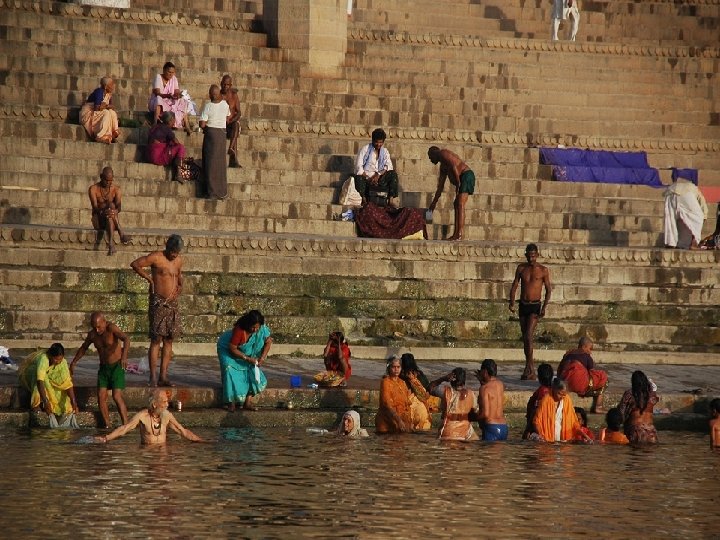
Ganges River • Best-known South Asian river (Known as Gangamai—“Mother Ganges”) • Provides drinking and farming water, transportation • Hindus believe that the Ganges River brings life to its people (Sacred) - pilgrims come to bathe, scatter ashes of dead
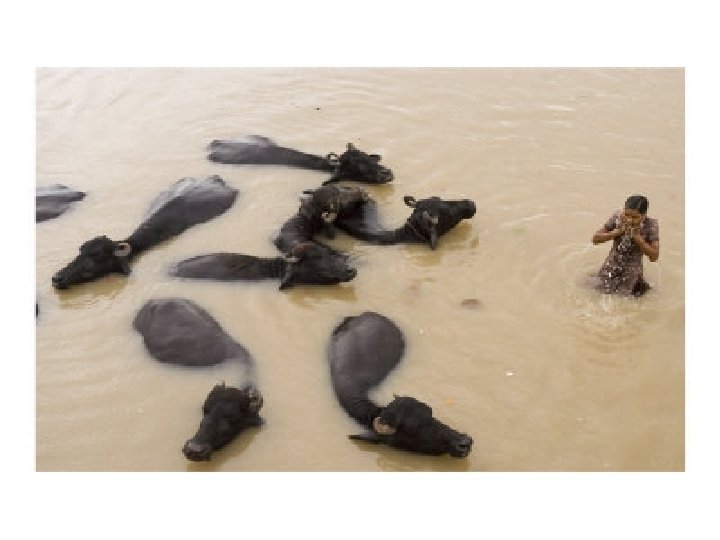
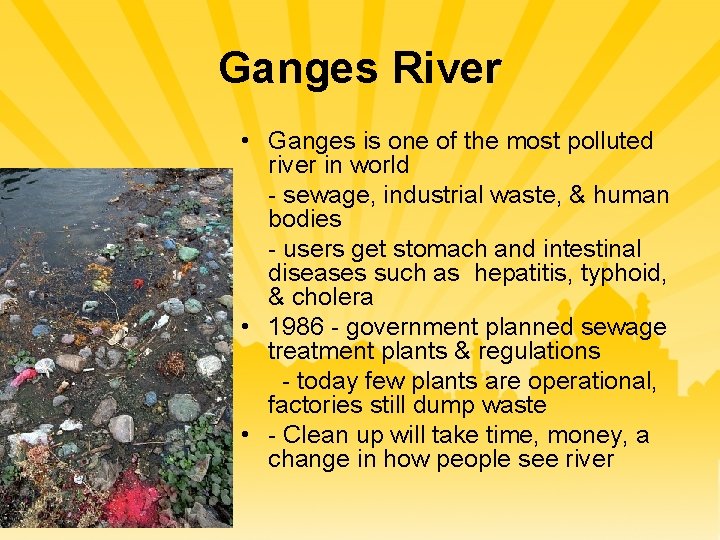
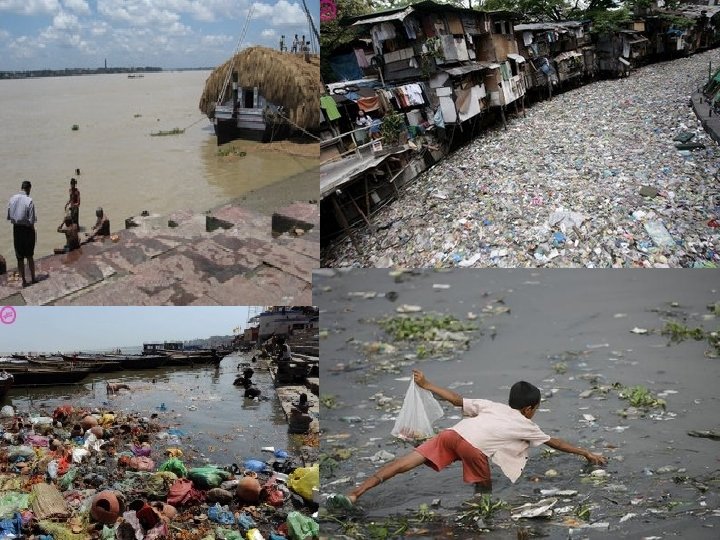
Ganges River • Ganges is one of the most polluted river in world - sewage, industrial waste, & human bodies - users get stomach and intestinal diseases such as hepatitis, typhoid, & cholera • 1986 - government planned sewage treatment plants & regulations - today few plants are operational, factories still dump waste • - Clean up will take time, money, a change in how people see river
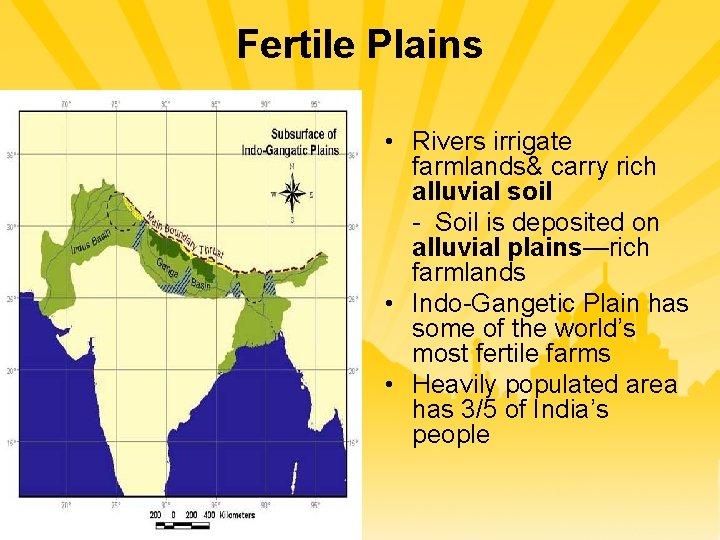
Fertile Plains • Rivers irrigate farmlands& carry rich alluvial soil - Soil is deposited on alluvial plains—rich farmlands • Indo-Gangetic Plain has some of the world’s most fertile farms • Heavily populated area has 3/5 of India’s people
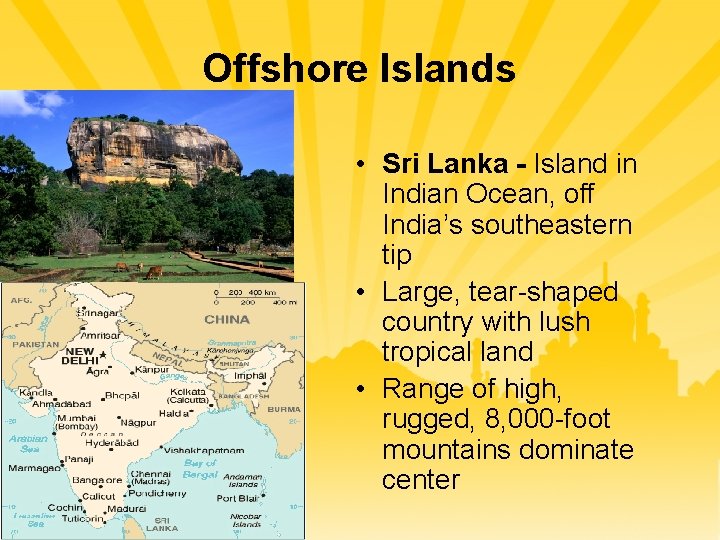
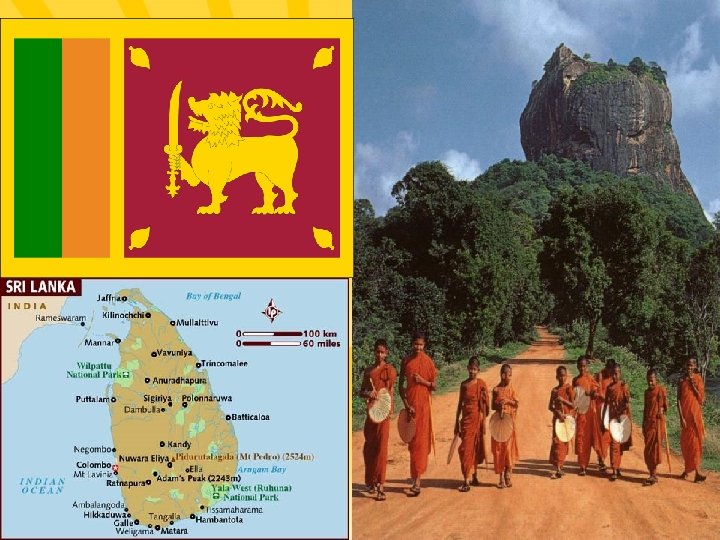
Offshore Islands • Sri Lanka - Island in Indian Ocean, off India’s southeastern tip • Large, tear-shaped country with lush tropical land • Range of high, rugged, 8, 000 -foot mountains dominate center
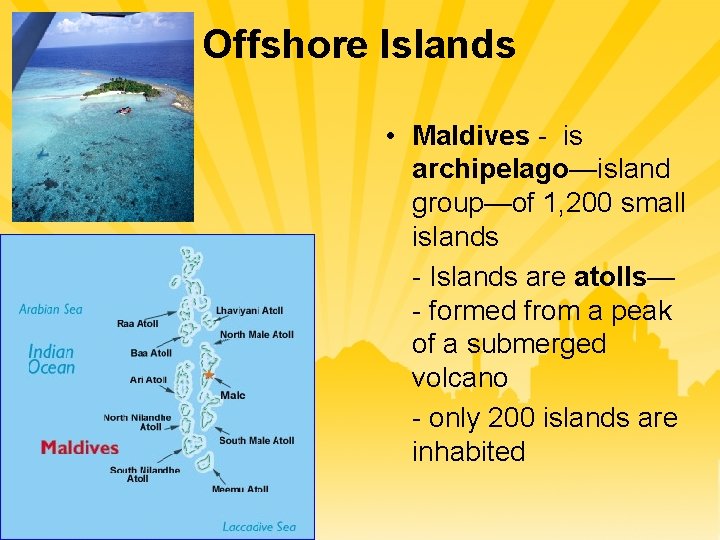
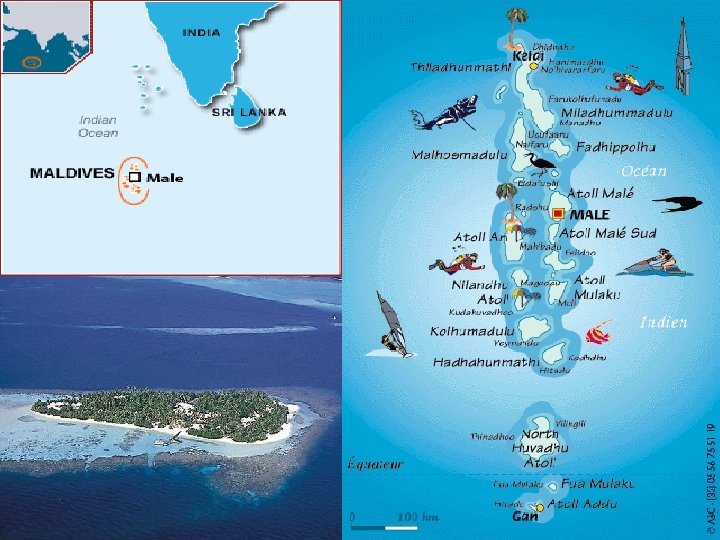
Offshore Islands • Maldives - is archipelago—island group—of 1, 200 small islands - Islands are atolls— - formed from a peak of a submerged volcano - only 200 islands are inhabited
Natural Resources • Water and soil - Provides food through farming & fishing • River systems help enrich land with alluvial soil & water • Also provide transportation & power
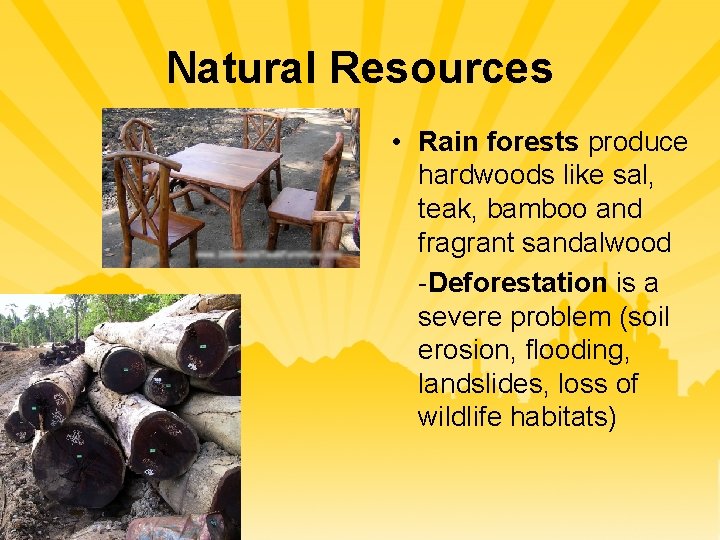
Natural Resources • Rain forests produce hardwoods like sal, teak, bamboo and fragrant sandalwood -Deforestation is a severe problem (soil erosion, flooding, landslides, loss of wildlife habitats)
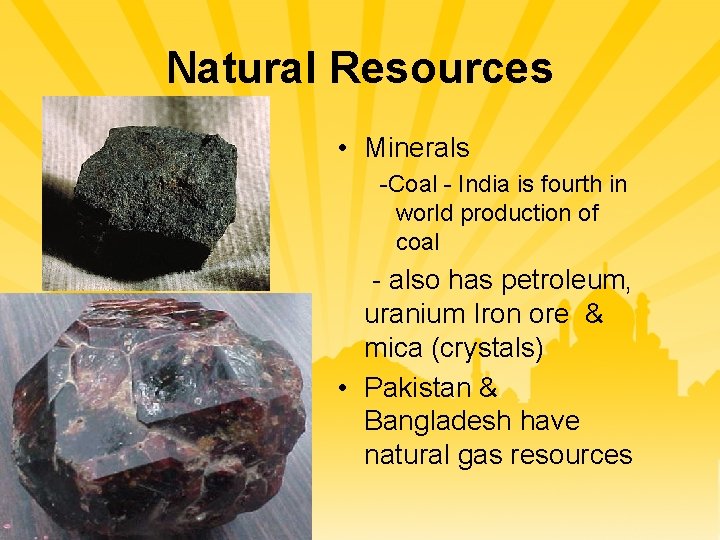
Natural Resources • Minerals -Coal - India is fourth in world production of coal - also has petroleum, uranium Iron ore & mica (crystals) • Pakistan & Bangladesh have natural gas resources
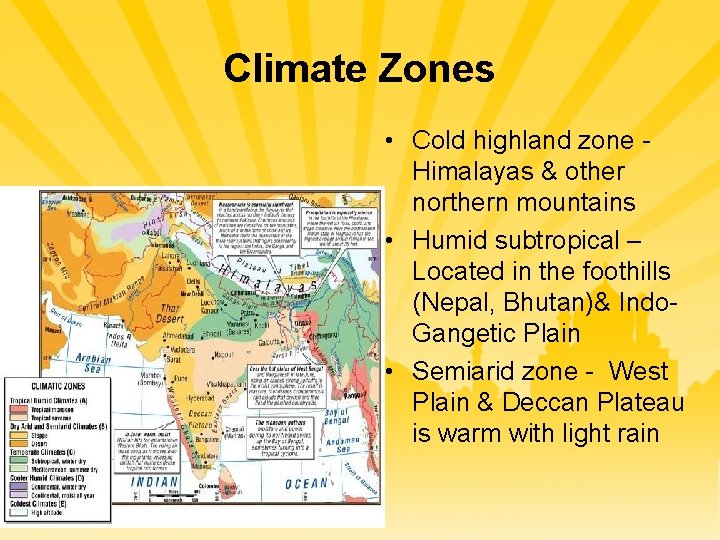
Climate Zones • Cold highland zone Himalayas & other northern mountains • Humid subtropical – Located in the foothills (Nepal, Bhutan)& Indo. Gangetic Plain • Semiarid zone - West Plain & Deccan Plateau is warm with light rain
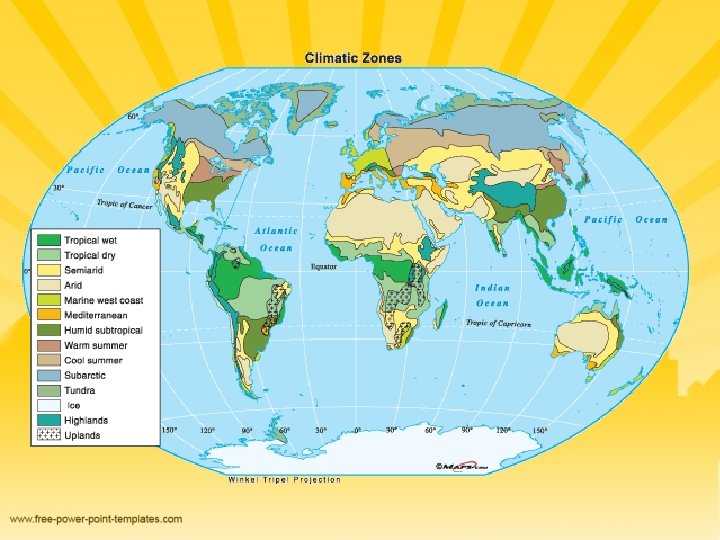
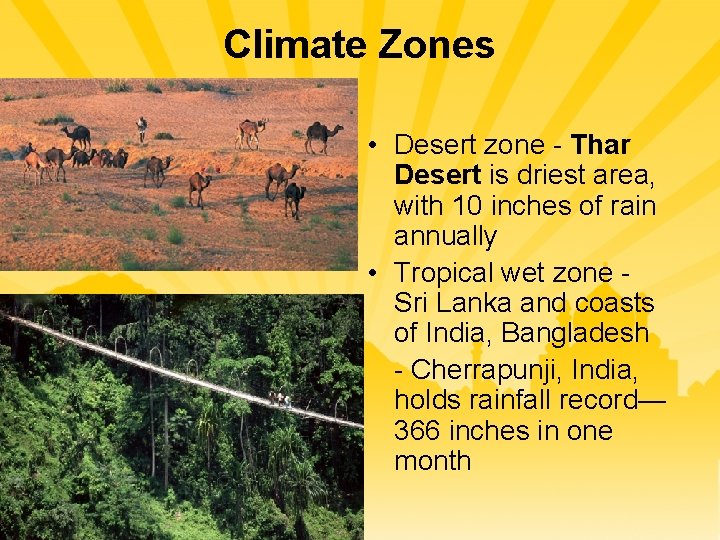
Climate Zones • Desert zone - Thar Desert is driest area, with 10 inches of rain annually • Tropical wet zone Sri Lanka and coasts of India, Bangladesh - Cherrapunji, India, holds rainfall record— 366 inches in one month
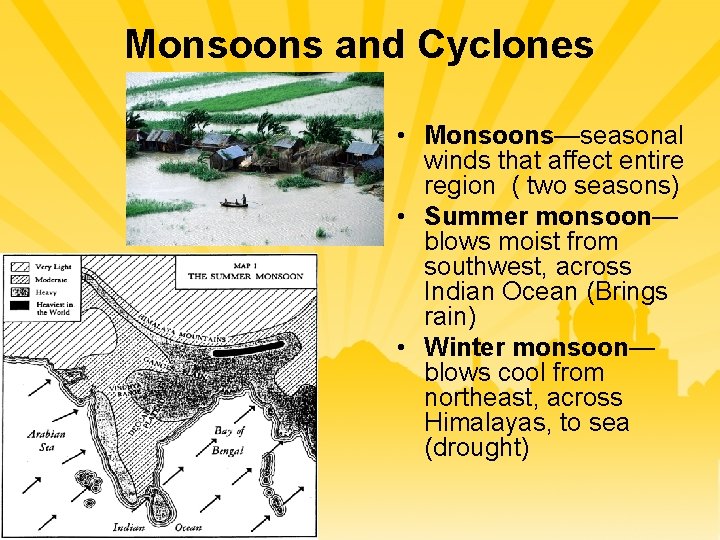
Monsoons and Cyclones • Monsoons—seasonal winds that affect entire region ( two seasons) • Summer monsoon— blows moist from southwest, across Indian Ocean (Brings rain) • Winter monsoon— blows cool from northeast, across Himalayas, to sea (drought)
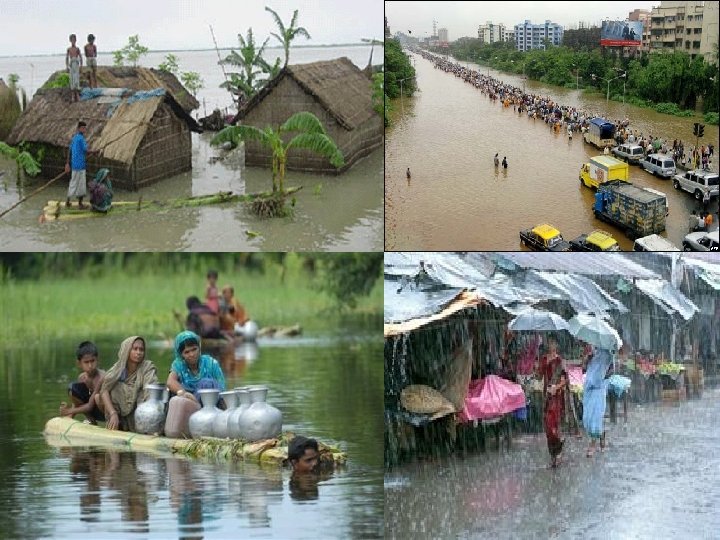
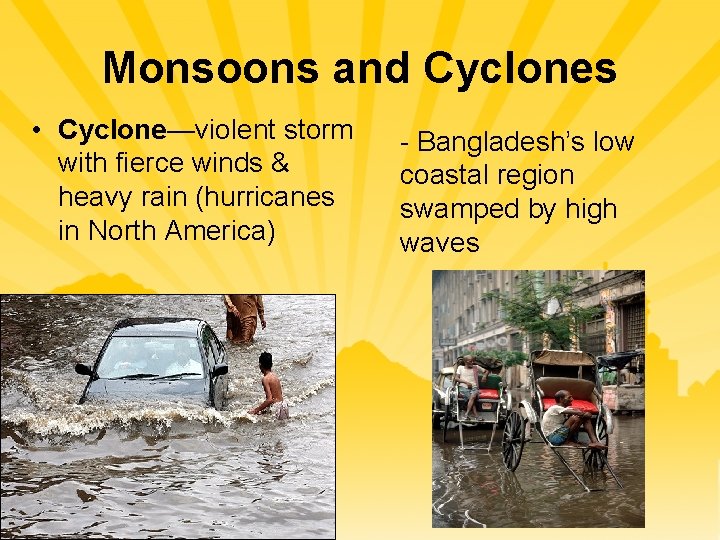
Monsoons and Cyclones • Cyclone—violent storm with fierce winds & heavy rain (hurricanes in North America) - Bangladesh’s low coastal region swamped by high waves
Physical Review • • • • What type of weather is associated with a winter monsoon? What type of weather is associated with a summer monsoon? What is an archipelago? . What do the Himalayan Mountains form a barrier between? What is an atoll? What are alluvial plains? What is a subcontinent? What is an abunadant resource in Bangladesh that was used to build a dam on the Feni River? What is an estuary? What is a storm surge? Mount Everest is located in what mountain range? What desert is located in South Asia? What type of landform is South Asia?
History
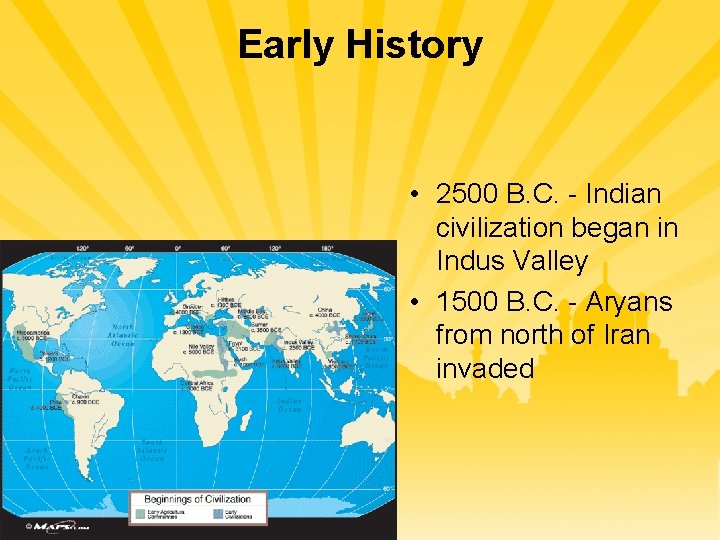
Early History • 2500 B. C. - Indian civilization began in Indus Valley • 1500 B. C. - Aryans from north of Iran invaded
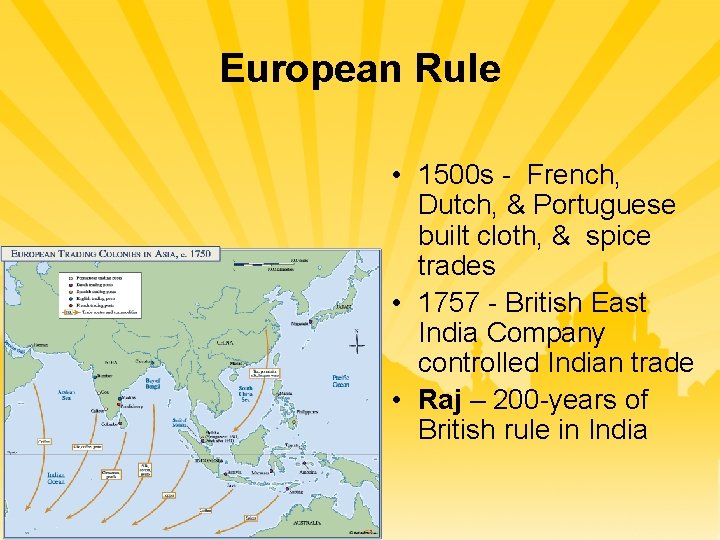
European Rule • 1500 s - French, Dutch, & Portuguese built cloth, & spice trades • 1757 - British East India Company controlled Indian trade • Raj – 200 -years of British rule in India
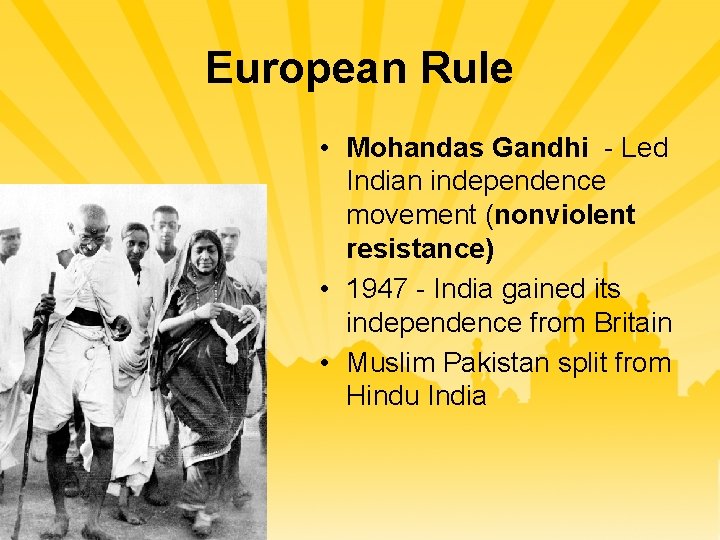
European Rule • Mohandas Gandhi - Led Indian independence movement (nonviolent resistance) • 1947 - India gained its independence from Britain • Muslim Pakistan split from Hindu India
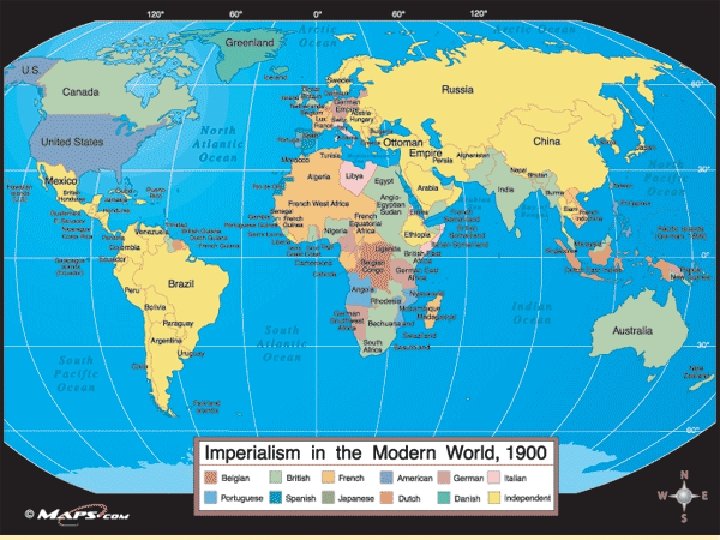
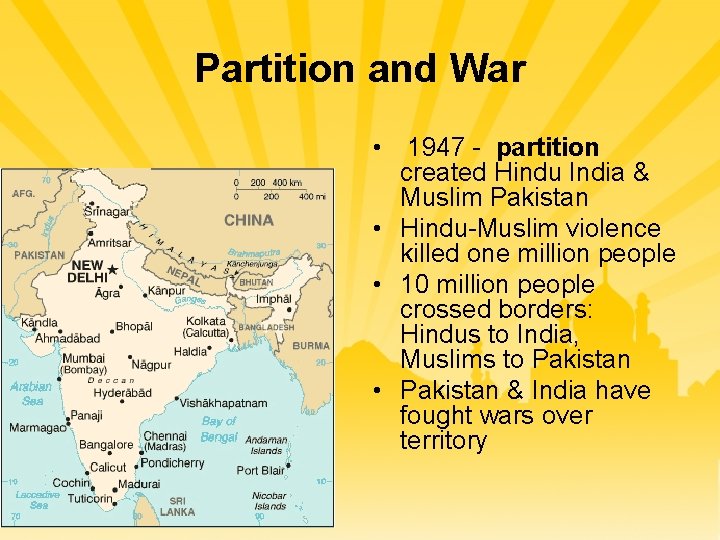
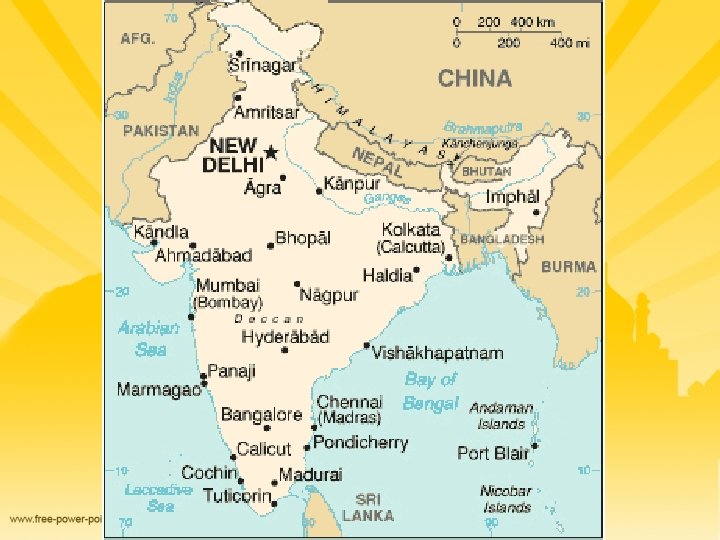
Partition and War • 1947 - partition created Hindu India & Muslim Pakistan • Hindu-Muslim violence killed one million people • 10 million people crossed borders: Hindus to India, Muslims to Pakistan • Pakistan & India have fought wars over territory
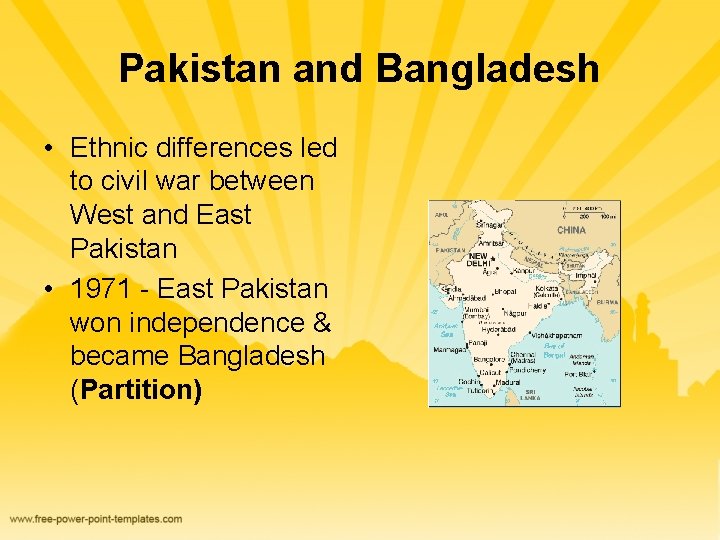
Pakistan and Bangladesh • Ethnic differences led to civil war between West and East Pakistan • 1971 - East Pakistan won independence & became Bangladesh (Partition)
History Review • • • Who led India’s independence movement? What is nonviolent resistance? What was the partition of India& Pakistan in 1947? What was Raj? What two countries have fought several wars over the territory of Kashmir? • Where did civilization first begin in South Asia? • What country was known as East Pakistan between 1947 & 1971?
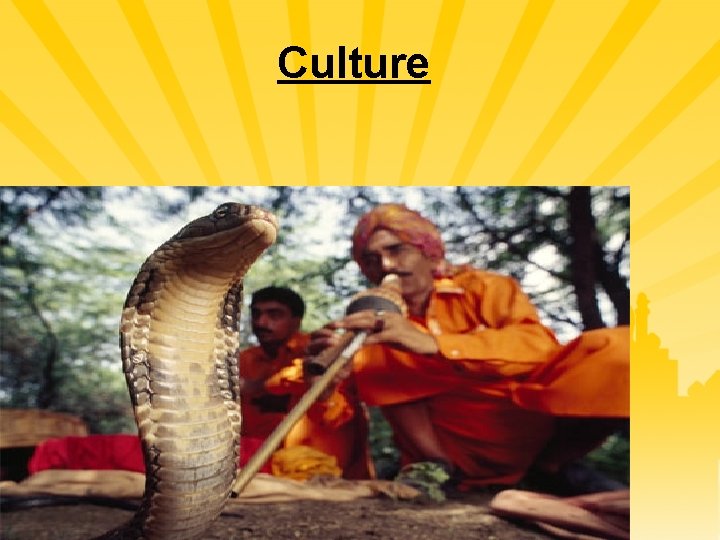
Culture
Languages • India has over 1000 languages and dialects - Hindi is the official language • Pakistan is more diverse: five main groups, each with own language - Punjabis, Sindhis, Pathans, Muhajirs, Balochs • Majority of people in Bangladesh are Bengali - Bengali language based on Sanskit, ancient Indo-Aryan language
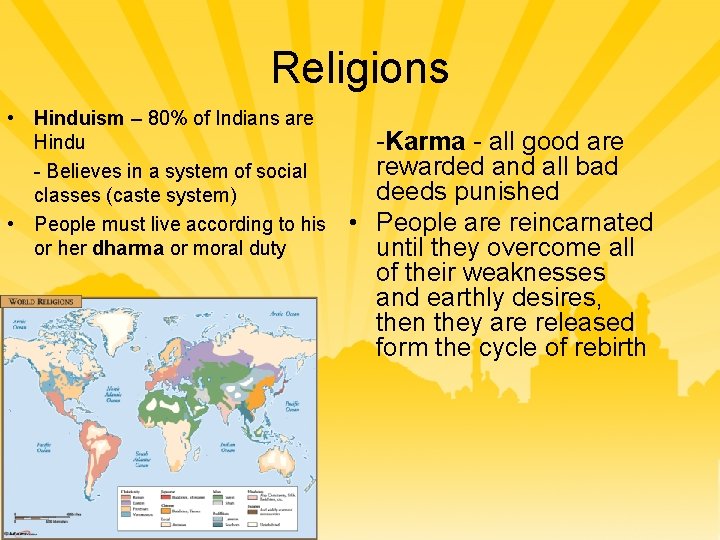
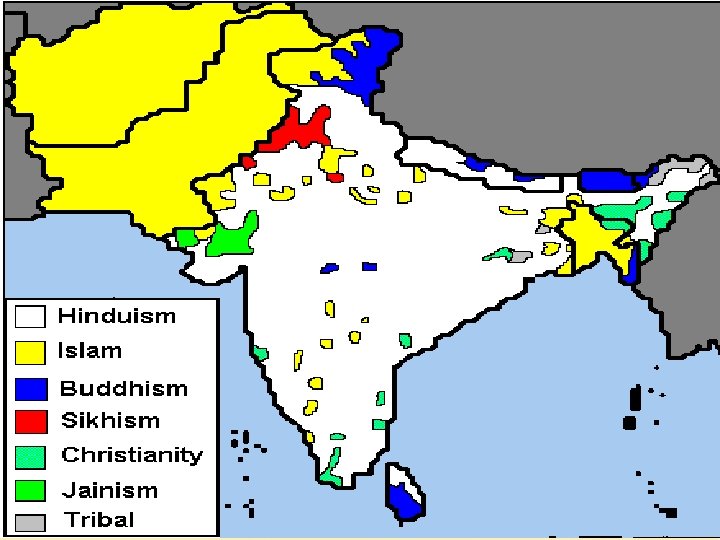
Religions • Hinduism – 80% of Indians are Hindu - Believes in a system of social classes (caste system) • People must live according to his or her dharma or moral duty -Karma - all good are rewarded and all bad deeds punished • People are reincarnated until they overcome all of their weaknesses and earthly desires, then they are released form the cycle of rebirth
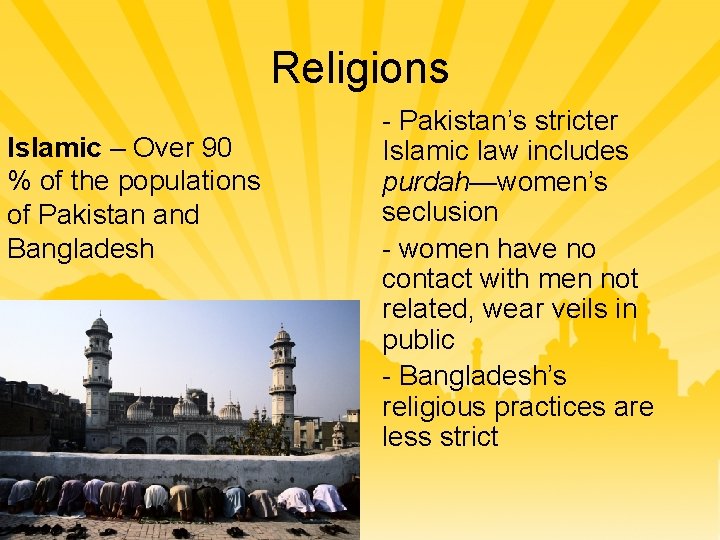
Religions Islamic – Over 90 % of the populations of Pakistan and Bangladesh - Pakistan’s stricter Islamic law includes purdah—women’s seclusion - women have no contact with men not related, wear veils in public - Bangladesh’s religious practices are less strict
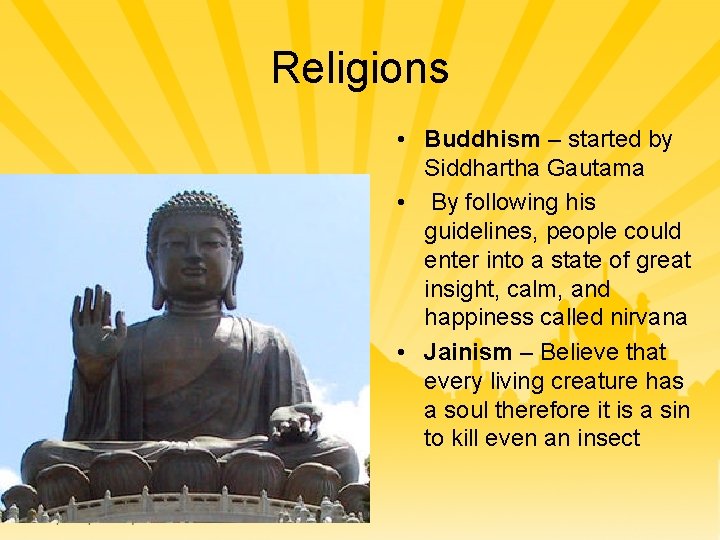
Religions • Buddhism – started by Siddhartha Gautama • By following his guidelines, people could enter into a state of great insight, calm, and happiness called nirvana • Jainism – Believe that every living creature has a soul therefore it is a sin to kill even an insect
Culture Review • What religion do most Indians belong to? • Who founded the religion of Buddhism? • What is the caste system & what religion believes in it? • What is the predominate religion in Pakistan & Bangladesh?
Living In South Asia Today
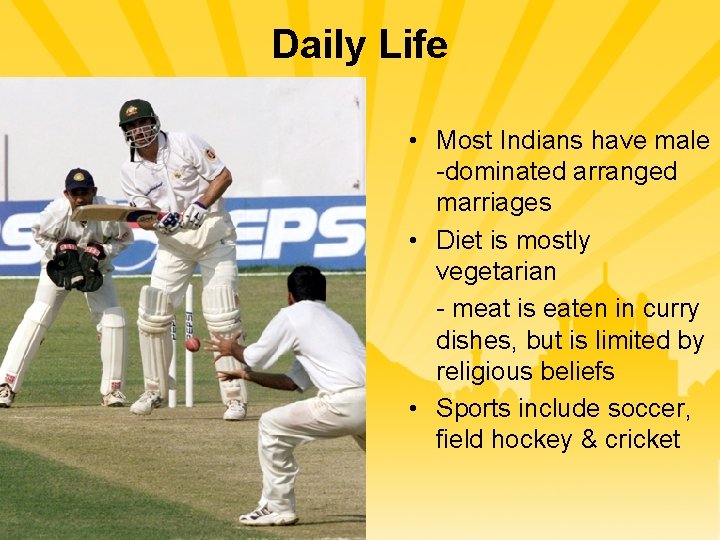
Daily Life • Most Indians have male -dominated arranged marriages • Diet is mostly vegetarian - meat is eaten in curry dishes, but is limited by religious beliefs • Sports include soccer, field hockey & cricket
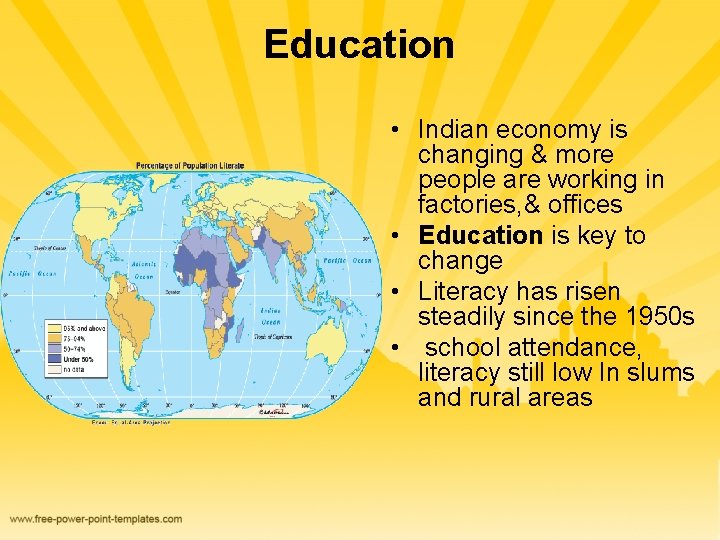
Education • Indian economy is changing & more people are working in factories, & offices • Education is key to change • Literacy has risen steadily since the 1950 s • school attendance, literacy still low In slums and rural areas
Population Problems • South Asia must manage population growth so economies can develop • Rapid growth means many citizens lack life’s basic necessities - food, clothing, shelter
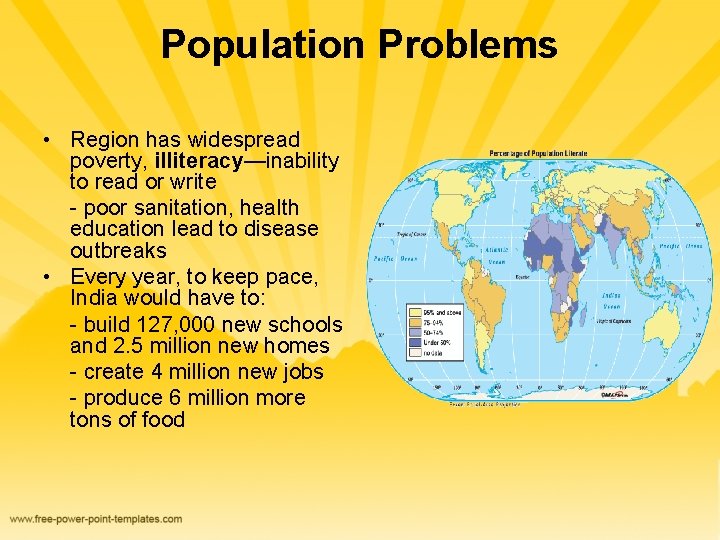
Population Problems • Region has widespread poverty, illiteracy—inability to read or write - poor sanitation, health education lead to disease outbreaks • Every year, to keep pace, India would have to: - build 127, 000 new schools and 2. 5 million new homes - create 4 million new jobs - produce 6 million more tons of food
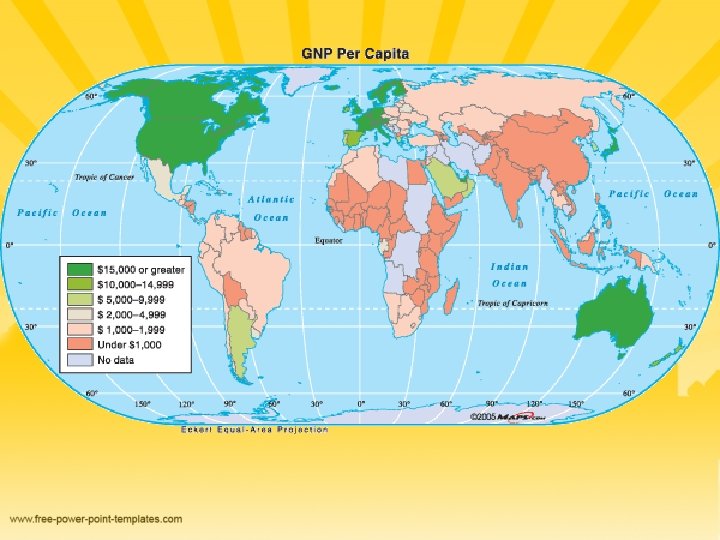
Managing Population Growth • India spends nearly $1 billion a year encouraging smaller families • Programs have only limited success - Indian women marry before age 18, start having babies early - Poor people view children as source of money (begging or working fields) - children can later take care of elderly parents - have more kids to beat high infant mortality • Education could break cycle of poverty & raise living standards ( limited funds) - India spends under $6 per pupil a year on education - U. S. spends $6, 320 per pupil a year - improves females’ status with job opportunities -better health care education could lower infant mortality rates
Living In South Asia Today Review • What is considered the key to controlling India’s population as well improving its standard of living? • What is illiteracy? • What country in South Asia has the largest population? • Name three reasons that Indian families continue to have a large number of children? • Name three basic necessities:
Economy
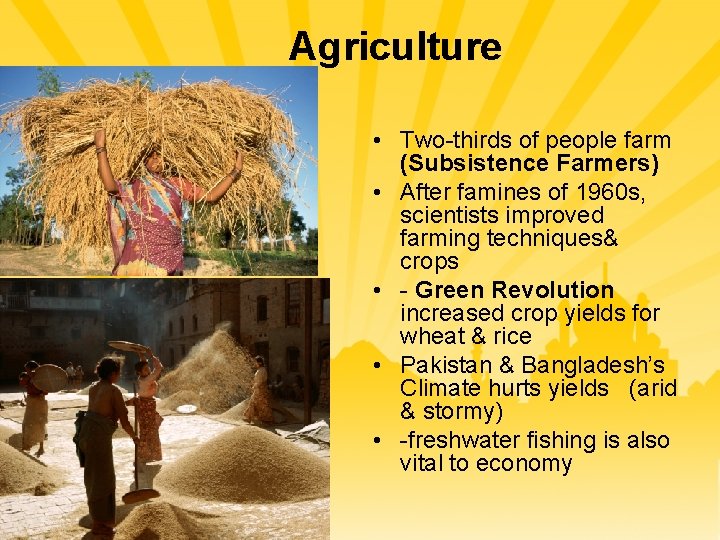
Agriculture • Two-thirds of people farm (Subsistence Farmers) • After famines of 1960 s, scientists improved farming techniques& crops • - Green Revolution increased crop yields for wheat & rice • Pakistan & Bangladesh’s Climate hurts yields (arid & stormy) • -freshwater fishing is also vital to economy
Industry • Cotton textiles have long been a major producer in India - iron, steel, chemical, food industries develop after 1940 s • Neither Pakistan or Bangladesh is highly industrialized - small factories lack capital, resources, markets to expand • Both export cotton clothes • Microcredit policy allows small loans to poor entrepreneurs - entrepreneurs—people who start and build businesses - small businesses join together to get microloans - program raises standards of living, especially for women
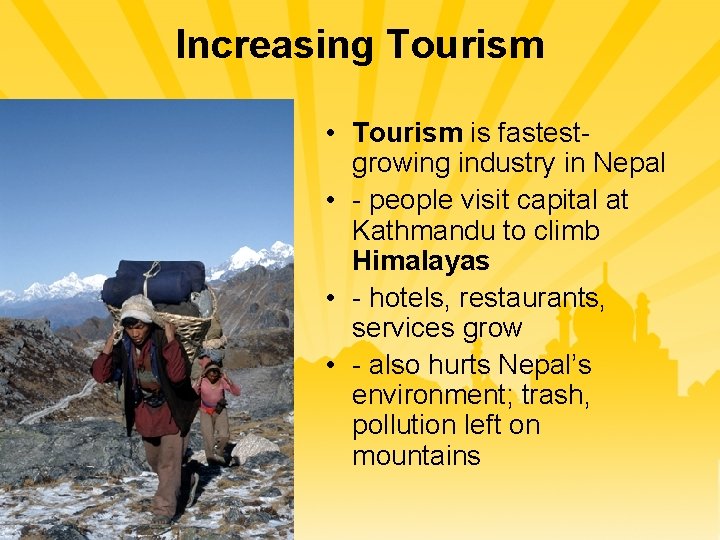
Increasing Tourism • Tourism is fastestgrowing industry in Nepal • - people visit capital at Kathmandu to climb Himalayas • - hotels, restaurants, services grow • - also hurts Nepal’s environment; trash, pollution left on mountains
Economy Review • What is Microcredit? • What is an entrepreneur?
- Slides: 63