
Geography of South America by Kristine Hirschmann Introduction
Geography of South America by: Kristine Hirschmann

Introduction • Today, geography of South America made patterns of early settlement that continue to influence countries, cities, cultures, and trade. • To understand South America, you must turn to geography. • Geography is the study of Earth’s physical features and the effects of the landscape on life in an area.

Physical Geography of South America • South America is the world’s fourth largest country. • Part of this landmass lies north of the equator. • South America lies just below the continent of North America.
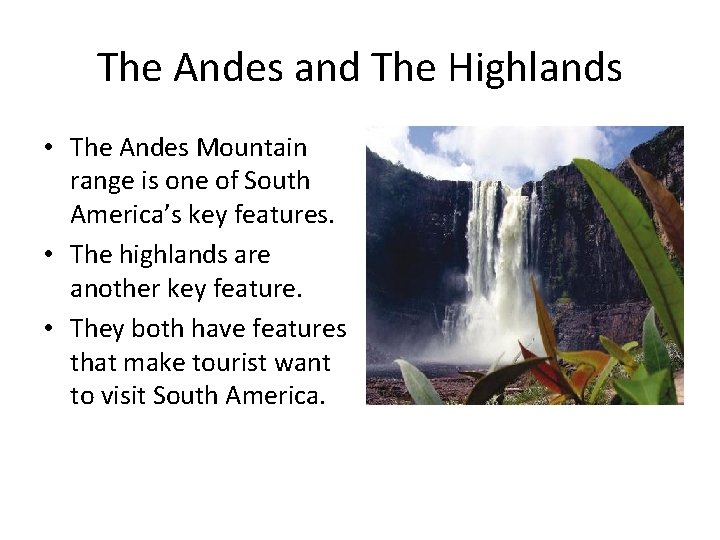
The Andes and The Highlands • The Andes Mountain range is one of South America’s key features. • The highlands are another key feature. • They both have features that make tourist want to visit South America.
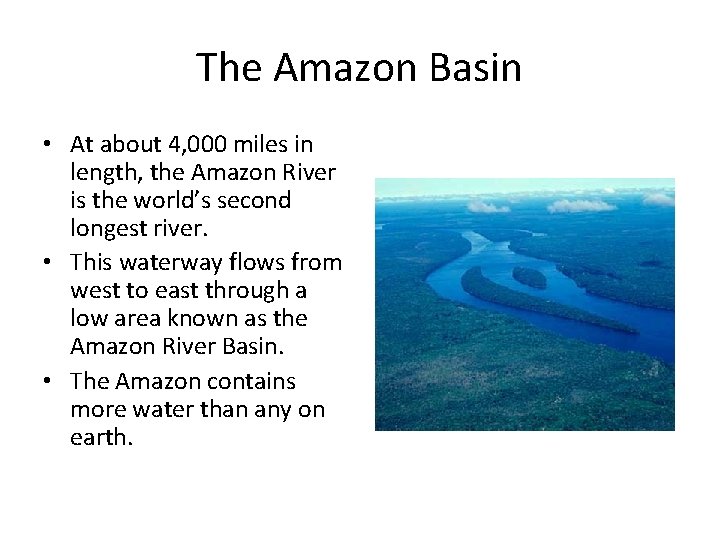
The Amazon Basin • At about 4, 000 miles in length, the Amazon River is the world’s second longest river. • This waterway flows from west to east through a low area known as the Amazon River Basin. • The Amazon contains more water than any on earth.
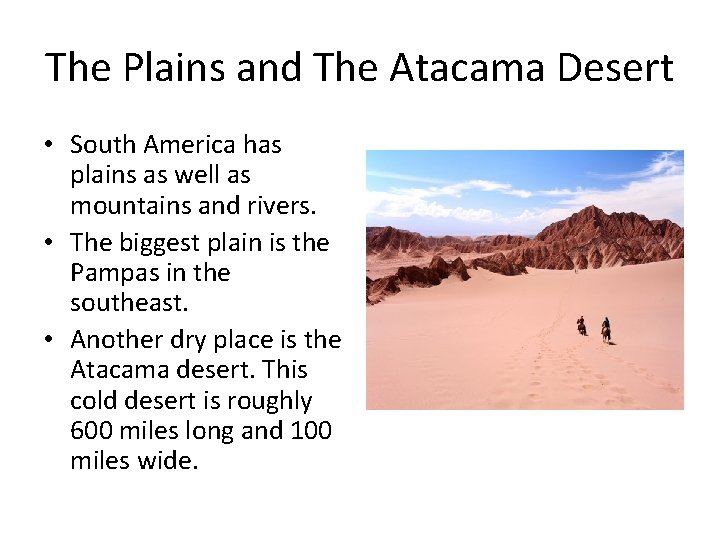
The Plains and The Atacama Desert • South America has plains as well as mountains and rivers. • The biggest plain is the Pampas in the southeast. • Another dry place is the Atacama desert. This cold desert is roughly 600 miles long and 100 miles wide.

Human Geography of South America • South America is divided into twelve countries. • People from a wide range of cultural backgrounds live in South America. • They celebrate different holidays and ways of life.
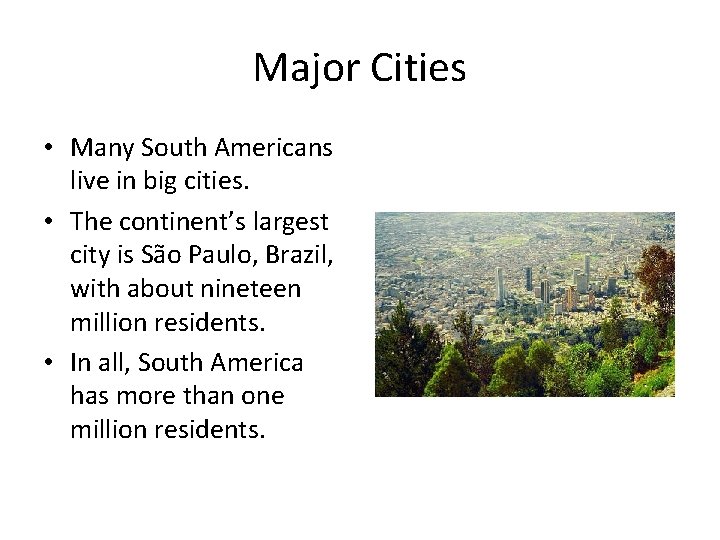
Major Cities • Many South Americans live in big cities. • The continent’s largest city is São Paulo, Brazil, with about nineteen million residents. • In all, South America has more than one million residents.
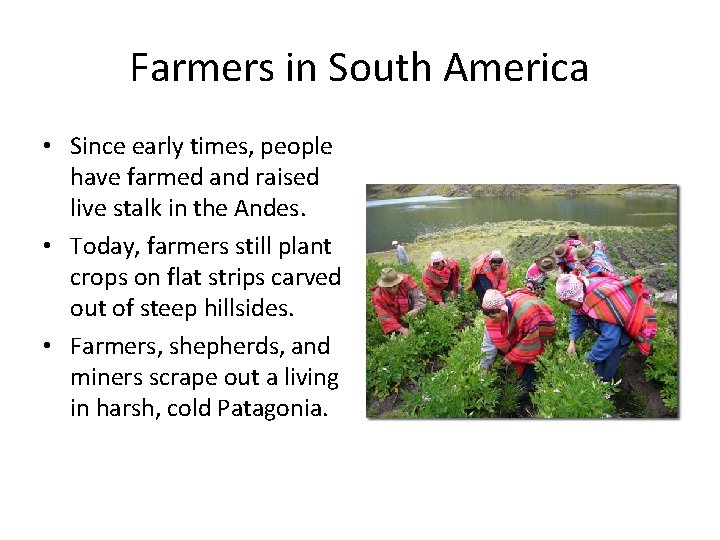
Farmers in South America • Since early times, people have farmed and raised live stalk in the Andes. • Today, farmers still plant crops on flat strips carved out of steep hillsides. • Farmers, shepherds, and miners scrape out a living in harsh, cold Patagonia.
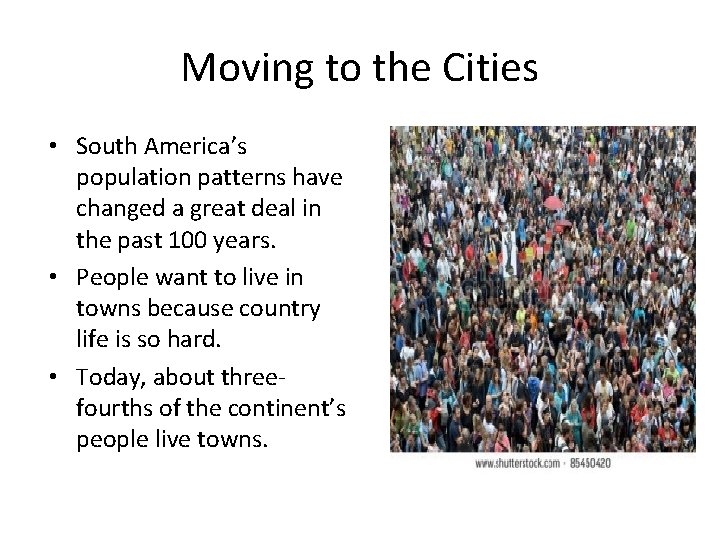
Moving to the Cities • South America’s population patterns have changed a great deal in the past 100 years. • People want to live in towns because country life is so hard. • Today, about threefourths of the continent’s people live towns.
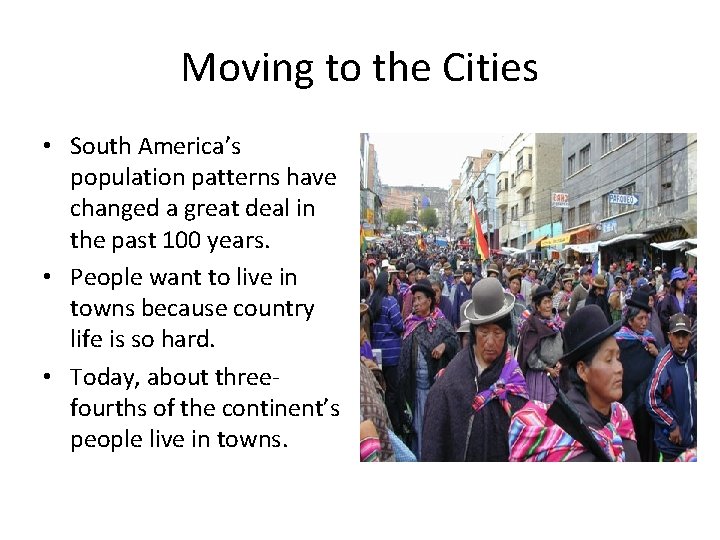
Moving to the Cities • South America’s population patterns have changed a great deal in the past 100 years. • People want to live in towns because country life is so hard. • Today, about threefourths of the continent’s people live in towns.

Geography and the Economy • South America is rich in natural resources. • Mines, farms, woods, and waterways help to drive the economies of many nations. • South American farms grows many crops.
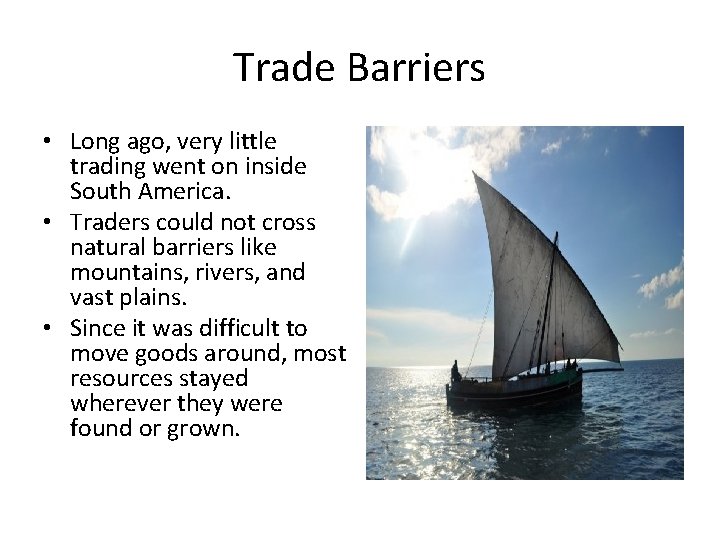
Trade Barriers • Long ago, very little trading went on inside South America. • Traders could not cross natural barriers like mountains, rivers, and vast plains. • Since it was difficult to move goods around, most resources stayed wherever they were found or grown.

Major Exports • South America’s natural riches play a big role in world trade • Brazil exports more beef than any other country. • South America does not export all of its products.
• As the population of South America grows, more and more resources are needed. • As South America’s known resources are used, people will look for more. • Some resources, are livestock and crops, can be replaced as fast as they are used.
- Slides: 15