
Geography of Greece and Its Influences 1000 BCE

Geography of Greece and It’s Influences 1000 BCE – 300 BCE
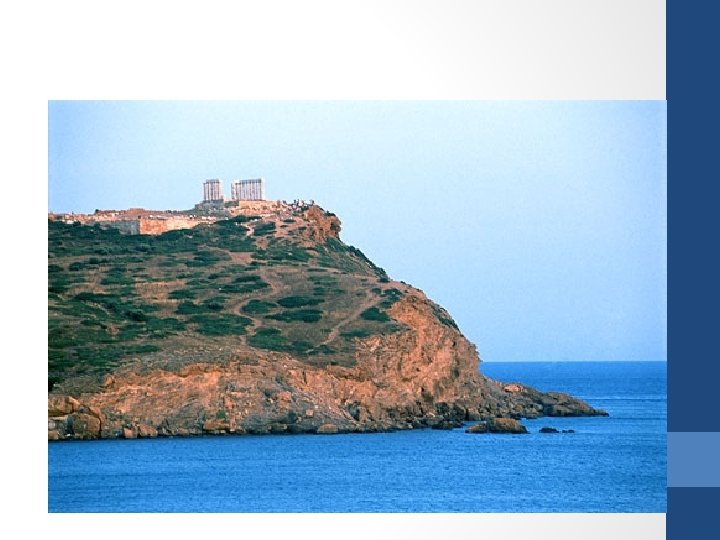


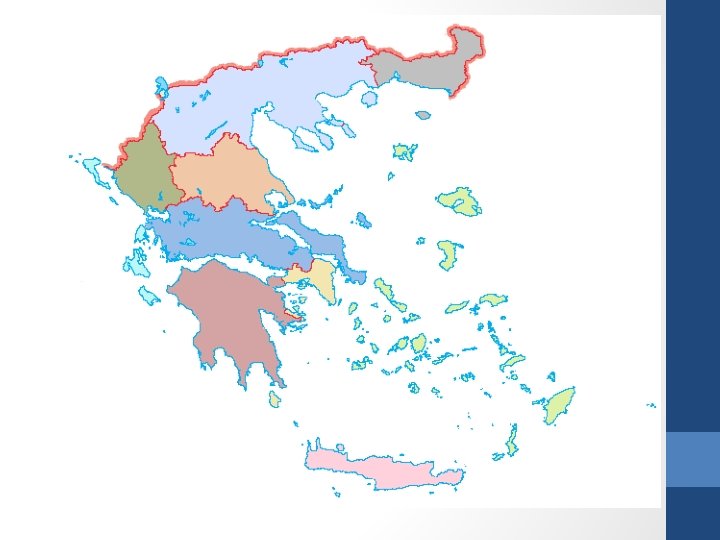
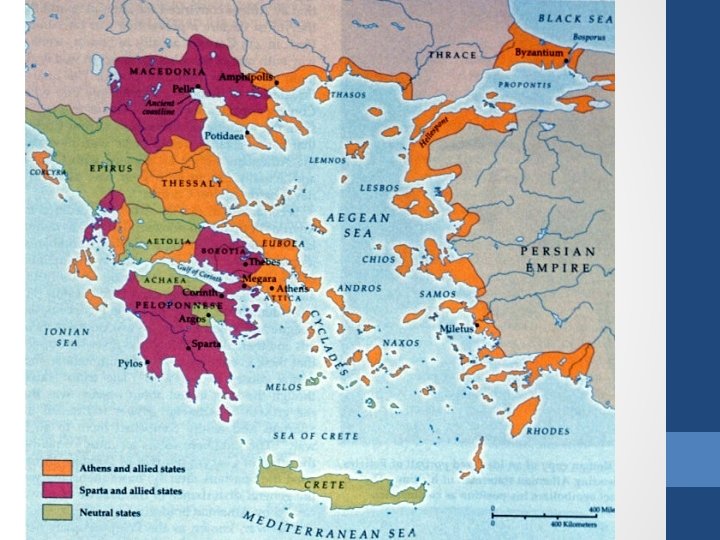
Mountainous peninsula that goes into the eastern Mediterranean Sea • 25% of the land can be cultivated • Mild Climate (Grapes, Olive Trees) • Coastline very rough and mountainous • Jutting coast (like fingers) – Natural Harbours • Near the sea – Developed transportation
Greek Wine • Greece is one of the oldest wine-producing regions in the world. • The earliest evidence of Greek wine has been dated to 6, 500 years ago where wine was produced on a household or communal basis. • In ancient times, as trade in wine became extensive, it was transported from end to end of the Mediterranean

Greek Wine Cups and Containers

Greek Olive Oil
Uses for Olive Oil • • It was a gift from the goddess Athena to the Athenians Daily Uses - Used for cooking, salads and perfume Medicinal - Used to heal scratches wounds and contusions Used to anoint the athletes at the Olympic Games
Very Mild Climate • Lots of time spent outside • Had to turn to fishing and trade because of lack of farm land • Mountains separated the country. Hard to unite • Trade introduced Greeks to other civilizations. Open to new ideas. • Greece was broken up into individual city states – Called Polis

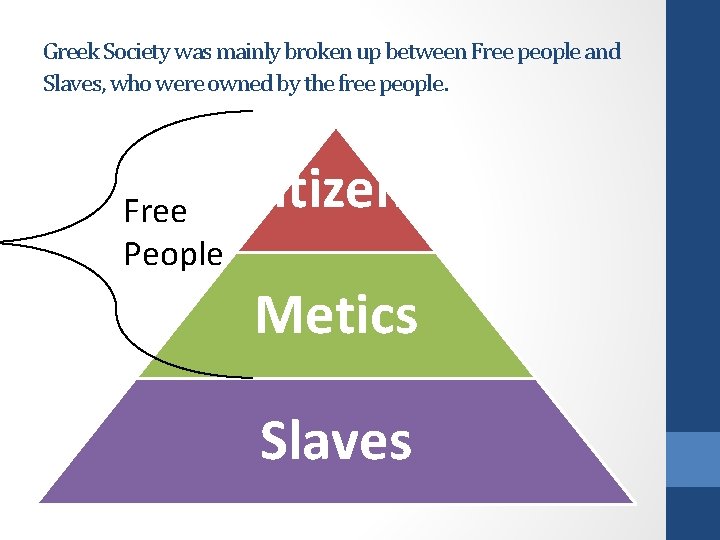
Greek Society was mainly broken up between Free people and Slaves, who were owned by the free people. Free People Citizens Metics Slaves
Citizens • A citizen was born with Athenian parents • They were the most powerful group, that could take part in the government of the Polis. • After compulsory service in the army they were expected to be government officials and take part in Jury Service.
Metics • A metic was of foreign birth that had migrated to Athens, to either trade or practice a craft. • A metic had to pay taxes and sometimes required to serve in the army. • However, they could never achieve full rights of a Citizen, neither could they own houses or land were not allowed to speak in law courts
Slaves • Slaves were used as servants and labourers, without any legal rights. • Sometimes the slaves were prisoners of war or bought from foreign slave traders. • Although many slaves lived closely with their owners, few were skilled craftsmen and even fewer were paid.
Women • The social classes applied to men only, as women all took their social and legal status from their husband or their male partner. • Women in ancient Greece were not permitted to take part in public life.
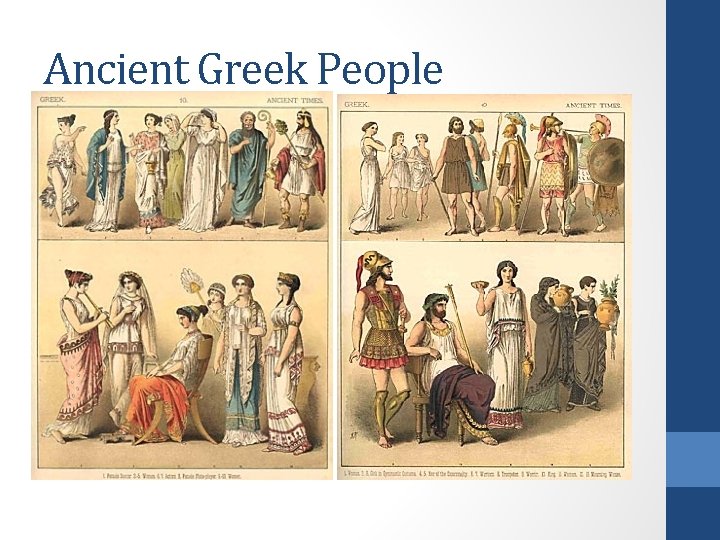
Ancient Greek People
Qualifications of a citizen • Only who were property owners and whose parents had been citizens • Foreign-born people and females were barred 1) Duties of a citizen • Develop political ability through self-government • Develop physical and artistic abilities through attendance at gymnasiums and theaters • Had to serve in the army and share in governing the city-state
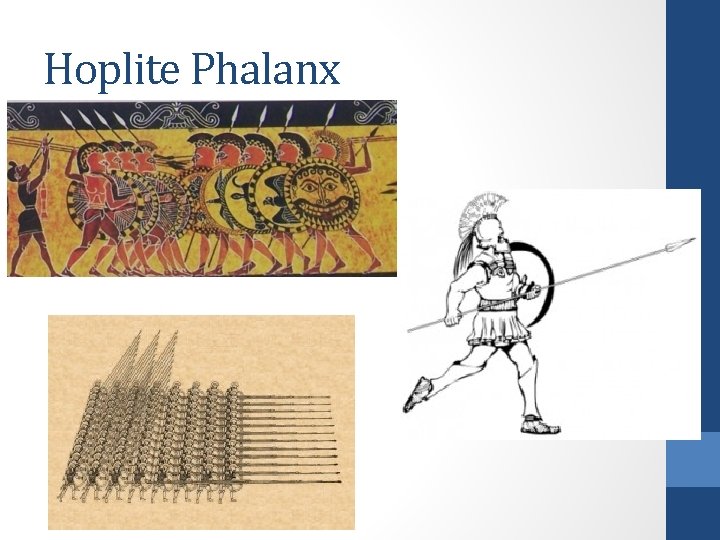
Hoplite Phalanx
Rights of the citizen • Every citizen given a voice in government • Free to have political discussions • Slaves did all the work for these people so they could concentrate on local affairs

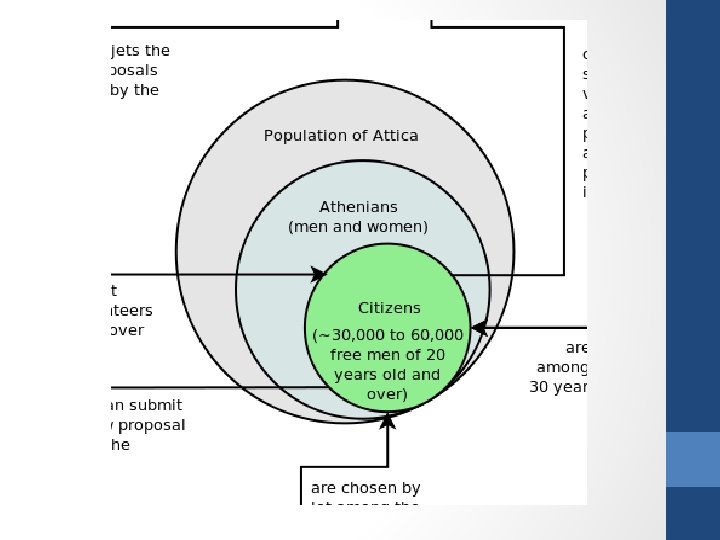
Greek Democracy • In Athens, only citizens got the right to vote (Land owning males, with Athenian heritage) • This was only 1/3 of the population of Athens and surrounding area • There were different bodies of government with different responsibilities but…. • It was a form of Direct democracy – Each citizen got to vote on laws or legislation directly
Greek Democracy • We are going to make decisions in class based on the Greek form of Democracy. • First Decision - You can wear a hat in class • Second Decision – 100% final Exam • Third Decision – The Girls can leave class early
- Slides: 26