Geography of Ancient Italy Cities Roma Capital of
- Slides: 25
Geography of Ancient Italy
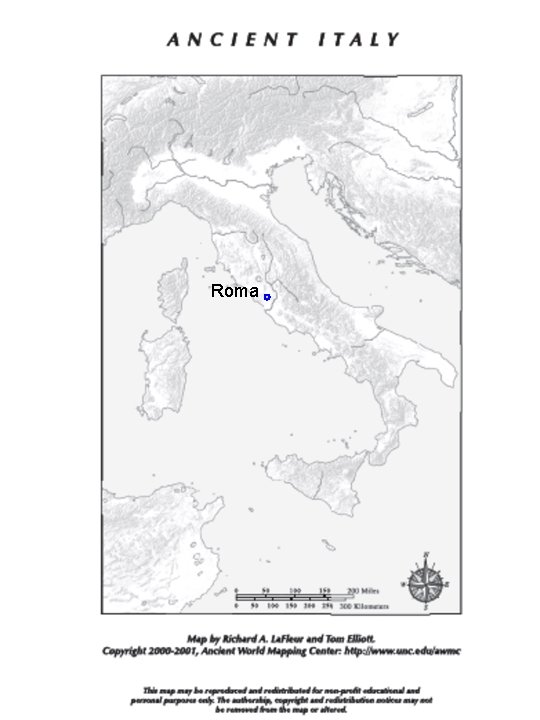
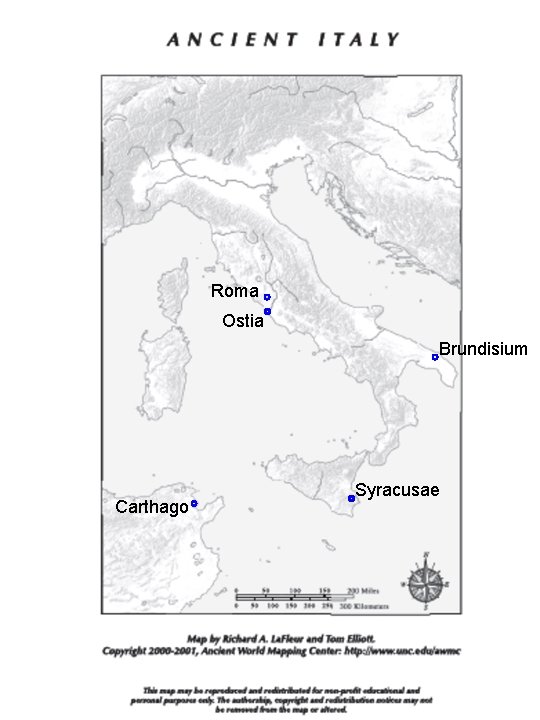
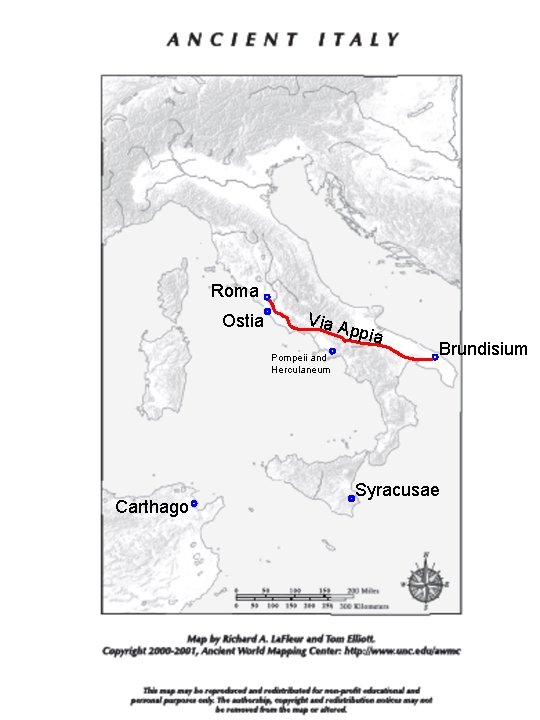
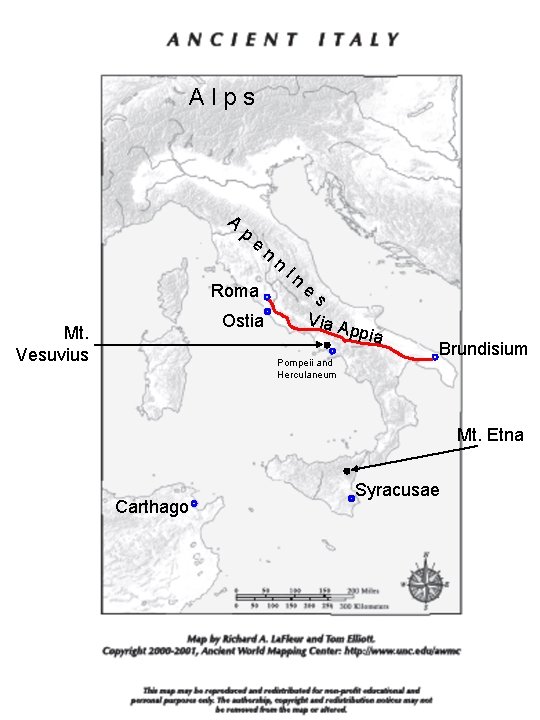
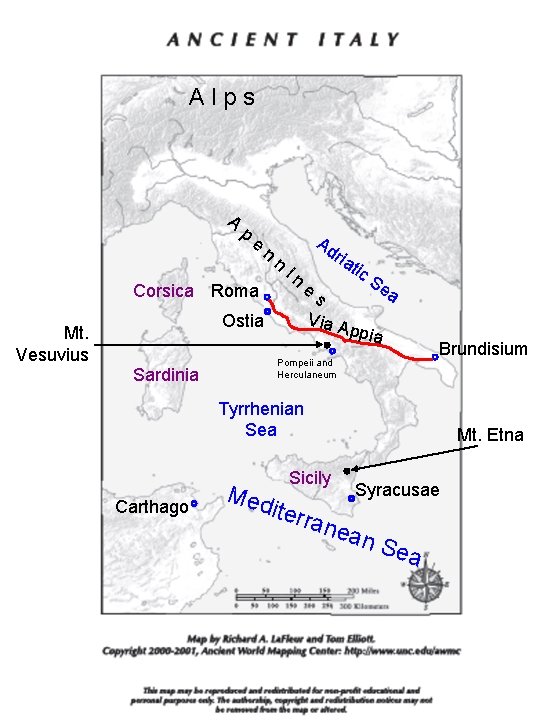
Cities • Roma – Capital of Italy – Seat of government for the Roman Empire – Nicknamed “The Mistress of Italy” because it was the chief city – Location: On the Tiber River, just north of the seaport of Ostia – Built on seven (7) hills – Named after Romulus, first king of Rome
Roma
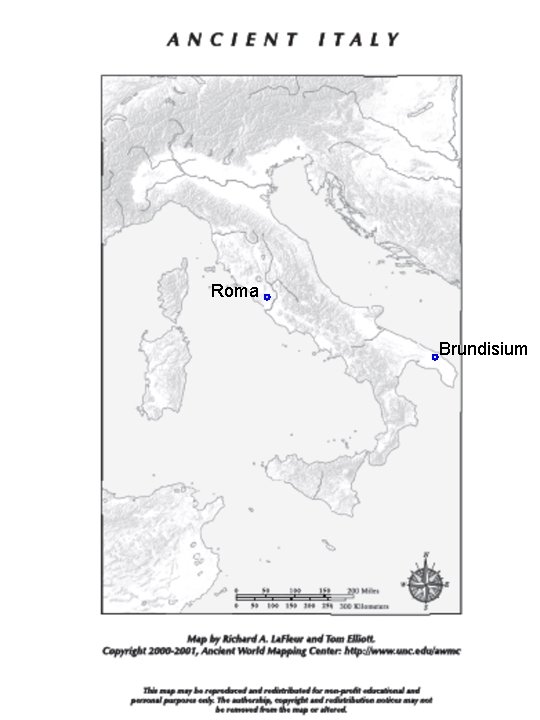
Cities • Brundisium – Seat of government for the province of Calabria – The city in which the Roman poet Vergil (Aeneid, Eclogues, Georgics) died – Located on the eastern shore of Italy on the Adriatic Sea – Eastern terminus (end) of the Via Appia
Roma Brundisium
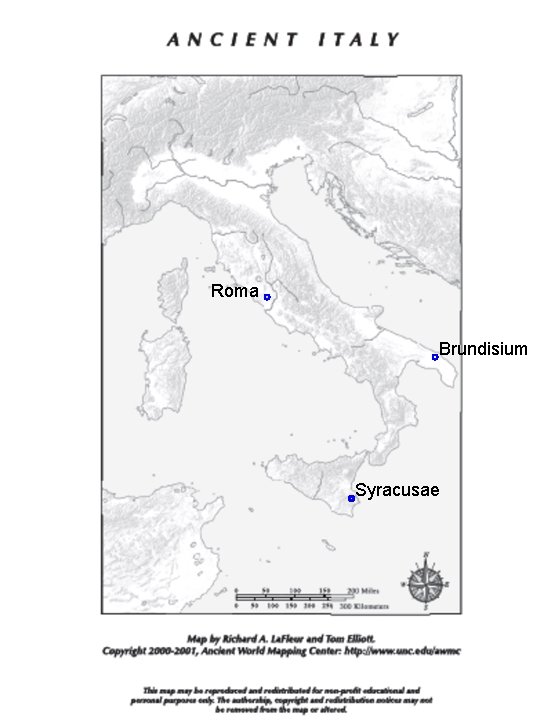
Cities • Syracusae – Seat of government for the province of Sicily – The city in which the Greek scientist Archimedes lived – Located on the eastern shore of Sicily on the Mediterranean Sea – Defeated by Rome in 241 BC and turned into a Roman province
Roma Brundisium Syracusae
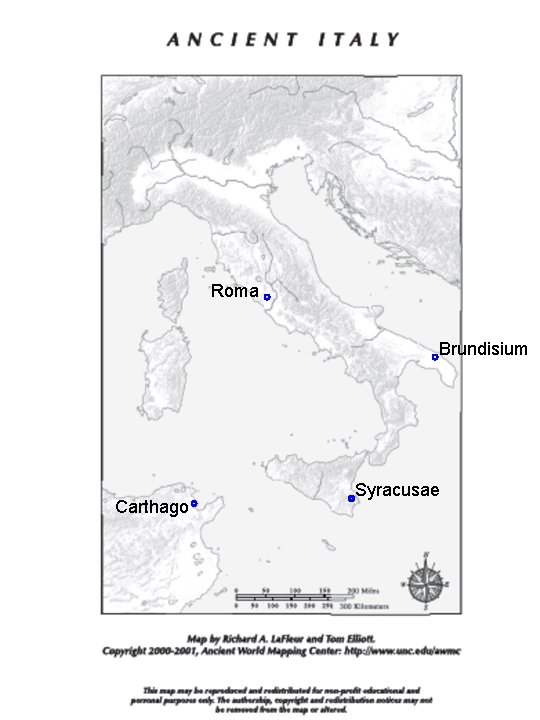
Cities • Carthago – The sworn enemy of Roma – Home to Hannibal, the greatest general to battle the Romans – Originally a Phoenician colony – Mythical home to Dido (from the Aeneid) – Fought three wars against Rome and lost all three – Located in modern Tunisia
Roma Brundisium Carthago Syracusae
Cities • Ostia – The seaport for Rome – Located at the mouth of the Tiber River on the Tyrrhenian Sea – Still a useful seaport today
Roma Ostia Brundisium Carthago Syracusae
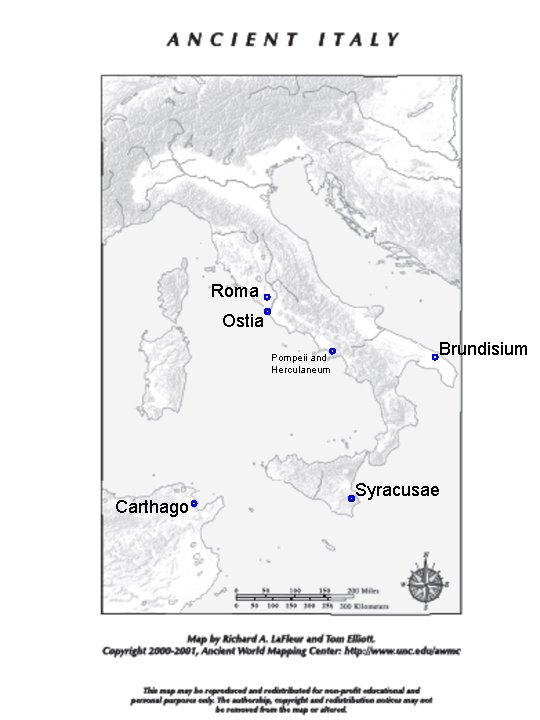
Cities • Pompeii and Herculaneum – Cities destroyed by the eruption of Mt. Vesuvius in AD 79 – The cities are almost perfectly preserved due to the ash and lava from the eruption – Excavating is going on there today – Now the cities are major tourist attractions
Roma Ostia Pompeii and Herculaneum Carthago Brundisium Syracusae
Road • Via Appia – The Appian Way, named for Appius Claudius, a statesman who ordered the road to be built in 312 BC – Made from stones, pebbles, rocks, and sand – Stretches from Roma to Brundisium – Still in use today
Roma Ostia Via A ppia Pompeii and Herculaneum Carthago Brundisium Syracusae
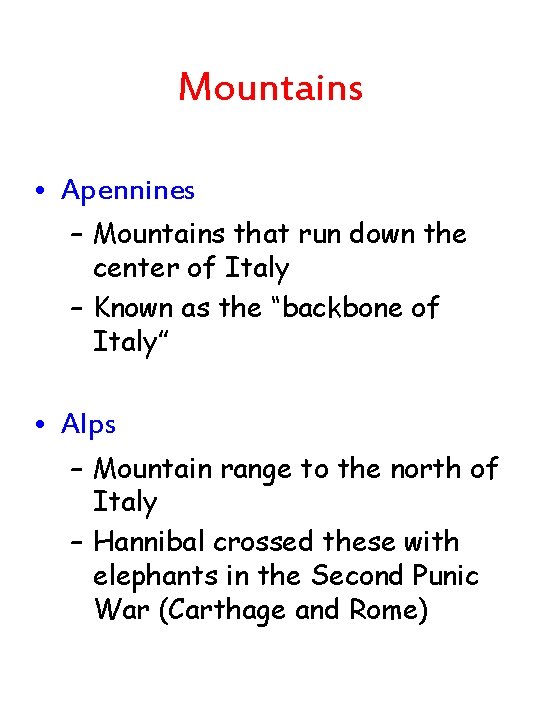
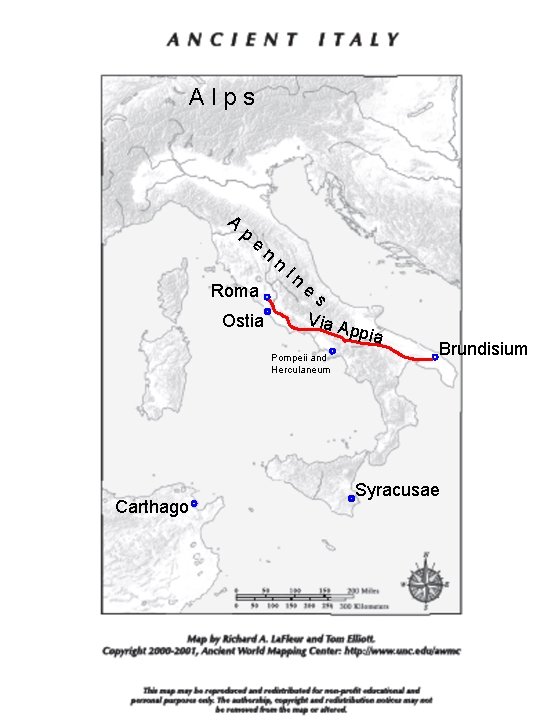
Mountains • Apennines – Mountains that run down the center of Italy – Known as the “backbone of Italy” • Alps – Mountain range to the north of Italy – Hannibal crossed these with elephants in the Second Punic War (Carthage and Rome)
Alps A p e n Roma Ostia n in e s Via A p Pompeii and Herculaneum Carthago pia Brundisium Syracusae
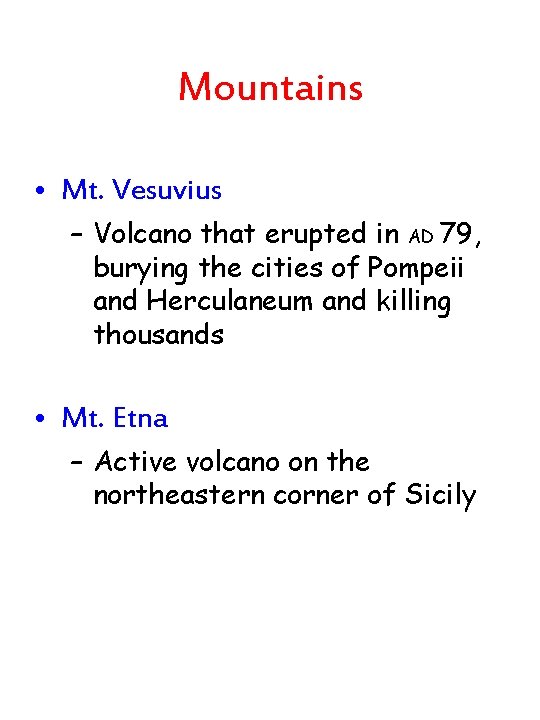
Mountains • Mt. Vesuvius – Volcano that erupted in AD 79, burying the cities of Pompeii and Herculaneum and killing thousands • Mt. Etna – Active volcano on the northeastern corner of Sicily
Alps A p e n Roma Ostia Mt. Vesuvius n in e s Via A p Pompeii and Herculaneum pia Brundisium Mt. Etna Carthago Syracusae
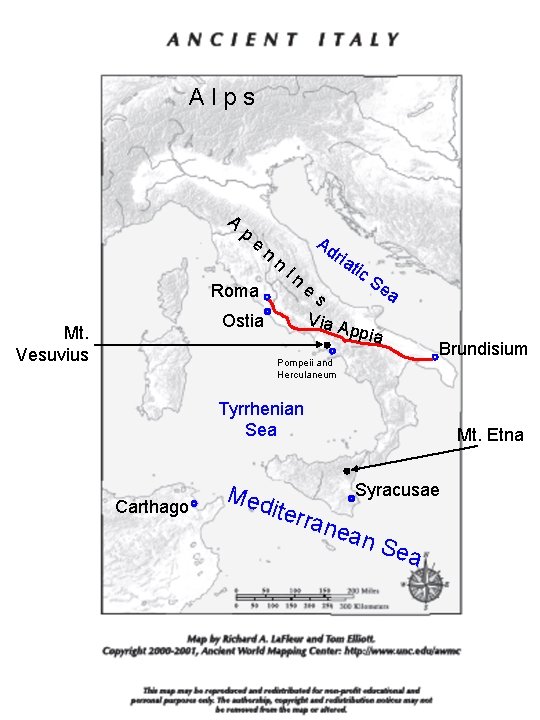
Seas • Mediterranean Sea – Located to the south – Literally means “sea in the middle of the land” – The Romans called it “Mare Nostrum”—Our Sea, because Rome held the land on both sides of it at the height of the Empire • Tyrrhenian Sea – Separates Italy from the islands of Corsica and Sardinia • Adriatic Sea – Separates Italy from the Balkan Peninsula (including Greece)
Alps A p e n Roma n Ad in ria e Ostia Mt. Vesuvius tic s Via A p Se a pia Brundisium Pompeii and Herculaneum Tyrrhenian Sea Carthago Med Mt. Etna iterr Syracusae ane a n Se a
Islands • Sicilia – Originally a Greek colony – Became a Roman province after its conquest in 241 BC • Sardinia – Originally a Phoenician colony – Roman province after First Punic War ended in 238 BC • Corsica – Originally a Greek, then a Phoenician colony – Roman province after First Punic War ended in 238 BC – Now a French island
Alps A p e n Corsica Roma n Ad in ria e Ostia Mt. Vesuvius tic s Via A p Se a pia Brundisium Pompeii and Herculaneum Sardinia Tyrrhenian Sea Carthago Mt. Etna Med Sicily iterr Syracusae ane a n Se a
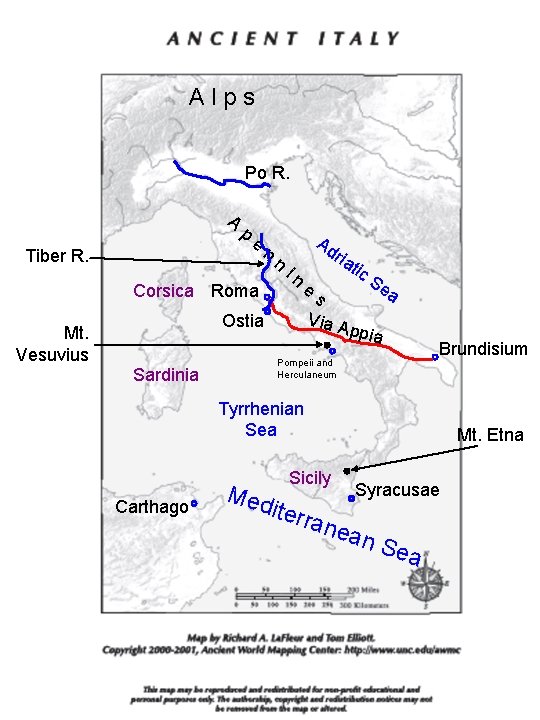
Rivers • Tiber – Rome’s river – Extends from Ostia into the Apennine Mountains – Deep enough to be navigable by ships • Po – River in the north of Italy – Usually considered the northern border of Italy during time of Caesar (100 -44 BC)
Alps Po R. A Tiber R. p e n Corsica Roma n Ad in ria e Ostia Mt. Vesuvius tic s Via A p Se a pia Brundisium Pompeii and Herculaneum Sardinia Tyrrhenian Sea Carthago Mt. Etna Med Sicily iterr Syracusae ane a n Se a