
Geography LOCATION PLACE MOVEMENT REGION HUMANENVIRONMENT INTERACTION 1
- Slides: 9
Geography LOCATION PLACE MOVEMENT REGION HUMAN-ENVIRONMENT INTERACTION
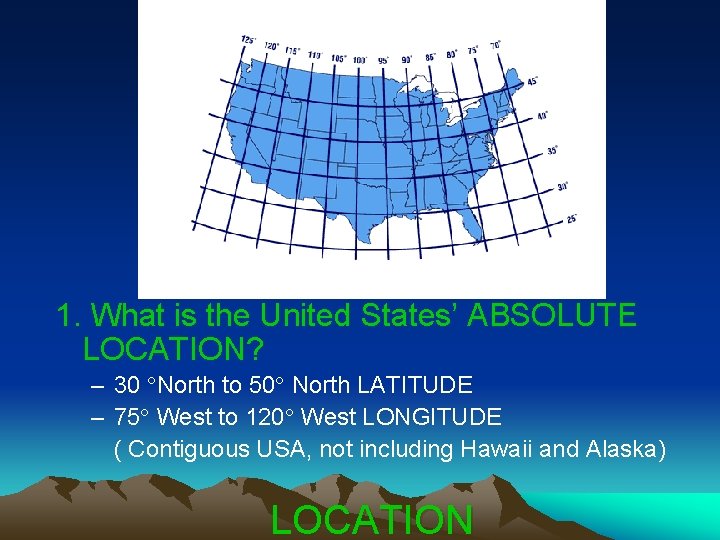
1. What is the United States’ ABSOLUTE LOCATION? – 30 North to 50 North LATITUDE – 75 West to 120 West LONGITUDE ( Contiguous USA, not including Hawaii and Alaska) LOCATION
1. What is the United States’ RELATIVE LOCATION? – South of Canada – North of Mexico – Between the Atlantic and Pacific Oceans 1. How has the country’s relative location changed over time? – Canada use to be part of Great Britain – Mexico use to part of Spain – The USA was originally just the 13 colonies on Atlantic coast…not all the way to the Pacific!!! LOCATION
PLACE 2. What are the physical and human characteristics of the United States? - Landforms…mountains; plains; deserts; bodies of water; vegetation, climate - Cultural diversity (melting pot); population density in East; Elderly in Florida…
MOVEMENT 3. How have people, goods, and ideas moved between places? – Bering Strait (Native Americans arrival) – European settlers arrival (Jamestown, VA) – Westward Expansion (Expansion of slavery? ) – “Rust Belt” loses population to “Sun Belt”
REGION 4. How areas of the United States similar to and different from other places? – All regions have: towns, cities, counties, states… – Regions differ: land, resources, people
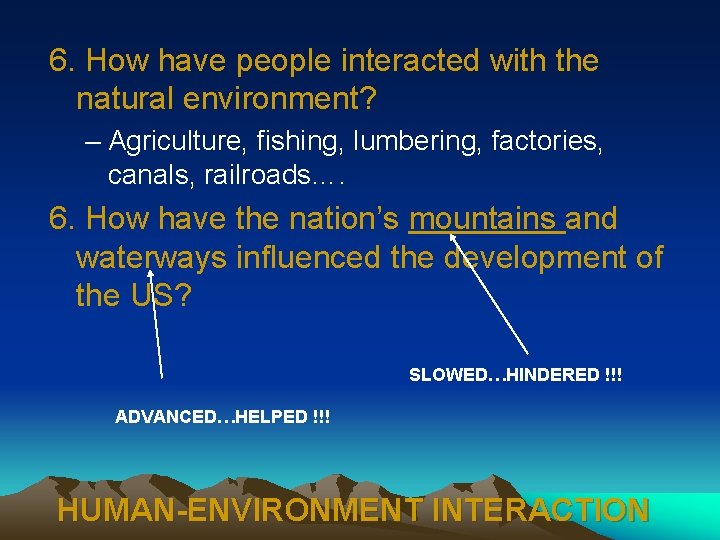
6. How have people interacted with the natural environment? – Agriculture, fishing, lumbering, factories, canals, railroads…. 6. How have the nation’s mountains and waterways influenced the development of the US? SLOWED…HINDERED !!! ADVANCED…HELPED !!! HUMAN-ENVIRONMENT INTERACTION
MOVEMENT HUMAN-ENVIRONMENT INTERACTION 7. What have been the major patterns of immigration and movement of people over the course of the country’s history? - Eastward…from Asia (Bering Strait) to North America Westward…from Europe to Atlantic Coast Westward…from Africa to Caribbean Northward…from Mexico to the Southwest USA
OLEAN , NEW YORK • LOCATION – Absolute: 42 N 78 W – Relative: Southeast of Buffalo • PLACE – Allegany River; Rock City • MOVEMENT – Erie Canal connects Olean to NY…Buffalo…Chicago • REGION – Southern Tier; Enchanted Mountain Region • HUMAN- ENVIRONMENT INTERACTION – Genesee Canal; Erie Railroad – Urbanization; Industrialization; Agriculture…