
Geography Landmark Human and Physical features of South

- Slides: 12
Geography Landmark Human and Physical features of South America By Josh Hill
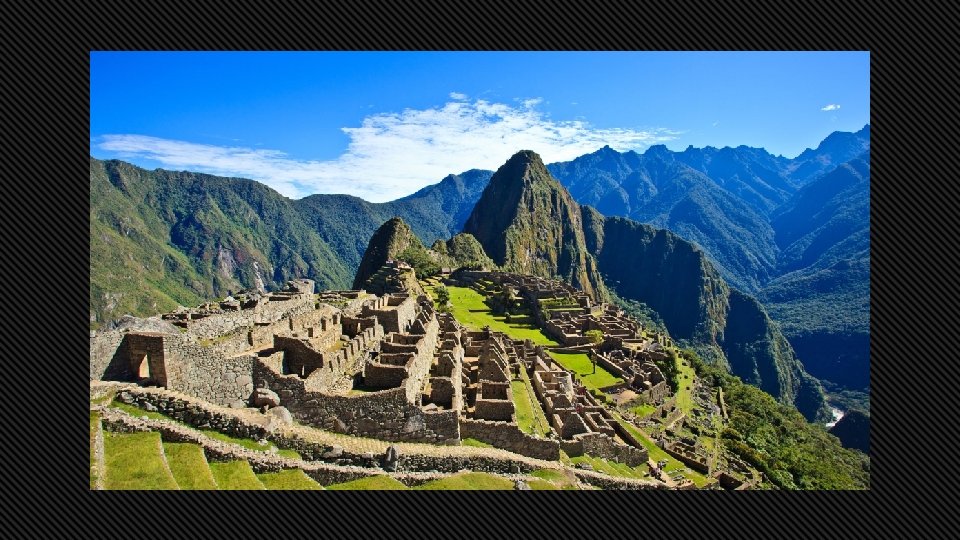
Machu Picchu is a historical Inca site located in Peru, South America. The Incas (a South American tribe) built the city on a beautiful mountain ridge, 2430 m above sea level. Human features: Machu Picchu The Incas built houses , fields and temples by cutting rock on the mountain until it was flat enough to build on. When the Spanish invaded Peru, the Incas left the Machu Picchu. Nobody knows why, but some think it was because of the diseases that Europe had back then. The city was then left… The Machu Picchu is very hard to get to because its so high in the mountains, it only has one way in and is surrounded by a stone wall.
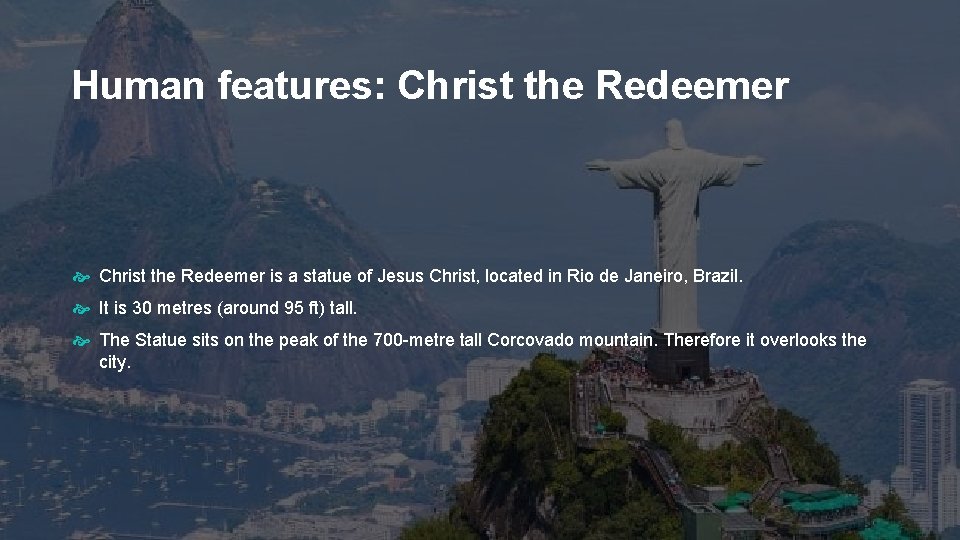
Human features: Christ the Redeemer is a statue of Jesus Christ, located in Rio de Janeiro, Brazil. It is 30 metres (around 95 ft) tall. The Statue sits on the peak of the 700 -metre tall Corcovado mountain. Therefore it overlooks the city.
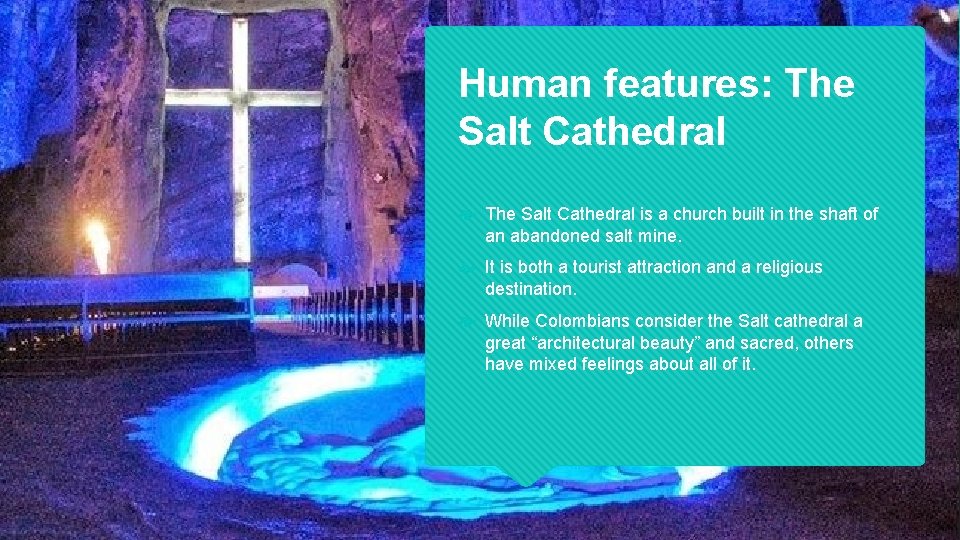
Human features: The Salt Cathedral is a church built in the shaft of an abandoned salt mine. It is both a tourist attraction and a religious destination. While Colombians consider the Salt cathedral a great “architectural beauty” and sacred, others have mixed feelings about all of it.
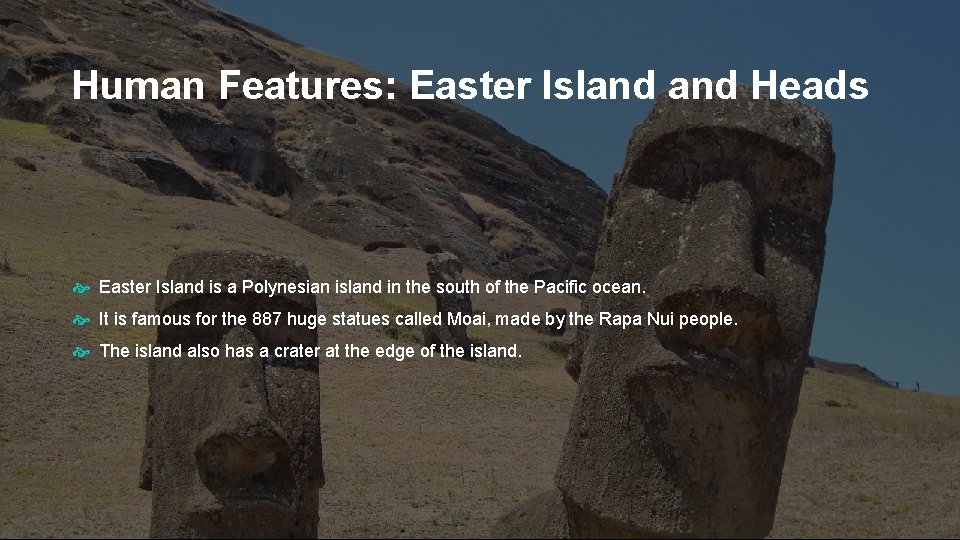
Human Features: Easter Island Heads Easter Island is a Polynesian island in the south of the Pacific ocean. It is famous for the 887 huge statues called Moai, made by the Rapa Nui people. The island also has a crater at the edge of the island.
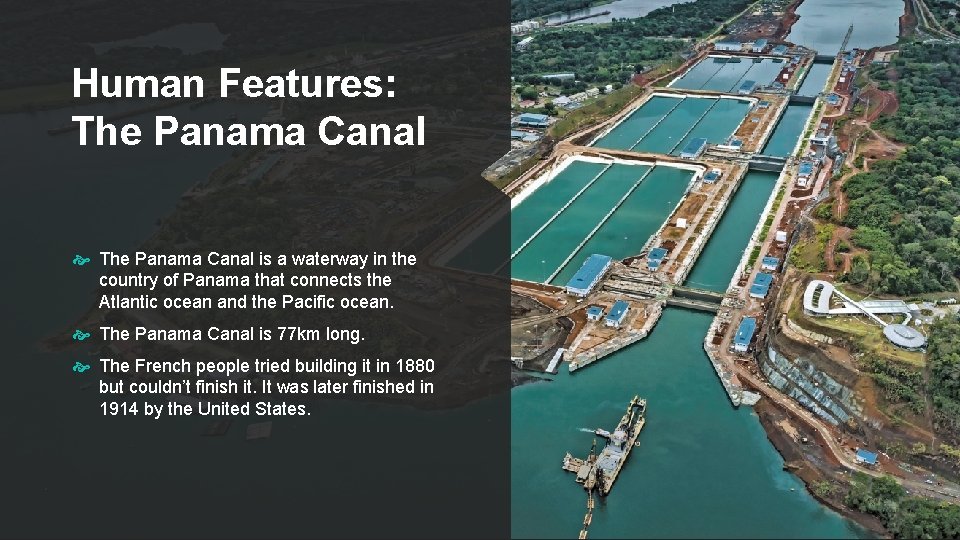
Human Features: The Panama Canal is a waterway in the country of Panama that connects the Atlantic ocean and the Pacific ocean. The Panama Canal is 77 km long. The French people tried building it in 1880 but couldn’t finish it. It was later finished in 1914 by the United States.
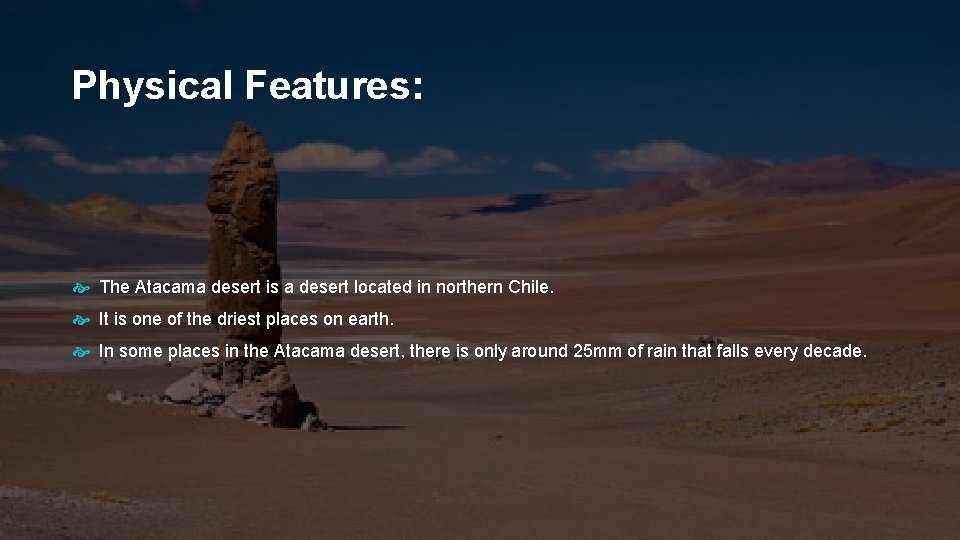
Physical Features: The Atacama desert is a desert located in northern Chile. It is one of the driest places on earth. In some places in the Atacama desert, there is only around 25 mm of rain that falls every decade.
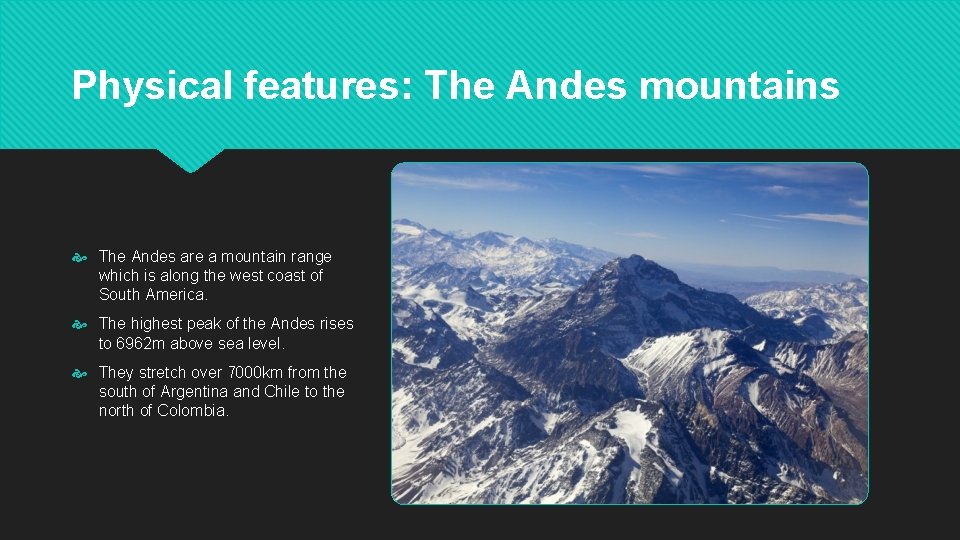
Physical features: The Andes mountains The Andes are a mountain range which is along the west coast of South America. The highest peak of the Andes rises to 6962 m above sea level. They stretch over 7000 km from the south of Argentina and Chile to the north of Colombia.
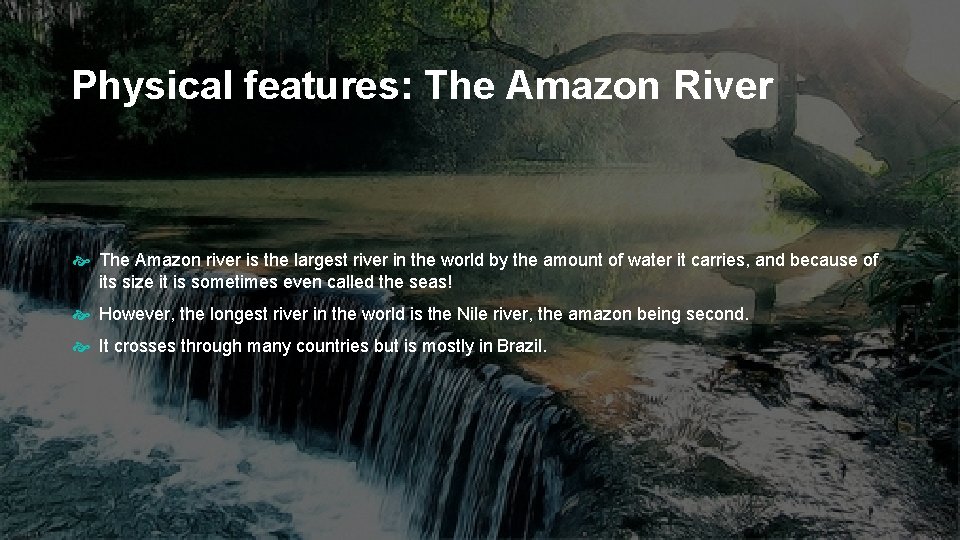
Physical features: The Amazon River The Amazon river is the largest river in the world by the amount of water it carries, and because of its size it is sometimes even called the seas! However, the longest river in the world is the Nile river, the amazon being second. It crosses through many countries but is mostly in Brazil.
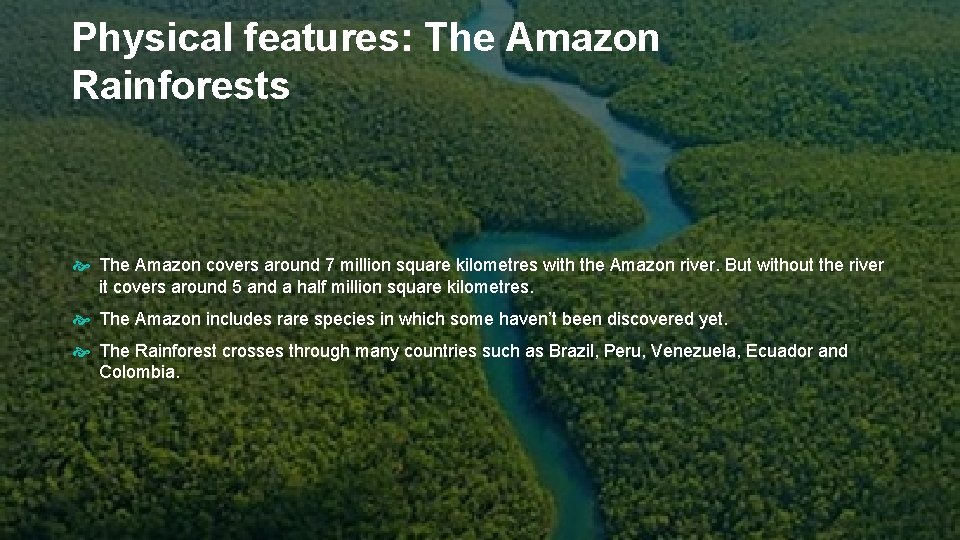
Physical features: The Amazon Rainforests The Amazon covers around 7 million square kilometres with the Amazon river. But without the river it covers around 5 and a half million square kilometres. The Amazon includes rare species in which some haven’t been discovered yet. The Rainforest crosses through many countries such as Brazil, Peru, Venezuela, Ecuador and Colombia.
Thank you for watching