
Geography Antarctica How Cold is Antarctica and why
![Geography Antarctica How Cold is Antarctica and why? [Date] Today I will: - Be](https://slidetodoc.com/presentation_image_h2/dc9e7d3daa8072d0606052c8ba44f46b/image-1.jpg "Geography Antarctica How Cold is Antarctica and why? [Date] Today I will: - Be")

- Slides: 8
Geography Antarctica How Cold is Antarctica and why? [Date] Today I will: - Be able to work out the range of world temperatures - Be able to explain why Antarctica is so cold
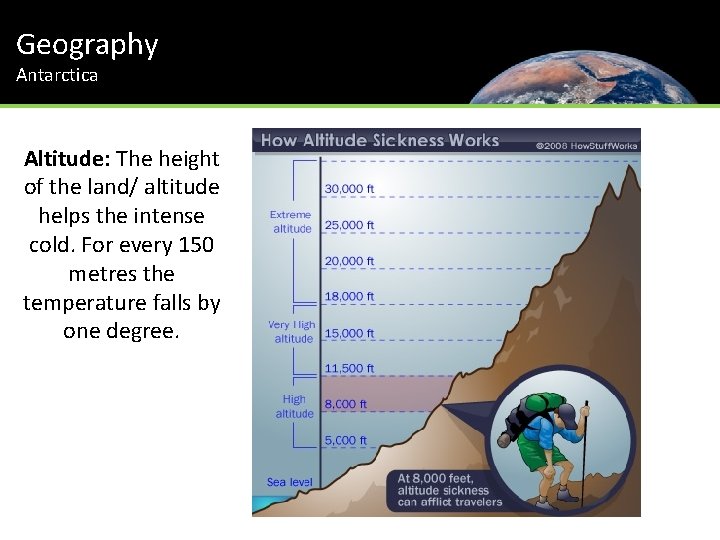
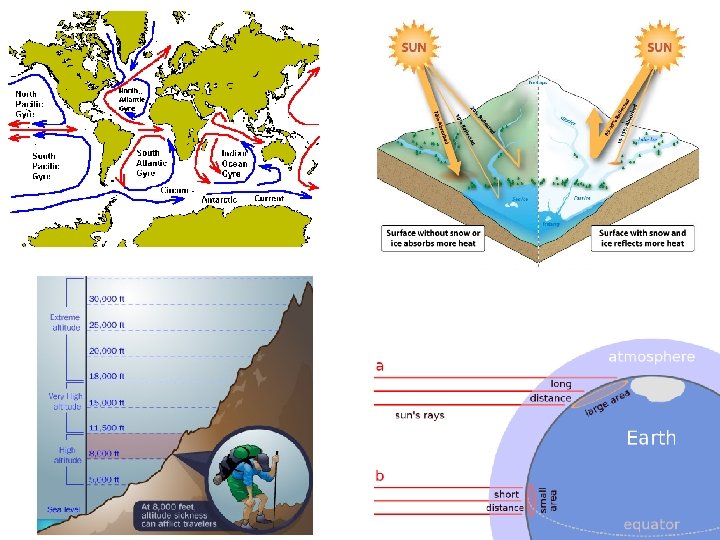
Geography Antarctica Altitude: The height of the land/ altitude helps the intense cold. For every 150 metres the temperature falls by one degree.
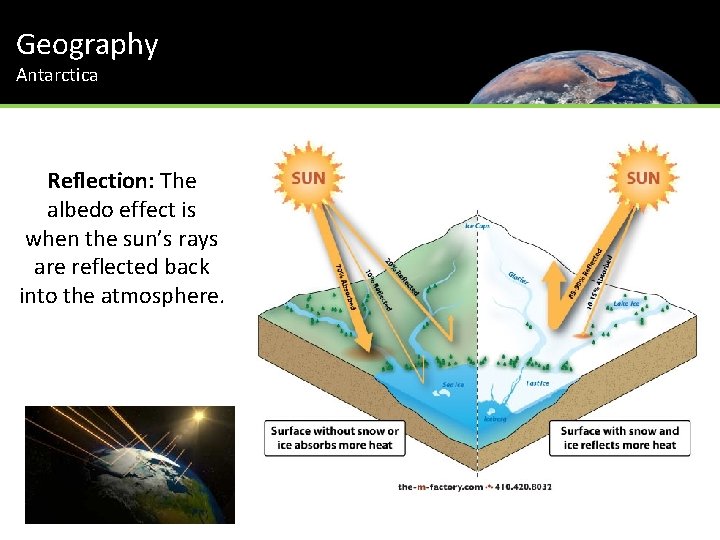
Geography Antarctica Reflection: The albedo effect is when the sun’s rays are reflected back into the atmosphere.
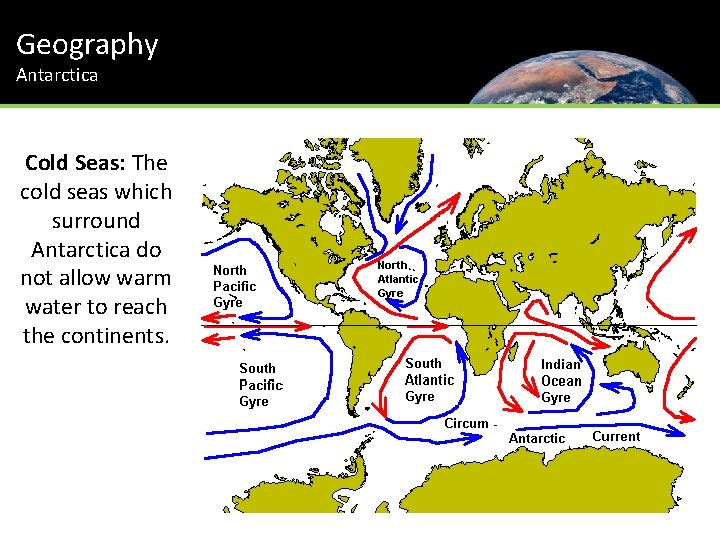
Geography Antarctica Cold Seas: The cold seas which surround Antarctica do not allow warm water to reach the continents.
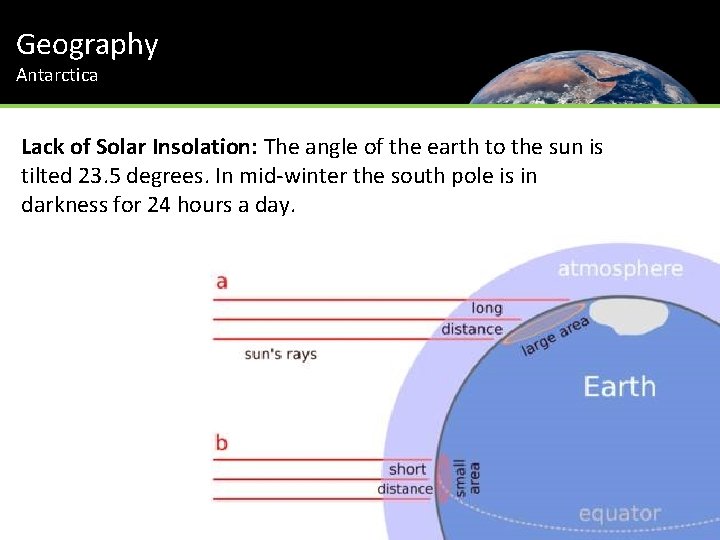
Geography Antarctica Lack of Solar Insolation: The angle of the earth to the sun is tilted 23. 5 degrees. In mid-winter the south pole is in darkness for 24 hours a day.
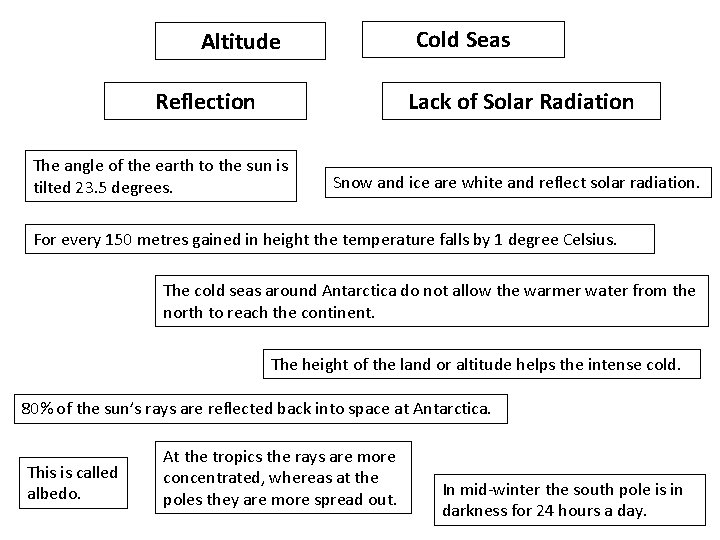
Cold Seas Altitude Reflection Lack of Solar Radiation The angle of the earth to the sun is tilted 23. 5 degrees. Snow and ice are white and reflect solar radiation. For every 150 metres gained in height the temperature falls by 1 degree Celsius. The cold seas around Antarctica do not allow the warmer water from the north to reach the continent. The height of the land or altitude helps the intense cold. 80% of the sun’s rays are reflected back into space at Antarctica. This is called albedo. At the tropics the rays are more concentrated, whereas at the poles they are more spread out. In mid-winter the south pole is in darkness for 24 hours a day.
Geography Antarctica
Geography Antarctica Altitude Cold Seas Reflection The angle of the earth to the sun is tilted 23. 5 degrees. Lack of Solar Radiation Snow and ice are white and reflect solar radiation. For every 150 metres gained in height the temperature falls by 1 degree Celsius. The cold seas around Antarctica do not allow the warmer water from the north to reach the continent. The height of the land or altitude helps the intense cold. 80% of the sun’s rays are reflected back into space at Antarctica. This is called albedo. At the tropics the rays are more concentrated, whereas at the poles they are more spread out. In mid-winter the south pole is in darkness for 24 hours a day.