
Geography 8 Lecture 10 Responses to the Centrifugal
- Slides: 19
Geography 8 Lecture 10: Responses to the Centrifugal City
Keywords • • • • 5 th Amendment “takings clause” Eminent domain Kelo v New London CT Urban government Stakeholders Comprehensive Zoning Standard State Zoning Act, 1926 NIMBY LULU Exclusive-use zoning Comprehensive Plan Urban livability New Urbanism Mixed-Use Growth Boundaries Impact Fees
New Landscapes of Sprawl • • The Geography of Nowhere Mass Consumption It’s All About the Car Bulkification
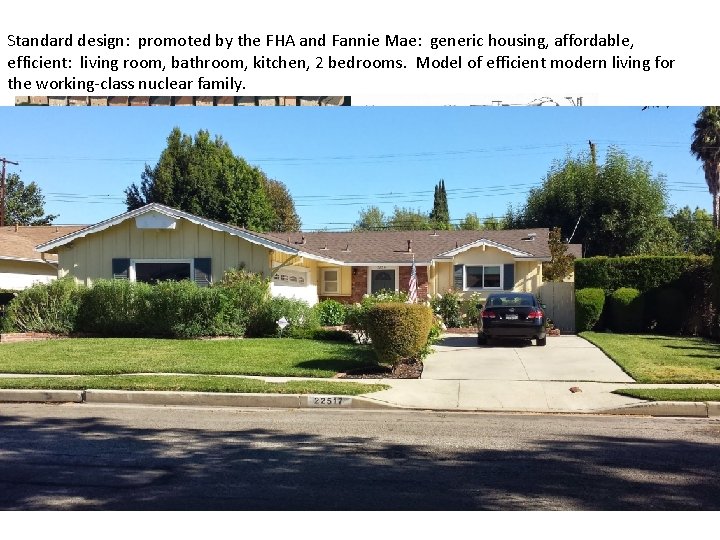
The Geography of Nowhere • • Mass produced communities Uniform landscapes No sense of “place” The FHA House
Standard design: promoted by the FHA and Fannie Mae: generic housing, affordable, efficient: living room, bathroom, kitchen, 2 bedrooms. Model of efficient modern living for the working-class nuclear family.
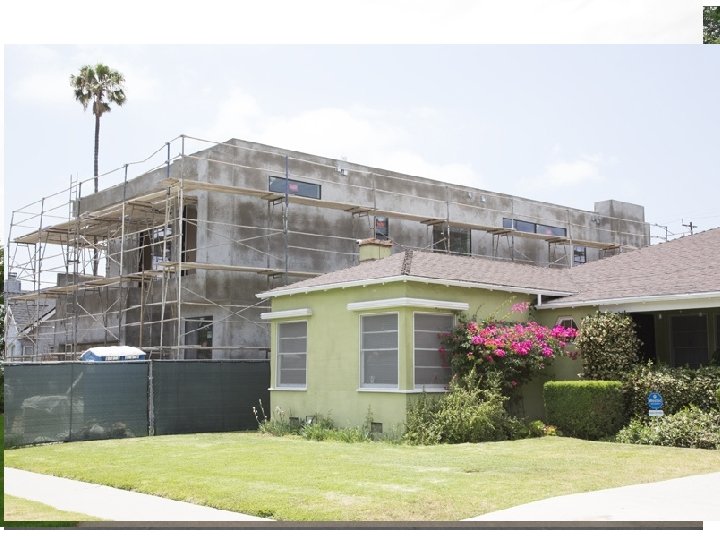
Mass Consumption • Search for bigger, better – More room to put all the stuff • Size drives market – bigger house=more wealth • The car gets a room of its own • The garage: from small shed in the back to 3, even 4 car garages • “Bulkification” – Larry Ford, Mc. Mansions
The Problems with Sprawl 1. Wasteful: land, energy, our time. 2. It creates an affluence that is shallow, superficial, crass and materialistic. 3. Makes rational, long-term planning almost impossible. 4. Most planning is at the municipal level—city government. 1. Focus is on a) Zoning 2. And on b) Livability
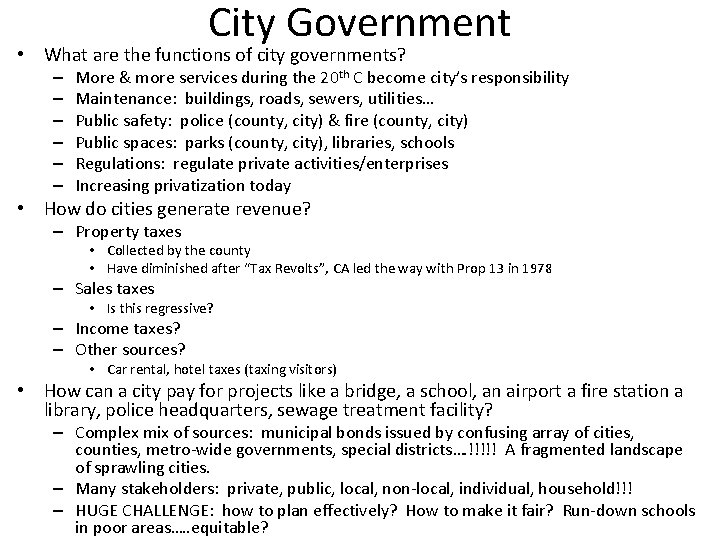
City Government • What are the functions of city governments? – – – More & more services during the 20 th C become city’s responsibility Maintenance: buildings, roads, sewers, utilities… Public safety: police (county, city) & fire (county, city) Public spaces: parks (county, city), libraries, schools Regulations: regulate private activities/enterprises Increasing privatization today • How do cities generate revenue? – Property taxes • Collected by the county • Have diminished after “Tax Revolts”, CA led the way with Prop 13 in 1978 – Sales taxes • Is this regressive? – Income taxes? – Other sources? • Car rental, hotel taxes (taxing visitors) • How can a city pay for projects like a bridge, a school, an airport a fire station a library, police headquarters, sewage treatment facility? – Complex mix of sources: municipal bonds issued by confusing array of cities, counties, metro-wide governments, special districts…. !!!!! A fragmented landscape of sprawling cities. – Many stakeholders: private, public, local, non-local, individual, household!!! – HUGE CHALLENGE: how to plan effectively? How to make it fair? Run-down schools in poor areas…. . equitable?
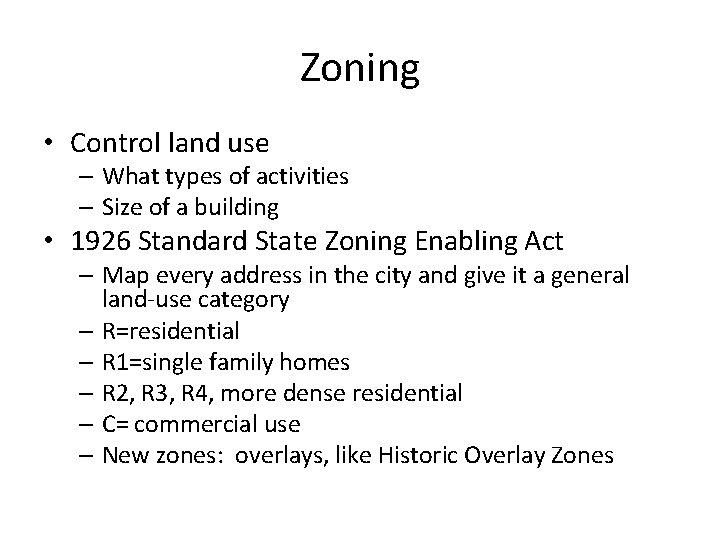
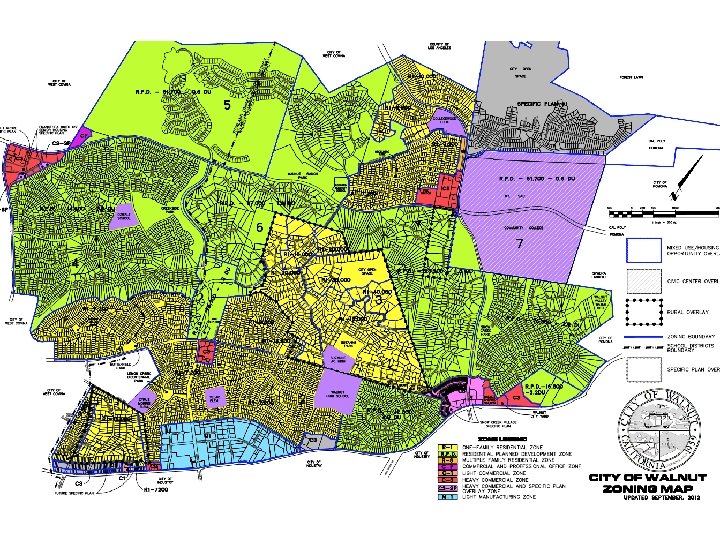
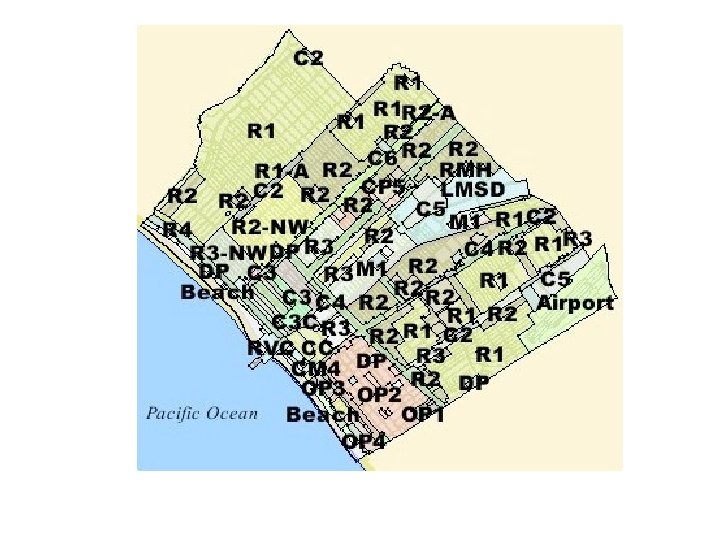
Zoning • Control land use – What types of activities – Size of a building • 1926 Standard State Zoning Enabling Act – Map every address in the city and give it a general land-use category – R=residential – R 1=single family homes – R 2, R 3, R 4, more dense residential – C= commercial use – New zones: overlays, like Historic Overlay Zones
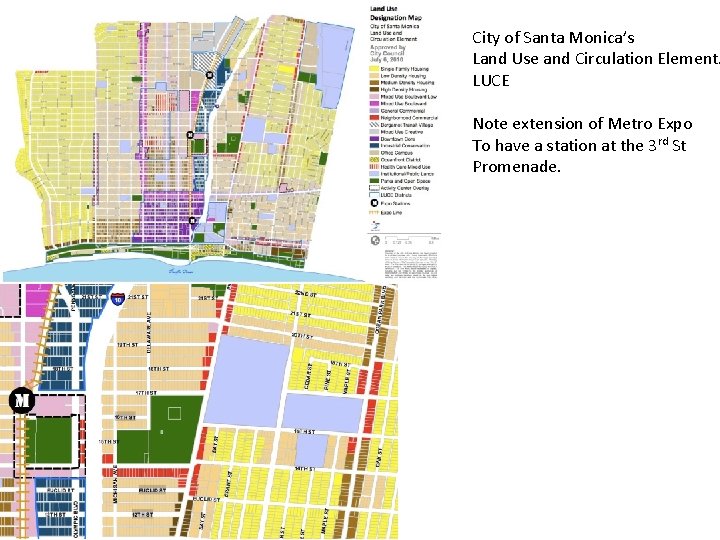
City of Santa Monica’s Land Use and Circulation Element. LUCE Note extension of Metro Expo To have a station at the 3 rd St Promenade.
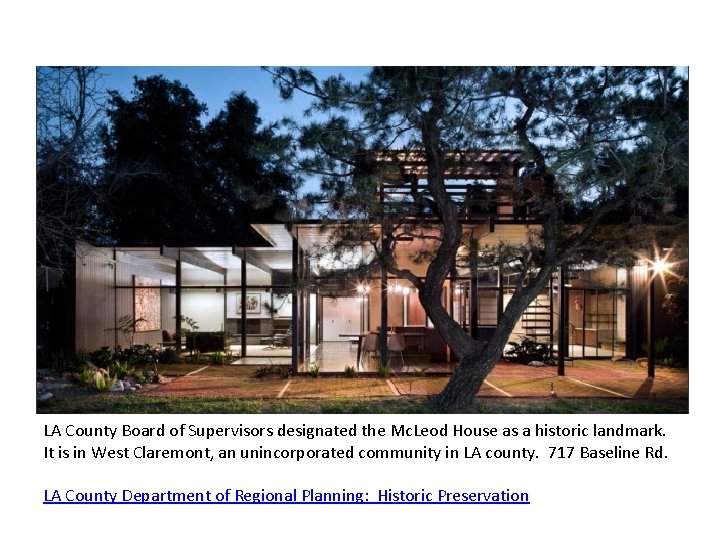
LA County Board of Supervisors designated the Mc. Leod House as a historic landmark. It is in West Claremont, an unincorporated community in LA county. 717 Baseline Rd. LA County Department of Regional Planning: Historic Preservation
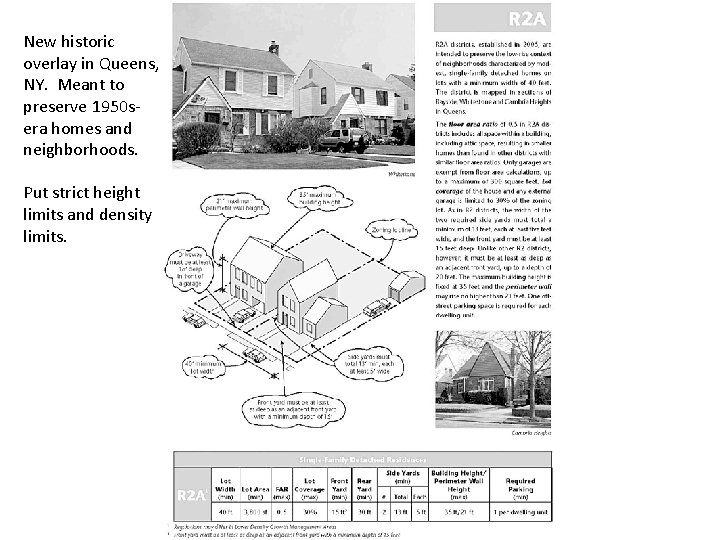
New historic overlay in Queens, NY. Meant to preserve 1950 sera homes and neighborhoods. Put strict height limits and density limits.
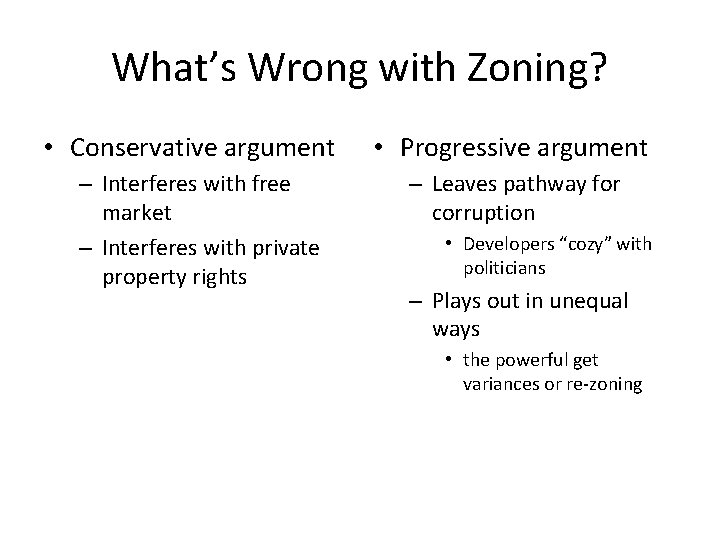
What’s Wrong with Zoning? • Conservative argument – Interferes with free market – Interferes with private property rights • Progressive argument – Leaves pathway for corruption • Developers “cozy” with politicians – Plays out in unequal ways • the powerful get variances or re-zoning
Other Criticisms of Zoning • Limits ability to do mixed-use development • Could exacerbate segregation (especially socio -economic) • Functionally segregates city and, therefore, promotes car use, car-based living
Eminent Domain • • 5 th Amendment: “takings clause” Land owner must be “compensated” Take-over must be for “public good” Kelo v New London, CT – Urban renewal project – Person’s home was taken by city and then given to private developer – Ruled 5 -4 in favor of developer
Livable Cities • New Urbanism—what is it? – Compact, mixed-use – TOD, transit-oriented design – Non-generic architecture • Runaway growth: NIMBYs and LULUs – Growth vs management • What makes a city “livable? – A “Happy City”: Charles Montgomery – Technology to make a better city: MIT’s Kent Larson – A “Walkable City”: Jeff Speck, urban planner