
GEOGRAPHY 5 WAYS TO LOOK AT EARTH Location
- Slides: 12
GEOGRAPHY
5 WAYS TO LOOK AT EARTH • Location • Regions • Place • Movement • Human-Environment Interactions
LOCATION – WHERE IS IT? • This is simply the area in which a place is on the map. • Cardinal Directions – North, South, East, West • Latitude/Longitude • Latitude is the distance north or south of the equator • Longitude is the distance east or west of the Prime Meridian
REGIONS • Regions are used to group places that have something in common: • History & Government • Population • Climate • Landforms
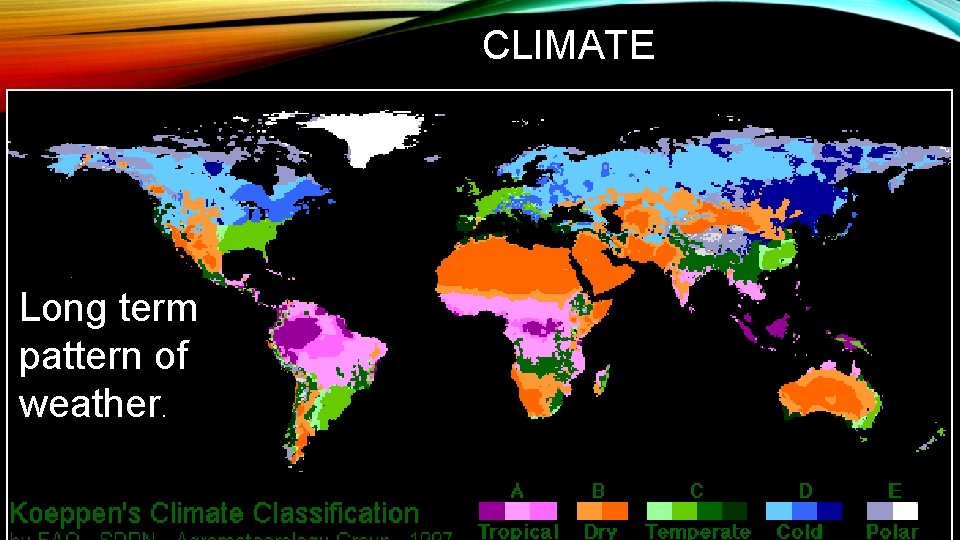
CLIMATE Long term pattern of weather.
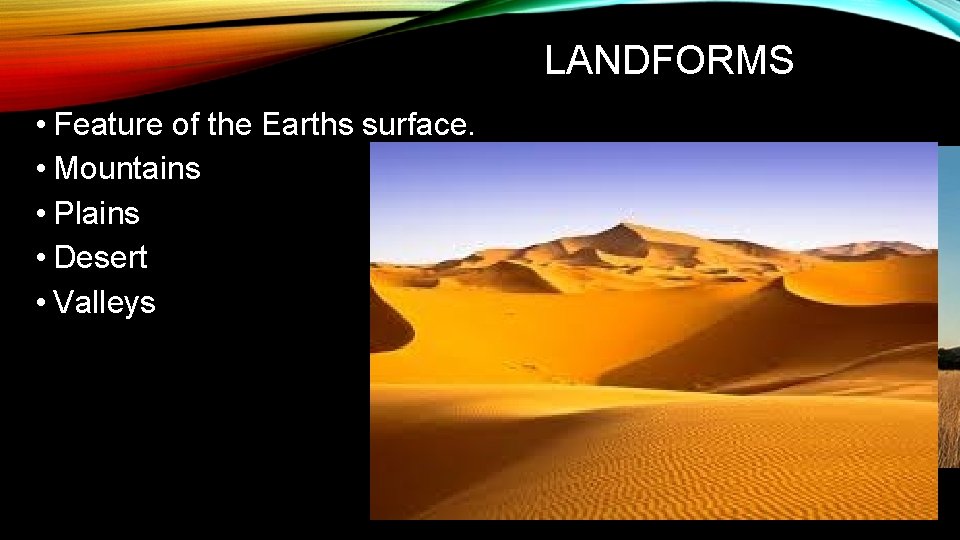
LANDFORMS • Feature of the Earths surface. • Mountains • Plains • Desert • Valleys
PLACE • Includes the human and physical features of a specific place. • Physical features are climate and landforms • Human features are how people live, work they do, religion they practice and the languages they speak.
MOVEMENT • How people, goods, and ideas get from one place to another. • Over history, this has grown due to technological advances. • People will bring their traditions and culture to these places, infusing it within other locations.
HUMAN-ENVIRONMENT INTERACTIONS • How people affect their environment or how natural surroundings affect people. People Affect Their Environment Affect on People
IMPORTANCE OF GEOGRAPHY & LOCATION
IMPORTANCE OF LOCATION • The location of a business, home, or city has a significant impact on how successful that specific place will be. • Ancient civilizations relied heavy on their location in the world, and their location ultimately determined their success.
FACTORS THE INFLUENCE LOCATION • What are the factors that influence the location of a city? List as many possibilities as you can.