
Geography 2 Human Geography Chapter 2 Globalization and
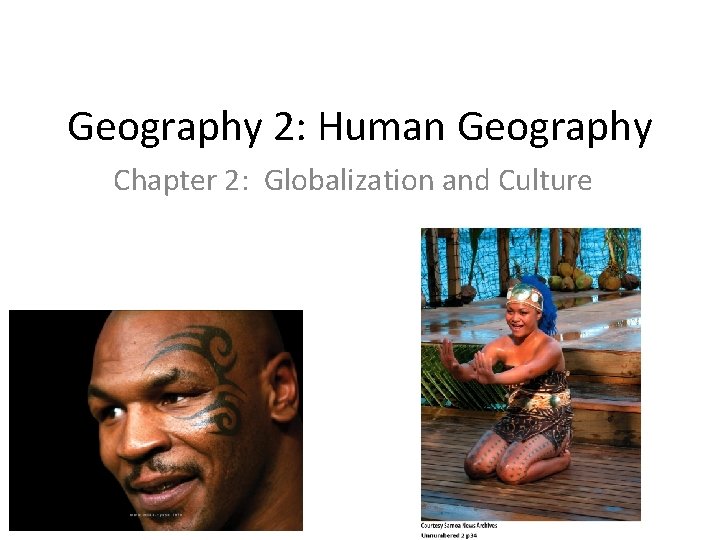
Geography 2: Human Geography Chapter 2: Globalization and Culture
Globalization • World-wide interconnectedness • Movement of capital, information, goods and services among huge MNCs, ignoring the role of national boundaries • Driven by – Quest for global markets – Technological advances: containerized shipping, the Internet, digitizing of information… – Lower costs for doing business (esp transportation) – More capital moving around the globe – Specific policies, organizations
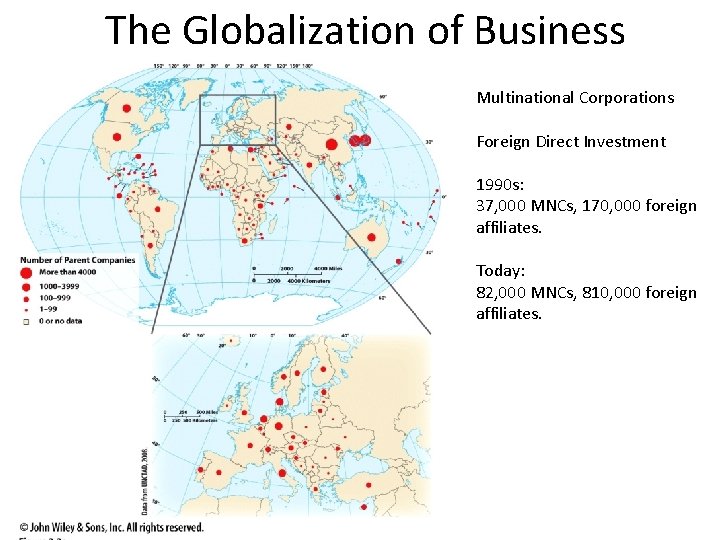
The Globalization of Business Multinational Corporations Foreign Direct Investment 1990 s: 37, 000 MNCs, 170, 000 foreign affiliates. Today: 82, 000 MNCs, 810, 000 foreign affiliates.
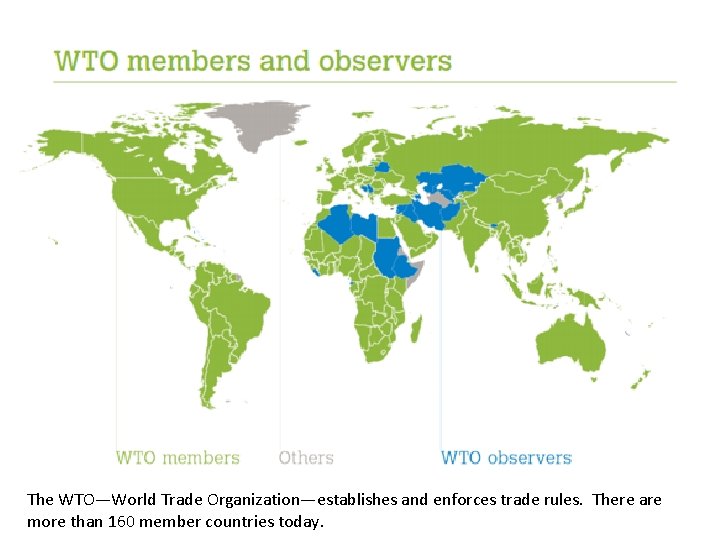
The WTO—World Trade Organization—establishes and enforces trade rules. There are more than 160 member countries today.
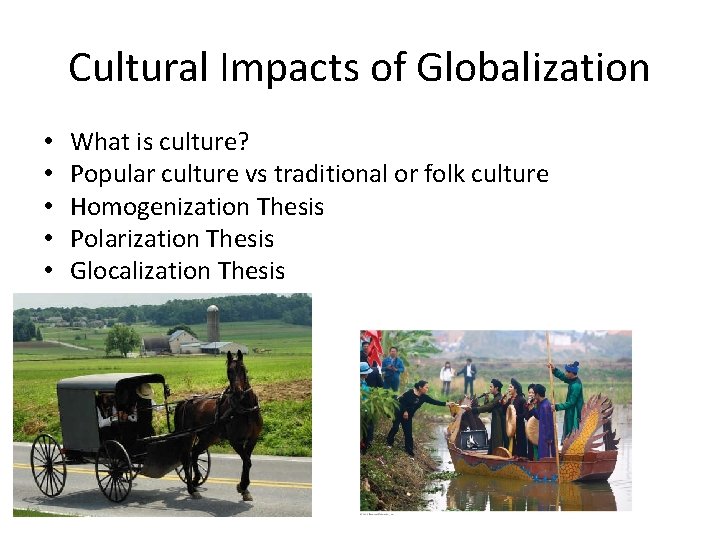
Cultural Impacts of Globalization • • • What is culture? Popular culture vs traditional or folk culture Homogenization Thesis Polarization Thesis Glocalization Thesis

Homogenization Thesis • Edward Relph’s “placelessness” • James Howard Kunstler’s “geography of nowhere” • How has culture become standardized globally?
Americanization • Economic processes shape cultural practices— esp MNCs • U. S. —economic power and cultural influence • Food: Mc. Donaldization • Entertainment • Values, attitudes—consumerism, freedom, individualism • Coca-Colonization—MNCs create a set of power relations similar to colonialism


Polarization • Increased sense of sociocultural identity as a result of globalization • Destabilizes societies • Backlash to homogenization • Rise of ethnic separatism, battles over identity • Dangerous, rise of global terrorism, criminal networks.
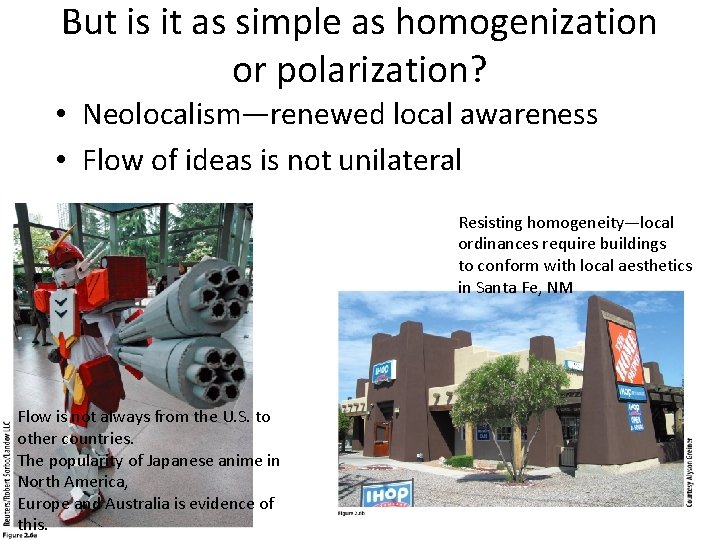
But is it as simple as homogenization or polarization? • Neolocalism—renewed local awareness • Flow of ideas is not unilateral Resisting homogeneity—local ordinances require buildings to conform with local aesthetics in Santa Fe, NM Flow is not always from the U. S. to other countries. The popularity of Japanese anime in North America, Europe and Australia is evidence of this.
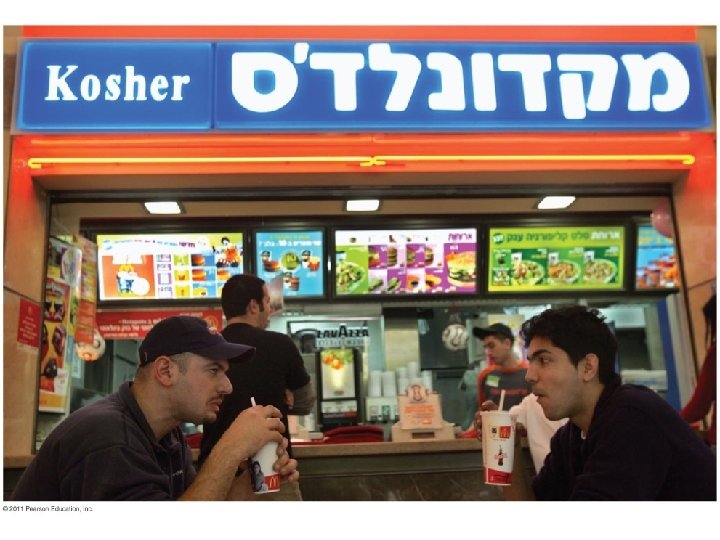
Glocalization • The local-global nexus • Both are changed • Dynamic nature of local and global relations— local forces become globlized and global forces become localized • True heterogeneity or a disguise for business as usual?


Commodification of Culture • What processes define cultural preferences? • Who owns culture? How is culture connected to identity?
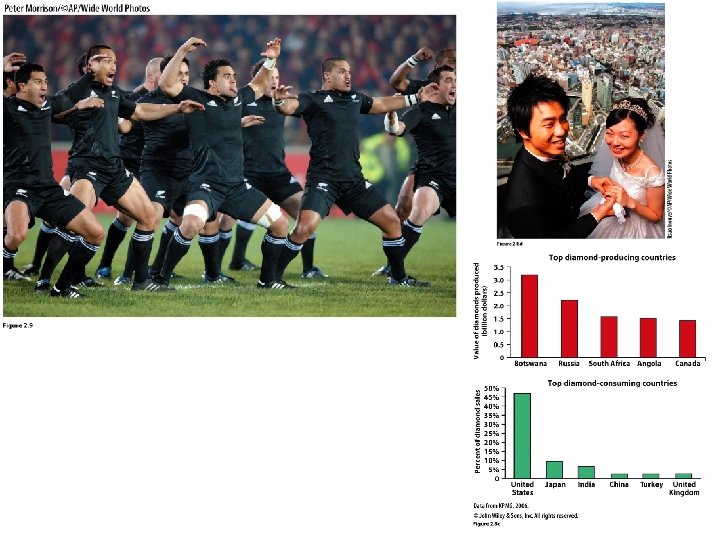
• Commodification of the past: heritage industry • Dissonance—inconsistent – Generates conflict, contestation • Opposing uses of heritage (sacred site vs. tourism) • Particularism – whose heritage?
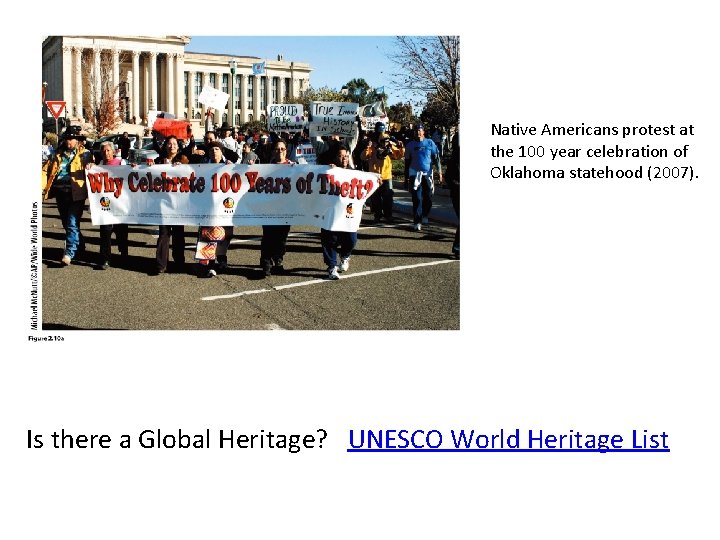
Native Americans protest at the 100 year celebration of Oklahoma statehood (2007). Is there a Global Heritage? UNESCO World Heritage List
- Slides: 19