
Geography 107 Introduction to Human Geography California State
- Slides: 39
Geography 107 Introduction to Human Geography California State University, Northridge
What is Geography • Geography is a subject. • Geography is a discipline. – Geographers use a set of methodologies. – Geographers have an epistemology. – Geographers ask, “Where? ” when they want to know “Why? ” • Geography is what geographers do. • Anything that takes place can be studied from a geographic perspective.
What’s wrong with Geography? • The “Mother of all Disciplines”… • Ancient history • Encyclopedia of every place…
Environmental Determinism. • Flawed notion that culture is a direct response to the dictates of climate and topography. • Popular during the 1800 s-1920 s. • Has some ugly potentialities and undermined the success of Geography as a discipline.
How this course works • The most important thing for you to learn is how to think…epistemology and methodology. • You will be introduced to a series of subjects (politics, language, ethnicity, industry, etc. ) • You will be shown how geographers understand these topics and how spatial thinking can be applied.
Some preliminaries… • Background vocabulary and some basic skills are in order…
Place is important • Location – Position – Description • Site – Physical characteristics – Attributes • Situation – Relative location – Comparisons – Significance of location
Region • Several different types of regions…or groupings of places. – Formal – Functional – Vernacular
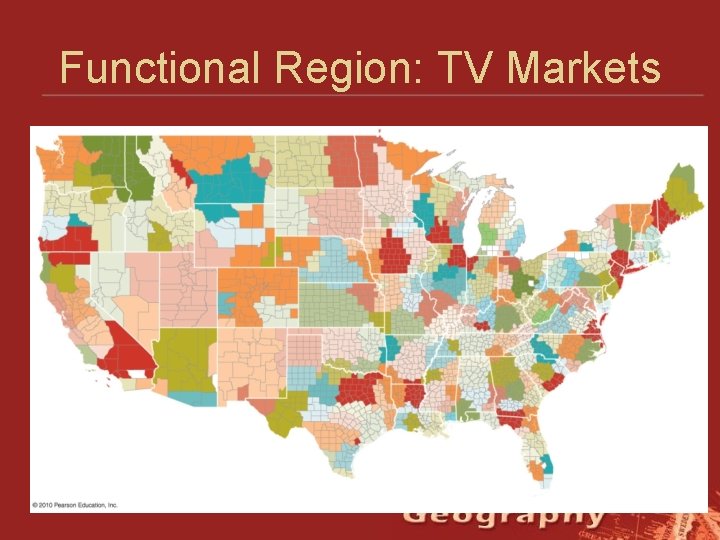
Functional Region • Has a concentrated center and fuzzy boundaries and is based frequently on economic linkages, communication and transportation ties. • “Core and Periphery” • KTLA, a Los Angeles TV station has a functional region… • “LA” is a functional region that extends outward to include suburbs. . .
Functional Region: TV Markets
Formal Regions • Formal regions are defined by some characteristic. • The characteristic may be absolute, or simply “predominate”
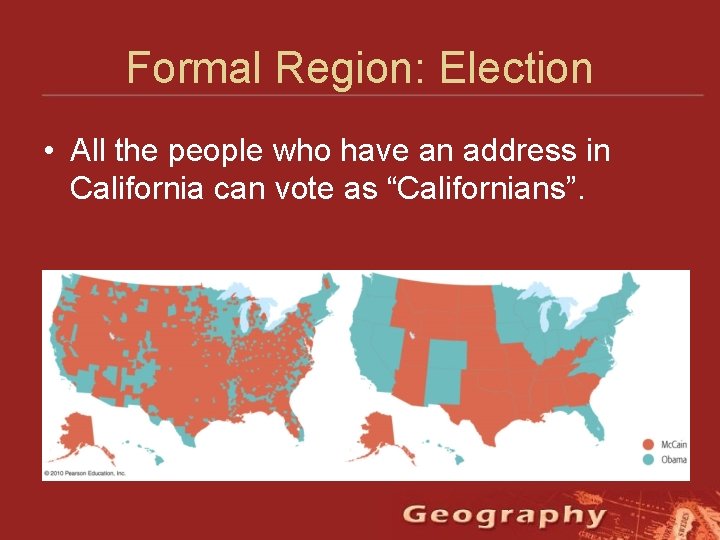
Formal Region: Election • All the people who have an address in California can vote as “Californians”.
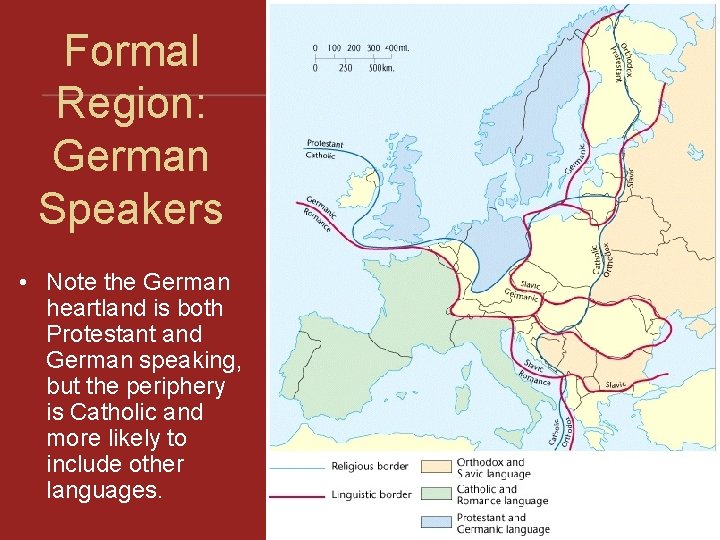
Formal Region: German Speakers • Note the German heartland is both Protestant and German speaking, but the periphery is Catholic and more likely to include other languages.
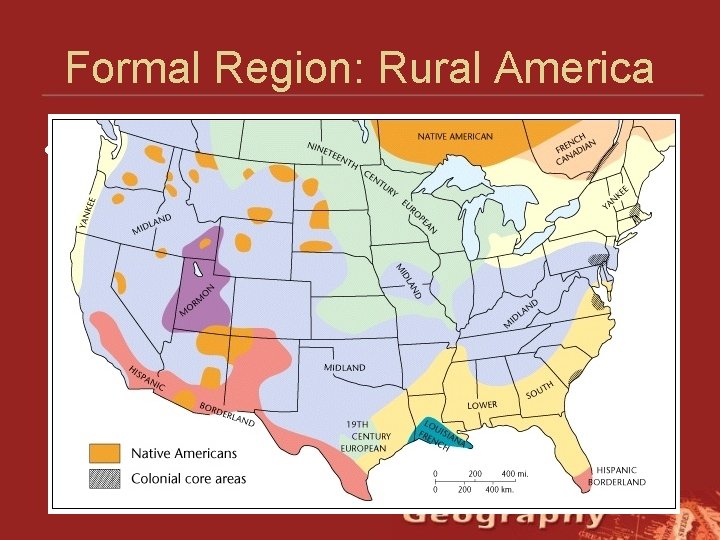
Formal Region: Rural America • figure
Vernacular Region • A region perceived to exist by people living within it, or by outsiders. • An outgrowth of a sense of belonging • Probably an outgrowth of a need to exclude others as well. • Powerful emotionally • Hard to characterize systematically • “So. Cal” is a vernacular region…
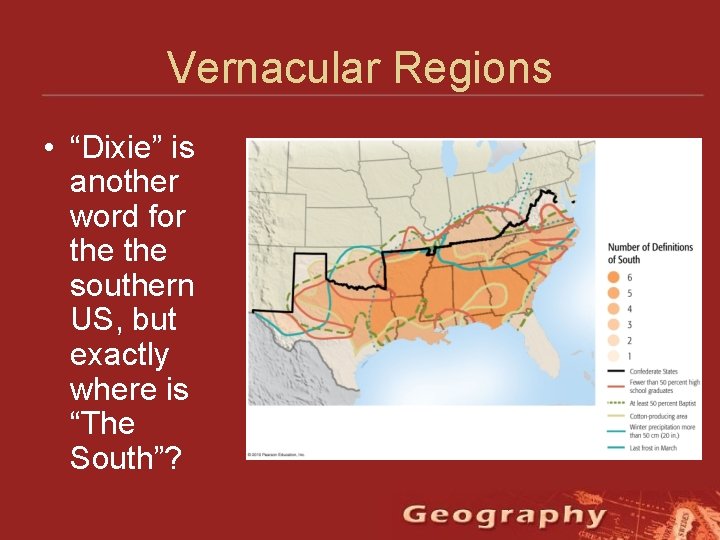
Vernacular Regions • “Dixie” is another word for the southern US, but exactly where is “The South”?
Where? Where! • “Where? ”, is the most important question geographers ask. • Where things are give us important clues about why they are as they are. • Historians tend to ask “When? ”…and focus on chronology. • Geographers focus on chorology…or more commonly “distribution”
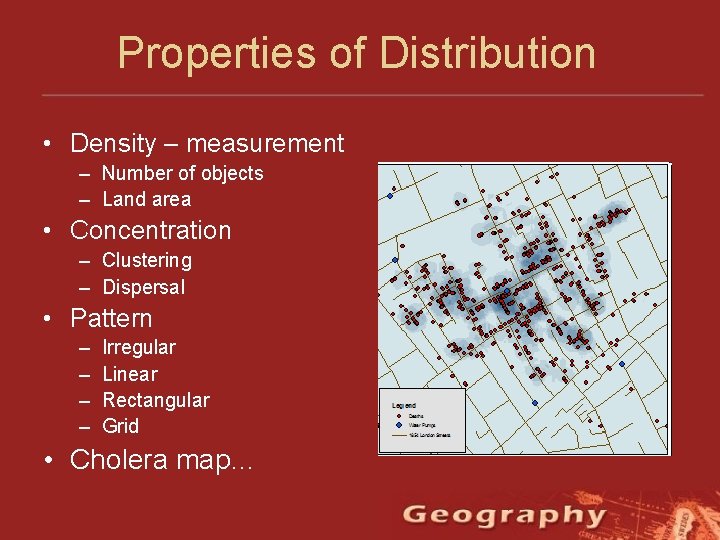
Properties of Distribution • Density – measurement – Number of objects – Land area • Concentration – Clustering – Dispersal • Pattern – – Irregular Linear Rectangular Grid • Cholera map…
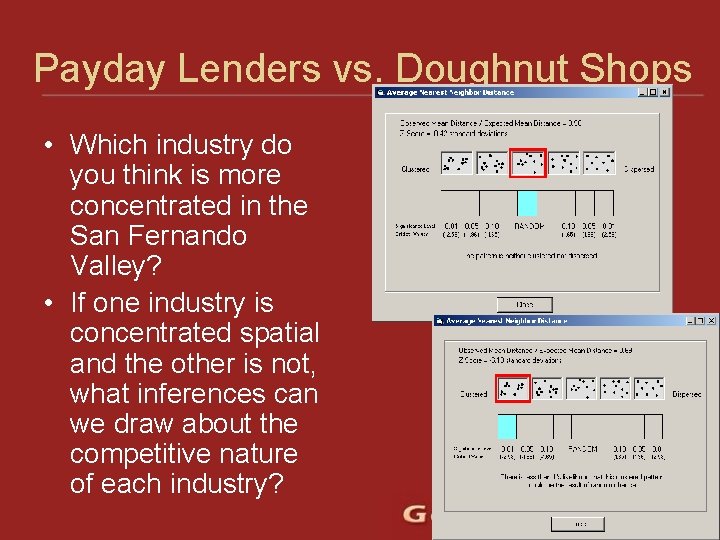
Payday Lenders vs. Doughnut Shops • Which industry do you think is more concentrated in the San Fernando Valley? • If one industry is concentrated spatial and the other is not, what inferences can we draw about the competitive nature of each industry?
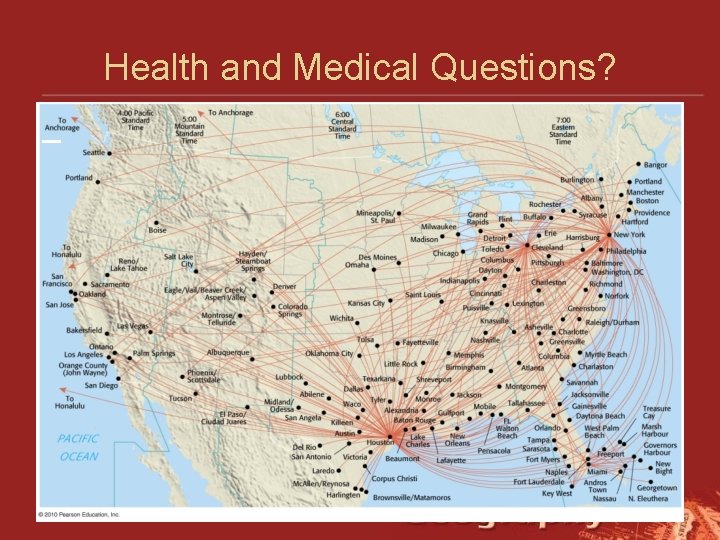
Connectivity • Spatial interaction • Characteristics spread through diffusion
Health and Medical Questions? _
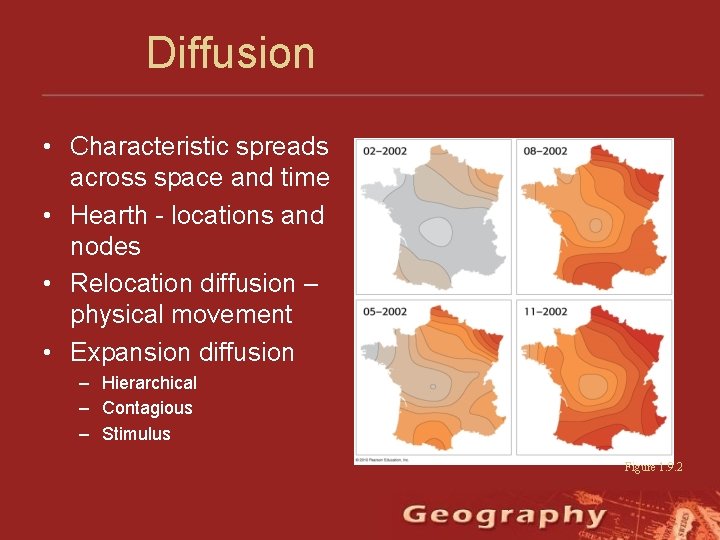
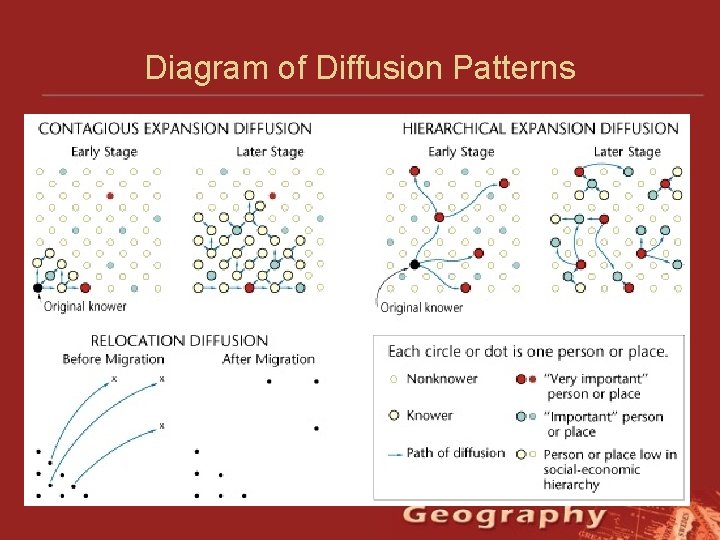
Diffusion • Characteristic spreads across space and time • Hearth - locations and nodes • Relocation diffusion – physical movement • Expansion diffusion – Hierarchical – Contagious – Stimulus Figure 1. 9. 2
Diagram of Diffusion Patterns
Environmental Determinism • Flawed notion that culture is a direct response to the dictates of climate and topography. • Popular during the 1800 s-1920 s. • Has some ugly potentialities and undermined the success of Geography as a discipline.
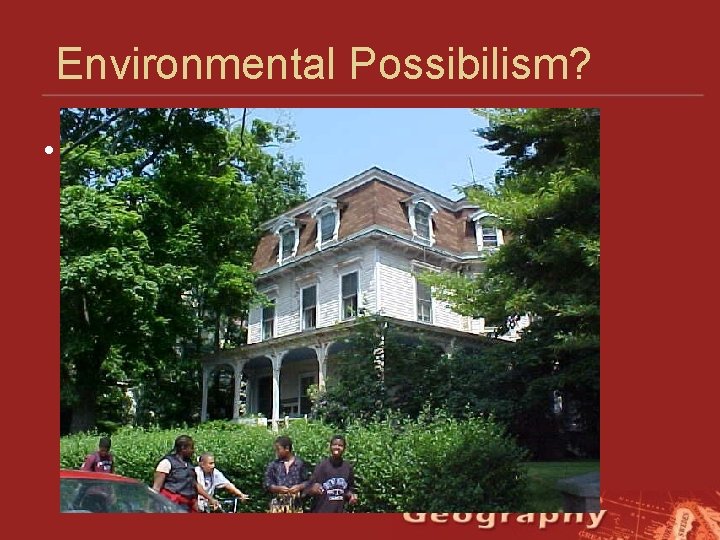
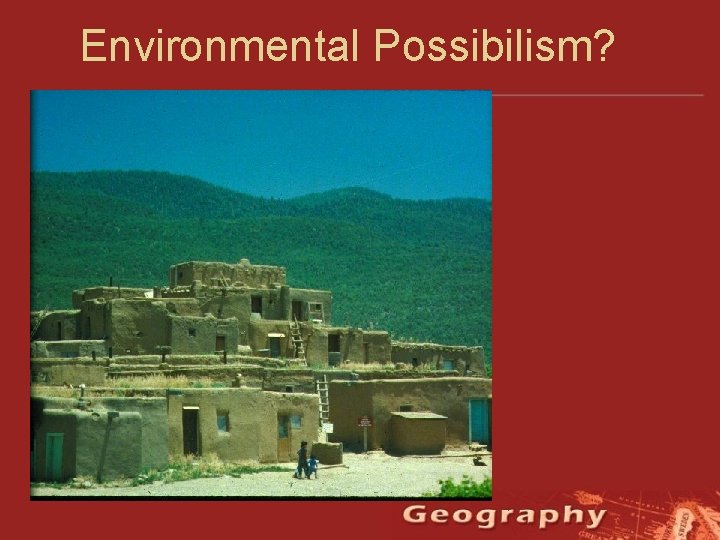
Environmental Possibilism • People are the primary architects of culture, although the environment gives us options that we may choose to follow or ignore.
Environmental Possibilism? • figure
Environmental Possibilism? • figure
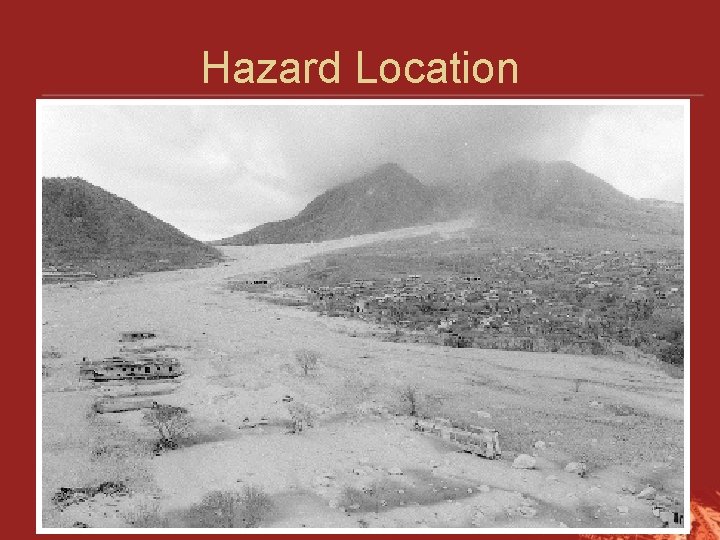
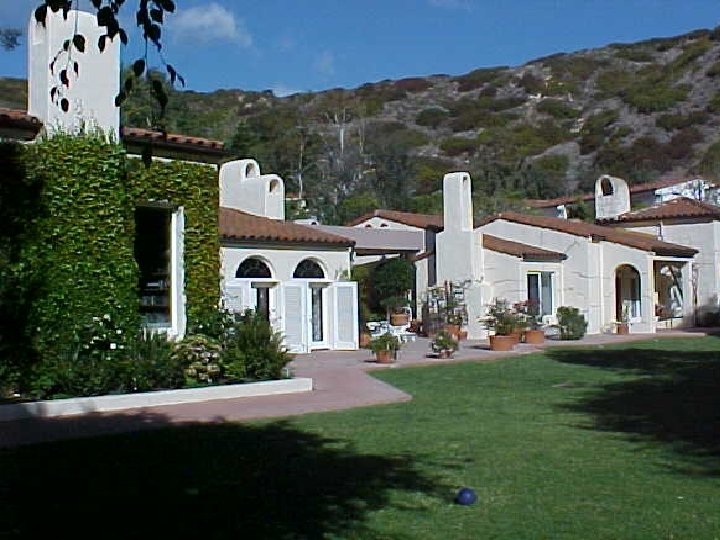
Environmental Perception • This school argues that perception of the environment is most important. • Ignorance is as important as knowledge • Geomancy or Feng Shui • Natural hazards and hazard zones
Hazard Location • Figure
Hazard Location: Malibu • figure
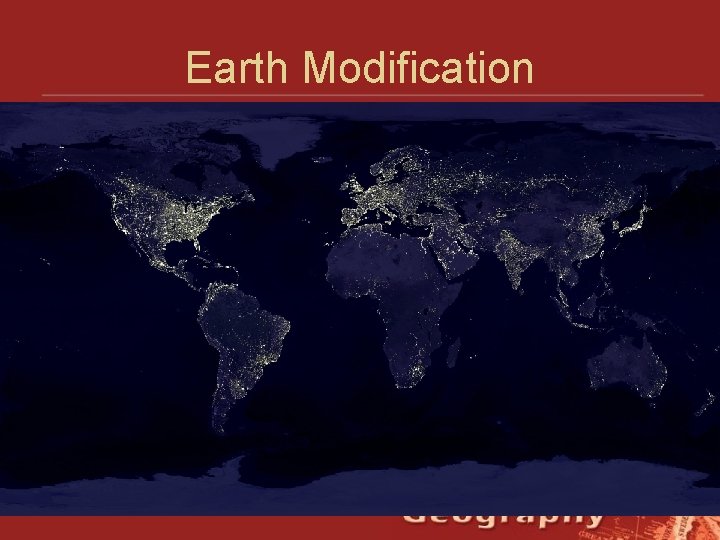
Humans as modifiers of the earth • Opposite of environmental determinism. • Argue that it is humans that are in the drivers seat in this relationship.
Earth Modification • figure
Cultural Integration • Cultures are complex wholes • Cultures are integrated systems • Each cultural aspect is dependent on others • Example: religion and politics and economics and race and … • Cultural determinism is a danger
Social Science • Scientific method applied to people • Laws are sought which explain humans spatial behavior • According to the text, space (geometric space) is a key concept in this modernist approach. • Model building is common • Economic determinism is a danger • Some progress made in accounting for geographic variation.
Humanistic geography • Place and place meaning • Humanistic views and subjectivity • This is an area of geography that is very much like English, history or art appreciation.
Postmodernism • Multiple definitions of postmodernism • Critical Theory and Cultural Studies
Cultural Landscape • • The built and humanized landscape Landscapes tell of the culture Can be “read” like a text Three principal aspects of cultural landscape – Settlement patterns – Land-division patterns – Architecture
Landscape • Consider the parking structure across from Sierra Hall. What does it suggest about the culture that built it? • What symbolic values does it have? • What is not said?
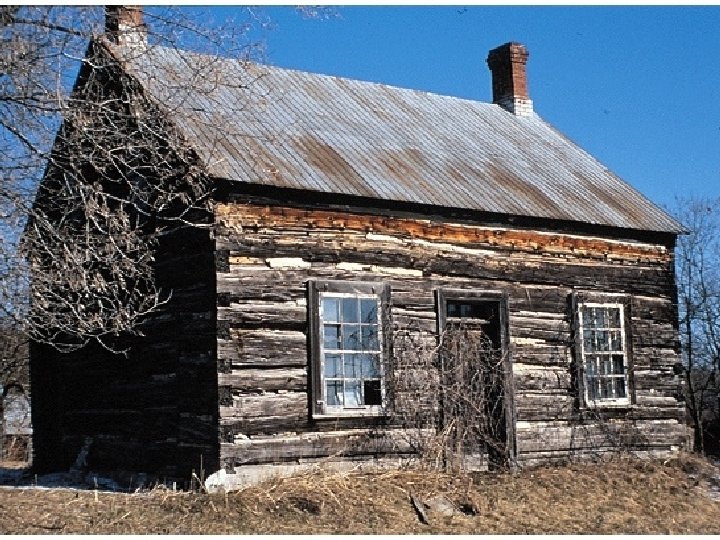
Conclusion • Example: the American log house