
Geography 101 GEOGRAPHY IS THE STUDY OF WORLDEARTH
- Slides: 17
Geography 101
GEOGRAPHY IS… • THE STUDY OF WORLD/EARTH
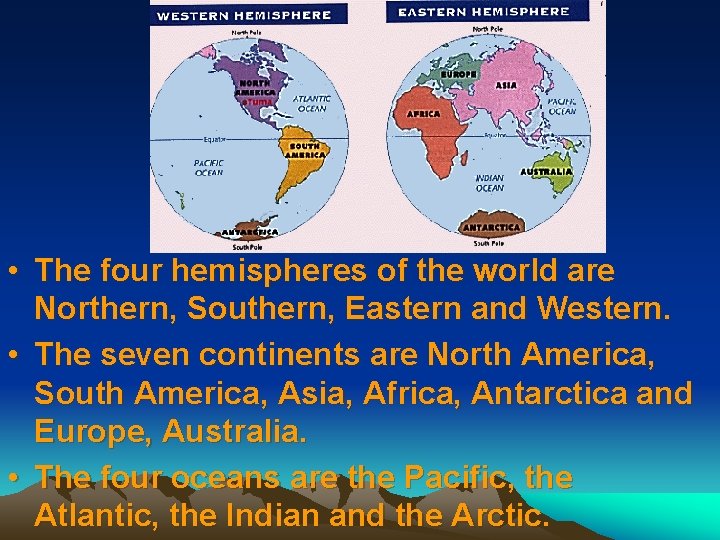
• The four hemispheres of the world are Northern, Southern, Eastern and Western. • The seven continents are North America, South America, Asia, Africa, Antarctica and Europe, Australia. • The four oceans are the Pacific, the Atlantic, the Indian and the Arctic.
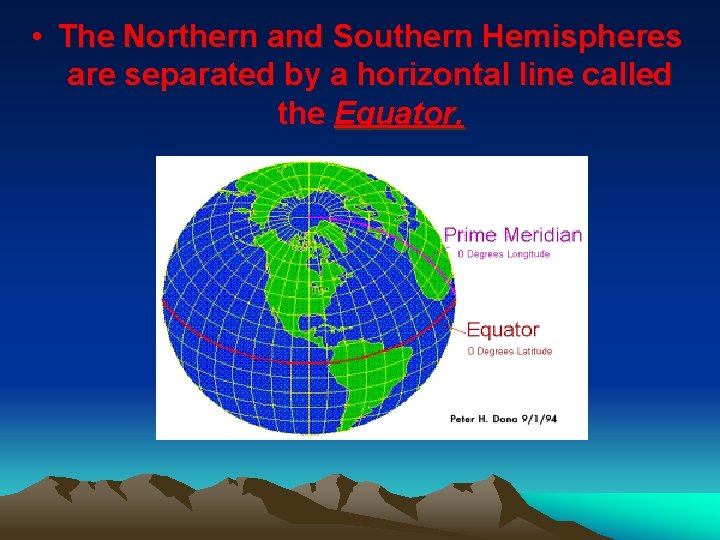
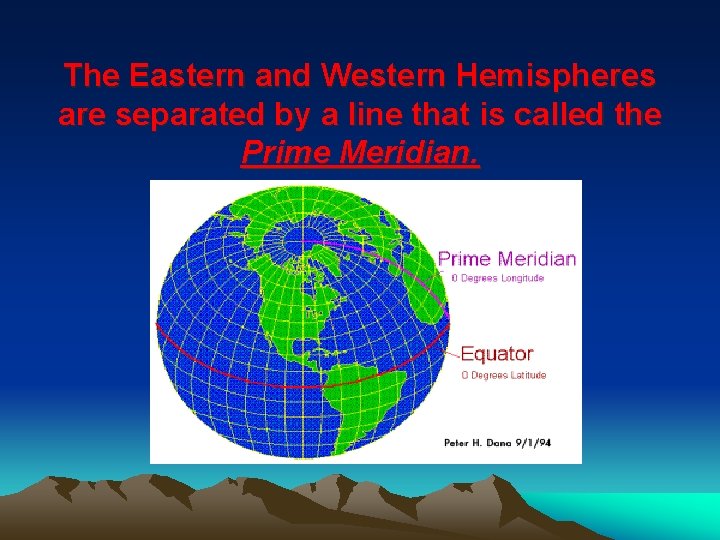
• The Northern and Southern Hemispheres are separated by a horizontal line called the Equator.
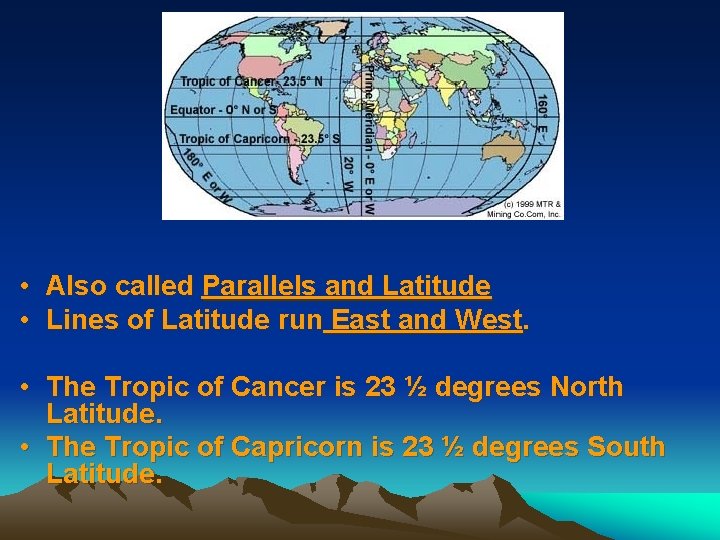
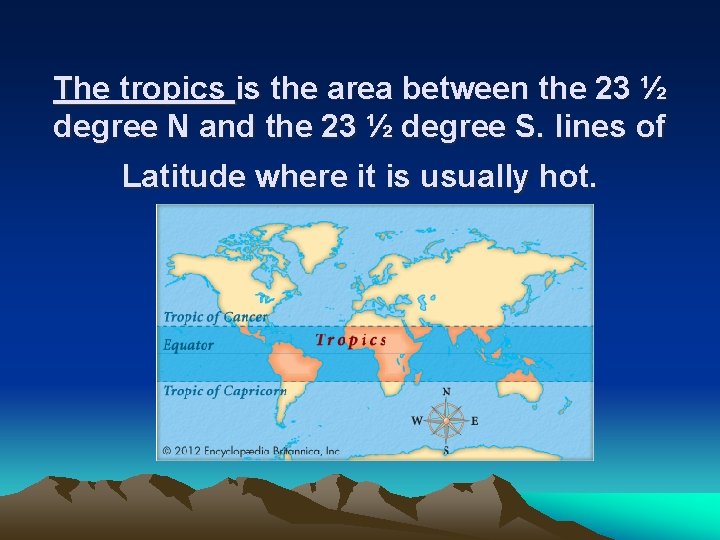
• Also called Parallels and Latitude • Lines of Latitude run East and West. • The Tropic of Cancer is 23 ½ degrees North Latitude. • The Tropic of Capricorn is 23 ½ degrees South Latitude.
The Eastern and Western Hemispheres are separated by a line that is called the Prime Meridian.
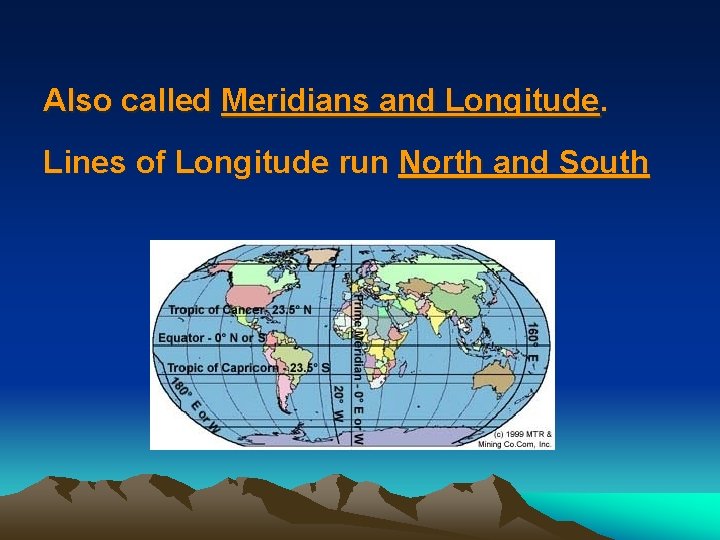
Also called Meridians and Longitude. Lines of Longitude run North and South
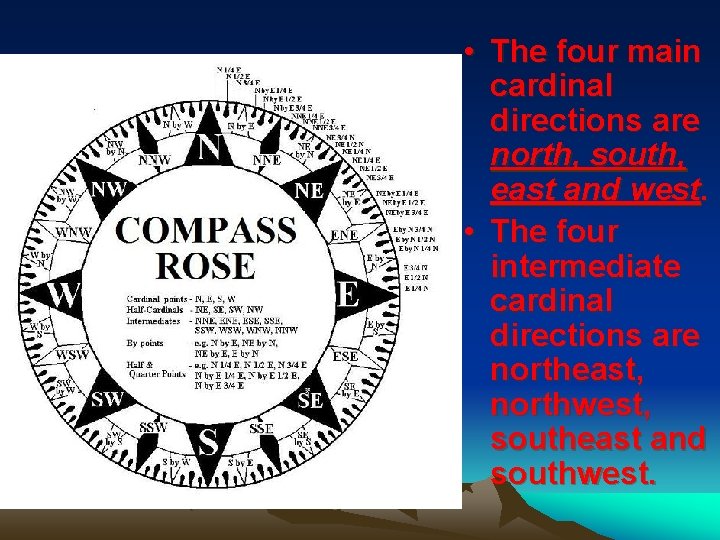
• The four main cardinal directions are north, south, east and west. • The four intermediate cardinal directions are northeast, northwest, southeast and southwest.
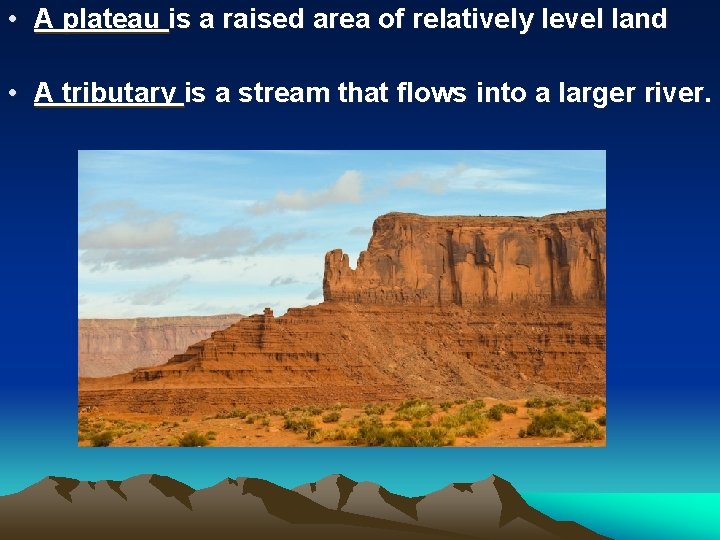
• A plateau is a raised area of relatively level land • A tributary is a stream that flows into a larger river.
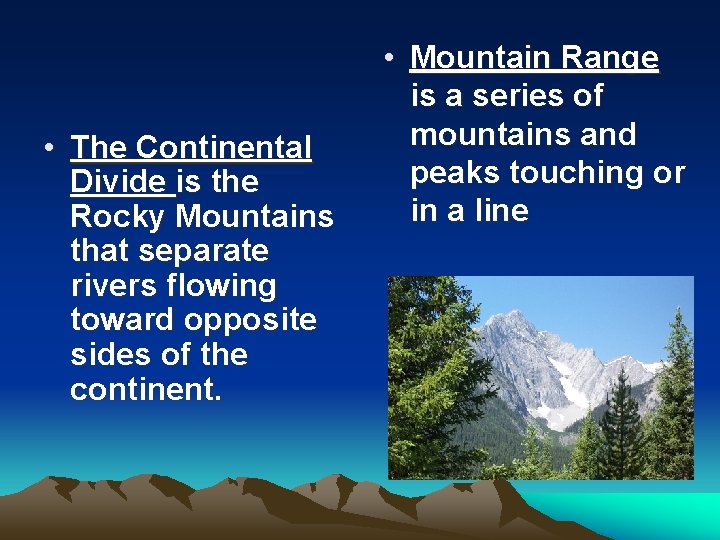
• The Continental Divide is the Rocky Mountains that separate rivers flowing toward opposite sides of the continent. • Mountain Range is a series of mountains and peaks touching or in a line
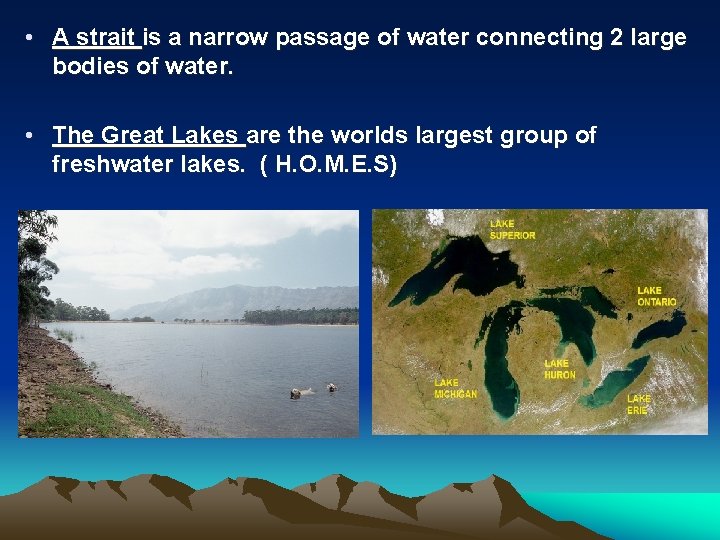
• A strait is a narrow passage of water connecting 2 large bodies of water. • The Great Lakes are the worlds largest group of freshwater lakes. ( H. O. M. E. S)
The tropics is the area between the 23 ½ degree N and the 23 ½ degree S. lines of Latitude where it is usually hot.
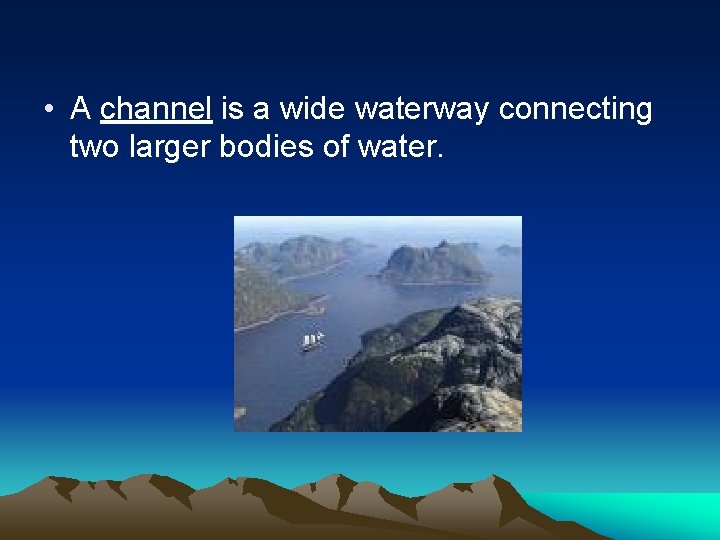
• A channel is a wide waterway connecting two larger bodies of water.
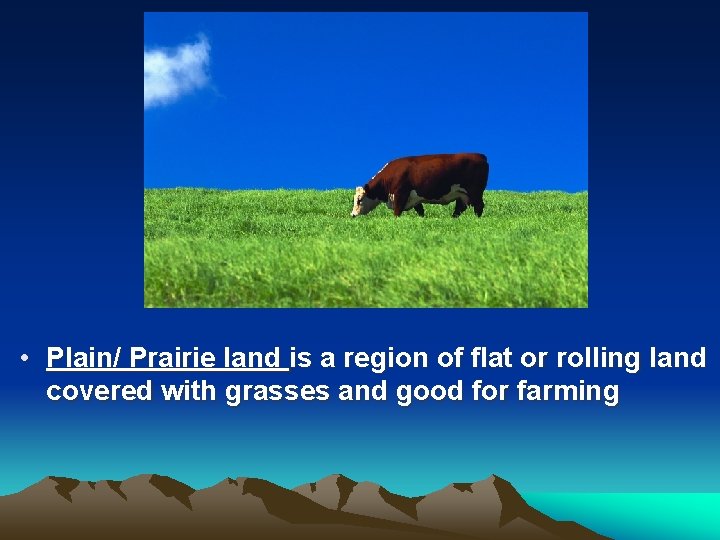
• Plain/ Prairie land is a region of flat or rolling land covered with grasses and good for farming
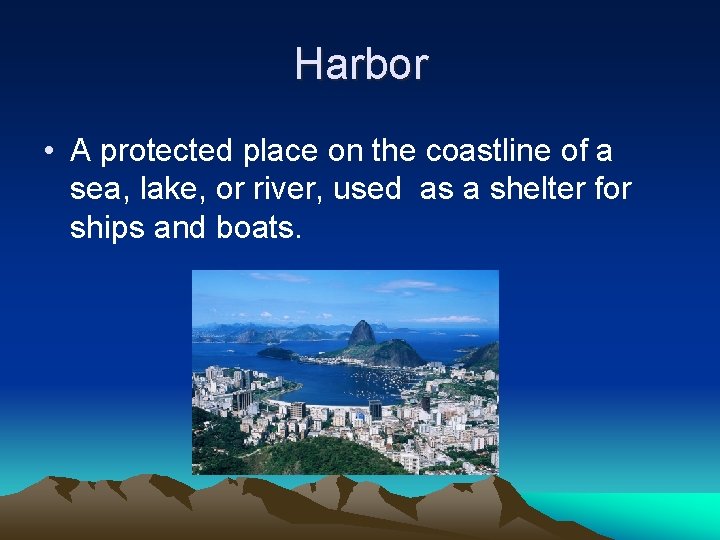
Harbor • A protected place on the coastline of a sea, lake, or river, used as a shelter for ships and boats.
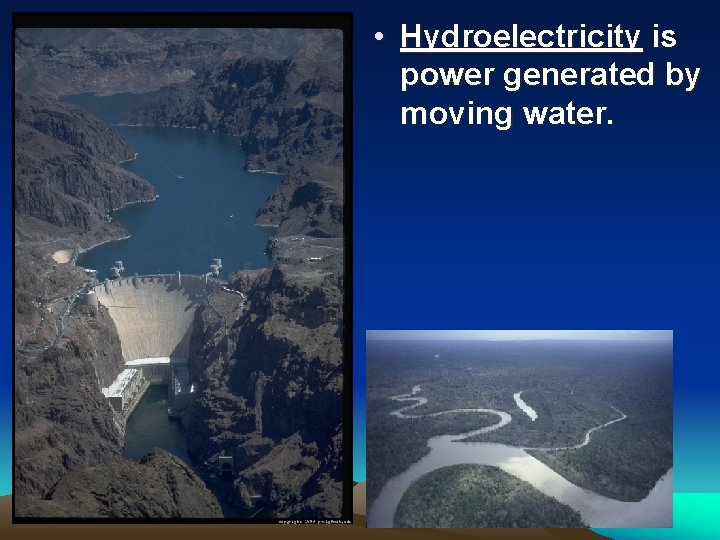
• Hydroelectricity is power generated by moving water.
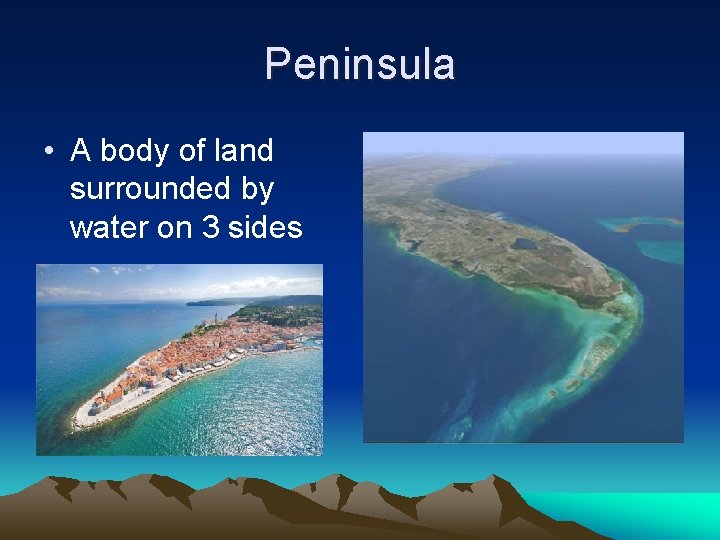
Peninsula • A body of land surrounded by water on 3 sides