
Geographic Profiling in Australia An examination of the






- Slides: 36
Geographic Profiling in Australia – An examination of the predictive potential of serial armed robberies in the Australian Environment The Seventh Annual International Crime Mapping Research Conference March 31 - April 3, 2004: Boston , Massachusetts By Peter Branca
Introduction • Outline of research in Australia • Serial Armed Robbery Research –Environment –Data analysis –Results –Conclusions
Research In Australia Few studies have been reported in relation to the geography of serial crime in Australia. • Kocsis & Irwin (1997) examined serial rape, arson and burglary - support Canter’s ‘Circle Theory’ • Catalano (2001) examined the spatial behaviour patterns of serial robbery in Perth - criminological theories were ‘helpful’ in predictions • Kocsis et al (2002) assessed the ‘Circle Theory’ for Geographic Psychological Profiling - rural town burglaries 50/50 Commuter and Marauder • Spencer - (Unpublished) Ph. D research into spatial patterns of serial sex offences - both Commuter and Marauder behaviour exhibited by same offenders, utility of Dragnet and Crime. Stat II investigated
International Research Focus on the home being central to serial crime locations. §Centrography §Journey to Crime §Routine Activity Theory §Circle Theory
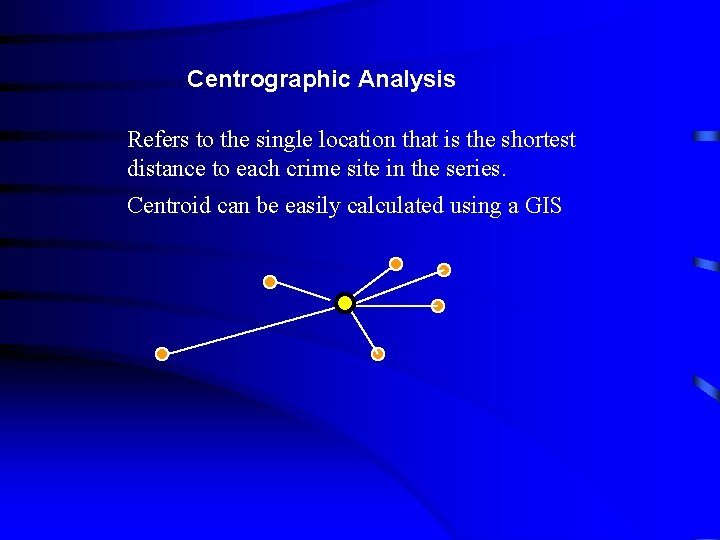
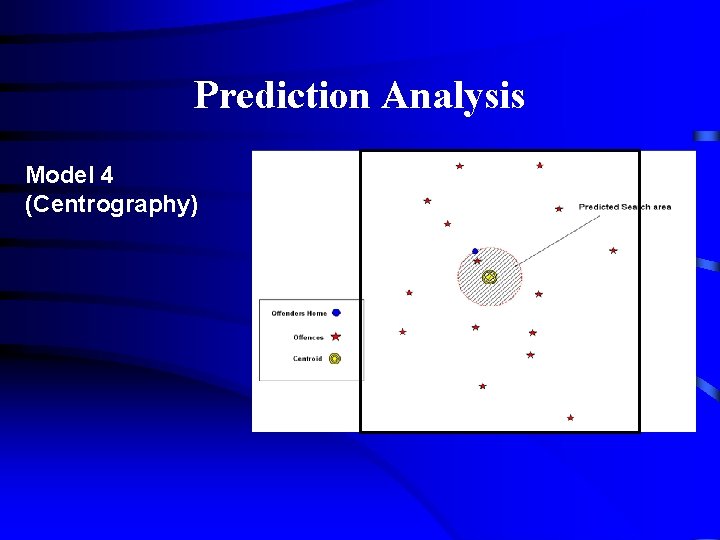
Centrographic Analysis Refers to the single location that is the shortest distance to each crime site in the series. Centroid can be easily calculated using a GIS
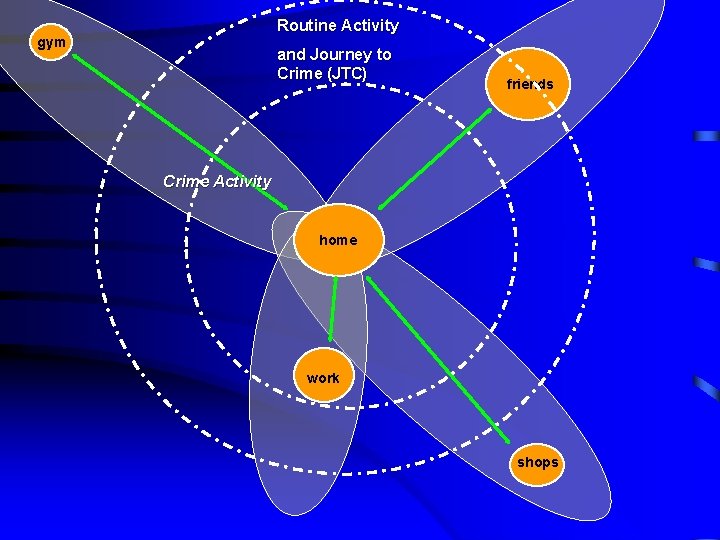
Routine Activity gym and Journey to Crime (JTC) friends Crime Activity home work shops
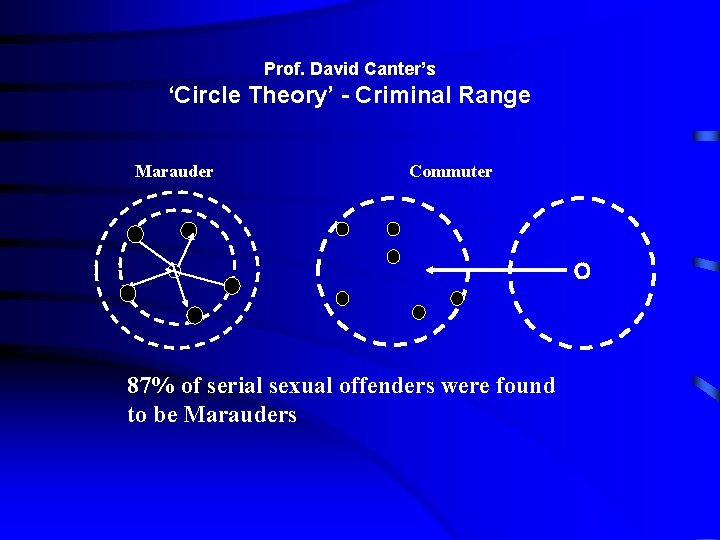
Prof. David Canter’s ‘Circle Theory’ - Criminal Range Marauder Commuter 87% of serial sexual offenders were found to be Marauders
Computer Programs - JTC §Rigel §Dragnet §Predator §Crime. Stat
Research Aims Serial Armed Robbery in Victoria To explore the predictive potential of Geographic Profiling in relation to serial armed robbery in Victoria, Australia. Utilising Journey to Crime (JTC) and Centroid calculations to predict the home location of serial offenders.
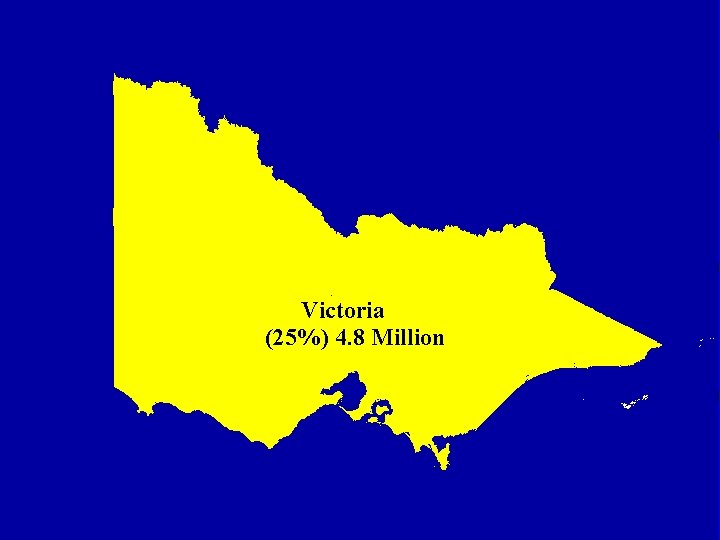
Australia - (a Quick Geography Lesson) 20 Million People Victoria (25%) 4. 8 Million Sydney Melbourne
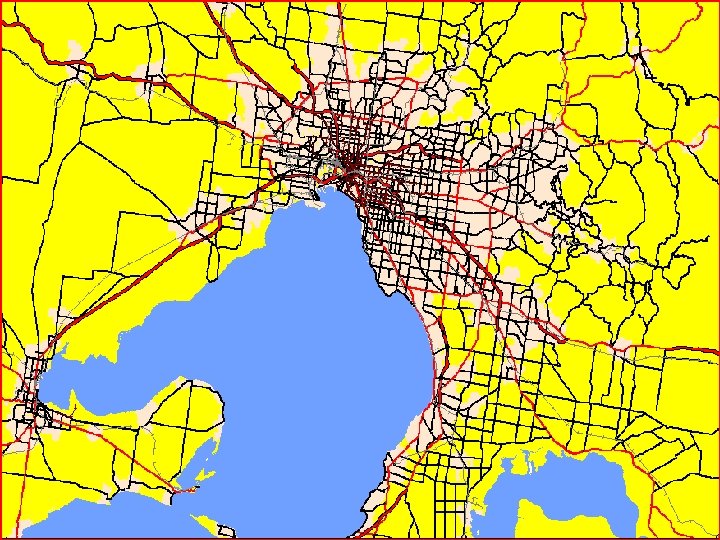
Greater Melbourne 3. 2 Million
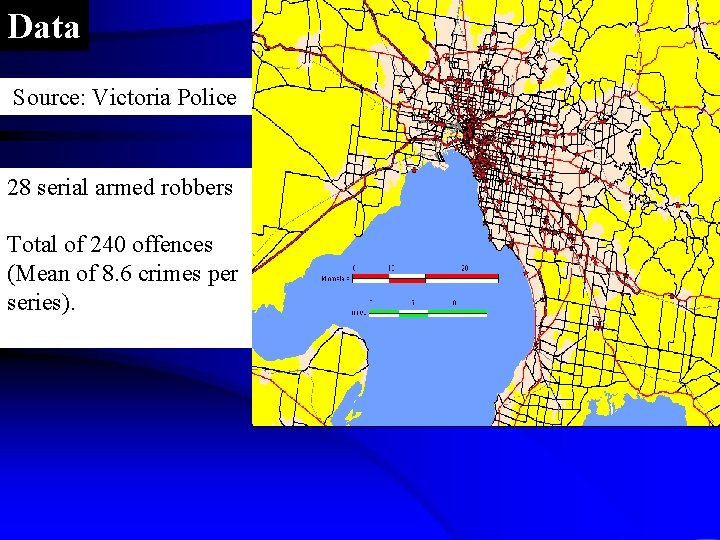
Data Source: Victoria Police 28 serial armed robbers Total of 240 offences (Mean of 8. 6 crimes per series).
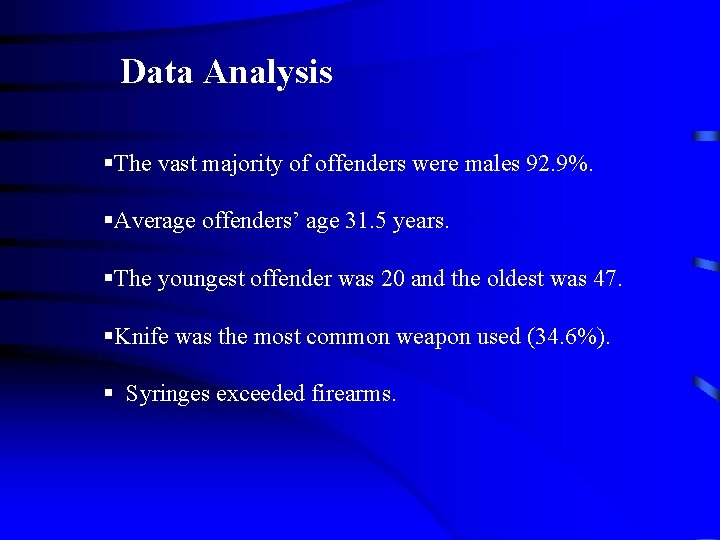
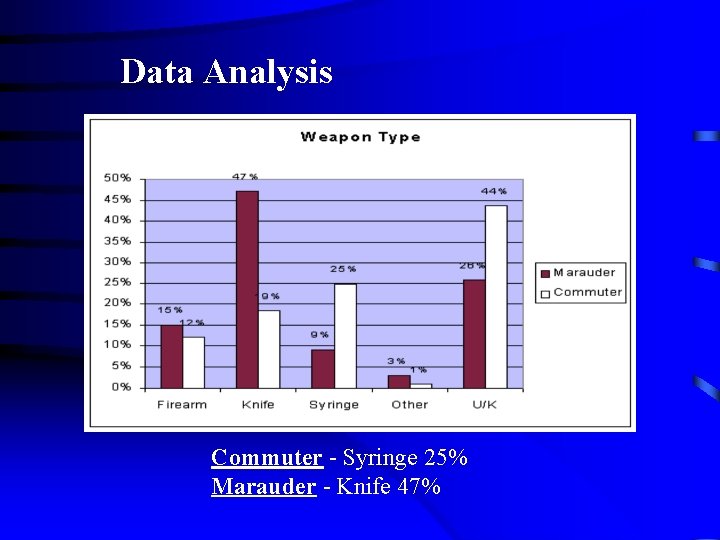
Data Analysis §The vast majority of offenders were males 92. 9%. §Average offenders’ age 31. 5 years. §The youngest offender was 20 and the oldest was 47. §Knife was the most common weapon used (34. 6%). § Syringes exceeded firearms.
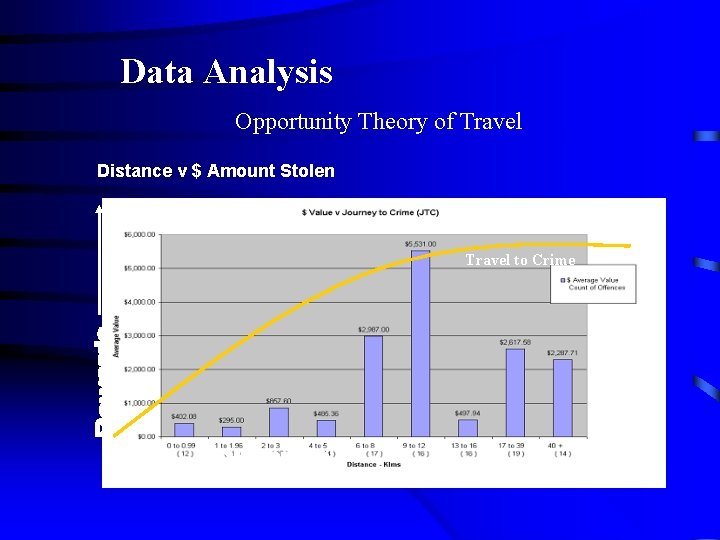
Data Analysis Opportunity Theory of Travel Distance v $ Amount Stolen Travel to Crime
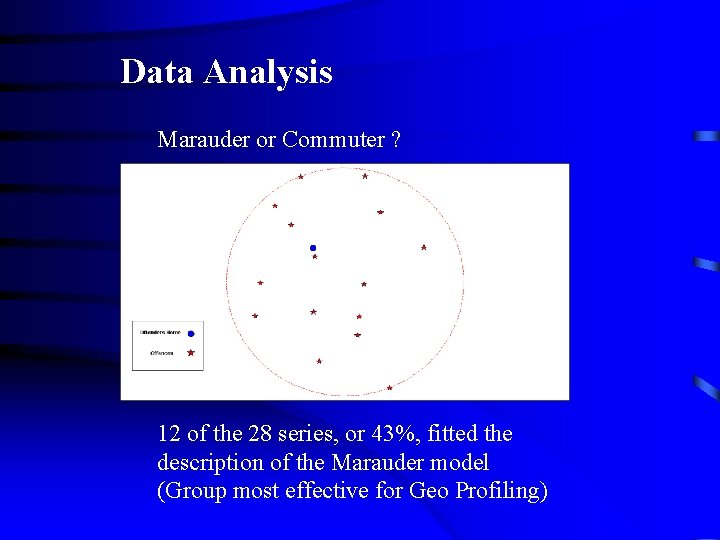
Data Analysis Marauder or Commuter ? 12 of the 28 series, or 43%, fitted the description of the Marauder model (Group most effective for Geo Profiling)
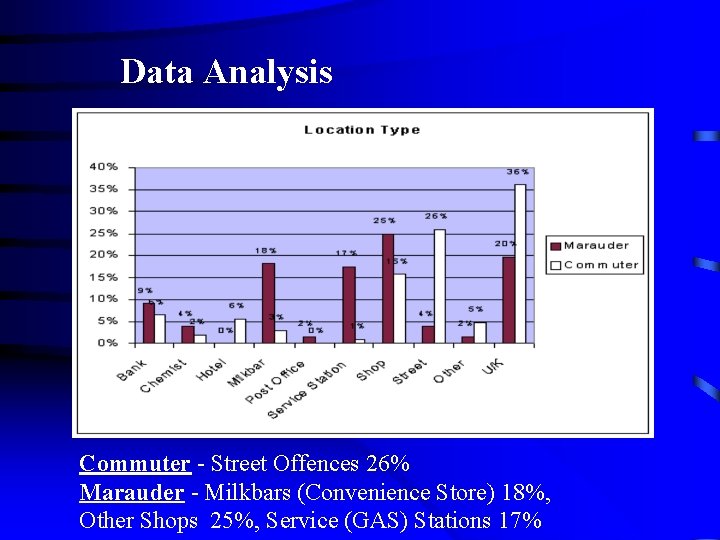
Data Analysis Commuter - Street Offences 26% Marauder - Milkbars (Convenience Store) 18%, Other Shops 25%, Service (GAS) Stations 17%
Data Analysis Commuter - Syringe 25% Marauder - Knife 47%
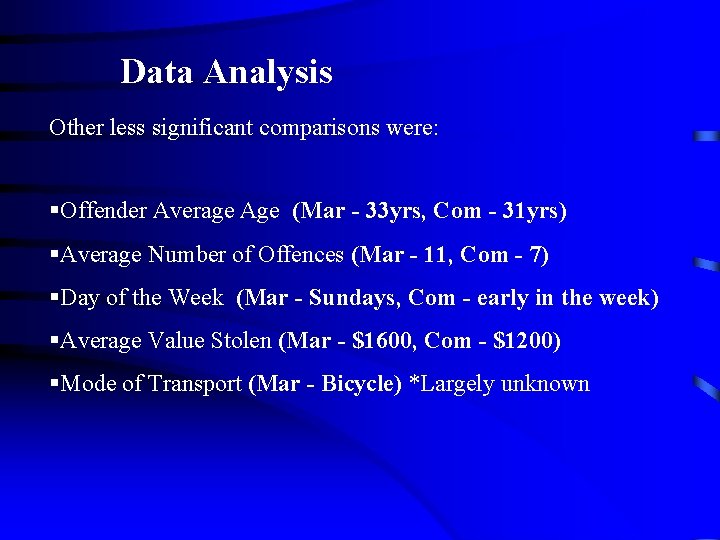
Data Analysis Other less significant comparisons were: §Offender Average Age (Mar - 33 yrs, Com - 31 yrs) §Average Number of Offences (Mar - 11, Com - 7) §Day of the Week (Mar - Sundays, Com - early in the week) §Average Value Stolen (Mar - $1600, Com - $1200) §Mode of Transport (Mar - Bicycle) *Largely unknown
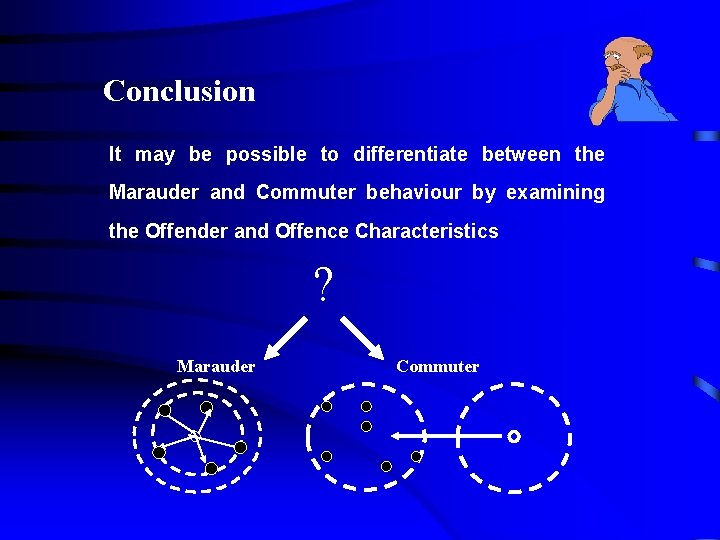
Conclusion It may be possible to differentiate between the Marauder and Commuter behaviour by examining the Offender and Offence Characteristics ? Marauder Commuter
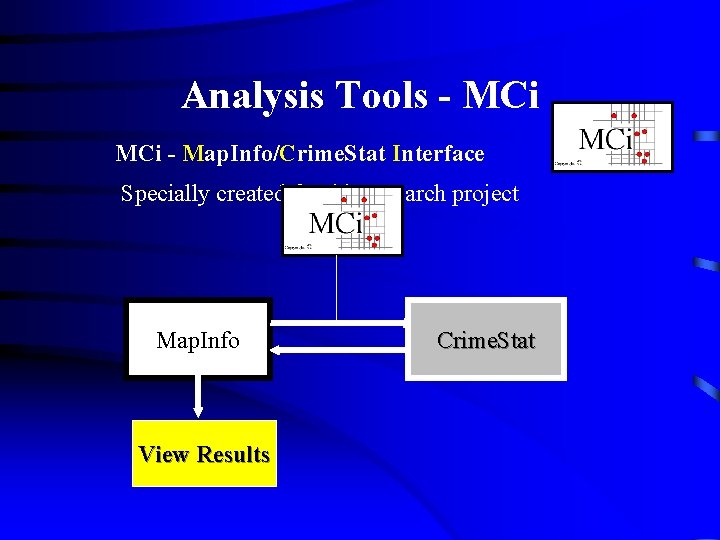
Software used for analysis • Map. Info • Crime. Stat • MCi
Analysis Tools - MCi - Map. Info/Crime. Stat Interface Specially created for this research project Map. Info View Results Crime. Stat Analysis
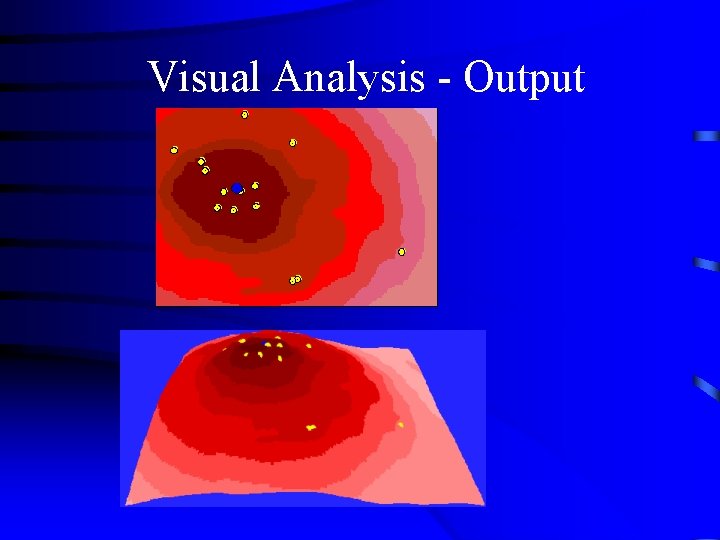
Visual Analysis - Output
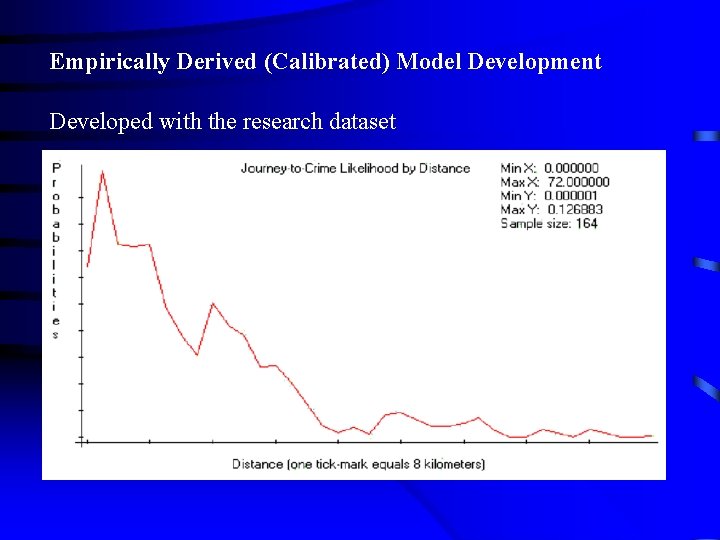
JTC Model Development Crime. Stat - Journey To Crime (JTC) Models can be based on either : • Mathematical function, or • Empirically derived function Ned Levine. Crime. Stat: A Spatial Statistics Program for the Analysis of Crime Incident Locations (v 2. 0).
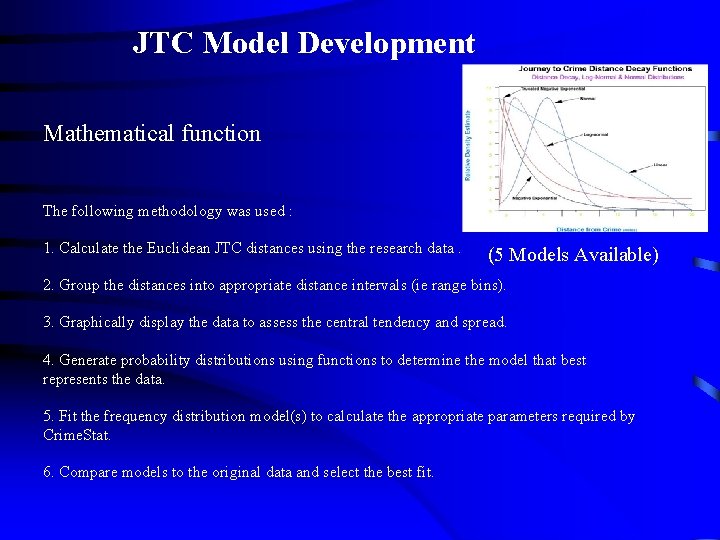
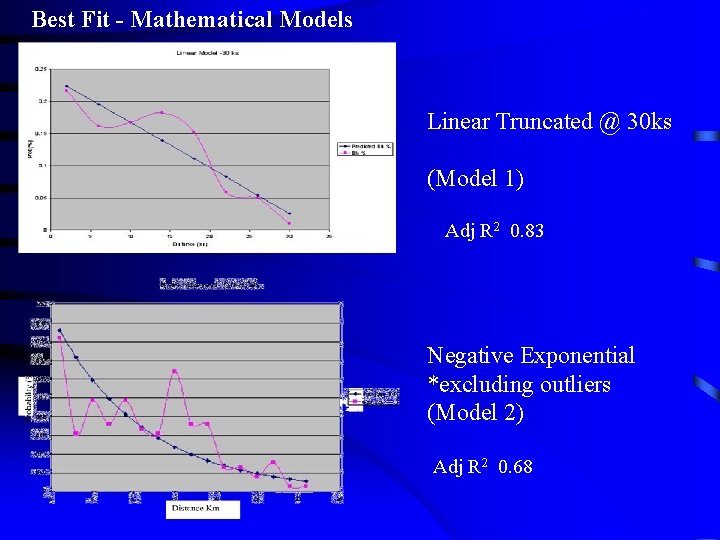
JTC Model Development Mathematical function The following methodology was used : 1. Calculate the Euclidean JTC distances using the research data. (5 Models Available) 2. Group the distances into appropriate distance intervals (ie range bins). 3. Graphically display the data to assess the central tendency and spread. 4. Generate probability distributions using functions to determine the model that best represents the data. 5. Fit the frequency distribution model(s) to calculate the appropriate parameters required by Crime. Stat. 6. Compare models to the original data and select the best fit.
Culling the data for modeling To remove: §Commuters §Outliers
Best Fit - Mathematical Models Linear Truncated @ 30 ks (Model 1) Adj R 2 0. 83 Negative Exponential *excluding outliers (Model 2) Adj R 2 0. 68
Empirically Derived (Calibrated) Model Development Developed with the research dataset
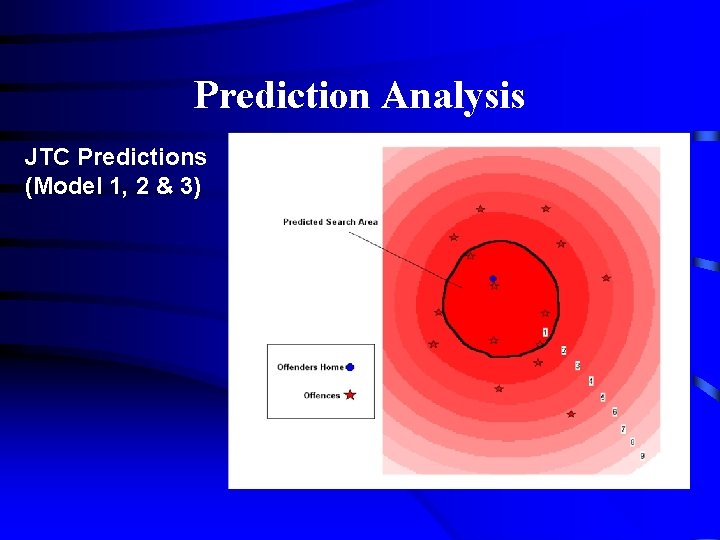
Prediction Analysis JTC Predictions: Models 1 & 2 (Mathematical functions) Model 3 (Empirical Model - Calibrated) Model 4 (Centrography)
Prediction Analysis JTC Predictions (Model 1, 2 & 3)
Prediction Analysis Model 4 (Centrography)
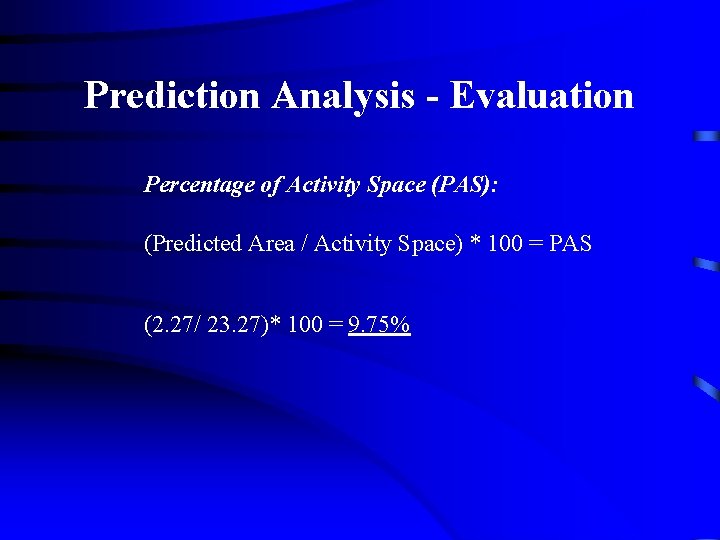
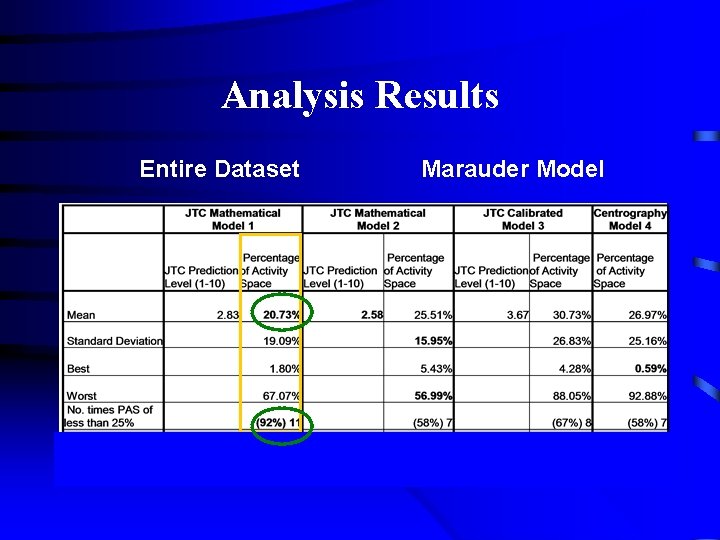
Prediction Analysis - Evaluation Percentage of Activity Space (PAS): (Predicted Area / Activity Space) * 100 = PAS (2. 27/ 23. 27)* 100 = 9. 75%
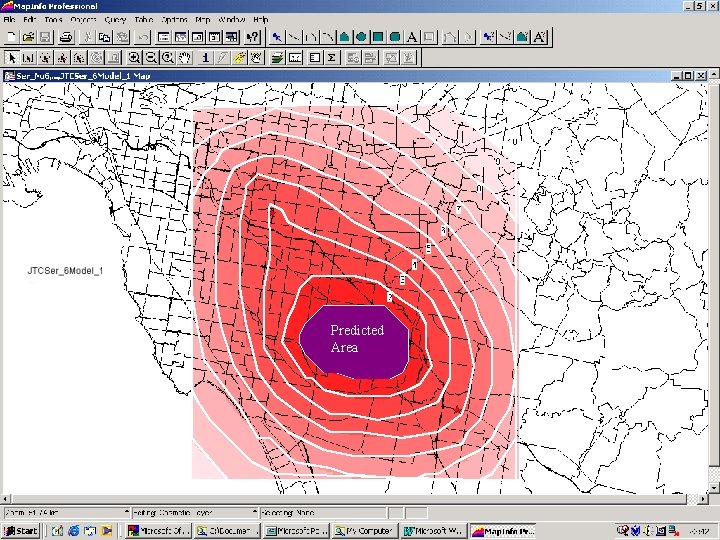
Predicted Area
Analysis Results Entire Dataset Marauder Model
Conclusions - Research Indicates: • Australian findings are consistent with international research • The spatial behaviour of serial armed robbers is consistent to findings of other types of serial violent offenders • It may be possible to identify a Marauder based upon offender/offence characteristics
Analysis Results - Further Investigation • Identify a predictive relationship between offence characteristics and Marauder/Commuter behaviour patterns • Research utilising larger data samples and other offence types should be investigated • Need for JTC software programs with greater flexibility in relation to the mathematical models available
Thank You Peter Branca psb 8@bigpond. com +61 (0) 419427997