
Geographic Features of Asia The southern and eastern
- Slides: 19
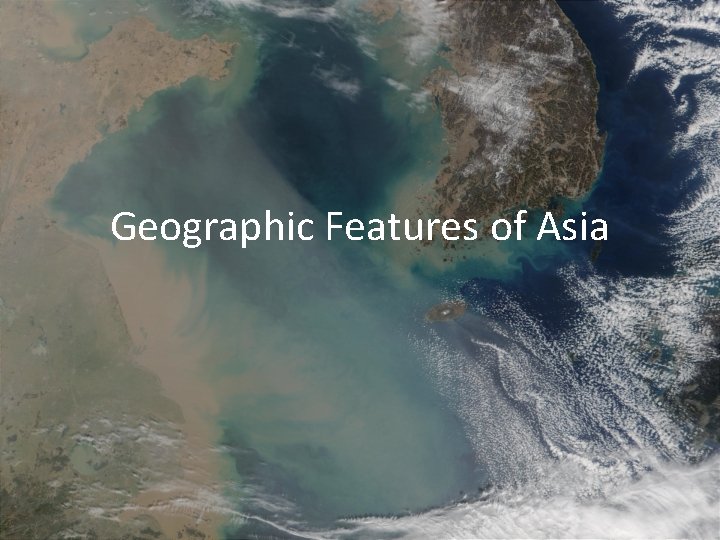
Geographic Features of Asia
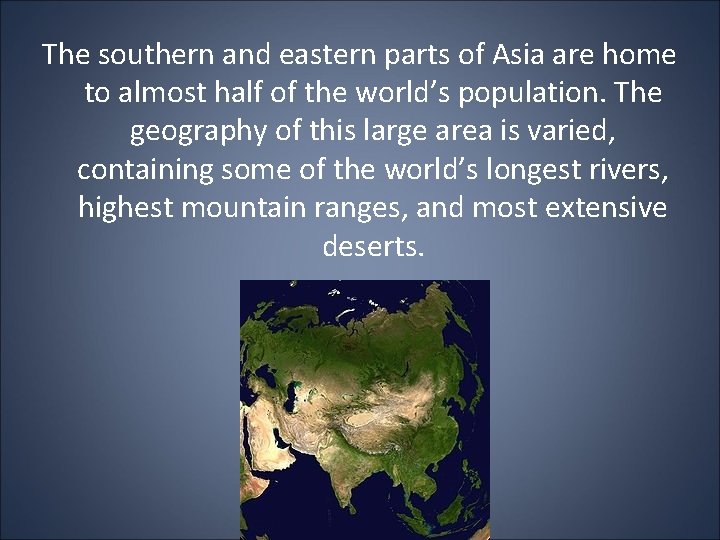
The southern and eastern parts of Asia are home to almost half of the world’s population. The geography of this large area is varied, containing some of the world’s longest rivers, highest mountain ranges, and most extensive deserts.
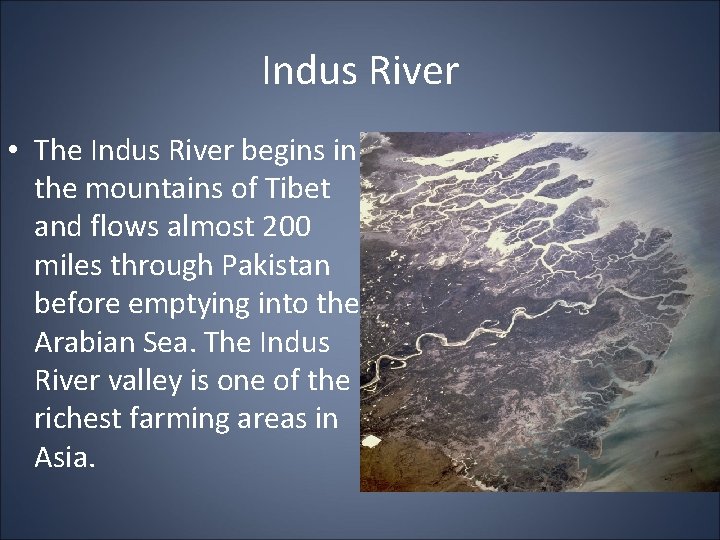
Indus River • The Indus River begins in the mountains of Tibet and flows almost 200 miles through Pakistan before emptying into the Arabian Sea. The Indus River valley is one of the richest farming areas in Asia.
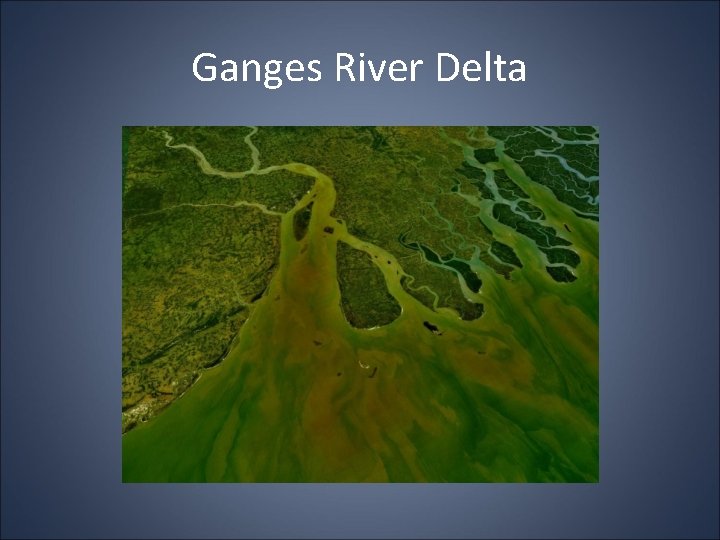
Ganges River • The Ganges River is India’s most important river. It begins in the Himalayan Mountains and flows southeast through India and Bangladesh before emptying into the Bay of Bengal. The Ganges carries lots of rich sediment that creates a large, fertile delta at the mouth of the river. Because so many people live and work along the Ganges, the water in the river is heavily polluted.
Ganges River Delta
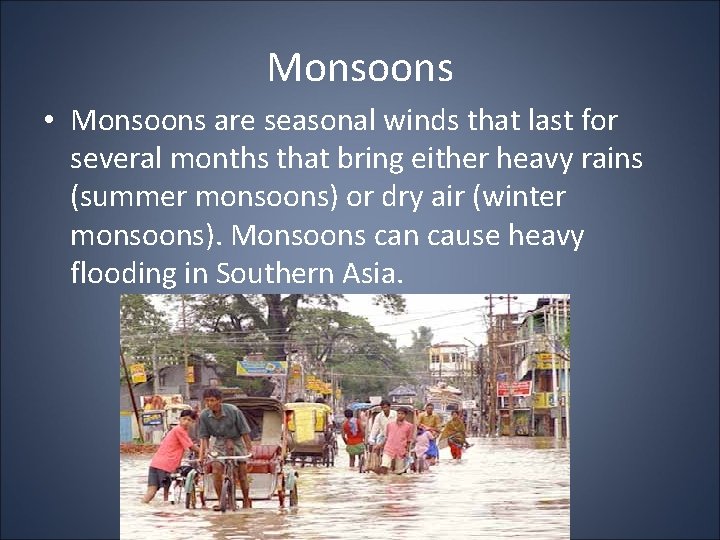
Monsoons • Monsoons are seasonal winds that last for several months that bring either heavy rains (summer monsoons) or dry air (winter monsoons). Monsoons can cause heavy flooding in Southern Asia.
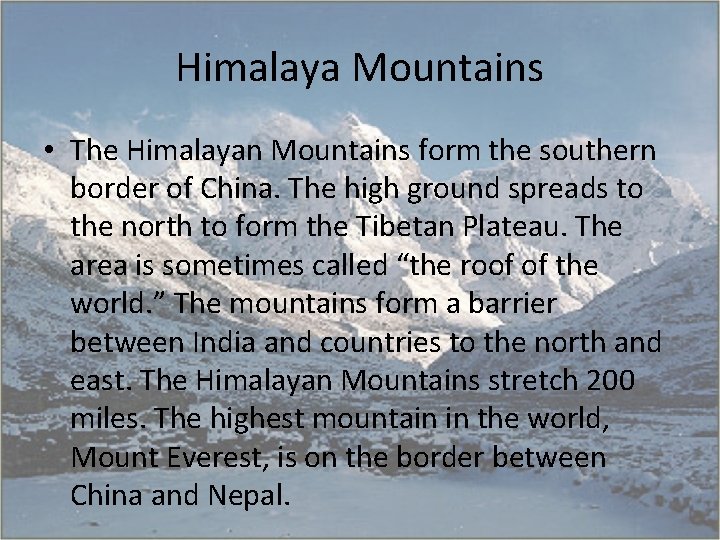
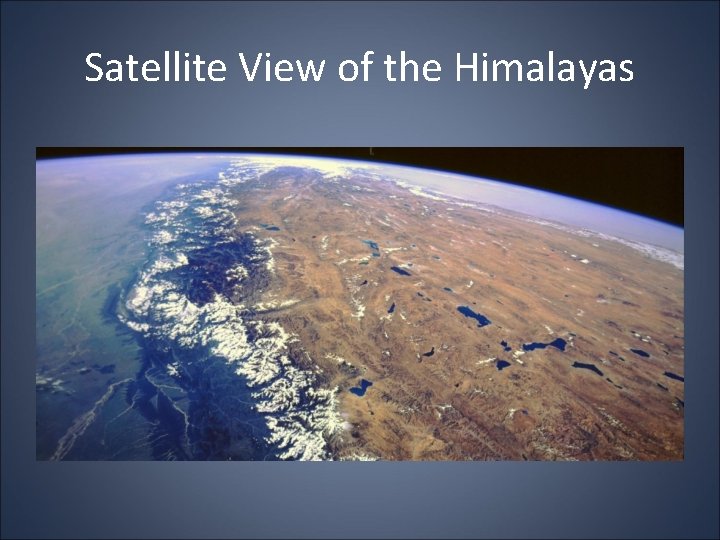
Himalaya Mountains • The Himalayan Mountains form the southern border of China. The high ground spreads to the north to form the Tibetan Plateau. The area is sometimes called “the roof of the world. ” The mountains form a barrier between India and countries to the north and east. The Himalayan Mountains stretch 200 miles. The highest mountain in the world, Mount Everest, is on the border between China and Nepal.
Satellite View of the Himalayas
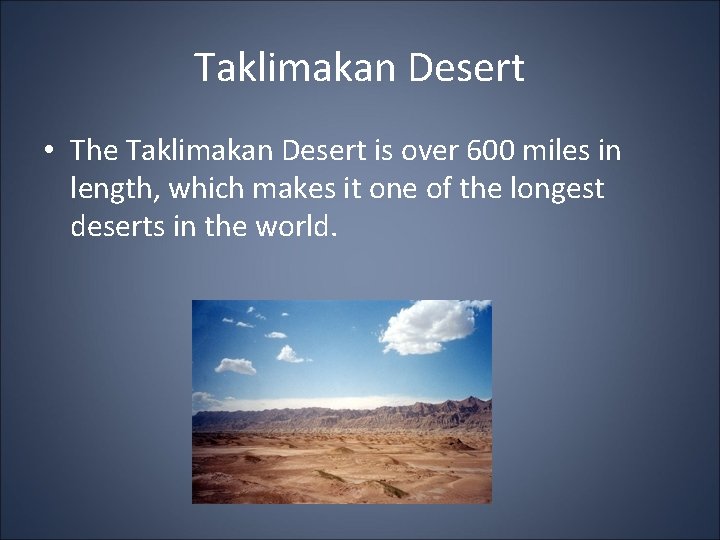
Taklimakan Desert • The Taklimakan Desert is over 600 miles in length, which makes it one of the longest deserts in the world.
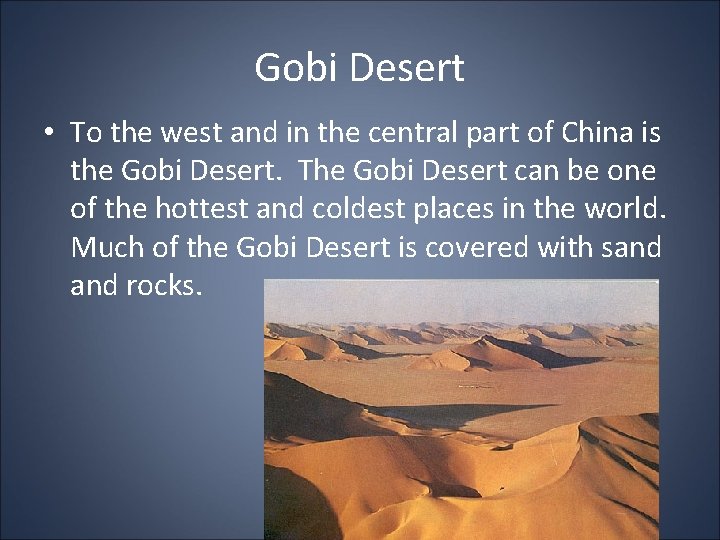
Gobi Desert • To the west and in the central part of China is the Gobi Desert. The Gobi Desert can be one of the hottest and coldest places in the world. Much of the Gobi Desert is covered with sand rocks.
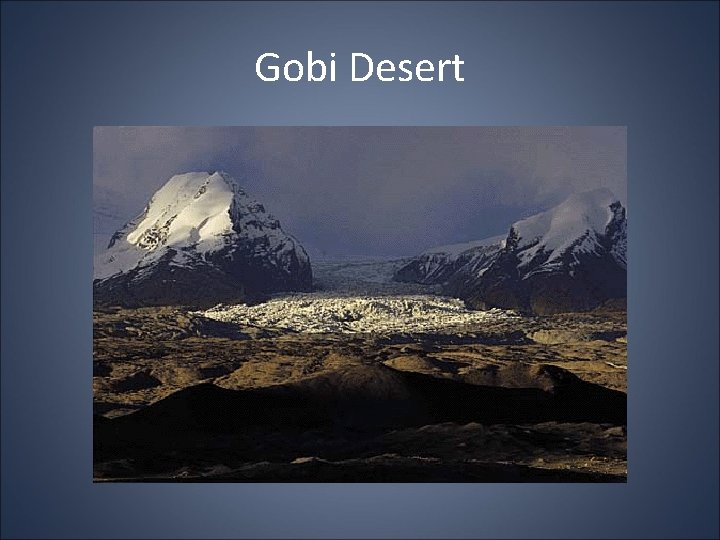
Gobi Desert
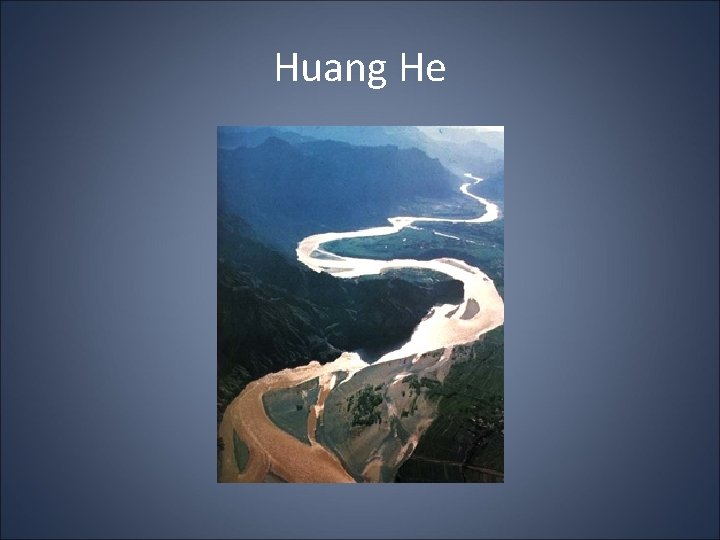
Huang He • The Huang He, or Yellow River, begins in the Tibetan Plateau and flows east through China to the Yellow Sea. The yellow dust blowing out of the Gobi Desert is picked up by the Huang He and carried along as loess (silt) makes the river and sea a yellowish color. The loess makes the soil rich. The river is used for transportation of goods and people. The frequent flooding of the river as caused some people to call it “China’s Sorrow. ”
Huang He
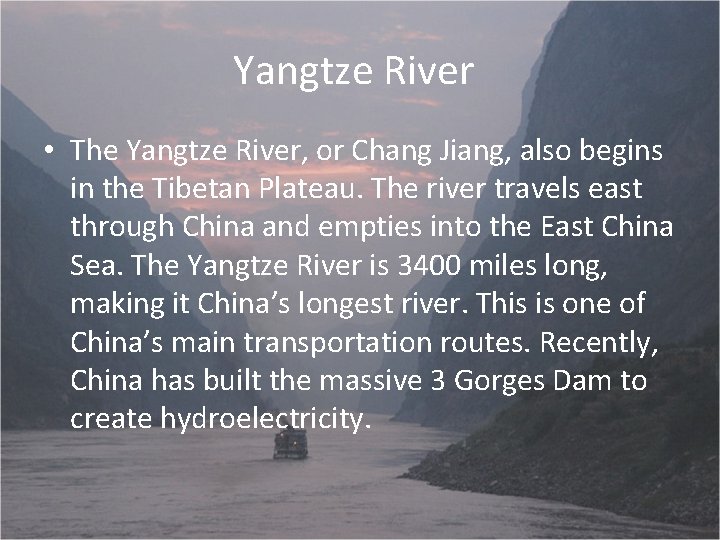
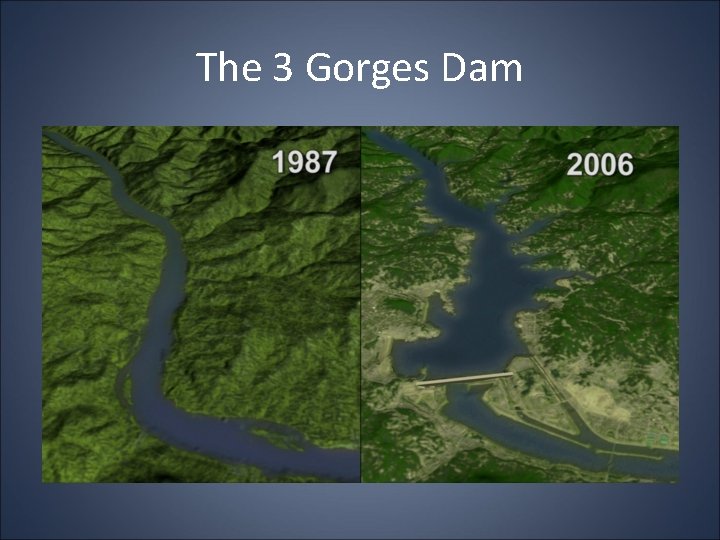
Yangtze River • The Yangtze River, or Chang Jiang, also begins in the Tibetan Plateau. The river travels east through China and empties into the East China Sea. The Yangtze River is 3400 miles long, making it China’s longest river. This is one of China’s main transportation routes. Recently, China has built the massive 3 Gorges Dam to create hydroelectricity.
The 3 Gorges Dam
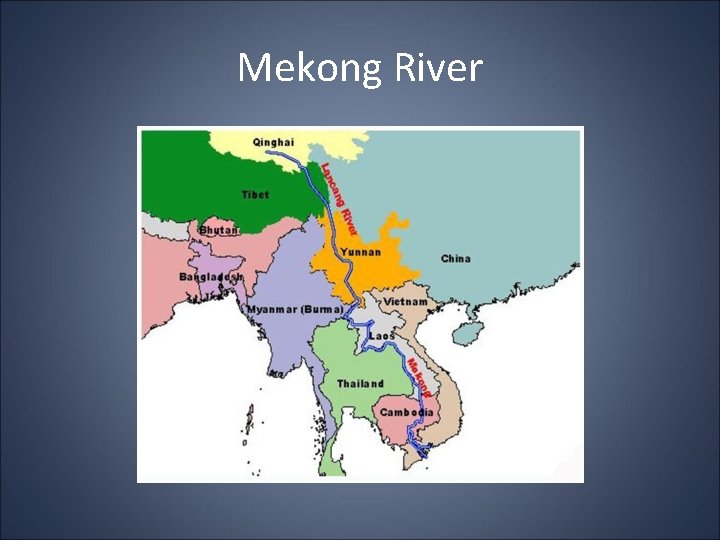
Mekong River • The Mekong River begins in the Tibetan Plateau. The river flows from China through Myanmar, Thailand, Laos, Cambodia, and finally Vietnam, where it empties into the South China Sea. The Mekong River delta has some of the richest farmland in the world.
Mekong River
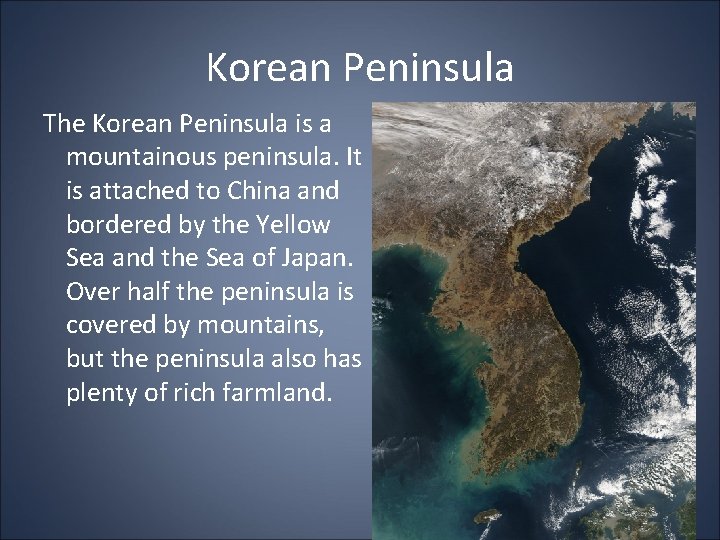
Korean Peninsula The Korean Peninsula is a mountainous peninsula. It is attached to China and bordered by the Yellow Sea and the Sea of Japan. Over half the peninsula is covered by mountains, but the peninsula also has plenty of rich farmland.
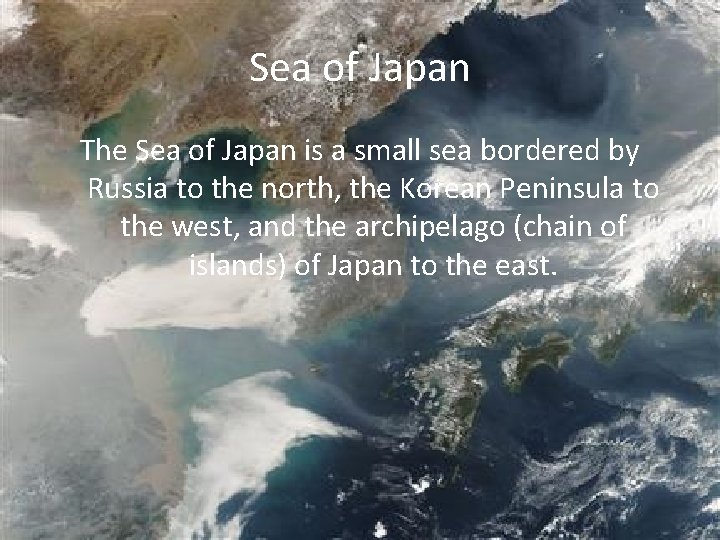
Sea of Japan The Sea of Japan is a small sea bordered by Russia to the north, the Korean Peninsula to the west, and the archipelago (chain of islands) of Japan to the east.