
Geographic Features and Climate Students will construct explanations
- Slides: 27
Geographic Features and Climate Students will construct explanations and design solutions in order to show atmospheric flow, geographic features, and ocean currents affect the climate of a region through heat transfer, highlighting that sub-systems make up a larger system.
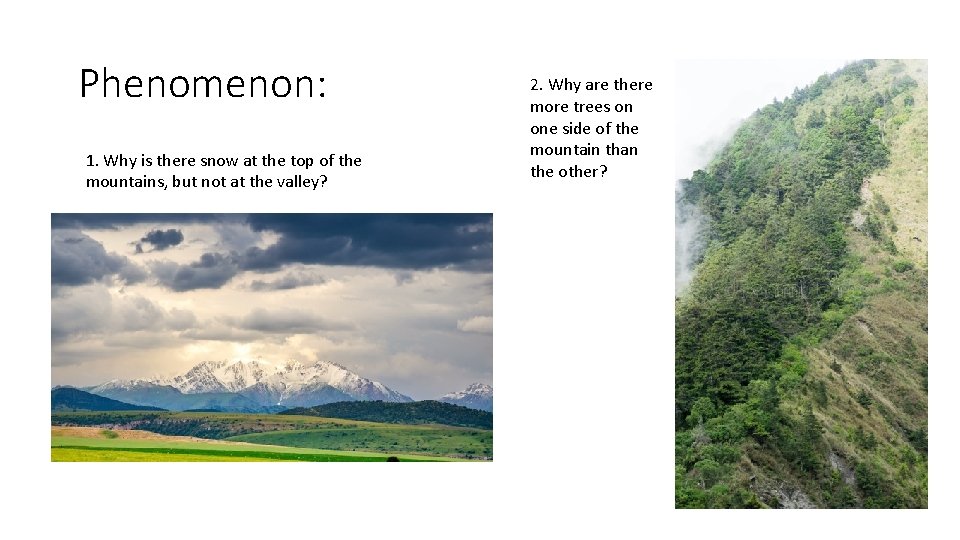
Phenomenon: 1. Why is there snow at the top of the mountains, but not at the valley? 2. Why are there more trees on one side of the mountain than the other?
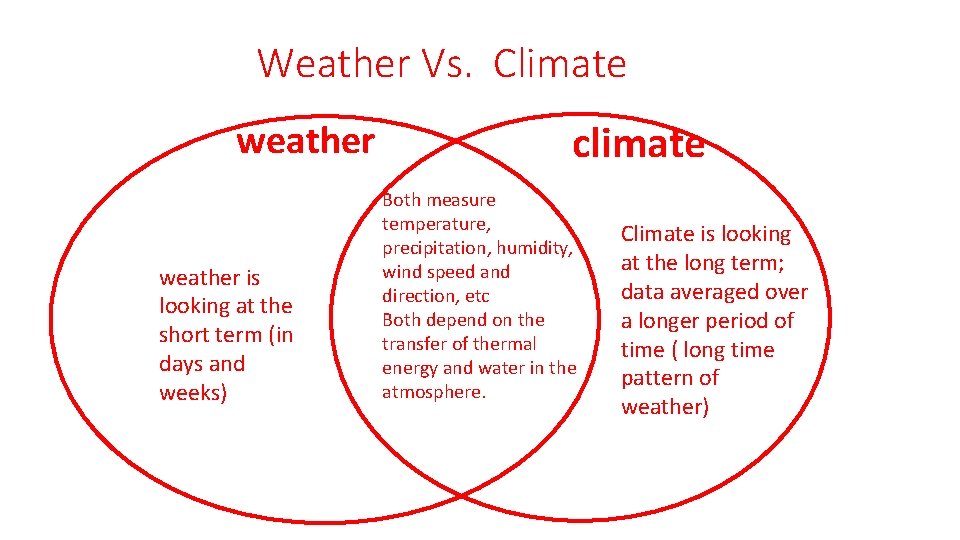
Weather Vs. Climate weather is looking at the short term (in days and weeks) climate Both measure temperature, precipitation, humidity, wind speed and direction, etc Both depend on the transfer of thermal energy and water in the atmosphere. Climate is looking at the long term; data averaged over a longer period of time ( long time pattern of weather)
• Different parts of the world have different climates. Some parts of the world are hot and rainy nearly every day. They have a tropical wet climate. Others are cold and snow-covered most of the year. They have a polar climate. Between the icy poles and the steamy tropics are many other climates that contribute to Earth’s biodiversity and geologic heritage.
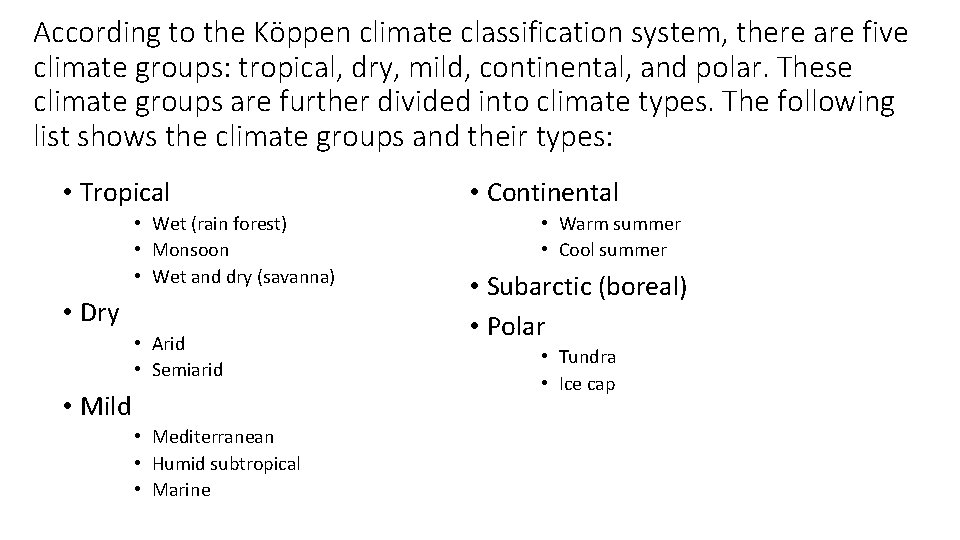
According to the Köppen climate classification system, there are five climate groups: tropical, dry, mild, continental, and polar. These climate groups are further divided into climate types. The following list shows the climate groups and their types: • Tropical • Wet (rain forest) • Monsoon • Wet and dry (savanna) • Dry • Arid • Semiarid • Mild • Mediterranean • Humid subtropical • Marine • Continental • Warm summer • Cool summer • Subarctic (boreal) • Polar • Tundra • Ice cap
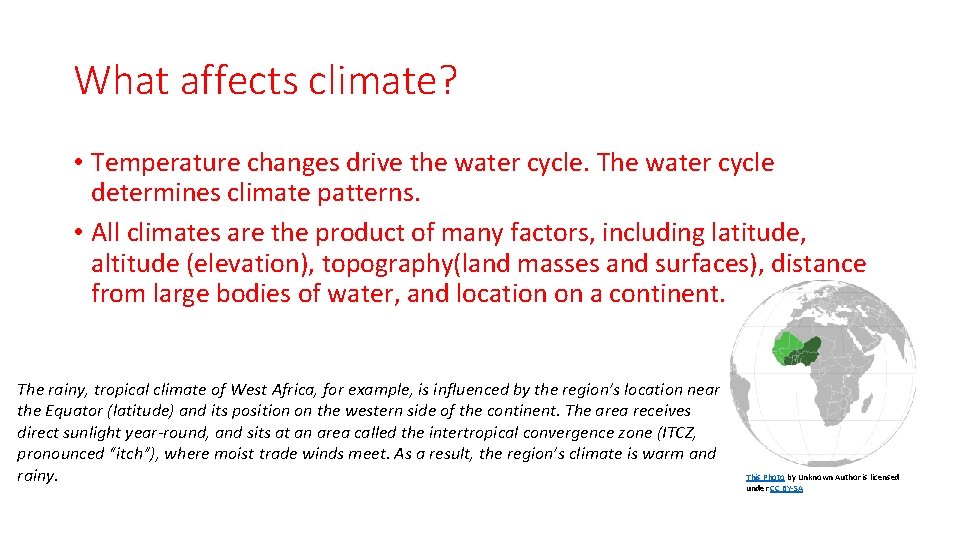
What affects climate? • Temperature changes drive the water cycle. The water cycle determines climate patterns. • All climates are the product of many factors, including latitude, altitude (elevation), topography(land masses and surfaces), distance from large bodies of water, and location on a continent. The rainy, tropical climate of West Africa, for example, is influenced by the region’s location near the Equator (latitude) and its position on the western side of the continent. The area receives direct sunlight year-round, and sits at an area called the intertropical convergence zone (ITCZ, pronounced “itch”), where moist trade winds meet. As a result, the region’s climate is warm and rainy. This Photo by Unknown Author is licensed under CC BY-SA
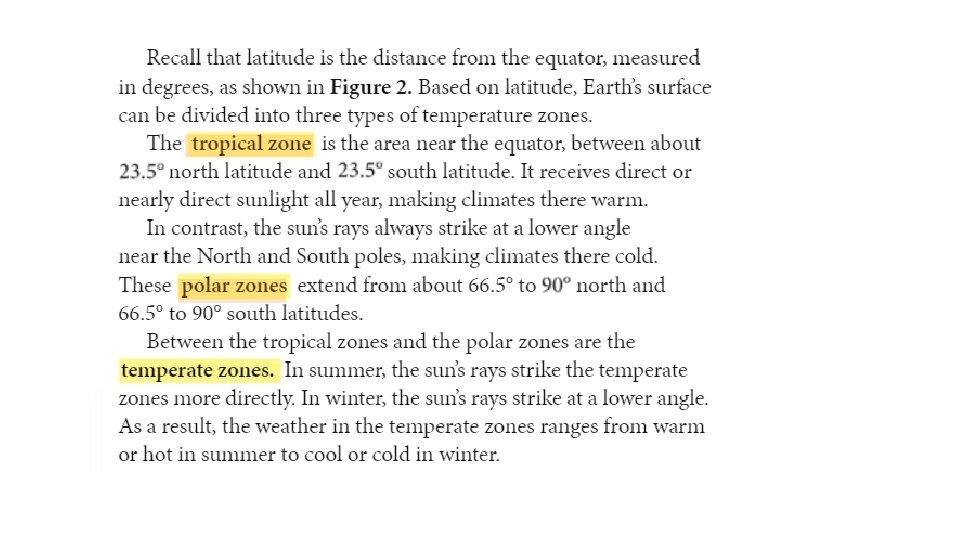
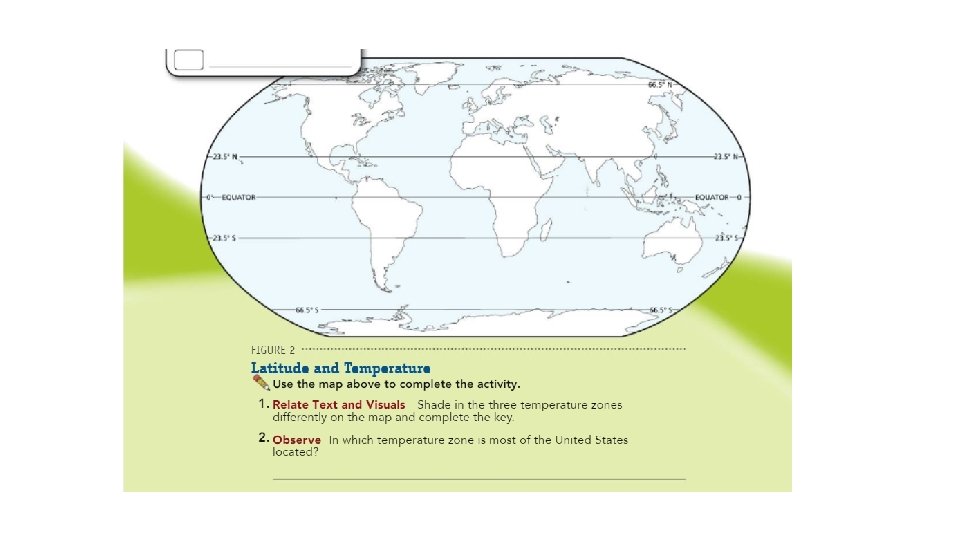
Climate and Latitude • Latitude plays a huge factor in determining climate because different latitudes receive different amounts of solar radiation. • The Equator receives the most solar radiation. Days are equally long year-round and the Sun is just about directly overhead at midday. • The polar regions receive the least solar radiation. The night lasts six months during the winter. Even in summer, the Sun never rises very high in the sky. Sunlight filters through a thick wedge of atmosphere, making the sunlight much less intense. The high albedo, because of ice and snow, reflects a good portion of the Sun's light.
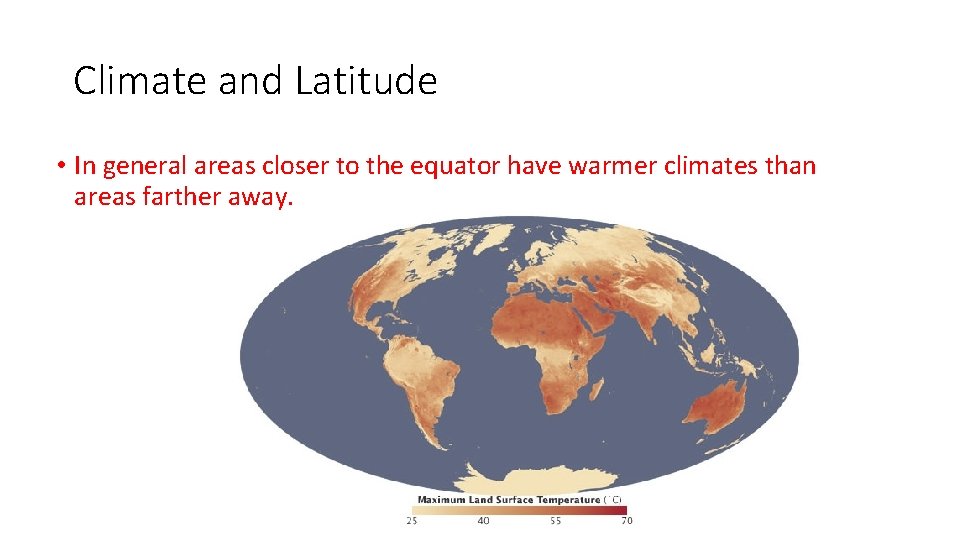
Climate and Latitude • In general areas closer to the equator have warmer climates than areas farther away.
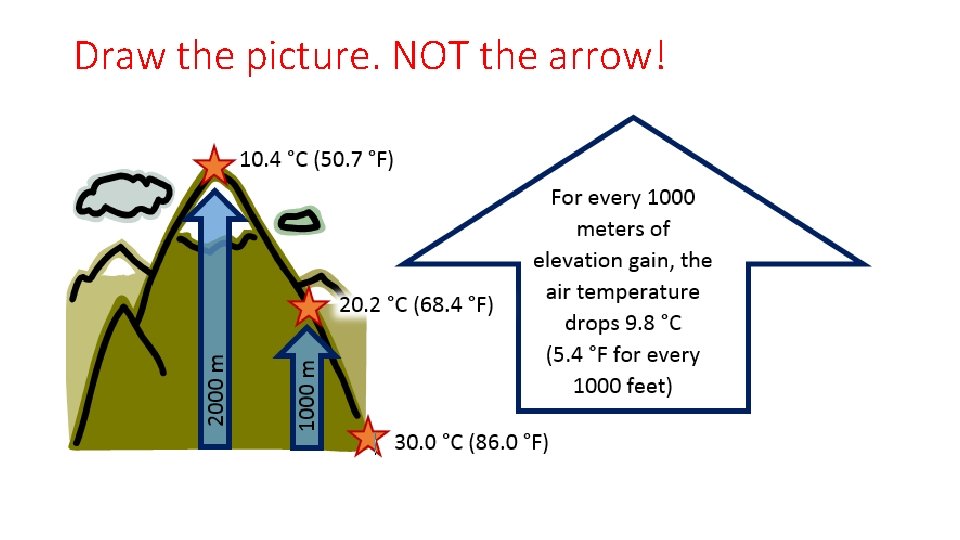
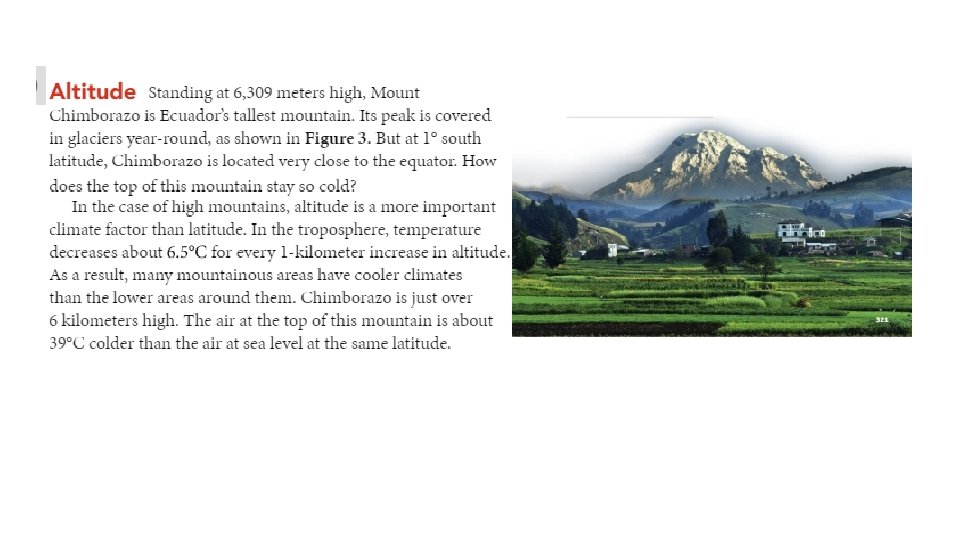
Climate and Altitude • Altitude, like elevation, is the distance above sea level. • High-altitude locations are usually much colder than areas closer to sea level. This is due to the low air pressure. Air expands as it rises, and the fewer gas molecules—including nitrogen, oxygen, and carbon dioxide—have fewer chances to bump into each other
Draw the picture. NOT the arrow!
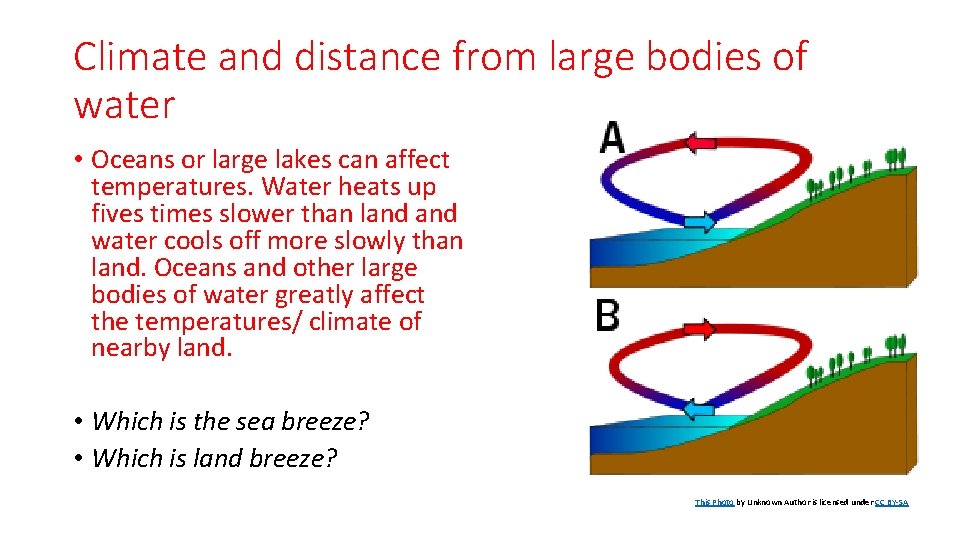
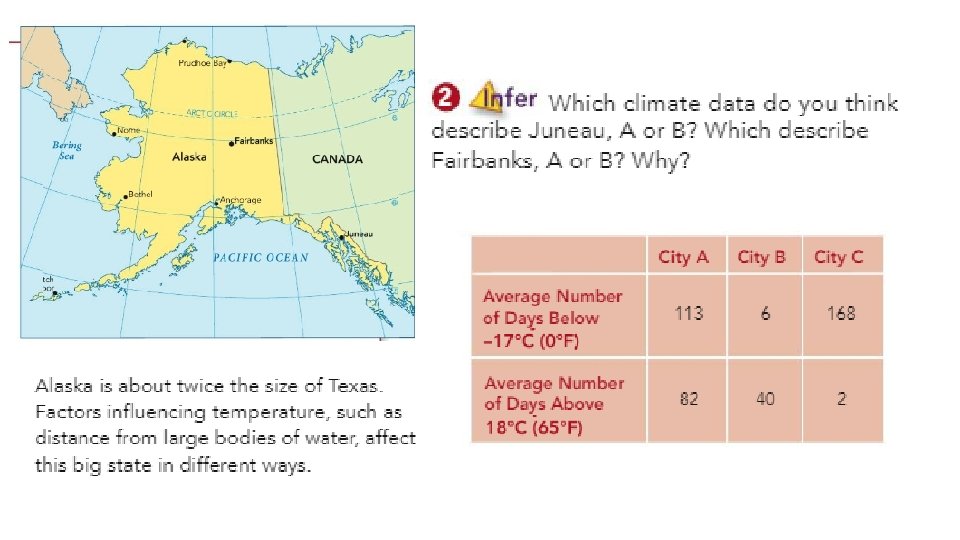
Climate and distance from large bodies of water • Oceans or large lakes can affect temperatures. Water heats up fives times slower than land water cools off more slowly than land. Oceans and other large bodies of water greatly affect the temperatures/ climate of nearby land. • Which is the sea breeze? • Which is land breeze? This Photo by Unknown Author is licensed under CC BY-SA
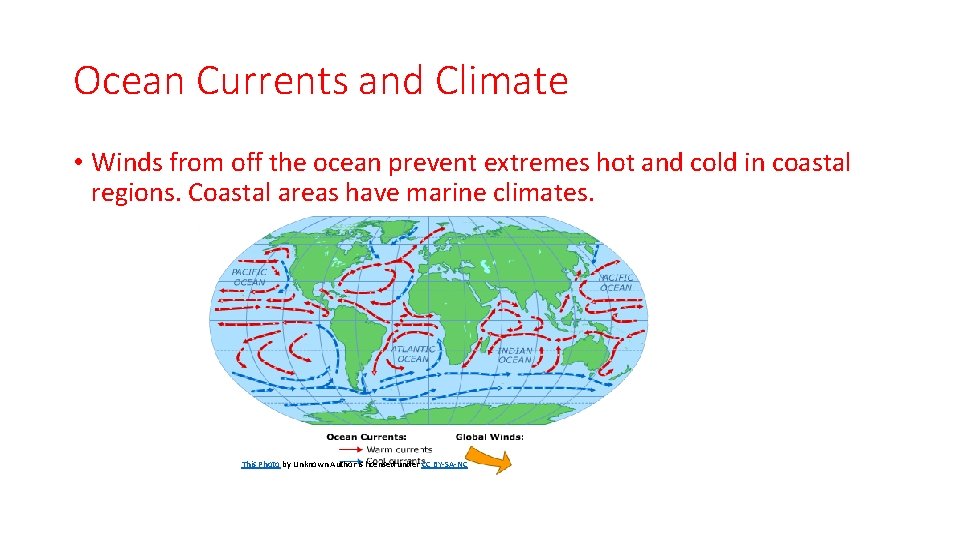
Ocean Currents and Climate • Winds from off the ocean prevent extremes hot and cold in coastal regions. Coastal areas have marine climates. This Photo by Unknown Author is licensed under CC BY-SA-NC
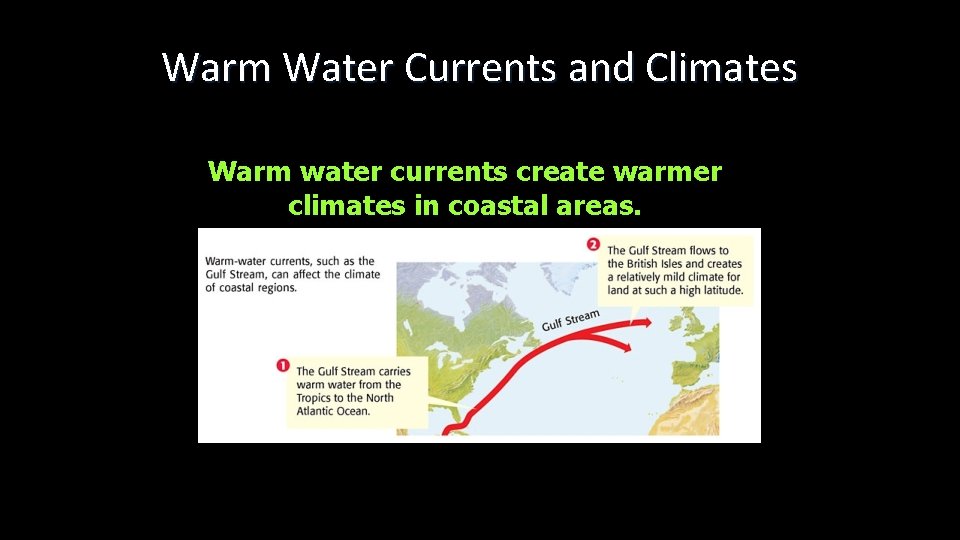
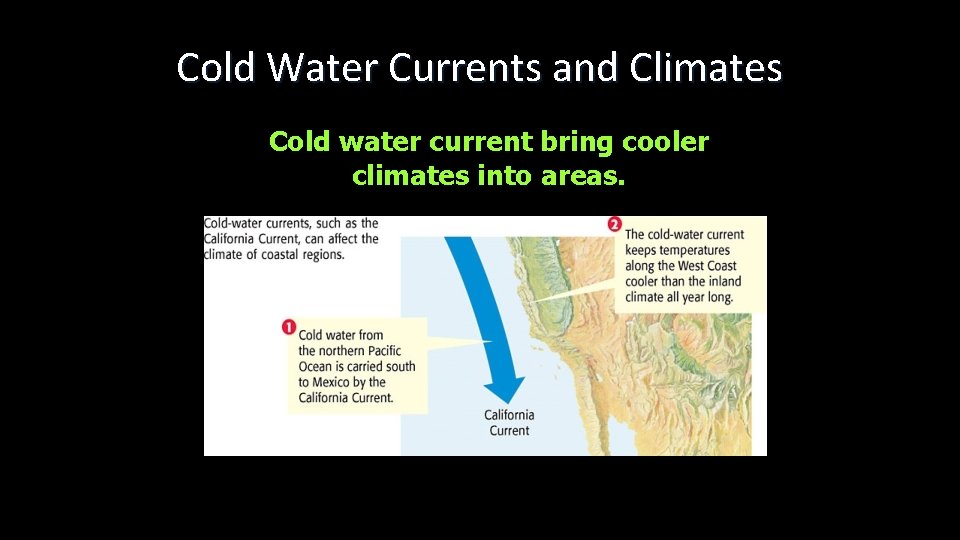
Currents and Climates • Surface currents gently cool or warm the coastal areas year round • Some surface currents change their circulation pattern causing changes in the atmosphere that affect the climate in many parts of the world.
Warm Water Currents and Climates Warm water currents create warmer climates in coastal areas.
Cold Water Currents and Climates Cold water current bring cooler climates into areas.
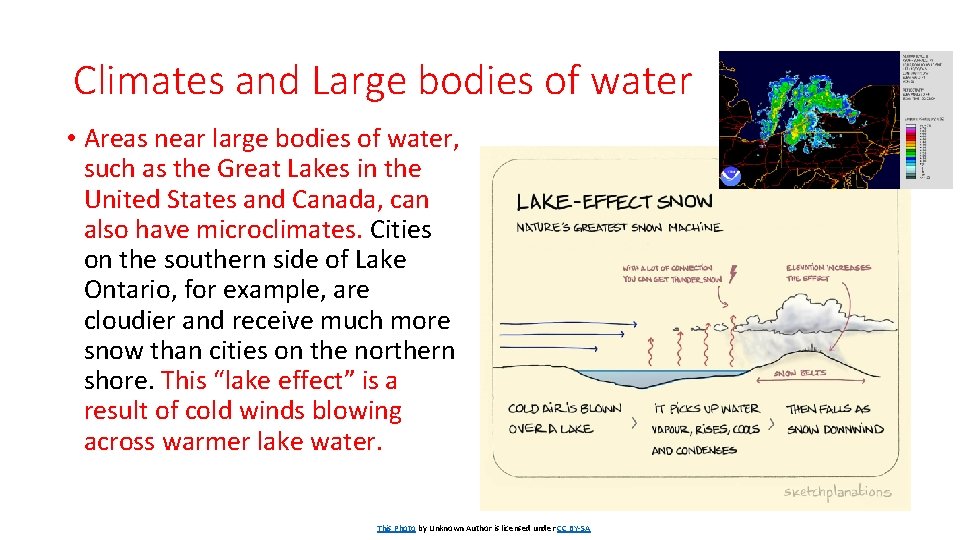
Climates and Large bodies of water • Areas near large bodies of water, such as the Great Lakes in the United States and Canada, can also have microclimates. Cities on the southern side of Lake Ontario, for example, are cloudier and receive much more snow than cities on the northern shore. This “lake effect” is a result of cold winds blowing across warmer lake water. This Photo by Unknown Author is licensed under CC BY-SA
Climate and Topography (land masses) • The amount of precipitation that falls in area can vary yearly. But, over time, total precipitation tends toward a yearly average. • The main factors that affect the amount of precipitation in some climates are prevailing winds, presence of mountains, and seasonal winds.
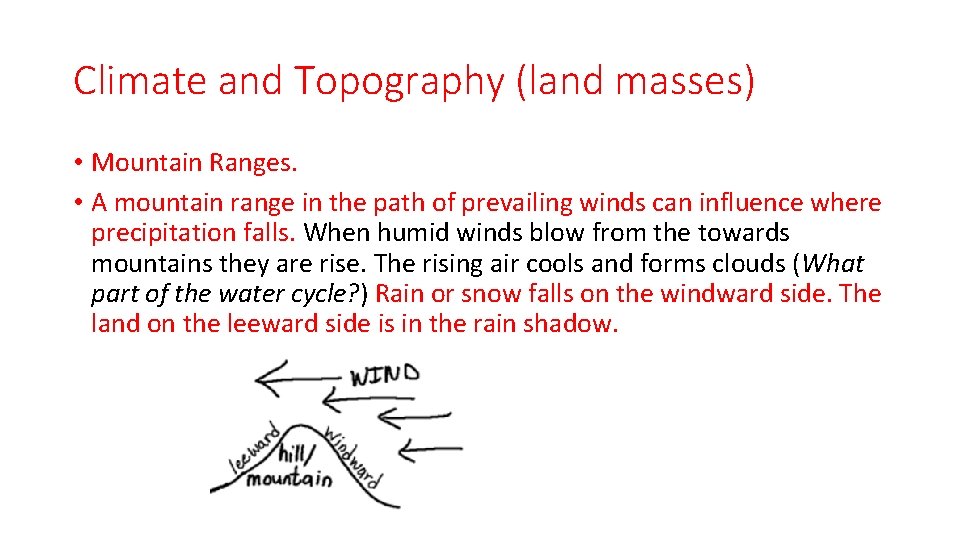
Climate and Topography (land masses) • Mountain Ranges. • A mountain range in the path of prevailing winds can influence where precipitation falls. When humid winds blow from the towards mountains they are rise. The rising air cools and forms clouds (What part of the water cycle? ) Rain or snow falls on the windward side. The land on the leeward side is in the rain shadow.
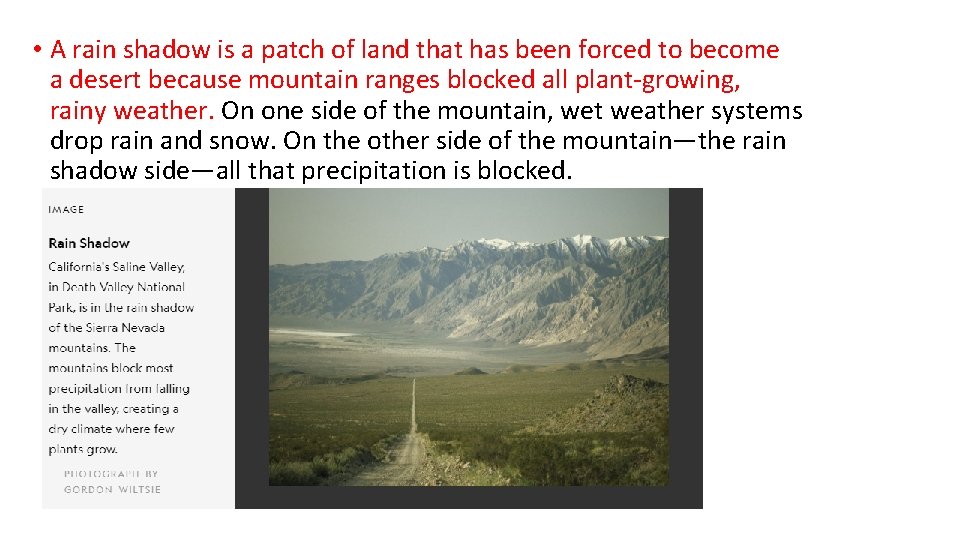
• A rain shadow is a patch of land that has been forced to become a desert because mountain ranges blocked all plant-growing, rainy weather. On one side of the mountain, wet weather systems drop rain and snow. On the other side of the mountain—the rain shadow side—all that precipitation is blocked.
• In a rain shadow, it’s warm and dry. On the other side of the mountain, it’s wet and cool. Why is there a difference? When an air mass moves from a low elevation to a high elevation, it expands and cools. This cool air cannot hold moisture as well as warm air. Cool air forms clouds, which drop rain and snow, as it rises up a mountain. After the air mass crosses over the peak of the mountain and starts down the other side, the air warms up and the clouds dissipate. That means there is less rainfall.
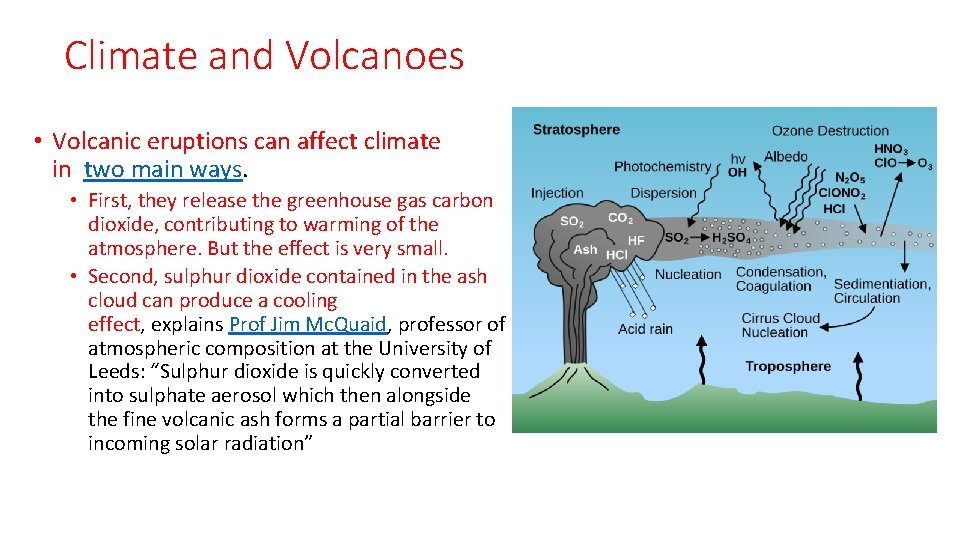
Climate and Volcanoes • Volcanic eruptions can affect climate in two main ways. • First, they release the greenhouse gas carbon dioxide, contributing to warming of the atmosphere. But the effect is very small. • Second, sulphur dioxide contained in the ash cloud can produce a cooling effect, explains Prof Jim Mc. Quaid, professor of atmospheric composition at the University of Leeds: “Sulphur dioxide is quickly converted into sulphate aerosol which then alongside the fine volcanic ash forms a partial barrier to incoming solar radiation”