
Geographic Colonialism Theories What is colonialism The practice
- Slides: 28
Geographic Colonialism & Theories
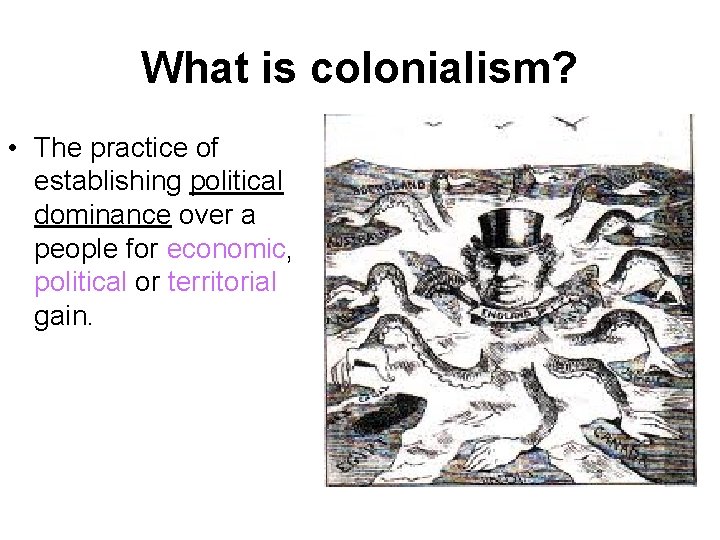
What is colonialism? • The practice of establishing political dominance over a people for economic, political or territorial gain.
Organic Theory & the growth of states ~ Fredrich Razel • Razel came up with term Geopolitics • Organic Theory- a state is like a living that constantly needs to grow to thrive • Razel’s theory describes colonization saying that states needed to take on new territory in order to meet the demands of their growing populations
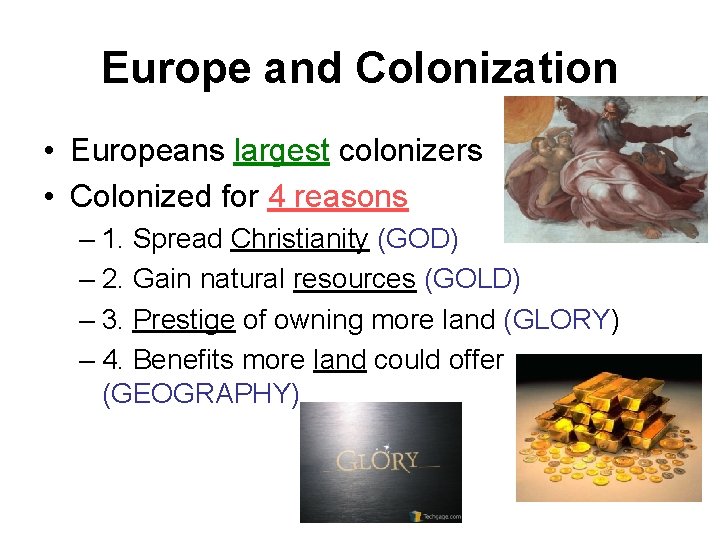
Europe and Colonization • Europeans largest colonizers • Colonized for 4 reasons – 1. Spread Christianity (GOD) – 2. Gain natural resources (GOLD) – 3. Prestige of owning more land (GLORY) – 4. Benefits more land could offer (GEOGRAPHY)
Impacts of Colonialism • French in Quebec • South America being similar to the Iberian Peninsula (Spain & Portugal) in language, religion, architecture, customs • Spanish last names in the Philippines • Suriname speaking Dutch • English in the United States
Effects of Colonization • Creation of Core and Periphery • Core States- industrialized states – Formally known as 1 st world countries – States that had colonies – Ex. US, England, Germany, France, Japan • Periphery or peripheral state- developing countries – Formally known as the 3 rd world – Former colonies • Sub-Saharan Africa, Central America • Semi-Periphery – Former colonies that are developing quickly • Example: China
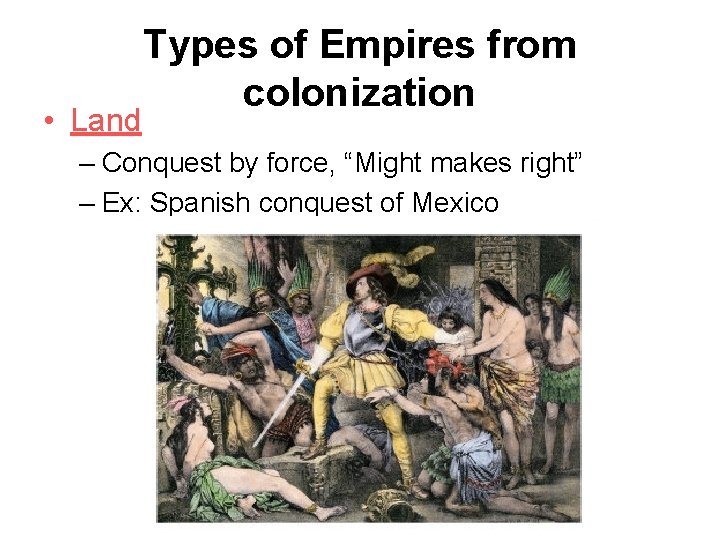
• Land Types of Empires from colonization – Conquest by force, “Might makes right” – Ex: Spanish conquest of Mexico
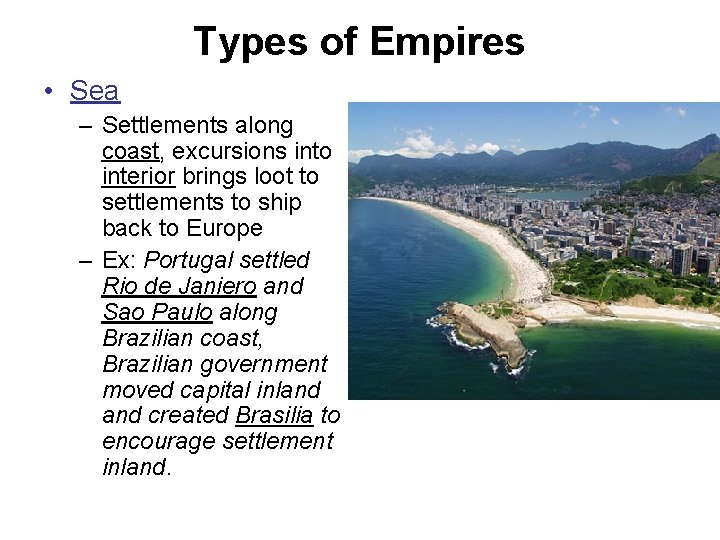
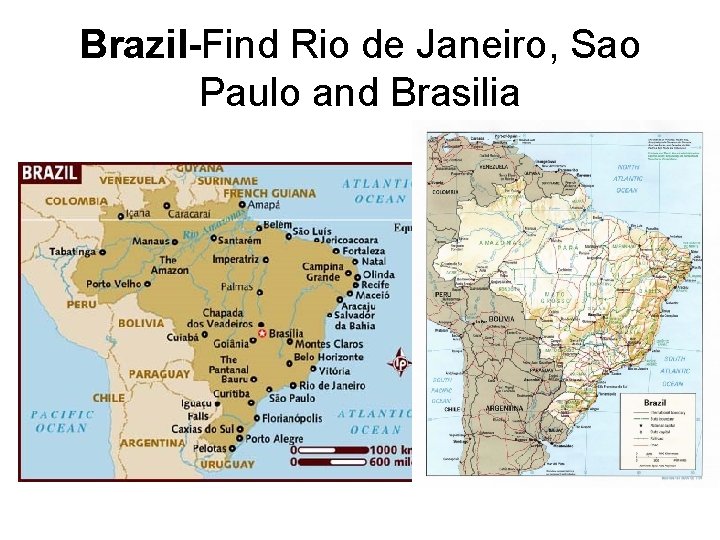
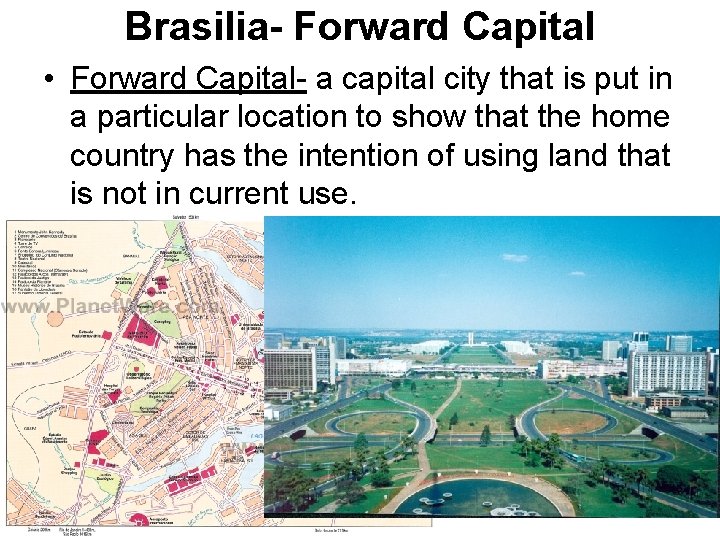
Types of Empires • Sea – Settlements along coast, excursions into interior brings loot to settlements to ship back to Europe – Ex: Portugal settled Rio de Janiero and Sao Paulo along Brazilian coast, Brazilian government moved capital inland created Brasilia to encourage settlement inland.
Brazil-Find Rio de Janeiro, Sao Paulo and Brasilia
Brasilia- Forward Capital • Forward Capital- a capital city that is put in a particular location to show that the home country has the intention of using land that is not in current use.
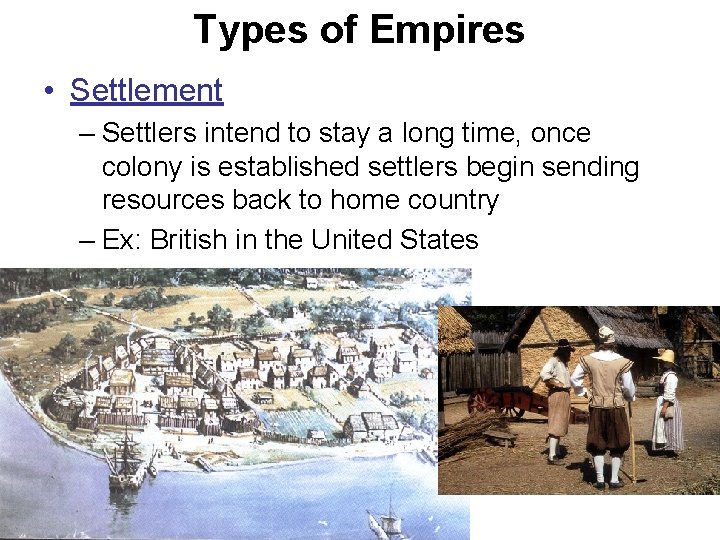
Types of Empires • Settlement – Settlers intend to stay a long time, once colony is established settlers begin sending resources back to home country – Ex: British in the United States
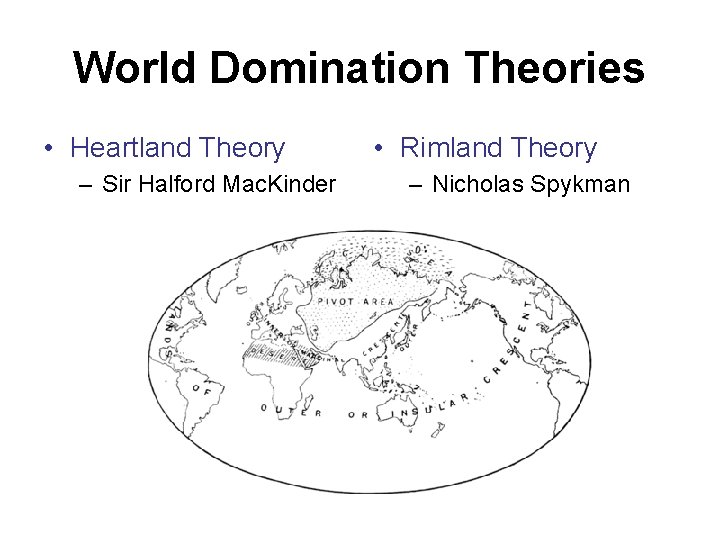
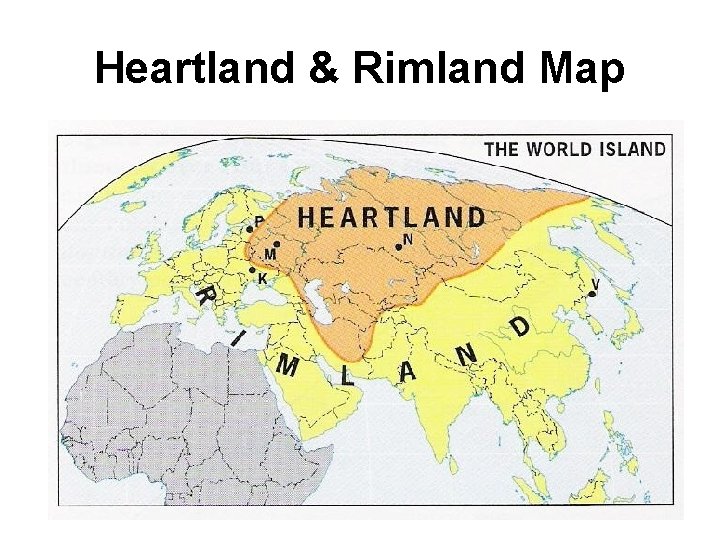
World Domination Theories • Heartland Theory – Sir Halford Mac. Kinder • Rimland Theory – Nicholas Spykman
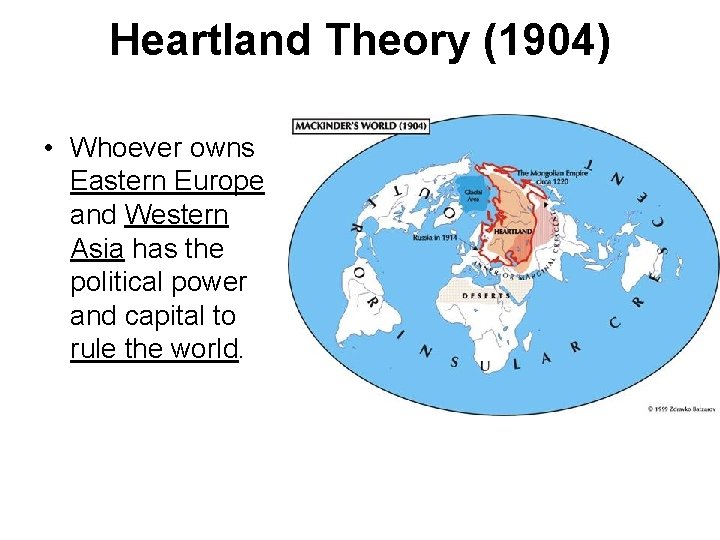
Heartland Theory (1904) • Whoever owns Eastern Europe and Western Asia has the political power and capital to rule the world.
Heartland Theory • Eastern Europe contained one of the richest agricultural regions in the world, abundant coal as well. • Hitler believed in this theory which is why he invaded Eastern Europe
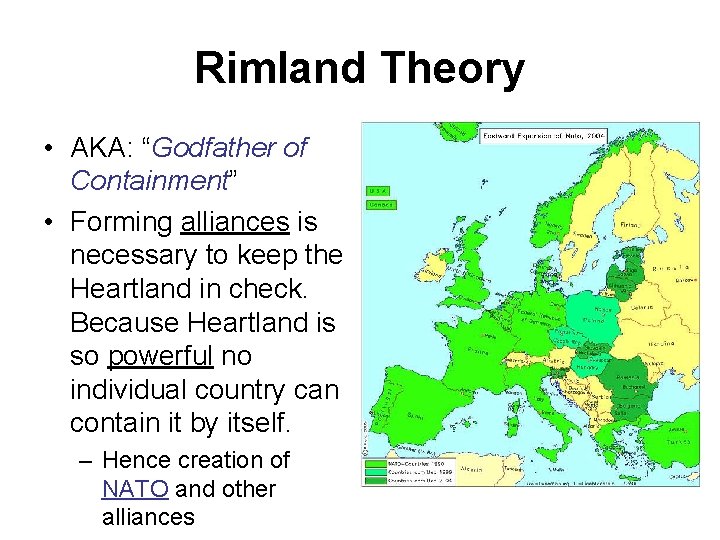
Rimland Theory • AKA: “Godfather of Containment” • Forming alliances is necessary to keep the Heartland in check. Because Heartland is so powerful no individual country can contain it by itself. – Hence creation of NATO and other alliances
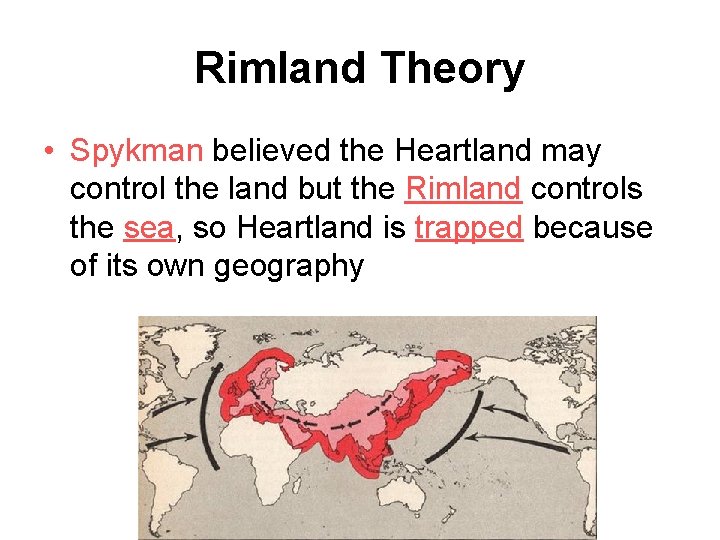
Rimland Theory • Spykman believed the Heartland may control the land but the Rimland controls the sea, so Heartland is trapped because of its own geography
Heartland & Rimland Map
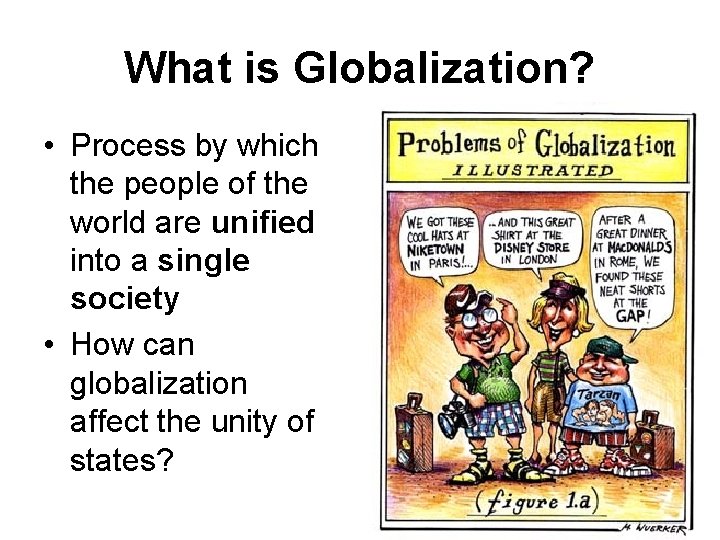
What is Globalization? • Process by which the people of the world are unified into a single society • How can globalization affect the unity of states?
Globalization • Transnational Corporations- a corporation or enterprise that manages production establishments or delivers services in at least two countries – Resources (Periphery) – Production (Periphery, Semi-Periphery) – Marketing and ownership (Core) What are some transnational corporations? – Coca-Cola, Honda, Exxon. Mobil, Ford Motor Company, Wal-Mart Stores Inc. • How can globalization be a centrifugal force?
Globalization • International Nongovernmental Organizations (NGO)- International group of private individuals with one common goal – no participation or representation of any government – (Interest groups at the international level) • What are some examples: – Greenpeace, Amnesty International, Doctors Without Borders • How can International NGOs inhibit the development of a nation state?
Globalization • Supranational organizations- 3 or more states joined together for a common goal – (Not super-natural) – What would the purposes be for joining a Supranational Organization? – What are some examples of supranational organizations? • UN, European Union, NATO, NAFTA
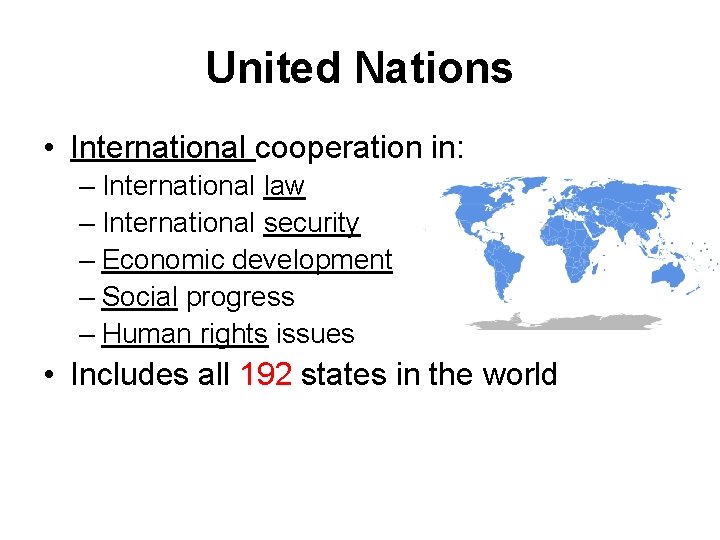
United Nations • International cooperation in: – International law – International security – Economic development – Social progress – Human rights issues • Includes all 192 states in the world
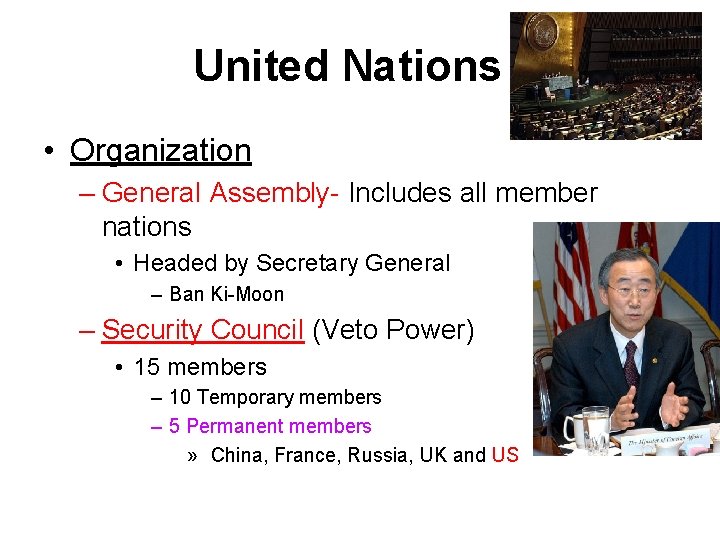
United Nations • Organization – General Assembly- Includes all member nations • Headed by Secretary General – Ban Ki-Moon – Security Council (Veto Power) • 15 members – 10 Temporary members – 5 Permanent members » China, France, Russia, UK and US
United Nations • Agencies and Programs – World Health Organization (WHO) – Food and Agriculture Organization (FAO) – United Nations Educational, Scientific and Cultural Organization (UNESCO) – World Bank – International Monetary Fund – World Trade Organization • GATT (General Agreement on Tariffs and Trade) • What are some problems with cutting tariffs?
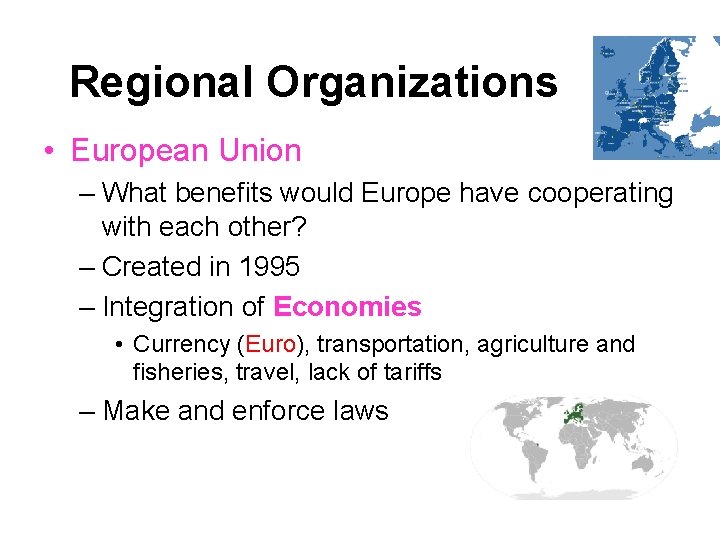
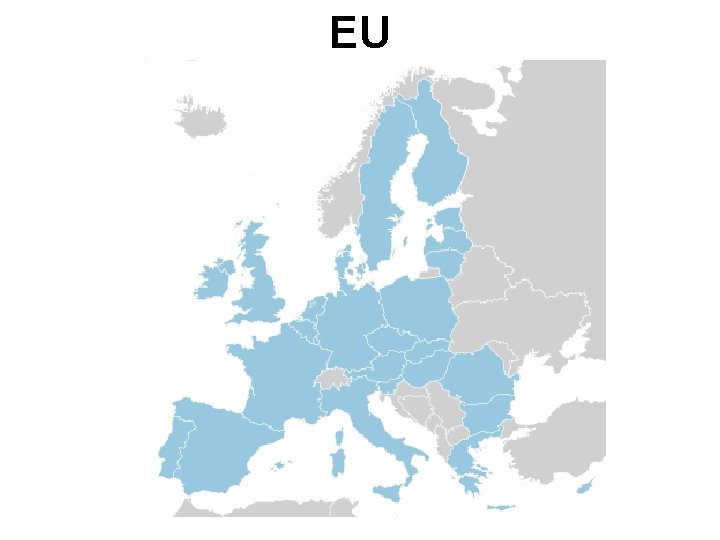
Regional Organizations • European Union – What benefits would Europe have cooperating with each other? – Created in 1995 – Integration of Economies • Currency (Euro), transportation, agriculture and fisheries, travel, lack of tariffs – Make and enforce laws
EU
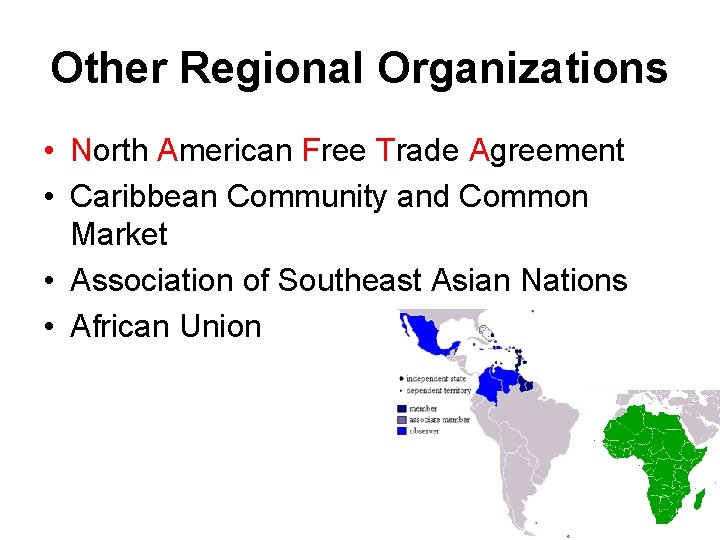
Other Regional Organizations • North American Free Trade Agreement • Caribbean Community and Common Market • Association of Southeast Asian Nations • African Union
FRQ Hint • Review your map of South Asia • Centripetal and centrifugal forces • Know what the word “viability” means