
Geographic Areas for NeighborhoodLevel Analysis Using ACS Data
Geographic Areas for Neighborhood-Level Analysis Using ACS Data Michael Ratcliffe Geography Division US Census Bureau 1
Which census geographic areas relate to neighborhoods? • Block Groups – Subsets of census tracts – Population range: 600 to 1, 200 • Census Tracts – Population range: 1, 200 to 8, 000; optimum 4, 000 • ZIP Code Tabulation Areas – Census block-based representations of ZIP Codes • Places – Incorporated places – Census designated places (unincorporated places) 2
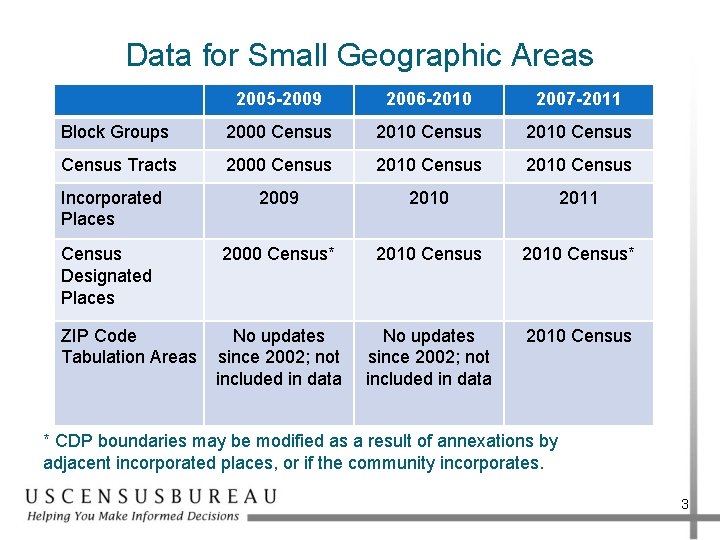
Data for Small Geographic Areas 2005 -2009 2006 -2010 2007 -2011 Block Groups 2000 Census 2010 Census Tracts 2000 Census 2010 Census Incorporated Places 2009 2010 2011 Census Designated Places 2000 Census* 2010 Census* No updates since 2002; not included in data 2010 Census ZIP Code Tabulation Areas * CDP boundaries may be modified as a result of annexations by adjacent incorporated places, or if the community incorporates. 3
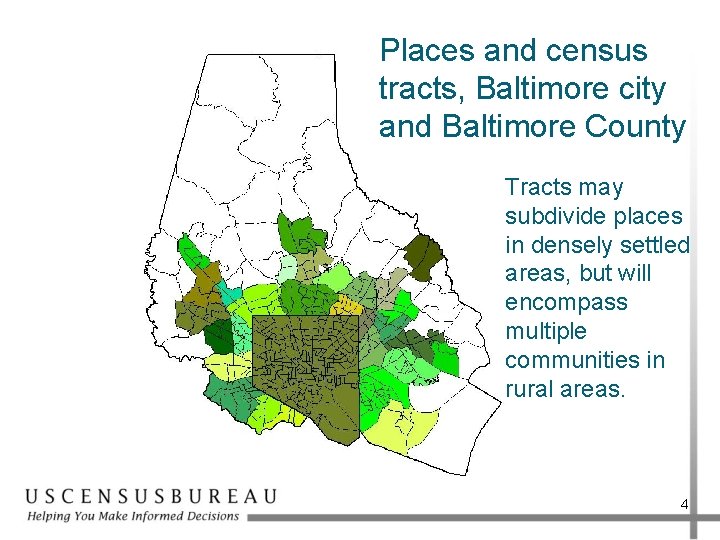
Places and census tracts, Baltimore city and Baltimore County Tracts may subdivide places in densely settled areas, but will encompass multiple communities in rural areas. 4

Baltimore neighborhoods and tracts 5
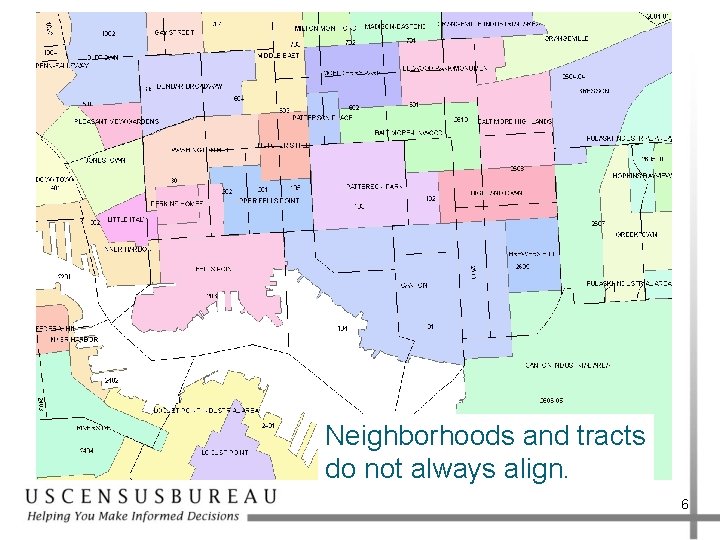
Neighborhoods and tracts do not always align. 6
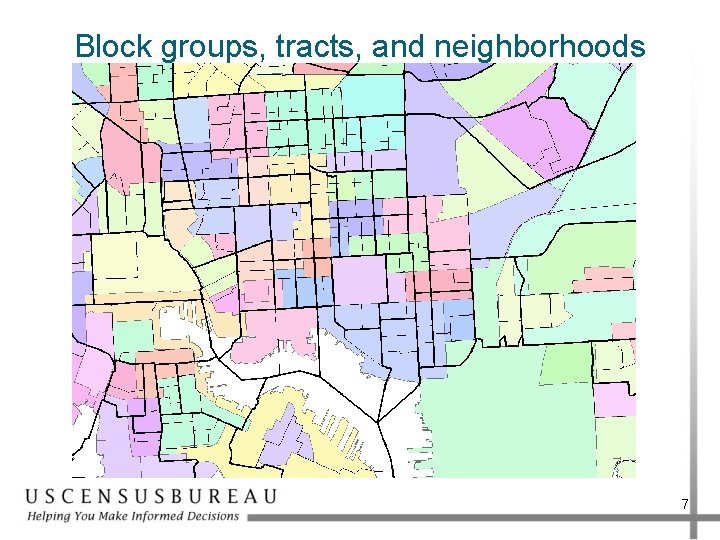
Block groups, tracts, and neighborhoods 7
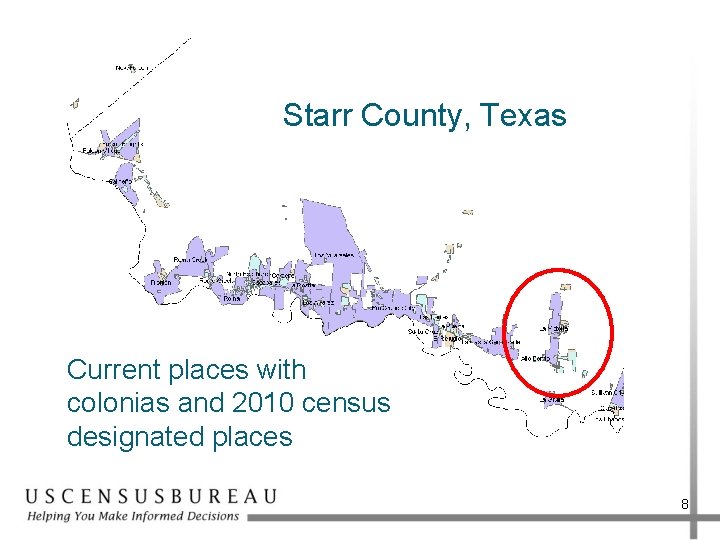
Starr County, Texas Current places with colonias and 2010 census designated places 8
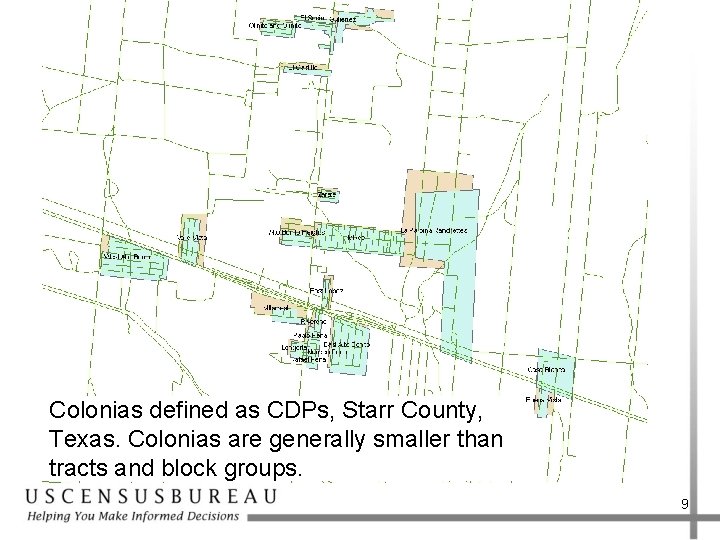
Colonias defined as CDPs, Starr County, Texas. Colonias are generally smaller than tracts and block groups. 9
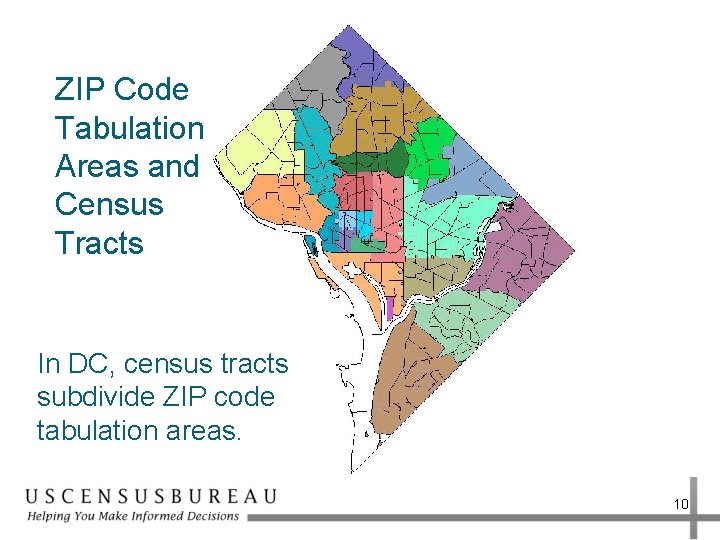
ZIP Code Tabulation Areas and Census Tracts In DC, census tracts subdivide ZIP code tabulation areas. 10
- Slides: 10