
GEOG 310 Middle America Sriram Kh Associate Professor


- Slides: 47
GEOG 310 Middle America Sriram Khé Associate Professor of Geography Sriram 1
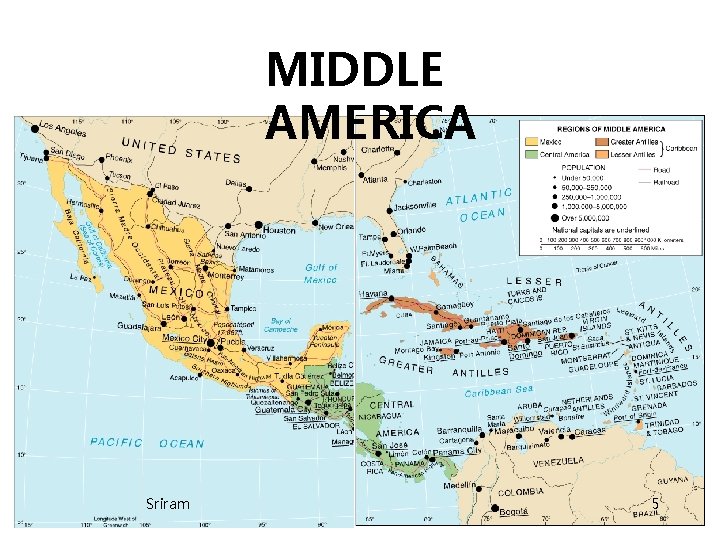
MIDDLE AMERICA Sriram
INTRODUCTION TO MIDDLE AMERICA THE REALM – MEXICO, CENTRAL AMERICA, CARIBBEAN ISLANDS MAJOR GEOGRAPHIC QUALITIES – FRAGMENTED - PHYSICALLY AND POLITICALLY – DIVERSE CULTURALLY – POVERTY IS ENDEMIC Sriram 3
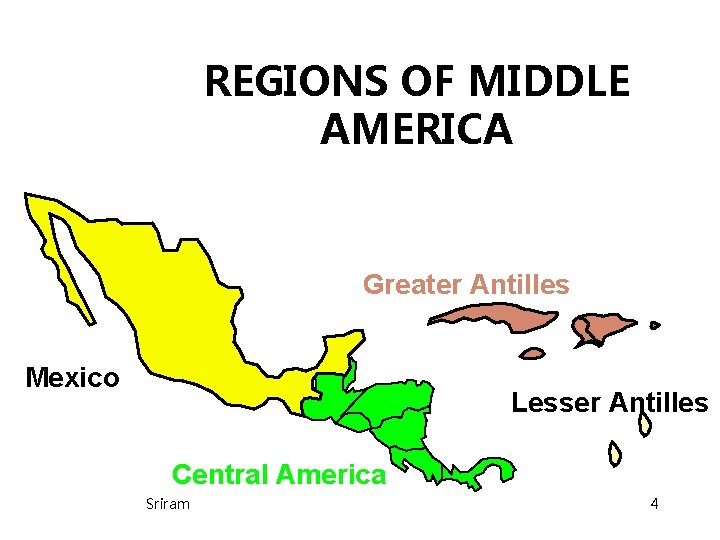
REGIONS OF MIDDLE AMERICA Greater Antilles Mexico Lesser Antilles Central America Sriram 4
MIDDLE AMERICA Sriram 5
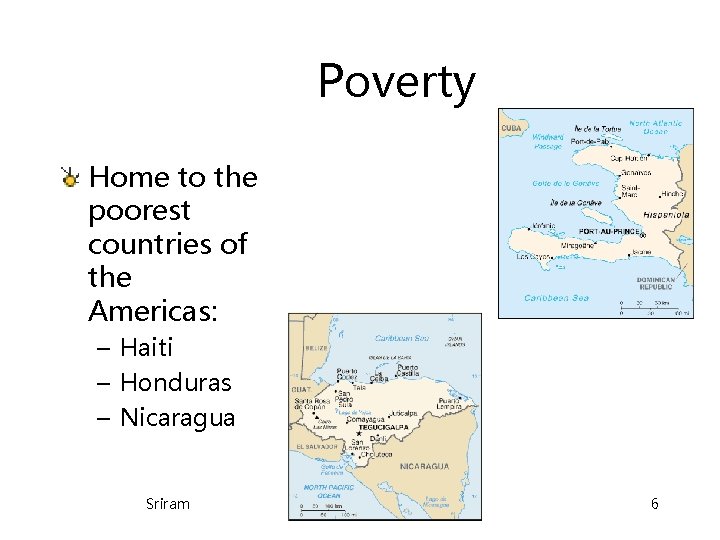
Poverty Home to the poorest countries of the Americas: – Haiti – Honduras – Nicaragua Sriram 6
PHYSICAL GEOGRAPHY LAND BRIDGE ARCHIPELAGO – GREATER AND LESSER ANTILLES NATURAL HAZARDS – EARTHQUAKES – VOLCANOES Sriram – HURRICANES I wonde r why? 7
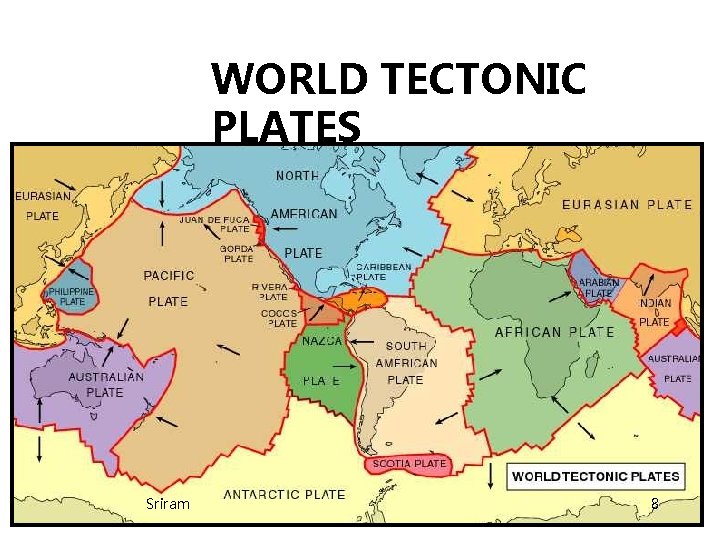
WORLD TECTONIC PLATES Sriram 8
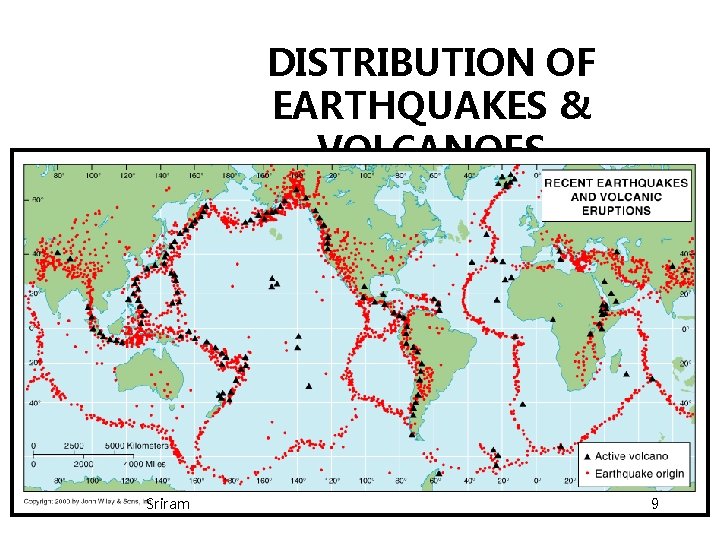
DISTRIBUTION OF EARTHQUAKES & VOLCANOES Sriram 9
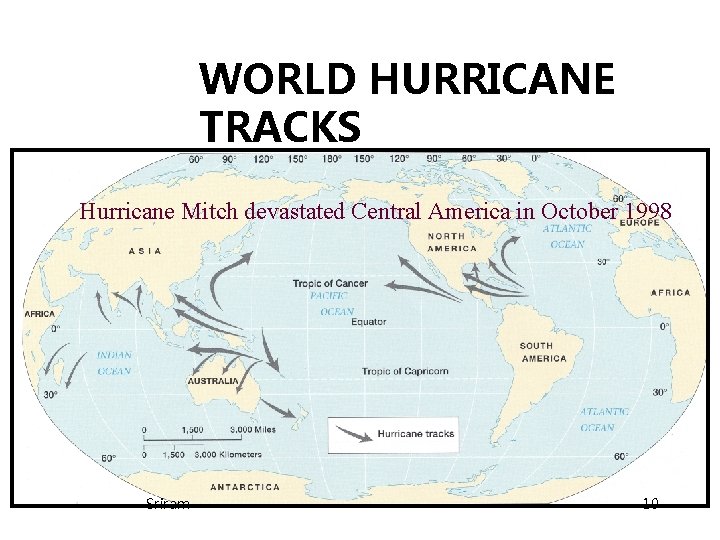
WORLD HURRICANE TRACKS Hurricane Mitch devastated Central America in October 1998 Sriram 10
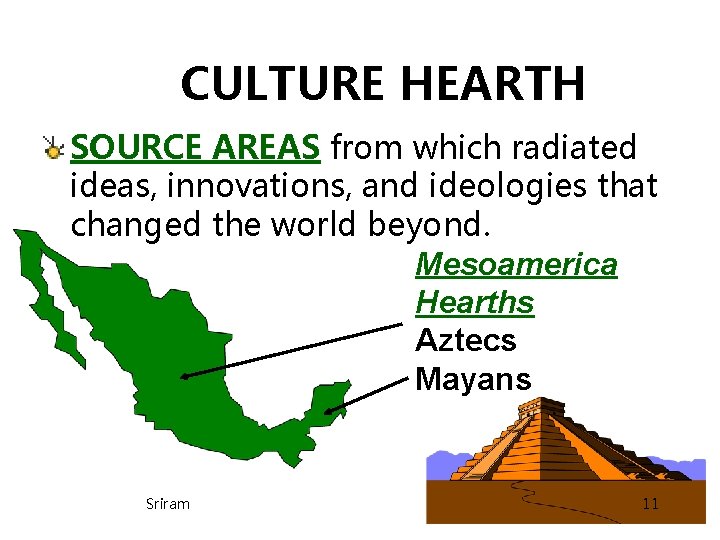
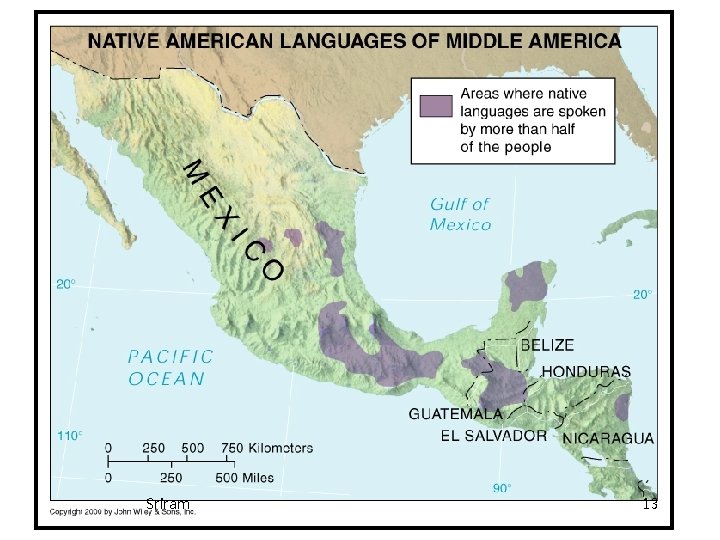
CULTURE HEARTH SOURCE AREAS from which radiated ideas, innovations, and ideologies that changed the world beyond. Mesoamerica Hearths Aztecs Mayans Sriram 11
MESOAMERICA CULTURE HEARTHS – MAYA CIVILIZATION • CLASSIC PERIOD 200 -900 AD • HONDURAS, GUATEMALA, BELIZE, YUCATAN PENINSULA • THEOCRATIC STRUCTURE – AZTEC CIVILIZATION • 1300 AD • VALLEY OF MEXICO Sriram 12
Sriram 13
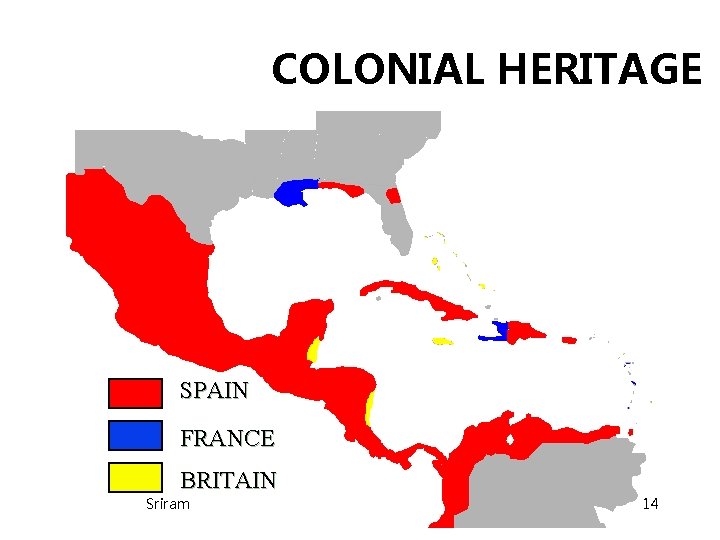
COLONIAL HERITAGE SPAIN FRANCE BRITAIN Sriram 14
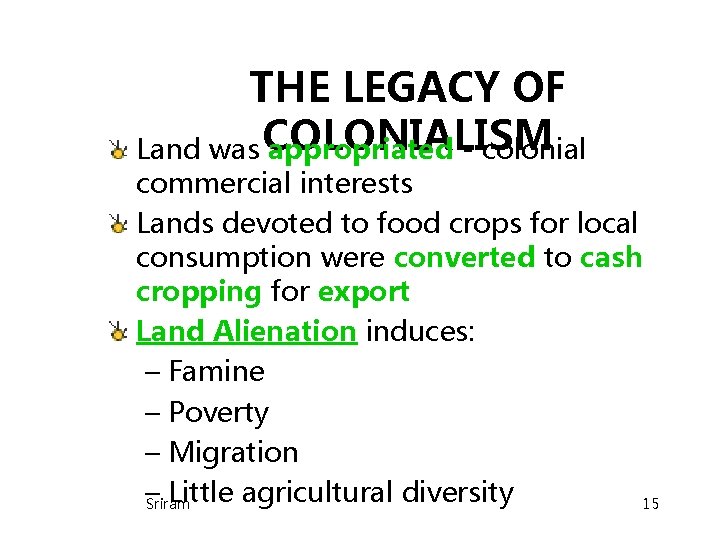
THE LEGACY OF Land was COLONIALISM appropriated - colonial commercial interests Lands devoted to food crops for local consumption were converted to cash cropping for export Land Alienation induces: – Famine – Poverty – Migration –Sriram Little agricultural diversity 15
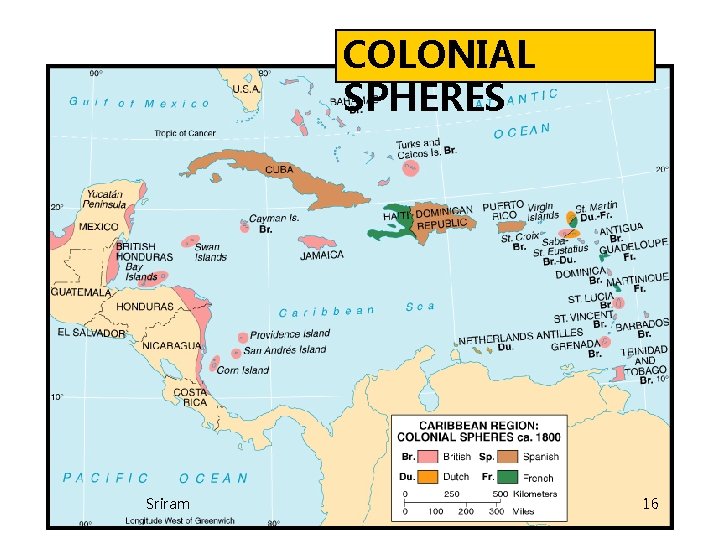
COLONIAL SPHERES Sriram 16
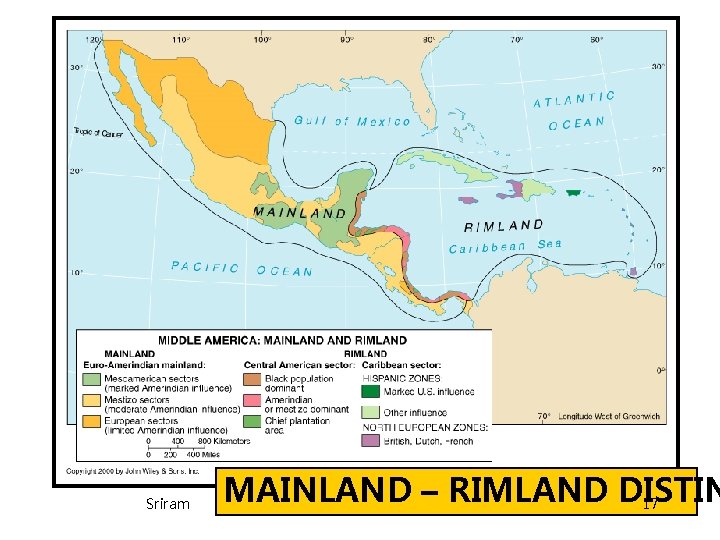
Sriram MAINLAND – RIMLAND DISTIN 17
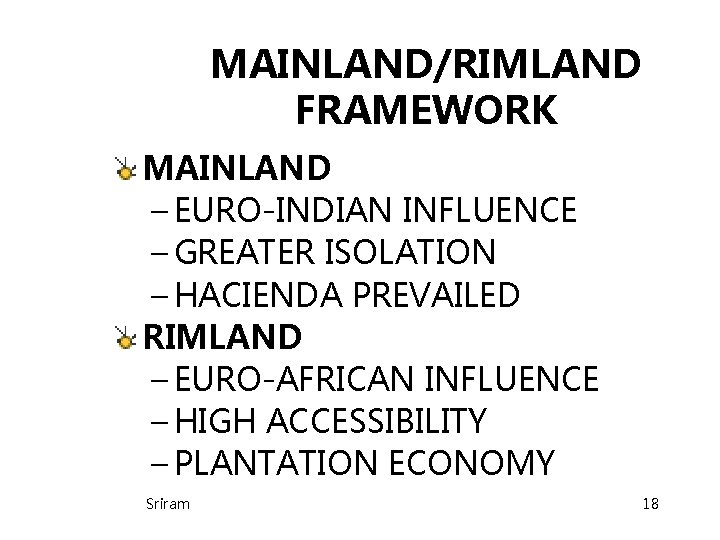
MAINLAND/RIMLAND FRAMEWORK MAINLAND – EURO-INDIAN INFLUENCE – GREATER ISOLATION – HACIENDA PREVAILED RIMLAND – EURO-AFRICAN INFLUENCE – HIGH ACCESSIBILITY – PLANTATION ECONOMY Sriram 18
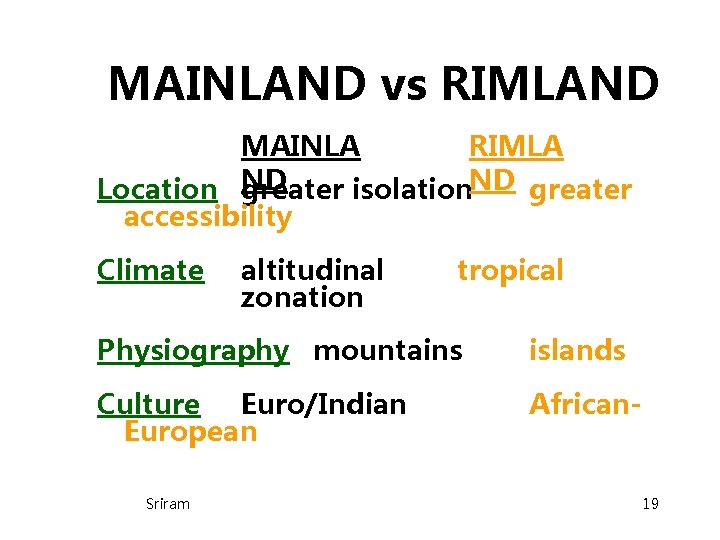
MAINLAND vs RIMLAND MAINLA RIMLA Location ND greater isolation. ND greater accessibility Climate altitudinal zonation tropical Physiography mountains islands Culture Euro/Indian European African- Sriram 19
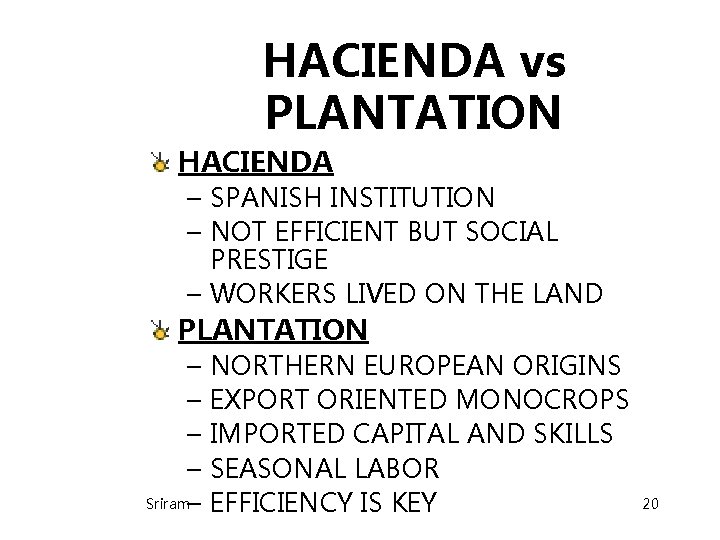
HACIENDA vs PLANTATION HACIENDA – SPANISH INSTITUTION – NOT EFFICIENT BUT SOCIAL PRESTIGE – WORKERS LIVED ON THE LAND PLANTATION – – Sriram– NORTHERN EUROPEAN ORIGINS EXPORT ORIENTED MONOCROPS IMPORTED CAPITAL AND SKILLS SEASONAL LABOR EFFICIENCY IS KEY 20
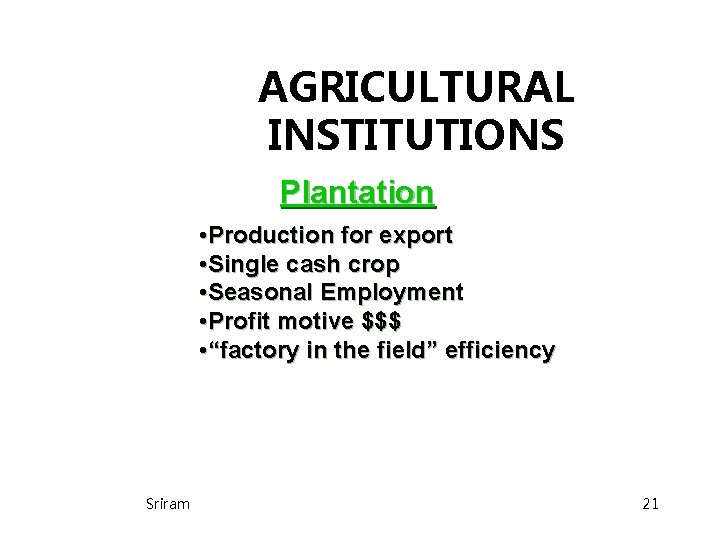
AGRICULTURAL INSTITUTIONS Plantation • Production for export • Single cash crop • Seasonal Employment • Profit motive $$$ • “factory in the field” efficiency Sriram 21
Sriram
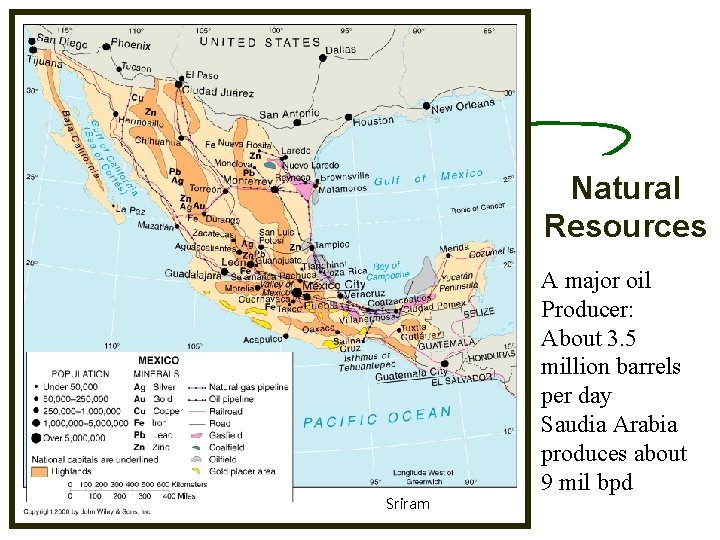
Natural Resources Sriram A major oil Producer: About 3. 5 million barrels per day Saudia Arabia produces about 9 mil bpd
MAQUILADORAS Assembly plants that pioneered the migration of industries in the 1970 s Today – >4, 000 maquiladoras – >1 million employees Sriram 24
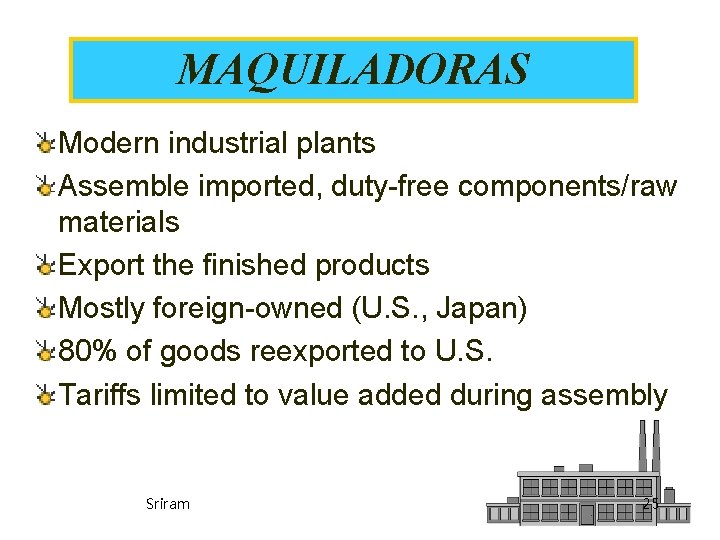
MAQUILADORAS Modern industrial plants Assemble imported, duty-free components/raw materials Export the finished products Mostly foreign-owned (U. S. , Japan) 80% of goods reexported to U. S. Tariffs limited to value added during assembly Sriram 25
MAQUILADORAS Maquiladora products Electronic equipment Electric appliances Auto parts Clothing Furniture Sriram 26
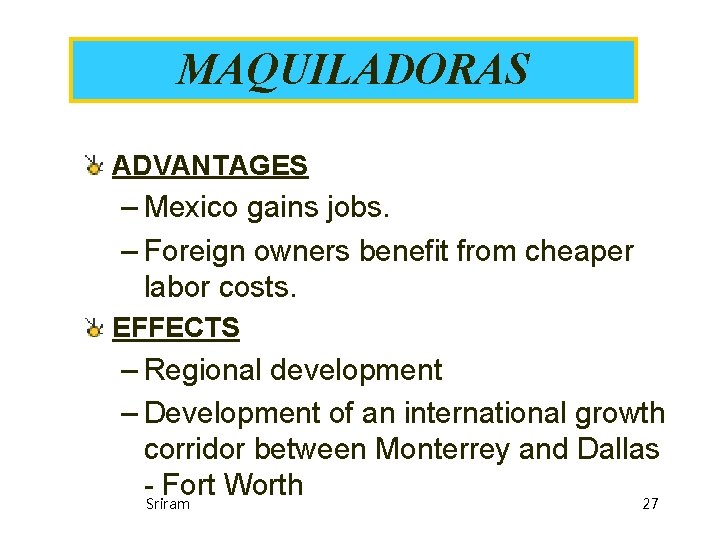
MAQUILADORAS ADVANTAGES – Mexico gains jobs. – Foreign owners benefit from cheaper labor costs. EFFECTS – Regional development – Development of an international growth corridor between Monterrey and Dallas -Sriram Fort Worth 27
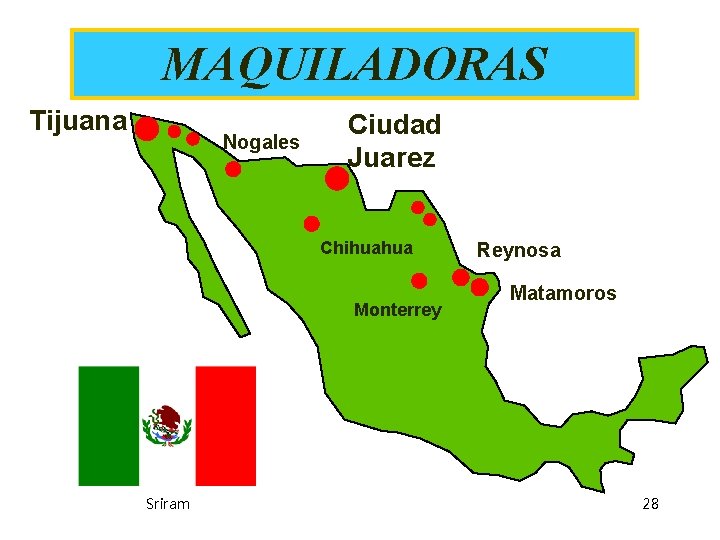
MAQUILADORAS Tijuana Nogales Ciudad Juarez Chihuahua Monterrey Sriram Reynosa Matamoros 28
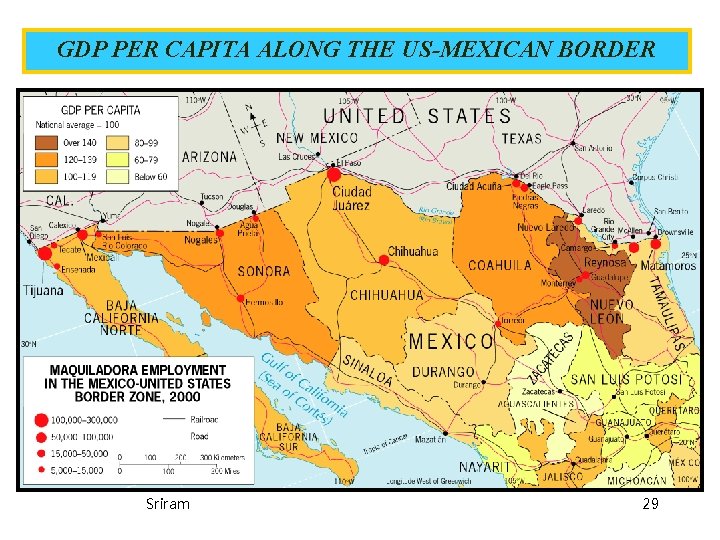
GDP PER CAPITA ALONG THE US-MEXICAN BORDER Sriram 29
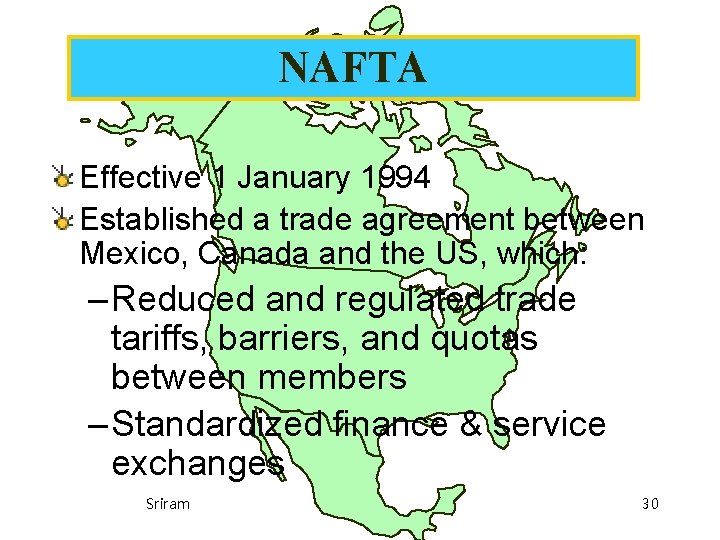
NAFTA Effective 1 January 1994 Established a trade agreement between Mexico, Canada and the US, which: – Reduced and regulated trade tariffs, barriers, and quotas between members – Standardized finance & service exchanges Sriram 30
NAFTA How has Mexico benefited from NAFTA? Sriram 31
MEXICO AND NAFTA Foremost, it promises a higher standard of living. NAFTA creates more jobs for Mexicans as US companies begin to invest more heavily in the Mexican market. Mexican exporters increase their sales to the US and Canada. Is that the entire story? Sriram 32
U. S. TRADE WITH CANADA & MEXICO Canada remains as the United States’ largest export market. Since 1977, Mexico has moved into second place (displacing Japan). 85% of all Mexican exports now go to the United States. 75% of Mexico’s imports originate in the United States. Sriram 33
Sriram 34
ECONOMIC TRENDS (Central America & the Caribbean) Agriculture Industry Services – Tourism Environmental Issues – Deforestation Sriram 35
PRIMARY SECTOR DEPENDENCE El Salvador – Agriculture accounts for 24% of GDP and 40% of the labor force and contributes to 60% of exports. – Economic losses because of guerrilla sabotage total $2 billion since 1979. Honduras – Agriculture accounts for more than 25% of GDP, employs 62% of the labor force, and produces two-thirds of exports. – Economic loss because of natural disaster 36 Sriram
HIPC Honduras and Nicaragua are on the HIPC list – Heavily indebted poor countries – The Initiative is designed to reduce debts to sustainable levels for poor countries that pursue economic and social policy reforms, – Used specifically in cases where traditional debt relief mechanisms will Sriram not be enough to help countries exit 37
The weight of debt Nicaragua's external debt currently stands at 6. 7 billion dollars. - 25% of the Nicaraguan budget is spent on debt payments – Contrast to … 14% on health care – 11% on education Almost half the population falling below the poverty line. High levels of infant mortality and maternal mortality, and a high level of infectious and parasitic diseases. Malnutrition is widespread with around 20 per Sriram cent of children under five being chronically malnourished or stunted 38
PRIMARY SECTOR DEPENDENCE Dominican Republic (49% Agriculture) – Sugarcane, coffee, cotton, cocoa, and tobacco Jamaica (22. 5% Agriculture) – Sugar, bananas, and rum (Hurricane Gilbert -1988) Cuba (20% Agriculture) – Sugar, tobacco, citrus, and coffee Sriram 39
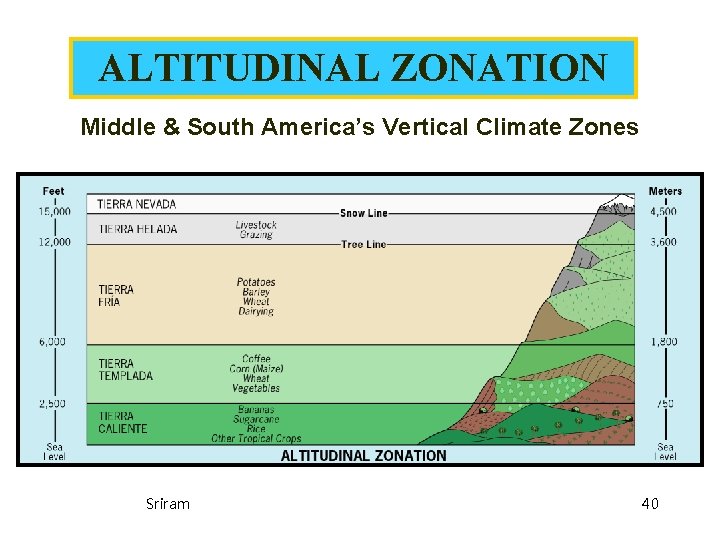
ALTITUDINAL ZONATION Middle & South America’s Vertical Climate Zones Sriram 40
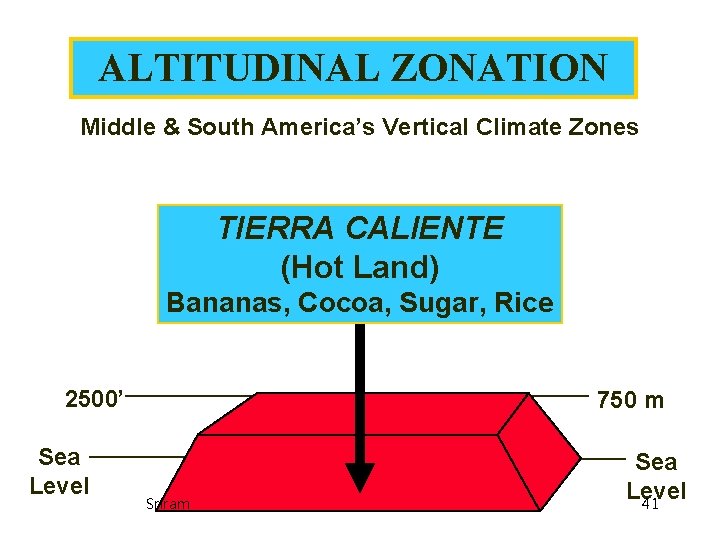
ALTITUDINAL ZONATION Middle & South America’s Vertical Climate Zones TIERRA CALIENTE (Hot Land) Bananas, Cocoa, Sugar, Rice 2500’ Sea Level 750 m Sriram Sea Level 41
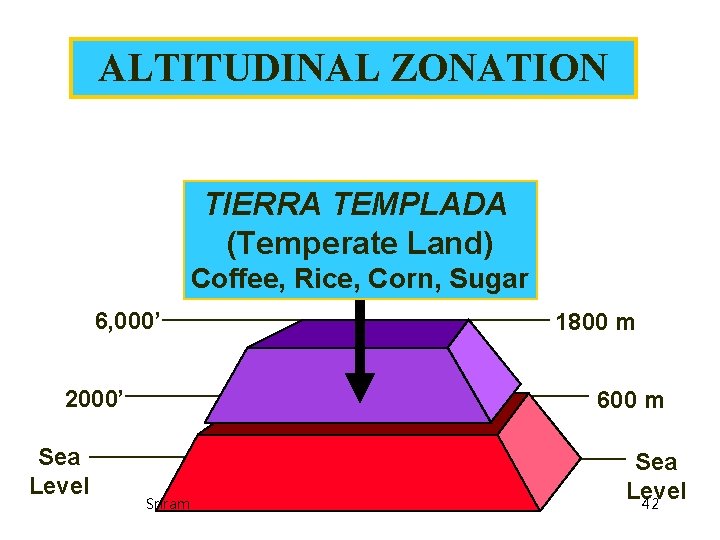
ALTITUDINAL ZONATION TIERRA TEMPLADA (Temperate Land) Coffee, Rice, Corn, Sugar 6, 000’ 2000’ Sea Level 1800 m 600 m Sriram Sea Level 42
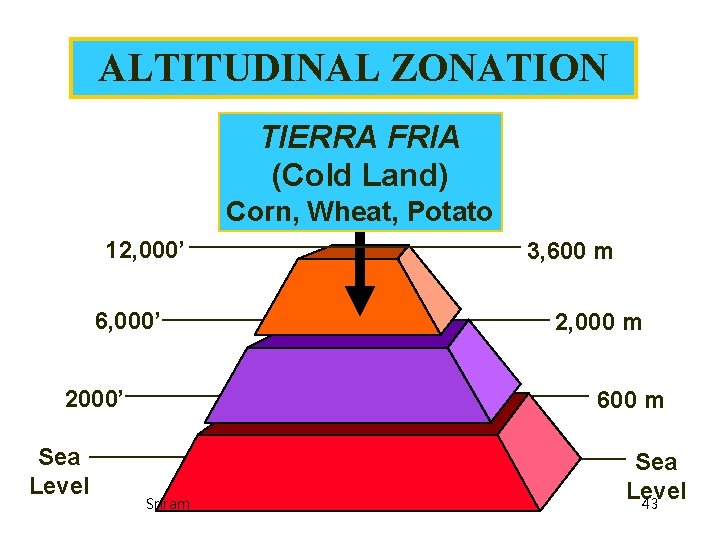
ALTITUDINAL ZONATION TIERRA FRIA (Cold Land) Corn, Wheat, Potato 12, 000’ 6, 000’ 2000’ Sea Level 3, 600 m 2, 000 m 600 m Sriram Sea Level 43
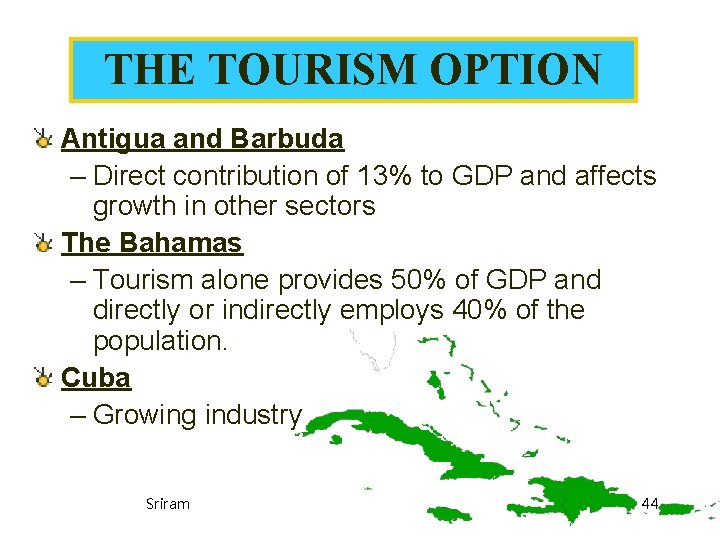
THE TOURISM OPTION Antigua and Barbuda – Direct contribution of 13% to GDP and affects growth in other sectors The Bahamas – Tourism alone provides 50% of GDP and directly or indirectly employs 40% of the population. Cuba – Growing industry Sriram 44
ENVIRONMENTAL CONCERNS Tropical Deforestation 3. 5 million acres of woodland in Central America disappear each year! Sriram 45
CAUSES OF TROPICAL DEFORESTATION Clearing of rural lands to accommodate meat production and export Rapid logging of tropical woodlands to meet global demands for new housing, paper, and furniture Population growth: forests are cut to provide crop-raising space and firewood Sriram 46
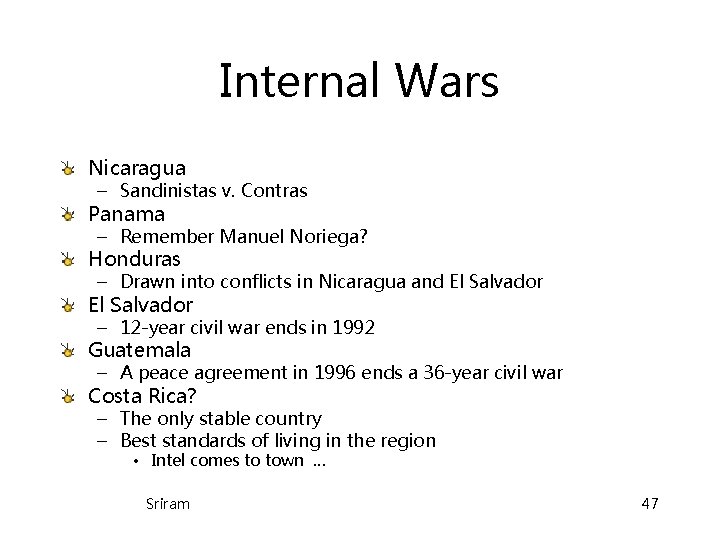
Internal Wars Nicaragua – Sandinistas v. Contras Panama – Remember Manuel Noriega? Honduras – Drawn into conflicts in Nicaragua and El Salvador – 12 -year civil war ends in 1992 Guatemala – A peace agreement in 1996 ends a 36 -year civil war Costa Rica? – The only stable country – Best standards of living in the region • Intel comes to town … Sriram 47