
GEOENV 315GEO 514 Hydrogeology Class meets Time Mondays


- Slides: 34
GEO/ENV 315/GEO 514 Hydrogeology • Class meets: Time: Mondays: 5: 30 pm – 8: 30 pm. Location: ESS 105 • Office Hours: Tuesdays and Thursdays 3: 00 – 4: 00 pm ESS 230 • Required textbook: Applied Hydrogeology (4 th edition), C. W. Fetter Prentice Hall
GEO/ENV 315/GEO 514 Hydrogeology • Instructor: Lianxing Wen email: Lianxing. Wen@stonybrook. edu office: ESS 230 phone: 632 -1726 • TA: Justin Cowart email: Justin. Cowart@stonybrook. edu
Requirements and Grading • Geo/Env 315: attend lectures; 5 problem sets (60%), 2 examinations (20% each). • Geo 514: all above (80%) + a term paper (20%)
Class website • Class website: http: //geophysics. geo. sunysb. edu/wen/Geo 315/
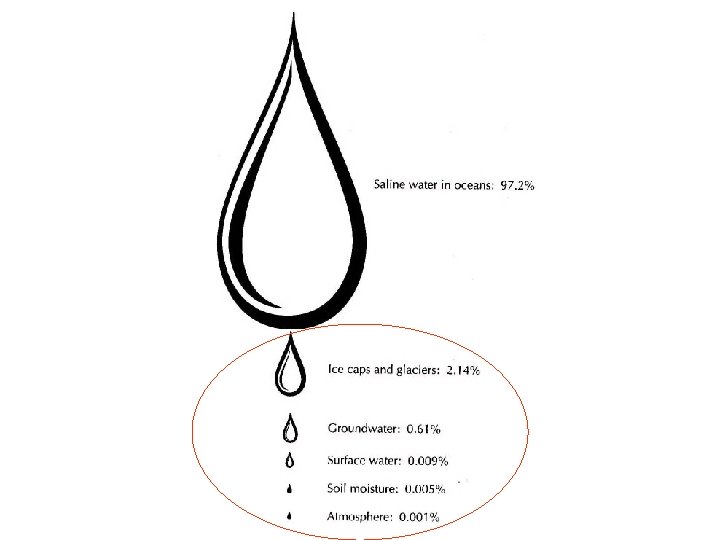
Water Budget • Saline water • Land Area -- Ice caps and glaciers -- Ground water -- Soil Moisture -- Fresh water lakes -- Rivers -- Saline lakes
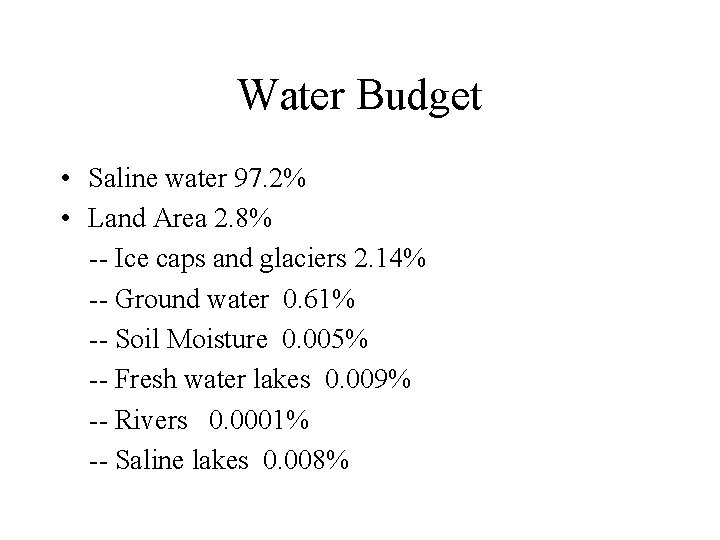
Water Budget • Saline water 97. 2% • Land Area 2. 8% -- Ice caps and glaciers 2. 14% -- Ground water 0. 61% -- Soil Moisture 0. 005% -- Fresh water lakes 0. 009% -- Rivers 0. 0001% -- Saline lakes 0. 008%
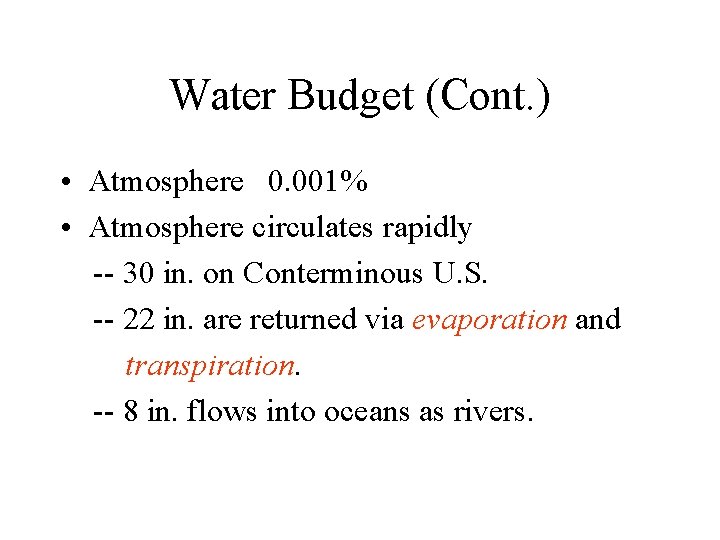
Water Budget (Cont. ) • Atmosphere 0. 001% • Atmosphere circulates rapidly -- 30 in. on Conterminous U. S. -- 22 in. are returned via evaporation and transpiration. -- 8 in. flows into oceans as rivers.
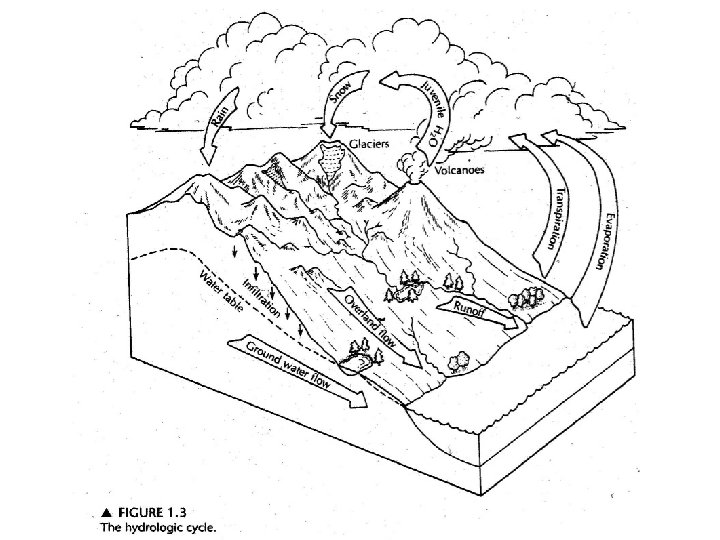
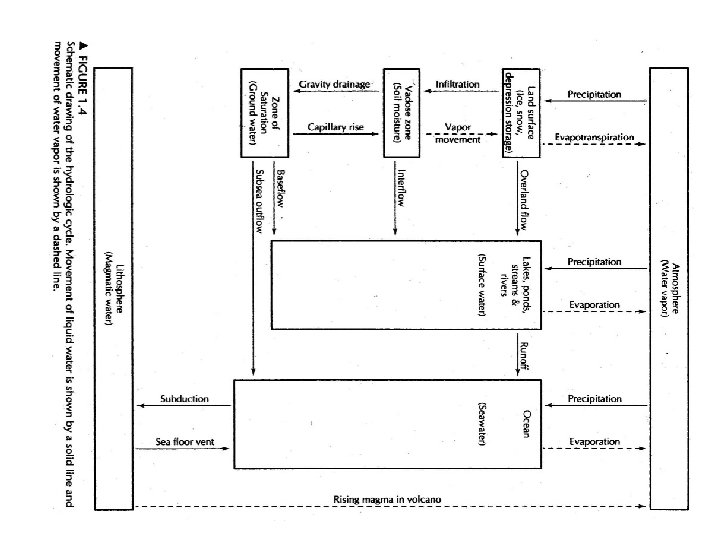
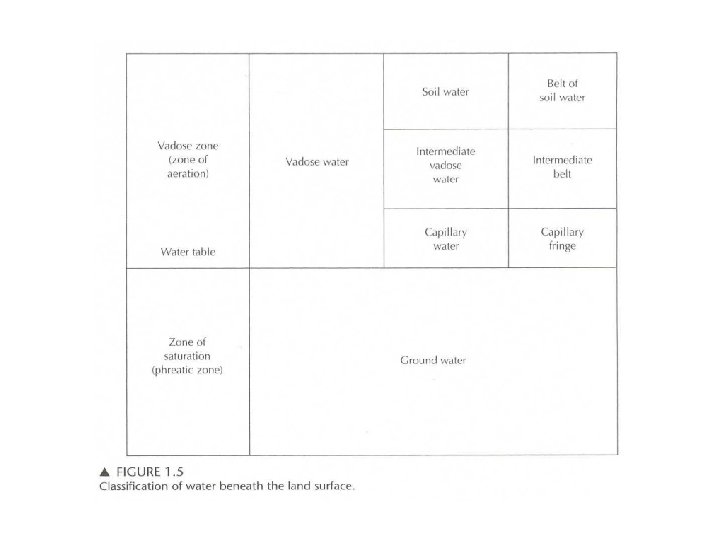
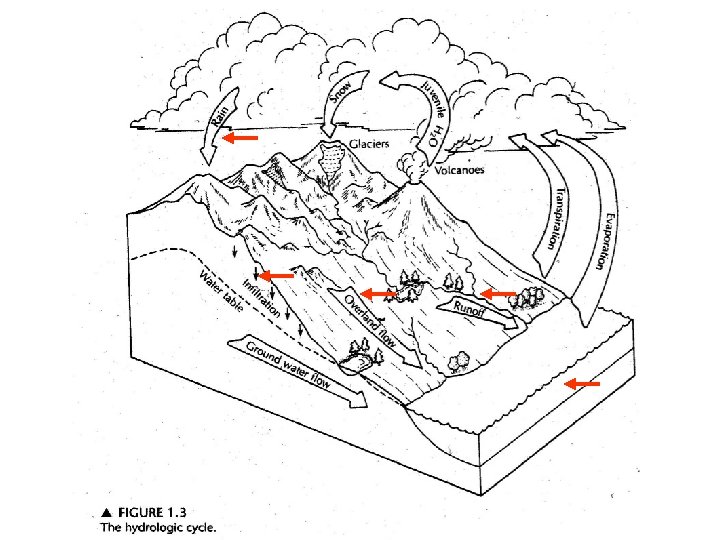
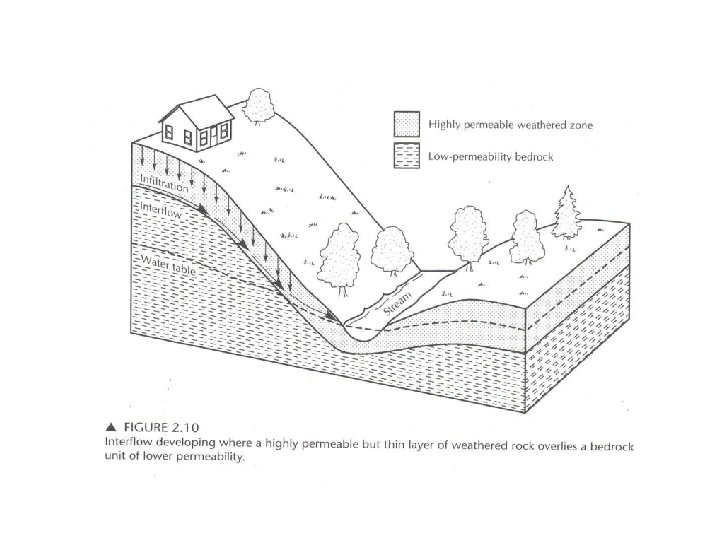
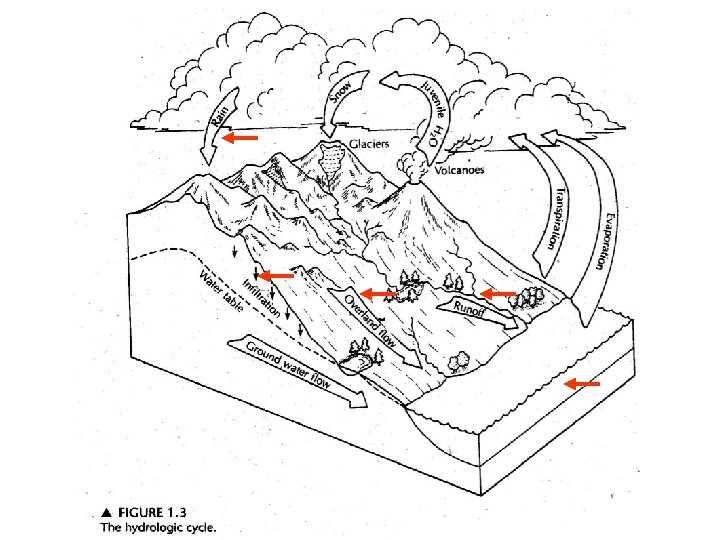
Hydrologic Cycle (Precipitation Pathways) • Depression Storage - ice, snow, puddles. • Overland flow • Infiltration -- Vadose zone – (soil moisture), interflow -- Gravity drainage -- Zone of saturation – (ground water) • Baseflow-ground-water contribution
Hydrologic Cycle (Precipitation Pathways – cont. ) • Baseflow – groundwater contribution to stream • Subsea outflow • Runoff – total flow in a stream • Magmatic water
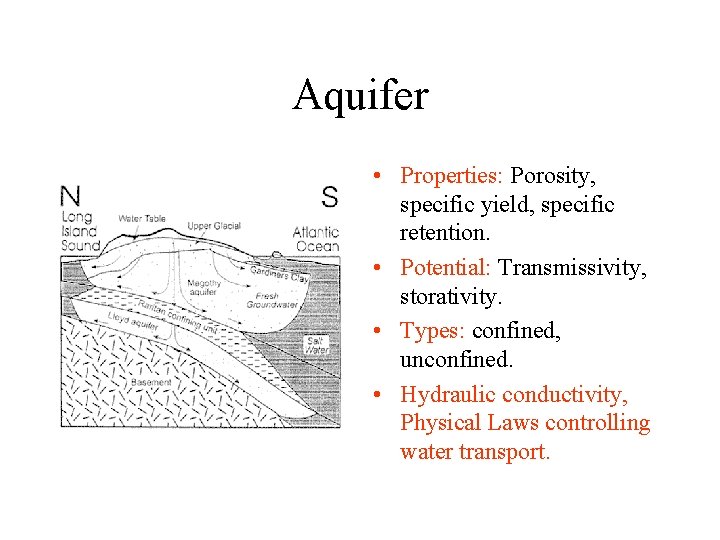
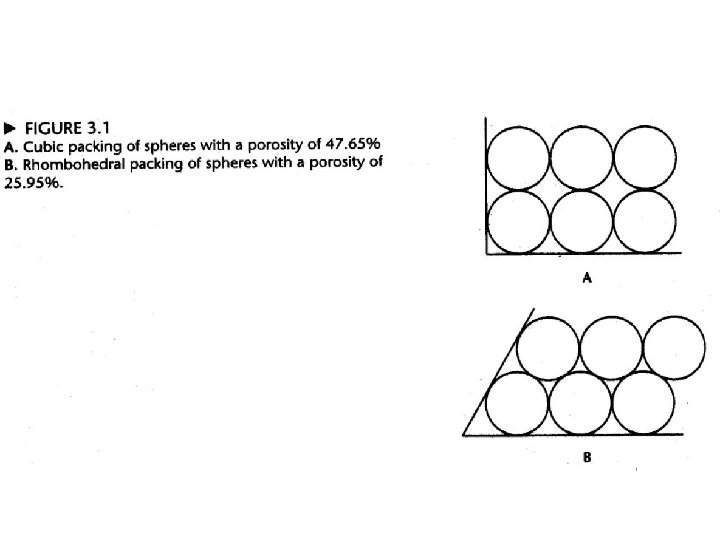
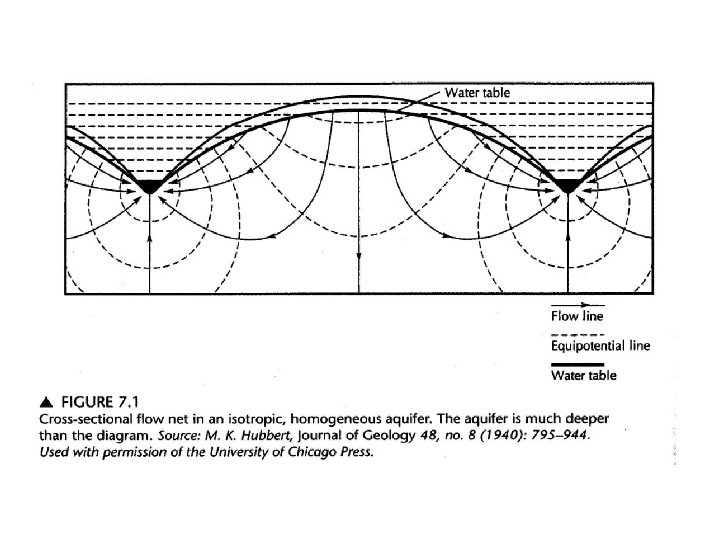
Aquifer • Properties: Porosity, specific yield, specific retention. • Potential: Transmissivity, storativity. • Types: confined, unconfined. • Hydraulic conductivity, Physical Laws controlling water transport.
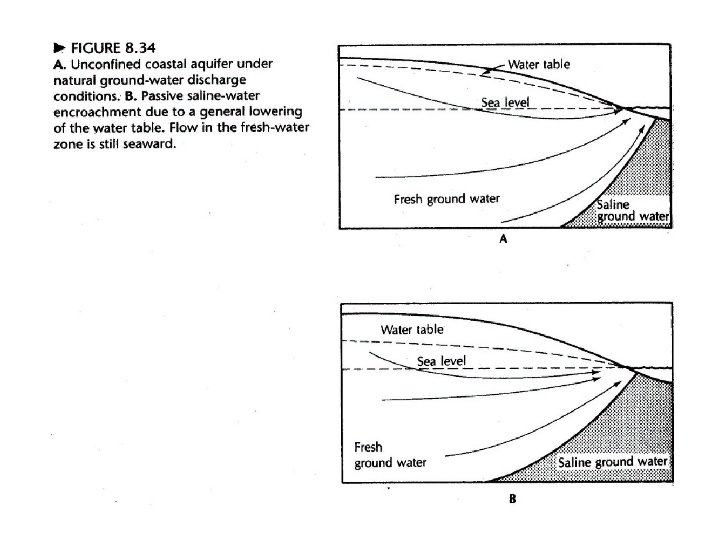
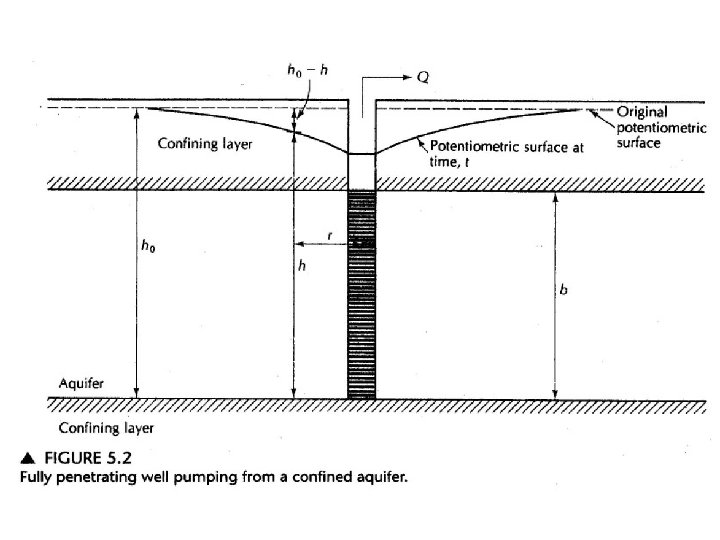
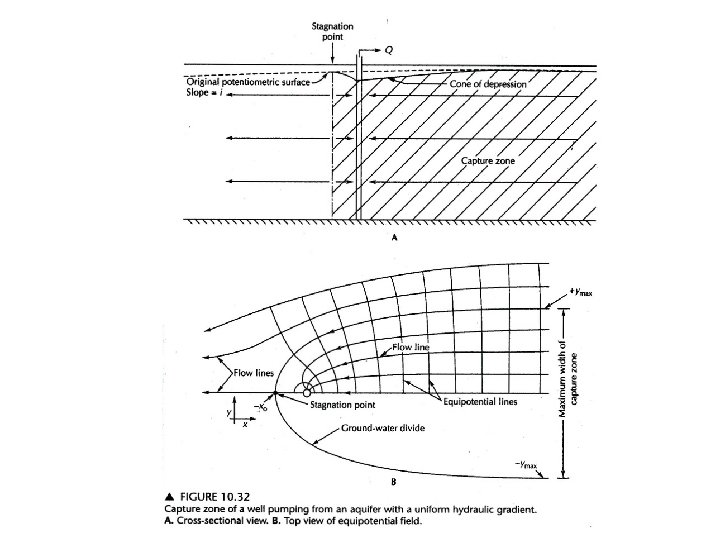
Ground-water flow to wells • • • Extract water Remove contaminated water Lower water table for constructions Relieve pressures under dams Injections – recharges Control slat-water intrusion
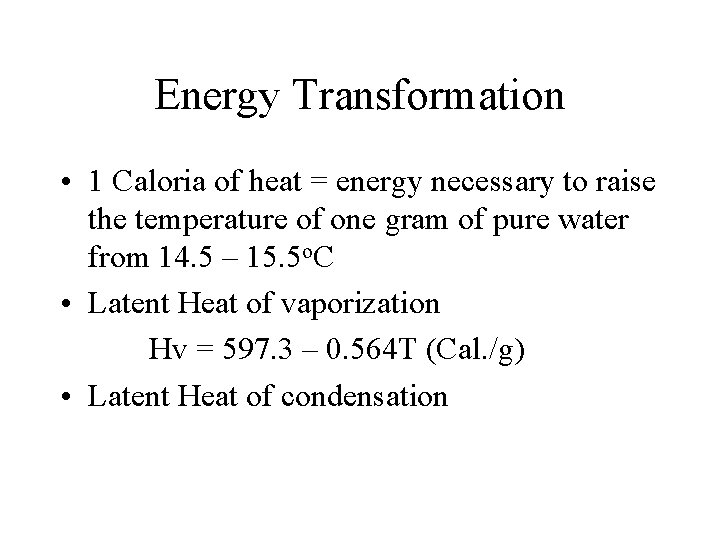
Energy Transformation • 1 Caloria of heat = energy necessary to raise the temperature of one gram of pure water from 14. 5 – 15. 5 o. C • Latent Heat of vaporization Hv = 597. 3 – 0. 564 T (Cal. /g) • Latent Heat of condensation
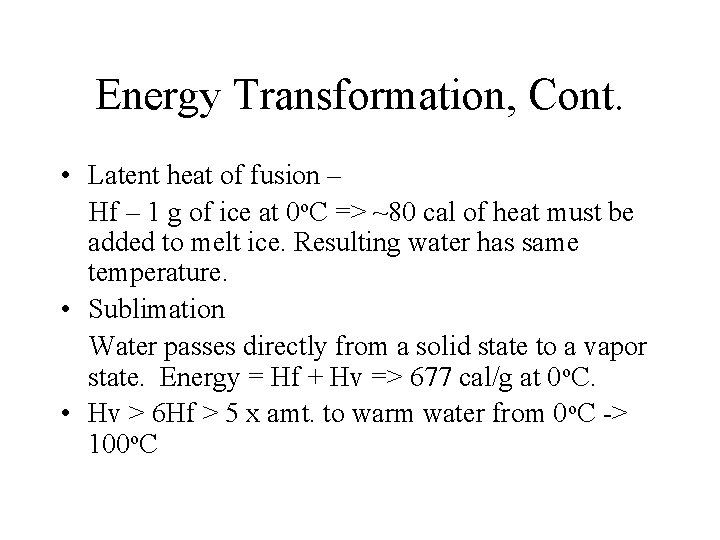
Energy Transformation, Cont. • Latent heat of fusion – Hf – 1 g of ice at 0 o. C => ~80 cal of heat must be added to melt ice. Resulting water has same temperature. • Sublimation Water passes directly from a solid state to a vapor state. Energy = Hf + Hv => 677 cal/g at 0 o. C. • Hv > 6 Hf > 5 x amt. to warm water from 0 o. C -> 100 o. C
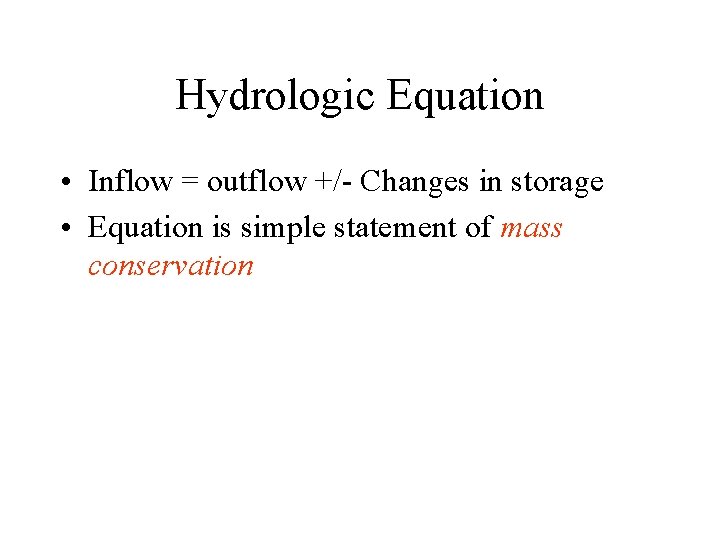
Hydrologic Equation • Inflow = outflow +/- Changes in storage • Equation is simple statement of mass conservation
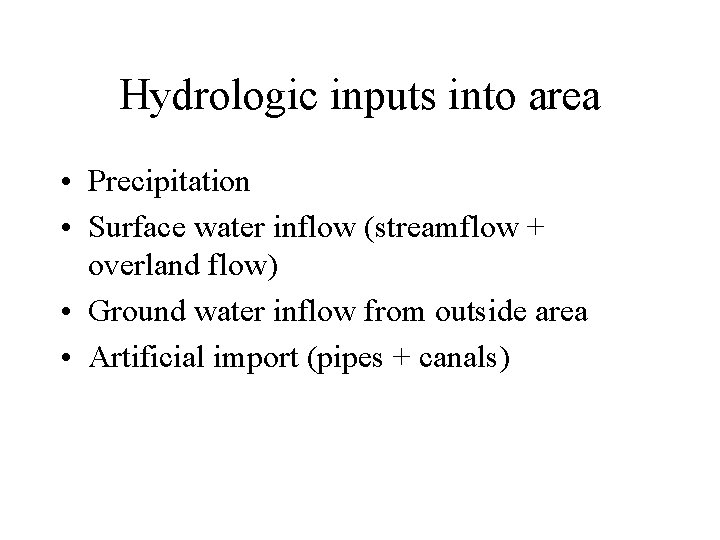
Hydrologic inputs into area • Precipitation • Surface water inflow (streamflow + overland flow) • Ground water inflow from outside area • Artificial import (pipes + canals)
Hydrologic outputs into area • • • Evapotranspiration from land areas Evaporation from surface water Runoff of surface water Groundwater outflow Artificial export of water through pipes and canals
Changes in storage • Changes in volume of: -- surface water in streams, rivers, lakes, and ponds. -- soil moisture in vadose zone -- ice and snow at surface -- temperature depression storage -- water on plant surfaces -- ground water below water table
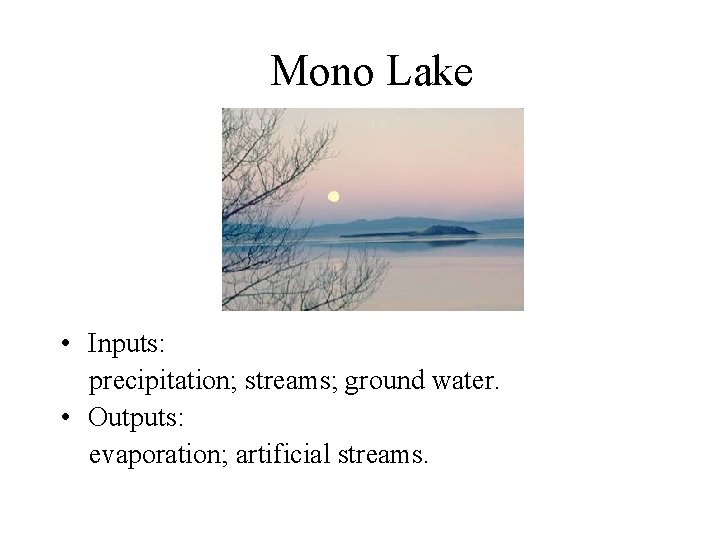
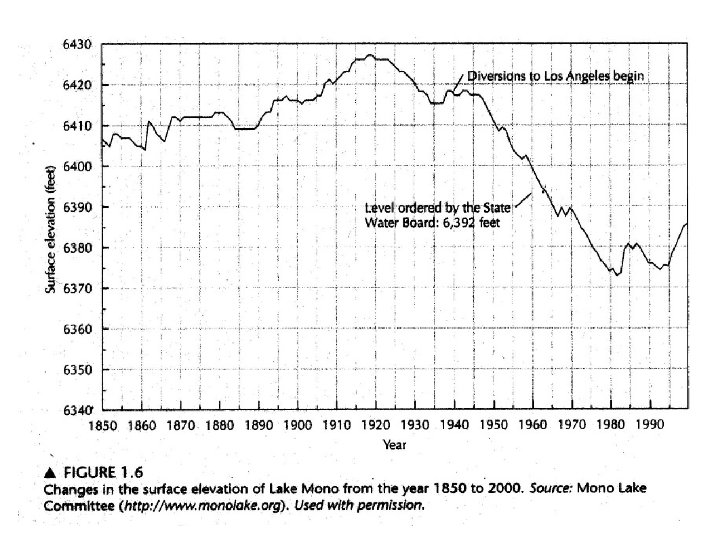
Mono Lake • Inputs: precipitation; streams; ground water. • Outputs: evaporation; artificial streams.