
Geochemistry of nutrients in Silver Bow Creek Chris
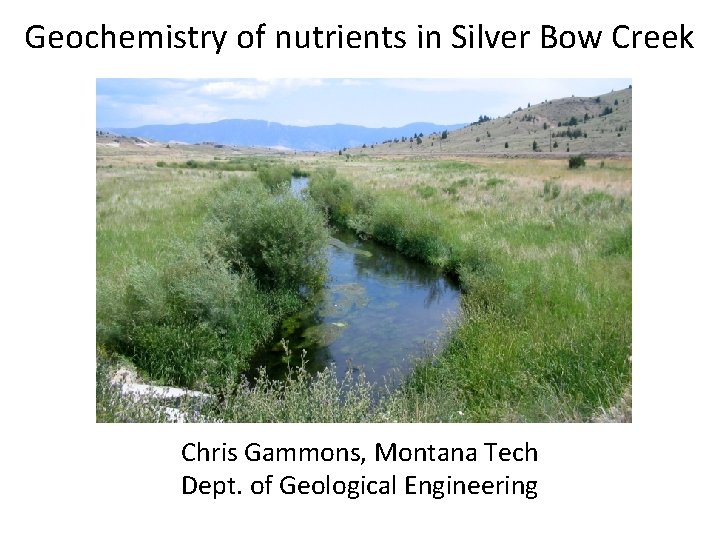
Geochemistry of nutrients in Silver Bow Creek Chris Gammons, Montana Tech Dept. of Geological Engineering
Acknowledgments • Grad students – Beverly Plumb (M. S. 2009) – John Babcock (M. S. in progress) • Colleagues – Steve Parker (MT Tech) – Simon Poulson (U-Nevada-Reno) • Funding – USGS & Montana Water Center Undergrad student Stacey Wilcox
Outline: main points 1. Silver Bow Creek is severely impacted by nutrient overload 2. Concentrations of specific nutrients change over very short time and spatial scales 3. Seasonal effects are also significant 4. The Warm Springs Ponds act as a huge sink for nitrogen 5. Stable isotopes may reveal clues to processes of nutrient cycling
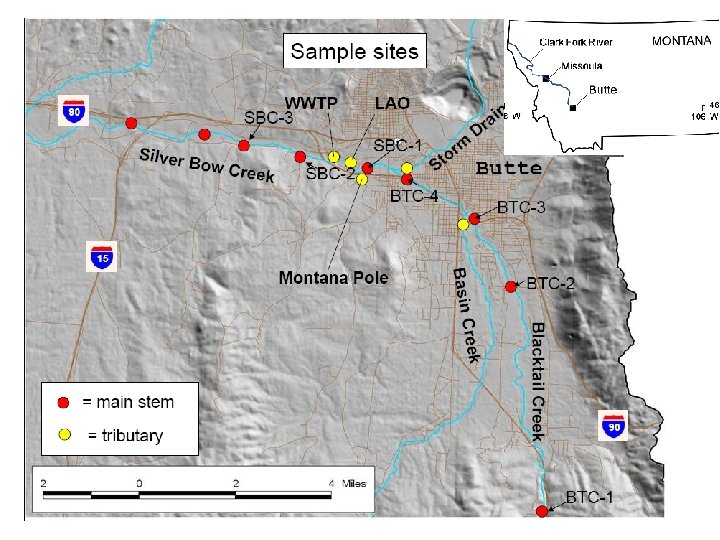
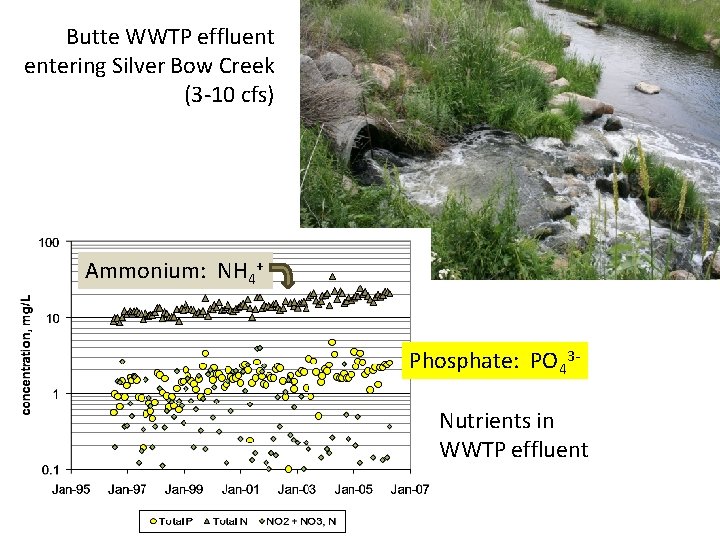
Butte WWTP effluent entering Silver Bow Creek (3 -10 cfs) Ammonium: NH 4+ Phosphate: PO 43 Nutrients in WWTP effluent
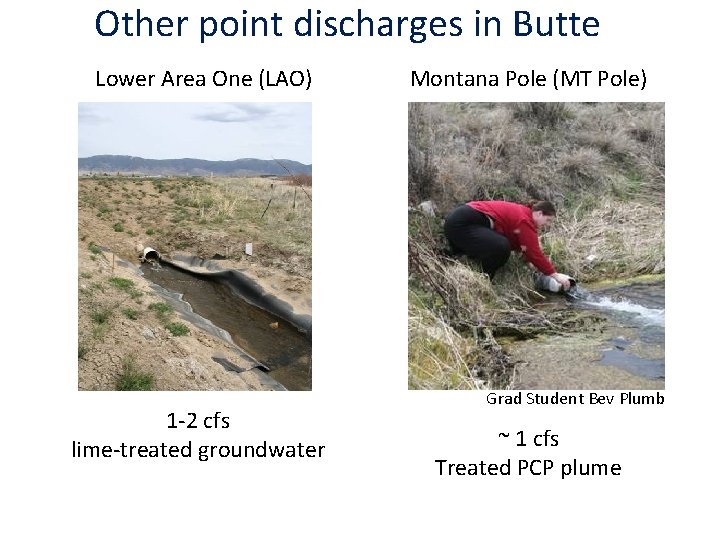
Other point discharges in Butte Lower Area One (LAO) 1 -2 cfs lime-treated groundwater Montana Pole (MT Pole) Grad Student Bev Plumb ~ 1 cfs Treated PCP plume
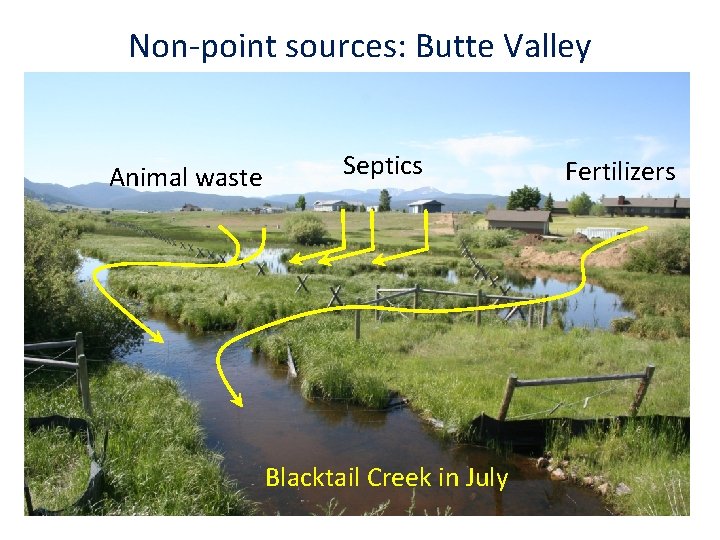
Non-point sources: Butte Valley Animal waste Septics Blacktail Creek in July Fertilizers
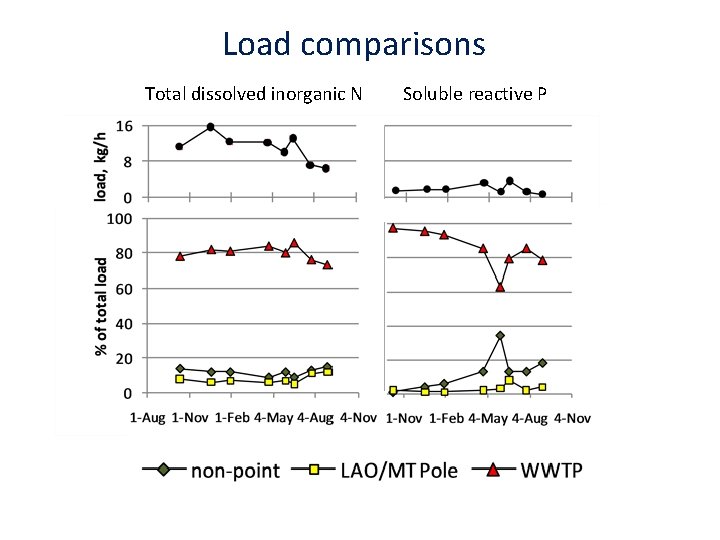
Load comparisons Total dissolved inorganic N Soluble reactive P
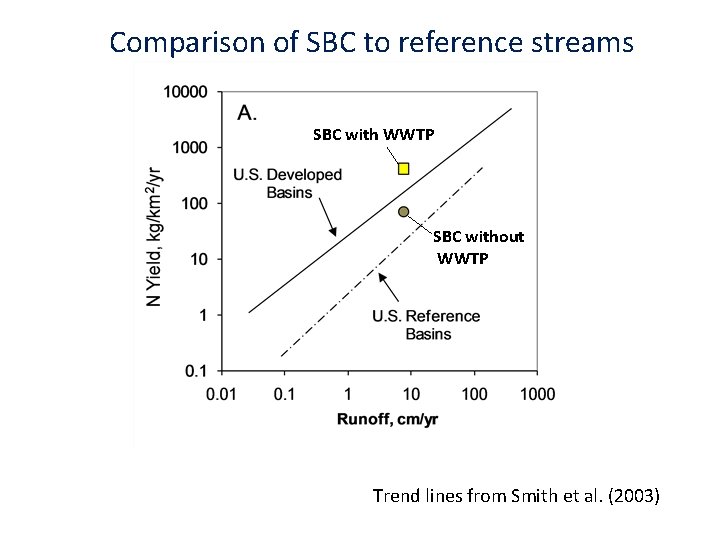
Comparison of SBC to reference streams SBC with WWTP SBC without WWTP Trend lines from Smith et al. (2003)
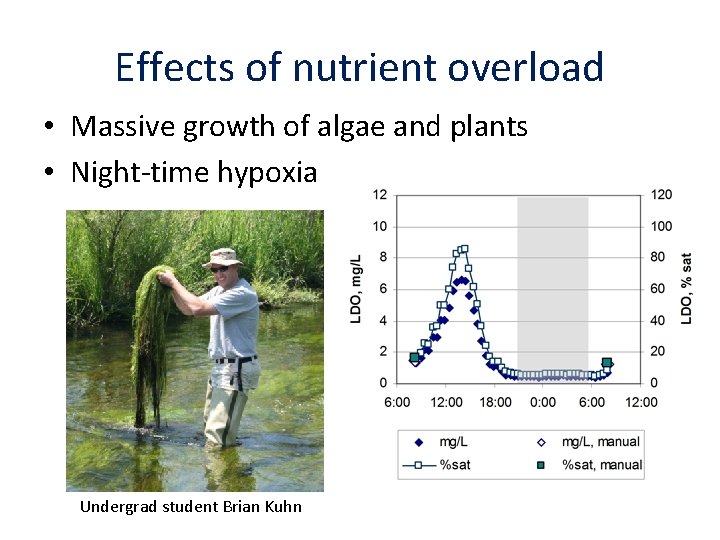
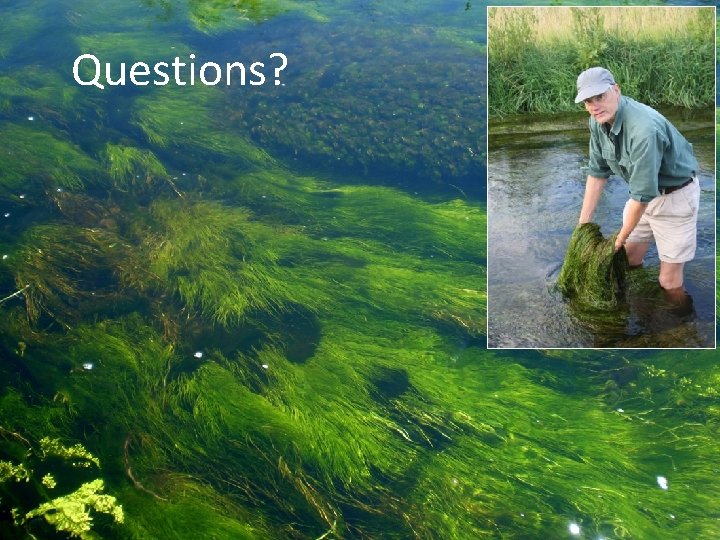
Effects of nutrient overload • Massive growth of algae and plants • Night-time hypoxia Undergrad student Brian Kuhn
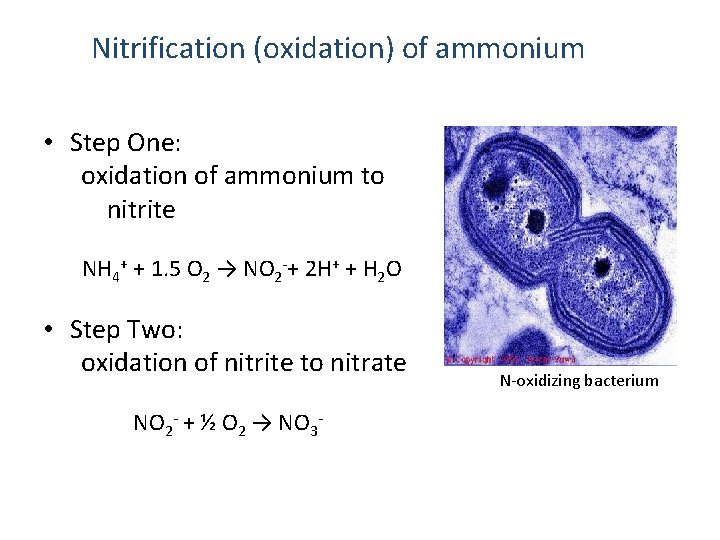
Nitrification (oxidation) of ammonium • Step One: oxidation of ammonium to nitrite NH 4+ + 1. 5 O 2 → NO 2 -+ 2 H+ + H 2 O • Step Two: oxidation of nitrite to nitrate NO 2 - + ½ O 2 → NO 3 - N-oxidizing bacterium
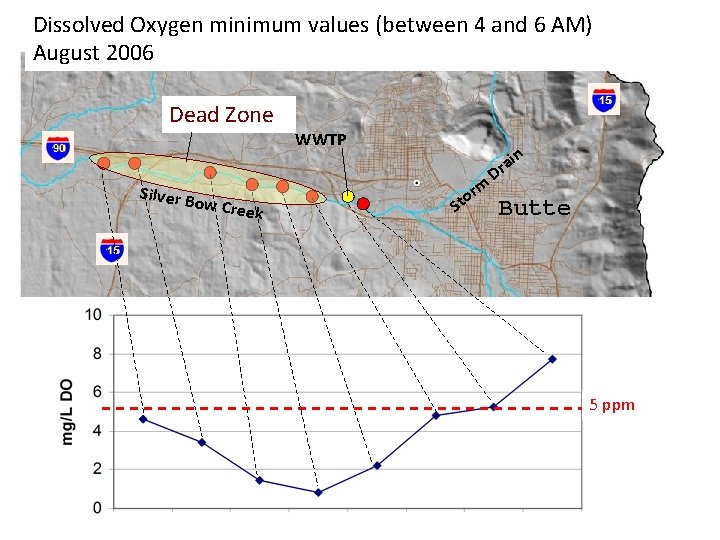
Dissolved Oxygen minimum values (between 4 and 6 AM) August 2006 Dead Zone Silver B ow Cre ek WWTP in rm o St a Dr Butte 5 ppm
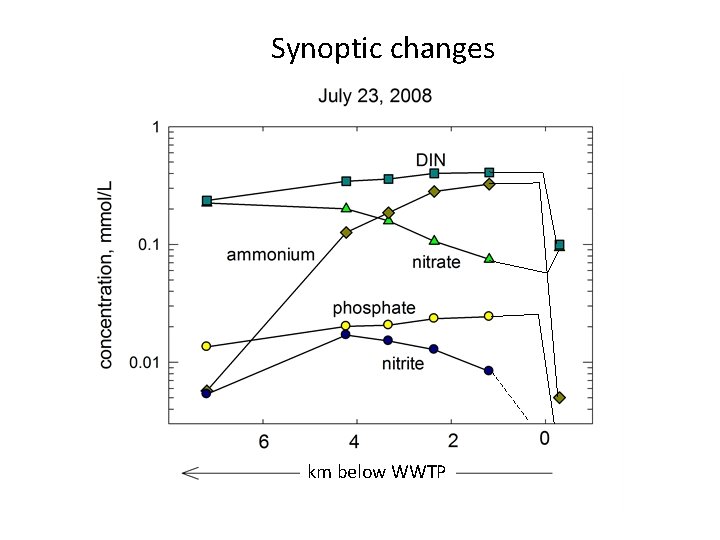
Synoptic changes km below WWTP
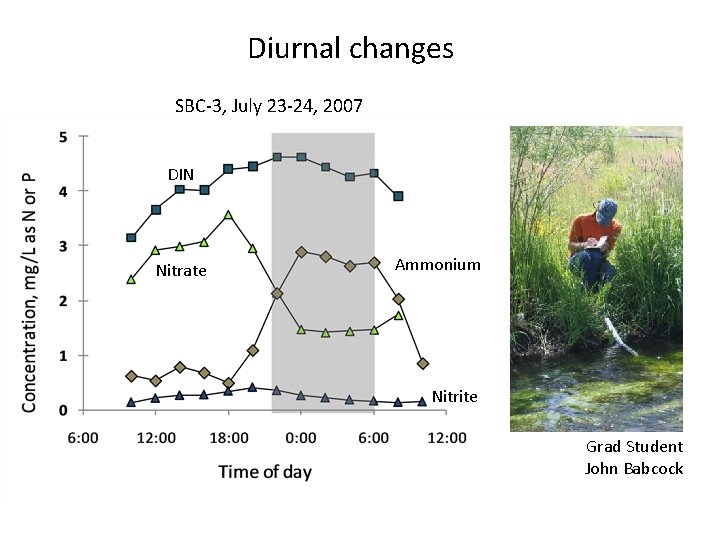
Diurnal changes SBC-3, July 23 -24, 2007 DIN Nitrate Ammonium Nitrite Grad Student John Babcock
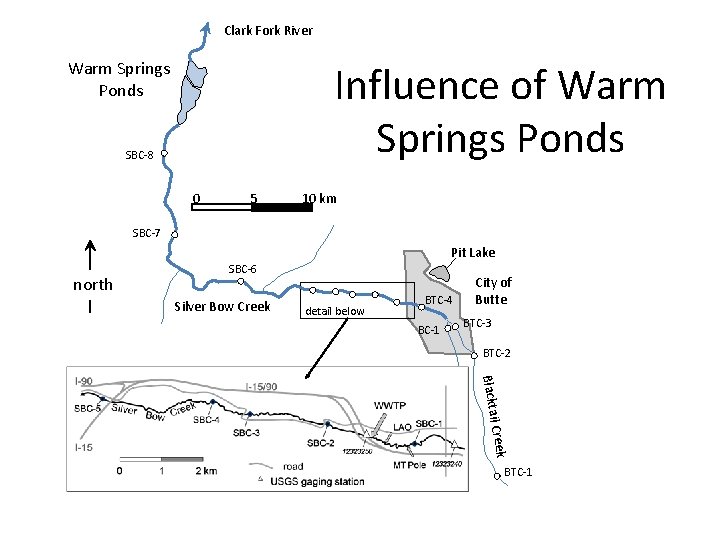
Clark Fork River Influence of Warm Springs Ponds SBC-8 0 5 10 km SBC-7 Pit Lake north SBC-6 Silver Bow Creek detail below BTC-4 BC-1 City of Butte BTC-3 BTC-2 il Blackta Creek BTC-1
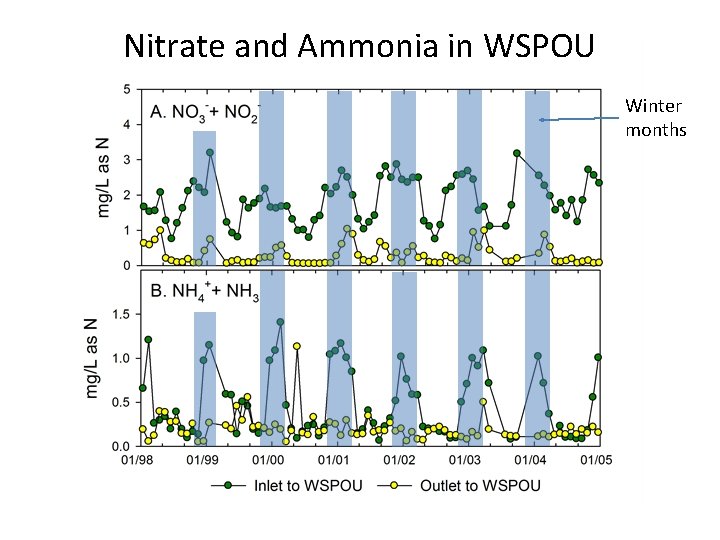
Nitrate and Ammonia in WSPOU Winter months
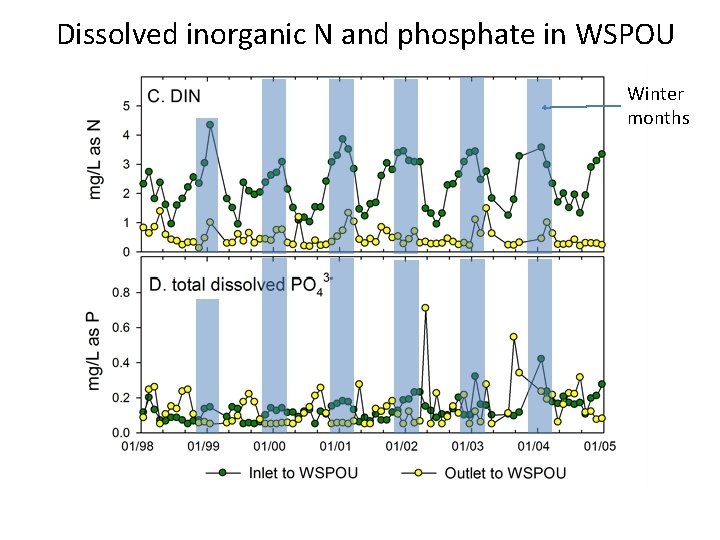
Dissolved inorganic N and phosphate in WSPOU Winter months
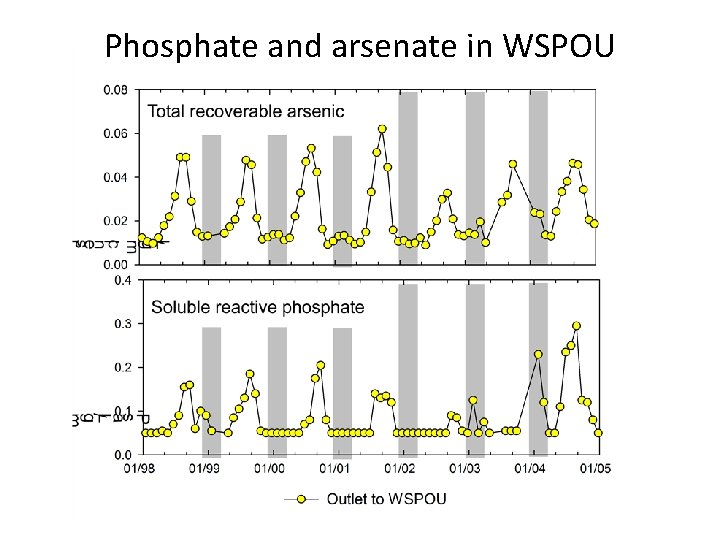
Phosphate and arsenate in WSPOU
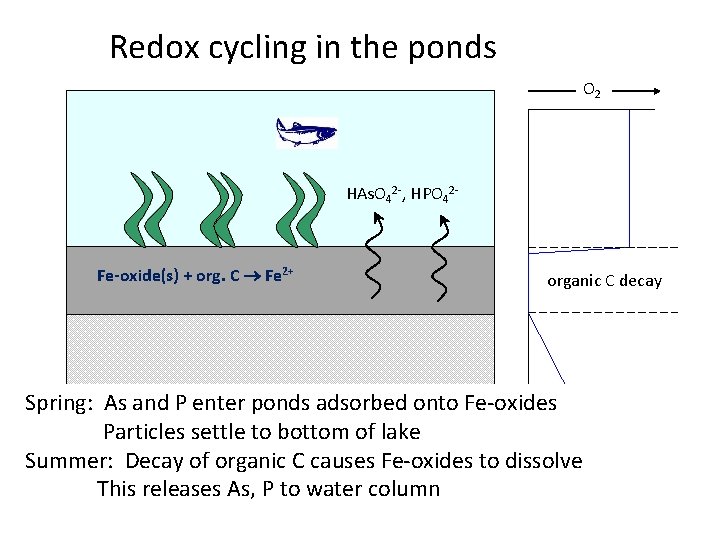
Redox cycling in the ponds O 2 HAs. O 42 -, HPO 42 - Fe-oxide(s) + org. C Fe 2+ organic C decay Spring: As and P enter ponds adsorbed onto Fe-oxides Particles settle to bottom of lake Summer: Decay of organic C causes Fe-oxides to dissolve This releases As, P to water column
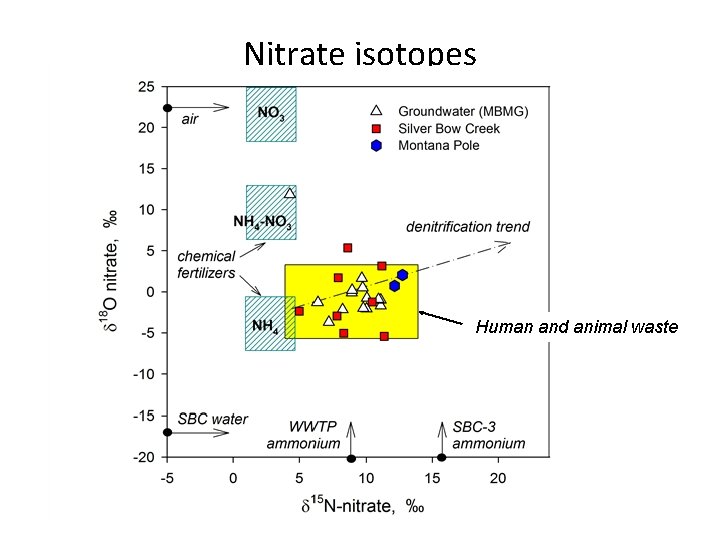
Nitrate isotopes Human and animal waste
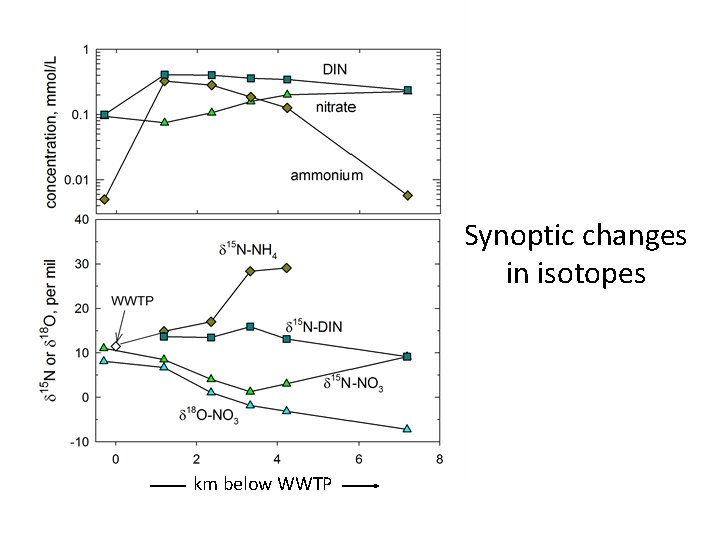
Synoptic changes in isotopes km below WWTP
Conclusions • Silver Bow Creek is over-nutrified – Uncontrolled growth of algae and plants – Night-time hypoxia = “dead zone” • Butte WWTP is main source of nutrients – Ammonium • Changes in nutrient concentration and speciation – Seasonal, diurnal, spatial • Influence of Warm Springs Ponds • Stable Isotopes – Complicated! – Reveal in-stream processes more than sources
Questions?
- Slides: 23