
Geo Science Chapter 12 Physical Environment and Introduction
- Slides: 6
Geo Science Chapter 12 Physical Environment and Introduction to Physical Geography By: Victoria Swanson
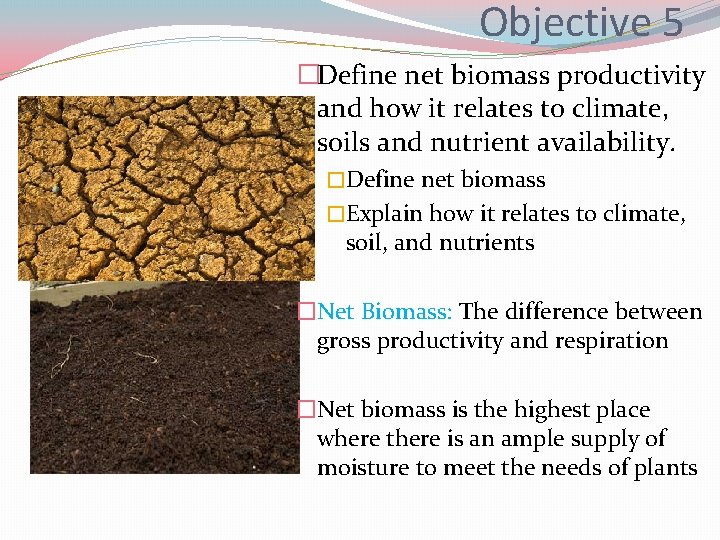
Objective 5 �Define net biomass productivity and how it relates to climate, soils and nutrient availability. �Define net biomass �Explain how it relates to climate, soil, and nutrients �Net Biomass: The difference between gross productivity and respiration �Net biomass is the highest place where there is an ample supply of moisture to meet the needs of plants
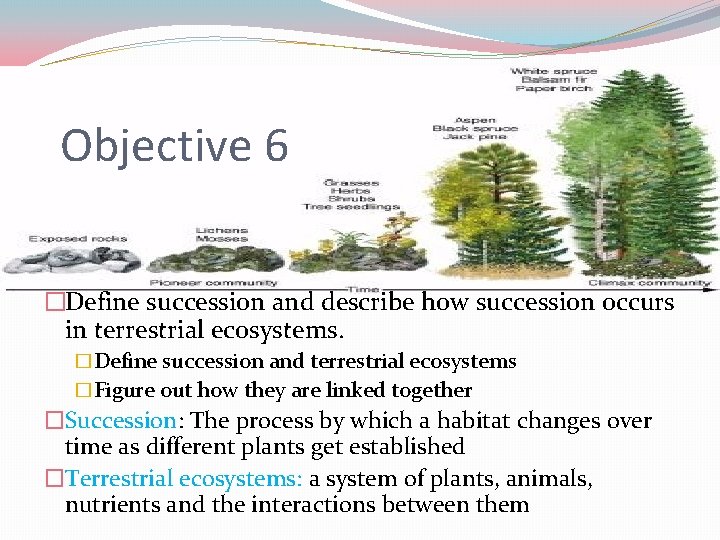
Objective 6 �Define succession and describe how succession occurs in terrestrial ecosystems. �Define succession and terrestrial ecosystems �Figure out how they are linked together �Succession: The process by which a habitat changes over time as different plants get established �Terrestrial ecosystems: a system of plants, animals, nutrients and the interactions between them
Objective 7 �Describe the first and second laws of thermodynamics and how they relate to trophic levels and food chains. �Define the laws of thermodynamics and tropic levels �Figure out how they relate through the tropic levels with the food chains �Thermodynamic first law- states that energy cannot be destroyed and can only be changed from one form to another
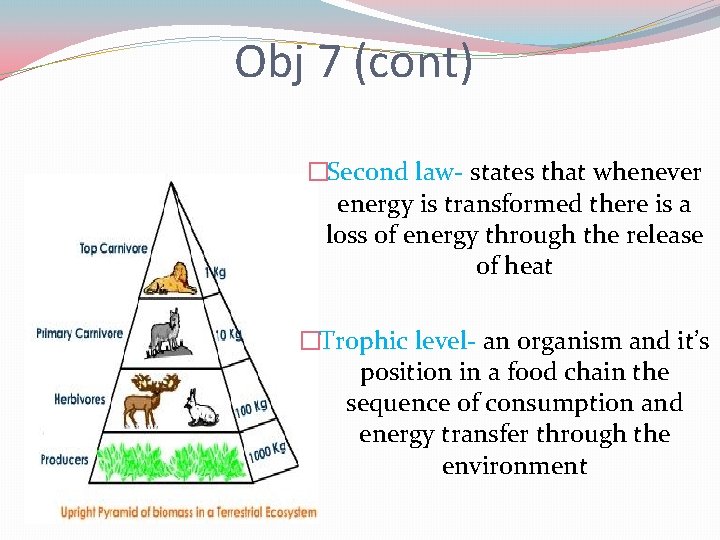
Obj 7 (cont) �Second law- states that whenever energy is transformed there is a loss of energy through the release of heat �Trophic level- an organism and it’s position in a food chain the sequence of consumption and energy transfer through the environment
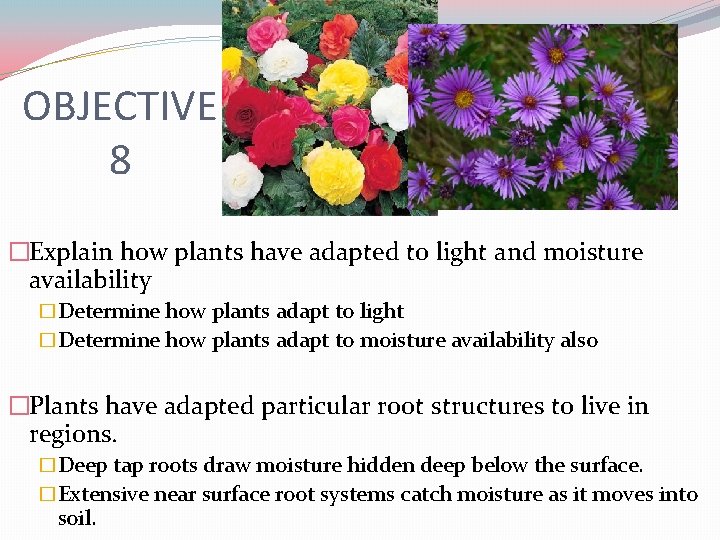
OBJECTIVE 8 �Explain how plants have adapted to light and moisture availability �Determine how plants adapt to light �Determine how plants adapt to moisture availability also �Plants have adapted particular root structures to live in regions. �Deep tap roots draw moisture hidden deep below the surface. �Extensive near surface root systems catch moisture as it moves into soil.