
GEO and Some Perspectives on Landsat USGSNASA Science
- Slides: 20
GEO and Some Perspectives on Landsat USGS-NASA Science Team Meeting Buellton, California 10 February 2013 Barbara J. Ryan Director, GEO Secretariat © GEO Secretariat
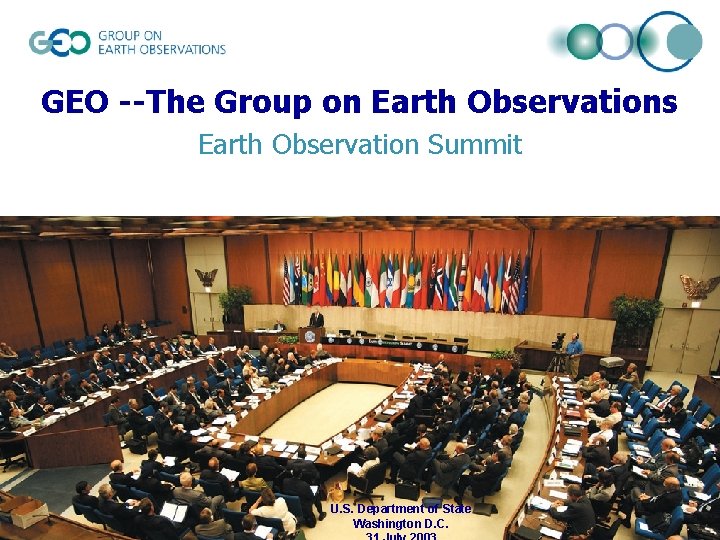
GEO --The Group on Earth Observations Earth Observation Summit U. S. Department of State Washington D. C.
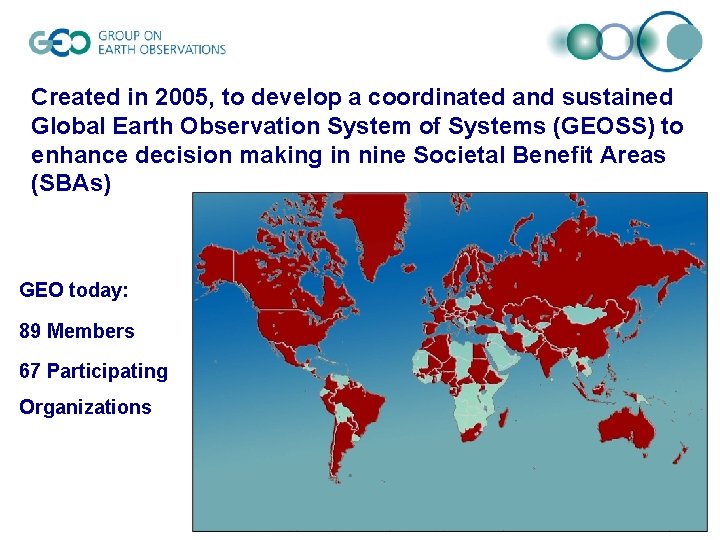
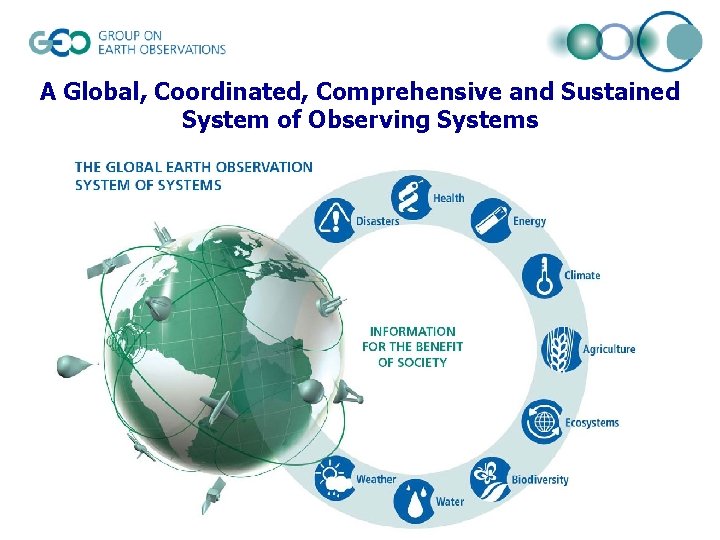
Created in 2005, to develop a coordinated and sustained Global Earth Observation System of Systems (GEOSS) to enhance decision making in nine Societal Benefit Areas (SBAs) GEO today: 89 Members 67 Participating Organizations
GEO Objectives • Improve and Coordinate Observation Systems • Advance Broad Open Data Policies/Practices • Foster Increased Use of EO Data and Information • Build Capacity
A Global, Coordinated, Comprehensive and Sustained System of Observing Systems
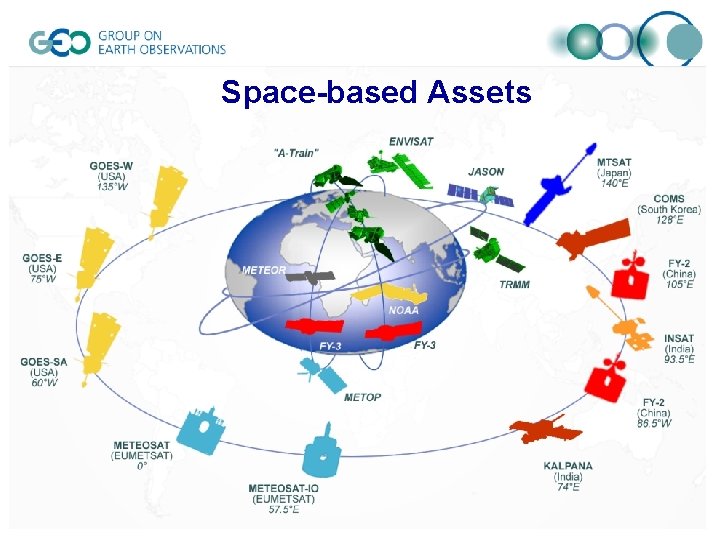
Space-based Assets
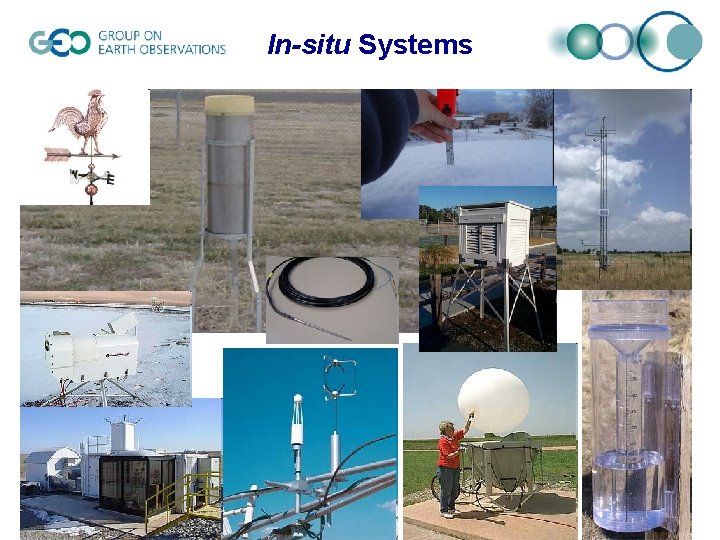
In-situ Systems
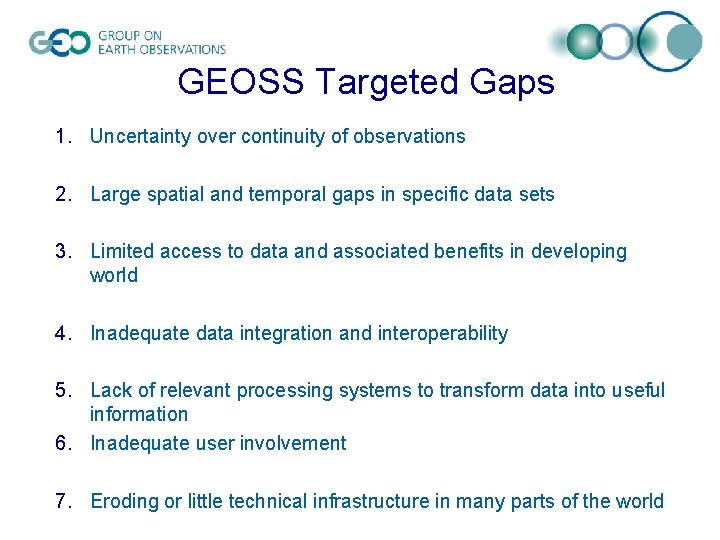
GEOSS Targeted Gaps 1. Uncertainty over continuity of observations 2. Large spatial and temporal gaps in specific data sets 3. Limited access to data and associated benefits in developing world 4. Inadequate data integration and interoperability 5. Lack of relevant processing systems to transform data into useful information 6. Inadequate user involvement 7. Eroding or little technical infrastructure in many parts of the world
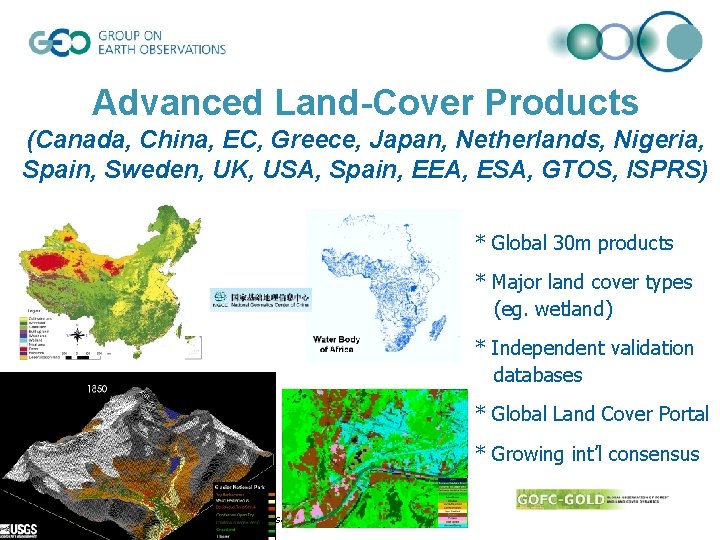
Advanced Land-Cover Products (Canada, China, EC, Greece, Japan, Netherlands, Nigeria, Spain, Sweden, UK, USA, Spain, EEA, ESA, GTOS, ISPRS) * Global 30 m products * Major land cover types (eg. wetland) * Independent validation databases * Global Land Cover Portal * Growing int’l consensus © GEO Secretariat
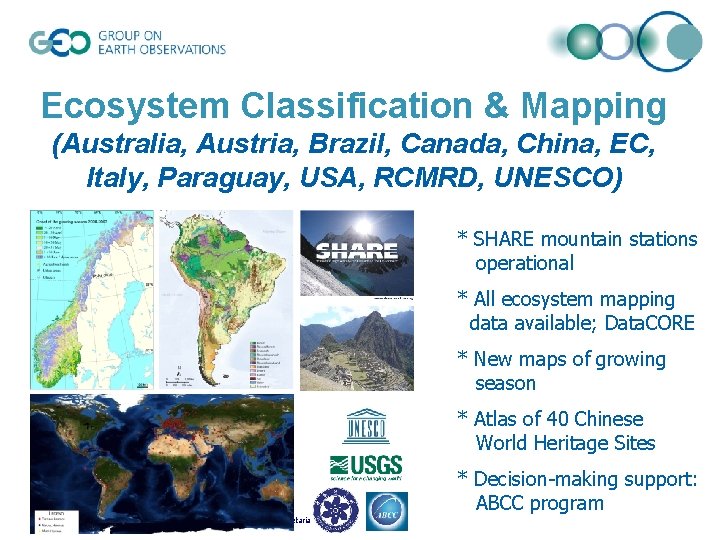
Ecosystem Classification & Mapping (Australia, Austria, Brazil, Canada, China, EC, Italy, Paraguay, USA, RCMRD, UNESCO) * SHARE mountain stations operational * All ecosystem mapping data available; Data. CORE * New maps of growing season * Atlas of 40 Chinese World Heritage Sites * Decision-making support: ABCC program © GEO Secretariat
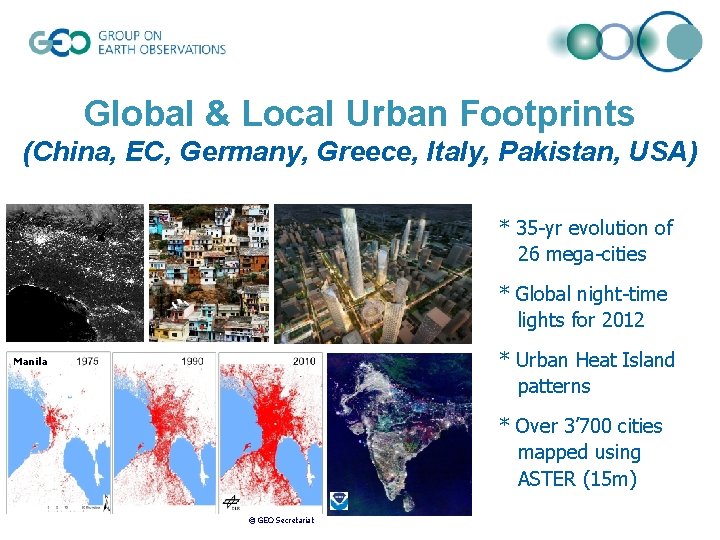
Global & Local Urban Footprints (China, EC, Germany, Greece, Italy, Pakistan, USA) * 35 -yr evolution of 26 mega-cities * Global night-time lights for 2012 * Urban Heat Island patterns Manila * Over 3’ 700 cities mapped using ASTER (15 m) © GEO Secretariat
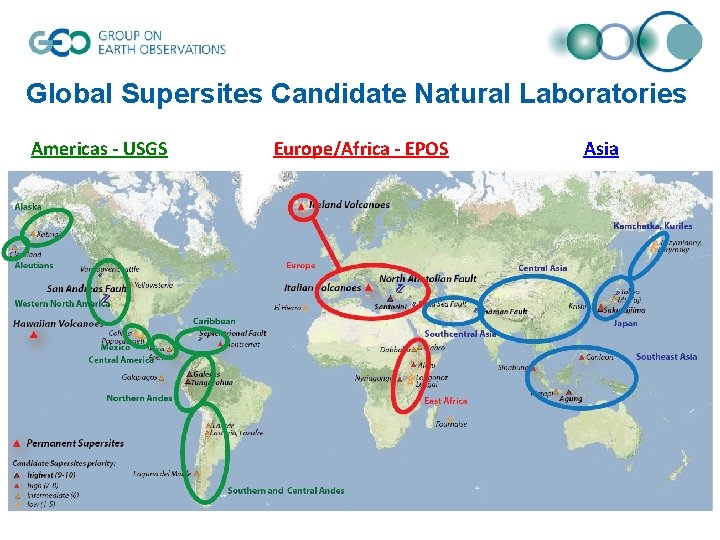
Global Supersites Candidate Natural Laboratories Americas - USGS Europe/Africa - EPOS Asia
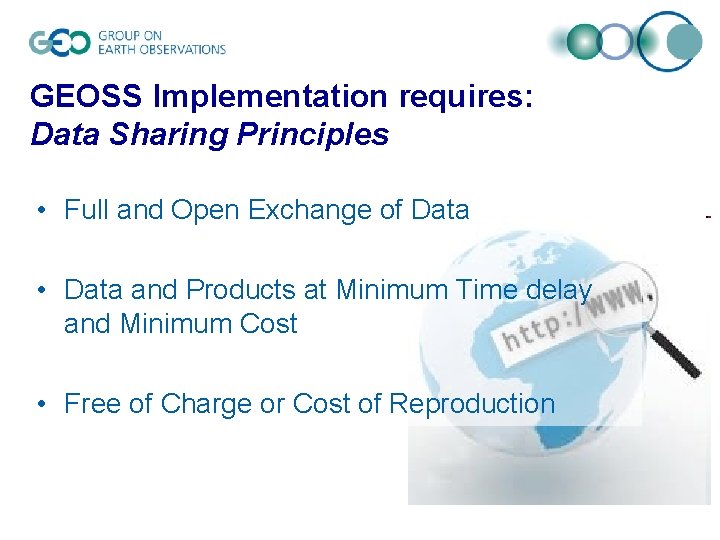
GEOSS Implementation requires: Data Sharing Principles • Full and Open Exchange of Data • Data and Products at Minimum Time delay and Minimum Cost • Free of Charge or Cost of Reproduction
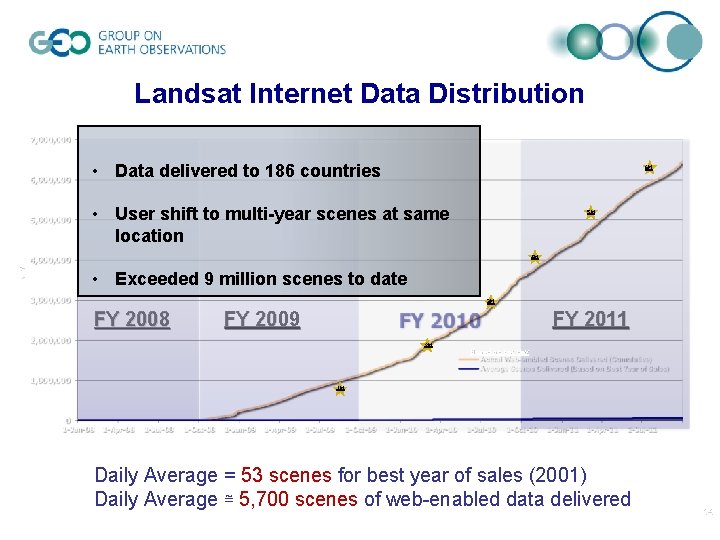
Landsat Internet Data Distribution Scenes Selected • Data delivered to 186 countries 6 M • User shift to multi-year scenes at same location 5 M 4 M • Exceeded 9 million scenes to date 3 M FY 2008 FY 2009 FY 2011 2 M Based on per day 1 M Daily Average = 53 scenes for best year of sales (2001) Daily Average ≅ 5, 700 scenes of web-enabled data delivered 14
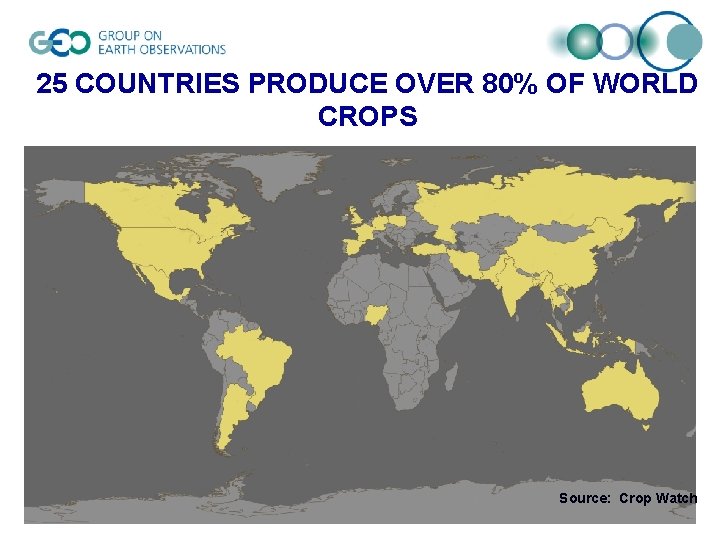
25 COUNTRIES PRODUCE OVER 80% OF WORLD CROPS Source: Crop Watch
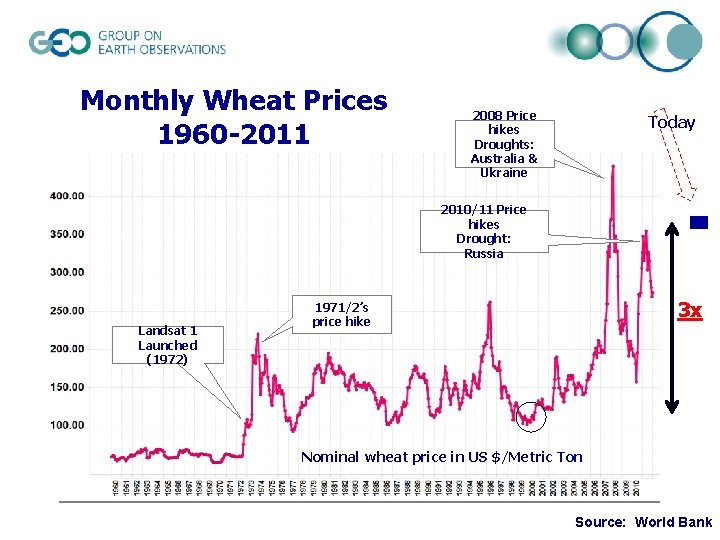
Monthly Wheat Prices 1960 -2011 2008 Price hikes Droughts: Australia & Ukraine Today 2010/11 Price hikes Drought: Russia Landsat 1 Launched (1972) 3 x 1971/2’s price hike Nominal wheat price in US $/Metric Ton Source: World Bank
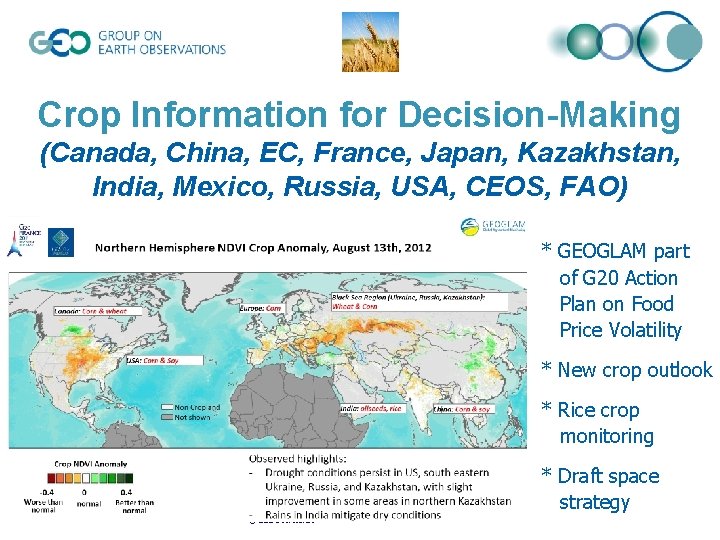
Crop Information for Decision-Making (Canada, China, EC, France, Japan, Kazakhstan, India, Mexico, Russia, USA, CEOS, FAO) * GEOGLAM part of G 20 Action Plan on Food Price Volatility * New crop outlook * Rice crop monitoring * Draft space strategy © GEO Secretariat
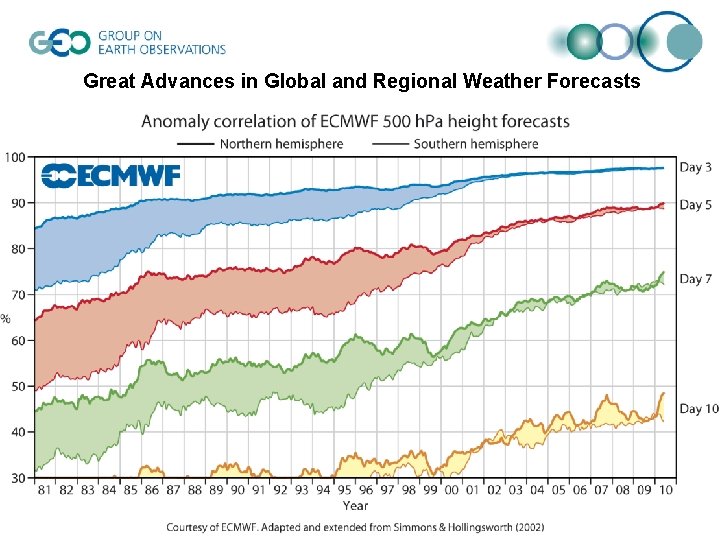
Great Advances in Global and Regional Weather Forecasts
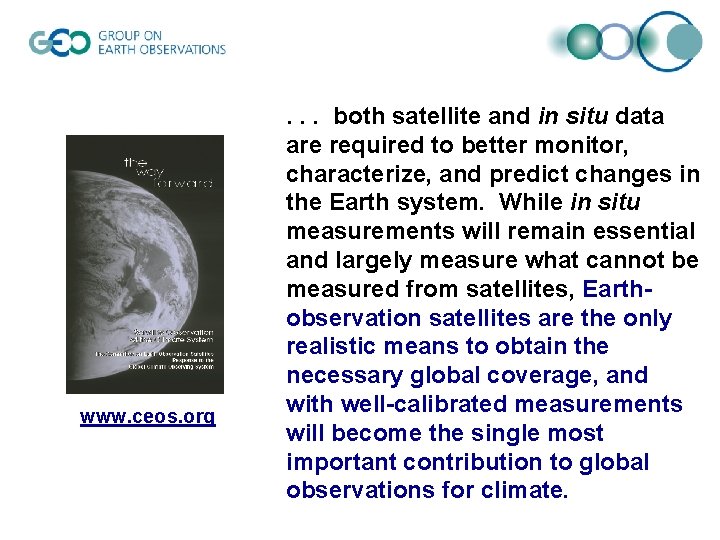
www. ceos. org . . . both satellite and in situ data are required to better monitor, characterize, and predict changes in the Earth system. While in situ measurements will remain essential and largely measure what cannot be measured from satellites, Earthobservation satellites are the only realistic means to obtain the necessary global coverage, and with well-calibrated measurements will become the single most important contribution to global observations for climate.
http: //www. earthobservations. org bryan@geosec. org