
Genres in Childrens Literature Britany Howell University of
Genres in Children’s Literature Britany Howell University of West Alabama LM 506
What is a GENRE? A genre is a kind or type of literature that has a common set of characteristics. Genres in literature are not always clear-cut and easily distinguished. There are 6 major groups of genres in children’s literature.
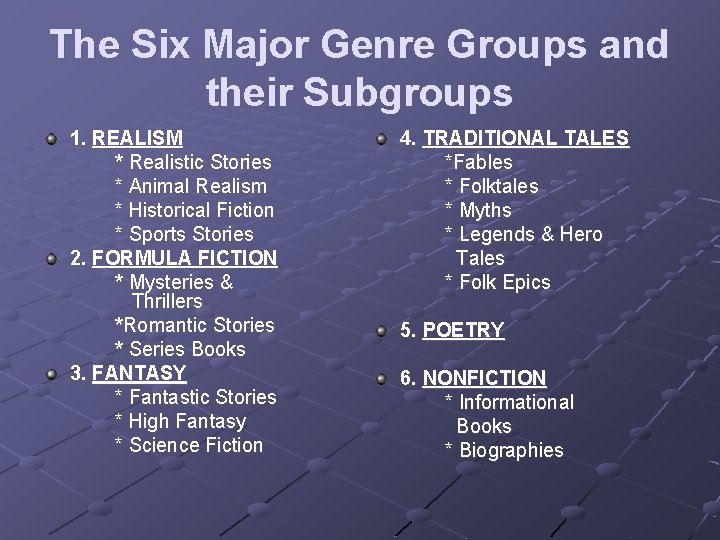
The Six Major Genre Groups and their Subgroups 1. REALISM * Realistic Stories * Animal Realism * Historical Fiction * Sports Stories 2. FORMULA FICTION * Mysteries & Thrillers *Romantic Stories * Series Books 3. FANTASY * Fantastic Stories * High Fantasy * Science Fiction 4. TRADITIONAL TALES *Fables * Folktales * Myths * Legends & Hero Tales * Folk Epics 5. POETRY 6. NONFICTION * Informational Books * Biographies
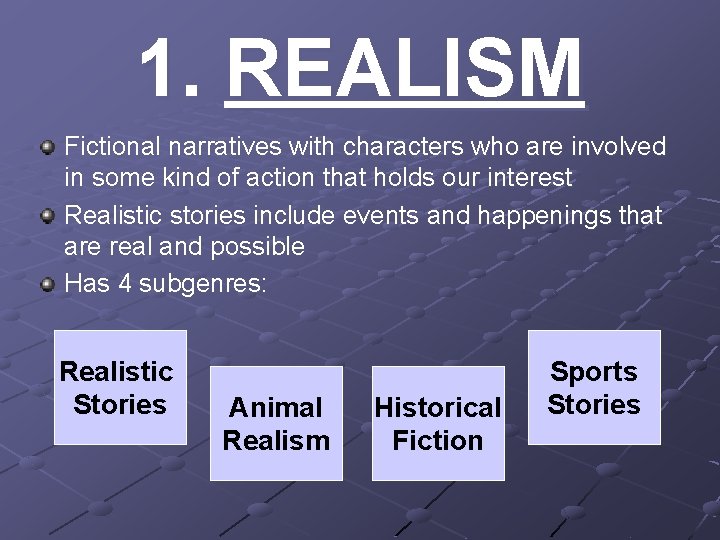
1. REALISM Fictional narratives with characters who are involved in some kind of action that holds our interest Realistic stories include events and happenings that are real and possible Has 4 subgenres: Realistic Stories Animal Realism Historical Fiction Sports Stories

1. REALISM: Realistic Stories These stories are realistic or possible. Problems are not universal but personal and particular. Includes round central characters Examples: The Summer of the Swans The Great Gilly Hopkins Roll of Thunder, Hear My Cry
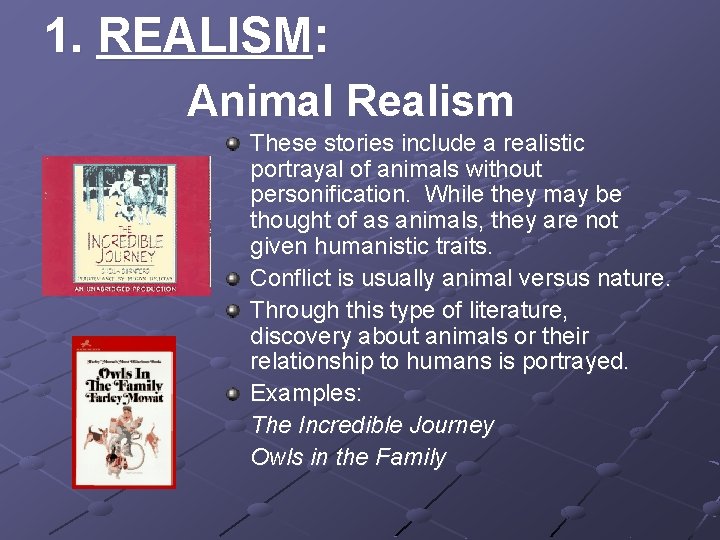
1. REALISM: Animal Realism These stories include a realistic portrayal of animals without personification. While they may be thought of as animals, they are not given humanistic traits. Conflict is usually animal versus nature. Through this type of literature, discovery about animals or their relationship to humans is portrayed. Examples: The Incredible Journey Owls in the Family
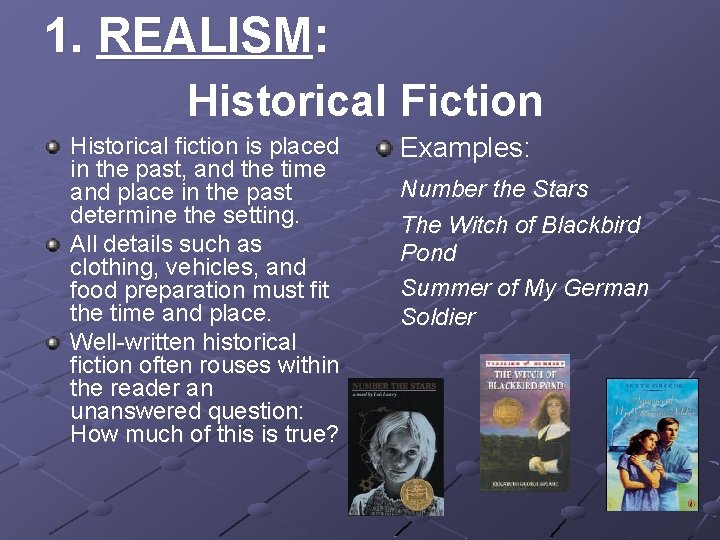
1. REALISM: Historical Fiction Historical fiction is placed in the past, and the time and place in the past determine the setting. All details such as clothing, vehicles, and food preparation must fit the time and place. Well-written historical fiction often rouses within the reader an unanswered question: How much of this is true? Examples: Number the Stars The Witch of Blackbird Pond Summer of My German Soldier
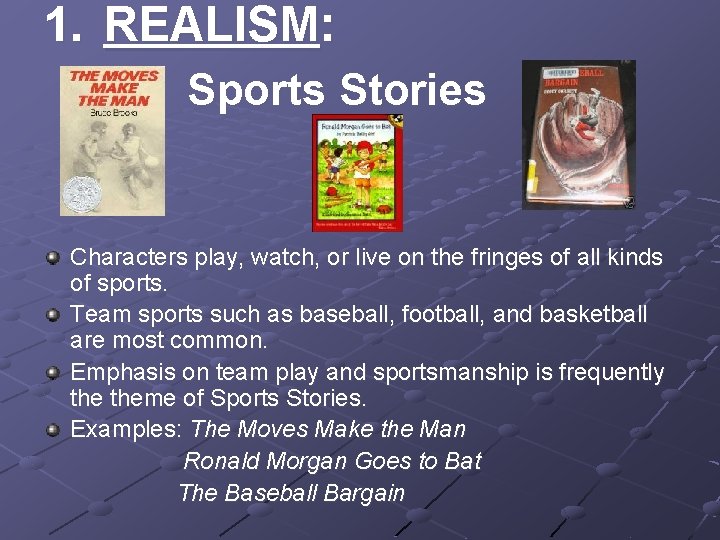
1. REALISM: Sports Stories Characters play, watch, or live on the fringes of all kinds of sports. Team sports such as baseball, football, and basketball are most common. Emphasis on team play and sportsmanship is frequently theme of Sports Stories. Examples: The Moves Make the Man Ronald Morgan Goes to Bat The Baseball Bargain
2. FORMULA FICTION Follows distinct patterns Following a formula restricts the writer’s originality. Has 3 subgenres: Mysteries and Thrillers Romantic Stories Series Books
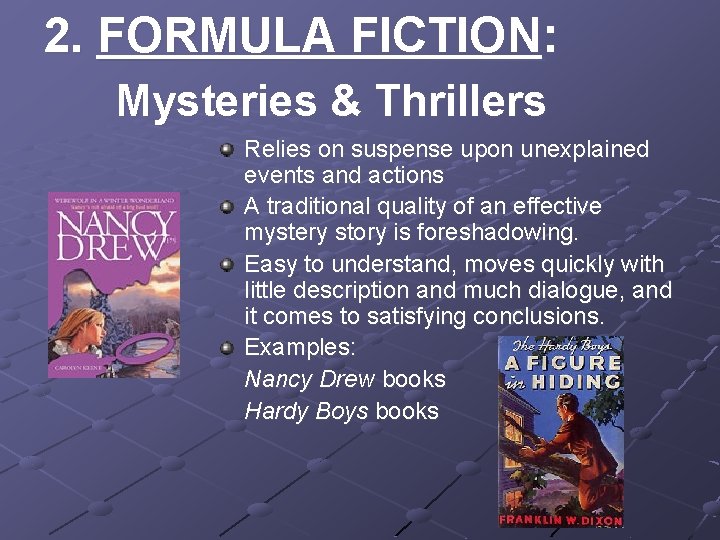
2. FORMULA FICTION: Mysteries & Thrillers Relies on suspense upon unexplained events and actions A traditional quality of an effective mystery story is foreshadowing. Easy to understand, moves quickly with little description and much dialogue, and it comes to satisfying conclusions. Examples: Nancy Drew books Hardy Boys books
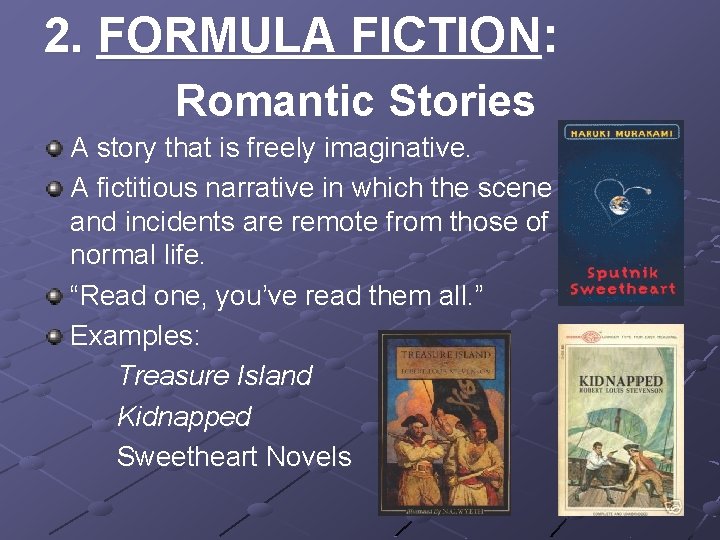
2. FORMULA FICTION: Romantic Stories A story that is freely imaginative. A fictitious narrative in which the scene and incidents are remote from those of normal life. “Read one, you’ve read them all. ” Examples: Treasure Island Kidnapped Sweetheart Novels
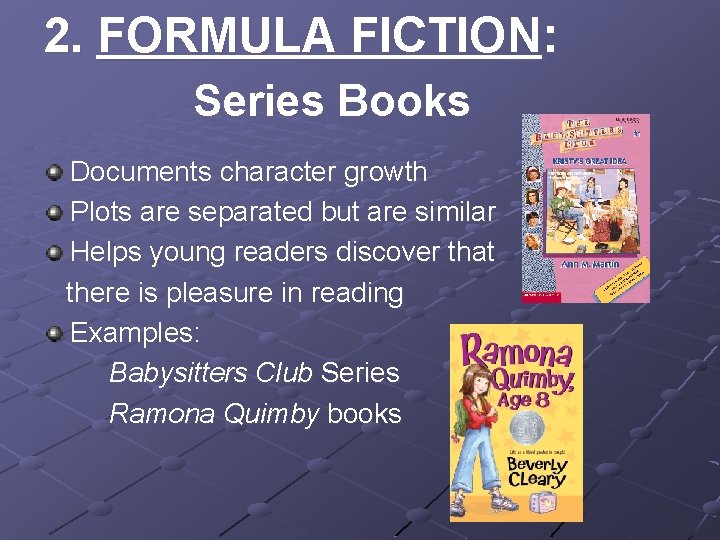
2. FORMULA FICTION: Series Books Documents character growth Plots are separated but are similar Helps young readers discover that there is pleasure in reading Examples: Babysitters Club Series Ramona Quimby books
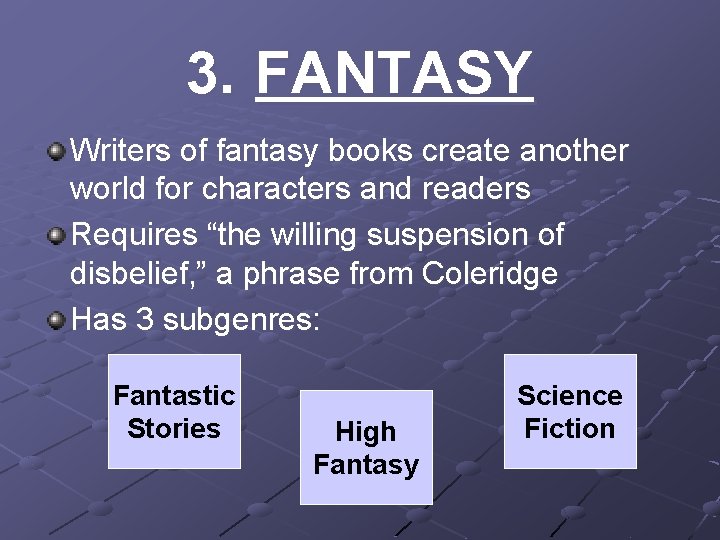
3. FANTASY Writers of fantasy books create another world for characters and readers Requires “the willing suspension of disbelief, ” a phrase from Coleridge Has 3 subgenres: Fantastic Stories High Fantasy Science Fiction
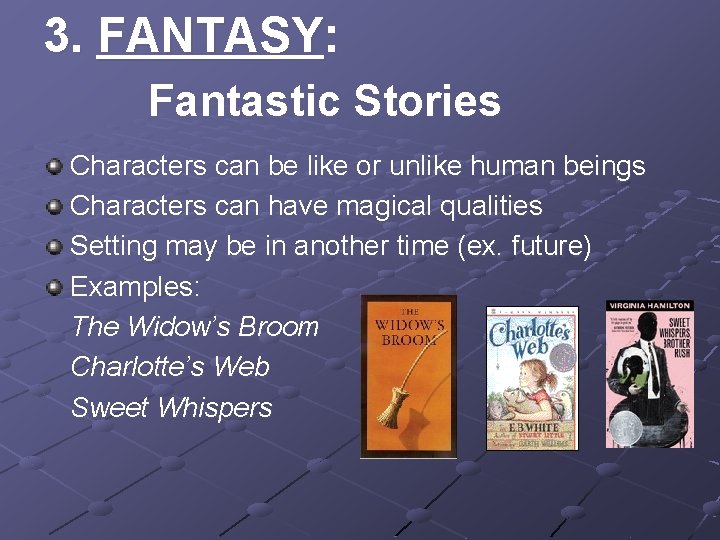
3. FANTASY: Fantastic Stories Characters can be like or unlike human beings Characters can have magical qualities Setting may be in another time (ex. future) Examples: The Widow’s Broom Charlotte’s Web Sweet Whispers
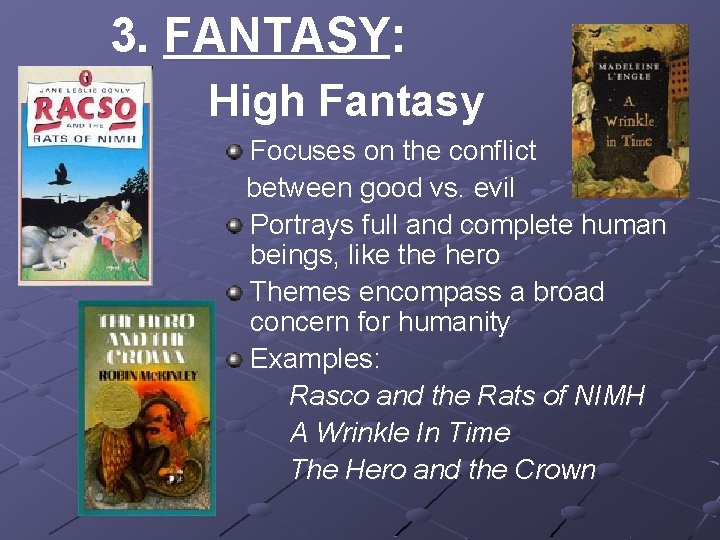
3. FANTASY: High Fantasy Focuses on the conflict between good vs. evil Portrays full and complete human beings, like the hero Themes encompass a broad concern for humanity Examples: Rasco and the Rats of NIMH A Wrinkle In Time The Hero and the Crown
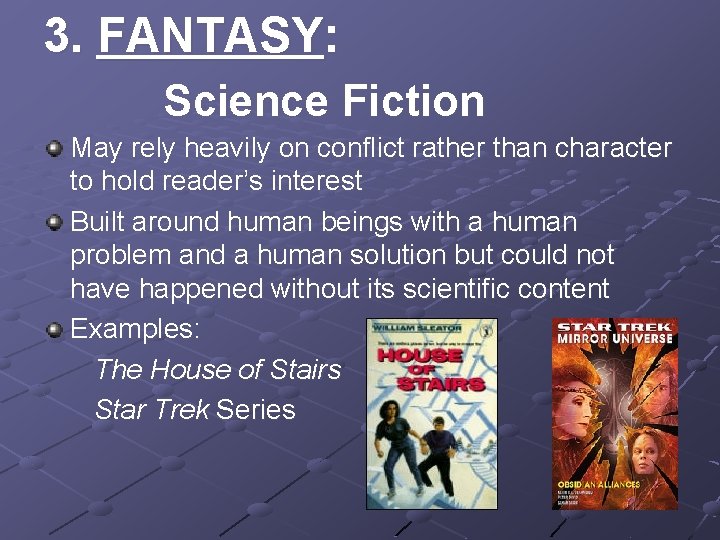
3. FANTASY: Science Fiction May rely heavily on conflict rather than character to hold reader’s interest Built around human beings with a human problem and a human solution but could not have happened without its scientific content Examples: The House of Stairs Star Trek Series
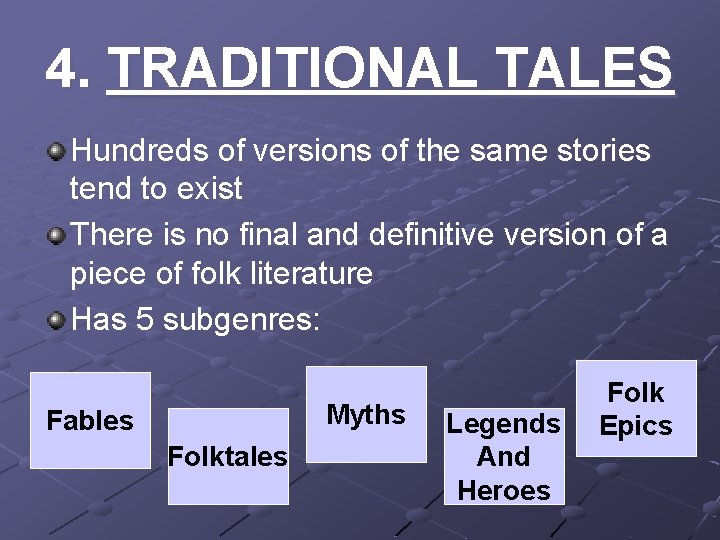
4. TRADITIONAL TALES Hundreds of versions of the same stories tend to exist There is no final and definitive version of a piece of folk literature Has 5 subgenres: Myths Fables Folktales Legends And Heroes Folk Epics
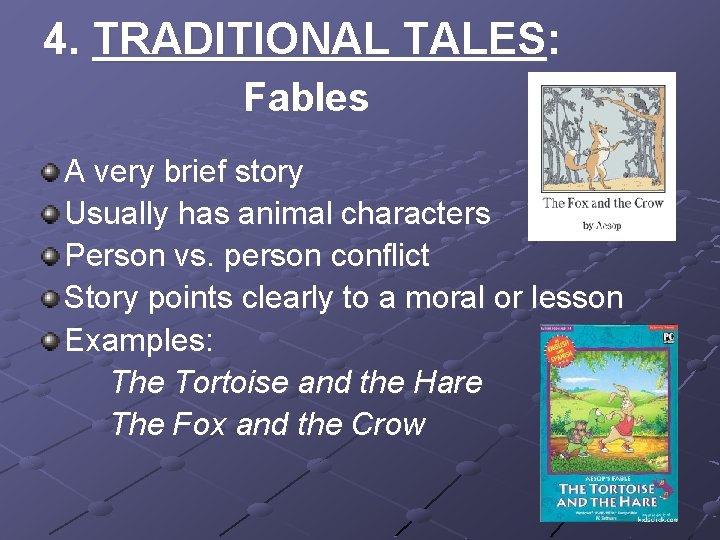
4. TRADITIONAL TALES: Fables A very brief story Usually has animal characters Person vs. person conflict Story points clearly to a moral or lesson Examples: The Tortoise and the Hare The Fox and the Crow
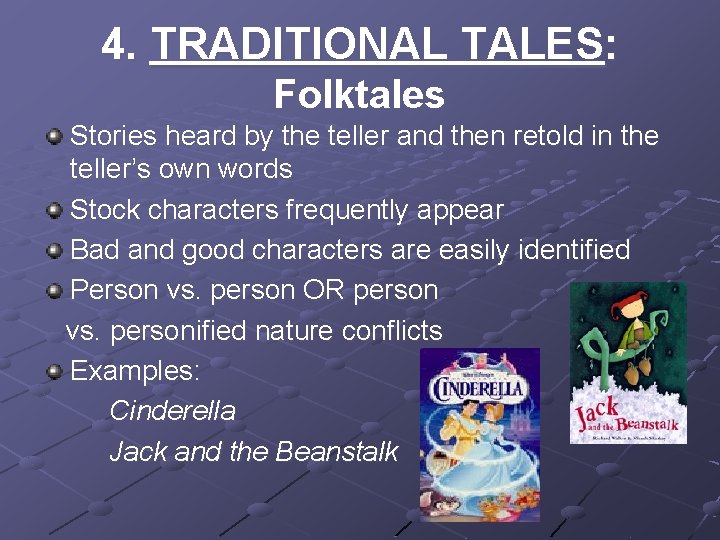
4. TRADITIONAL TALES: Folktales Stories heard by the teller and then retold in the teller’s own words Stock characters frequently appear Bad and good characters are easily identified Person vs. person OR person vs. personified nature conflicts Examples: Cinderella Jack and the Beanstalk
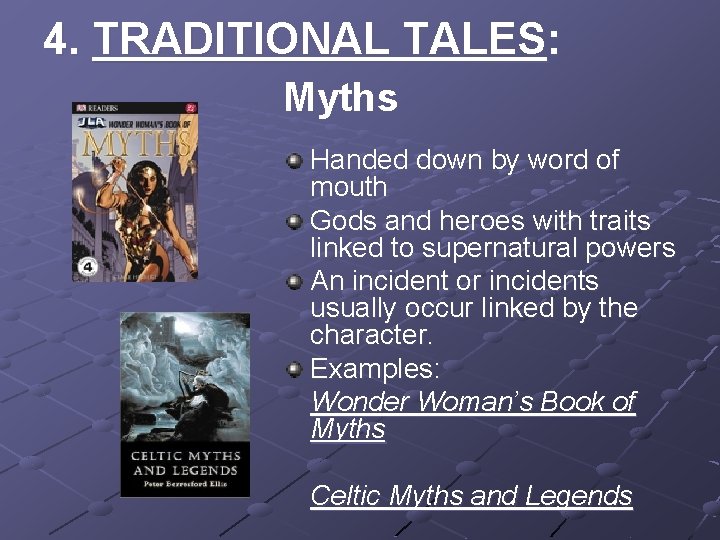
4. TRADITIONAL TALES: Myths Handed down by word of mouth Gods and heroes with traits linked to supernatural powers An incident or incidents usually occur linked by the character. Examples: Wonder Woman’s Book of Myths Celtic Myths and Legends
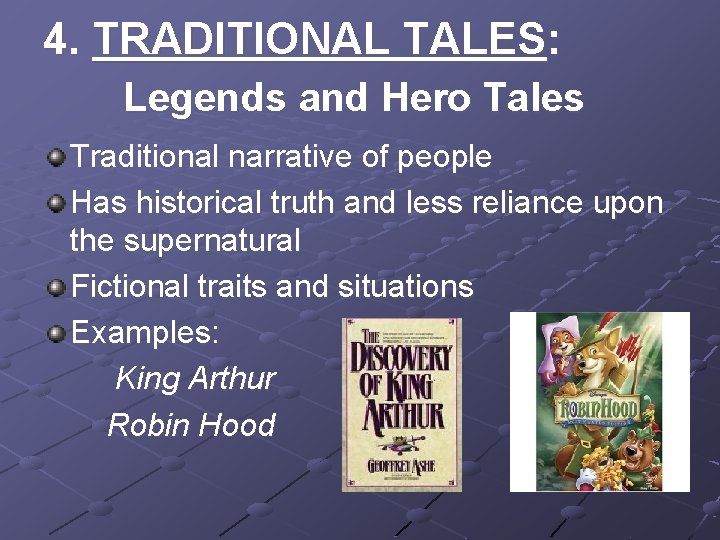
4. TRADITIONAL TALES: Legends and Hero Tales Traditional narrative of people Has historical truth and less reliance upon the supernatural Fictional traits and situations Examples: King Arthur Robin Hood
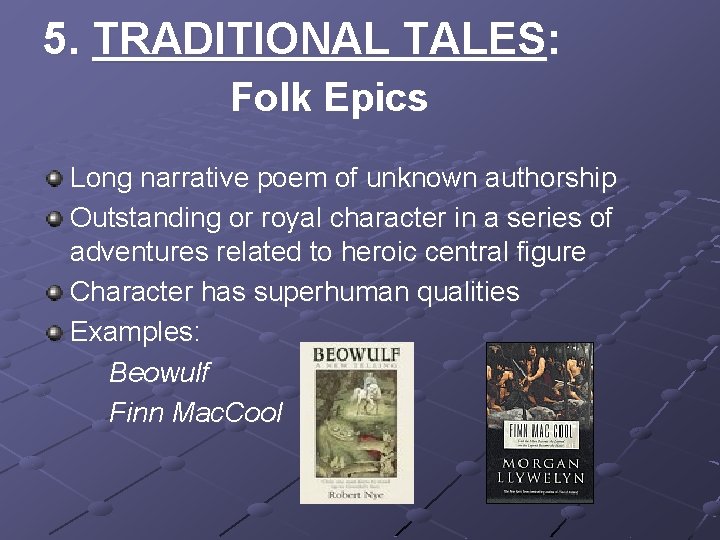
5. TRADITIONAL TALES: Folk Epics Long narrative poem of unknown authorship Outstanding or royal character in a series of adventures related to heroic central figure Character has superhuman qualities Examples: Beowulf Finn Mac. Cool
5. POETRY A kind of imaginative and artistic writing Ballads, narrative poetry, and lyric poetry are all types of poetry Pieces of writing that have rhythm or rhyme are not necessarily considered poetry
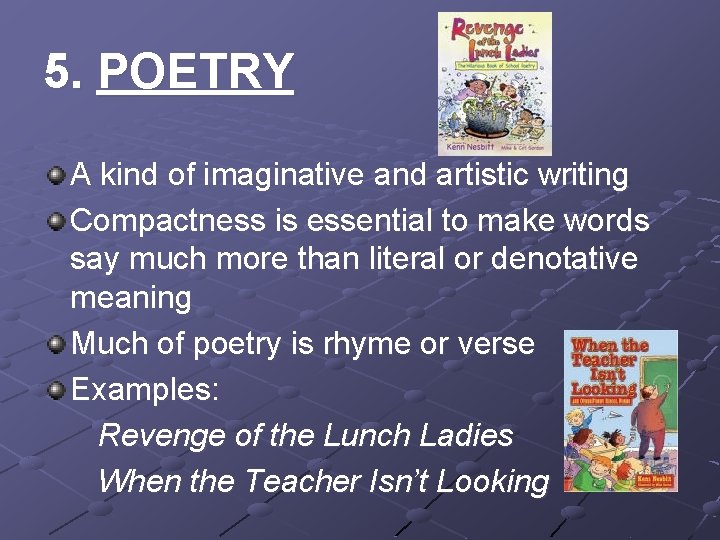
5. POETRY A kind of imaginative and artistic writing Compactness is essential to make words say much more than literal or denotative meaning Much of poetry is rhyme or verse Examples: Revenge of the Lunch Ladies When the Teacher Isn’t Looking
6. NONFICTION Nonfiction books are made up of factual information Relates facts to a concept Has 2 subgenres: Informational Books Biographies
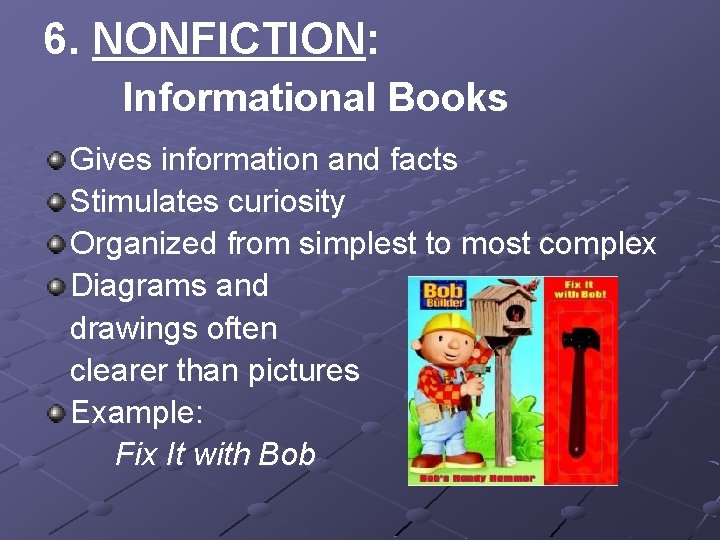
6. NONFICTION: Informational Books Gives information and facts Stimulates curiosity Organized from simplest to most complex Diagrams and drawings often clearer than pictures Example: Fix It with Bob
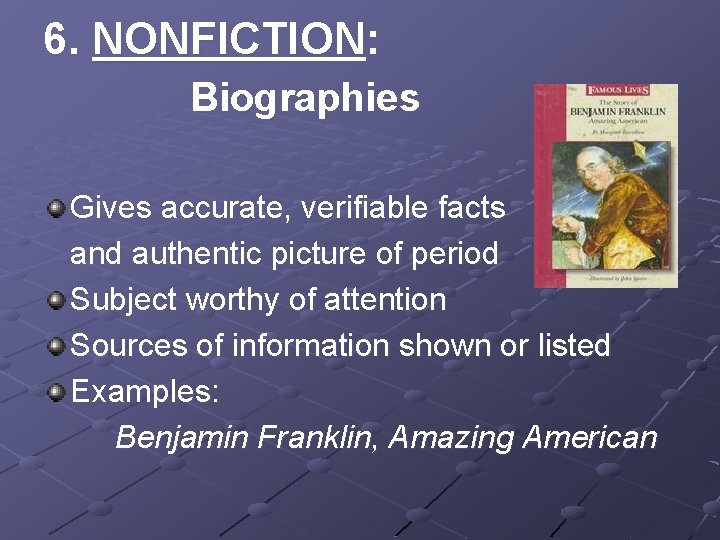
6. NONFICTION: Biographies Gives accurate, verifiable facts and authentic picture of period Subject worthy of attention Sources of information shown or listed Examples: Benjamin Franklin, Amazing American
GROUP ACTIVITY!! Each table will work together as a group. Use the books at your table and determine which genre of literature each is categorized as. Write your answers on the chart I give you. The first group to complete this activity with correct answers will receive a door prize!!!!
- Slides: 28