
Genomics Medicine http biochem 158 stanford edu Simple
Genomics & Medicine http: //biochem 158. stanford. edu/ Simple Nucleotide Polymorphisms http: //biochem 158. stanford. edu/SNPs. html Doug Brutlag Professor Emeritus of Biochemistry & Medicine Stanford University School of Medicine Doug Brutlag 2011
The Genome is Out of the Bag http: //stanmed. stanford. edu/2010 fall/article 1. html Doug Brutlag 2011
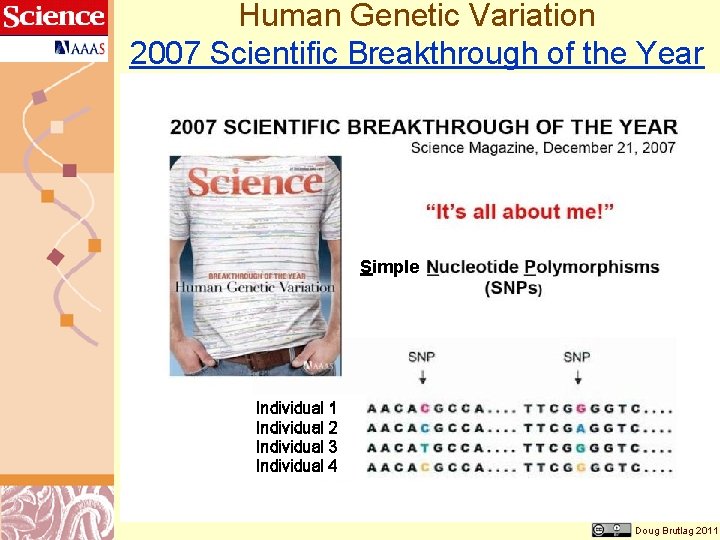
Human Genetic Variation 2007 Scientific Breakthrough of the Year Simple Individual 1 Individual 2 Individual 3 Individual 4 Doug Brutlag 2011
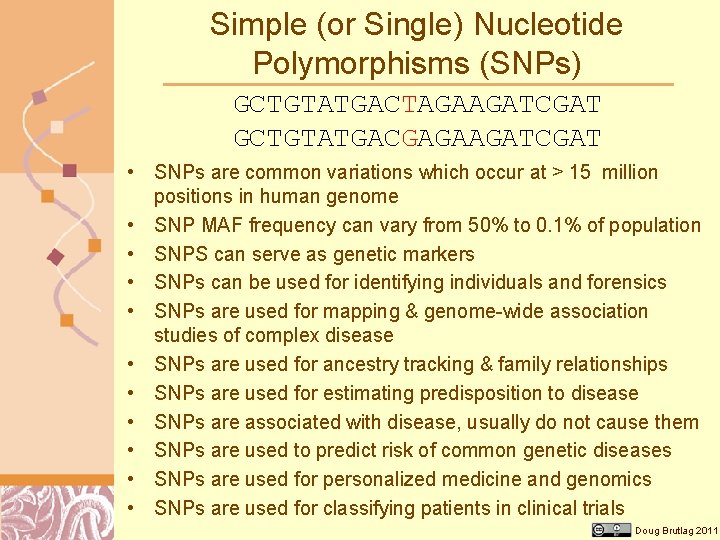
Simple (or Single) Nucleotide Polymorphisms (SNPs) GCTGTATGACTAGAAGATCGAT GCTGTATGACGAGAAGATCGAT • SNPs are common variations which occur at > 15 million positions in human genome • SNP MAF frequency can vary from 50% to 0. 1% of population • SNPS can serve as genetic markers • SNPs can be used for identifying individuals and forensics • SNPs are used for mapping & genome-wide association studies of complex disease • SNPs are used for ancestry tracking & family relationships • SNPs are used for estimating predisposition to disease • SNPs are associated with disease, usually do not cause them • SNPs are used to predict risk of common genetic diseases • SNPs are used for personalized medicine and genomics • SNPs are used for classifying patients in clinical trials Doug Brutlag 2011
SNPs and Mutations in the Human Genome • 15 million sites in the human genome where SNPs can occur • 3. 8 million SNP sites cataloged in 270 individuals in the Hap. Map consortium • Another 11 million SNP sites cataloged in the 1000 Genome effort • 10 million sites are common (minor allele frequency: MAF > 5%) • Each individual has 3 -5 million SNPs (common variations) relative to the reference human genome • Each individual also carries 300 to 500 rare mutations (more recent) many of which are lethal Doug Brutlag 2011
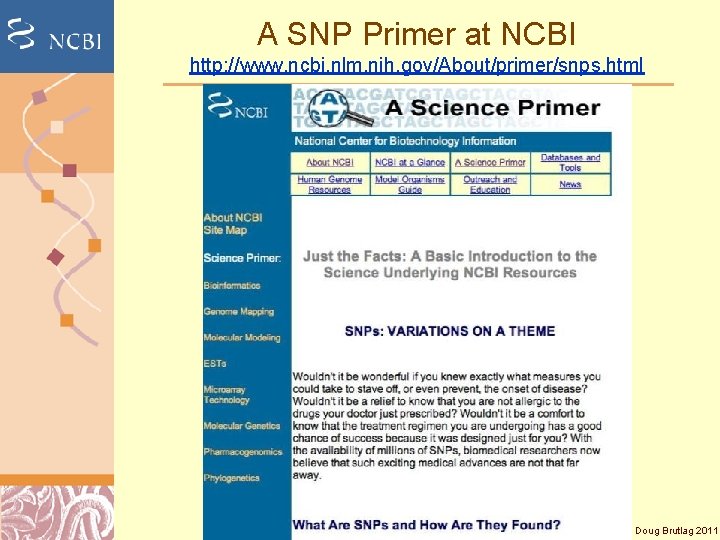
A SNP Primer at NCBI http: //www. ncbi. nlm. nih. gov/About/primer/snps. html Doug Brutlag 2011
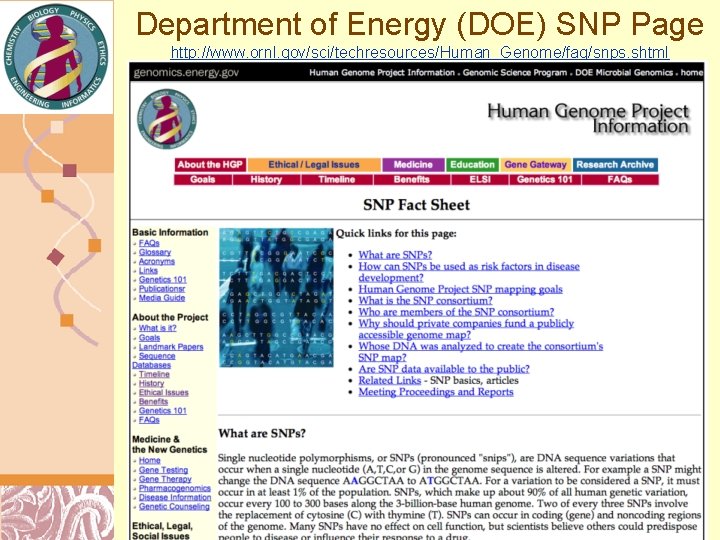
Department of Energy (DOE) SNP Page http: //www. ornl. gov/sci/techresources/Human_Genome/faq/snps. shtml Doug Brutlag 2011
A Primer of Genome Science Chapter 3 Genomic Variation Doug Brutlag 2011
Simple Nucleotide Polymorphisms (SNPs) • SNPs are common variations in the genome (minor allele frequency or MAF between 50% and 1%) • Most SNPs are genetically neutral – – Used in DNA fingerprints - forensics Paternity tests Immigration in the United Kingdom Used to track ethnic migrations and ancestry • Some SNPs reflect distinguishing characteristics – Often the basis for racial & genetic discrimination or other stigma • Rarer variations cause disease. Unlike SNPs, these variations are rare, often called mutations. • Some SNPs linked to predisposition to disease • SNPs can serve as genetic markers for other traits – Clinical trials associate SNPs with drug efficacy – Clinical trials associate SNPs adverse drug reactions – Personal genomics associate SNPs with traits • 23 and. Me, Navigenics, DNADirect Doug Brutlag 2011
Types of SNPs http: //www. ncbi. nlm. nih. gov/sites/entrez? db=snp • Non protein coding SNPs – – – – Promoters 5’ UTR 3’ UTR Introns Intergenic Regions Pseudogenes Regulatory • • Splicing Transcriptional regulation (promoter & transcription factor binding sites) Translational regulation (initiation or termination) Regulatory mi. RNA target sites • Coding SNPs – Synonymous SNPs (third position variation) – Replacement SNPs (change Amino acid) • Functional SNPs (acceptable amino acid replacement) • Non-functional SNPs (traits & diseases) Doug Brutlag 2011
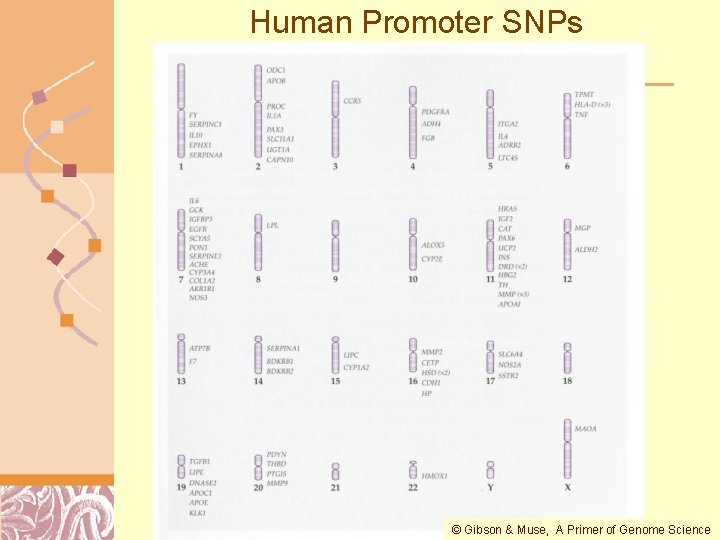
Human Promoter SNPs © Gibson & Muse, A Primer of Genome Science Doug Brutlag 2011
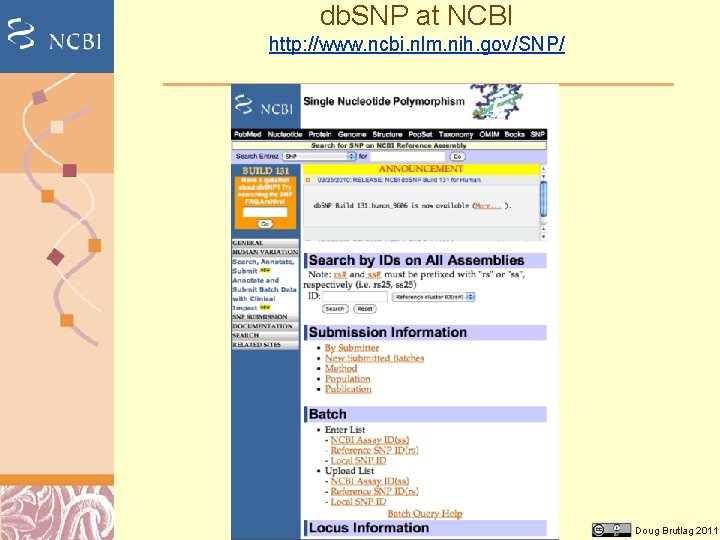
db. SNP at NCBI http: //www. ncbi. nlm. nih. gov/SNP/ Doug Brutlag 2011
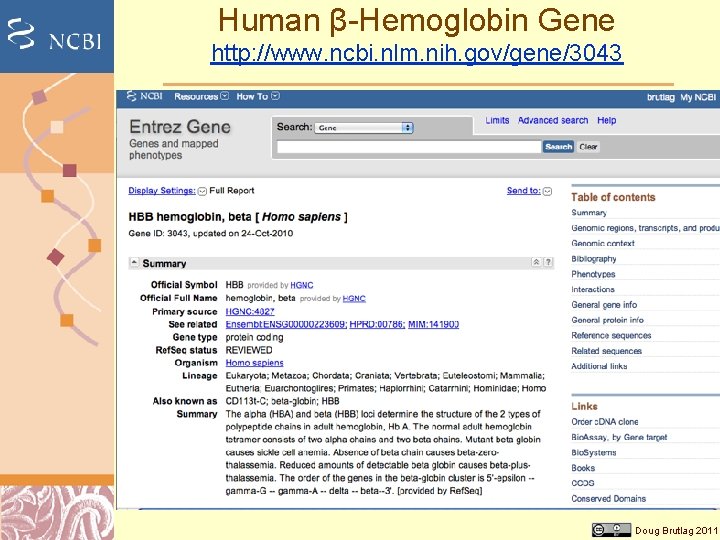
Human β-Hemoglobin Gene http: //www. ncbi. nlm. nih. gov/gene/3043 Doug Brutlag 2011
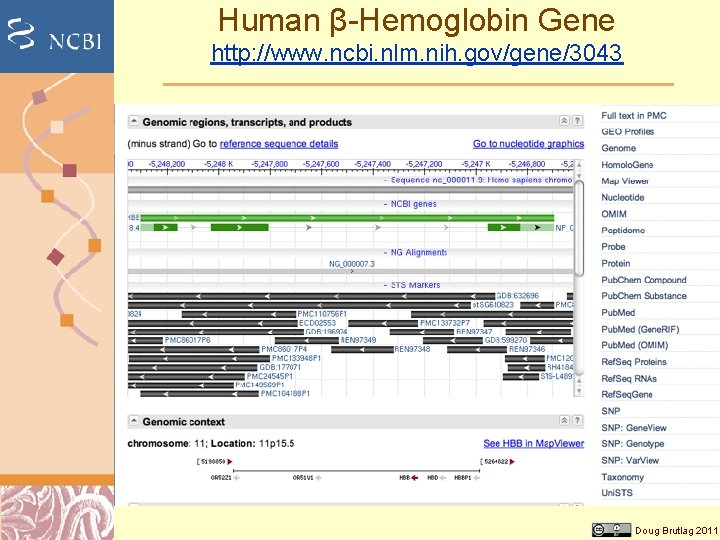
Human β-Hemoglobin Gene http: //www. ncbi. nlm. nih. gov/gene/3043 Doug Brutlag 2011
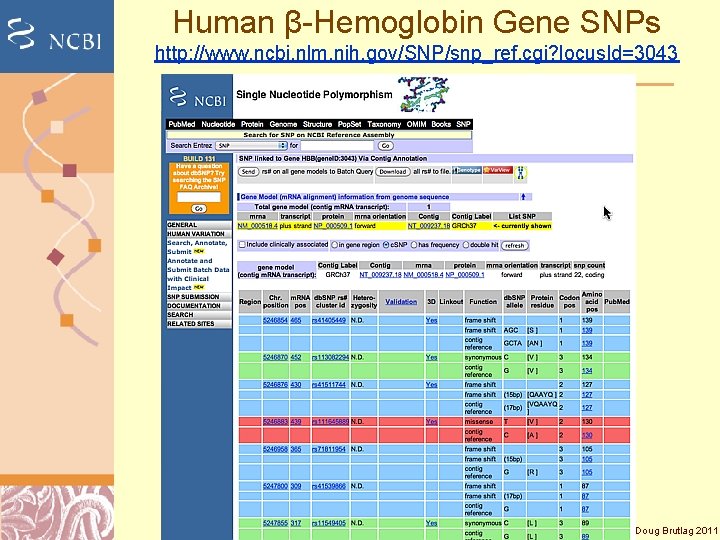
Human β-Hemoglobin Gene SNPs http: //www. ncbi. nlm. nih. gov/SNP/snp_ref. cgi? locus. Id=3043 Doug Brutlag 2011
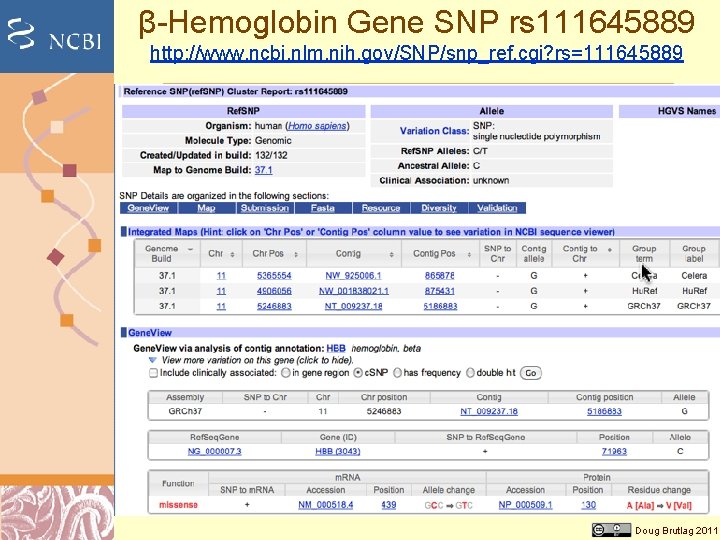
β-Hemoglobin Gene SNP rs 111645889 http: //www. ncbi. nlm. nih. gov/SNP/snp_ref. cgi? rs=111645889 Doug Brutlag 2011
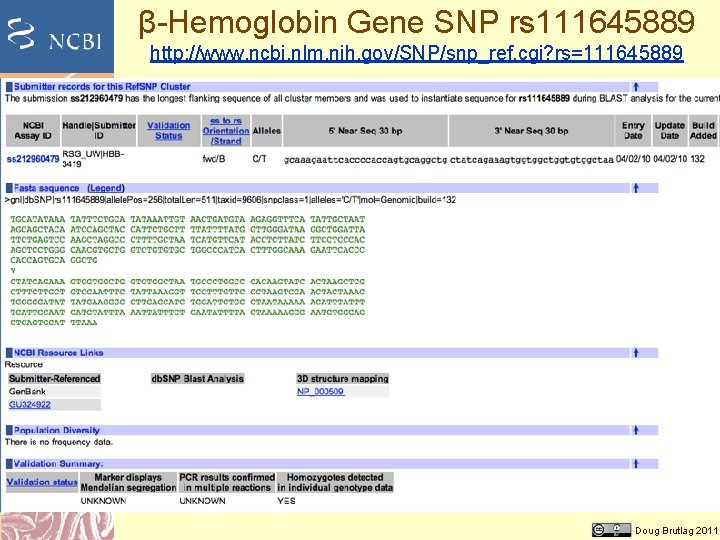
β-Hemoglobin Gene SNP rs 111645889 http: //www. ncbi. nlm. nih. gov/SNP/snp_ref. cgi? rs=111645889 Doug Brutlag 2011
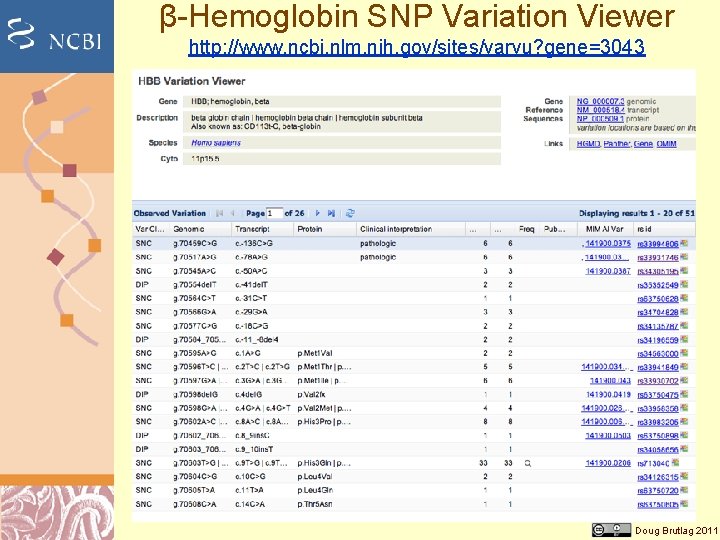
β-Hemoglobin SNP Variation Viewer http: //www. ncbi. nlm. nih. gov/sites/varvu? gene=3043 Doug Brutlag 2011
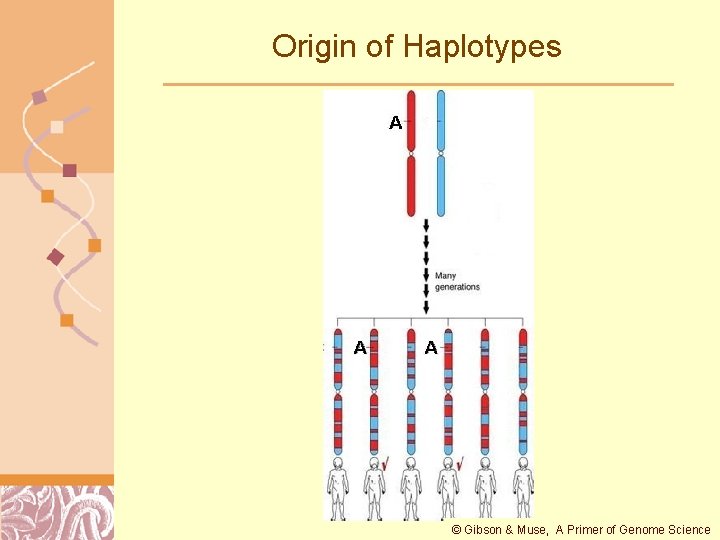
Origin of Haplotypes © Gibson & Muse, A Primer of Genome Science Doug Brutlag 2011
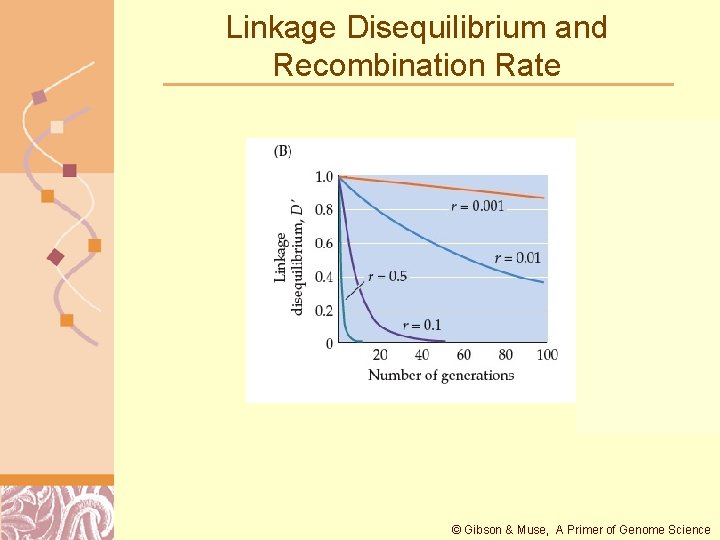
Linkage Disequilibrium and Recombination Rate © Gibson & Muse, A Primer of Genome Science Doug Brutlag 2011
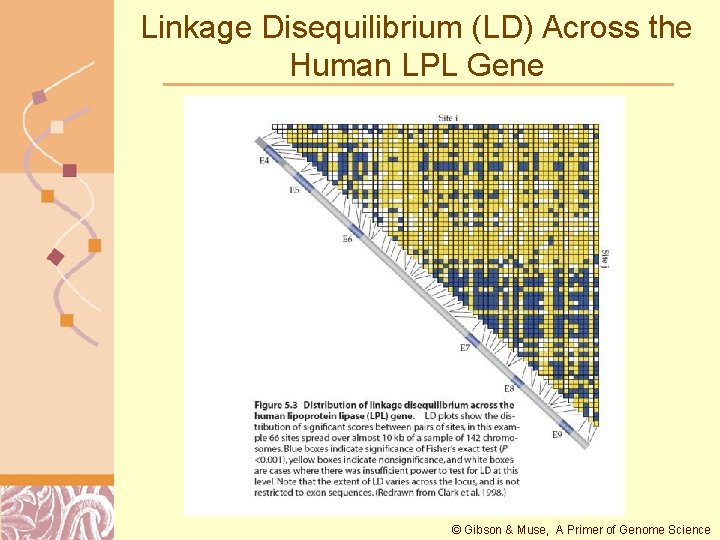
Linkage Disequilibrium (LD) Across the Human LPL Gene © Gibson & Muse, A Primer of Genome Science Doug Brutlag 2011
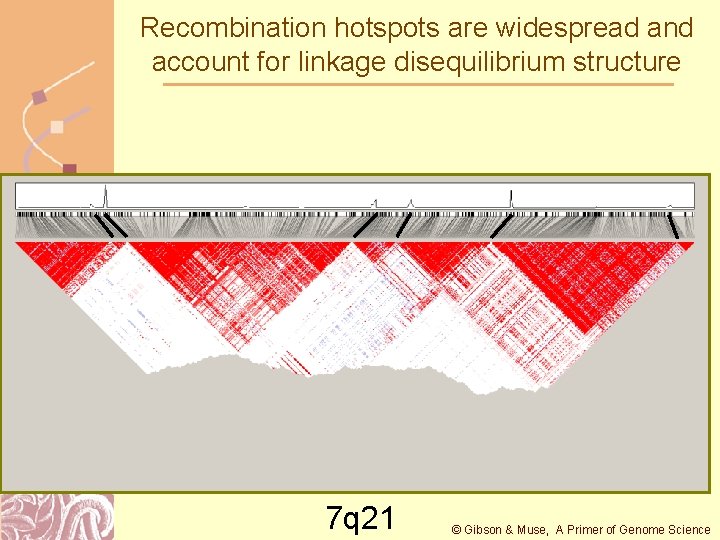
Recombination hotspots are widespread and account for linkage disequilibrium structure 7 q 21 © Gibson & Muse, A Primer of Genome Science Doug Brutlag 2011
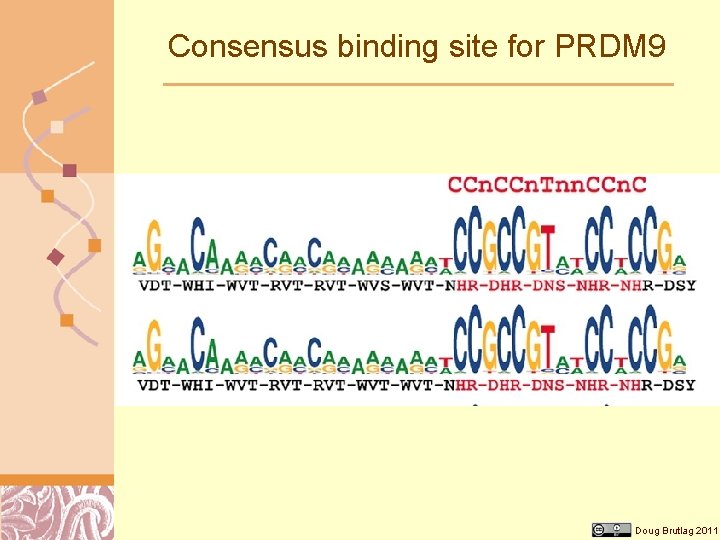
Consensus binding site for PRDM 9 Doug Brutlag 2011
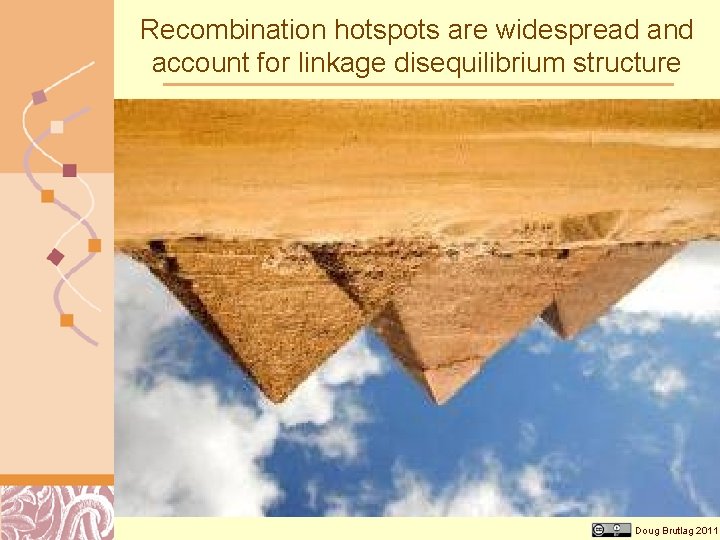
Recombination hotspots are widespread and account for linkage disequilibrium structure Doug Brutlag 2011
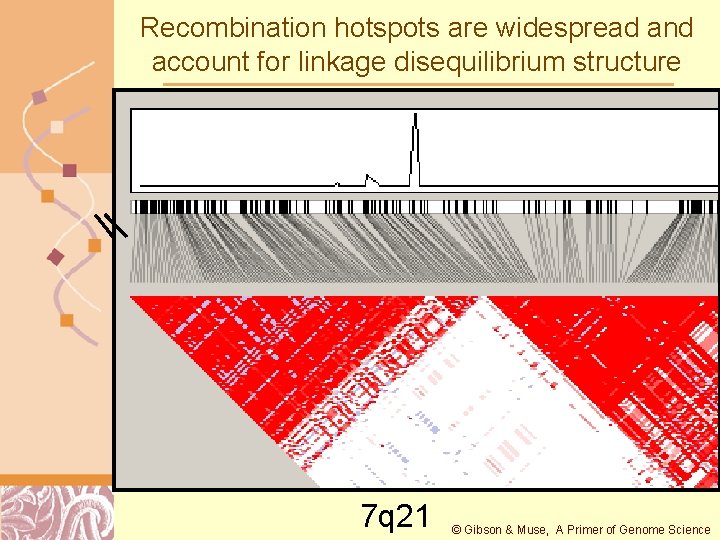
Recombination hotspots are widespread and account for linkage disequilibrium structure 7 q 21 © Gibson & Muse, A Primer of Genome Science Doug Brutlag 2011
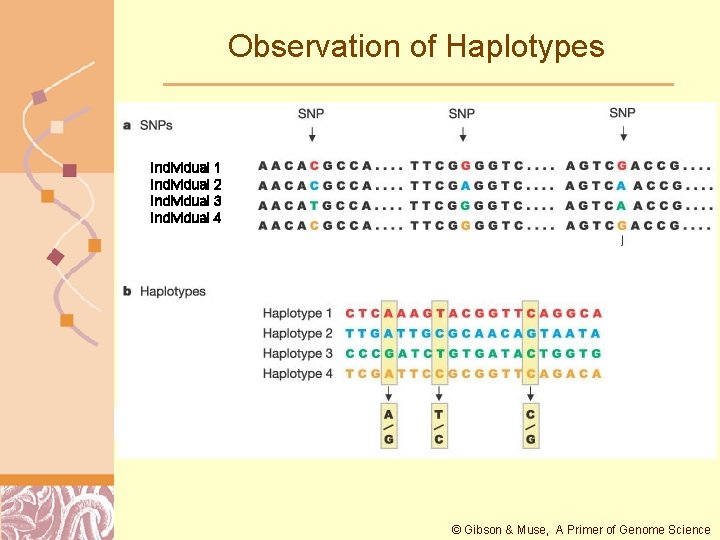
Observation of Haplotypes Individual 1 Individual 2 Individual 3 Individual 4 © Gibson & Muse, A Primer of Genome Science Doug Brutlag 2011
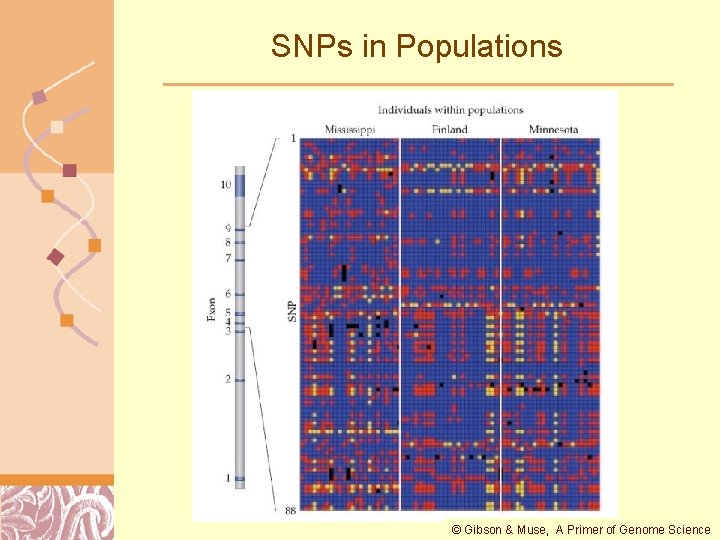
SNPs in Populations © Gibson & Muse, A Primer of Genome Science Doug Brutlag 2011
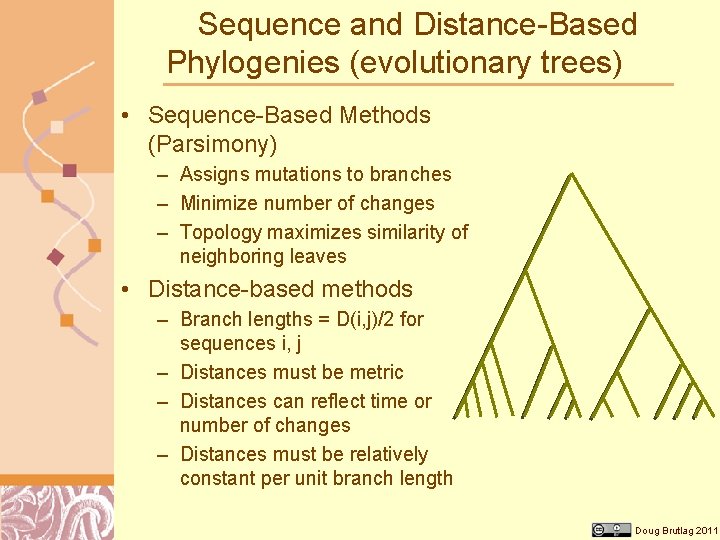
Sequence and Distance-Based Phylogenies (evolutionary trees) • Sequence-Based Methods (Parsimony) – Assigns mutations to branches – Minimize number of changes – Topology maximizes similarity of neighboring leaves • Distance-based methods – Branch lengths = D(i, j)/2 for sequences i, j – Distances must be metric – Distances can reflect time or number of changes – Distances must be relatively constant per unit branch length Doug Brutlag 2011
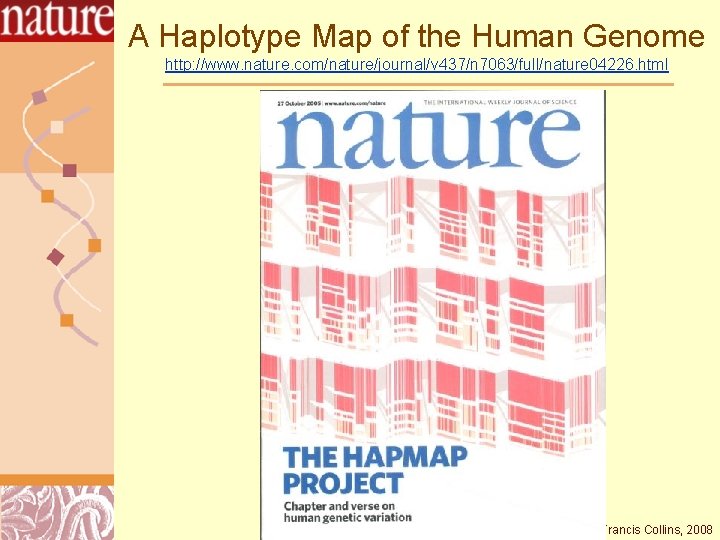
A Haplotype Map of the Human Genome http: //www. nature. com/nature/journal/v 437/n 7063/full/nature 04226. html © Francis. Doug Collins, 2008 Brutlag 2011
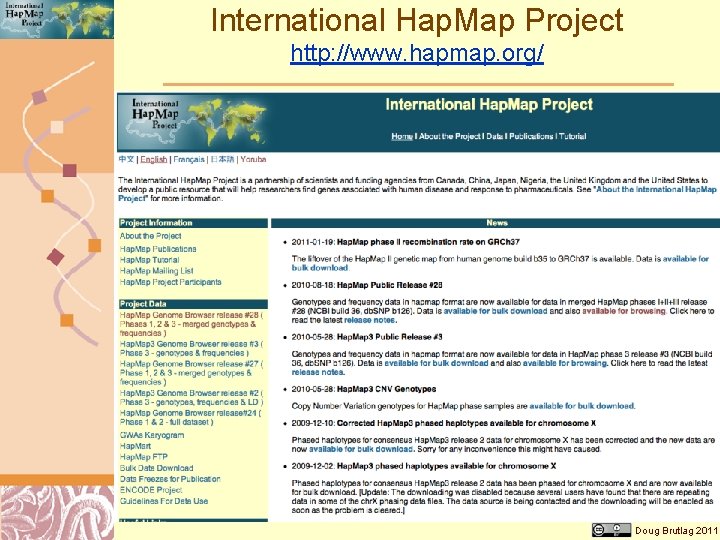
International Hap. Map Project http: //www. hapmap. org/ Doug Brutlag 2011
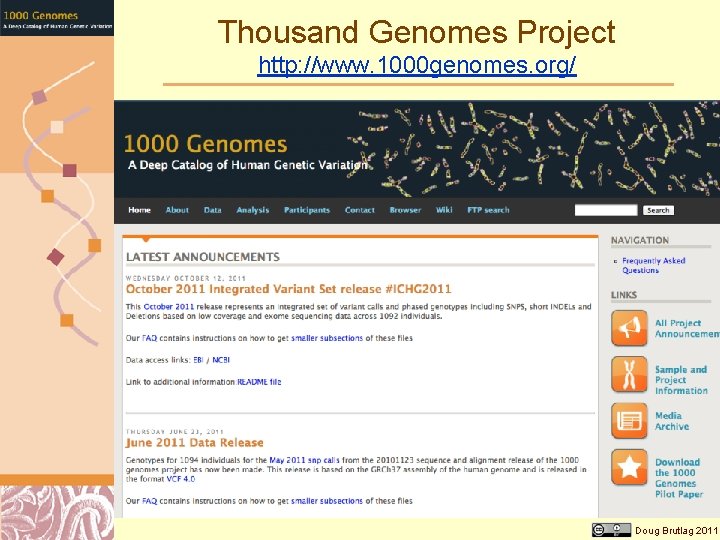
Thousand Genomes Project http: //www. 1000 genomes. org/ Doug Brutlag 2011
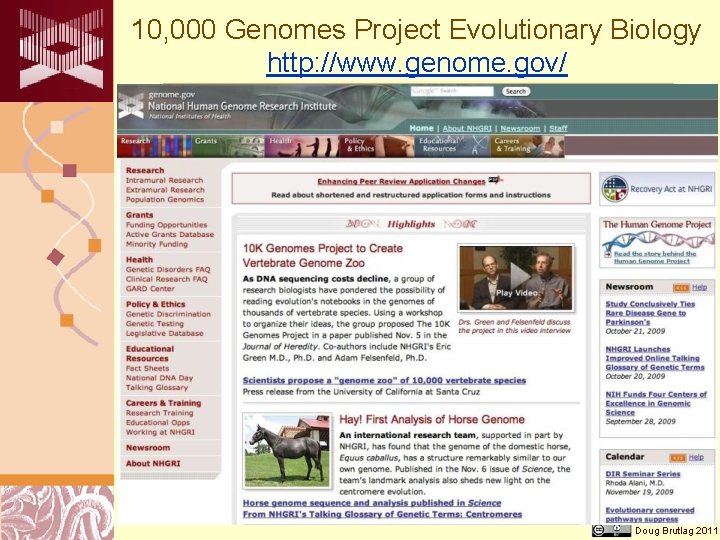
10, 000 Genomes Project Evolutionary Biology http: //www. genome. gov/ Doug Brutlag 2011
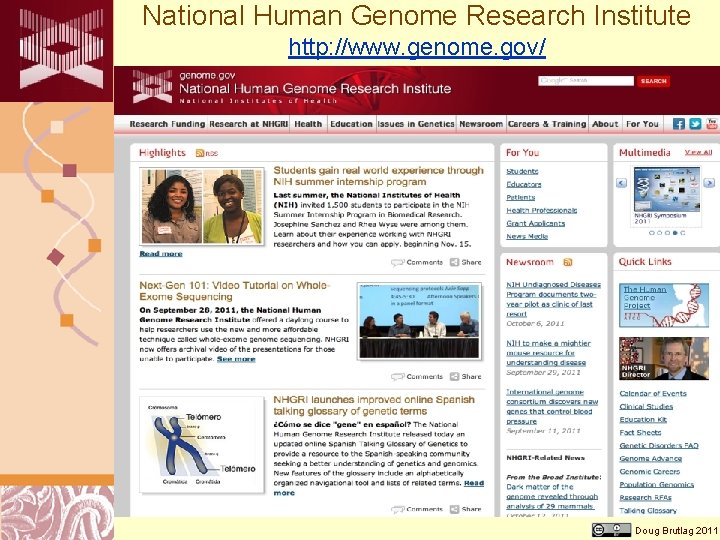
National Human Genome Research Institute http: //www. genome. gov/ Doug Brutlag 2011
- Slides: 33