
Genomic selection in animal breeding A promising future
Genomic selection in animal breeding- A promising future for faster genetic improvement in livestock Dr Indrasen Chauhan Scientist, CSWRI, Avikanagar Tonk-304501
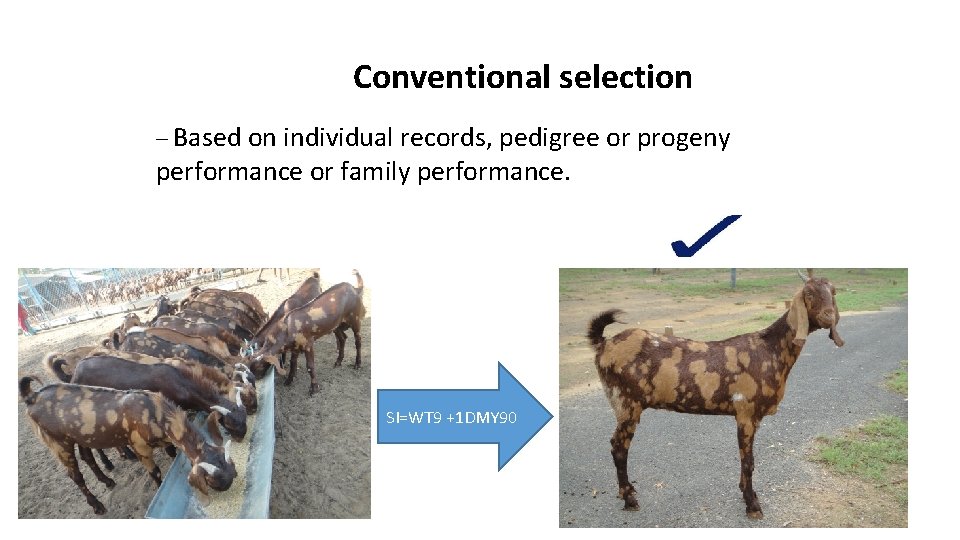
Conventional selection – Based on individual records, pedigree or progeny performance or family performance. SI=WT 9 +1 DMY 90

Progeny testing –Bulls evaluated on the basis of daughters performance http: //www. nddb. org/ndpi/English/About. NDPI/M anuals-Guidelines/PDFDocuments/PIP-Vol-IV-AManual-on-Progeny-Testing. pdf
History of Genomics Ø 1911 -The gene map of Drosphila by Alfred Sturtevant. Ø 1930 s-Molecular Biology begins. Ø 1965 -Margaret Dayhoff's Atlas of Protein Sequences Ø 1970 -Sequencing techniques by Fredirick Sanger Ø Three disciplines Genetics, Molecular biology and Bioinformatics converged in 1980 s and 1990 s -Genomics
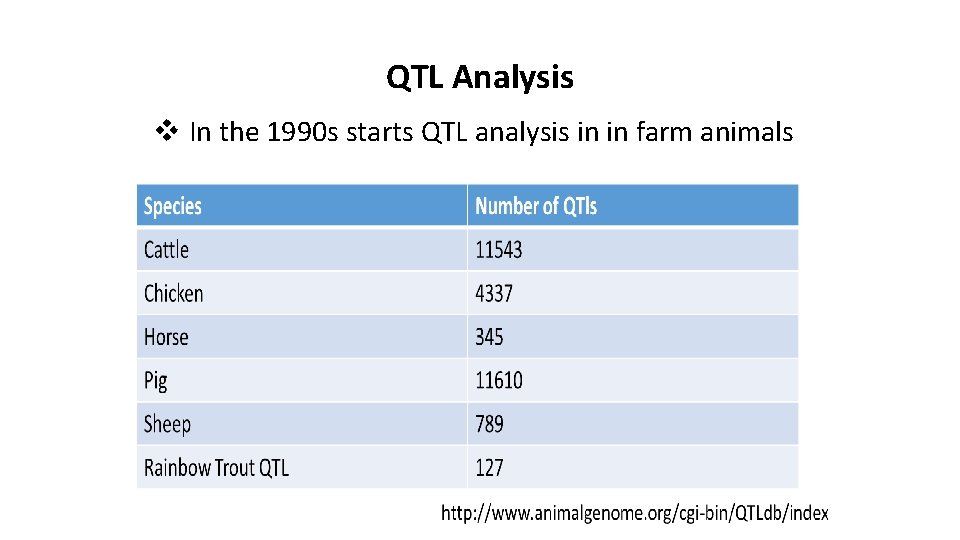
QTL Analysis v In the 1990 s starts QTL analysis in in farm animals

Marker Assisted Selection (MAS) 1 -Detect one or several QTLs 2 -Fine mapping 3 -Find the gene responsible 4 -Introgression
Limitations of MAS 1 -The effect of individual Quantitative trait loci (QTL) on polygenic traits, such as milk yield, are likely to be small 2 -Number of QTL required is quite large to sufficiently explain the genetic variation in these traits
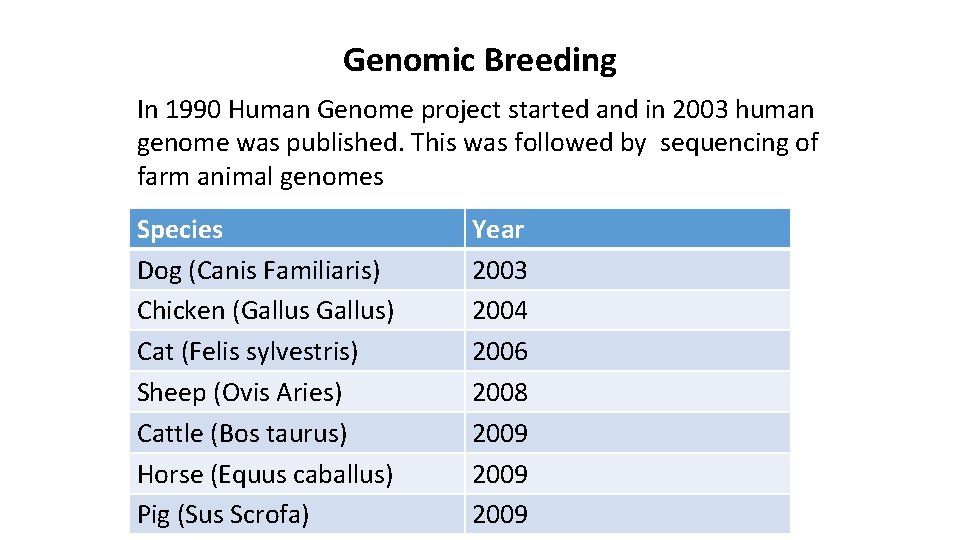
Genomic Breeding In 1990 Human Genome project started and in 2003 human genome was published. This was followed by sequencing of farm animal genomes Species Dog (Canis Familiaris) Chicken (Gallus) Cat (Felis sylvestris) Sheep (Ovis Aries) Cattle (Bos taurus) Horse (Equus caballus) Pig (Sus Scrofa) Year 2003 2004 2006 2008 2009
Ø Sequencing revolutionised development of large panels of SNPs in domestic animals Ø Genomic Selection was actually first introduced by Haley and Visscher at Armidale WCGALP in 1998 Ø But the methodology for Genomic Selection was first presented by Meuwissen et. al. in 2001
Genomic Breeding “Genomic Selection is defined as a technology for increasing the accuracy with which the genetic merit of young potential breeding animals can be determined". Wickham et al. , 2012 Two step process: • Estimate the effects of markers in a reference (training) populations (phenotyped and genotyped) • This information utilized to predict the breeding value of candidates to selection in a testing (evaluation) population (genotyped)
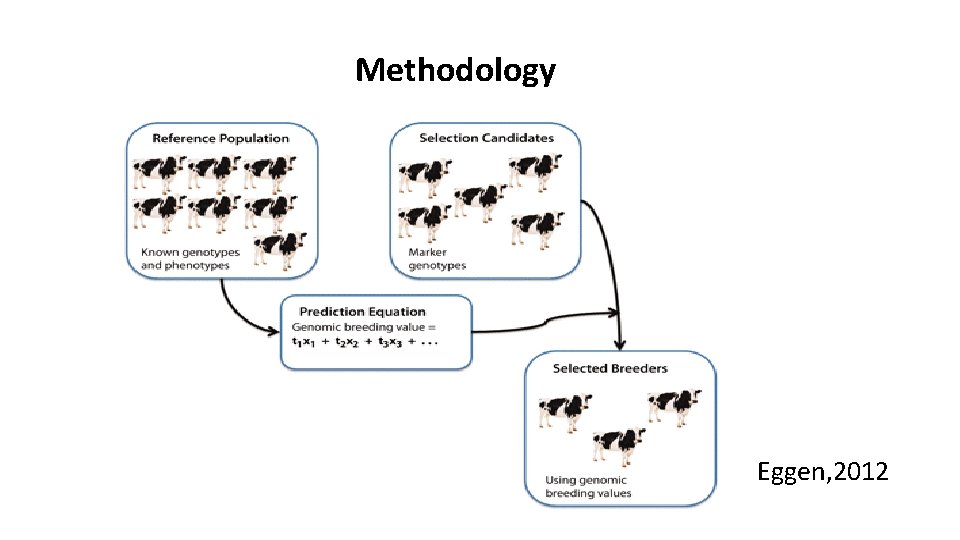
Methodology Eggen, 2012
Differences with MAS Ø MAS concentrates on few QTLs having association with markers Ø Genomic selection uses a genome-wide panel of dense markers
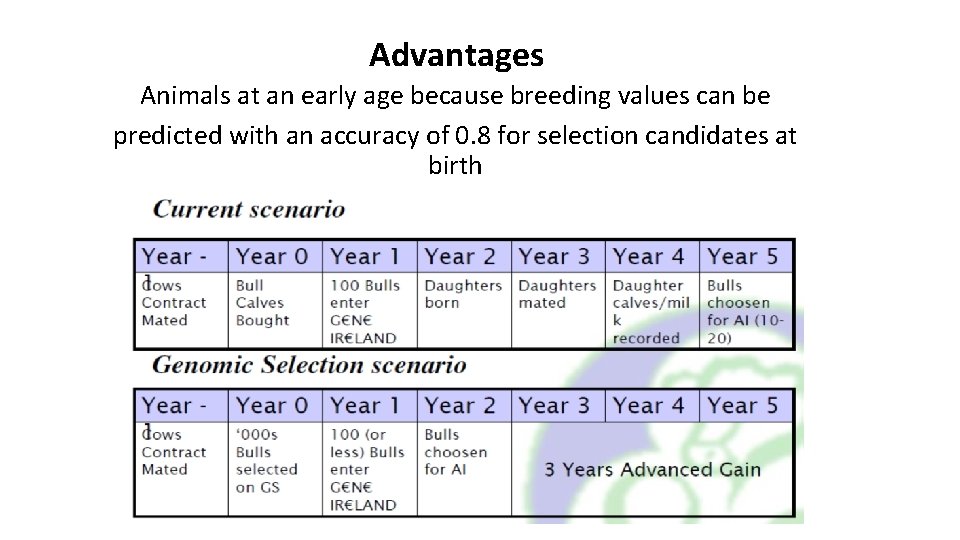
Advantages Animals at an early age because breeding values can be predicted with an accuracy of 0. 8 for selection candidates at birth
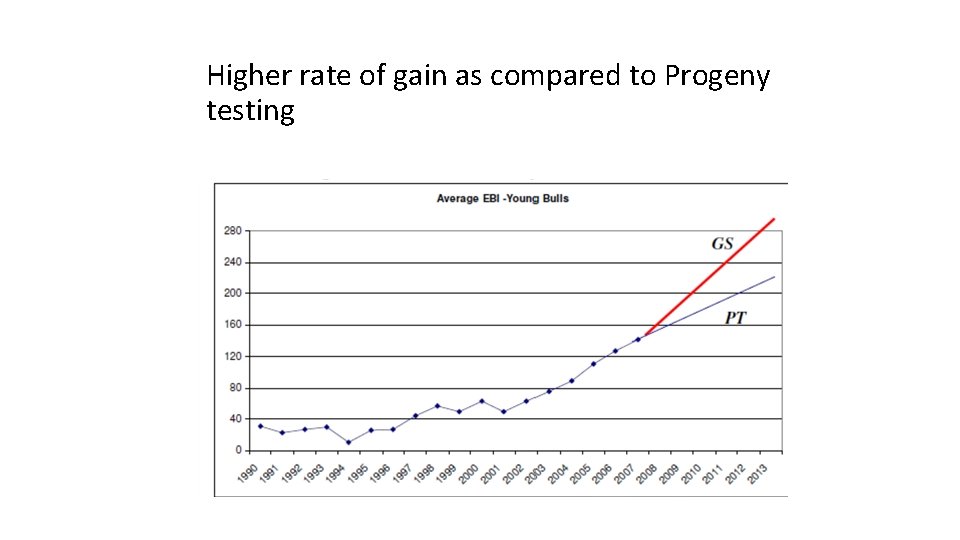
Higher rate of gain as compared to Progeny testing
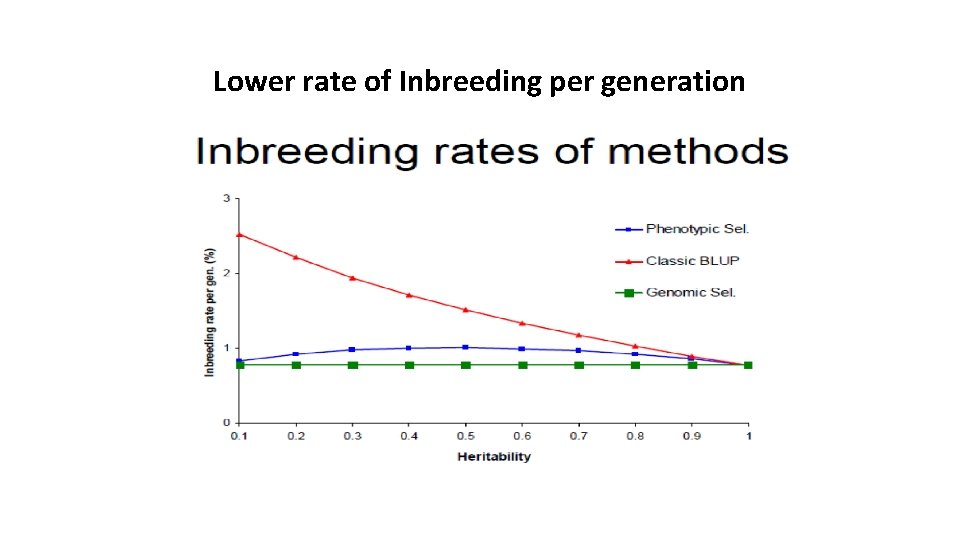
Lower rate of Inbreeding per generation
Genomic selection for future uses: -Mitigation of effects of climatic change-select for lower GHG (green-house gas) emissions in species: "Eco friendly cattle”(Hayes et. al. , 2013) Genomic selection is especially useful for § Traits with low heritability(fitness traits) § Traits difficult/expensive to measure(like wool quality in sheep § Disease susceptibility/resistance traits § Traits that take a lifetime to measure(longevity)
High-density SNP Chips available for Ø Ø Ø Ø Ø Cattle Sheep Goat Pigs Horses Dogs Chicken Salmon Human
Countries following Genomic Selection Ø USA & Canada (In Collaboration) Ø New Zealand Ø Netherlands Ø Australia Ø Denmark & Sweden Ø Brazil
Limitations Ø Genotyping requires sufficiently large set of animals for accurate marker estimates Ø For Low heritable traits more records are needed Ø Between breed accuracy low-High Density chip Ø Marker estimates must be estimated in population where they have to be used

Thank you
- Slides: 20