
Genomic Focus Epigenetics Corey Henderson Laura Bergeron Cynthia
Genomic Focus: Epigenetics Corey Henderson Laura Bergeron Cynthia Hansen Kyle Fowler
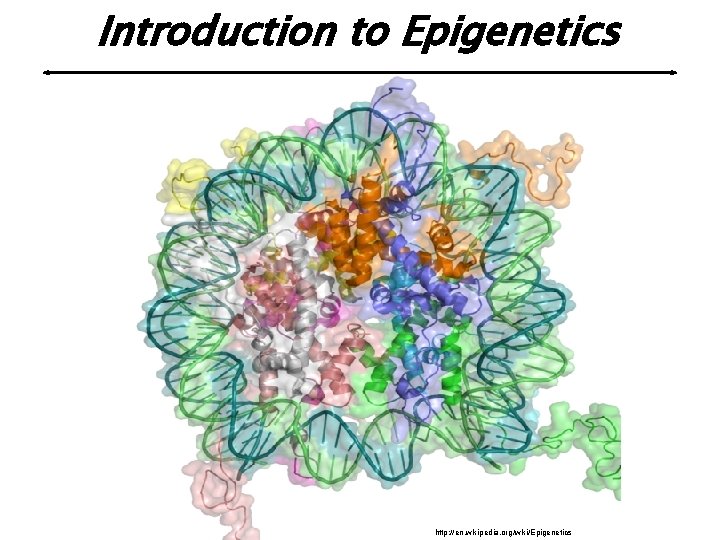
Introduction to Epigenetics http: //en. wikipedia. org/wiki/Epigenetics
Epigenetics: Defining the Science • The study of heritable changes in gene expression that occur without a change in DNA sequence. – Regulation differentiation From Structure not sequence • Heritable • Defensive tactics (the micro-arm-bar) – Repeat induced modification • Methylation
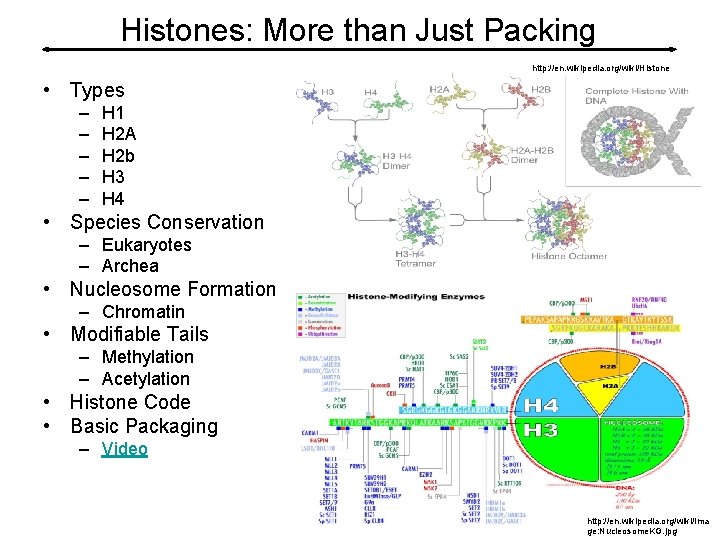
Histones: More than Just Packing http: //en. wikipedia. org/wiki/Histone • Types – – – H 1 H 2 A H 2 b H 3 H 4 • Species Conservation – Eukaryotes – Archea • Nucleosome Formation – Chromatin • Modifiable Tails – Methylation – Acetylation • Histone Code • Basic Packaging – Video http: //en. wikipedia. org/wiki/Ima ge: Nucleosome. KG. jpg
Chromatin • DNA + Protien • Enables extraordinary condensation and packaging of eukaryotic genomes • Fundamental unit: NUCLEOSOME • Gene expression in Eukaryotes takes place with highly packaged chromatin • Regulation of gene expression by chromatin structure is epigenetic regulation
Heterochromatin • Highly condensed DNA – Lots of repeats • Danger of TE’s • But: Neccesary – In absence of heterochromatin chromosomes fail to segregate properly • Effect of structure over sequence – Moving a euchromatic gene next to or within heterochromatin will show variable scilencing w/ no change in coding
Discoveries for Epigenetics Filamentous Fungi – RIP • Repeat Induced Point Mutation – MIP • Methylation induced premeiotically • Plants and Animals – RIGS • Repeat Induced Gene Silencing
RNA • Sequence-specific degradation – RNAi • AKA – Cosuppression (plants) – Quelling (Neurospora) • Post Translational Gene Scilencing • RNA/DNA interaction – Methylation • Feedback induced Epigentic regulation
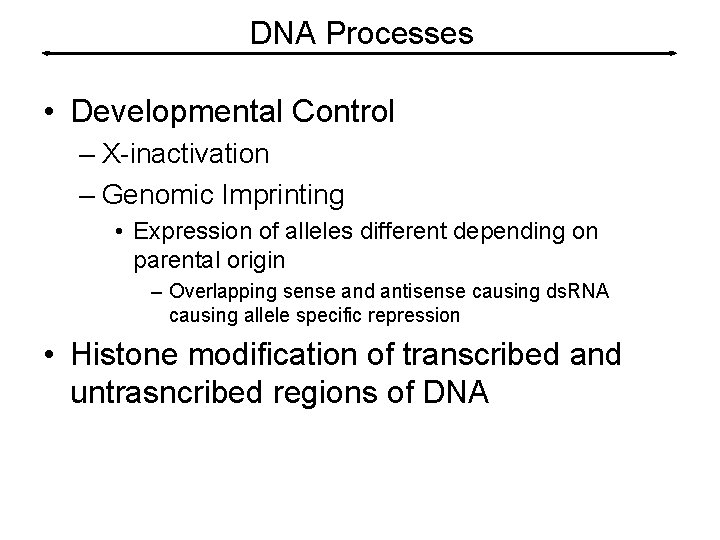
DNA Processes • Developmental Control – X-inactivation – Genomic Imprinting • Expression of alleles different depending on parental origin – Overlapping sense and antisense causing ds. RNA causing allele specific repression • Histone modification of transcribed and untrasncribed regions of DNA
Epigenetics
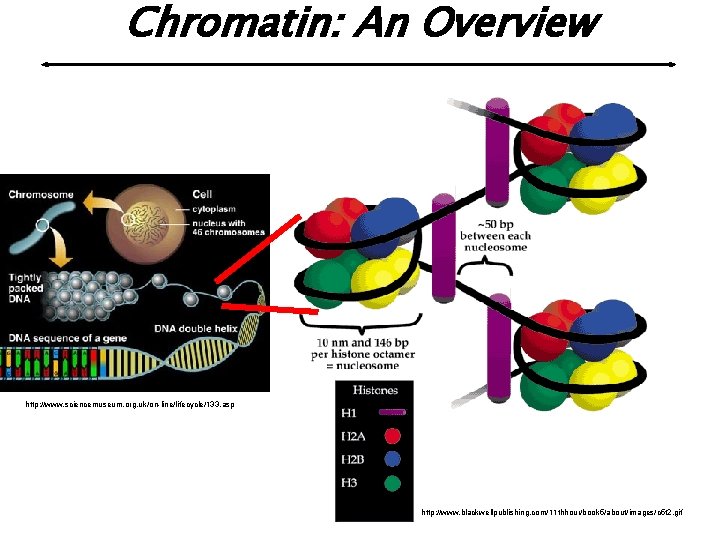
Chromatin: An Overview http: //www. sciencemuseum. org. uk/on-line/lifecycle/133. asp http: //www. blackwellpublishing. com/11 thhour/book 5/about/images/c 5 t 2. gif
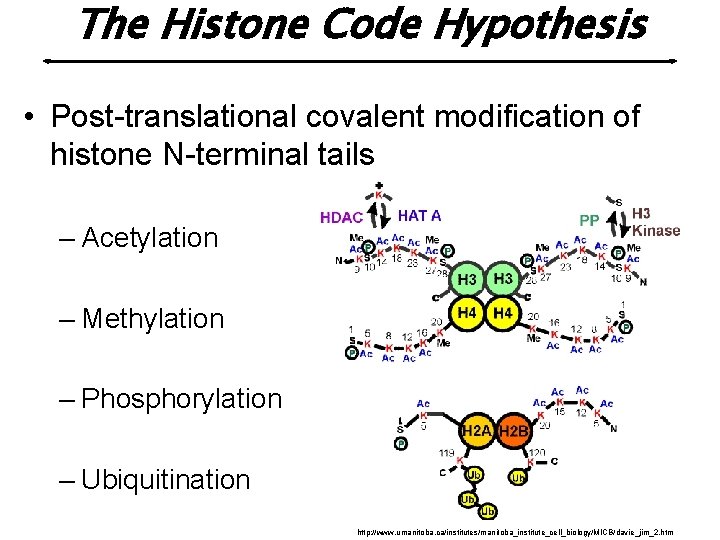
The Histone Code Hypothesis • Post-translational covalent modification of histone N-terminal tails – Acetylation – Methylation – Phosphorylation – Ubiquitination http: //www. umanitoba. ca/institutes/manitoba_institute_cell_biology/MICB/davie_jim_2. htm
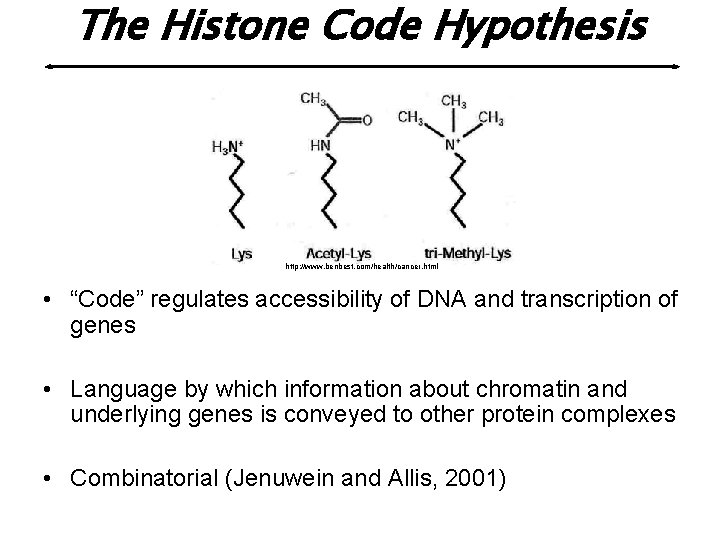
The Histone Code Hypothesis http: //www. benbest. com/health/cancer. html • “Code” regulates accessibility of DNA and transcription of genes • Language by which information about chromatin and underlying genes is conveyed to other protein complexes • Combinatorial (Jenuwein and Allis, 2001)
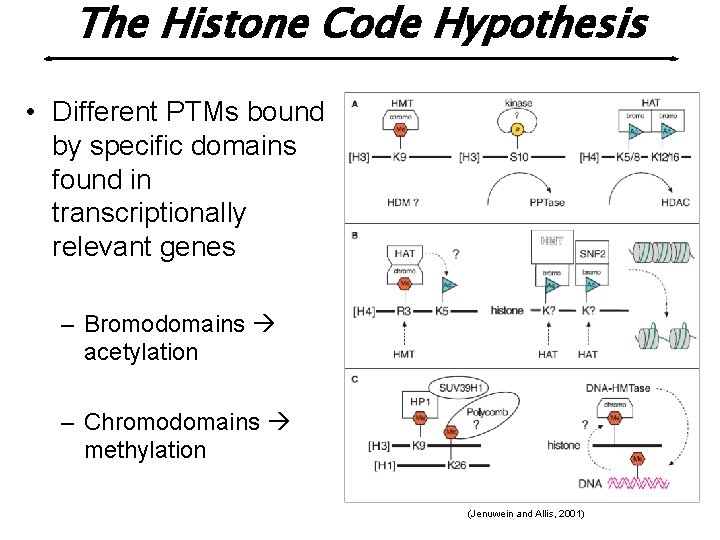
The Histone Code Hypothesis • Different PTMs bound by specific domains found in transcriptionally relevant genes – Bromodomains acetylation – Chromodomains methylation (Jenuwein and Allis, 2001)
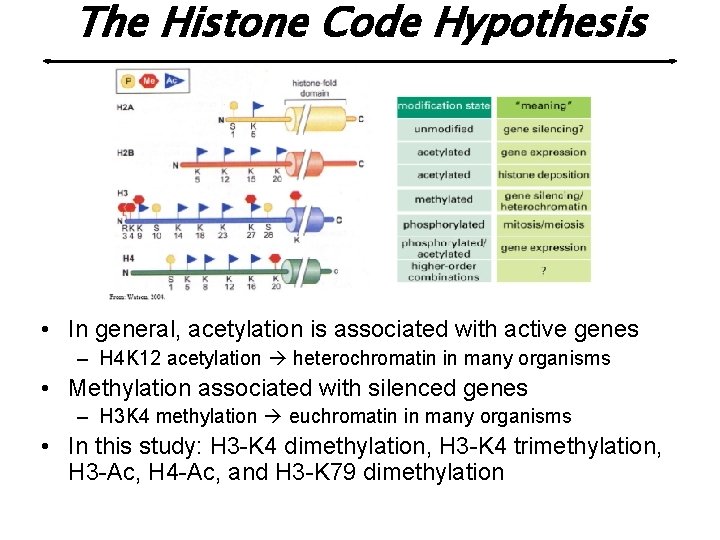
The Histone Code Hypothesis • In general, acetylation is associated with active genes – H 4 K 12 acetylation heterochromatin in many organisms • Methylation associated with silenced genes – H 3 K 4 methylation euchromatin in many organisms • In this study: H 3 -K 4 dimethylation, H 3 -K 4 trimethylation, H 3 -Ac, H 4 -Ac, and H 3 -K 79 dimethylation
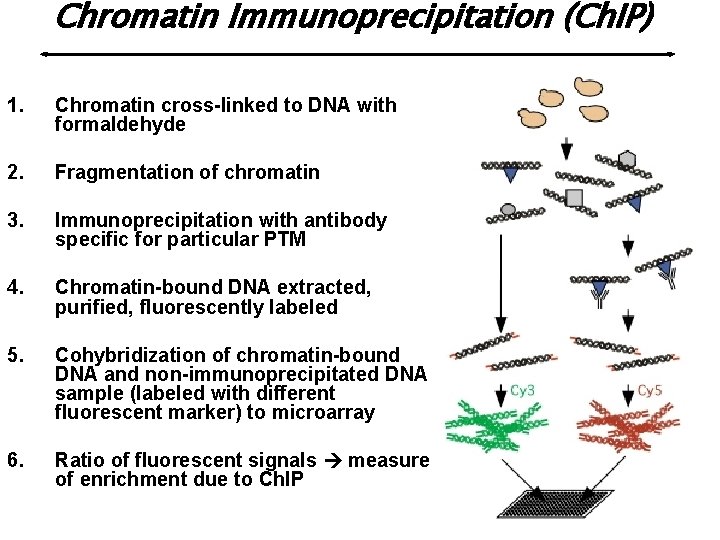
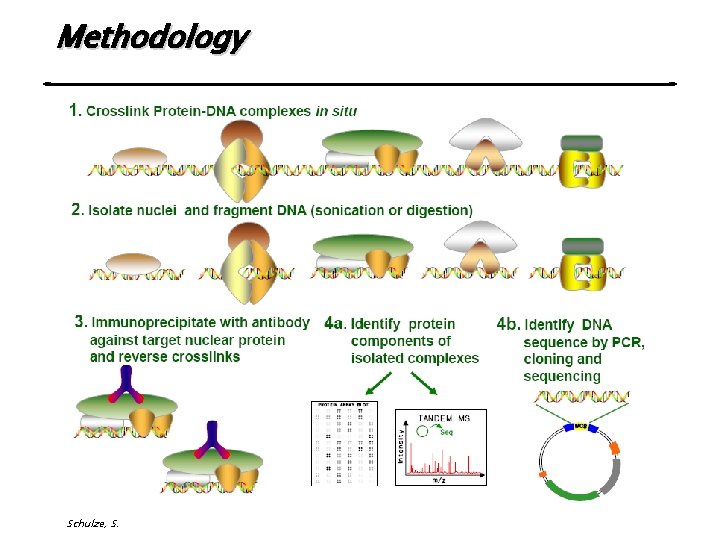
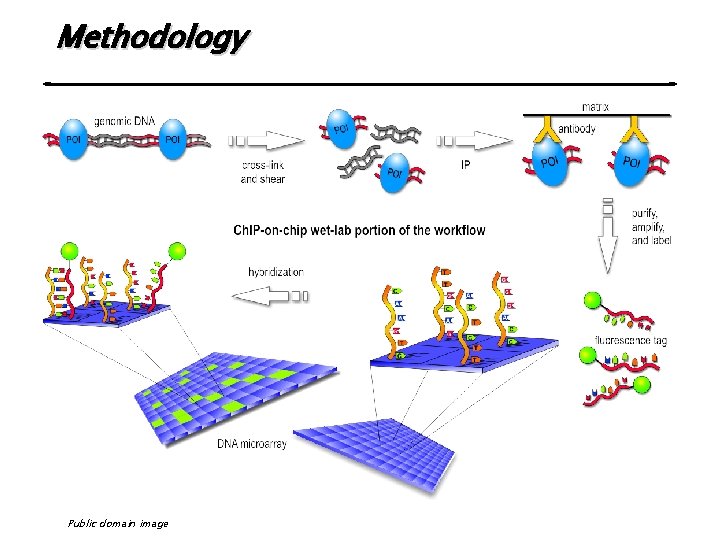
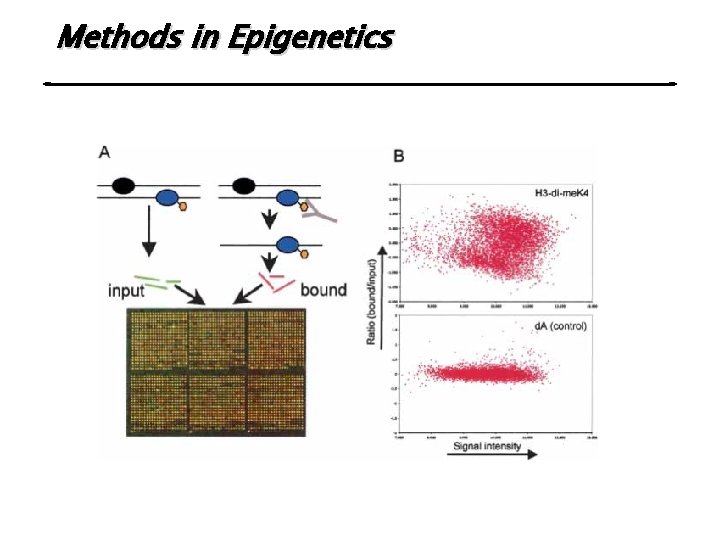
Chromatin Immunoprecipitation (Ch. IP) 1. Chromatin cross-linked to DNA with formaldehyde 2. Fragmentation of chromatin 3. Immunoprecipitation with antibody specific for particular PTM 4. Chromatin-bound DNA extracted, purified, fluorescently labeled 5. Cohybridization of chromatin-bound DNA and non-immunoprecipitated DNA sample (labeled with different fluorescent marker) to microarray 6. Ratio of fluorescent signals measure of enrichment due to Ch. IP
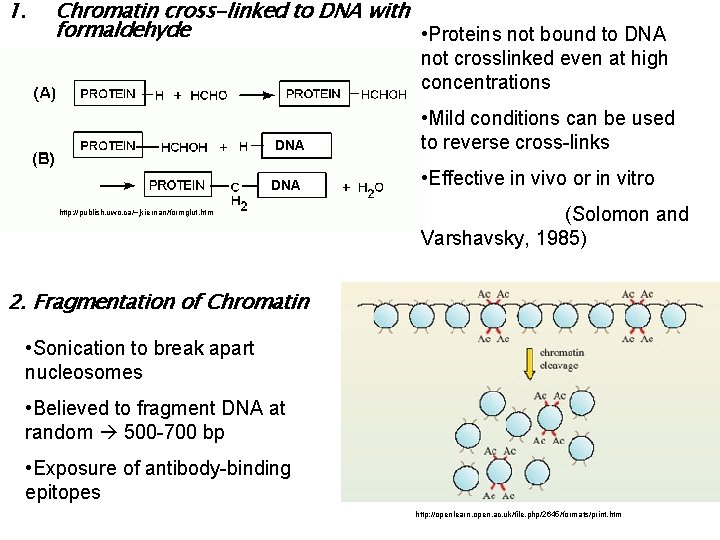
1. Chromatin cross-linked to DNA with formaldehyde • Proteins not bound to DNA not crosslinked even at high concentrations DNA http: //publish. uwo. ca/~jkiernan/formglut. htm • Mild conditions can be used to reverse cross-links • Effective in vivo or in vitro (Solomon and Varshavsky, 1985) 2. Fragmentation of Chromatin • Sonication to break apart nucleosomes • Believed to fragment DNA at random 500 -700 bp • Exposure of antibody-binding epitopes http: //openlearn. open. ac. uk/file. php/2645/formats/print. htm
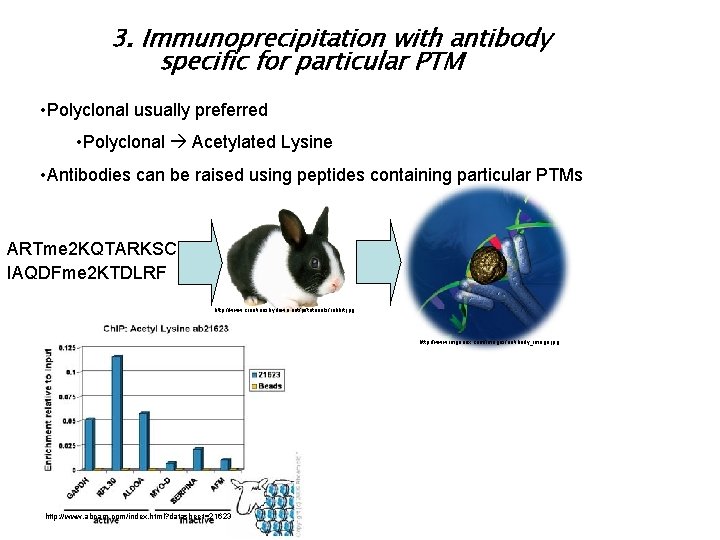
3. Immunoprecipitation with antibody specific for particular PTM • Polyclonal usually preferred • Polyclonal Acetylated Lysine • Antibodies can be raised using peptides containing particular PTMs ARTme 2 KQTARKSC IAQDFme 2 KTDLRF http: //www. creationsbydawn. net/pi/tutorials/rabbit. jpg http: //www. imgenex. com/images/antibody_image. jpg http: //www. abcam. com/index. html? datasheet=21623
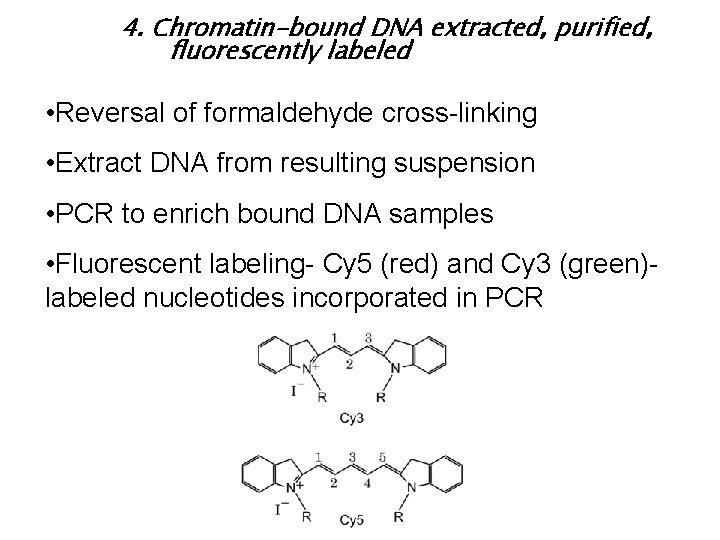
4. Chromatin-bound DNA extracted, purified, fluorescently labeled • Reversal of formaldehyde cross-linking • Extract DNA from resulting suspension • PCR to enrich bound DNA samples • Fluorescent labeling- Cy 5 (red) and Cy 3 (green)labeled nucleotides incorporated in PCR
Ch. IP-on-Chip 5. Cohybridization of chromatin-bound DNA and nonimmunoprecipitated DNA sample (labeled with different fluorescent marker) to microarray 6. Ratio of fluorescent signals measure of enrichment due to Ch. IP
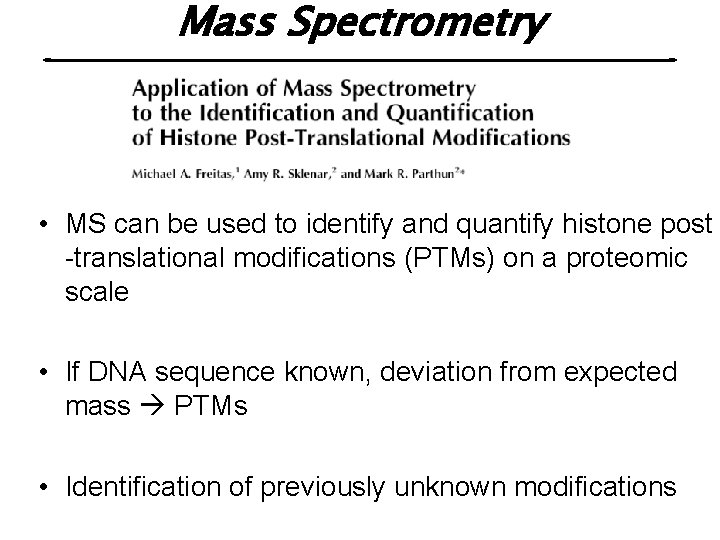
Mass Spectrometry • MS can be used to identify and quantify histone post -translational modifications (PTMs) on a proteomic scale • If DNA sequence known, deviation from expected mass PTMs • Identification of previously unknown modifications
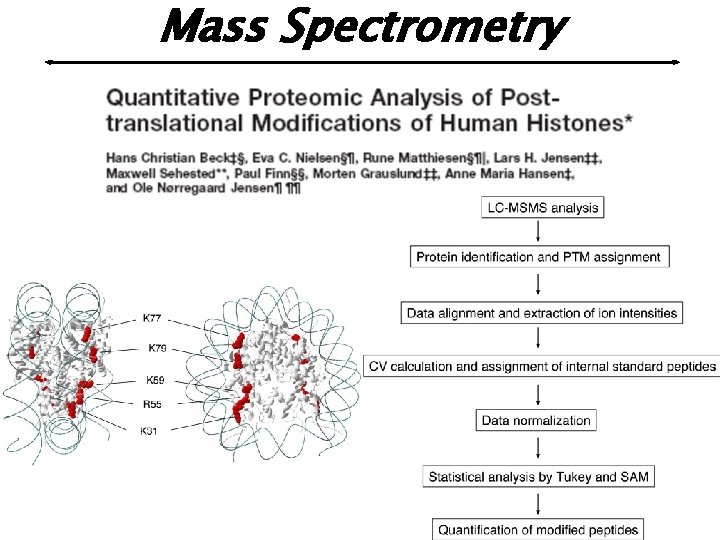
Mass Spectrometry
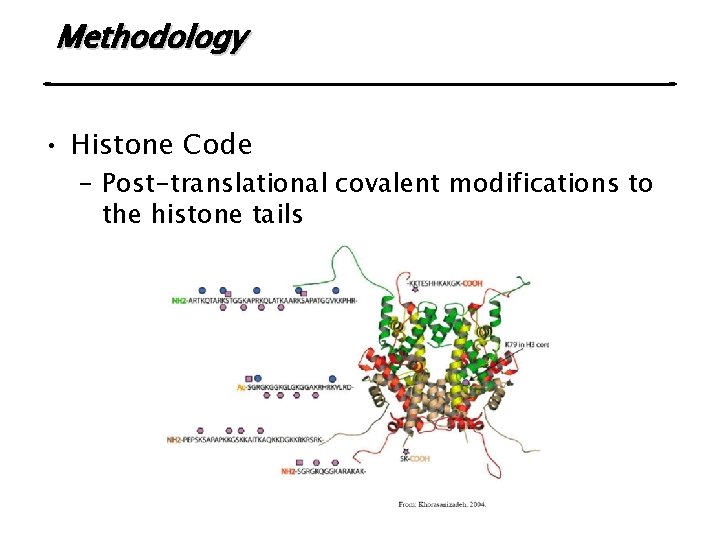
Methodology • Histone Code – Post-translational covalent modifications to the histone tails
Methodology • Chromatin Immunoprecipitation (Ch. IP) – Isolation of DNA bound to chromatin – Requires specific antibody or epitope tag to pull down protein (or modification) of interest – Looked at relationship between genes and specific modifications (acetylation, methylation, phosphorylation, etc. )
Methodology Schulze, S.
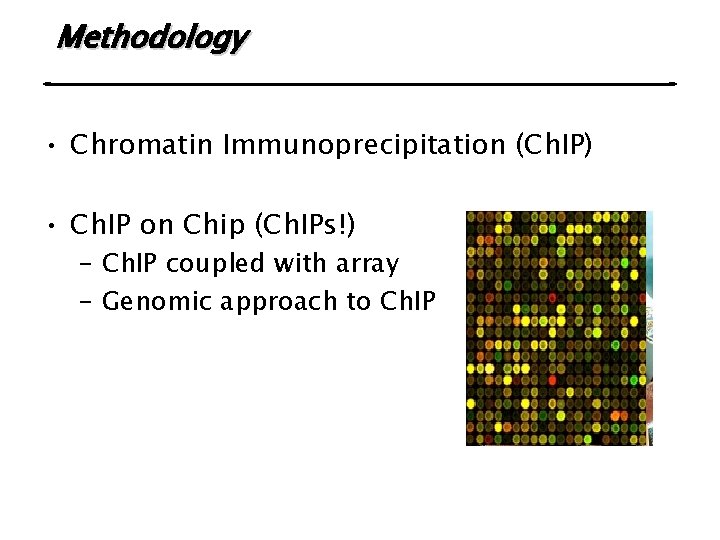
Methodology • Chromatin Immunoprecipitation (Ch. IP) • Ch. IP on Chip (Ch. IPs!) – Ch. IP coupled with array – Genomic approach to Ch. IP
Methodology Public domain image
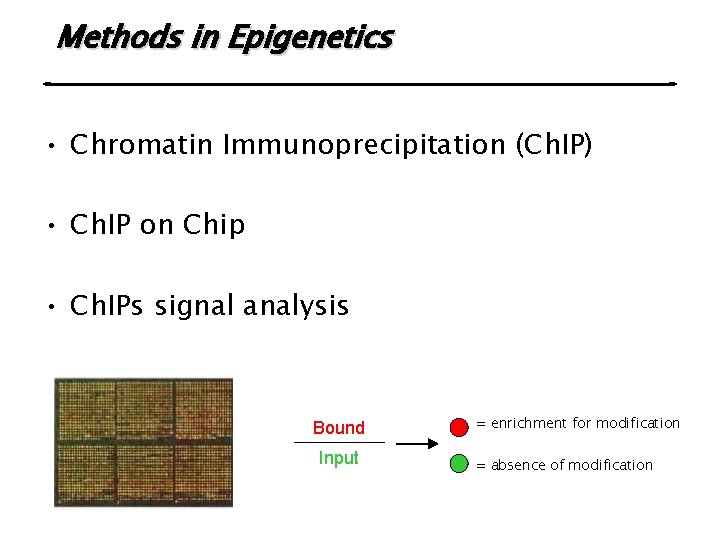
Methods in Epigenetics • Chromatin Immunoprecipitation (Ch. IP) • Ch. IP on Chip • Ch. IPs signal analysis Bound Input = enrichment for modification = absence of modification
Methods in Epigenetics
Data and Conclusions • Are there relationships between genes and histone modifications? • Relationships between various histone modifications? • What did they hope to see? – Correlations! – AKA, Thank god its linear
Data and Conclusions
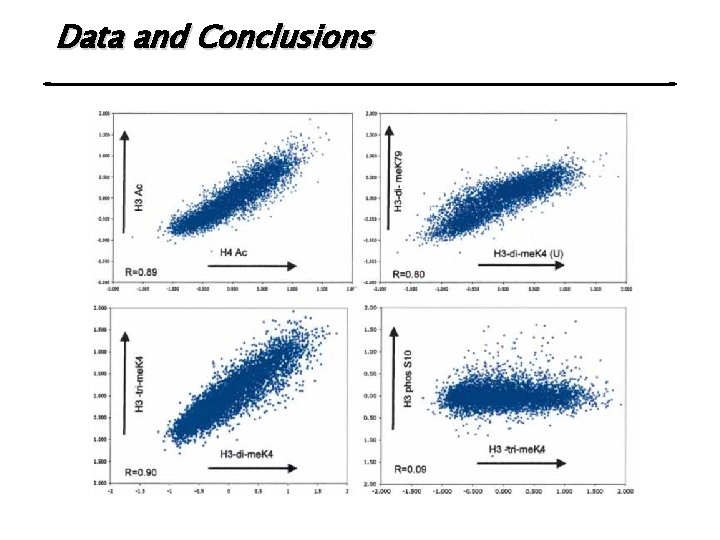
Data and Conclusions • Found distinct correlations between certain histone modifications – Gene dimethylated at Lys 4 likely to also be dimethylated on Lys 79, and acetylated
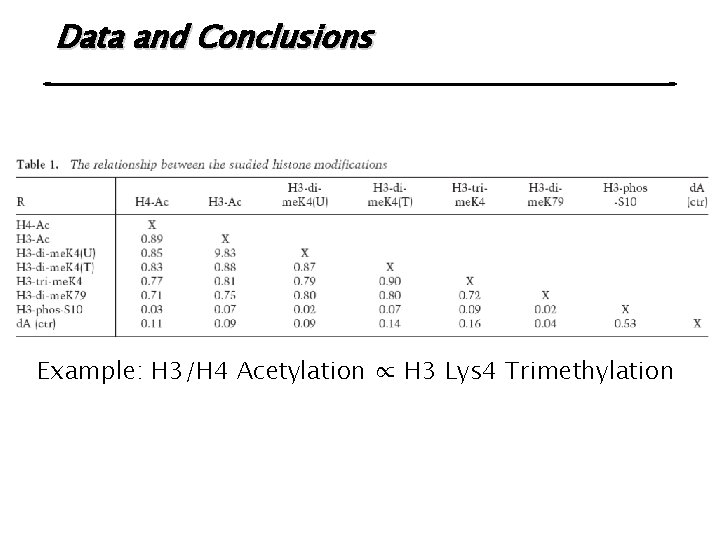
Data and Conclusions Example: H 3/H 4 Acetylation ∝ H 3 Lys 4 Trimethylation
Data and Conclusions • Found distinct correlations between certain histone modifications – Gene dimethylated at Lys 4 likely to also be dimethylated on Lys 79, and acetylated • Transcriptional state reflected in histone modifications – Genes actively transcribing vs. repressed – Acetylation, H 3 -K 4, H 3 -K 79 associated with active genes
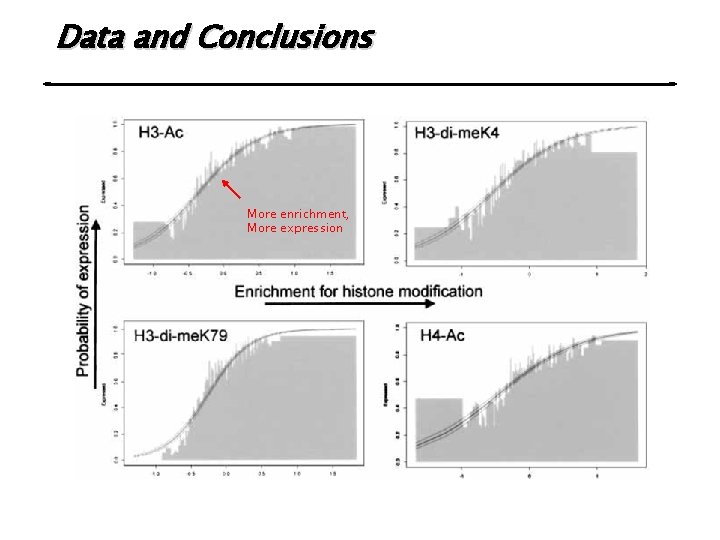
Data and Conclusions More enrichment, More expression
Data and Conclusions • Transcriptional correlation beyond the gene level? • Chromosome- & Genome-wide analysis – Entirety of H 3 -K 4 methylation across chromosome 2 L in Drosophila – Related these data to c. DNA array
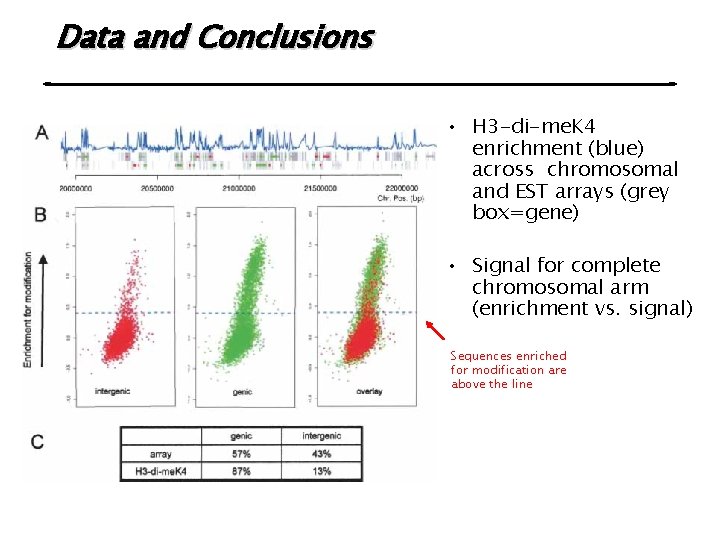
Data and Conclusions • H 3 -di-me. K 4 enrichment (blue) across chromosomal and EST arrays (grey box=gene) • Signal for complete chromosomal arm (enrichment vs. signal) Sequences enriched for modification are above the line
Future Work / Other Research • Variant histones – Euchromatin vs. heterochromatin • Dosage compensation • Implications (medicine, heredity, etc. )
Differences in Histones: Variant • All histones have variants except H 4 • The varients are subject to posttranslational modification as well • Some are very similar with subtle differences (ex. H 3 and H 3. 3) • Others are very different (ex. H 2 A and macro. H 2 A) • Specific tasks: Transcription activating and silencing, damaged DNA detection, etc.
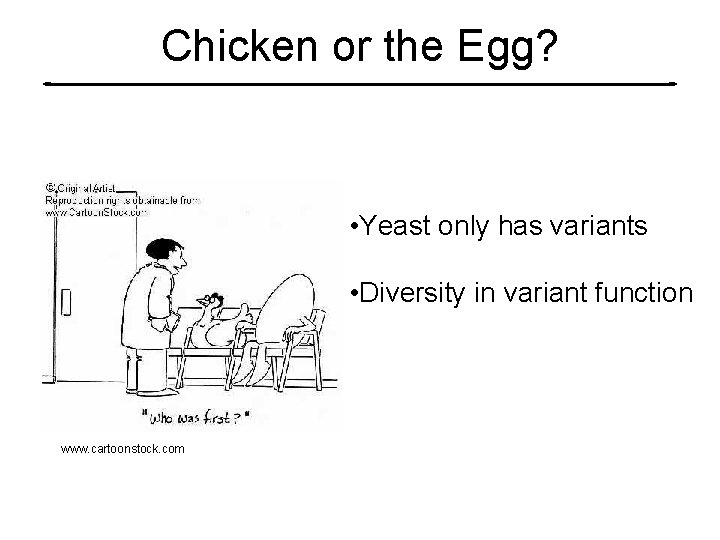
Chicken or the Egg? • Yeast only has variants • Diversity in variant function www. cartoonstock. com
Histones and Viruses • Variant histones have been associated with viral stabilization • Viruses make own chromatin through canonical histones • Variant histones used as an entry point in DNA integration
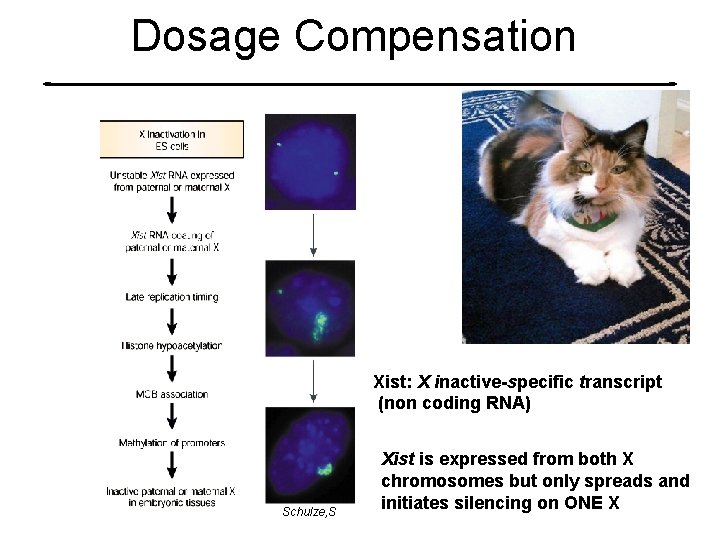
Dosage Compensation Xist: X inactive-specific transcript (non coding RNA) Schulze, S Xist is expressed from both X chromosomes but only spreads and initiates silencing on ONE X
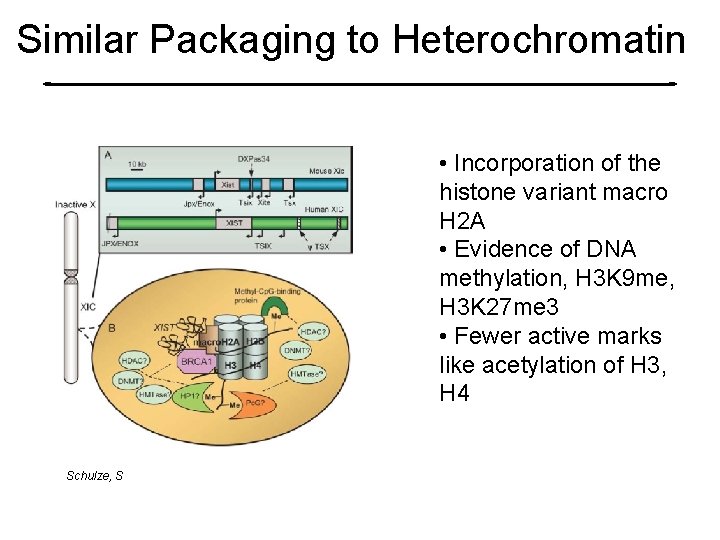
Similar Packaging to Heterochromatin • Incorporation of the histone variant macro H 2 A • Evidence of DNA methylation, H 3 K 9 me, H 3 K 27 me 3 • Fewer active marks like acetylation of H 3, H 4 Schulze, S
Epigenetics and medicine • Cancer • Heart failure • Mood disorders
Questions?
- Slides: 45