
Genitourinary Infections and Sexually Transmitted Diseases The Normal




- Slides: 48
Genitourinary Infections and Sexually Transmitted Diseases 高雄長庚醫院婦產部 婦癌科 吳貞璇醫師
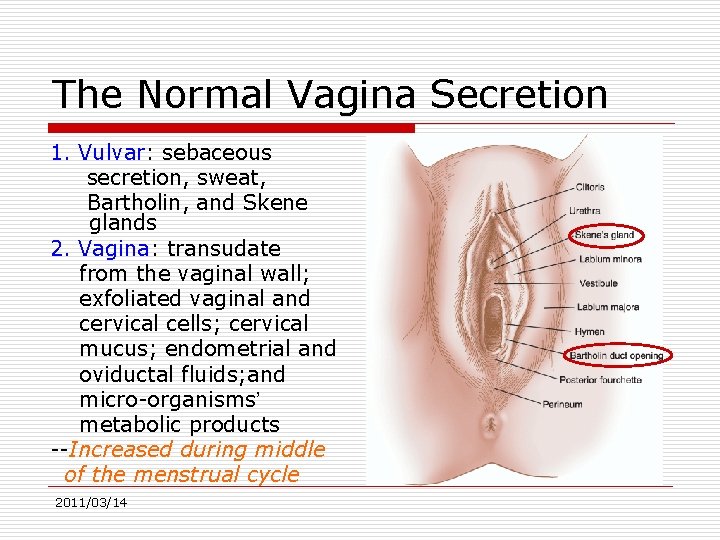
The Normal Vagina Secretion 1. Vulvar: sebaceous secretion, sweat, Bartholin, and Skene glands 2. Vagina: transudate from the vaginal wall; exfoliated vaginal and cervical cells; cervical mucus; endometrial and oviductal fluids; and micro-organisms’ metabolic products --Increased during middle of the menstrual cycle 2011/03/14
Vaginal epithelial cells o Affected by estrogen and progesterone: o Superficial cells: main cell type in reproductive age, predominate when estrogen stimulation. o Intermediate cells: predominate during the luteal phase because of stimulation by progesterone o Parabasal cells: in postmenopausal age 2011/03/14
The normal vaginal flora o Mostly aerobic o 6 different species of bacteria, the most common of which is hydrogen peroxideproducing lactobacilli. o The factors affecting bacterial growth: vaginal p. H (vaginal epithelial cells have rich glycogen---lactic acid) o The p. H level of the normal vagina < 4. 5, maintained by the production of lactic acid. 2011/03/14
Normal vaginal secretions analysis o floccular, white, and usually located in the dependent portion of the vagina (posterior fornix) o Wet-mount preparation shows many superficial epithelial cells, few white blood cells, and few clue cells o Clue cells: superficial vaginal epithelial cells with adherent bacteria (usually Gardnerella Vaginalis) 2011/03/14
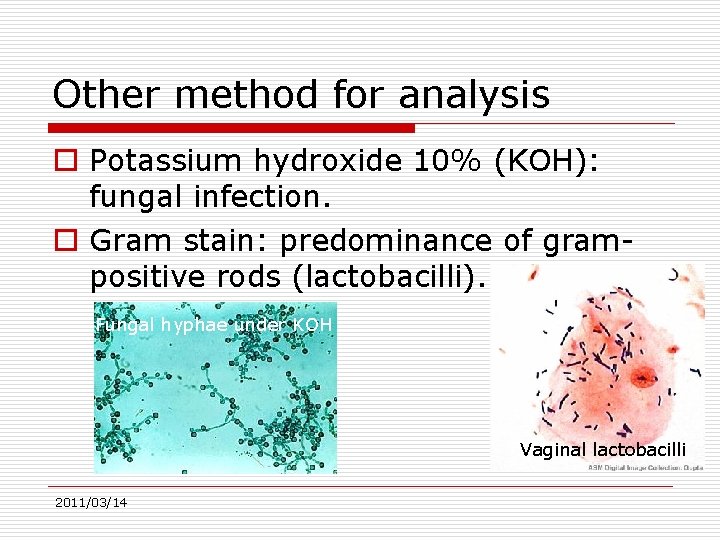
Other method for analysis o Potassium hydroxide 10% (KOH): fungal infection. o Gram stain: predominance of grampositive rods (lactobacilli). Fungal hyphae under KOH Vaginal lactobacilli 2011/03/14
Bacterial Vaginosis(BV) o Overgrowth of G. vaginalis and Mycoplasma hominis o Unknown trigger, but repeated vaginal alkalinization may related (frequent sexual intercourse or use of douches) o Increased risk for PID, postoperative infections after hysterectomy, PPROM, preterm labor, chorioamnionitis, and postcesarean endometritis 2011/03/14
Diagnosis of BV o A fishy vaginal odor: particularly noticeable following coitus o Vaginal secretions: gray and thinly coat the vaginal walls. o The p. H of vaginal secretions > 4. 5 (usually 4. 7 to 5. 7). o Microscopy of the vaginal secretions reveals an increased number of clue cells, and leukocytes are conspicuously absent. . o The "whiff" test : the addition of KOH to the vaginal secretions releases a fishy, aminelike odor. 2011/03/14
Treatment of BV— inhibit anaerobes o Metronidazole: 500 mg PO BID x 7 days Metronidazole gel 0. 75% 5 g VAG stat or BID x 5 days *patient should avoid using alcohol during treatment with oral metronidazole and for 24 hrs thereafter. o Clindamycin cream, 2%, 5 g VAG HS x 7 days Clindamycin, 300 mg, PO BID x 7 days Clindamycin, 100 mg, VAG HS x 3 days 2011/03/14
Treatment of BV— inhibit anaerobes o Prefer intravaginal treatment o Treat male sexual partner---not necessary due to not impovement in therapeutic response 2011/03/14
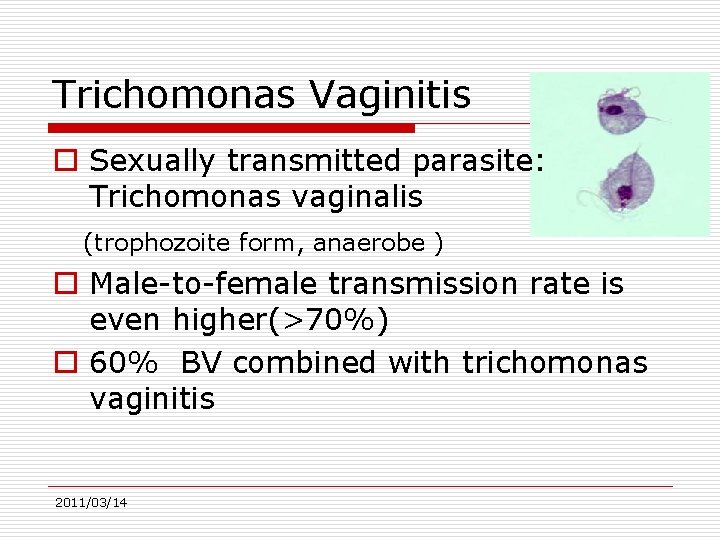
Trichomonas Vaginitis o Sexually transmitted parasite: Trichomonas vaginalis (trophozoite form, anaerobe ) o Male-to-female transmission rate is even higher(>70%) o 60% BV combined with trichomonas vaginitis 2011/03/14
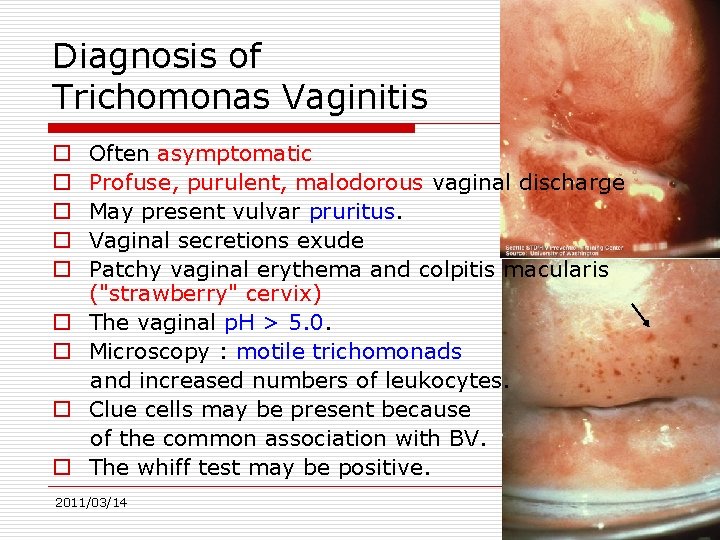
Diagnosis of Trichomonas Vaginitis o o o o o Often asymptomatic Profuse, purulent, malodorous vaginal discharge May present vulvar pruritus. Vaginal secretions exude Patchy vaginal erythema and colpitis macularis ("strawberry" cervix) The vaginal p. H > 5. 0. Microscopy : motile trichomonads and increased numbers of leukocytes. Clue cells may be present because of the common association with BV. The whiff test may be positive. 2011/03/14
Treatment of Trichomonas Vaginitis o Metronidazole: 2 g PO STAT and a 500 mg PO BID x 7 days *highly effective and have cure rates of about 95% *Metronidazole gel should not be used for the treatment of vaginal trichomoniasis. o The sexual partner should also be treated. o Failed initial therapy repeat metronidazole 500 mg, PO BID x 7 days. o Failed repeated treatment metronidazole 2 g PO QD x 5 days or Tinidazole 2 g QD x 5 days. o Other sexually transmitted diseases (STDs) should be considered (Neisseria gonorrhoeae, Chlamydia trachomatis. , HIV infection) 2011/03/14
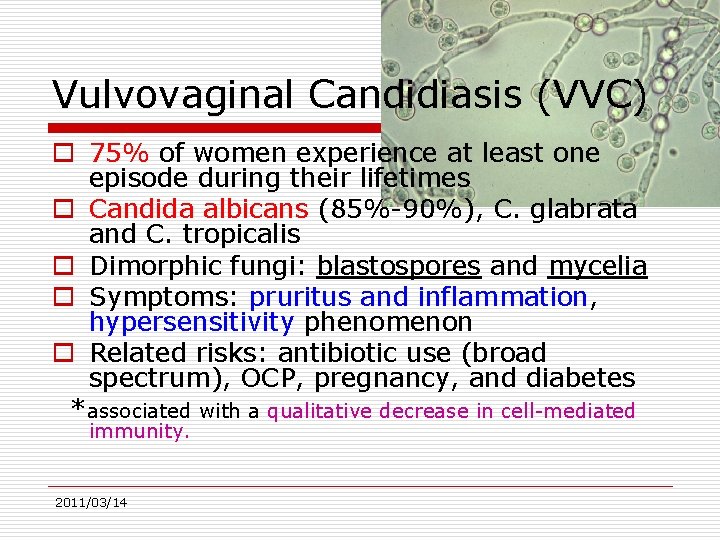
Vulvovaginal Candidiasis (VVC) o 75% of women experience at least one episode during their lifetimes o Candida albicans (85%-90%), C. glabrata and C. tropicalis o Dimorphic fungi: blastospores and mycelia o Symptoms: pruritus and inflammation, hypersensitivity phenomenon o Related risks: antibiotic use (broad spectrum), OCP, pregnancy, and diabetes *associated with a qualitative decrease in cell-mediated immunity. 2011/03/14
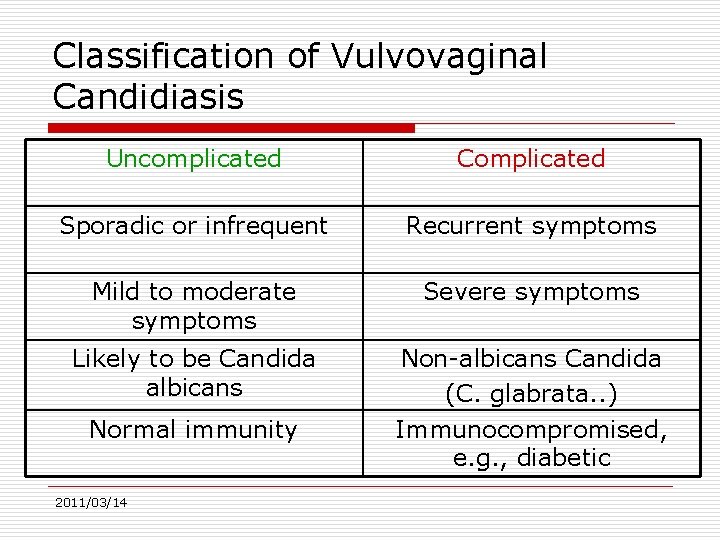
Classification of Vulvovaginal Candidiasis Uncomplicated Complicated Sporadic or infrequent Recurrent symptoms Mild to moderate symptoms Severe symptoms Likely to be Candida albicans Non-albicans Candida (C. glabrata. . ) Immunocompromised, e. g. , diabetic Normal immunity 2011/03/14
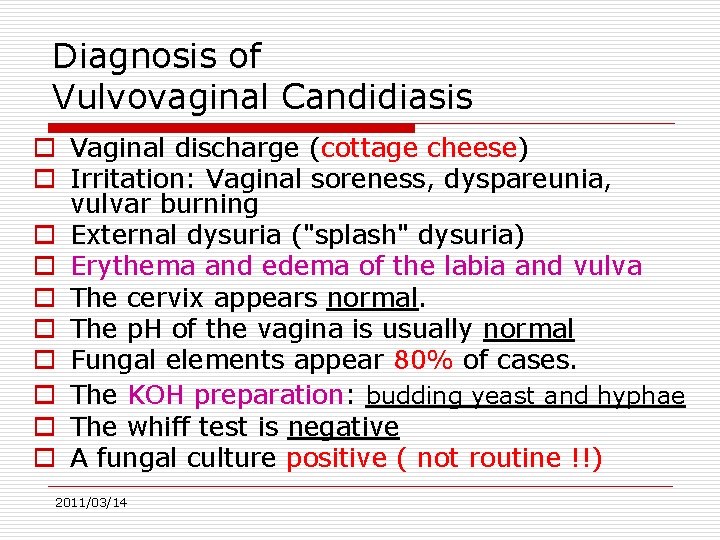
Diagnosis of Vulvovaginal Candidiasis o Vaginal discharge (cottage cheese) o Irritation: Vaginal soreness, dyspareunia, vulvar burning o External dysuria ("splash" dysuria) o Erythema and edema of the labia and vulva o The cervix appears normal. o The p. H of the vagina is usually normal o Fungal elements appear 80% of cases. o The KOH preparation: budding yeast and hyphae o The whiff test is negative o A fungal culture positive ( not routine !!) 2011/03/14
Treatment of Vulvovaginal Candidiasis o Butoconazole: 2% cream, 5 g VAG x 3 days or 2% cream, 5 g BI-BSR, STAT VAG ü Clotrimazole: 1% cream, 5 g VAG x 7 -14 days or 100 mg 1 PC VAG x 7 days or 2 PC for 3 days, or 500 mg 1 PC VAG STAT (Pregnancy suitable) o Miconazole: 2% cream, 5 g VAG x 7 days, or 200 mg 1 PC VAG x 3 days , or 100 mg 1 PC VAG x 7 days ü Nystatin: 100, 000 -U VAG STAT x 14 days o Ticonazole: 6. 5% ointment, 5 g VAG STAT ü Zalain: 500 mg HS QW 2011/03/14
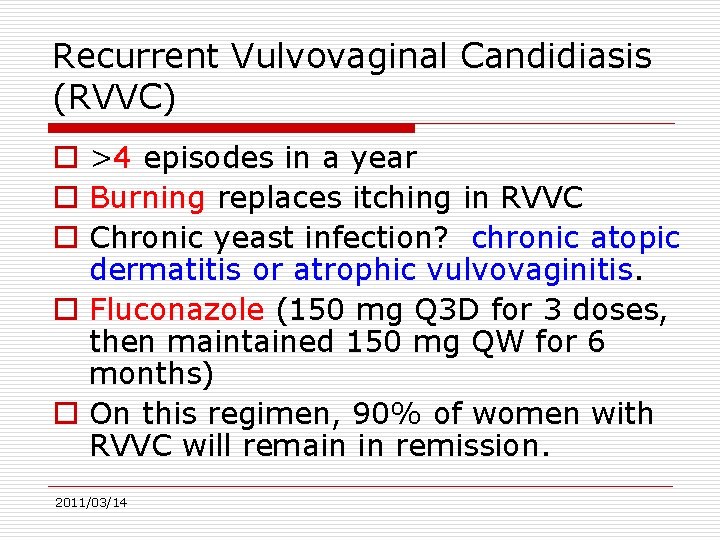
Recurrent Vulvovaginal Candidiasis (RVVC) o >4 episodes in a year o Burning replaces itching in RVVC o Chronic yeast infection? chronic atopic dermatitis or atrophic vulvovaginitis. o Fluconazole (150 mg Q 3 D for 3 doses, then maintained 150 mg QW for 6 months) o On this regimen, 90% of women with RVVC will remain in remission. 2011/03/14
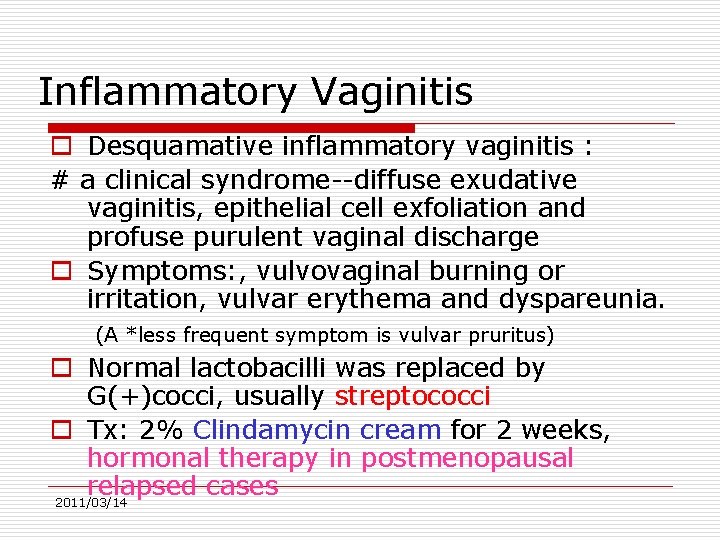
Inflammatory Vaginitis o Desquamative inflammatory vaginitis : # a clinical syndrome--diffuse exudative vaginitis, epithelial cell exfoliation and profuse purulent vaginal discharge o Symptoms: , vulvovaginal burning or irritation, vulvar erythema and dyspareunia. (A *less frequent symptom is vulvar pruritus) o Normal lactobacilli was replaced by G(+)cocci, usually streptococci o Tx: 2% Clindamycin cream for 2 weeks, hormonal therapy in postmenopausal relapsed cases 2011/03/14
Atrophic Vaginitis o Lack of Estrogen to maintain normal vaginal ecology—inflammatory vaginitis o Purulent vaginal discharge, dyspareunia and postcoital bleeding o Loss of the vaginal rugae and friable vagina. o Predominance of parabasal epithelial cells o Tx: topical estrogen vaginal cream— 1 g conjugated estrogen VAG QD x 1~2 wks 2011/03/14
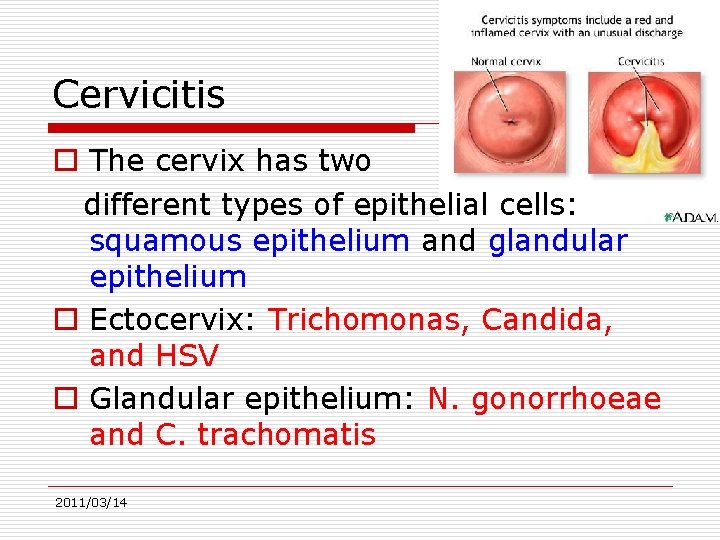
Cervicitis o The cervix has two different types of epithelial cells: squamous epithelium and glandular epithelium o Ectocervix: Trichomonas, Candida, and HSV o Glandular epithelium: N. gonorrhoeae and C. trachomatis 2011/03/14
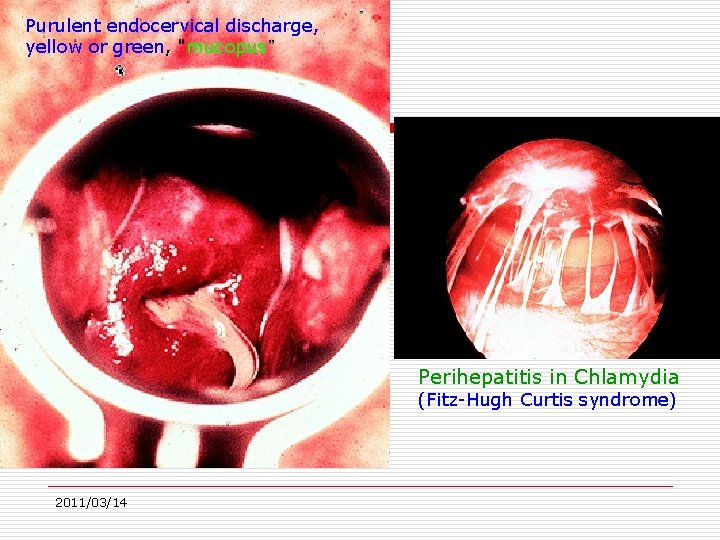
Diagnosis of Cervicitis o Purulent endocervical discharge, yellow or green, "mucopus” o Gram stained: increased neutrophils (30/HPF) *Gonococcal endocervicitis shows intracellular G(-) diplococci o The microbial etiology of endocervicitis is unknown, but about 50% of cases have gonococci or chlamydia 2011/03/14
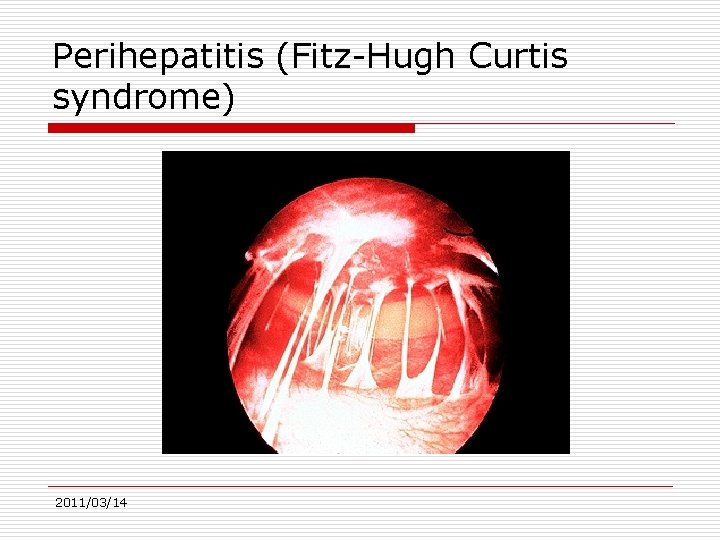
Purulent endocervical discharge, yellow or green, "mucopus” Perihepatitis in Chlamydia (Fitz-Hugh Curtis syndrome) 2011/03/14
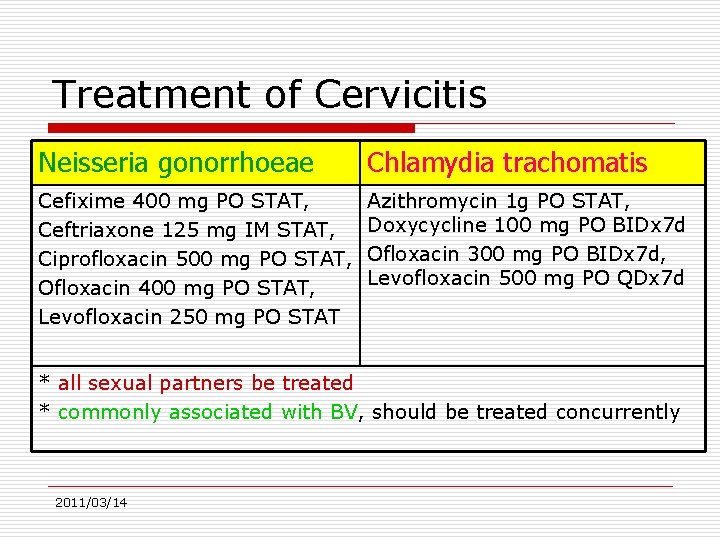
Treatment of Cervicitis Neisseria gonorrhoeae Chlamydia trachomatis Cefixime 400 mg PO STAT, Ceftriaxone 125 mg IM STAT, Ciprofloxacin 500 mg PO STAT, Ofloxacin 400 mg PO STAT, Levofloxacin 250 mg PO STAT Azithromycin 1 g PO STAT, Doxycycline 100 mg PO BIDx 7 d Ofloxacin 300 mg PO BIDx 7 d, Levofloxacin 500 mg PO QDx 7 d * all sexual partners be treated * commonly associated with BV, should be treated concurrently 2011/03/14
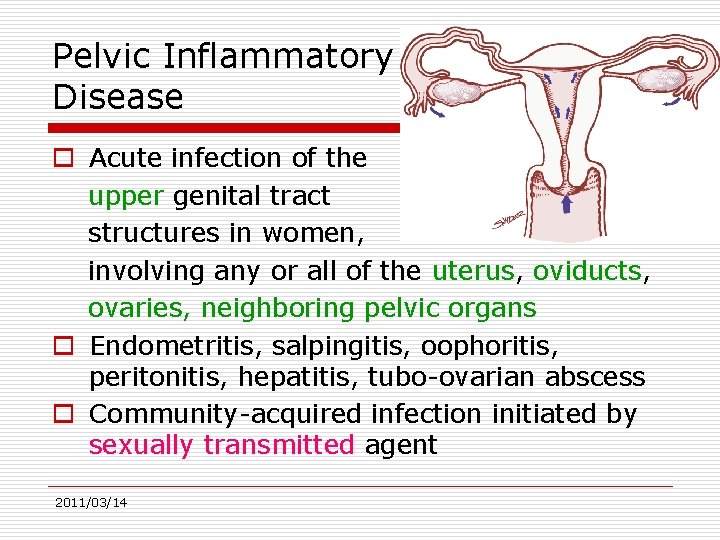
Pelvic Inflammatory Disease o Acute infection of the upper genital tract structures in women, involving any or all of the uterus, oviducts, ovaries, neighboring pelvic organs o Endometritis, salpingitis, oophoritis, peritonitis, hepatitis, tubo-ovarian abscess o Community-acquired infection initiated by sexually transmitted agent 2011/03/14
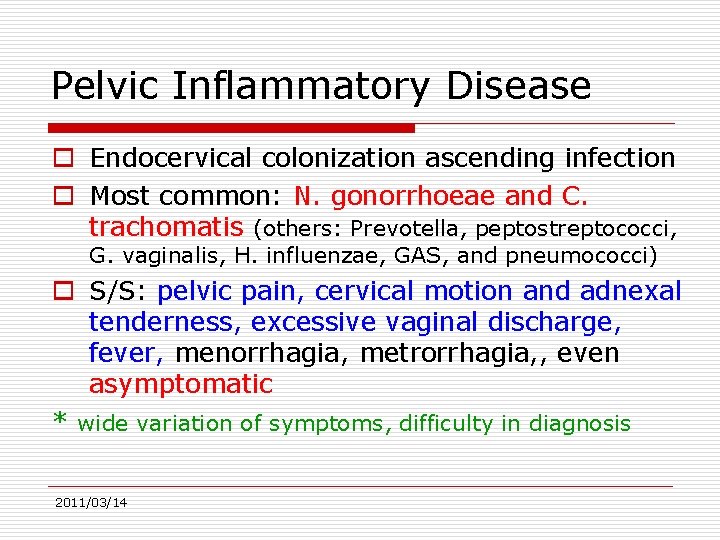
Pelvic Inflammatory Disease o Endocervical colonization ascending infection o Most common: N. gonorrhoeae and C. trachomatis (others: Prevotella, peptostreptococci, G. vaginalis, H. influenzae, GAS, and pneumococci) o S/S: pelvic pain, cervical motion and adnexal tenderness, excessive vaginal discharge, fever, menorrhagia, metrorrhagia, , even asymptomatic * wide variation of symptoms, difficulty in diagnosis 2011/03/14
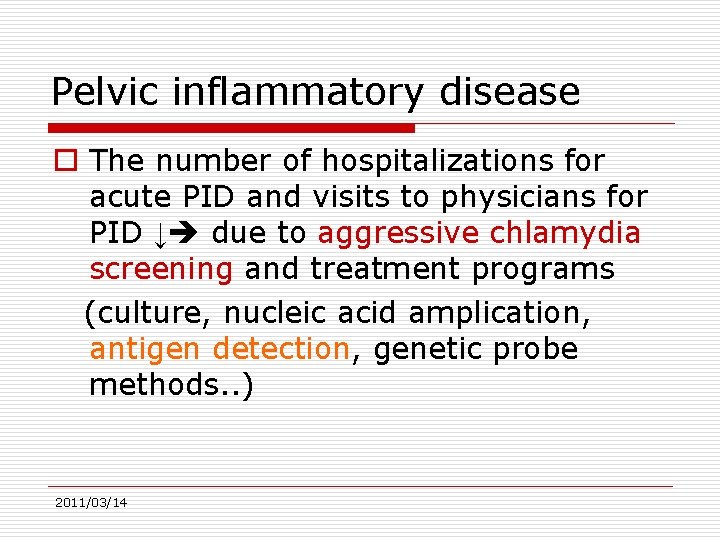
Pelvic inflammatory disease o The number of hospitalizations for acute PID and visits to physicians for PID ↓ due to aggressive chlamydia screening and treatment programs (culture, nucleic acid amplication, antigen detection, genetic probe methods. . ) 2011/03/14
Risk factors for STD: Age < 25 y/o Young age at first sex Non-barrier contraception New, multiple, or symptomatic sexual partners o Oral contraception o Cervical ectopy o o 2011/03/14
Factors facilitate PID o o o Previous episode of PID Sex during menses Vaginal douching Bacterial vaginosis Intrauterine device 2011/03/14
Clinical features o Lower abdominal pain (worsens during coitus or jarring movement) o Onset the pain during or shortly after menses suggestive !! o Bilateral pain, rarely more than 2 wks o Abnormal uterine bleeding: 1/3 2011/03/14
Diagnosis of PID o Symptoms: variable o Signs: Pelvic organ tenderness , cervical motion and adnexal tenderness, fever , leukorrhea and/or mucopurulent endocervicitis o Specificity: 1. Endometrial biopsy showing endometritis 2. Elevated CRP or ESR 3. Fever> 38 C and leukocytosis 4. Positive culture test for gonorrhea or chlamydia 5. Ultrasound documenting tubo-ovarian abscess 6. Laparoscopy visually confirming salpingitis 2011/03/14
Perihepatitis (Fitz-Hugh Curtis syndrome) 2011/03/14
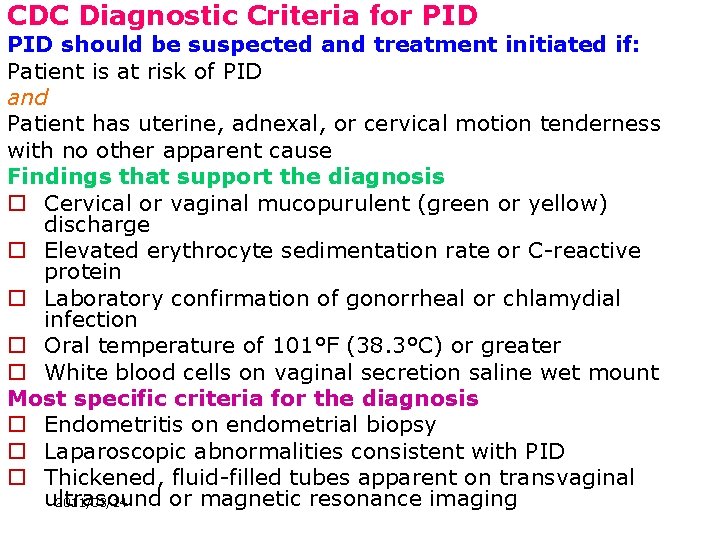
CDC Diagnostic Criteria for PID should be suspected and treatment initiated if: Patient is at risk of PID and Patient has uterine, adnexal, or cervical motion tenderness with no other apparent cause Findings that support the diagnosis o Cervical or vaginal mucopurulent (green or yellow) discharge o Elevated erythrocyte sedimentation rate or C-reactive protein o Laboratory confirmation of gonorrheal or chlamydial infection o Oral temperature of 101°F (38. 3°C) or greater o White blood cells on vaginal secretion saline wet mount Most specific criteria for the diagnosis o Endometritis on endometrial biopsy o Laparoscopic abnormalities consistent with PID o Thickened, fluid-filled tubes apparent on transvaginal ultrasound or magnetic resonance imaging 2011/03/14
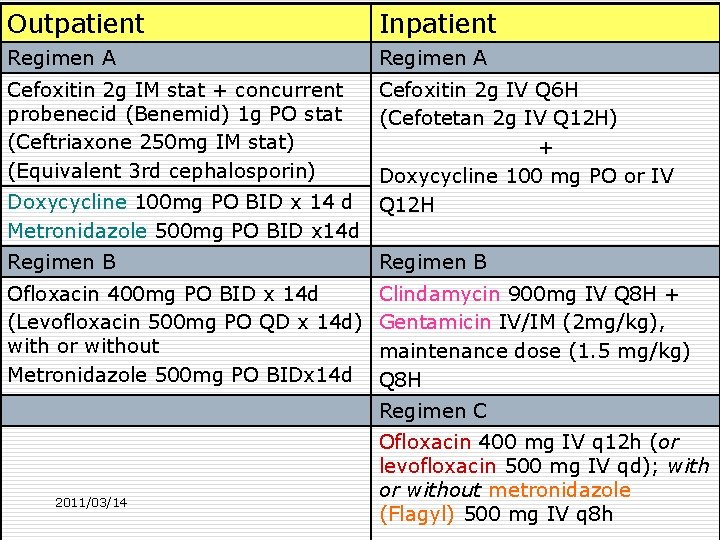
Outpatient Inpatient Regimen A Cefoxitin 2 g IM stat + concurrent probenecid (Benemid) 1 g PO stat (Ceftriaxone 250 mg IM stat) (Equivalent 3 rd cephalosporin) Cefoxitin 2 g IV Q 6 H (Cefotetan 2 g IV Q 12 H) + Doxycycline 100 mg PO or IV Q 12 H Doxycycline 100 mg PO BID x 14 d Metronidazole 500 mg PO BID x 14 d Regimen B Ofloxacin 400 mg PO BID x 14 d (Levofloxacin 500 mg PO QD x 14 d) with or without Metronidazole 500 mg PO BIDx 14 d Clindamycin 900 mg IV Q 8 H + Gentamicin IV/IM (2 mg/kg), maintenance dose (1. 5 mg/kg) Q 8 H Regimen C 2011/03/14 Ofloxacin 400 mg IV q 12 h (or levofloxacin 500 mg IV qd); with or without metronidazole (Flagyl) 500 mg IV q 8 h
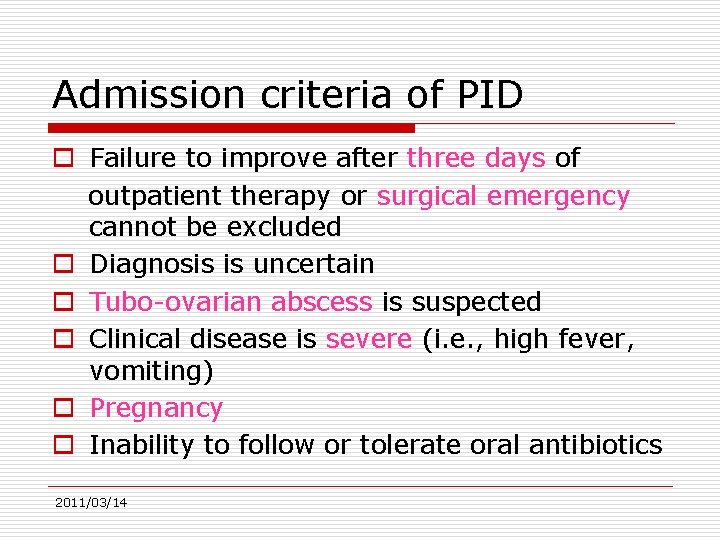
Admission criteria of PID o Failure to improve after three days of outpatient therapy or surgical emergency cannot be excluded o Diagnosis is uncertain o Tubo-ovarian abscess is suspected o Clinical disease is severe (i. e. , high fever, vomiting) o Pregnancy o Inability to follow or tolerate oral antibiotics 2011/03/14
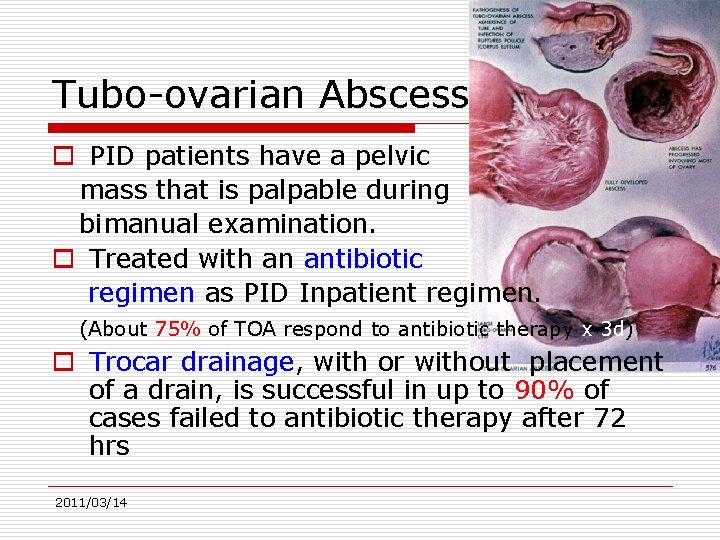
Tubo-ovarian Abscess o PID patients have a pelvic mass that is palpable during bimanual examination. o Treated with an antibiotic regimen as PID Inpatient regimen. (About 75% of TOA respond to antibiotic therapy x 3 d) o Trocar drainage, with or without placement of a drain, is successful in up to 90% of cases failed to antibiotic therapy after 72 hrs 2011/03/14
How to prevent PID ? p Prevent STDs (Latex male condoms ) p CDC: yearly chlamydia testing ü all sexually active women age 25 or younger ü older women with risk factors for chlamydial infections (those who have a new sex partner or multiple sex partners ü all pregnant women p Aware of any genital symptoms (suspicious STDs) 2011/03/14
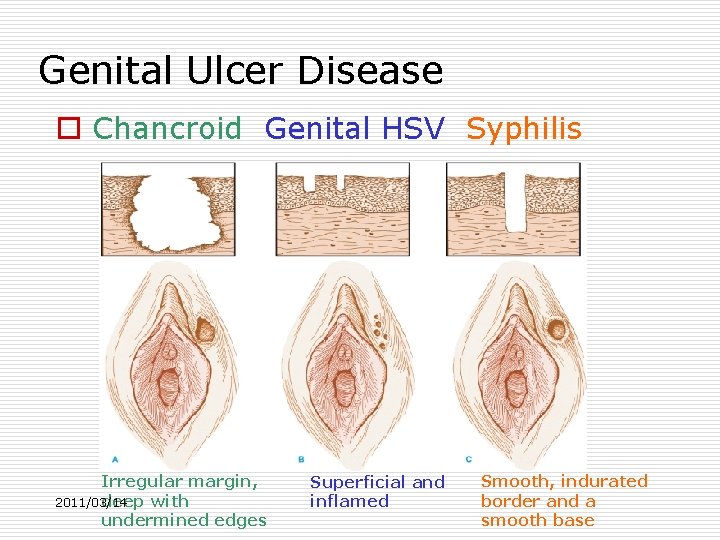
Genital Ulcer Disease o Chancroid Genital HSV Syphilis Irregular margin, deep with 2011/03/14 undermined edges Superficial and inflamed Smooth, indurated border and a smooth base
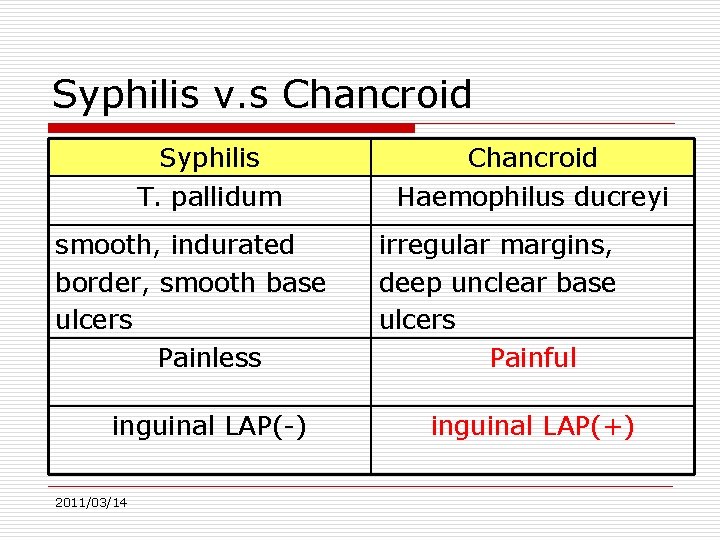
Syphilis v. s Chancroid Syphilis T. pallidum smooth, indurated border, smooth base ulcers Painless inguinal LAP(-) 2011/03/14 Chancroid Haemophilus ducreyi irregular margins, deep unclear base ulcers Painful inguinal LAP(+)
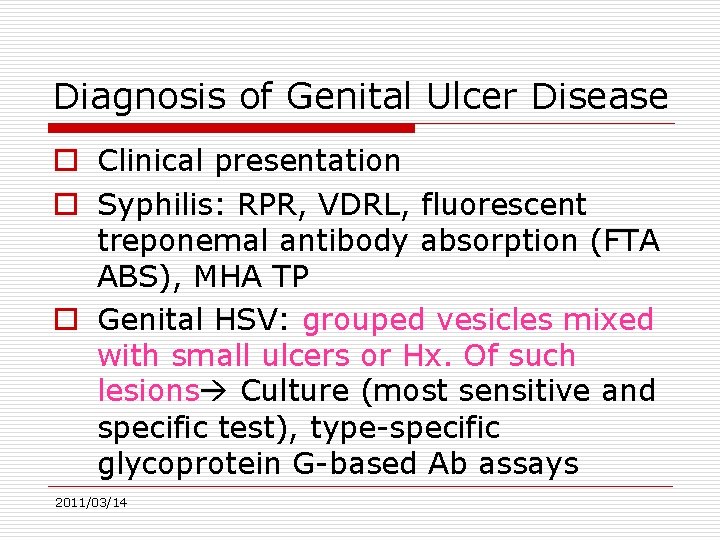
Diagnosis of Genital Ulcer Disease o Clinical presentation o Syphilis: RPR, VDRL, fluorescent treponemal antibody absorption (FTA ABS), MHA TP o Genital HSV: grouped vesicles mixed with small ulcers or Hx. Of such lesions Culture (most sensitive and specific test), type-specific glycoprotein G-based Ab assays 2011/03/14
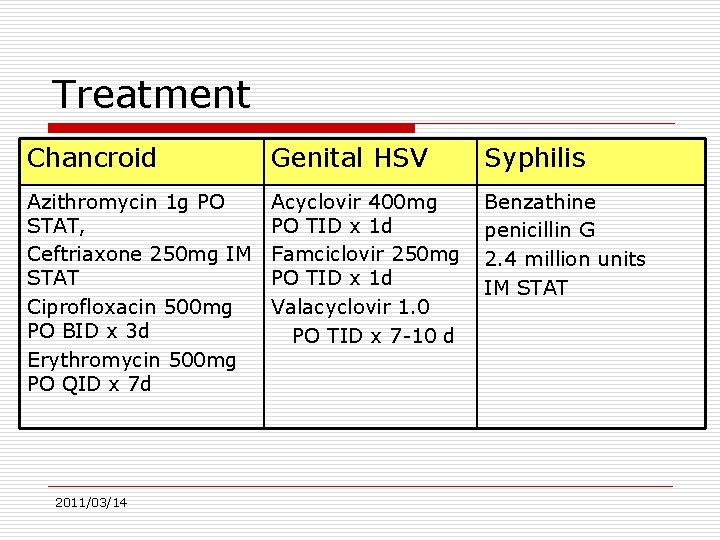
Treatment Chancroid Genital HSV Syphilis Azithromycin 1 g PO STAT, Ceftriaxone 250 mg IM STAT Ciprofloxacin 500 mg PO BID x 3 d Erythromycin 500 mg PO QID x 7 d Acyclovir 400 mg PO TID x 1 d Famciclovir 250 mg PO TID x 1 d Valacyclovir 1. 0 PO TID x 7 -10 d Benzathine penicillin G 2. 4 million units IM STAT 2011/03/14
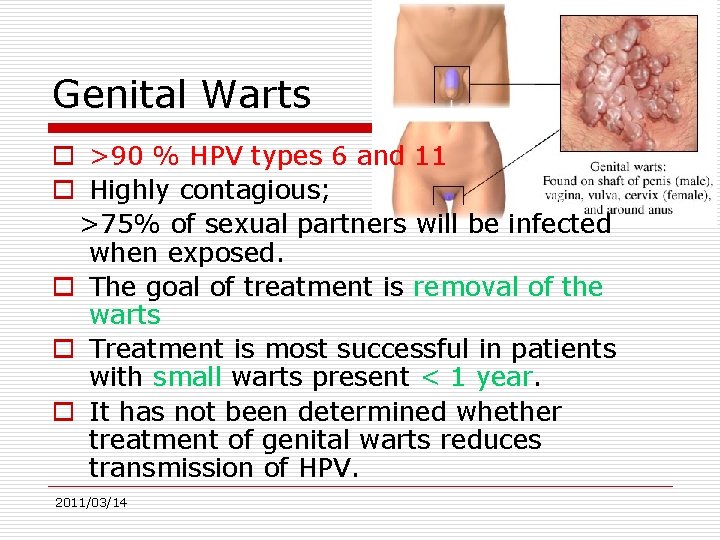
Genital Warts o >90 % HPV types 6 and 11 o Highly contagious; >75% of sexual partners will be infected when exposed. o The goal of treatment is removal of the warts o Treatment is most successful in patients with small warts present < 1 year. o It has not been determined whether treatment of genital warts reduces transmission of HPV. 2011/03/14
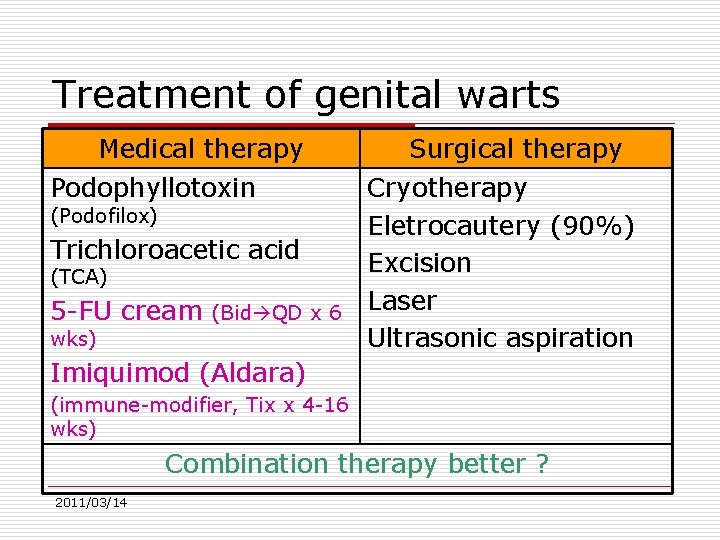
Treatment of genital warts Medical therapy Podophyllotoxin (Podofilox) Trichloroacetic acid (TCA) 5 -FU cream (Bid QD x 6 wks) Surgical therapy Cryotherapy Eletrocautery (90%) Excision Laser Ultrasonic aspiration Imiquimod (Aldara) (immune-modifier, Tix x 4 -16 wks) Combination therapy better ? 2011/03/14
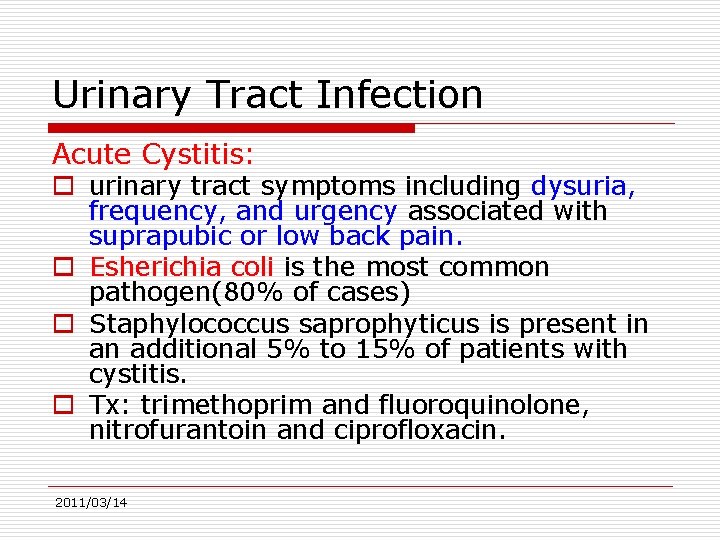
Urinary Tract Infection Acute Cystitis: o urinary tract symptoms including dysuria, frequency, and urgency associated with suprapubic or low back pain. o Esherichia coli is the most common pathogen(80% of cases) o Staphylococcus saprophyticus is present in an additional 5% to 15% of patients with cystitis. o Tx: trimethoprim and fluoroquinolone, nitrofurantoin and ciprofloxacin. 2011/03/14
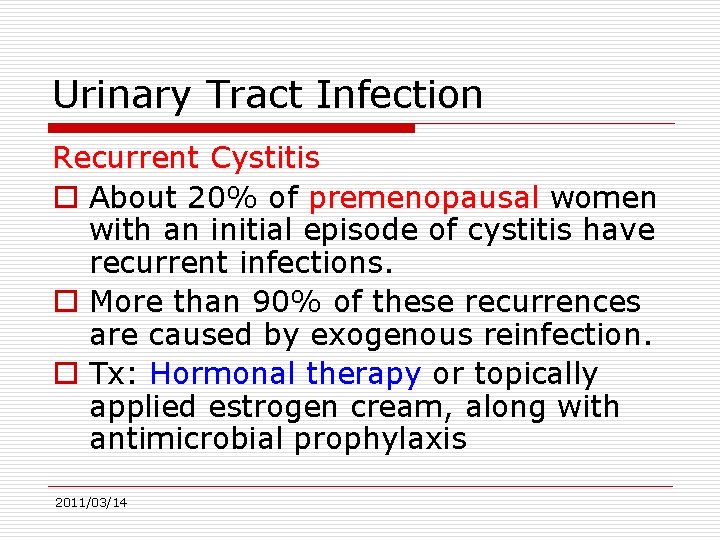
Urinary Tract Infection Recurrent Cystitis o About 20% of premenopausal women with an initial episode of cystitis have recurrent infections. o More than 90% of these recurrences are caused by exogenous reinfection. o Tx: Hormonal therapy or topically applied estrogen cream, along with antimicrobial prophylaxis 2011/03/14
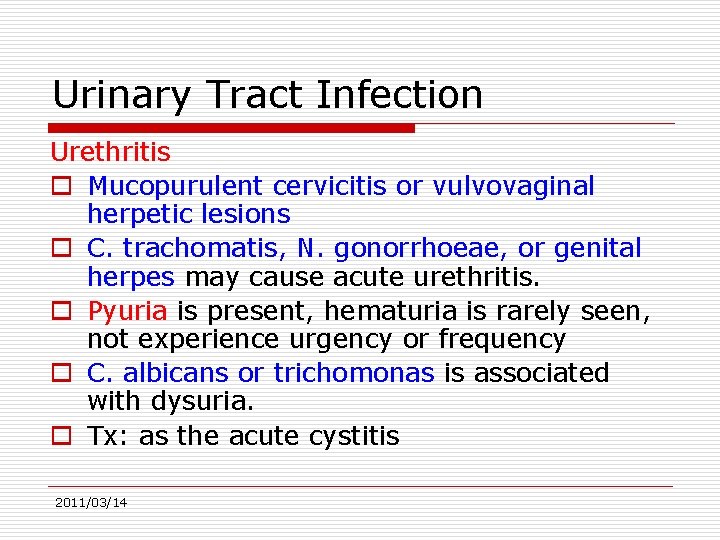
Urinary Tract Infection Urethritis o Mucopurulent cervicitis or vulvovaginal herpetic lesions o C. trachomatis, N. gonorrhoeae, or genital herpes may cause acute urethritis. o Pyuria is present, hematuria is rarely seen, not experience urgency or frequency o C. albicans or trichomonas is associated with dysuria. o Tx: as the acute cystitis 2011/03/14
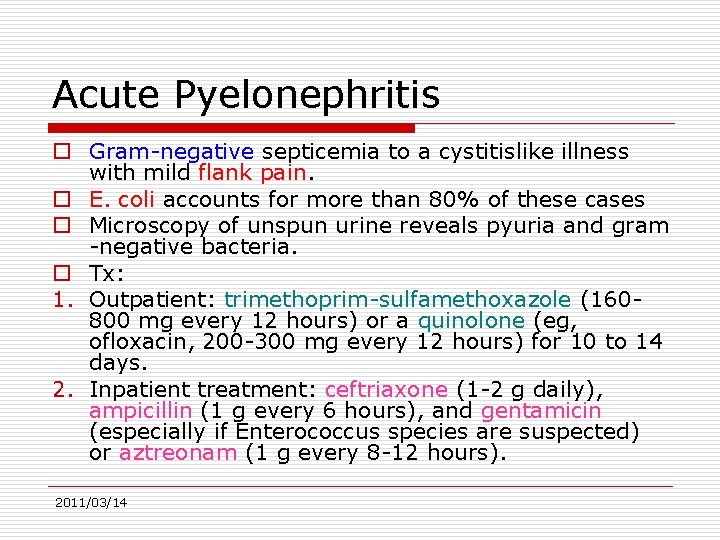
Acute Pyelonephritis o Gram-negative septicemia to a cystitislike illness with mild flank pain. o E. coli accounts for more than 80% of these cases o Microscopy of unspun urine reveals pyuria and gram -negative bacteria. o Tx: 1. Outpatient: trimethoprim-sulfamethoxazole (160800 mg every 12 hours) or a quinolone (eg, ofloxacin, 200 -300 mg every 12 hours) for 10 to 14 days. 2. Inpatient treatment: ceftriaxone (1 -2 g daily), ampicillin (1 g every 6 hours), and gentamicin (especially if Enterococcus species are suspected) or aztreonam (1 g every 8 -12 hours). 2011/03/14
Thank you for your attentions !! 2011/03/14