
GENETICS WARM UP How are traits passed down

- Slides: 18
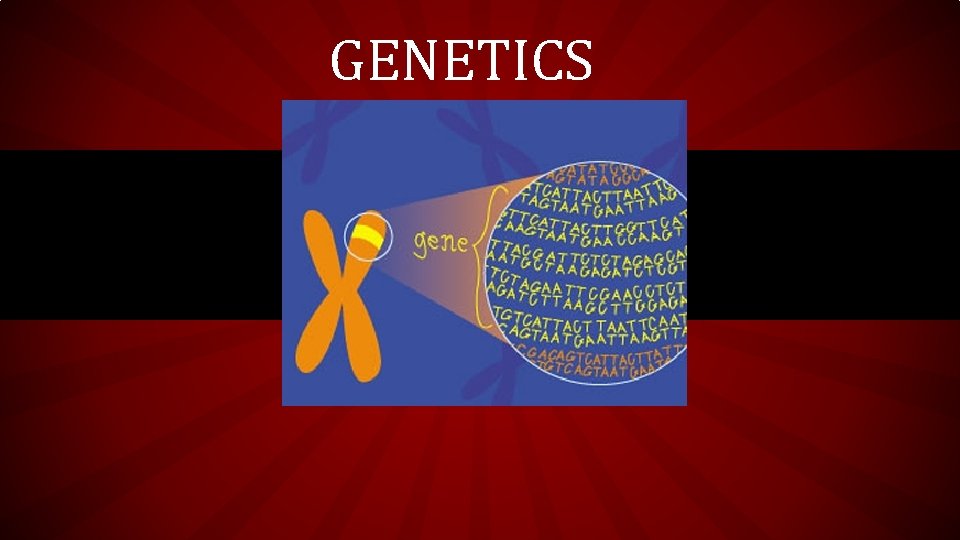
GENETICS
WARM- UP: How are traits passed down from parents to offspring?
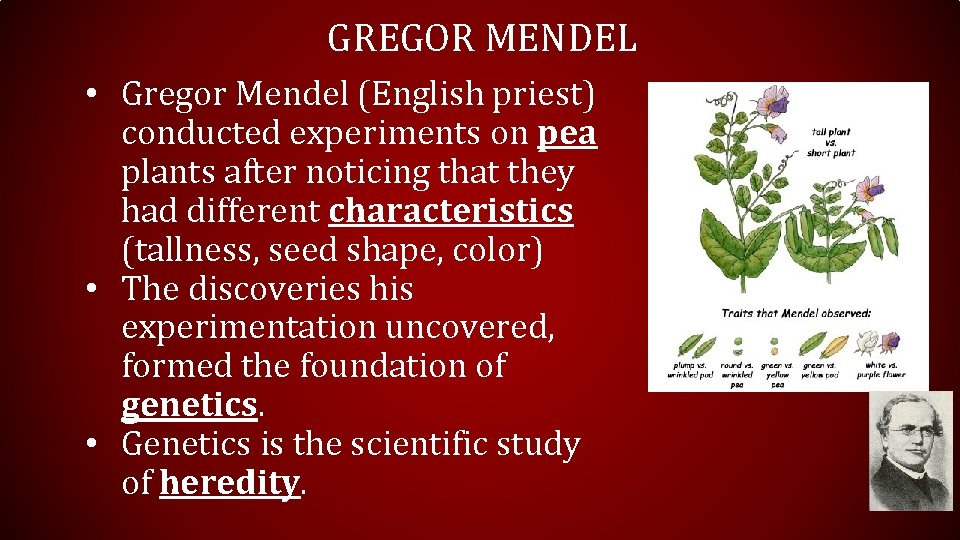
GREGOR MENDEL • Gregor Mendel (English priest) conducted experiments on pea plants after noticing that they had different characteristics (tallness, seed shape, color) • The discoveries his experimentation uncovered, formed the foundation of genetics. • Genetics is the scientific study of heredity.
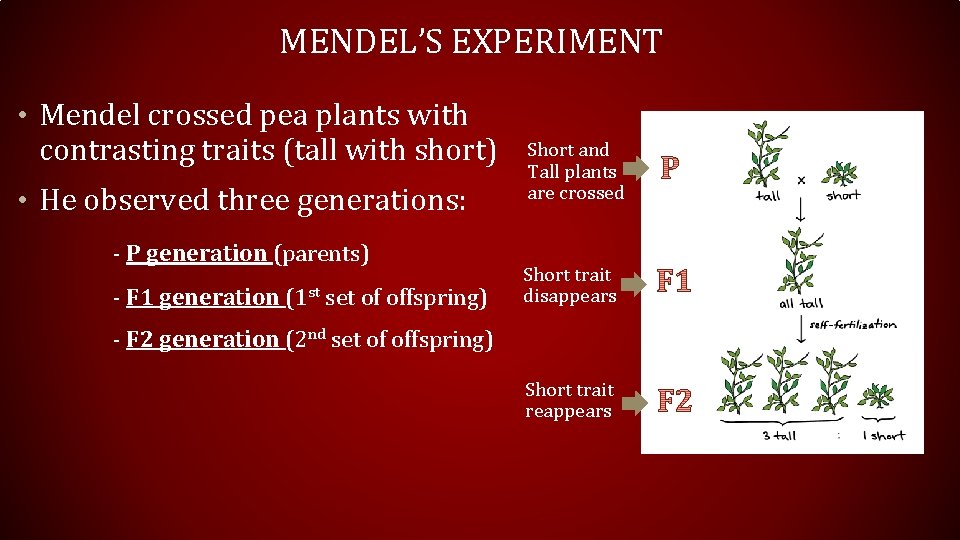
MENDEL’S EXPERIMENT • Mendel crossed pea plants with contrasting traits (tall with short) • He observed three generations: - P generation (parents) - F 1 generation (1 st set of offspring) Short and Tall plants are crossed Short trait disappears - F 2 generation (2 nd set of offspring) Short trait reappears
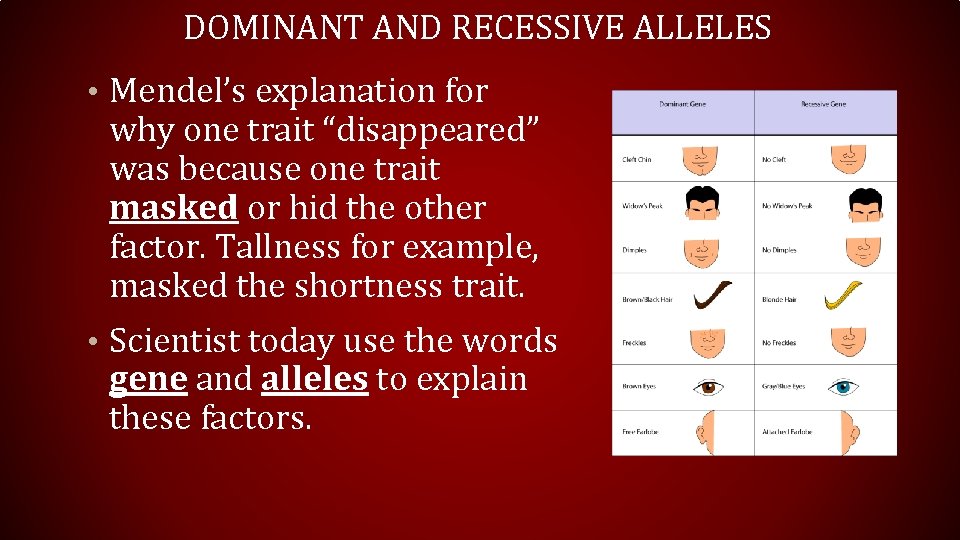
DOMINANT AND RECESSIVE ALLELES • Mendel’s explanation for why one trait “disappeared” was because one trait masked or hid the other factor. Tallness for example, masked the shortness trait. • Scientist today use the words gene and alleles to explain these factors.
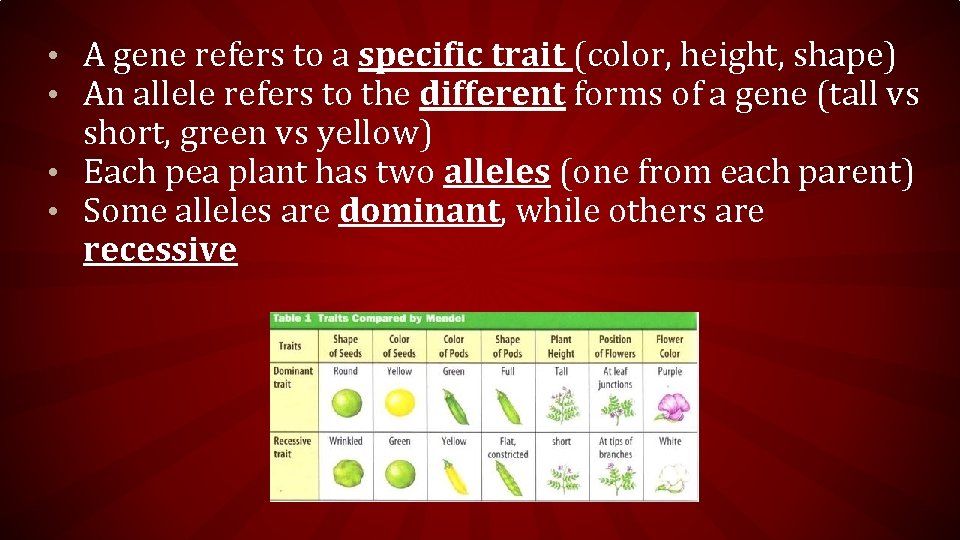
• A gene refers to a specific trait (color, height, shape) • An allele refers to the different forms of a gene (tall vs short, green vs yellow) • Each pea plant has two alleles (one from each parent) • Some alleles are dominant, while others are recessive
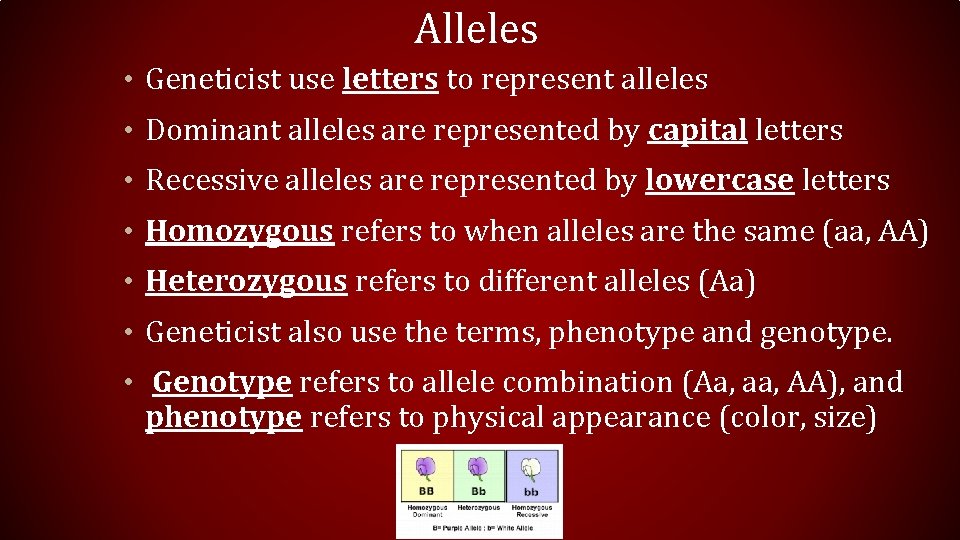
Alleles • Geneticist use letters to represent alleles • Dominant alleles are represented by capital letters • Recessive alleles are represented by lowercase letters • Homozygous refers to when alleles are the same (aa, AA) • Heterozygous refers to different alleles (Aa) • Geneticist also use the terms, phenotype and genotype. • Genotype refers to allele combination (Aa, aa, AA), and phenotype refers to physical appearance (color, size)
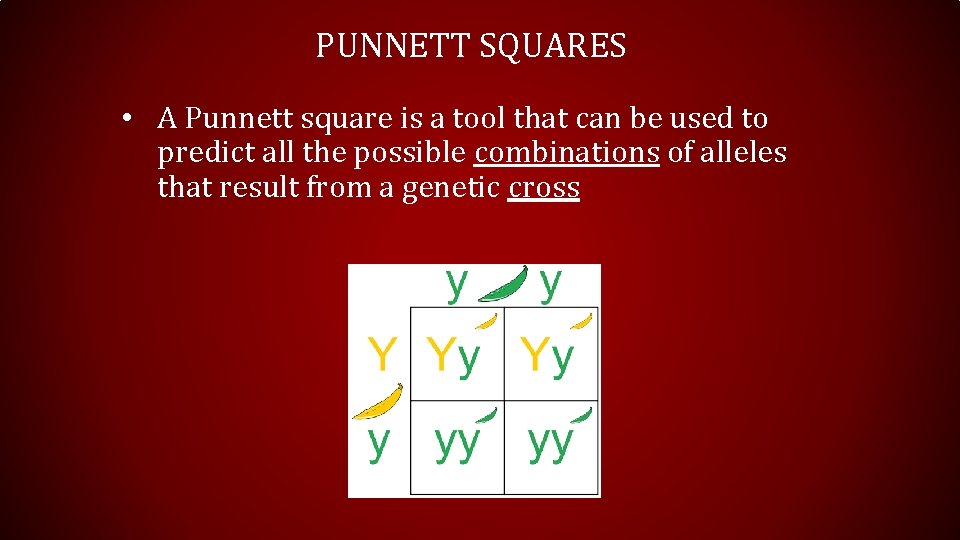
PUNNETT SQUARES • A Punnett square is a tool that can be used to predict all the possible combinations of alleles that result from a genetic cross
GENETICS CONTINUED
SINGLE GENES WITH MULTIPLE ALLELES • Several human traits are controlled by single genes with one dominant and one recessive allele. This results in two distinct phenotypes. • Some human traits are controlled by single genes that have more than two alleles, they are said to have multiple alleles.
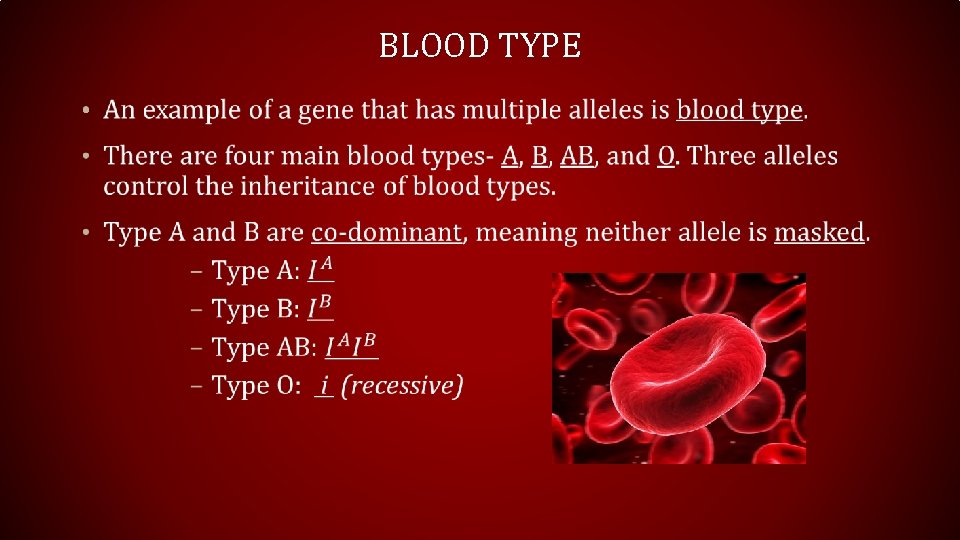
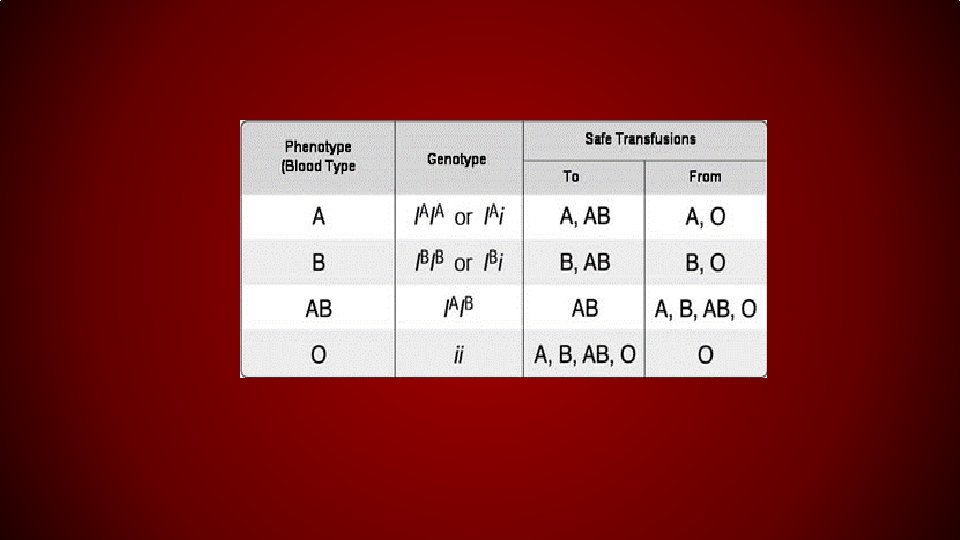
BLOOD TYPE •
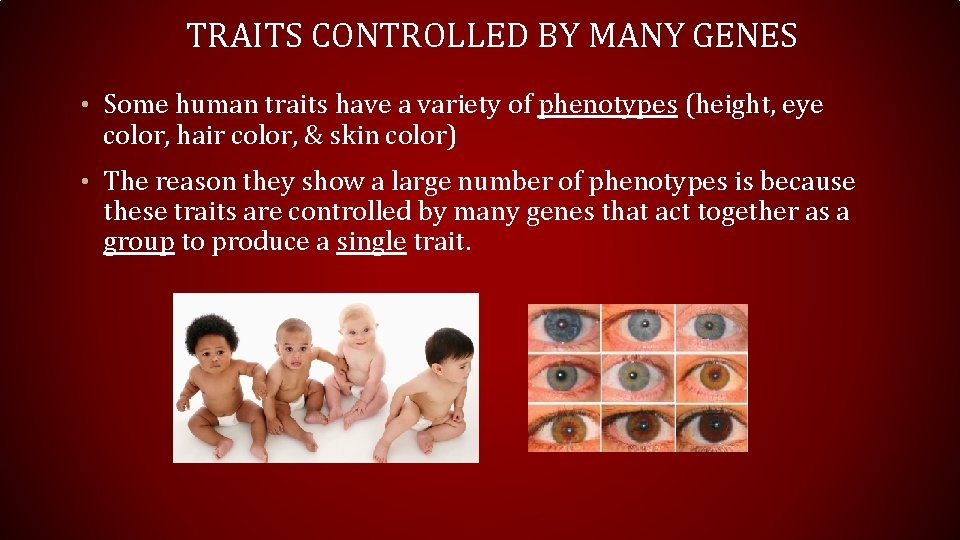
TRAITS CONTROLLED BY MANY GENES • Some human traits have a variety of phenotypes (height, eye color, hair color, & skin color) • The reason they show a large number of phenotypes is because these traits are controlled by many genes that act together as a group to produce a single trait.
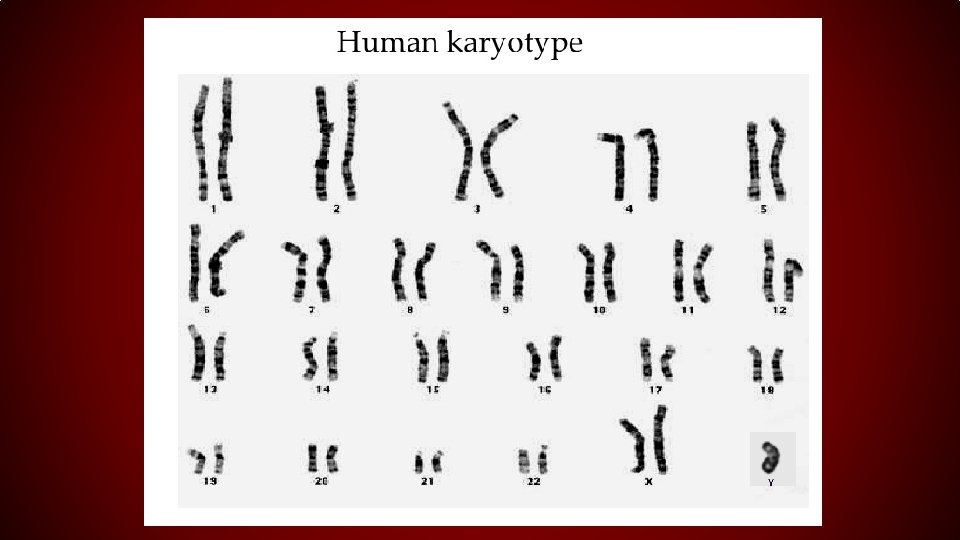
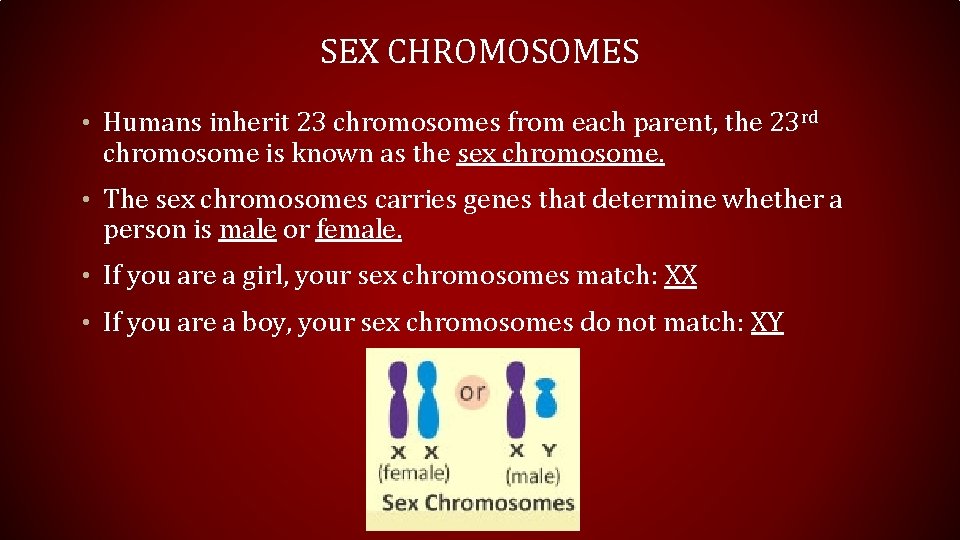
SEX CHROMOSOMES • Humans inherit 23 chromosomes from each parent, the 23 rd chromosome is known as the sex chromosome. • The sex chromosomes carries genes that determine whether a person is male or female. • If you are a girl, your sex chromosomes match: XX • If you are a boy, your sex chromosomes do not match: XY
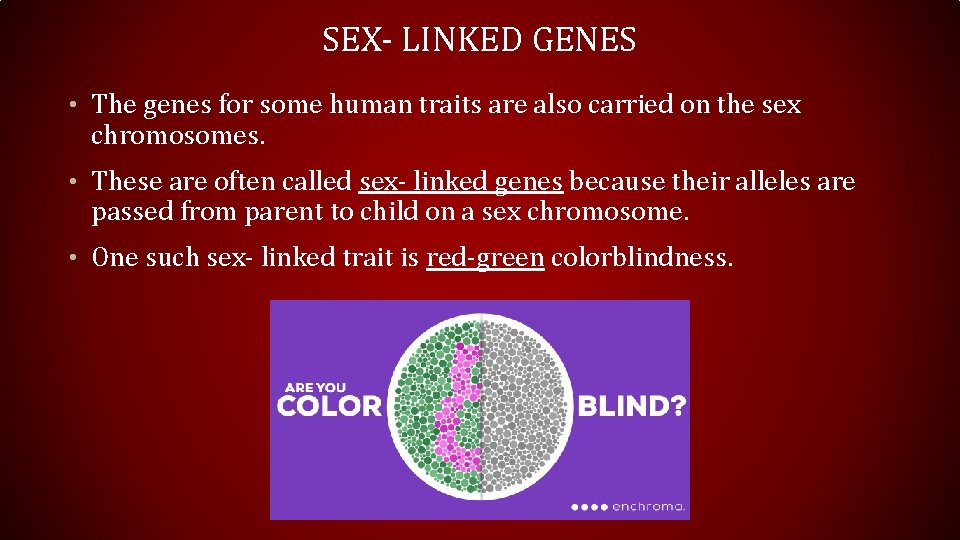
SEX- LINKED GENES • The genes for some human traits are also carried on the sex chromosomes. • These are often called sex- linked genes because their alleles are passed from parent to child on a sex chromosome. • One such sex- linked trait is red-green colorblindness.
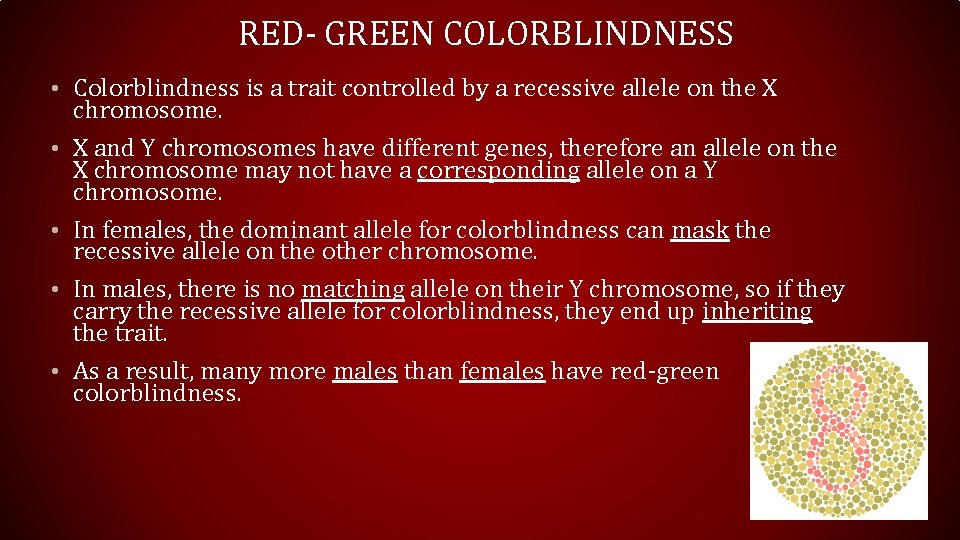
RED- GREEN COLORBLINDNESS • Colorblindness is a trait controlled by a recessive allele on the X • • chromosome. X and Y chromosomes have different genes, therefore an allele on the X chromosome may not have a corresponding allele on a Y chromosome. In females, the dominant allele for colorblindness can mask the recessive allele on the other chromosome. In males, there is no matching allele on their Y chromosome, so if they carry the recessive allele for colorblindness, they end up inheriting the trait. As a result, many more males than females have red-green colorblindness.
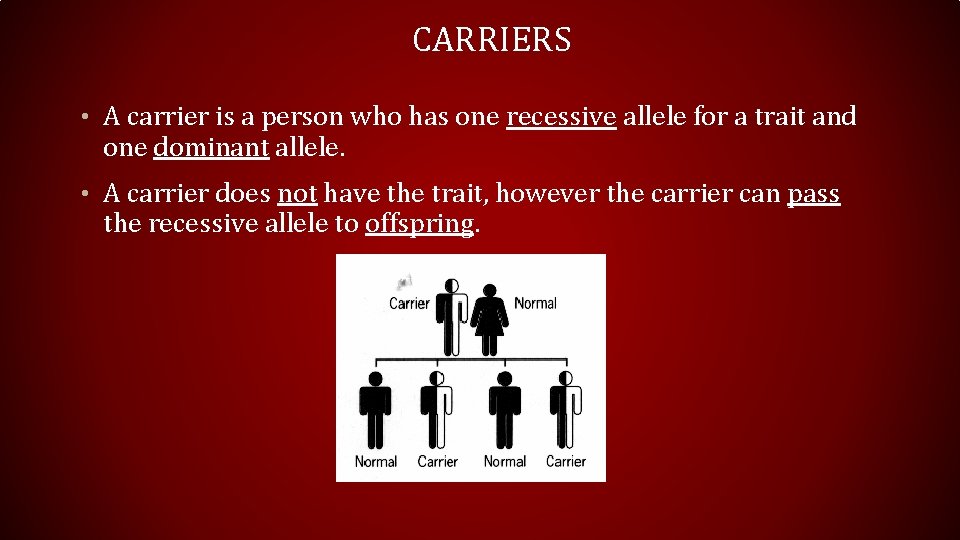
CARRIERS • A carrier is a person who has one recessive allele for a trait and one dominant allele. • A carrier does not have the trait, however the carrier can pass the recessive allele to offspring.