
Genetics Vocabulary Gene A section of DNA that
Genetics Vocabulary: Gene: A section of DNA that encodes a particular protein (ex: hair protein) Alleles: Different versions of a gene (ex: black hair vs. blond hair) Everyone has two alleles for each gene – one from each parent! Dominant: An allele that always shows up if you have it (ex: B = black hair) Recessive: An allele that only shows up if there is no dominant allele (ex: b) Genotype:
Genetics Vocabulary: Genotype: The genetic make-up (combination of alleles) (ex: BB or Bb or bb) Phenotype: The characteristics or traits that show up (ex: your hair color) Dominant: An allele that always shows up if you have it (ex: B = black hair) Recessive: An allele that only shows up if there is no dominant allele (ex: b) Homozygous: Two of the same allele for a particular trait are present � Ex: RR (homozygous dominant) = Red wings
More Genetics Vocabulary Homozygous and Heterozygous �Homozygous: Two of the same allele for a particular trait are present Ex: RR (homozygous dominant) = Red wings Ex: rr (homozygous recessive)= yellow wings �Heterozygous: Two different alleles for a particular trait are present Ex: Rr = red wings Objectives for Class: • Experiment with probability to see the diversity of offspring that can be made through sexual reproduction
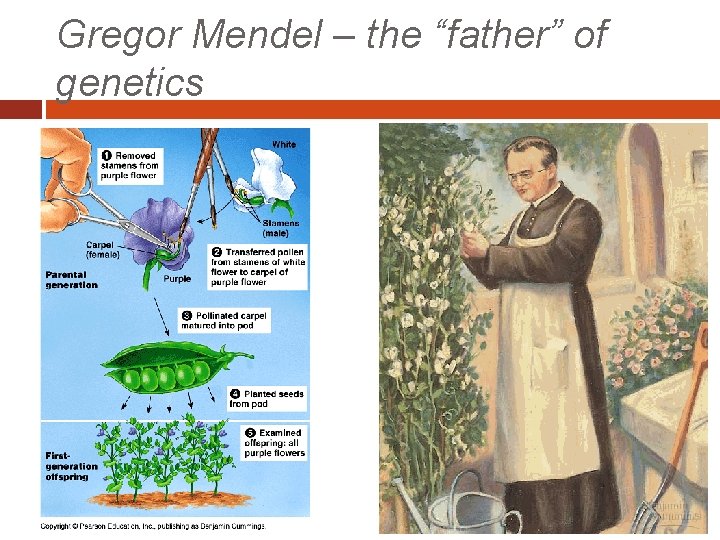
Gregor Mendel – the “father” of genetics
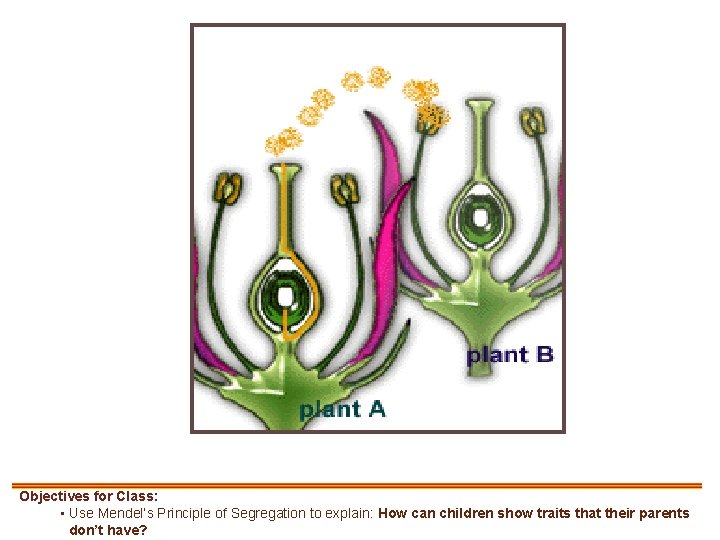
Objectives for Class: • Use Mendel’s Principle of Segregation to explain: How can children show traits that their parents don’t have?
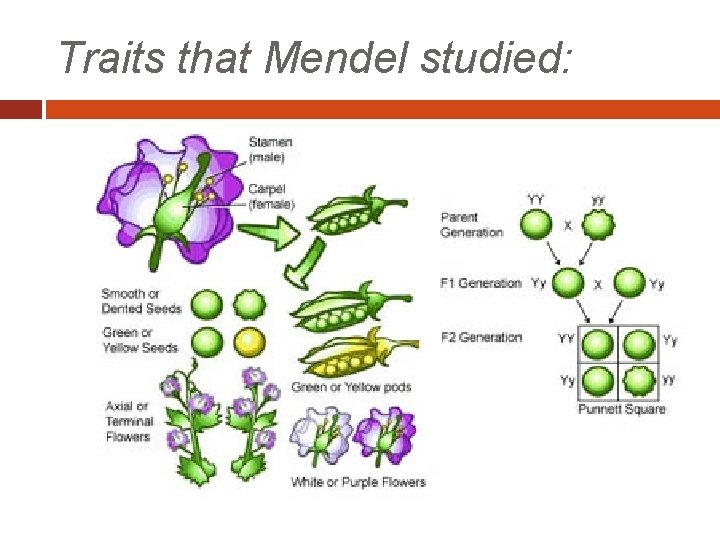
Traits that Mendel studied:
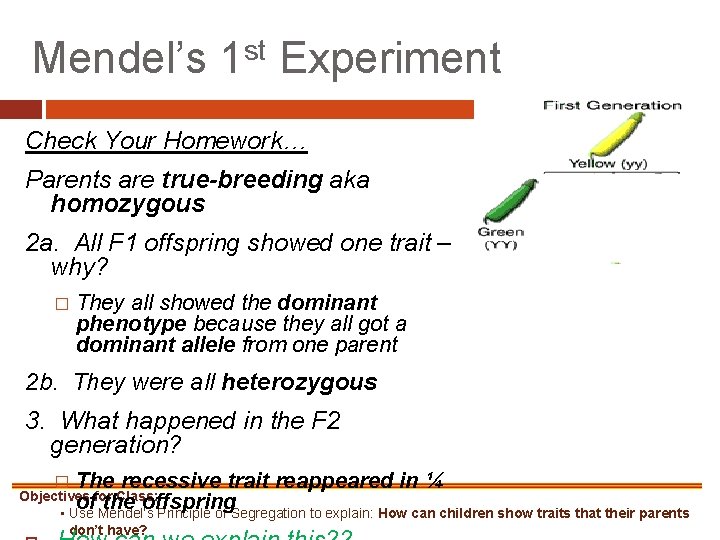
Mendel’s 1 st Experiment Check Your Homework… Parents are true-breeding aka homozygous 2 a. All F 1 offspring showed one trait – why? � They all showed the dominant phenotype because they all got a dominant allele from one parent 2 b. They were all heterozygous 3. What happened in the F 2 generation? � The recessive trait reappeared in ¼ Objectives for Class: of the offspring • Use Mendel’s Principle of Segregation to explain: How can children show traits that their parents don’t have?
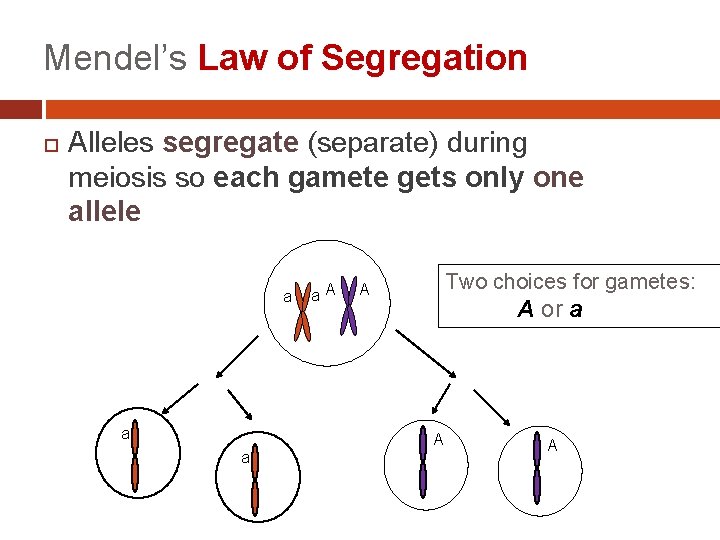
Mendel’s Law of Segregation Alleles segregate (separate) during meiosis so each gamete gets only one allele a a a. A Two choices for gametes: A A or a A
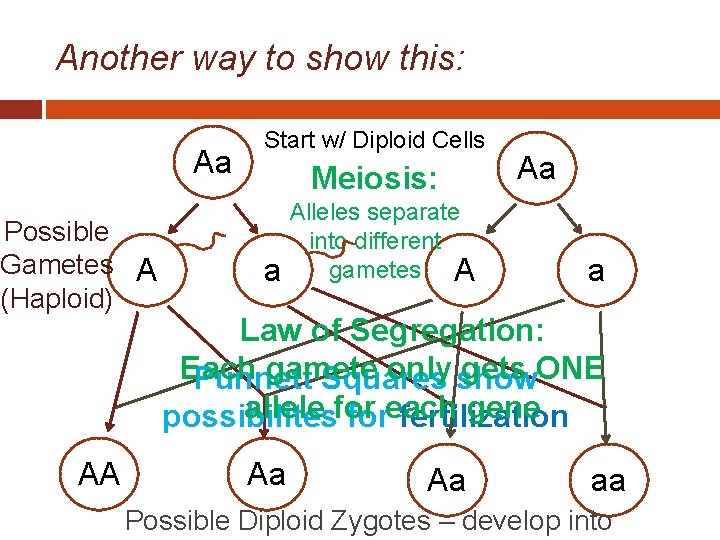
Another way to show this: Aa Possible Gametes A (Haploid) AA Start w/ Diploid Cells Meiosis: a Alleles separate into different gametes A Aa a Law of Segregation: Each gamete only show gets ONE Punnett Squares allele for gene possibilites foreach fertilization Aa Aa aa Possible Diploid Zygotes – develop into

Principle of Segregation (continued…) This explains why the recessive trait reappears in the F 2 generation… in ¼ of the offspring.
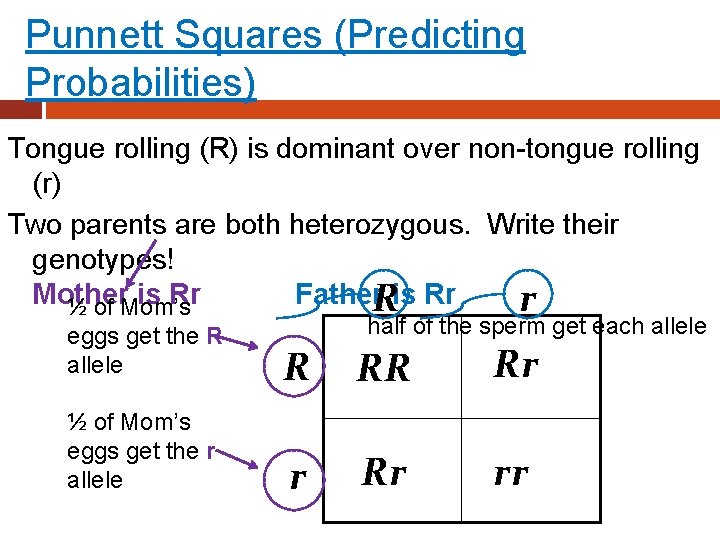
Punnett Squares (Predicting Probabilities) Tongue rolling (R) is dominant over non-tongue rolling (r) Two parents are both heterozygous. Write their genotypes! Mother is Rr Father. Ris Rr r ½ of Mom’s eggs get the R allele ½ of Mom’s eggs get the r allele half of the sperm get each allele R RR Rr rr
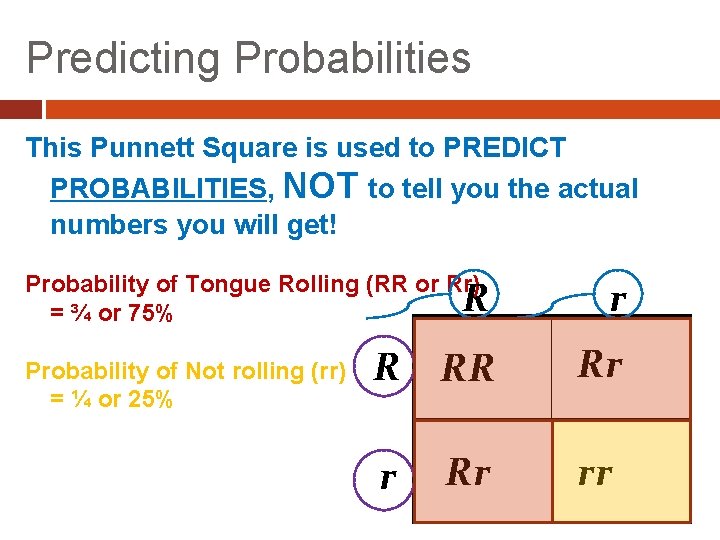
Predicting Probabilities This Punnett Square is used to PREDICT PROBABILITIES, NOT to tell you the actual numbers you will get! Probability of Tongue Rolling (RR or Rr) = ¾ or 75% Probability of Not rolling (rr) = ¼ or 25% R r R RR Rr Rr rr r
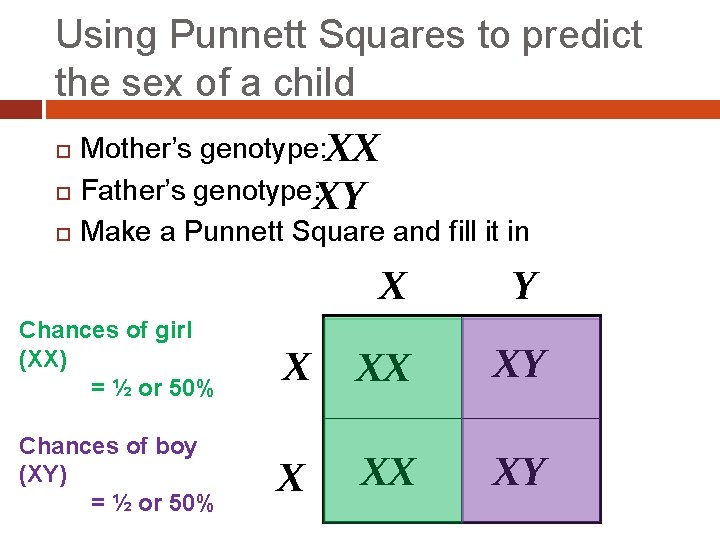
Using Punnett Squares to predict the sex of a child Mother’s genotype: XX Father’s genotype: XY Make a Punnett Square and fill it in X Y Chances of girl (XX) = ½ or 50% X XX XY Chances of boy (XY) = ½ or 50% X XX XY
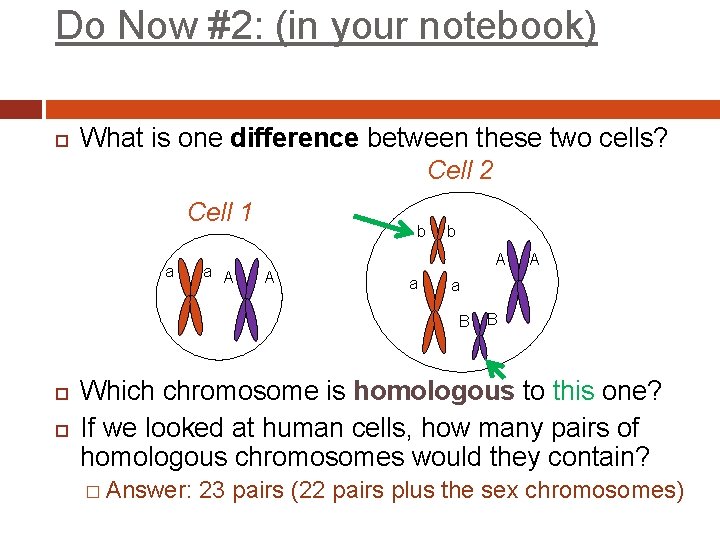
Do Now #2: (in your notebook) What is one difference between these two cells? Cell 2 Cell 1 a a A b b A A a a B A B Which chromosome is homologous to this one? If we looked at human cells, how many pairs of homologous chromosomes would they contain? � Answer: 23 pairs (22 pairs plus the sex chromosomes)
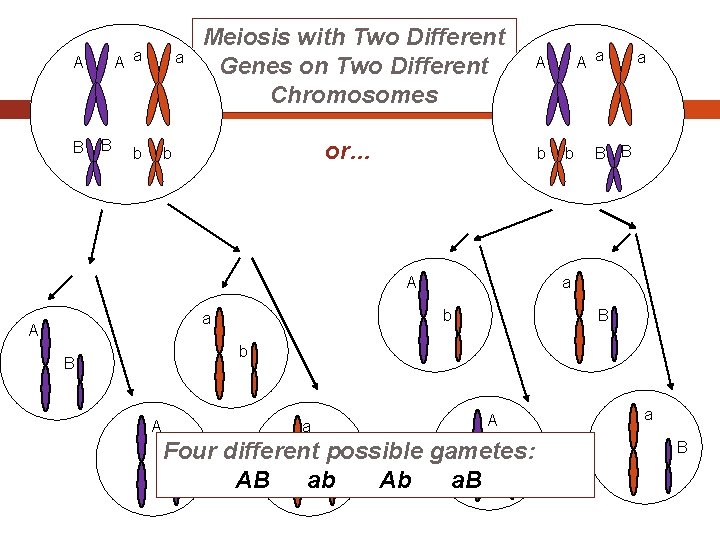
A a A B B a b Meiosis with Two Different Genes on Two Different Chromosomes A or… b b A b a B B a A B b a A a b B A a A b Four different possible gametes: B b AB ab Ab a. B a B
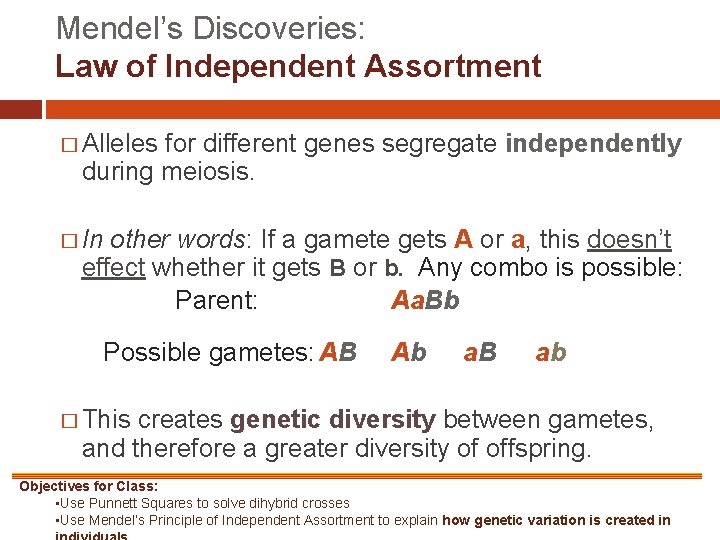
Mendel’s Discoveries: Law of Independent Assortment � Alleles for different genes segregate independently during meiosis. � In other words: If a gamete gets A or a, this doesn’t effect whether it gets B or b. Any combo is possible: Parent: Aa. Bb Possible gametes: AB Ab a. B ab � This creates genetic diversity between gametes, and therefore a greater diversity of offspring. Objectives for Class: • Use Punnett Squares to solve dihybrid crosses • Use Mendel’s Principle of Independent Assortment to explain how genetic variation is created in
Example: Dihybrid Cross (Two Traits) (only write what’s in purple) Tall (T) is dominant over short (t) Black hair (B) is dominant over blond hair (b) Two parents are heterozygous for both traits: (1) Write the Parent Genotypes: Tt. Bb x Tt. Bb (2) What Gametes can they make? TB Tb t. B tb
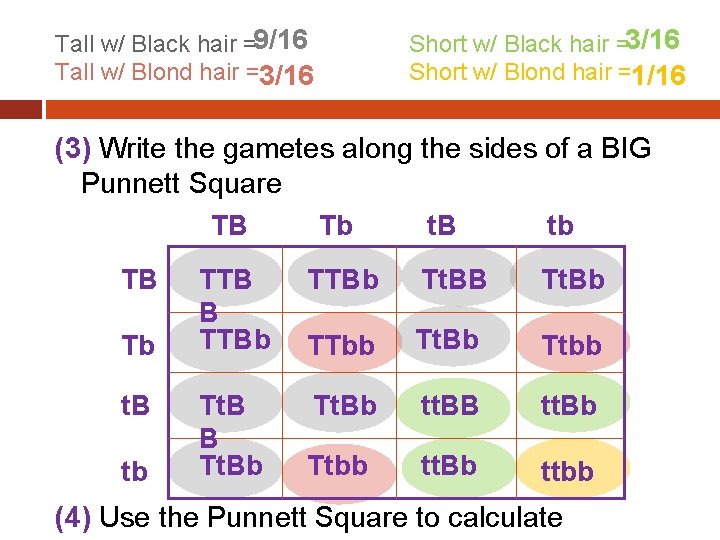
Tall w/ Black hair =9/16 Tall w/ Blond hair =3/16 Short w/ Black hair =3/16 Short w/ Blond hair =1/16 (3) Write the gametes along the sides of a BIG Punnett Square TB Tb t. B tb TTB B TTBb Tt. BB Tt. Bb TTbb Tt. Bb Ttbb Tt. B B Tt. Bb tt. BB tt. Bb Ttbb tt. Bb ttbb (4) Use the Punnett Square to calculate
- Slides: 18