
Genetics The Work of Mendel Regents Biology 2007
Genetics & The Work of Mendel Regents Biology 2007 -2008
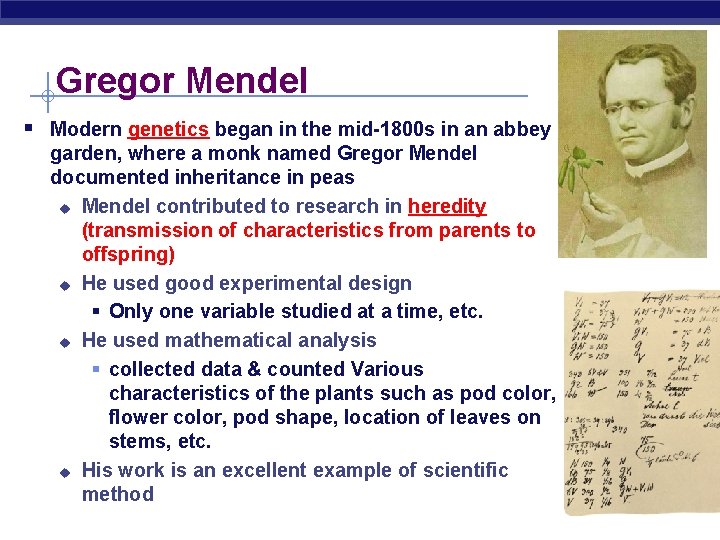
Gregor Mendel § Modern genetics began in the mid-1800 s in an abbey garden, where a monk named Gregor Mendel documented inheritance in peas u Mendel contributed to research in heredity (transmission of characteristics from parents to offspring) u He used good experimental design § Only one variable studied at a time, etc. u He used mathematical analysis § collected data & counted Various characteristics of the plants such as pod color, flower color, pod shape, location of leaves on stems, etc. u His work is an excellent example of scientific method Regents Biology
Chapter 9 Section 1 Mendel’s Legacy Gregor Mendel, continued § Mendel’s Garden Peas Mendel observed many characteristics of pea plants. Eventually these were called traits. u Traits are genetically determined variants (variations) of a characteristic. u Example: § Characteristic = eye color, trait = blue eyes u Each characteristic in the peas occurred in two contrasting traits. § Example, yellow or green peas pods, wrinkled or smooth pea pods, white or purple flowers, etc (see next side for all 7 traits he researched)… Regents Biology
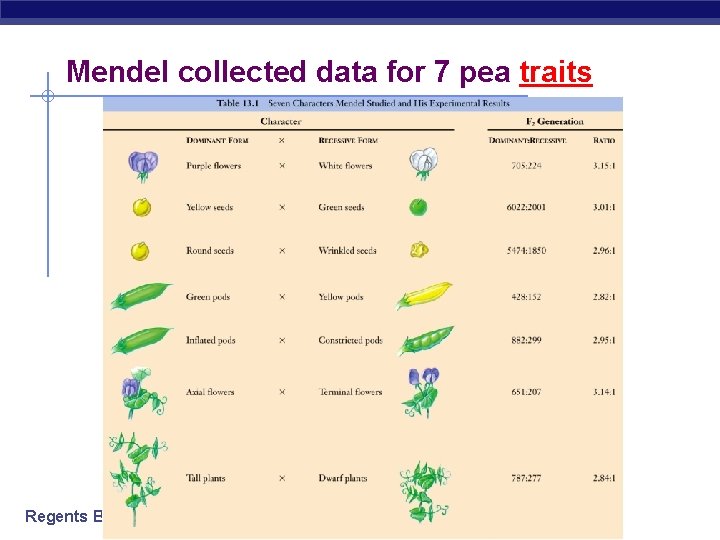
Mendel collected data for 7 pea traits Regents Biology
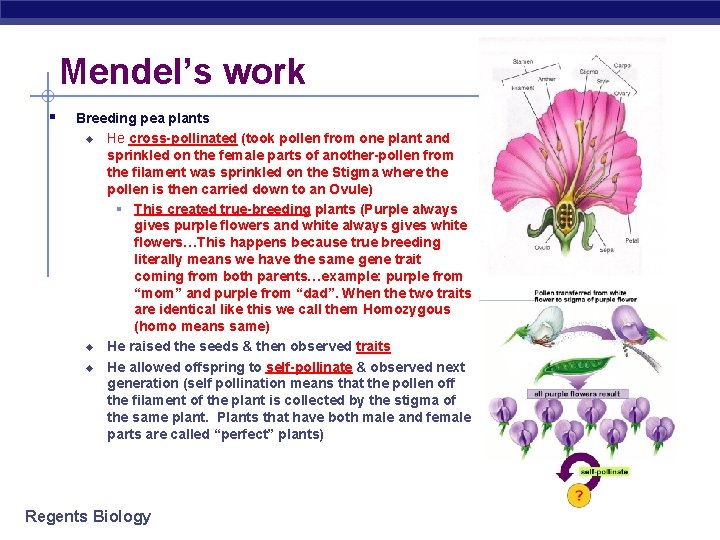
Mendel’s work § Breeding pea plants u He cross-pollinated (took pollen from one plant and sprinkled on the female parts of another-pollen from the filament was sprinkled on the Stigma where the pollen is then carried down to an Ovule) § This created true-breeding plants (Purple always gives purple flowers and white always gives white flowers…This happens because true breeding literally means we have the same gene trait coming from both parents…example: purple from “mom” and purple from “dad”. When the two traits are identical like this we call them Homozygous (homo means same) u He raised the seeds & then observed traits u He allowed offspring to self-pollinate & observed next generation (self pollination means that the pollen off the filament of the plant is collected by the stigma of the same plant. Plants that have both male and female parts are called “perfect” plants) Regents Biology
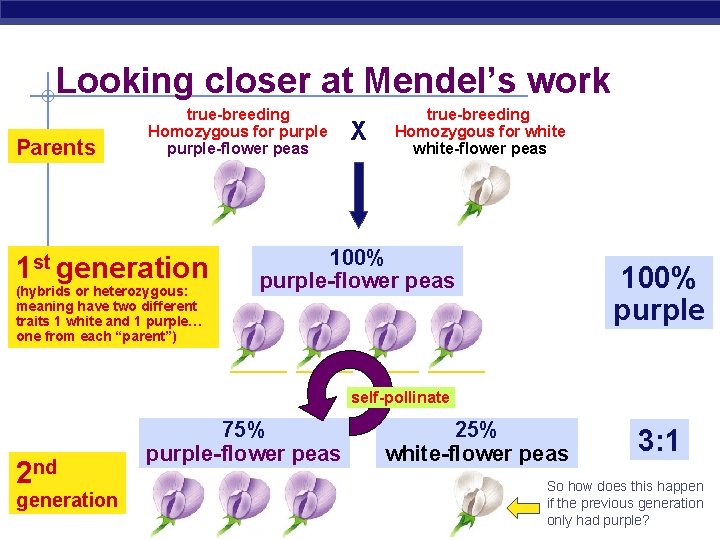
Looking closer at Mendel’s work Parents true-breeding Homozygous for purple-flower peas 1 st generation (hybrids or heterozygous: meaning have two different traits 1 white and 1 purple… one from each “parent”) X true-breeding Homozygous for white-flower peas 100% purple self-pollinate 2 nd generation 75% purple-flower peas Regents Biology 25% white-flower peas 3: 1 So how does this happen if the previous generation only had purple?

Chapter 9 Section 1 Mendel’s Legacy Support for Mendel’s Conclusions § We now know that the factors that Mendel studied are alleles, or alternative forms of a gene. § Example: Gene: eye color alleles: blue, green, or brown. § One allele for each trait is passed from each parent to the offspring. Regents Biology
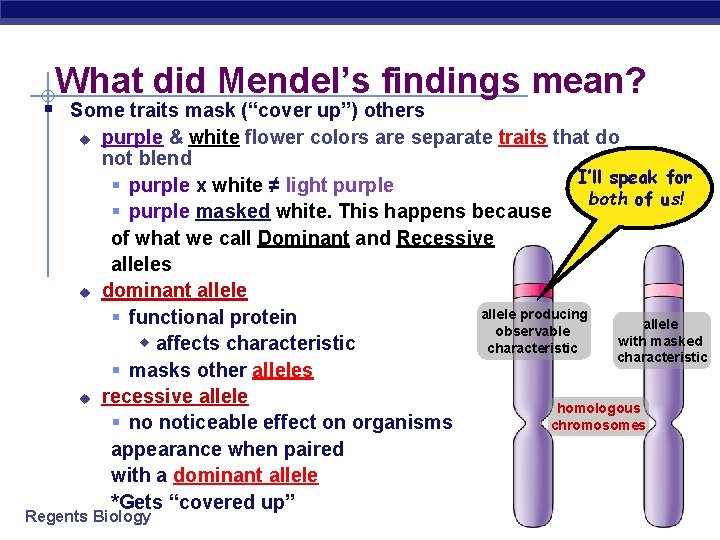
What did Mendel’s findings mean? § Some traits mask (“cover up”) others u u u purple & white flower colors are separate traits that do not blend I’ll speak for § purple x white ≠ light purple both of us! § purple masked white. This happens because of what we call Dominant and Recessive alleles dominant allele producing § functional protein allele observable with masked w affects characteristic § masks other alleles recessive allele homologous § no noticeable effect on organisms chromosomes appearance when paired with a dominant allele *Gets “covered up” Regents Biology
Genotype vs. phenotype § Difference between how an organism “looks” & its genetics u u phenotype § description of an organism’s appearance in terms of traits § We would use words like tall, purple, or other physical descriptions genotype § description of an organism’s genetic makeup (genes) § We will now be using “letter codes” to describe Genotype. (see next slide) Regents Biology
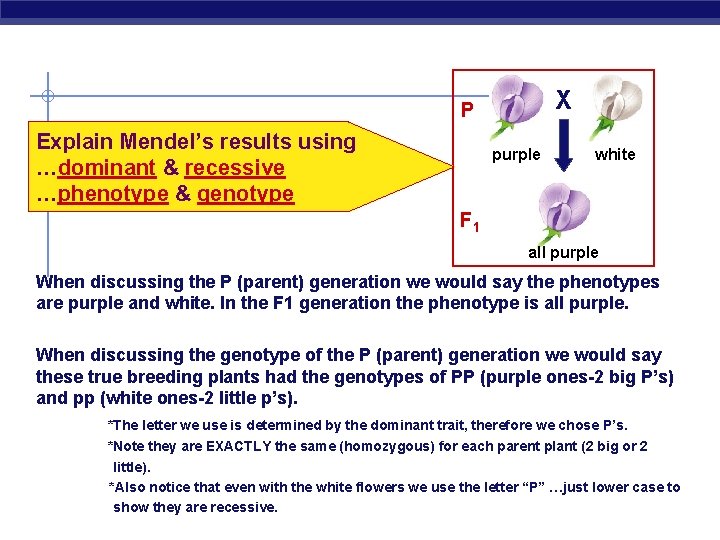
X P Explain Mendel’s results using …dominant & recessive …phenotype & genotype purple white F 1 all purple When discussing the P (parent) generation we would say the phenotypes are purple and white. In the F 1 generation the phenotype is all purple. When discussing the genotype of the P (parent) generation we would say these true breeding plants had the genotypes of PP (purple ones-2 big P’s) and pp (white ones-2 little p’s). *The letter we use is determined by the dominant trait, therefore we chose P’s. *Note they are EXACTLY the same (homozygous) for each parent plant (2 big or 2 little). *Also notice that even with the white flowers we use the letter “P” …just lower case to show they are recessive. Regents Biology
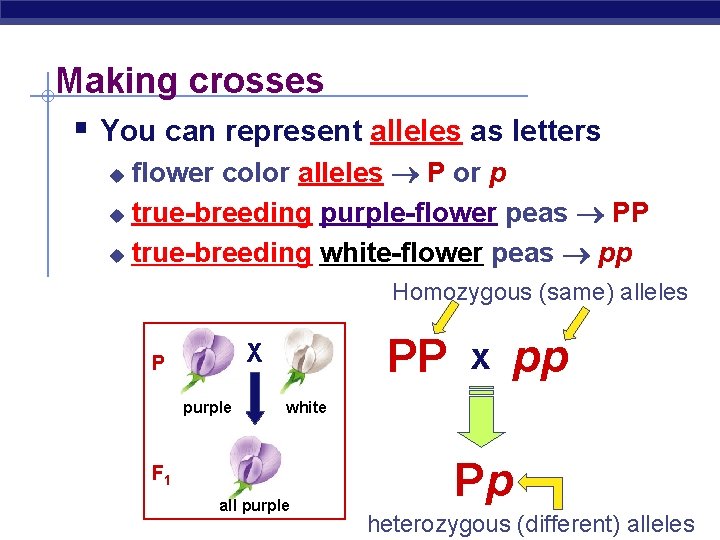
Making crosses § You can represent alleles as letters flower color alleles P or p u true-breeding purple-flower peas PP u true-breeding white-flower peas pp u Homozygous (same) alleles PP x pp X P purple white F 1 Regents Biology all purple Pp heterozygous (different) alleles
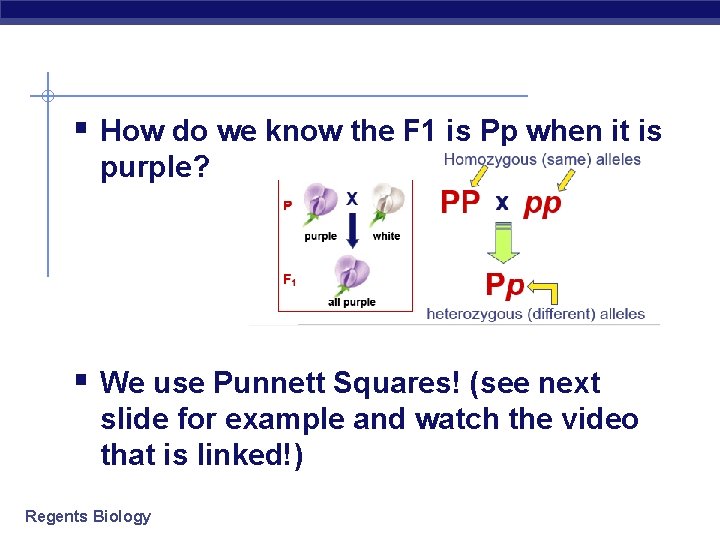
§ How do we know the F 1 is Pp when it is purple? § We use Punnett Squares! (see next slide for example and watch the video that is linked!) Regents Biology
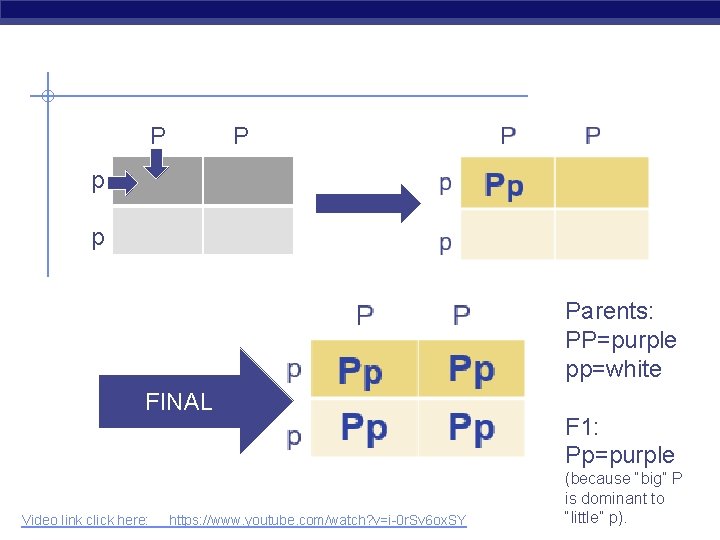
P P p p Parents: PP=purple pp=white FINAL Regents Biology Video link click here: https: //www. youtube. com/watch? v=i-0 r. Sv 6 ox. SY F 1: Pp=purple (because “big” P is dominant to “little” p).
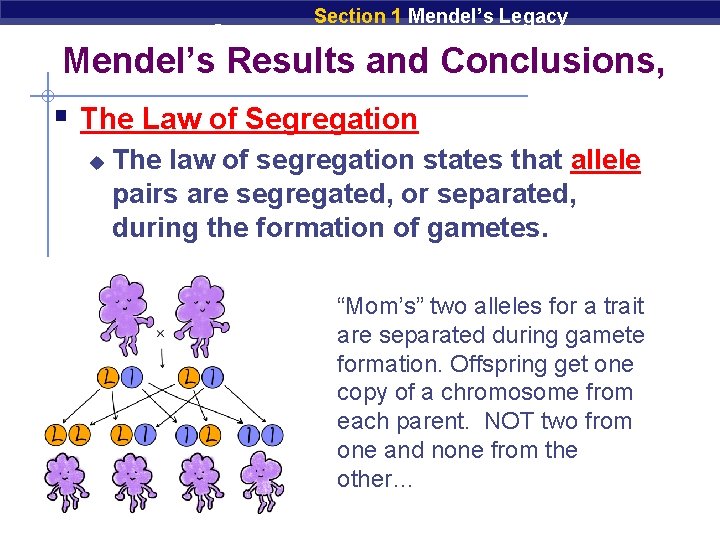
Chapter 9 Section 1 Mendel’s Legacy Mendel’s Results and Conclusions, § The Law of Segregation u The law of segregation states that allele pairs are segregated, or separated, during the formation of gametes. “Mom’s” two alleles for a trait are separated during gamete formation. Offspring get one copy of a chromosome from each parent. NOT two from one and none from the other… Regents Biology
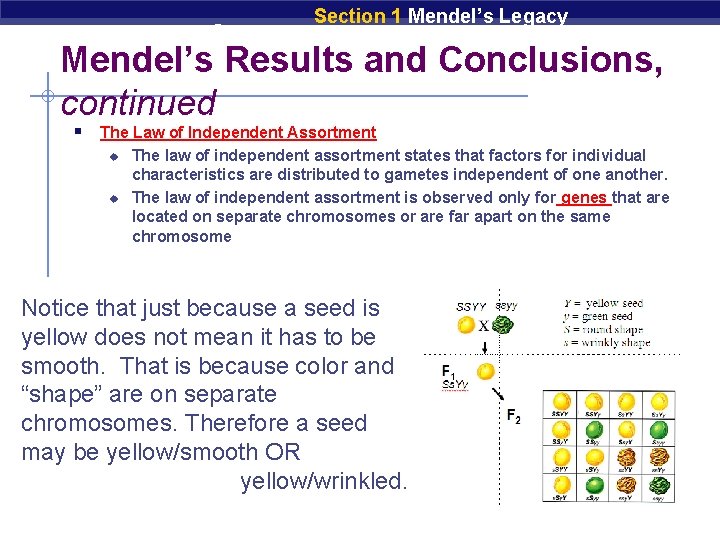
Chapter 9 Section 1 Mendel’s Legacy Mendel’s Results and Conclusions, continued § The Law of Independent Assortment u u The law of independent assortment states that factors for individual characteristics are distributed to gametes independent of one another. The law of independent assortment is observed only for genes that are located on separate chromosomes or are far apart on the same chromosome. Notice that just because a seed is yellow does not mean it has to be smooth. That is because color and “shape” are on separate chromosomes. Therefore a seed may be yellow/smooth OR yellow/wrinkled. Regents Biology
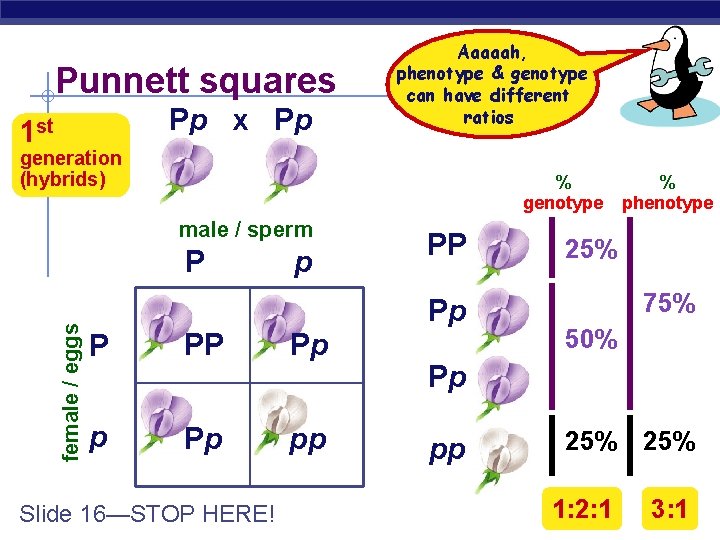
Punnett squares Pp x Pp 1 st Aaaaah, phenotype & genotype can have different ratios generation (hybrids) % genotype male / sperm female / eggs P p PP Pp P PP Pp pp Regents Biology Slide 16—STOP HERE! % phenotype 25% 75% 50% Pp pp 25% 1: 2: 1 3: 1
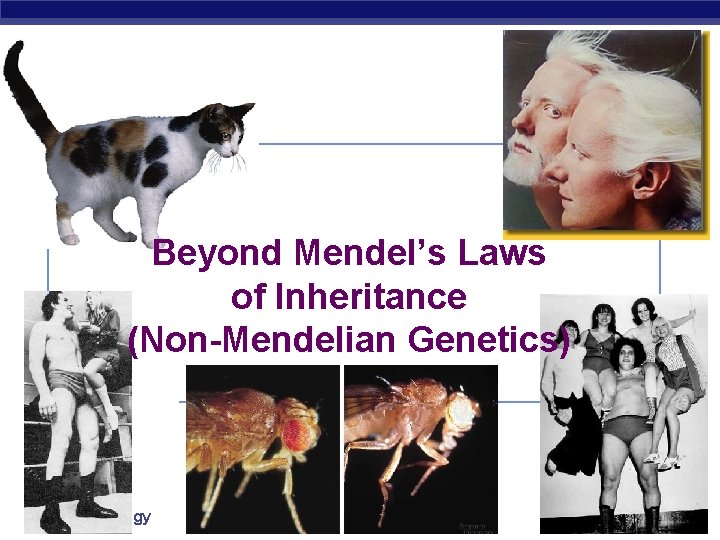
Beyond Mendel’s Laws of Inheritance (Non-Mendelian Genetics) Regents Biology 2007 -2008
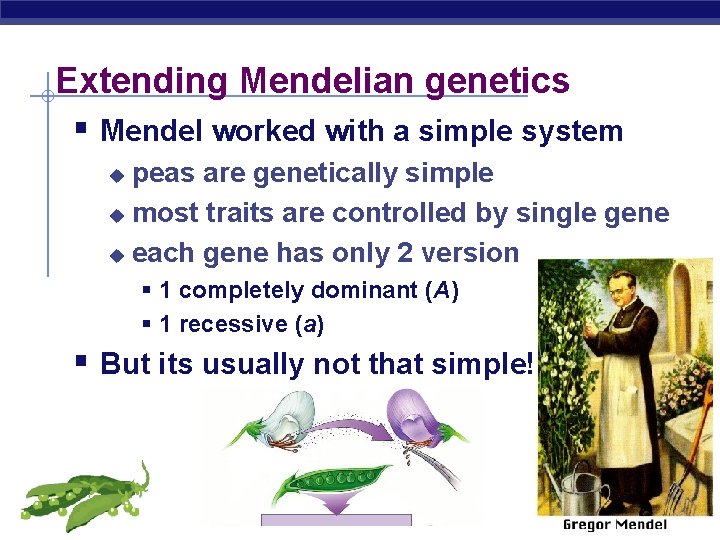
Extending Mendelian genetics § Mendel worked with a simple system peas are genetically simple u most traits are controlled by single gene u each gene has only 2 version u § 1 completely dominant (A) § 1 recessive (a) § But its usually not that simple! Regents Biology
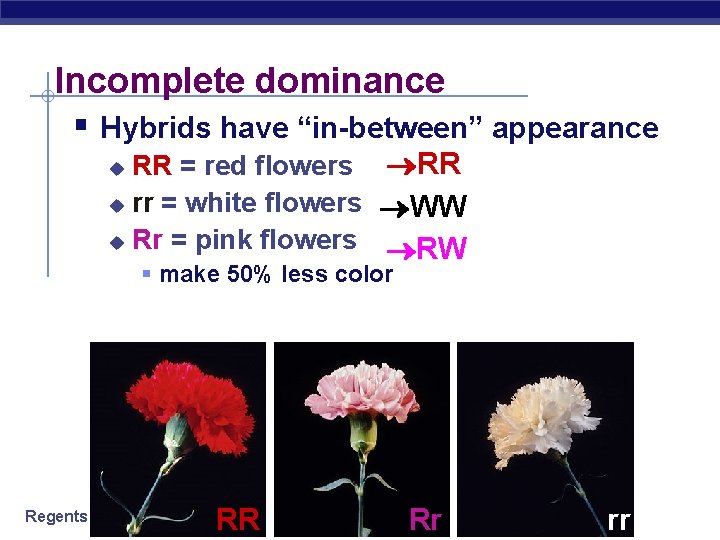
Incomplete dominance § Hybrids have “in-between” appearance RR = red flowers RR u rr = white flowers WW u Rr = pink flowers RW u § make 50% less color Regents Biology RR Rr rr
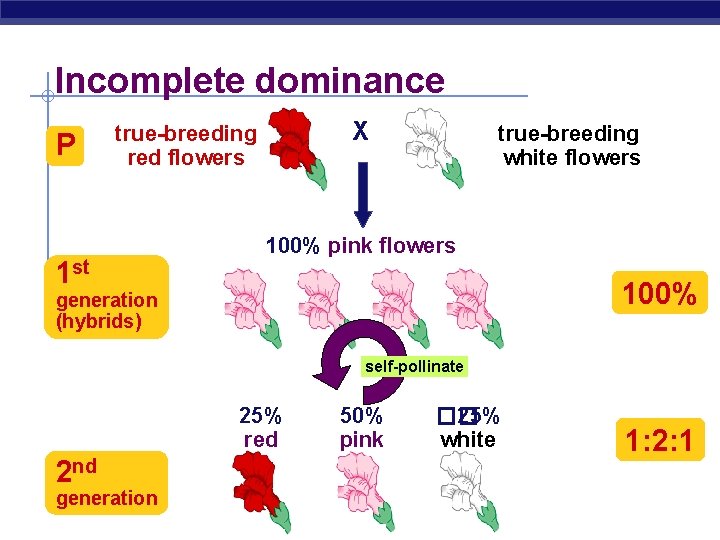
Incomplete dominance P X true-breeding red flowers 1 st true-breeding white flowers 100% pink flowers 100% generation (hybrids) self-pollinate 25% red 2 nd generation Regents Biology 50% pink �� 25% white 1: 2: 1
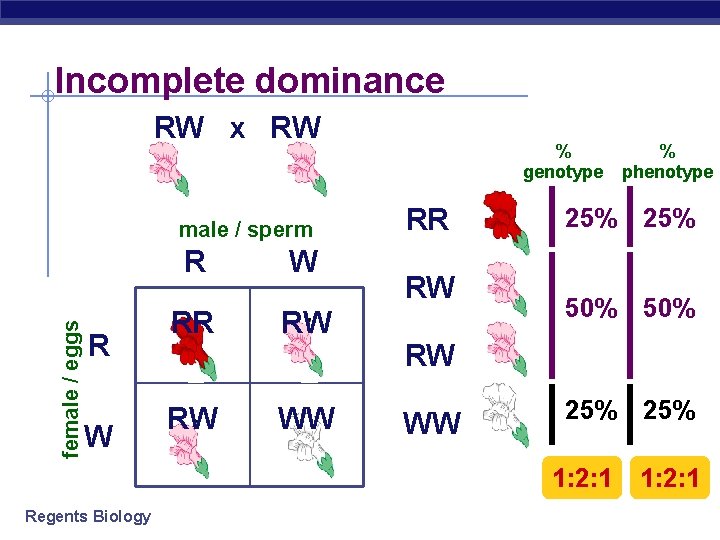
Incomplete dominance RW x RW male / sperm female / eggs R R W W RR RW RW WW % genotype RR RW 25% 50% RW WW 25% 1: 2: 1 Regents Biology % phenotype 1: 2: 1

Codominance § Equal dominance human ABO blood groups u 3 version u § A, B, i § A & B alleles are codominant § both A & B alleles are dominant over i allele u the genes code for different sugars on the surface of red blood cells § “name tag” of red blood cell Regents Biology
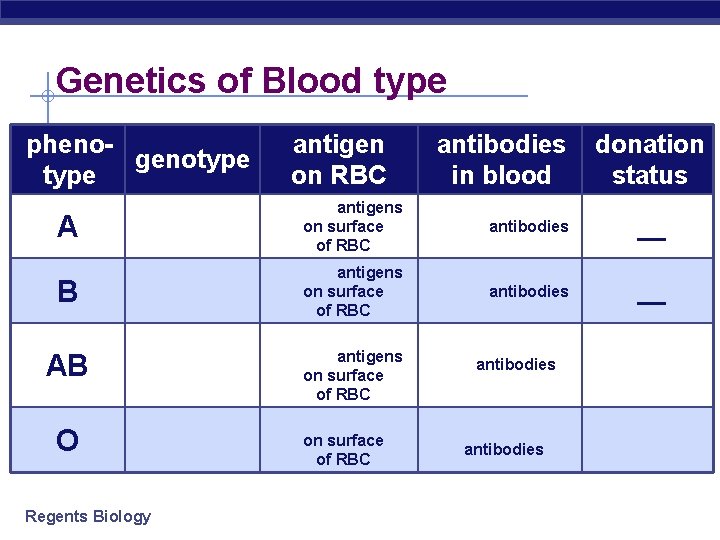
Genetics of Blood type phenogenotype A B antigen on RBC antibodies in blood donation status A A or A i type A antigens on surface of RBC anti-B antibodies __ BB or B i type B antigens on surface of RBC anti-A antibodies __ AB both type A & type B antigens on surface of RBC no antibodies universal recipient ii no antigens on surface of RBC anti-A & anti-B antibodies universal donor AB O Regents Biology
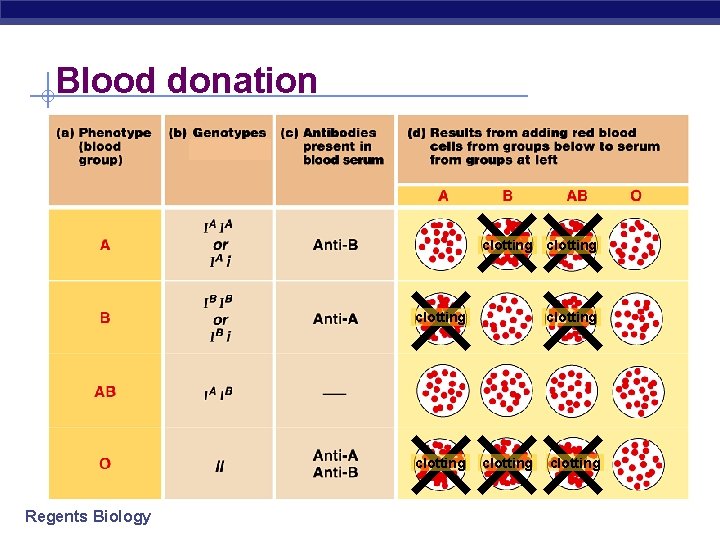
Blood donation clotting Regents Biology clotting

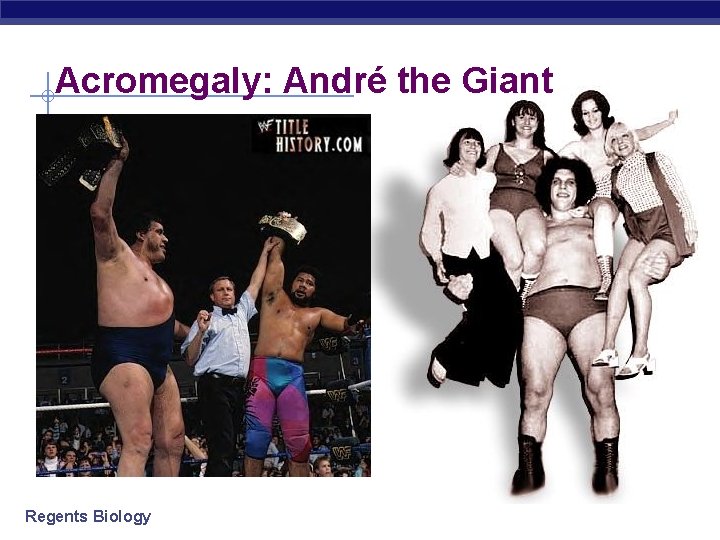
One gene: many effects § The genes that we have covered so far § affect only one trait But most genes are affect many traits u 1 gene affects more than 1 trait § dwarfism (achondroplasia) § gigantism (acromegaly) Regents Biology
Acromegaly: André the Giant Regents Biology

Inheritance pattern of Achondroplasia Aa x aa a a A Aa Aa a aa aa 50%Biology dwarf: 50% Regents normal or 1: 1 Aa x Aa A AA Aa aa 67% dwarf: 33% normal or 2: 1
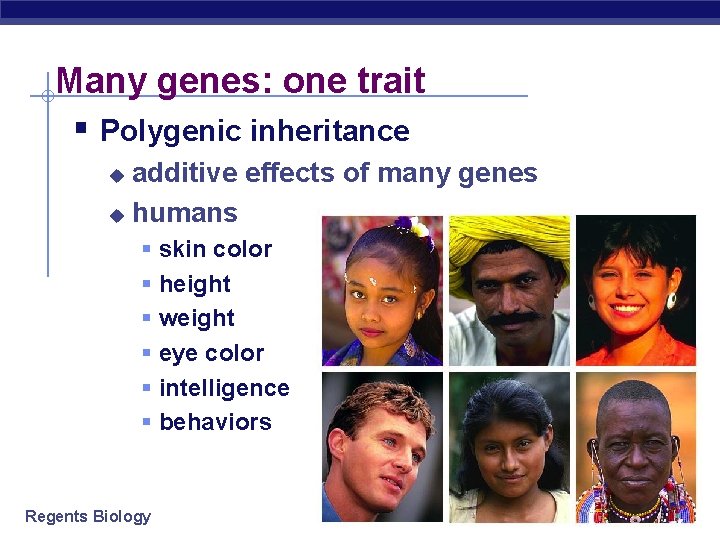
Many genes: one trait § Polygenic inheritance additive effects of many genes u humans u § § § Regents Biology skin color height weight eye color intelligence behaviors
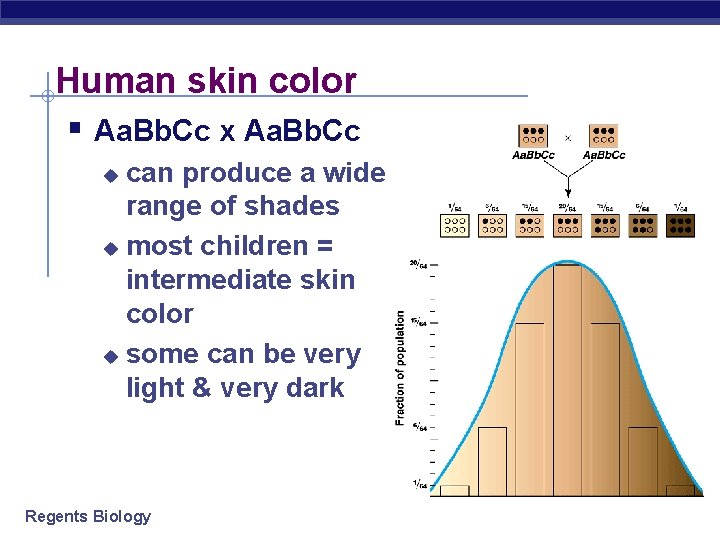
Human skin color § Aa. Bb. Cc x Aa. Bb. Cc can produce a wide range of shades u most children = intermediate skin color u some can be very light & very dark u Regents Biology
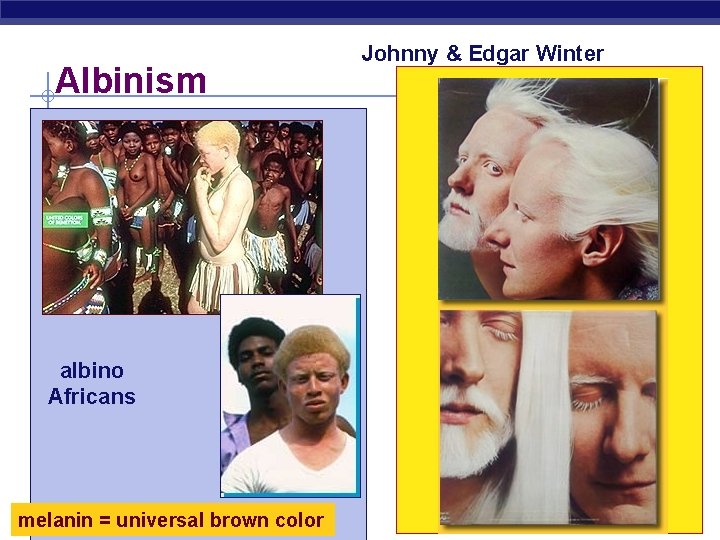
Albinism albino Africans Regents Biology melanin = universal brown color Johnny & Edgar Winter
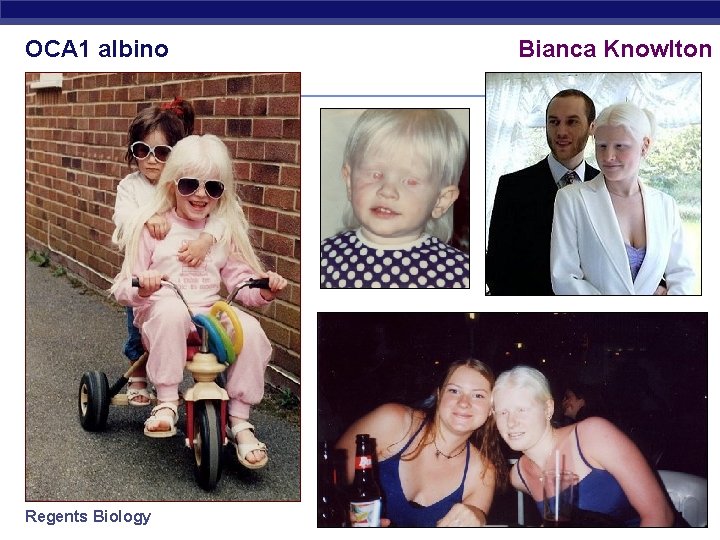
OCA 1 albino Regents Biology Bianca Knowlton
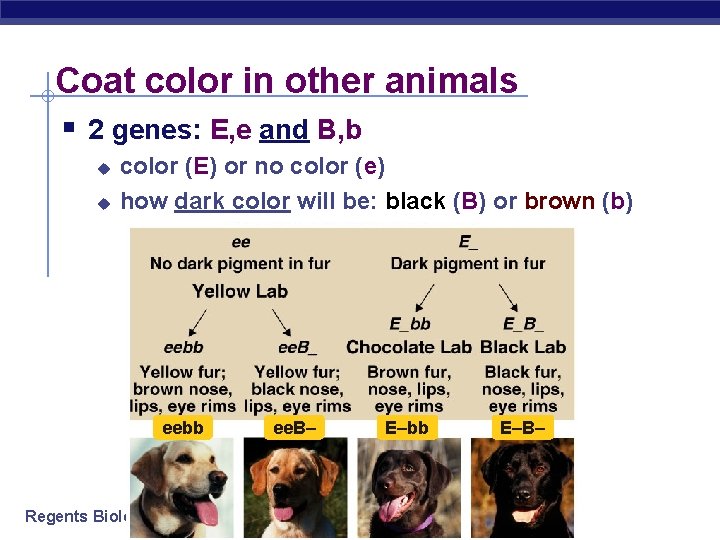
Coat color in other animals § 2 genes: E, e and B, b u u color (E) or no color (e) how dark color will be: black (B) or brown (b) eebb Regents Biology ee. B– E–bb E–B–
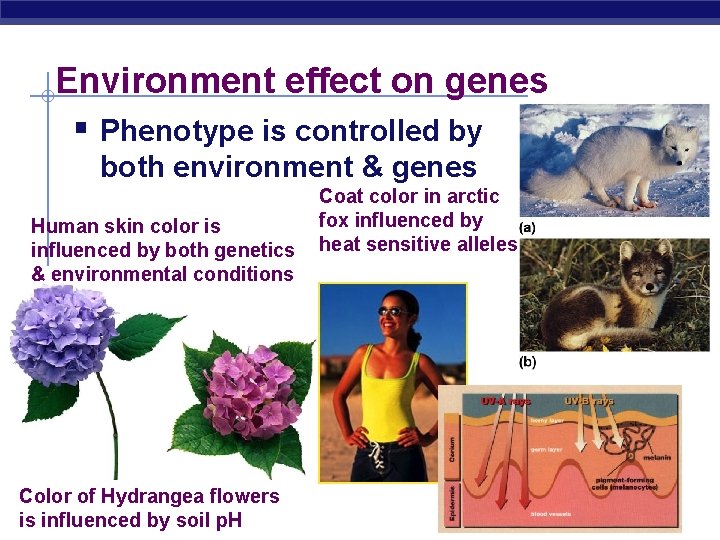
Environment effect on genes § Phenotype is controlled by both environment & genes Human skin color is influenced by both genetics & environmental conditions Color of Hydrangea flowers Regents Biologyby soil p. H is influenced Coat color in arctic fox influenced by heat sensitive alleles
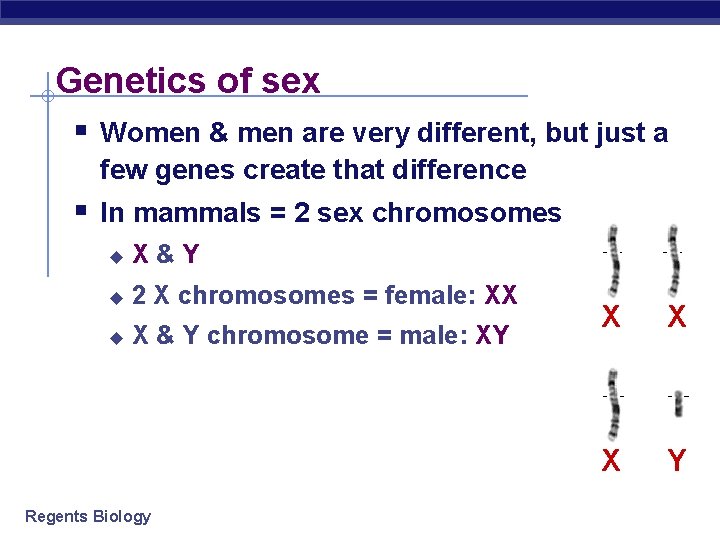
Genetics of sex § Women & men are very different, but just a few genes create that difference § In mammals = 2 sex chromosomes u X&Y u 2 X chromosomes = female: XX u X & Y chromosome = male: XY Regents Biology X X X Y
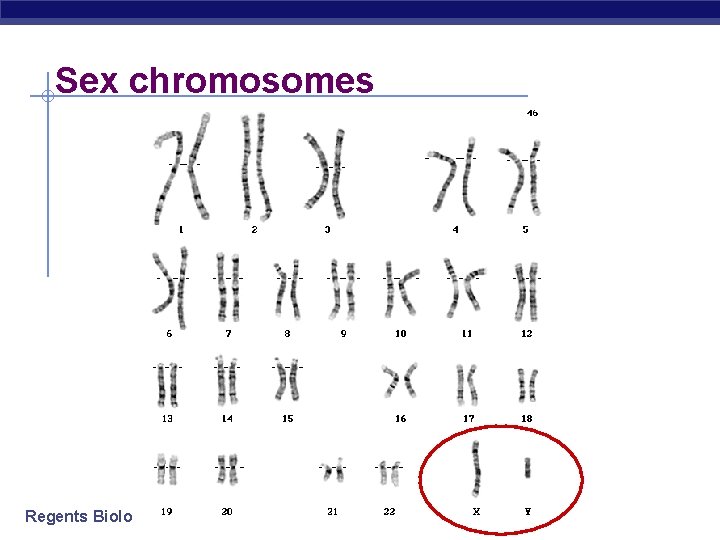
Sex chromosomes Regents Biology
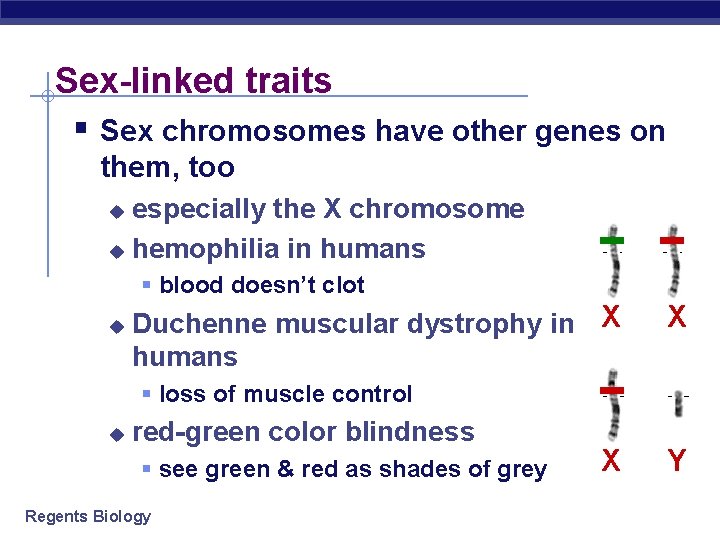
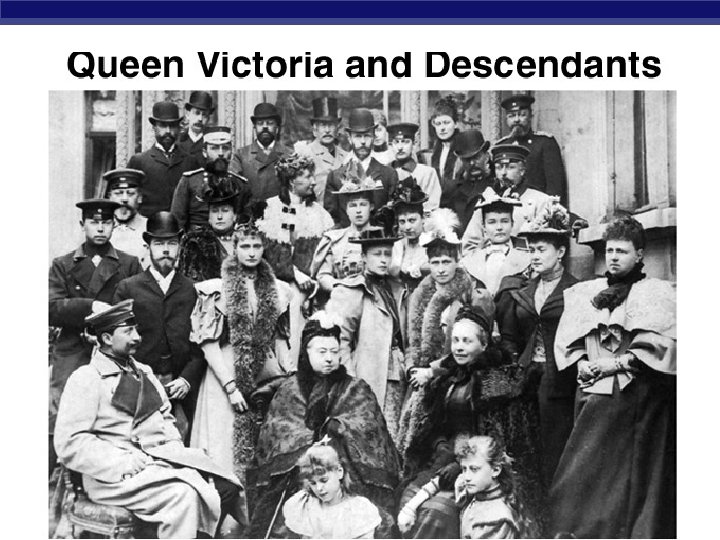
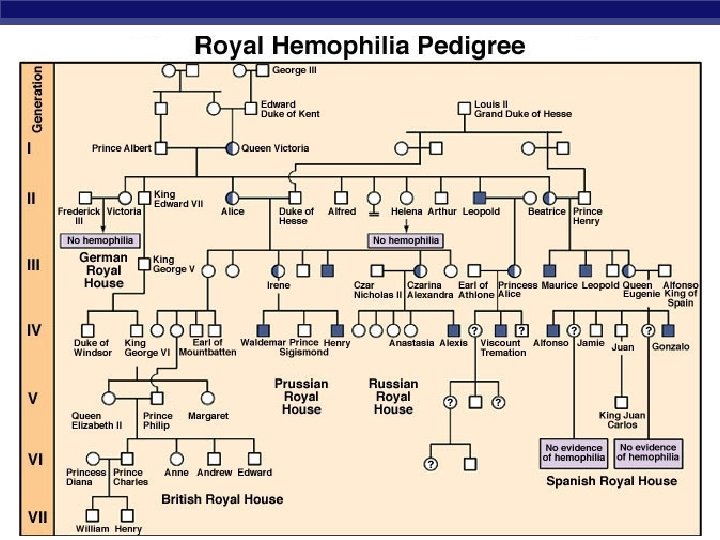
Sex-linked traits § Sex chromosomes have other genes on them, too especially the X chromosome u hemophilia in humans u § blood doesn’t clot u Duchenne muscular dystrophy in X humans X § loss of muscle control u red-green color blindness § see green & red as shades of grey Regents Biology X Y
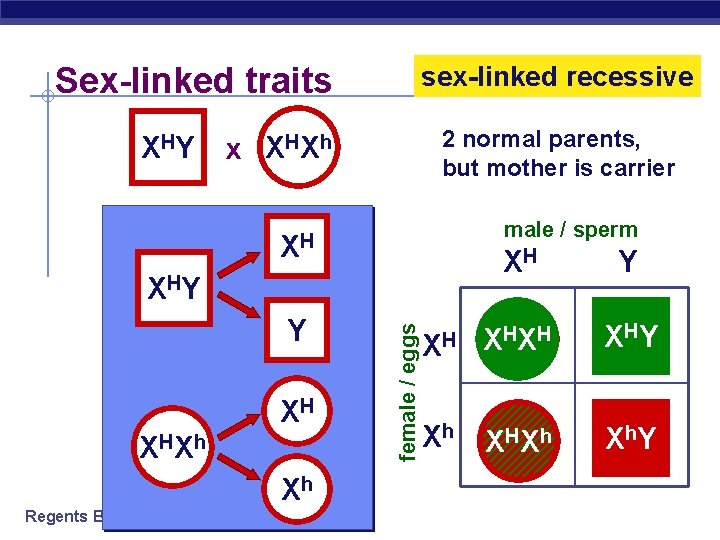
Sex-linked traits sex-linked recessive 2 normal parents, but mother is carrier HY HX h XHH x XHh male / sperm XH XH Y XH X HX H X HY Xh X HX h X h. Y Y XH X HX h Xh Regents Biology female / eggs X HY
Regents Biology
Regents Biology
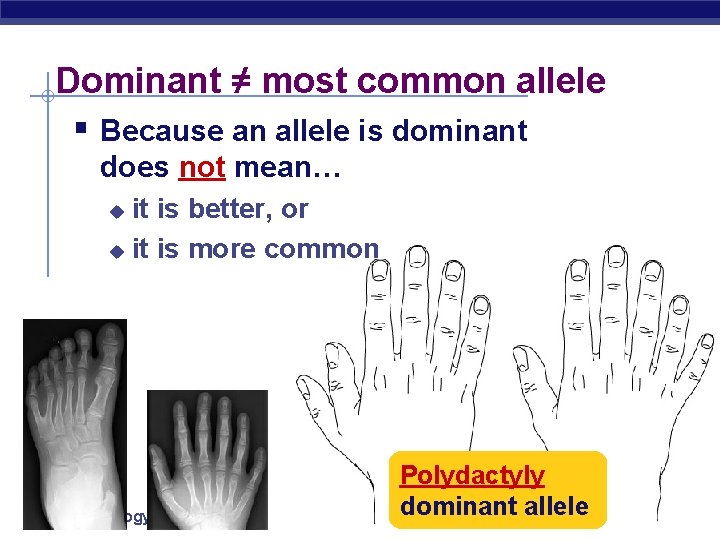
Dominant ≠ most common allele § Because an allele is dominant does not mean… it is better, or u it is more common u Regents Biology Polydactyly dominant allele

Polydactyly individuals are born with extra fingers or toes the allele for >5 fingers/toes is DOMINANT & the allele for 5 digits is recessive allele far more common than dominant only 1 individual out of 500 has more than 5 fingers/toes so 499 out of 500 people are Regents Biology homozygous recessive (aa)
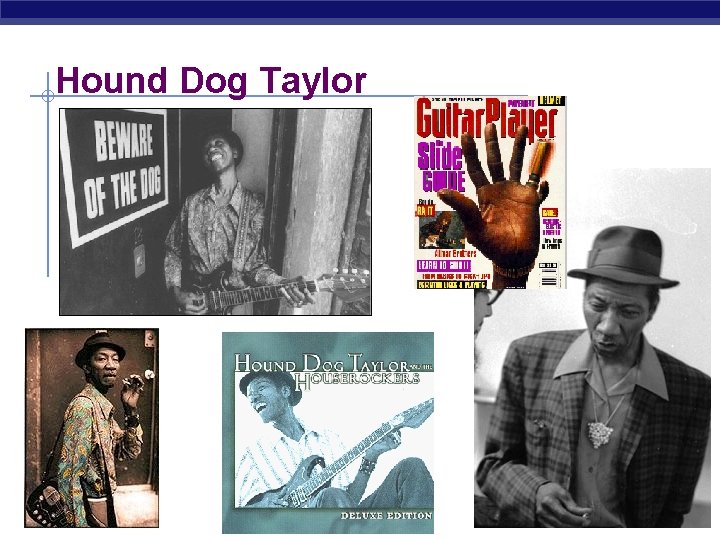
Hound Dog Taylor Regents Biology
- Slides: 42