
GENETICS The study of the pattern of inheritance
- Slides: 23
GENETICS The study of the pattern of inheritance
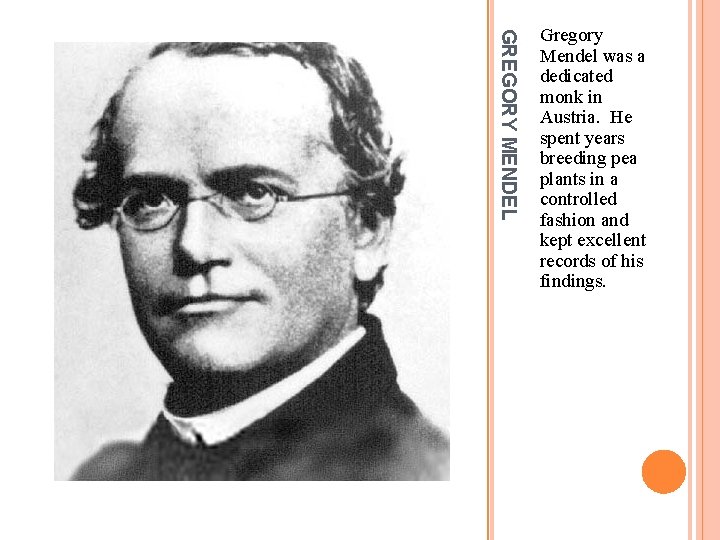
GREGORY MENDEL Gregory Mendel was a dedicated monk in Austria. He spent years breeding pea plants in a controlled fashion and kept excellent records of his findings.
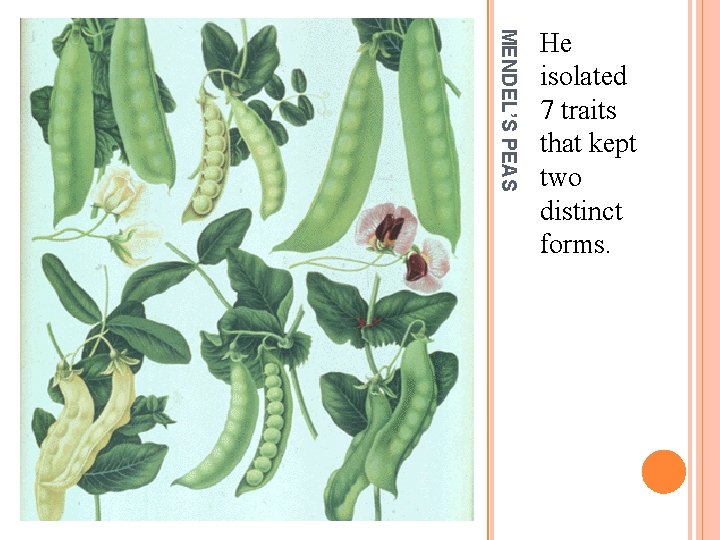
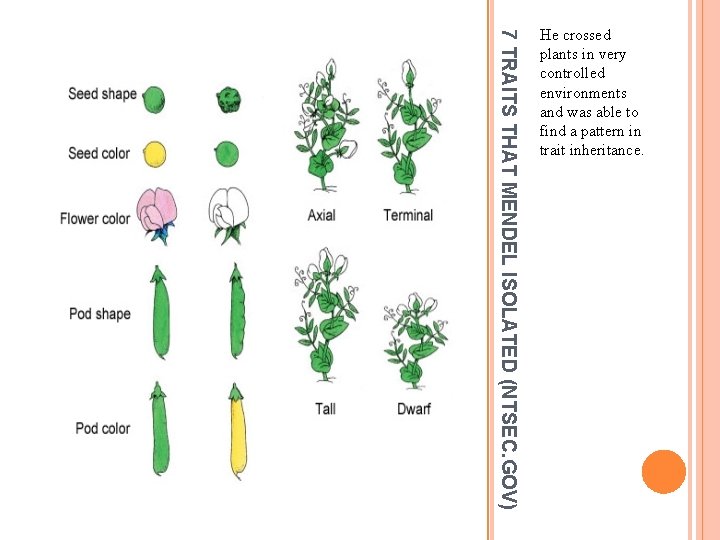
MENDEL’S PEAS He isolated 7 traits that kept two distinct forms.
7 TRAITS THAT MENDEL ISOLATED (NTSEC. GOV) He crossed plants in very controlled environments and was able to find a pattern in trait inheritance.
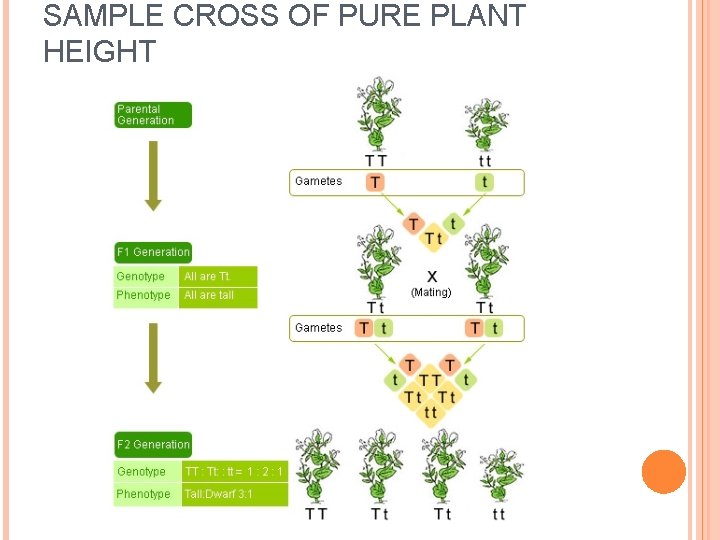
SAMPLE CROSS OF PURE PLANT HEIGHT
GENE PAIRS Mendel saw that these results could be explained if an inherited trait such as plant height was governed by two factors, which he called… GENES.
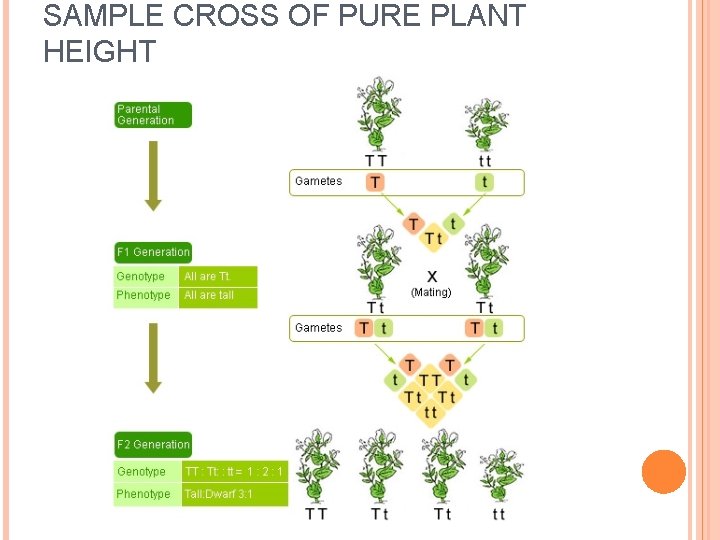
GENE PAIRS A plant receives two genes for each of its traits, one from each parent. In turn, each plant passed on one of its two genes at random to each offspring. One quarter of the offspring would have two tall genes, a half would have the tall and short gene, and one quarter would have two short genes.
SAMPLE CROSS OF PURE PLANT HEIGHT
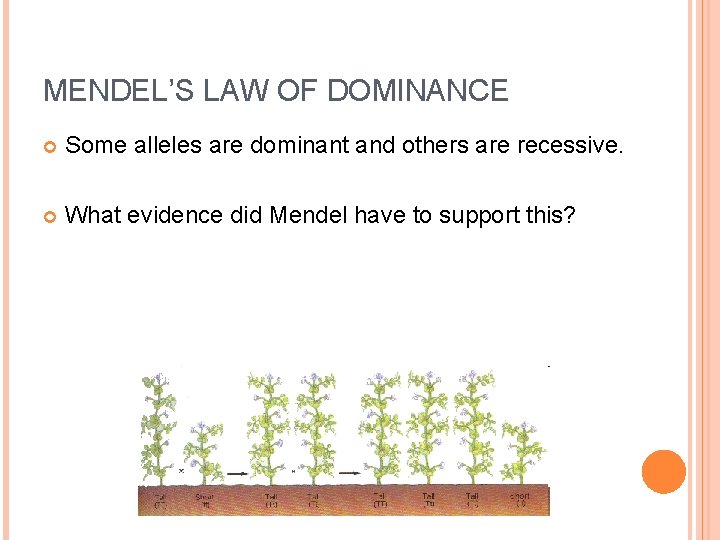
MENDEL’S LAW OF DOMINANCE Some alleles are dominant and others are recessive. What evidence did Mendel have to support this?
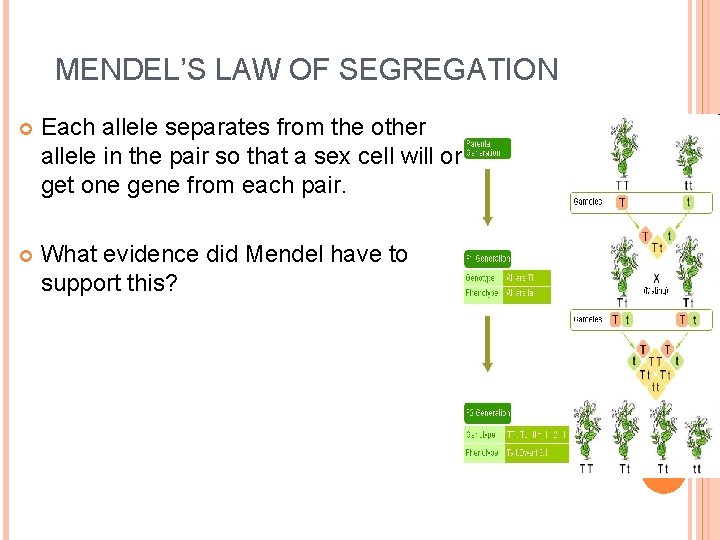
MENDEL’S LAW OF SEGREGATION Each allele separates from the other allele in the pair so that a sex cell will only get one gene from each pair. What evidence did Mendel have to support this?
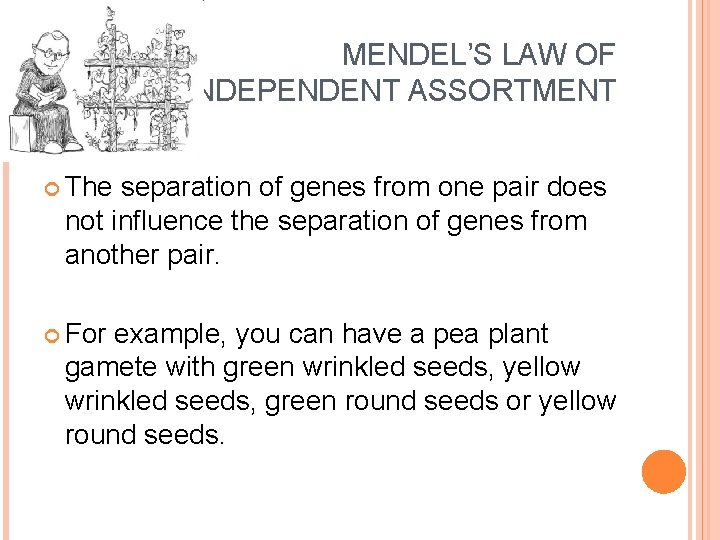
MENDEL’S LAW OF INDEPENDENT ASSORTMENT The separation of genes from one pair does not influence the separation of genes from another pair. For example, you can have a pea plant gamete with green wrinkled seeds, yellow wrinkled seeds, green round seeds or yellow round seeds.
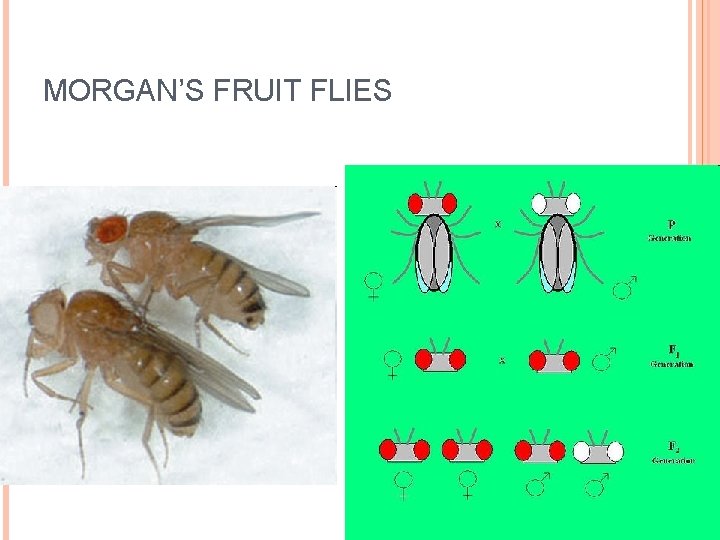
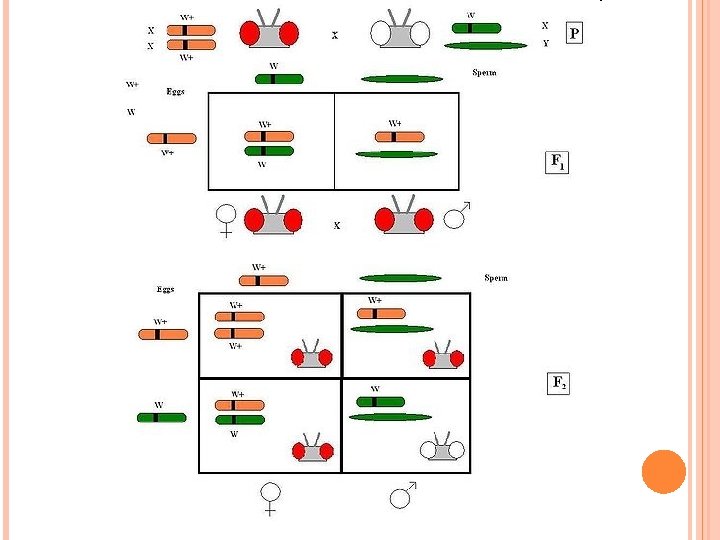
MORGAN’S FRUIT FLIES
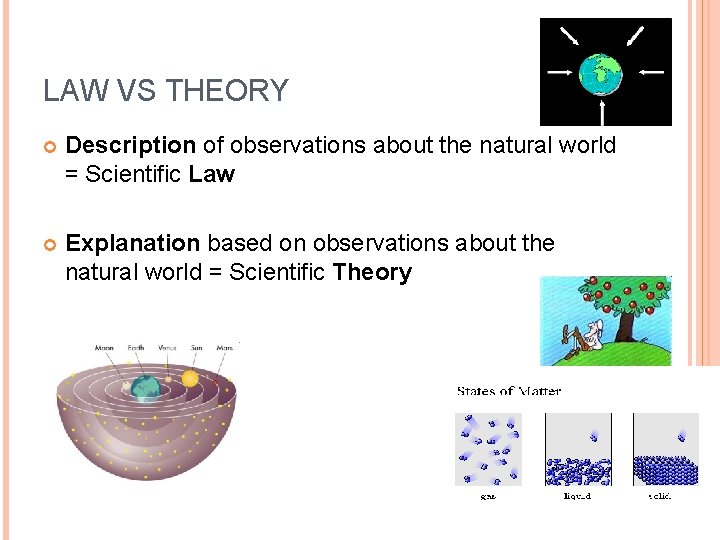
LAW VS THEORY Description of observations about the natural world = Scientific Law Explanation based on observations about the natural world = Scientific Theory
SCIENTIFIC LAW OR SCIENTIFIC THEORY Which changes? Which is more scientific? Which is proven?
LAW VS. THEORY Both can change Neither is more scientific Law = description Theory = explanation Neither is proven
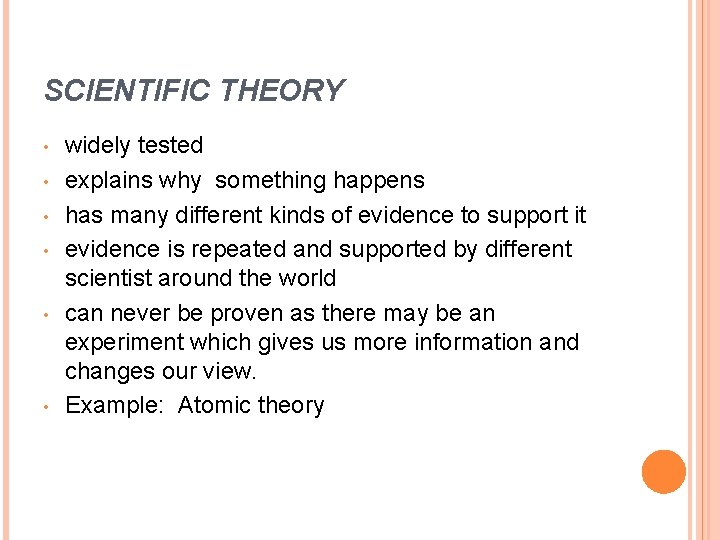
SCIENTIFIC THEORY • • • widely tested explains why something happens has many different kinds of evidence to support it evidence is repeated and supported by different scientist around the world can never be proven as there may be an experiment which gives us more information and changes our view. Example: Atomic theory
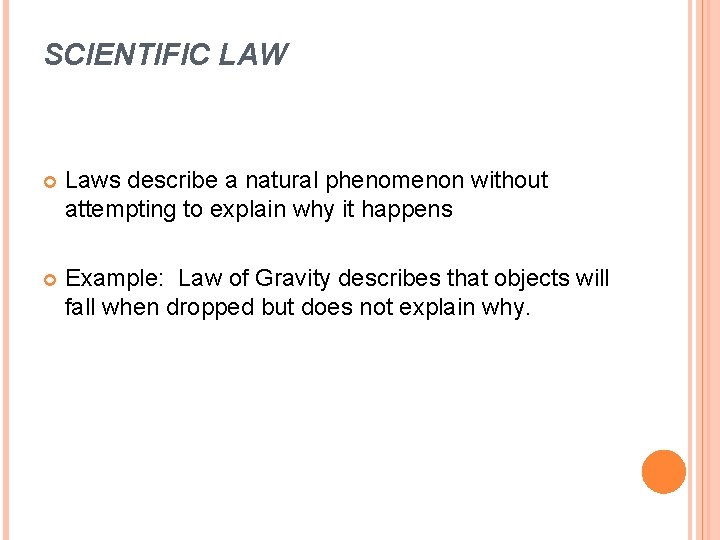
SCIENTIFIC LAW Laws describe a natural phenomenon without attempting to explain why it happens Example: Law of Gravity describes that objects will fall when dropped but does not explain why.
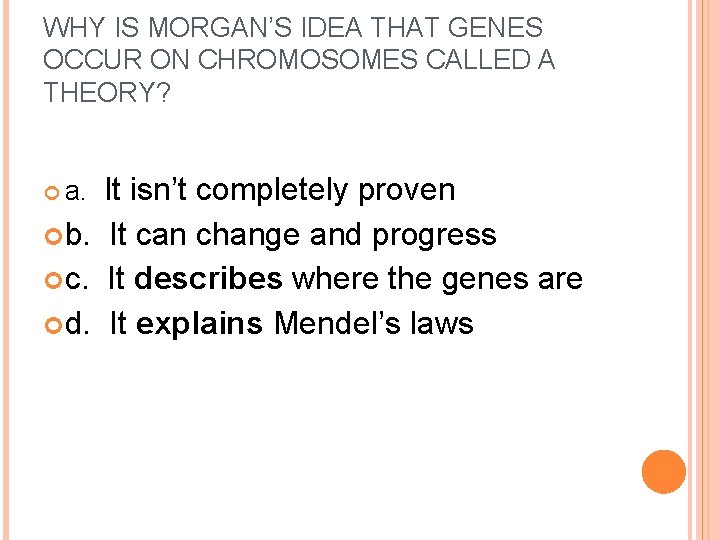
WHY IS MORGAN’S IDEA THAT GENES OCCUR ON CHROMOSOMES CALLED A THEORY? It isn’t completely proven b. It can change and progress c. It describes where the genes are d. It explains Mendel’s laws a.
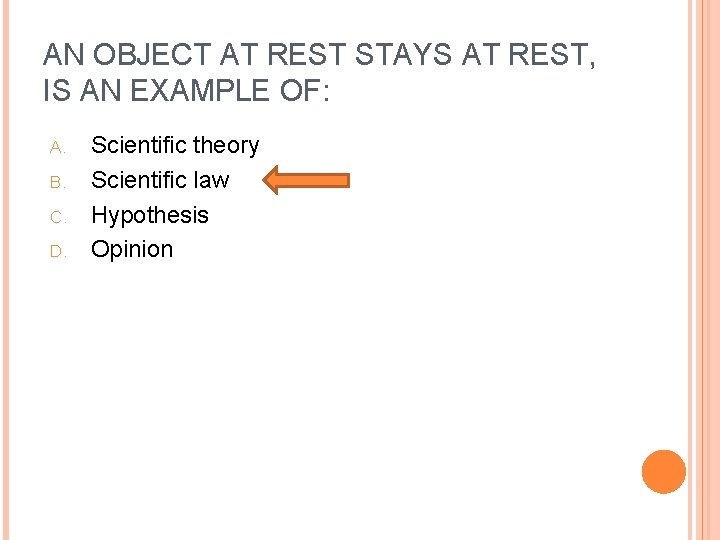
AN OBJECT AT REST STAYS AT REST, IS AN EXAMPLE OF: A. B. C. D. Scientific theory Scientific law Hypothesis Opinion
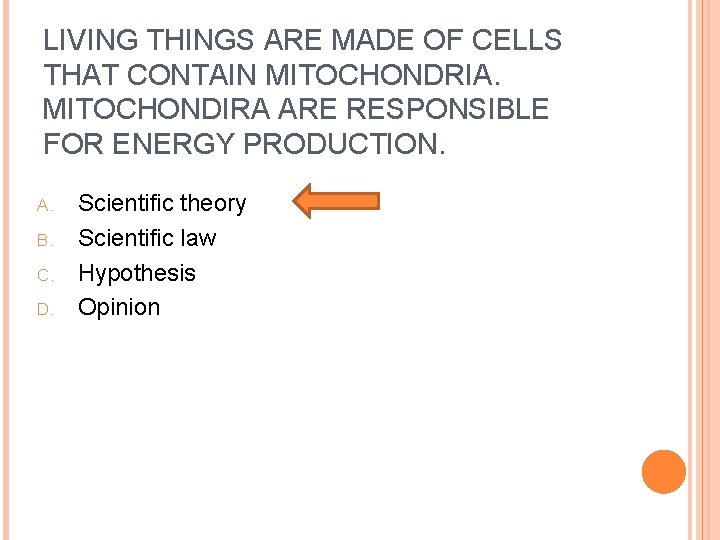
LIVING THINGS ARE MADE OF CELLS THAT CONTAIN MITOCHONDRIA. MITOCHONDIRA ARE RESPONSIBLE FOR ENERGY PRODUCTION. A. B. C. D. Scientific theory Scientific law Hypothesis Opinion
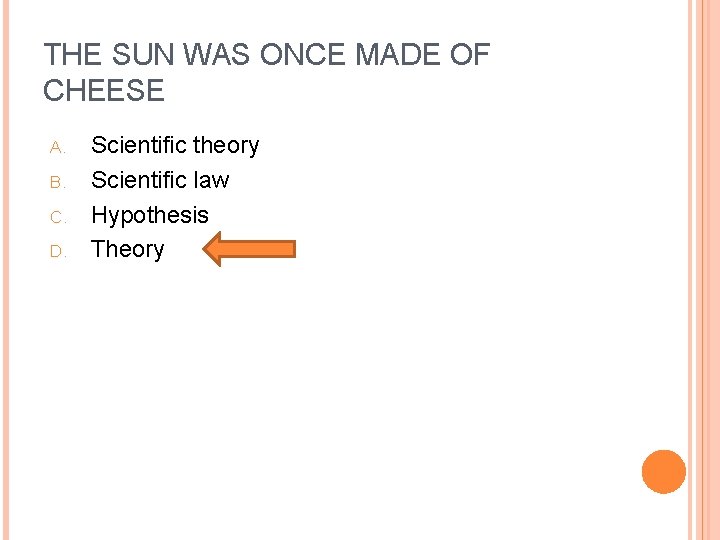
THE SUN WAS ONCE MADE OF CHEESE A. B. C. D. Scientific theory Scientific law Hypothesis Theory
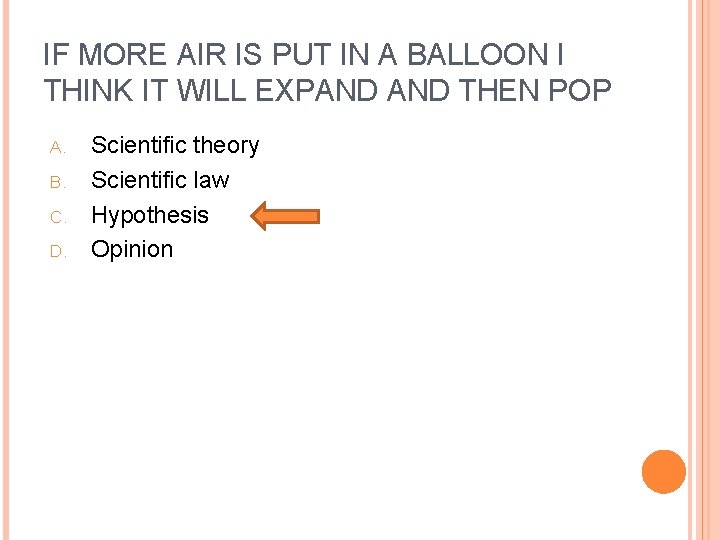
IF MORE AIR IS PUT IN A BALLOON I THINK IT WILL EXPAND THEN POP A. B. C. D. Scientific theory Scientific law Hypothesis Opinion