
Genetics The source of variability for evolution How
Genetics: The source of variability for evolution How population survival strategies determine human biology and provides the basic background for human variation
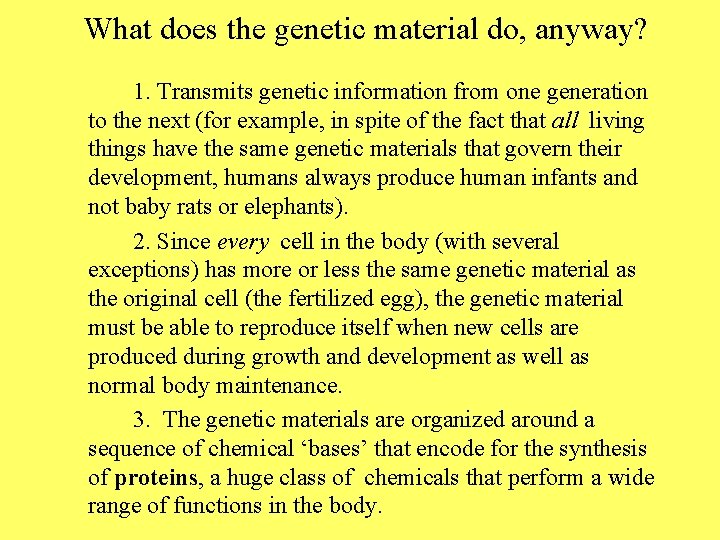
What does the genetic material do, anyway? 1. Transmits genetic information from one generation to the next (for example, in spite of the fact that all living things have the same genetic materials that govern their development, humans always produce human infants and not baby rats or elephants). 2. Since every cell in the body (with several exceptions) has more or less the same genetic material as the original cell (the fertilized egg), the genetic material must be able to reproduce itself when new cells are produced during growth and development as well as normal body maintenance. 3. The genetic materials are organized around a sequence of chemical ‘bases’ that encode for the synthesis of proteins, a huge class of chemicals that perform a wide range of functions in the body.
A major function of the DNA: coding for the synthesis of proteins • While the functions of the genetic material located on the chromosomes are numerous and complicated, for our purposes, we can examine the major function: that of the synthesis of proteins. • Proteins are a very large class of molecules which perform a huge array of functions in living things. It has been estimated that there are over 60, 000 different proteins in the human body, only about 1500 of which have been identified. • Proteins differ from one another, and thus perform differently, based on their organization and makeup.
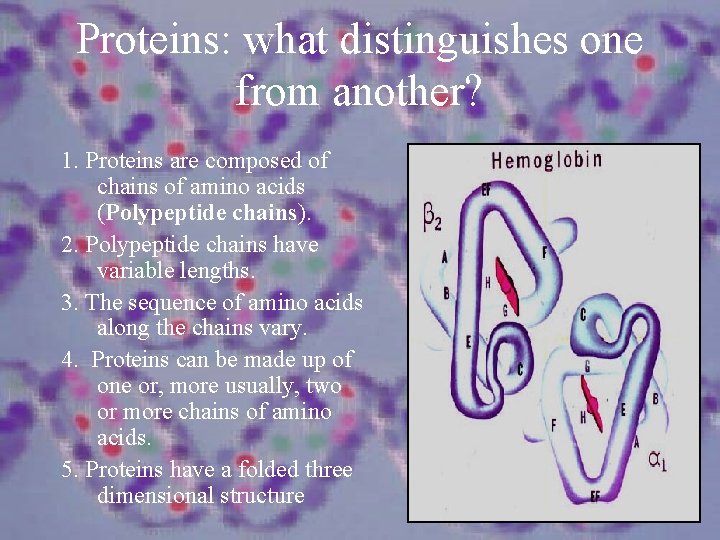
Proteins: what distinguishes one from another? 1. Proteins are composed of chains of amino acids (Polypeptide chains). 2. Polypeptide chains have variable lengths. 3. The sequence of amino acids along the chains vary. 4. Proteins can be made up of one or, more usually, two or more chains of amino acids. 5. Proteins have a folded three dimensional structure
Amino Acids: What are they and where do they come from? Glycine (gly) (glu) Alanine (ala) Valine (val) Leucine (leu) Threonine (thr) Lysine (lys) Glutamine (gln) Methionine (met) Tryptophan(trp) Histidine (his) (phe) • Chemical group Glutamic acid based on their composition: an Aspartic acid (asp) “amine” and an Isoleucine (Ile) “acid” Serine (ser) • Of the 20 common Proline (pro) amino acids: Arginine (arg) Aspargine (asn) Cysteine (cys) Tyrosine (tyr) Phenylalanine – 12 the body can make – 8 (or 9) must be obtained from foods (these are the essential amino acids)
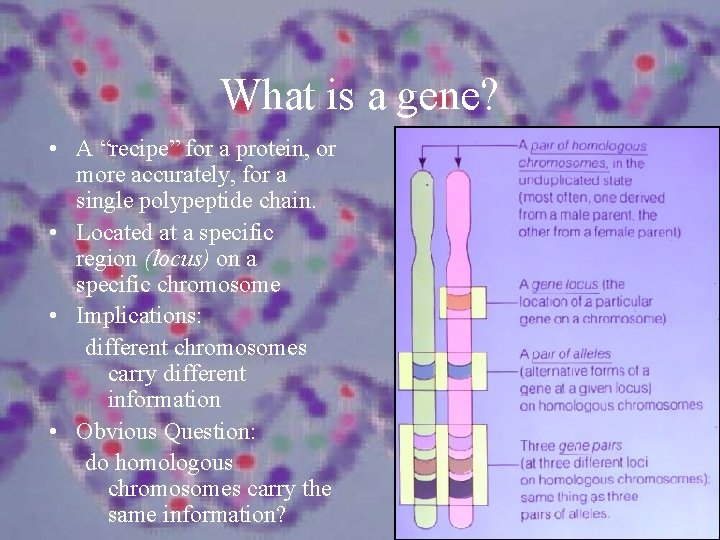
What is a gene? • A “recipe” for a protein, or more accurately, for a single polypeptide chain. • Located at a specific region (locus) on a specific chromosome • Implications: different chromosomes carry different information • Obvious Question: do homologous chromosomes carry the same information?
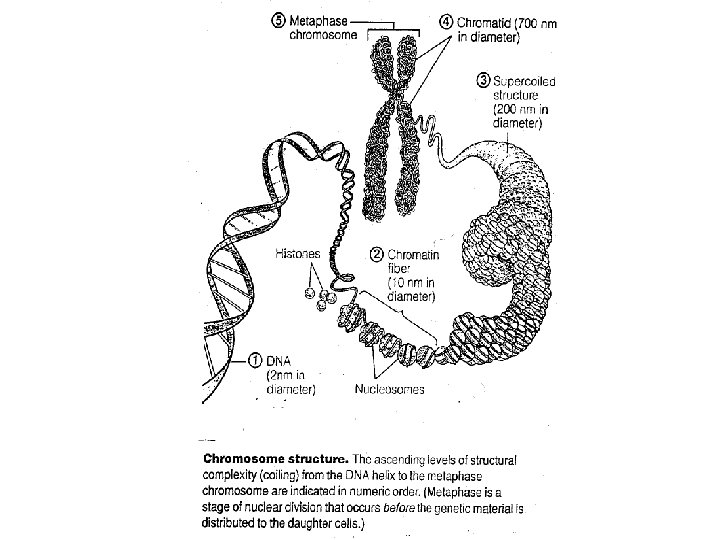
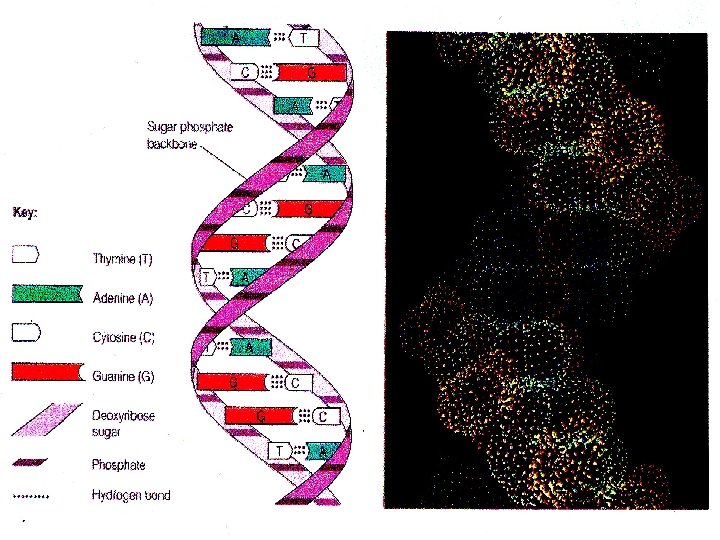
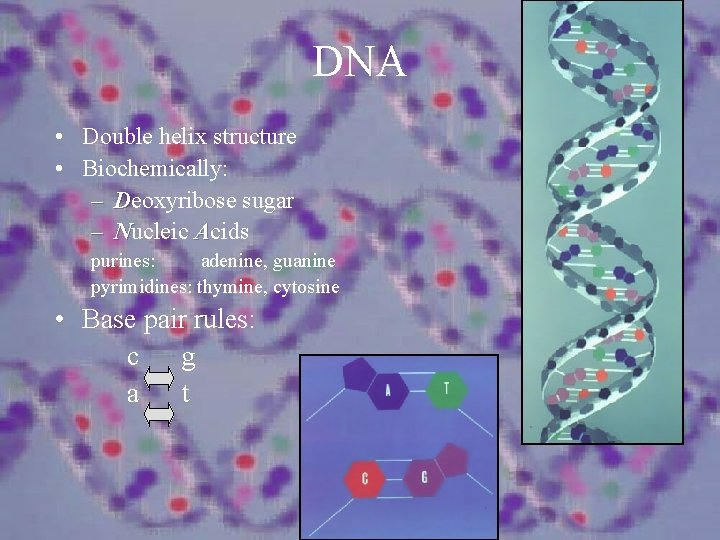
DNA • Double helix structure • Biochemically: – Deoxyribose sugar – Nucleic Acids purines: adenine, guanine pyrimidines: thymine, cytosine • Base pair rules: c g a t
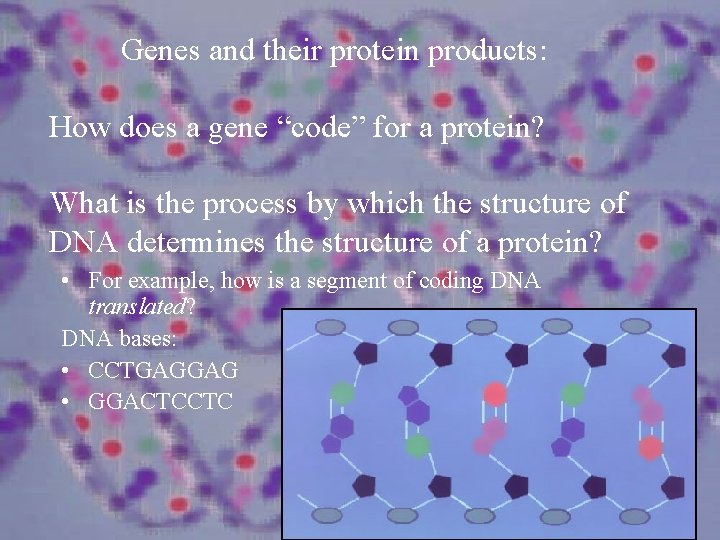
Genes and their protein products: How does a gene “code” for a protein? What is the process by which the structure of DNA determines the structure of a protein? • For example, how is a segment of coding DNA translated? DNA bases: • CCTGAGGAG • GGACTCCTC
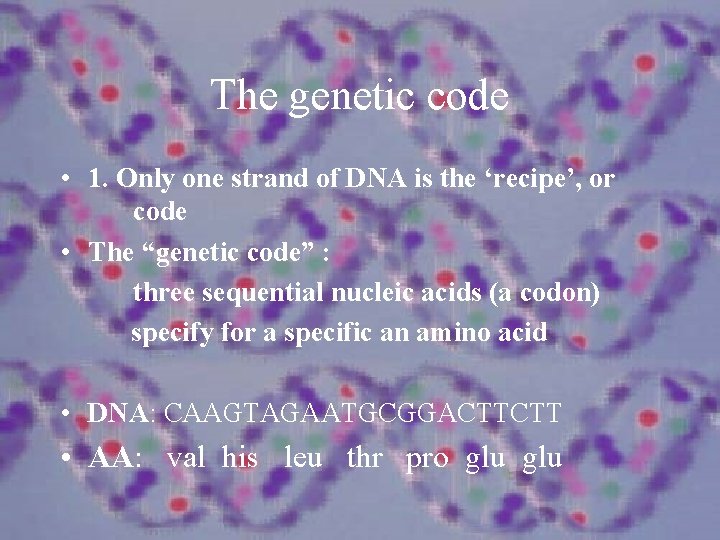
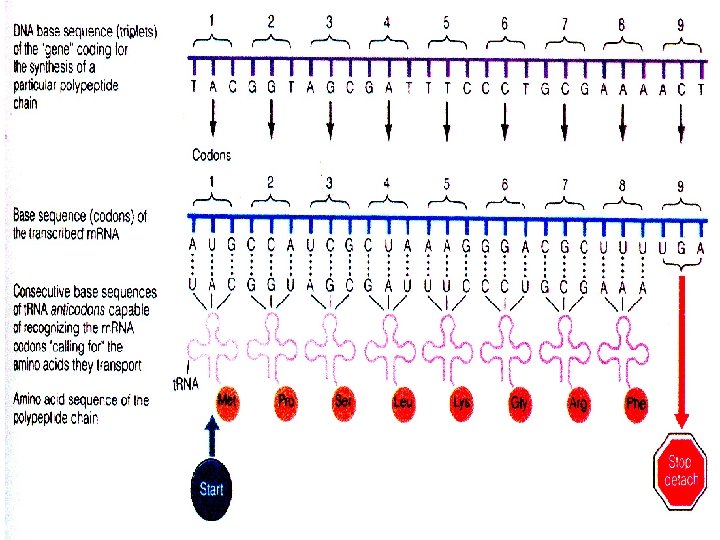
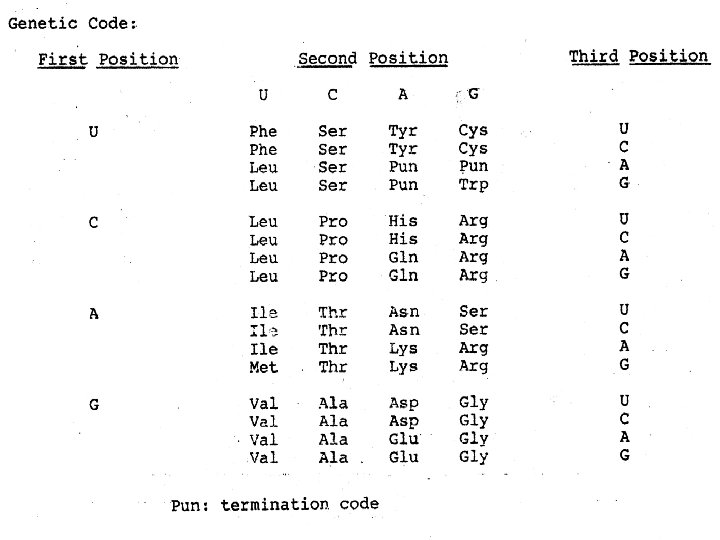
The genetic code • 1. Only one strand of DNA is the ‘recipe’, or code • The “genetic code” : three sequential nucleic acids (a codon) specify for a specific an amino acid • DNA: CAAGTAGAATGCGGACTTCTT • AA: val his leu thr pro glu
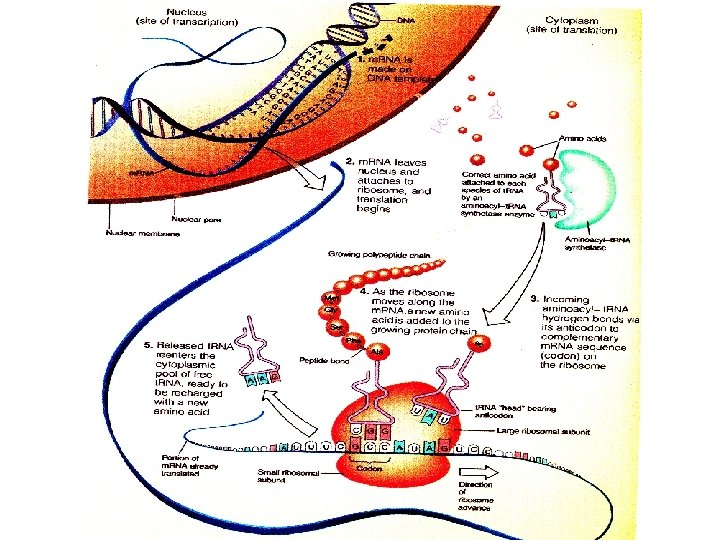
Code to Protein: Shuttle system • Because the synthesis of an amino acid polypeptide chain takes place in the cell proper and not in the cell nucleus, the code must be copied and transported to this site. • A messenger transmits DNA sequence to protein assembly site: – messenger RNA (Ribose Nucleic Acid) • distinct from DNA: single strand C G A (Uracil, “U”, substitutes for “T”) – self-assembles as it “reads” the DNA by base-pair rules – goes to ribosome, site of protein assembly
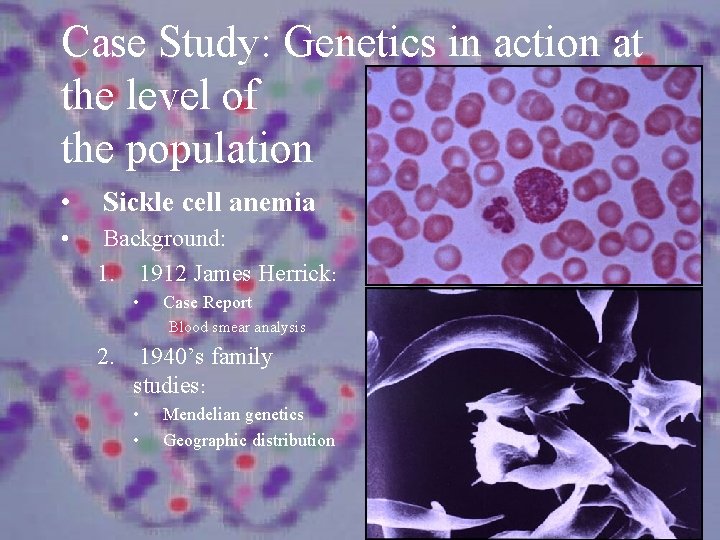
Case Study: Genetics in action at the level of the population • Sickle cell anemia • Background: 1. 1912 James Herrick: • Case Report Blood smear analysis 2. 1940’s family studies: • • Mendelian genetics Geographic distribution
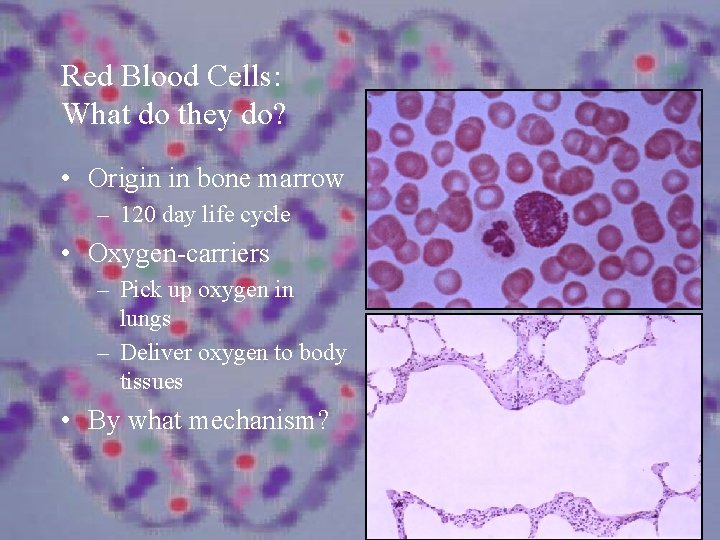
Red Blood Cells: What do they do? • Origin in bone marrow – 120 day life cycle • Oxygen-carriers – Pick up oxygen in lungs – Deliver oxygen to body tissues • By what mechanism? Rbcsinblood on top half alvertonoutpouch on bottom
The Protein Hemoglobin • A protein in red blood cells (RBCs). • Helmoglobin functions in the transport of oxygen from the lungs to body cells. • Like almost all proteins, its structure is part of the code carried by the chromosomes in the nucleus. • How does hemoglobin carry Oxygen?
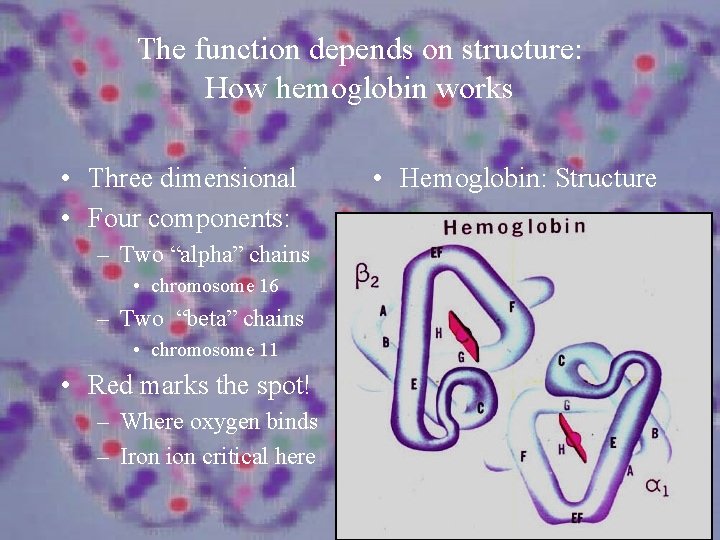
The function depends on structure: How hemoglobin works • Three dimensional • Four components: – Two “alpha” chains • chromosome 16 – Two “beta” chains • chromosome 11 • Red marks the spot! – Where oxygen binds – Iron ion critical here • Hemoglobin: Structure
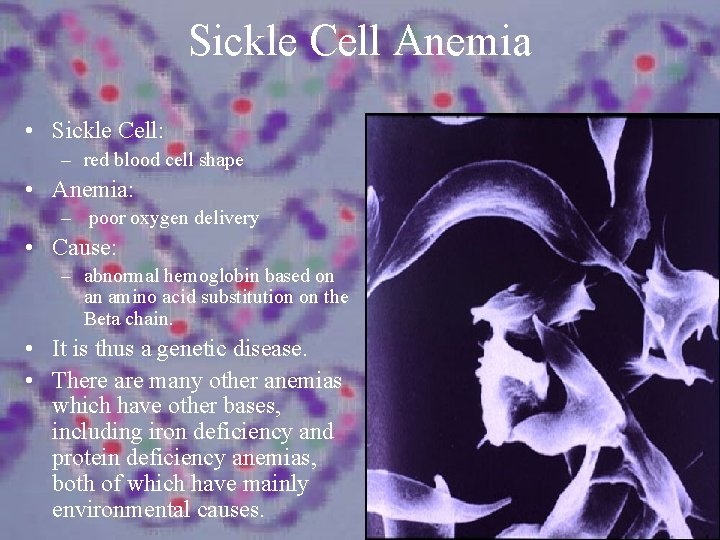
Sickle Cell Anemia • Sickle Cell: – red blood cell shape • Anemia: – poor oxygen delivery • Cause: – abnormal hemoglobin based on an amino acid substitution on the Beta chain. • It is thus a genetic disease. • There are many other anemias which have other bases, including iron deficiency and protein deficiency anemias, both of which have mainly environmental causes.
![Hemoglobin “S” vs Hemoglobin “A” (Sickle [S] vs Normal [A]) First 6 amino acids:](http://slidetodoc.com/presentation_image_h/c62823d207bbc66181748e6e9372d252/image-23.jpg "Hemoglobin “S” vs Hemoglobin “A” (Sickle [S] vs Normal [A]) First 6 amino acids:")
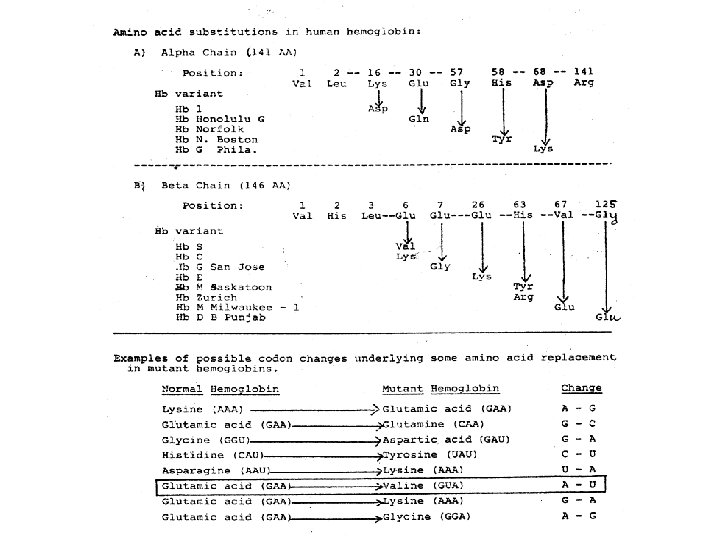
Hemoglobin “S” vs Hemoglobin “A” (Sickle [S] vs Normal [A]) First 6 amino acids: • Beta globin gene: Valine • Hbs beta globin chain Histidine – one different amino acid – valine replaces glutamic acid at position 6 Leucine Threonine Proline Glutamic acid Valine A S – 146 amino acids
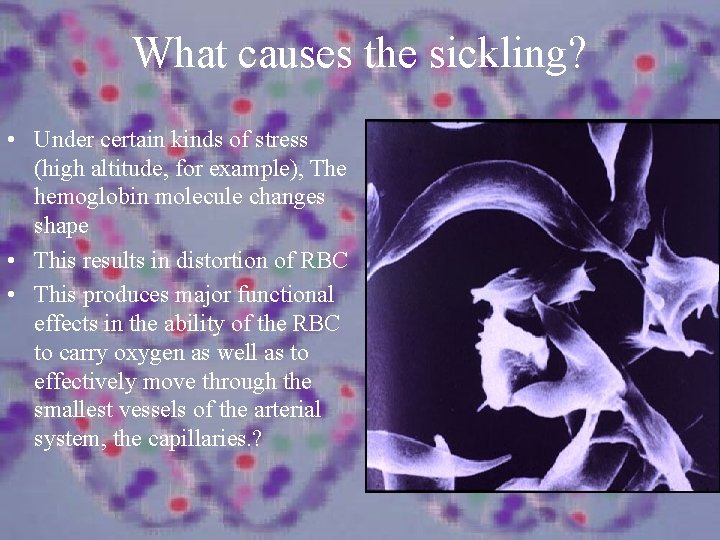
What causes the sickling? • Under certain kinds of stress (high altitude, for example), The hemoglobin molecule changes shape • This results in distortion of RBC • This produces major functional effects in the ability of the RBC to carry oxygen as well as to effectively move through the smallest vessels of the arterial system, the capillaries. ?
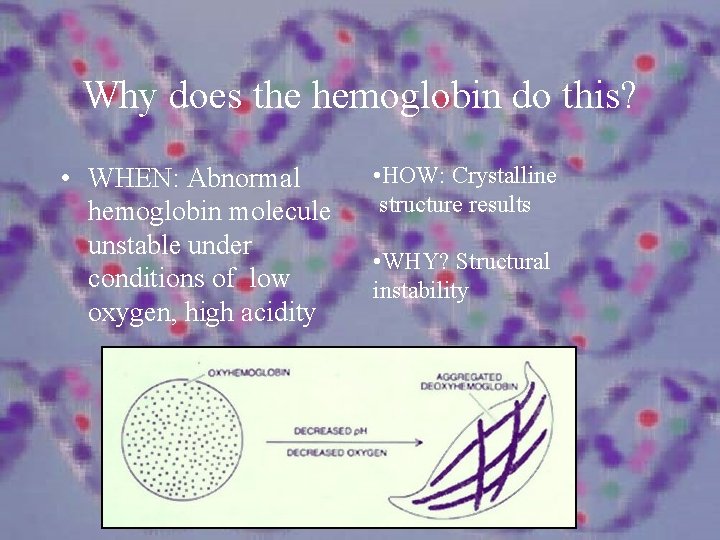
Why does the hemoglobin do this? • WHEN: Abnormal hemoglobin molecule unstable under conditions of low oxygen, high acidity • HOW: Crystalline structure results • WHY? Structural instability
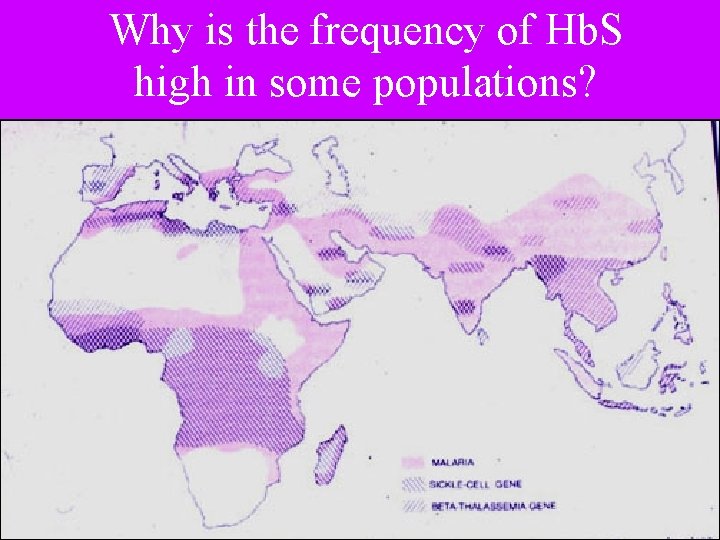
Why is the frequency of Hb. S high in some populations?
Population Frequency of Hb. S • In Africa – In a broad swath across central Africa, 1 in 5 people are carriers. – They have the Hb. S/Hb. A genotype; they are heterozygous (hetero=different) – The expression of Beta hemoglobin is a codominant trait: both proteins are expressed Heterozygote vs Homozygote? Dominant vs recessive?
Hb. S and adaptation: • In a population of 100 individuals, calculate the number of Hb. S and Hb. A alleles if 20 % of the people are heterozygotic and the rest are homozygotic normal. • What is the percentage of Hb. S and Hb. A genes in the population? • Why do you think there are no Hb. S/Hb. S individuals?
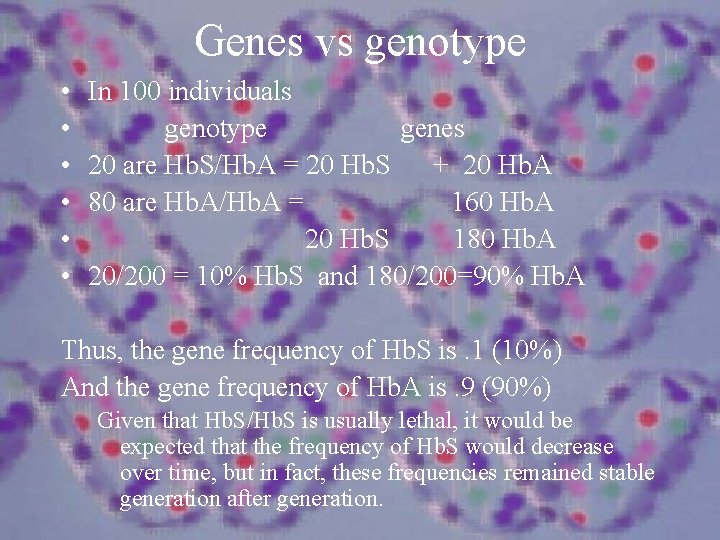
Genes vs genotype • • • In 100 individuals genotype genes 20 are Hb. S/Hb. A = 20 Hb. S + 20 Hb. A 80 are Hb. A/Hb. A = 160 Hb. A 20 Hb. S 180 Hb. A 20/200 = 10% Hb. S and 180/200=90% Hb. A Thus, the gene frequency of Hb. S is. 1 (10%) And the gene frequency of Hb. A is. 9 (90%) Given that Hb. S/Hb. S is usually lethal, it would be expected that the frequency of Hb. S would decrease over time, but in fact, these frequencies remained stable generation after generation.
An Environmental factor: Malaria Disease is: • Mosquito-borne • A parasite is introduced into the host when blood is taken. One of the most deadly of many forms of malaria is: – Plasmodium falciparum Illness is often fatal, with symptoms like: – High fever – rigor – sweats • High mortality – very high in infants and children (It has been estimated for example that each year around the world more than 20 million children die of malaria).
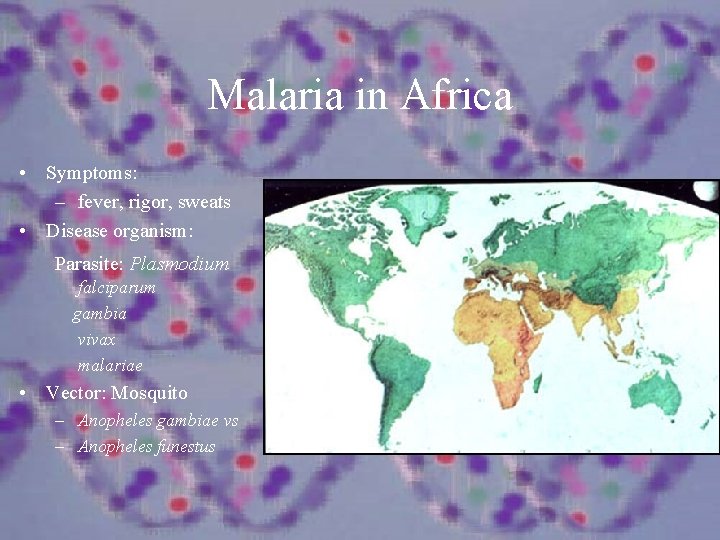
Malaria in Africa • Symptoms: – fever, rigor, sweats • Disease organism: Parasite: Plasmodium falciparum gambia vivax malariae • Vector: Mosquito – Anopheles gambiae vs – Anopheles funestus
Malarial Illness and Parasite • Illness intensity related • Mechanisms to to parasite density decrease parasites: – Fewer parasites, less ill – kill mosquitoes (DDT) – interrupt parasite lifecycle (anti-malarial drugs) – change the microenvironment of the parasite in the body • parasite needs oxygen
How to make the body inhospitable for the parasite and increase the likelihood of individual human’s survival • Decrease available oxygen to parasite • Within limits set by the survivability of the host • Red blood cell biochemistry
Natural Selection and the introduction of a new agricultural technique • About 2000 years ago, several new domestic plants (banana, taro, yams and coconuts) were introduced into Central Africa from Malaysia. • This area, because of its poor soils, was not cultivated prior to this time and the local populations were gatherer/hunters. • In this environment, only slash and burn agricultural methods would work. This resulted in the forest clearing and a markedly more open environment.
New Environment: New Mosquitoes • Prior to the changes brought about by slash and burn agricultural methods, the local mosquito was Anopheles funestus, which breeds in shade and uses bovids (antelopes) as its main host. • After the changes from slash and burn, there was much more open land standing water, leading to the spread of a new mosquito, Anopheles gambiae, from West Africa. This animal breeds in sun and uses humans as its primary host. • As a result, more people contracted malaria, and high mortality followed. • Thus, a mutation that introduced Hb. S would be selected for as a means of conferring some resistance against this deadly disease.
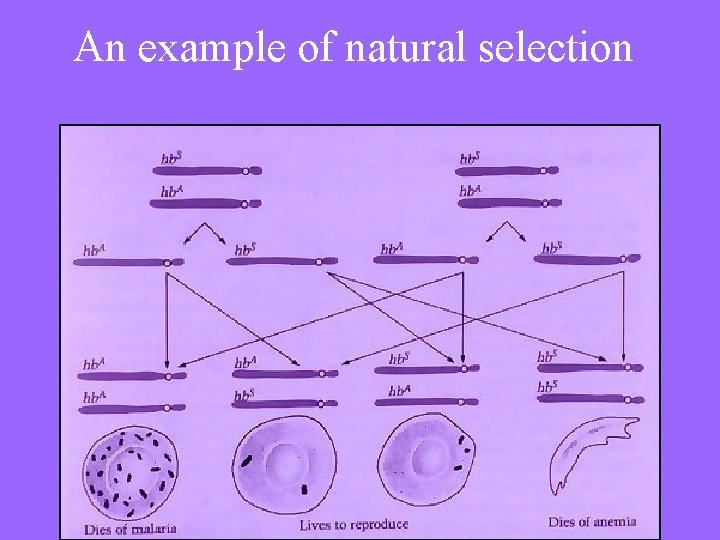
A New Mutation: Hb. S Mutations are random and occur in all populations. In the case, individuals with traits that are adaptive in the face of parasites have a better chance to reach adulthood. In central Africa, Hb. S/Hb. A individuals: 1. Parasites use host oxygen, causing conditions resulting in sickling of red blood cells 2. Anemia is detrimental to parasite survival 3. Parasite numbers decrease, individual improves
An example of natural selection
Many solutions to the malaria problem • In Southeast Asia, the disease thalassemia represents a similar outcome of selection for hemoglobin variants • In the Mediterranean, other red blood cell enzyme errors • The heterozygote has the advantage
How are new genes introduced into populations? • By random mutations that occur in all populations at all times. Mutations DO NOT happen because the new variation is needed to better adapt a population to its environment. Most mutations are deleterious and do not survive in a population • New genes are also introduced by people. • Migration into and out of populations: people take their genes with them, an example of gene flow • For example, the relative frequency of Hb. S in the populations of African descent in the United States has decreased in the past two centuries as a result of intermixture with other populations, as well as selection against the allele in a non-malarial environment.
Review 1: Sickle cell anemia • Random mutation (beta hemoglobin gene: chromosome 11, at position six), producing the sickling allele. • This modification results in a RBC which changes shape when it deoxygenates in the terminal capillaries. • The sickled RBCs limit smooth blood flow, preventing tissues from being properly oxygenated.
Review 2: Sickle cell anemia • Those who are homozygous for the sickling allele (Hb S / Hb S) usually die from the effects of sickle cell disease prior to reaching adulthood. This is known as sickle cell anemia. • Those who are heterozygous for the allele suffer periodic bouts but can live a relatively normal adult existence. This form is known as sickle cell trait,
Review 3: Sickle cell anemia • In an environment without any selection favoring the sickle cell allele, it would be maintained at a very low frequency via mutations and, potentially, gene flow. • This is the situation in many human populations in non-malarial environments.
Review 4: Sickle cell anemia • In Central Africa, 2000 years ago, new domesticated plants (banana, coconut, yams and taro) were introduced into the area inhabited by gatherer/hunters. • Slash and burn agriculture was necessary in the poor soils, which, over time, dramatically changed the environment, and bringing about a replacement of the Anopheles funestus mosquito by the West African A. gambiae.
Review 5: Sickle cell anemia • The introduction of this new mosquito, which overwhelmingly uses humans as hosts, brought about the spread of a deadly form of malaria, Plasmodium falciparum. • Heterozygous individuals, by lowering the Oxygen content of their blood, are able to limit the reproductive capacity of the malarial parasite.
Review 6: Sickle cell anemia • As a result of selection favoring the heterozygote, a balanced polymorphism evolved in this part of Africa with the allele frequency of Hb s reaching 10%. • When the environment changed (spraying with DDT, for example) or when Africans left this area, the frequency of the allele decreased, but never to zero. • An example of human micro-evolution.
Concepts you should know and understand after our discussions: I. Basic Genetics • • The differences between chromosomes, gene, allele How cell division occurs Meiosis DNA, RNA and the process of protein synthesis How mutations, recombination, translocation effect this Codon The relationship between nucleic acid, amino acid, protein The human karyotype: autosomes, sex chromosomes
Concepts you should know and understand after our discussions: II. How genetics works in populations • The specific case of sickle cell anemia: – An example of a mutation that became advantageous to a population – The specifics of the mutation, the structure and function of hemoglobin, how it affects the red blood cell, and the effects for the individual • The selective pressure of malaria: – The nature of the disease, the organism that causes it, how it is contracted by people; how they survive it. • Why did malaria and sickle cell anemia evolve together in a human population? – An example of balanced selection • How genetic mutation, natural selection, genetic drift and gene flow effect a population’s gene pool
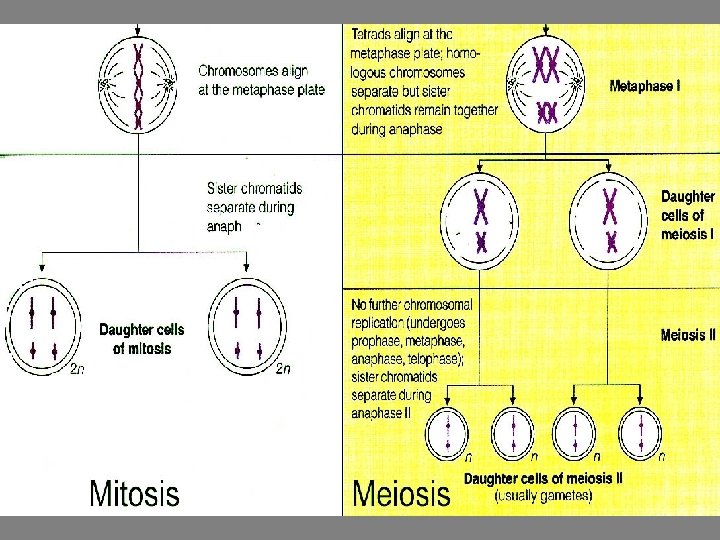
DNA Replication: Mitosis One crucial function of the DNA is to more or less accurately replicate itself during ordinary cell division, so that each of the two resulting daughter cells receive the same complete set of 23 pairs of chromosomes as the original parental cell. This is accomplished by the opening of the DNA helix and each single strand reproducing its complement to form two sets of the complete double helix.
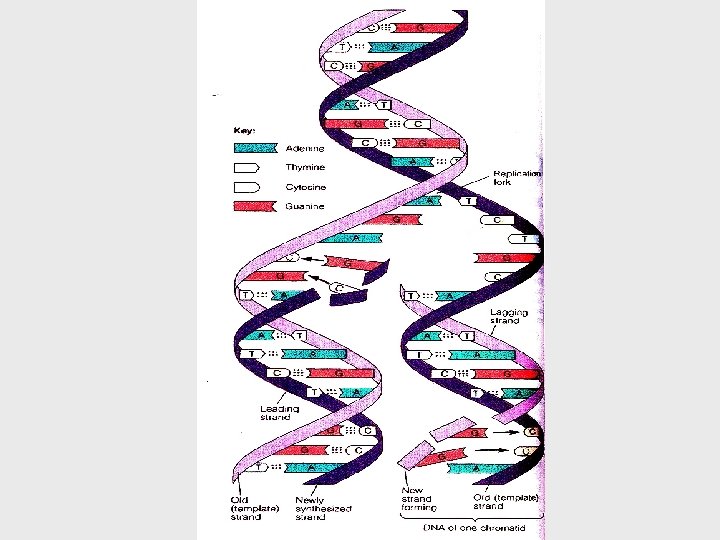
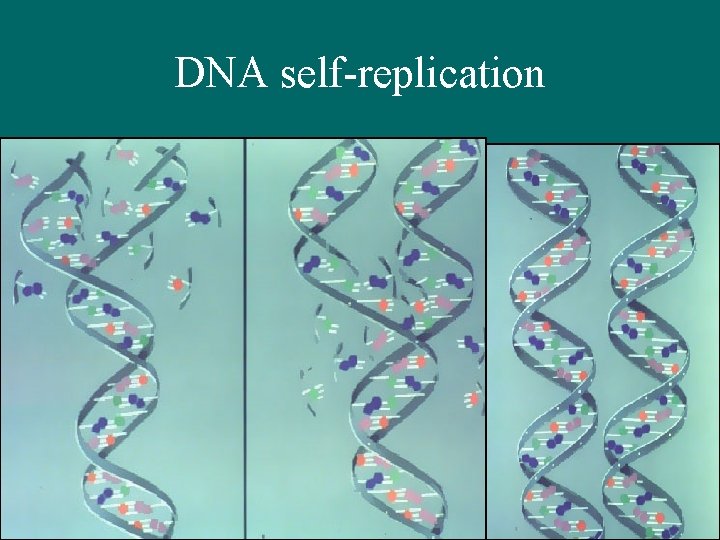
DNA self-replication
- Slides: 50