
Genetics The scientific study of heredity What is
- Slides: 20
Genetics The scientific study of heredity.
What is Heredity ? • The passing of traits from parents to their offspring
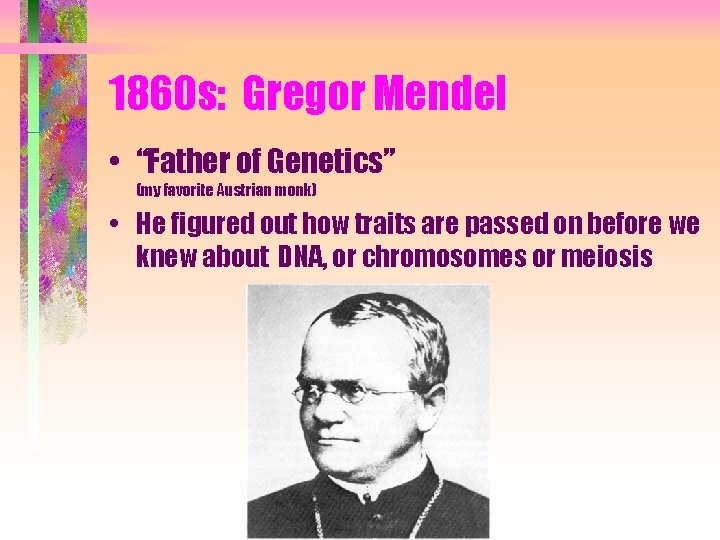
1860 s: Gregor Mendel • “Father of Genetics” (my favorite Austrian monk) • He figured out how traits are passed on before we knew about DNA, or chromosomes or meiosis
Mendelstudied heredity with pea plants • Why pea plants? (was it luck? ) – – – – 1. Small 2. Easy to grow 3. Produces large numbers of offspring 4. Matures quickly 5. Plants can self or cross fertilize 6. Many varieties 7. Each trait has two forms • Tall/short purple/white flowers • green/yellow seeds colored/white seed coat • green/yellow seed pods inflated/narrowed seed pod • wrinkled/smooth seed
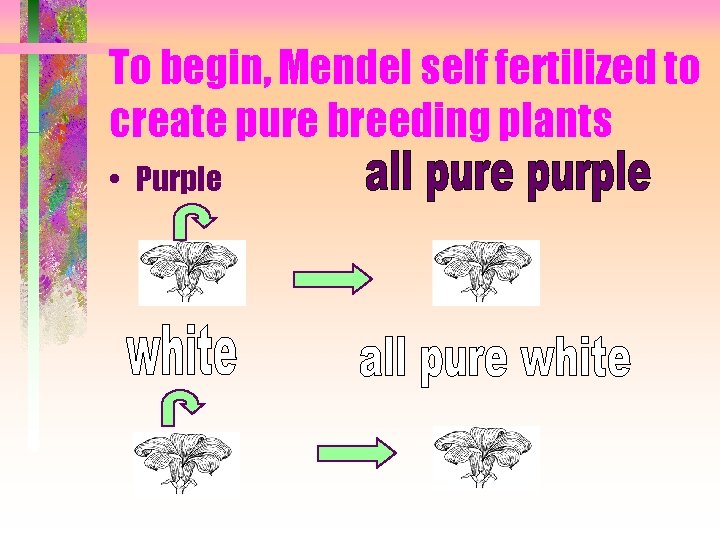
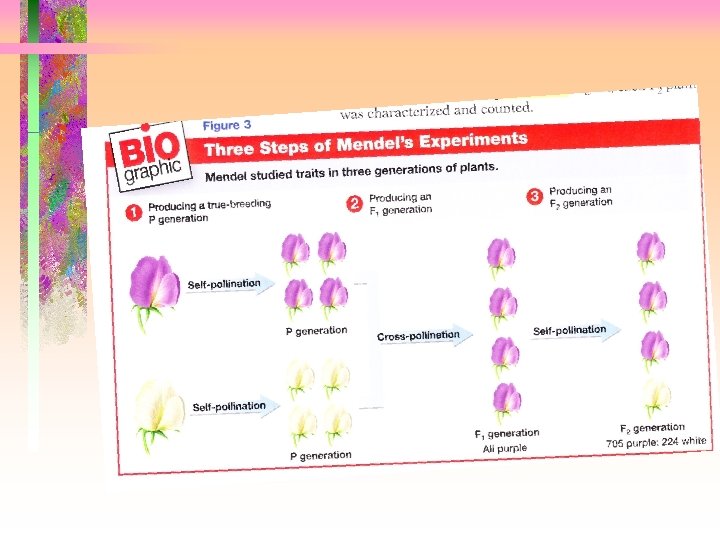
To begin, Mendel self fertilized to create pure breeding plants • Purple
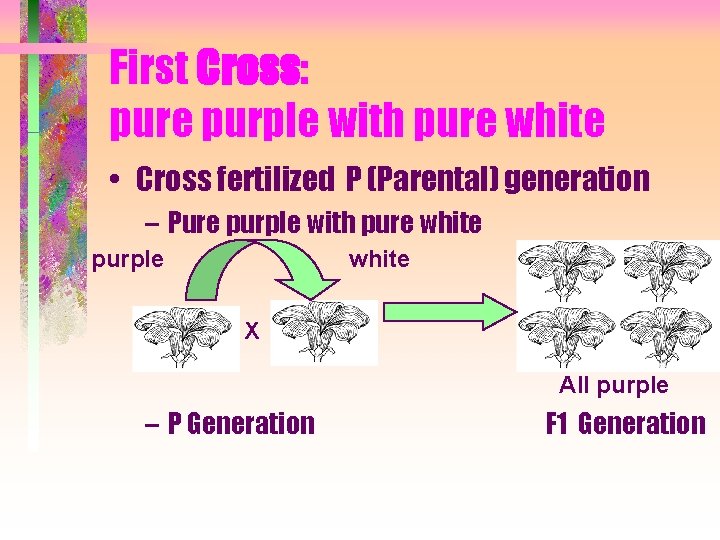
First Cross: pure purple with pure white • Cross fertilized P (Parental) generation – Pure purple with pure white purple white X All purple – P Generation F 1 Generation
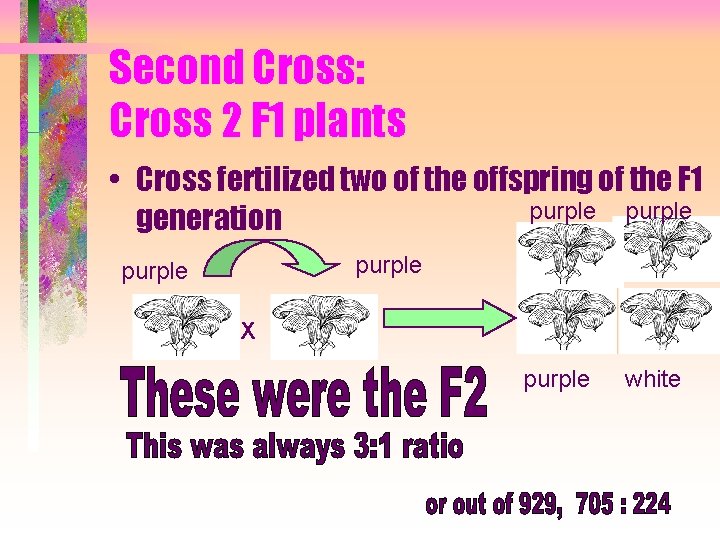
Second Cross: Cross 2 F 1 plants • Cross fertilized two of the offspring of the F 1 purple generation purple X purple white
Mendel’s Experiments led him to 3 Laws of Inheritance • The Law of Dominance • The Law of Segregation • The Law of Independent Assortment
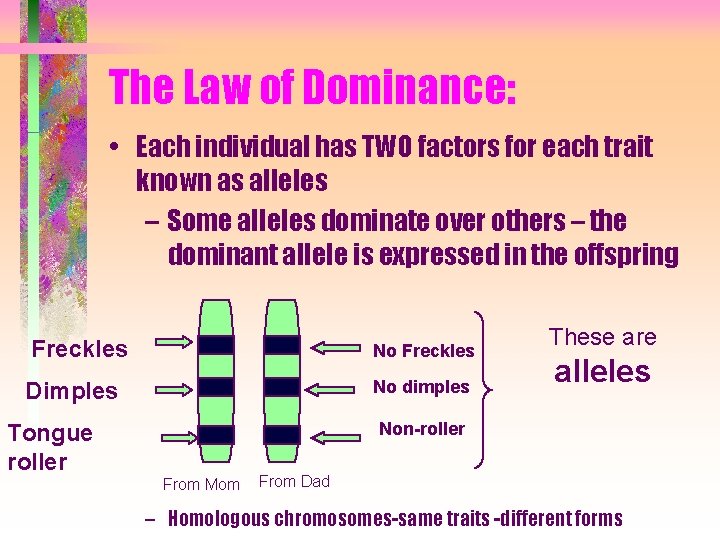
The Law of Dominance: • Each individual has TWO factors for each trait known as alleles – Some alleles dominate over others – the dominant allele is expressed in the offspring Freckles No dimples Dimples These are alleles Non-roller Tongue roller From Mom From Dad – Homologous chromosomes-same traits -different forms
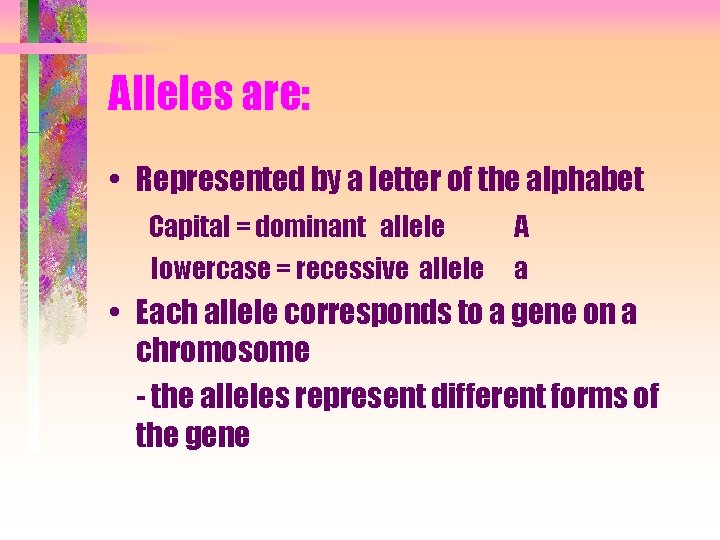
Alleles are: • Represented by a letter of the alphabet Capital = dominant allele lowercase = recessive allele A a • Each allele corresponds to a gene on a chromosome - the alleles represent different forms of the gene
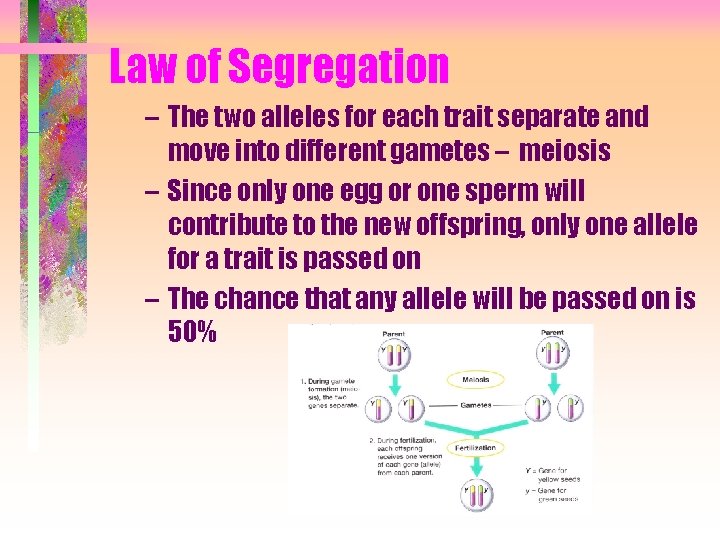
Law of Segregation – The two alleles for each trait separate and move into different gametes – meiosis – Since only one egg or one sperm will contribute to the new offspring, only one allele for a trait is passed on – The chance that any allele will be passed on is 50%
Law of Independent Assortment • the inheritance of alleles for one trait doesn’t affect the inheritance of alleles for another trait - occurs in meiosis during metaphase 1
Genotype: • Genotype is the combination of alleles for a particular expressed with letters • Homozygous dominant: – TT - two capital letters • Heterozygous – Tt - one of each letter (big and small) • Homozygous recessive – tt - two lower case letters
Phenotype: • Phenotype is physical expression of the genotype Genotype Phenotype TT tall plant Tt tall plant (dominant allele always is expressed over the recessive allele) tt short plant (recessive trait is expressed only if there
If R = red, and r = white • What is the genotype of homozygous dominant? – RR • What is the heterozygous genotype? – Rr • What is the homozygous recessive genotype? – rr
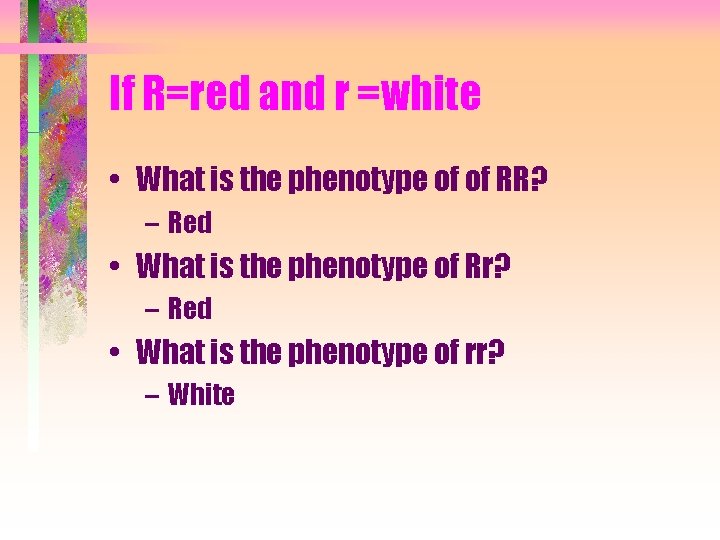
If R=red and r =white • What is the phenotype of of RR? – Red • What is the phenotype of Rr? – Red • What is the phenotype of rr? – White
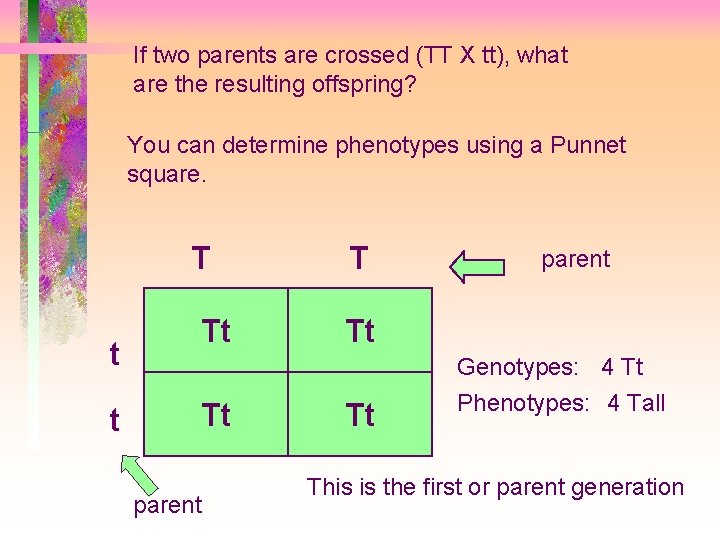
If two parents are crossed (TT X tt), what are the resulting offspring? You can determine phenotypes using a Punnet square. T t t Tt Tt parent Tt Tt Genotypes: 4 Tt Phenotypes: 4 Tall This is the first or parent generation
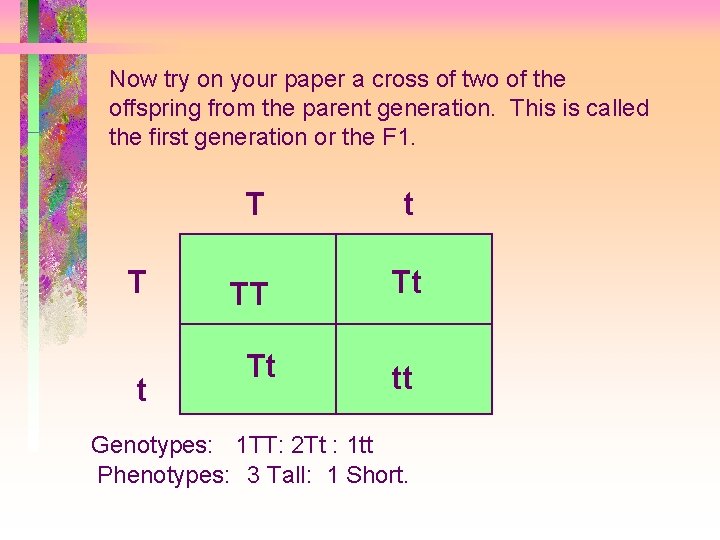
Now try on your paper a cross of two of the offspring from the parent generation. This is called the first generation or the F 1. T t TT Tt Tt tt Genotypes: 1 TT: 2 Tt : 1 tt Phenotypes: 3 Tall: 1 Short.
Vocabulary Heredity Law of Dominance Law of Segregation Law of Independent Assortment Allele Genotype Phenotype