
Genetics study of inheritance of biological traits Heredity
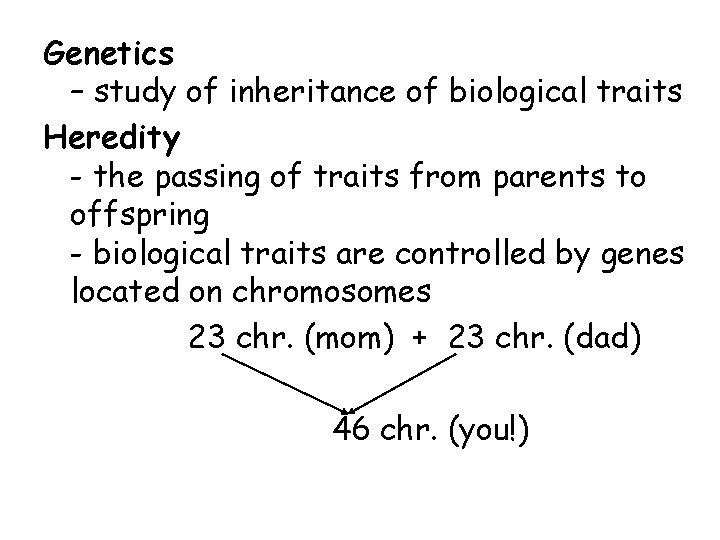
Genetics – study of inheritance of biological traits Heredity - the passing of traits from parents to offspring - biological traits are controlled by genes located on chromosomes 23 chr. (mom) + 23 chr. (dad) 46 chr. (you!)
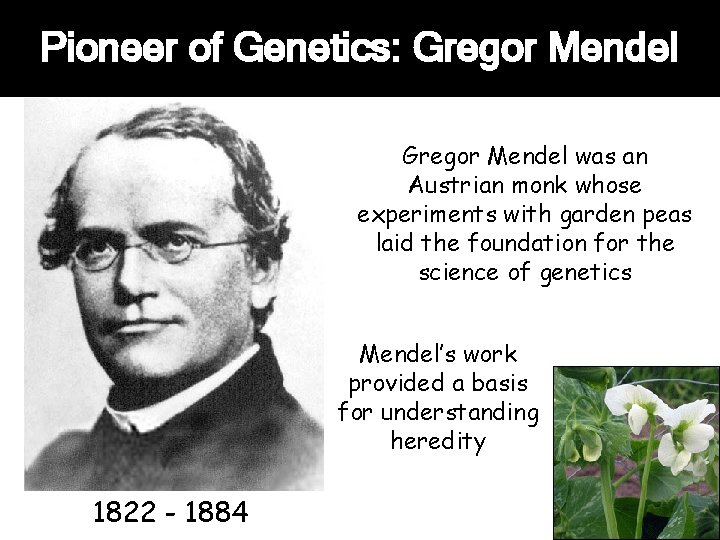
Pioneer of Genetics: Gregor Mendel was an Austrian monk whose experiments with garden peas laid the foundation for the science of genetics Mendel’s work provided a basis for understanding heredity 1822 - 1884
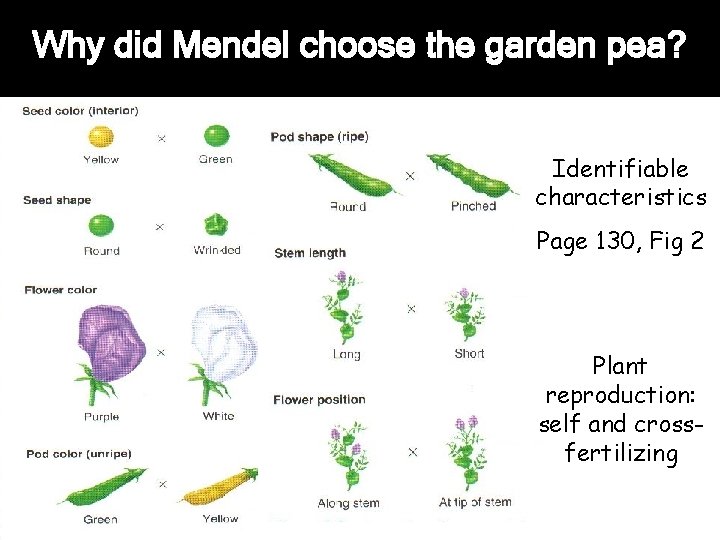
Why did Mendel choose the garden pea? Identifiable characteristics Page 130, Fig 2 Plant reproduction: self and crossfertilizing
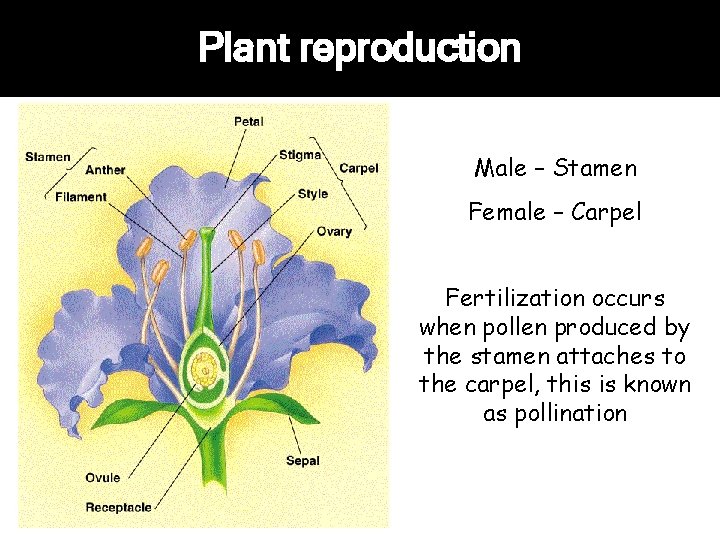
Plant reproduction Male – Stamen Female – Carpel Fertilization occurs when pollen produced by the stamen attaches to the carpel, this is known as pollination
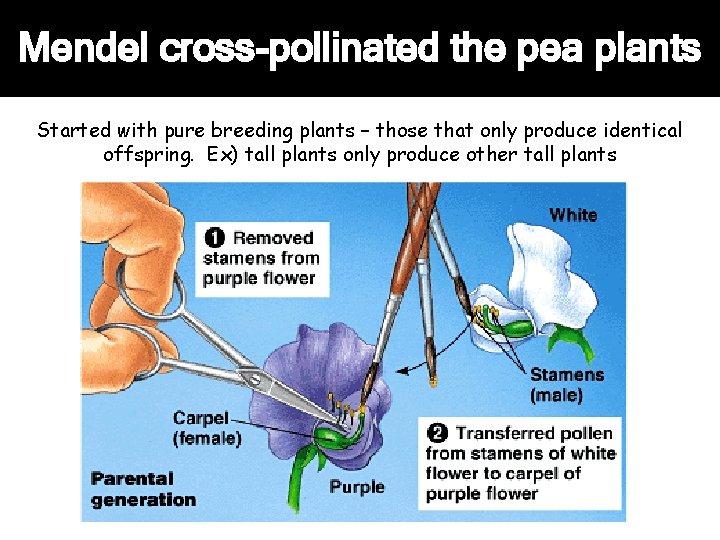
Mendel cross-pollinated the pea plants Started with pure breeding plants – those that only produce identical offspring. Ex) tall plants only produce other tall plants
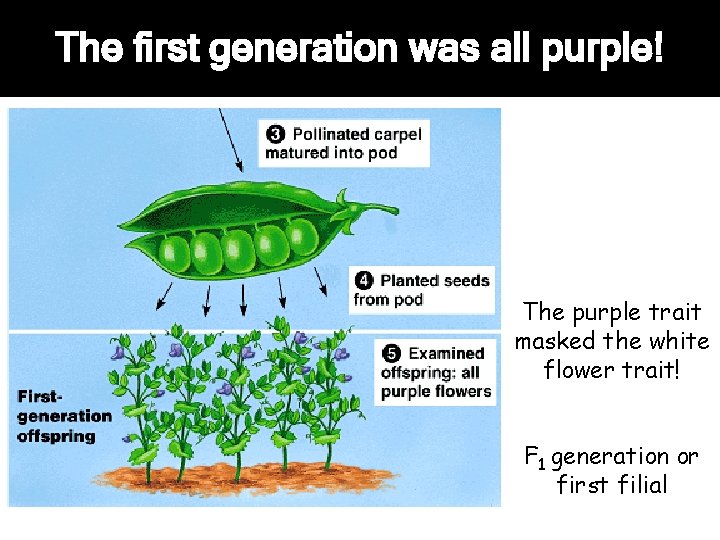
The first generation was all purple! The purple trait masked the white flower trait! F 1 generation or first filial
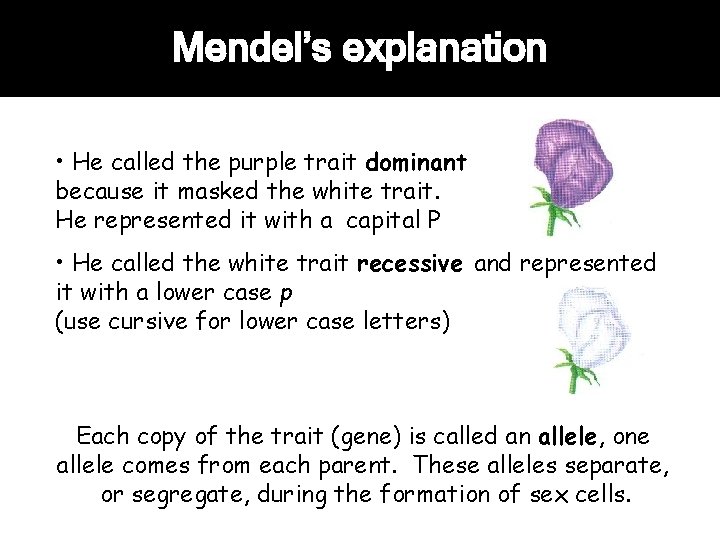
Mendel’s explanation • He called the purple trait dominant because it masked the white trait. He represented it with a capital P • He called the white trait recessive and represented it with a lower case p (use cursive for lower case letters) Each copy of the trait (gene) is called an allele, one allele comes from each parent. These alleles separate, or segregate, during the formation of sex cells.
Some more terminology Allele: a version of a gene Genotype refers to the alleles an organism contains for a particular trait (Pp) Phenotype refers to the observable trait (purple) Homozygous: a genotype in which the alleles of a pair are the same Heterozygous: a genotype in which the alleles of a pair are different Monohybrid cross: a cross that involves only one trait

Mendel created a second generation by allowing the F 1 s to self-pollinate F 1 generation Pp Meiosis occurs. Each gamete has one of the homologous chromosomes. F 2 generation inherits alleles from the gametes of the F 1 75% purple, 25% white Pp P p PP Pp Pp pp Purple White
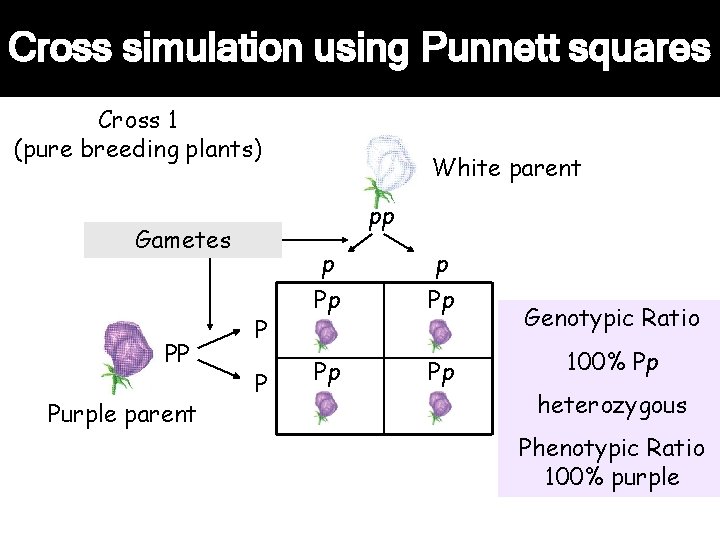
Cross simulation using Punnett squares Cross 1 (pure breeding plants) pp Gametes PP Purple parent White parent P P p p Pp Pp Genotypic Ratio 100% Pp heterozygous Phenotypic Ratio 100% purple
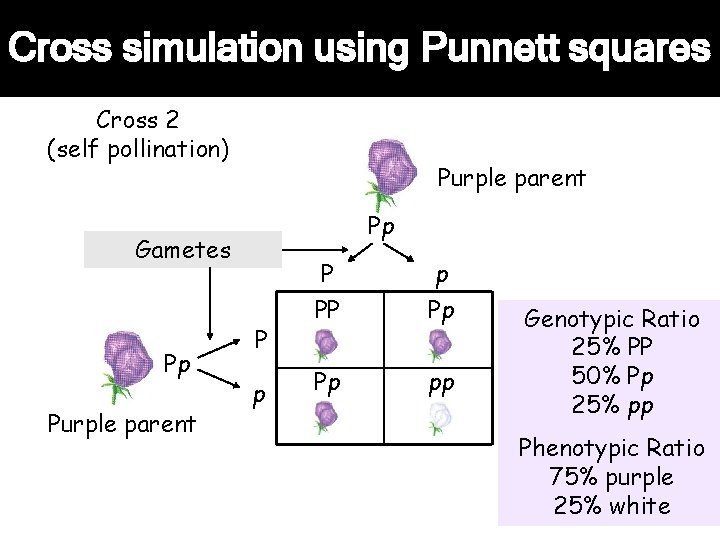
Cross simulation using Punnett squares Cross 2 (self pollination) Purple parent Pp Gametes Pp Purple parent P p P PP p Pp Pp pp Genotypic Ratio 25% PP 50% Pp 25% pp Phenotypic Ratio 75% purple 25% white
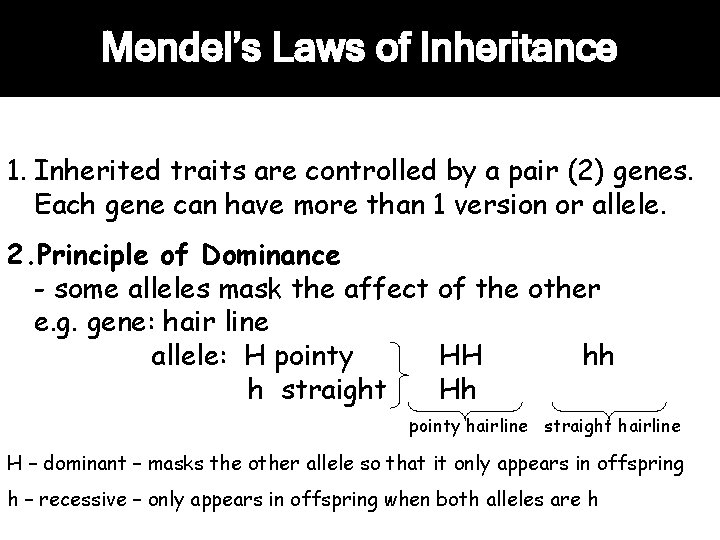
Mendel’s Laws of Inheritance 1. Inherited traits are controlled by a pair (2) genes. Each gene can have more than 1 version or allele. 2. Principle of Dominance - some alleles mask the affect of the other e. g. gene: hair line allele: H pointy HH hh h straight Hh pointy hairline straight hairline H – dominant – masks the other allele so that it only appears in offspring h – recessive – only appears in offspring when both alleles are h
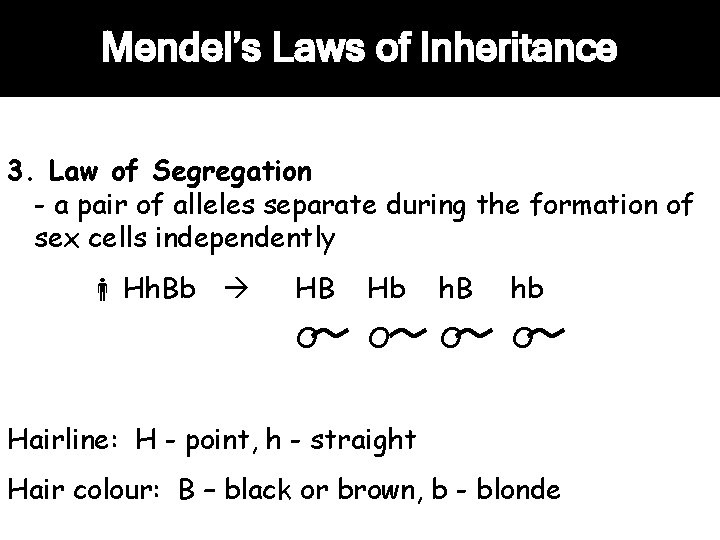
Mendel’s Laws of Inheritance 3. Law of Segregation - a pair of alleles separate during the formation of sex cells independently Hh. Bb HB Hb h. B hb O O Hairline: H - point, h - straight Hair colour: B – black or brown, b - blonde
Mendel’s Laws of Inheritance 1. Each parent contributes one allele. If a purebreeding plant self-fertilizes, each offspring receives two copies of the same allele. 2. Dominant alleles are always expressed when a recessive allele is present. 3. Each pair of alleles segregates during the formation of sex cells.
Practice: Read Chapter 6. 1 pp. 154 -160 in your textbook. p. 160 Questions 1 -8 Go to http: //dnaftb. org/1/concept and complete the questions on the worksheet at the class site: http: //papaiconomou. weebly. com
- Slides: 15