
Genetics Study of Heredity Why do cats have

- Slides: 29
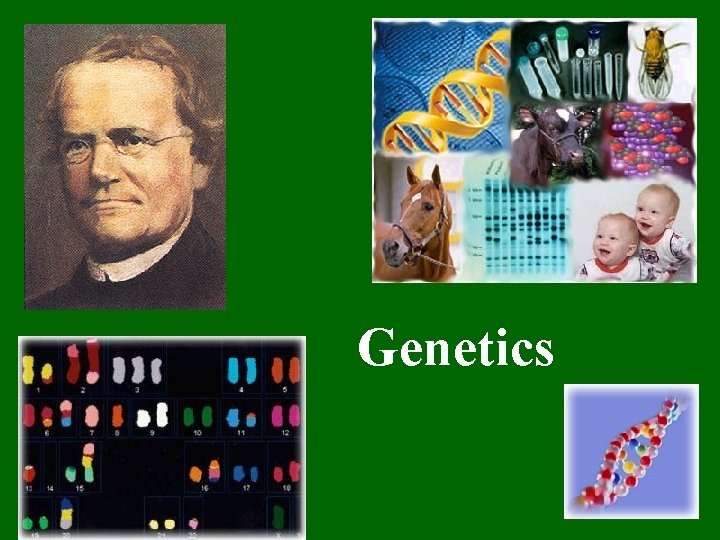
Genetics
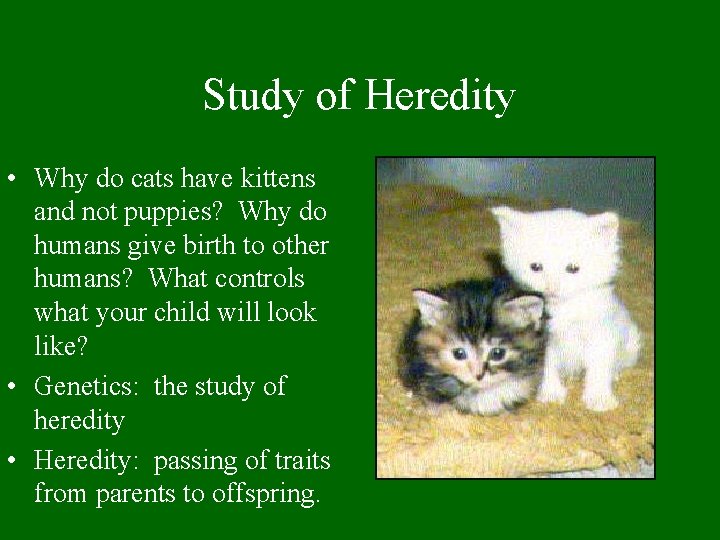
Study of Heredity • Why do cats have kittens and not puppies? Why do humans give birth to other humans? What controls what your child will look like? • Genetics: the study of heredity • Heredity: passing of traits from parents to offspring.
Imagine a time before we knew of DNA and genes. These things were a great mystery.
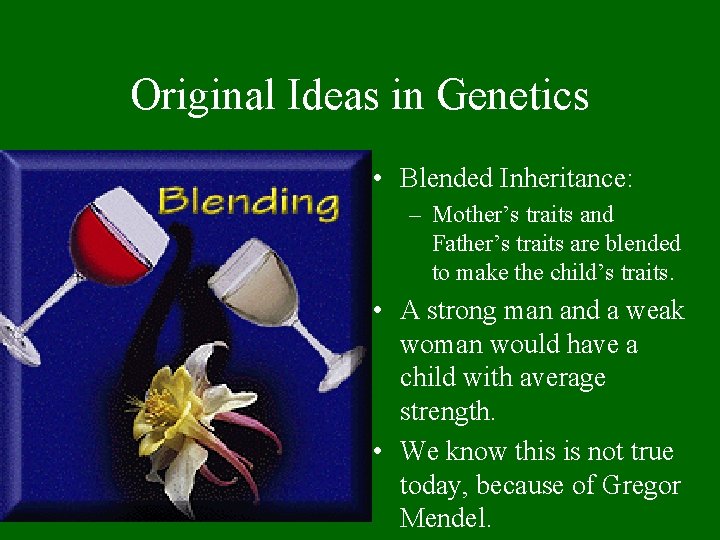
Original Ideas in Genetics • Blended Inheritance: – Mother’s traits and Father’s traits are blended to make the child’s traits. • A strong man and a weak woman would have a child with average strength. • We know this is not true today, because of Gregor Mendel.
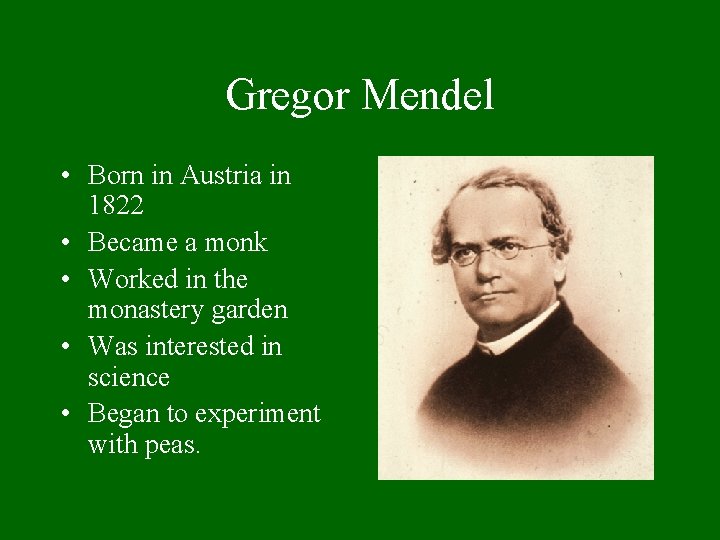
Gregor Mendel • Born in Austria in 1822 • Became a monk • Worked in the monastery garden • Was interested in science • Began to experiment with peas.
Mendel cross-fertilized peas • Why peas? – Reproduce really quickly – Could control the matings of pea plants – Peas are Hermaphrodites – Grows easily and produces MANY offspring
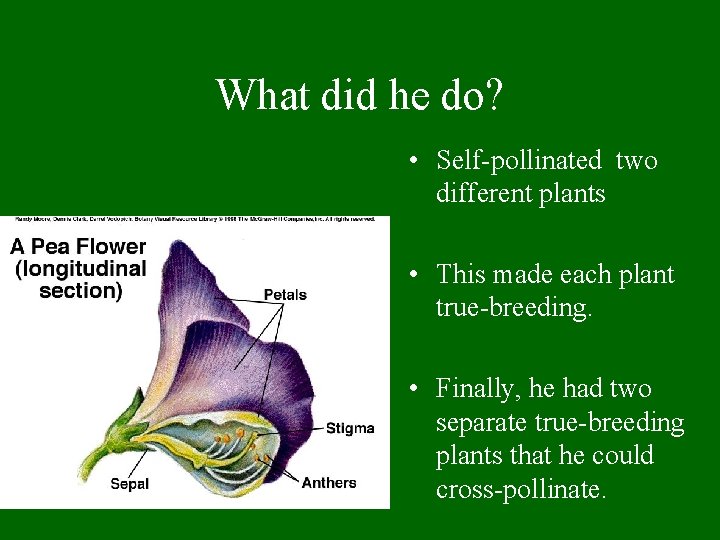
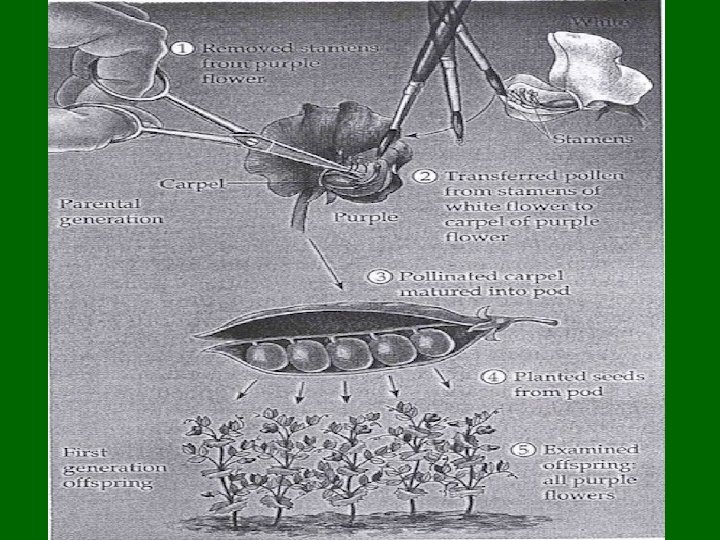
What did he do? • Self-pollinated two different plants • This made each plant true-breeding. • Finally, he had two separate true-breeding plants that he could cross-pollinate.
Vocabulary • Self-pollination-letting the male part of one plant fertilize the female part of the same plant. (Hermaphroditic part) AKA: inbreeding • True-breeding-a plant that produces offspring that display only one form of a trait. (Ex- purple plant makes purple plants) • Cross-pollination-letting the male part of one plant fertilize the female part of a different plant (more like dating)
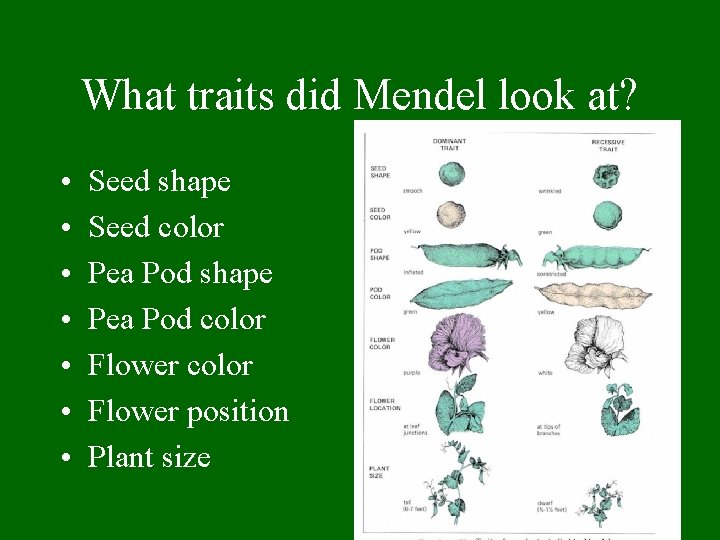
What traits did Mendel look at? • • Seed shape Seed color Pea Pod shape Pea Pod color Flower position Plant size
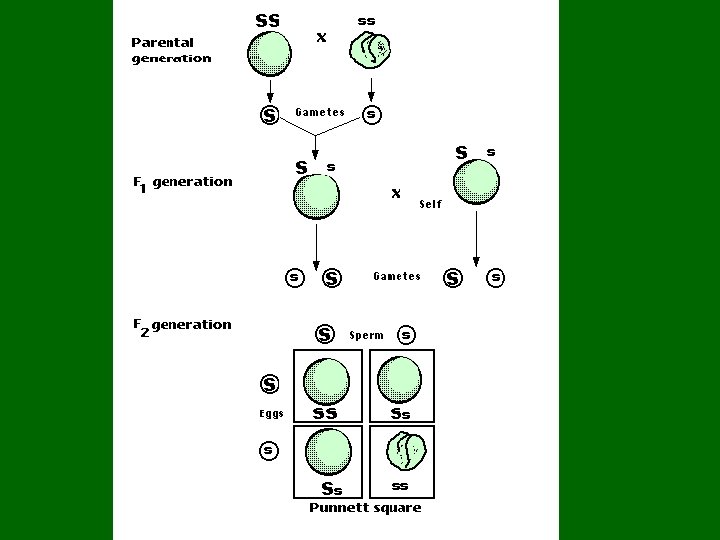
Mendel had specific names for each generation of plants. • P generation – Parental generation, the first two individuals that are crossed in a breeding experiment. • F 1 generation – First filial generation, the offspring of the P generation • F 2 generation – Second filial generation, the offspring F 1 generation
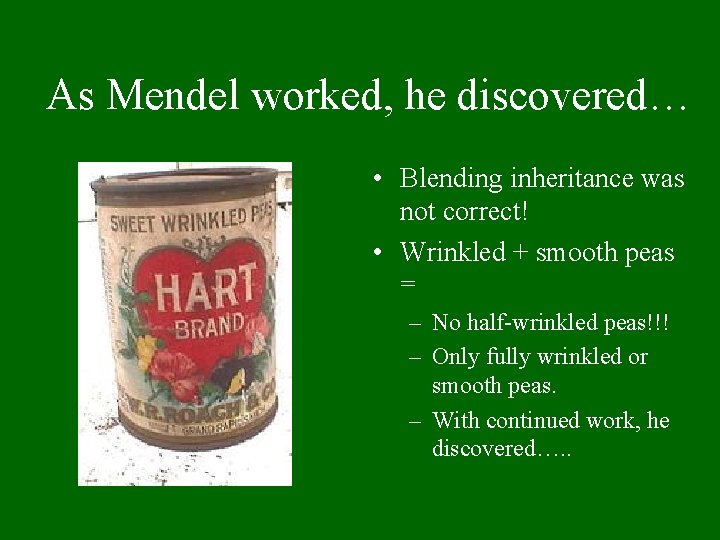
As Mendel worked, he discovered… • Blending inheritance was not correct! • Wrinkled + smooth peas = – No half-wrinkled peas!!! – Only fully wrinkled or smooth peas. – With continued work, he discovered…. .
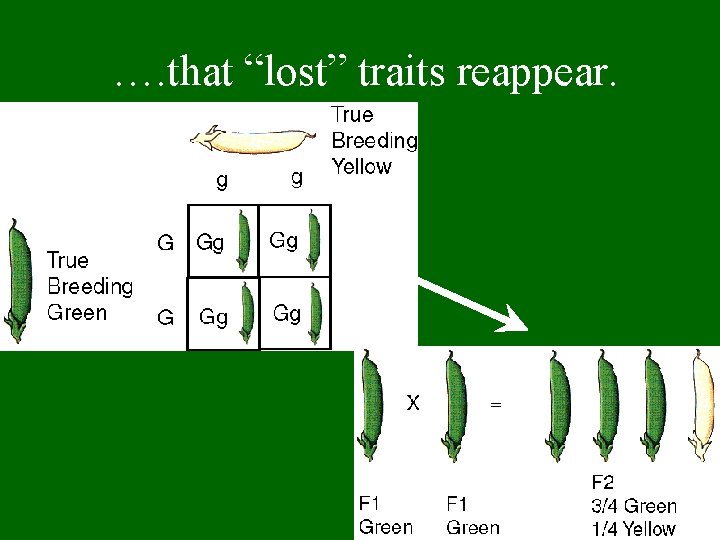
…. that “lost” traits reappear.
Mendel’s Four Hypotheses • Mendelian Theory of Heredity – 1. When gametes are formed, only one allele for each gene goes into each gamete. This happens during Meiosis II. • There’s only one allele in each sperm and only one allele in each egg. – 2. An individual gets two genes for each trait (one from each parent) • Each pea plant gets one gene for pod color (one from each parent plant) – 3. These two genes are called Alleles and there are different versions of alleles • For the pea pod color trait: yellow or green or white, etc. – 4. Of these different versions of alleles, one is dominant and one is recessive • For the pea pod trait : Green alleles are dominant, yellow alleles are recessive
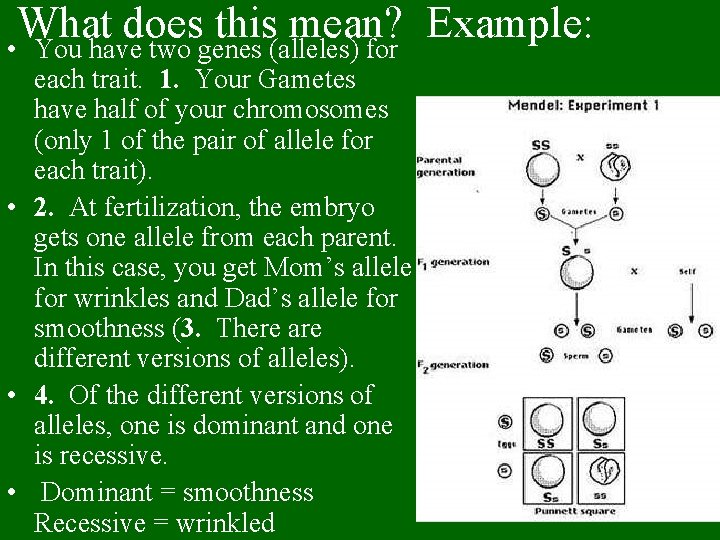
What does this mean? Example: • You have two genes (alleles) for each trait. 1. Your Gametes have half of your chromosomes (only 1 of the pair of allele for each trait). • 2. At fertilization, the embryo gets one allele from each parent. In this case, you get Mom’s allele for wrinkles and Dad’s allele for smoothness (3. There are different versions of alleles). • 4. Of the different versions of alleles, one is dominant and one is recessive. • Dominant = smoothness Recessive = wrinkled
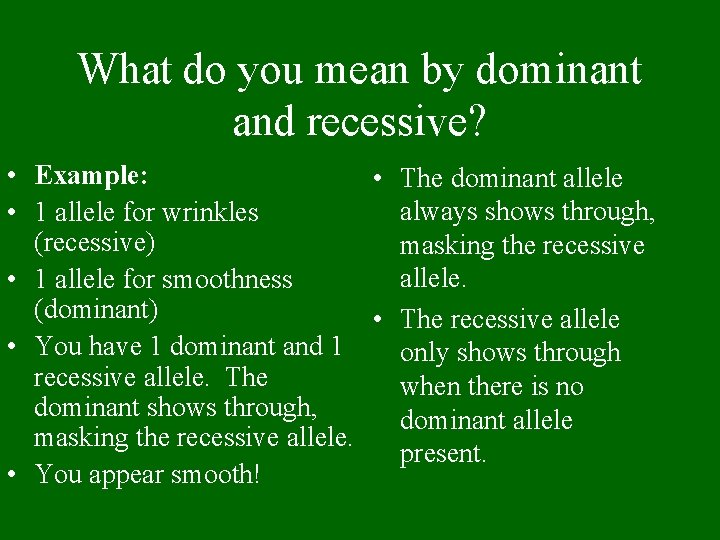
What do you mean by dominant and recessive? • Example: • The dominant allele always shows through, • 1 allele for wrinkles (recessive) masking the recessive allele. • 1 allele for smoothness (dominant) • The recessive allele • You have 1 dominant and 1 only shows through recessive allele. The when there is no dominant shows through, dominant allele masking the recessive allele. present. • You appear smooth!
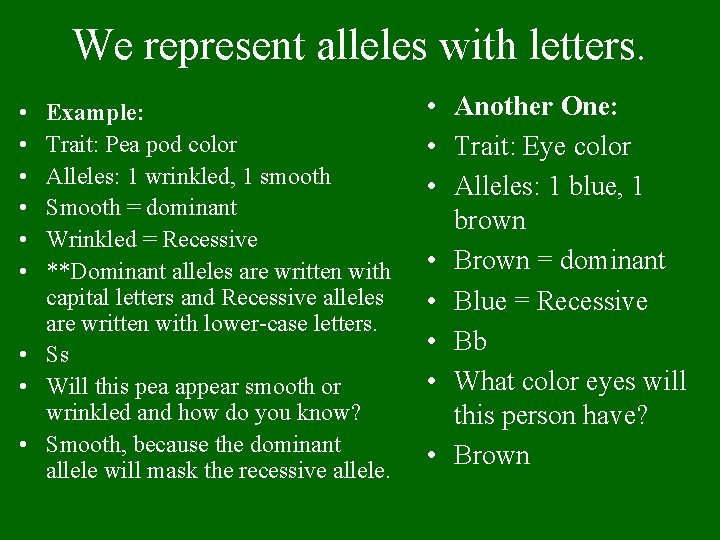
We represent alleles with letters. • • • Example: Trait: Pea pod color Alleles: 1 wrinkled, 1 smooth Smooth = dominant Wrinkled = Recessive **Dominant alleles are written with capital letters and Recessive alleles are written with lower-case letters. • Ss • Will this pea appear smooth or wrinkled and how do you know? • Smooth, because the dominant allele will mask the recessive allele. • Another One: • Trait: Eye color • Alleles: 1 blue, 1 brown • Brown = dominant • Blue = Recessive • Bb • What color eyes will this person have? • Brown
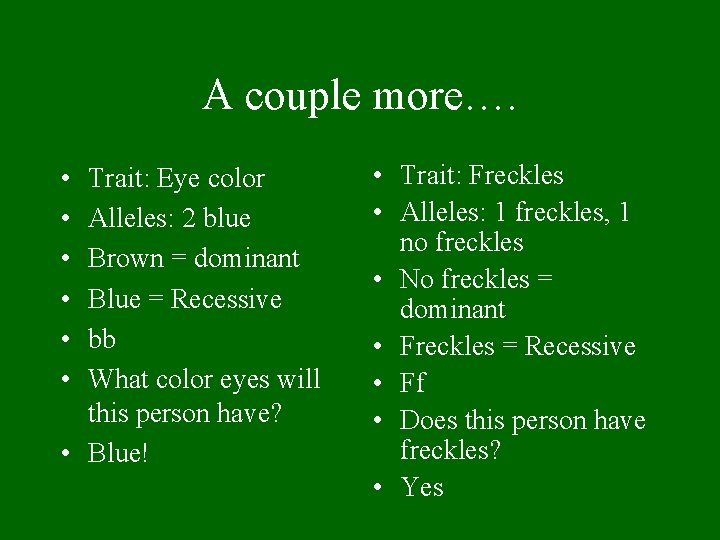
A couple more…. • • • Trait: Eye color Alleles: 2 blue Brown = dominant Blue = Recessive bb What color eyes will this person have? • Blue! • Trait: Freckles • Alleles: 1 freckles, 1 no freckles • No freckles = dominant • Freckles = Recessive • Ff • Does this person have freckles? • Yes
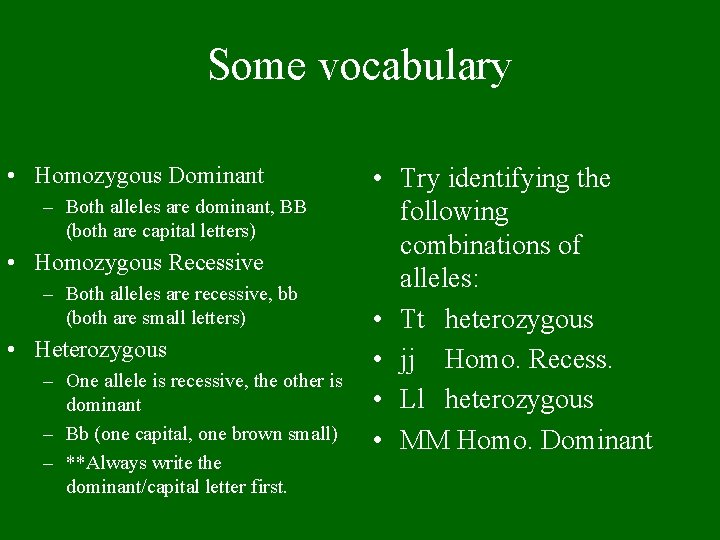
Some vocabulary • Homozygous Dominant – Both alleles are dominant, BB (both are capital letters) • Homozygous Recessive – Both alleles are recessive, bb (both are small letters) • Heterozygous – One allele is recessive, the other is dominant – Bb (one capital, one brown small) – **Always write the dominant/capital letter first. • Try identifying the following combinations of alleles: • Tt heterozygous • jj Homo. Recess. • Ll heterozygous • MM Homo. Dominant
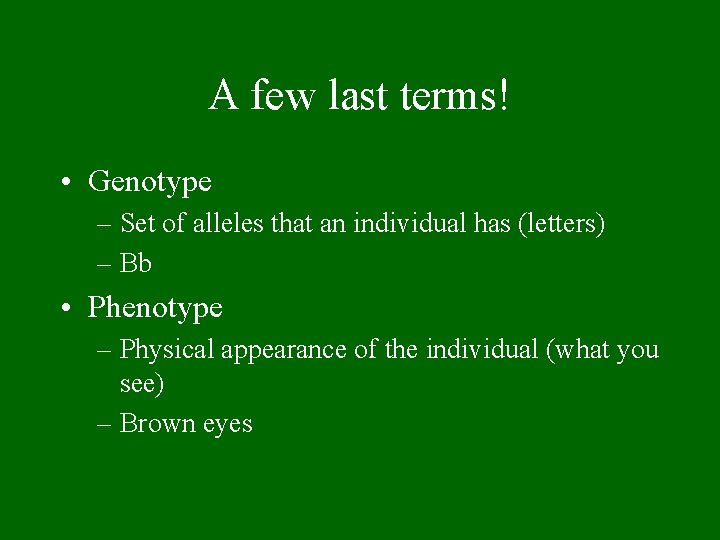
A few last terms! • Genotype – Set of alleles that an individual has (letters) – Bb • Phenotype – Physical appearance of the individual (what you see) – Brown eyes
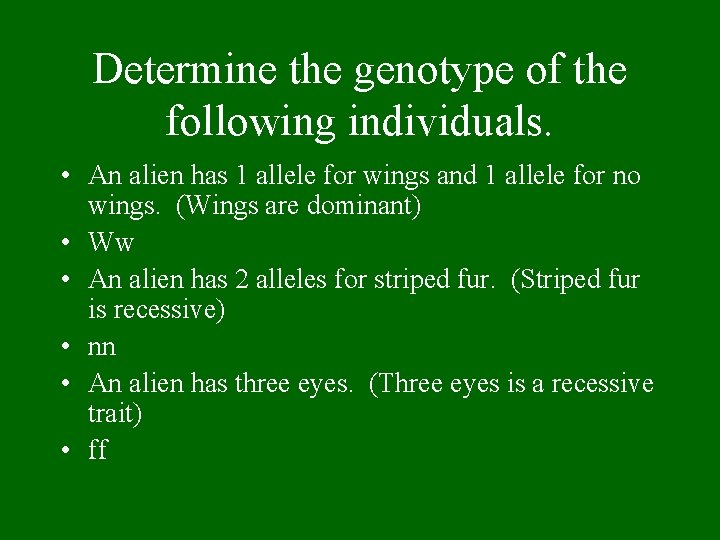
Determine the genotype of the following individuals. • An alien has 1 allele for wings and 1 allele for no wings. (Wings are dominant) • Ww • An alien has 2 alleles for striped fur. (Striped fur is recessive) • nn • An alien has three eyes. (Three eyes is a recessive trait) • ff
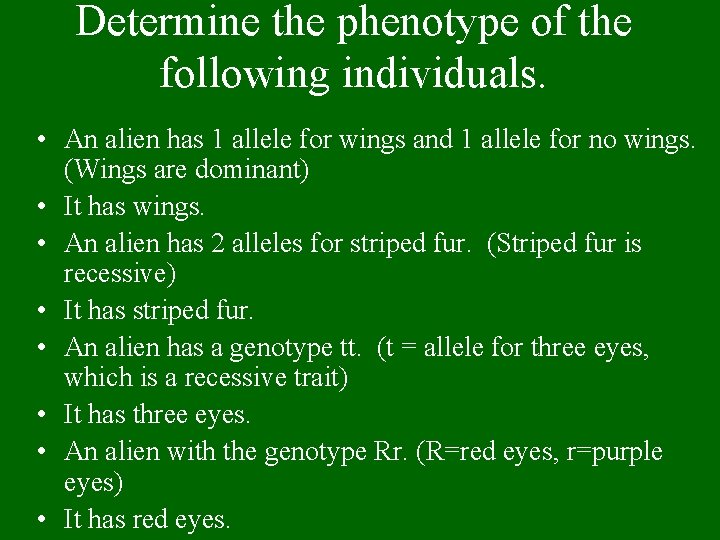
Determine the phenotype of the following individuals. • An alien has 1 allele for wings and 1 allele for no wings. (Wings are dominant) • It has wings. • An alien has 2 alleles for striped fur. (Striped fur is recessive) • It has striped fur. • An alien has a genotype tt. (t = allele for three eyes, which is a recessive trait) • It has three eyes. • An alien with the genotype Rr. (R=red eyes, r=purple eyes) • It has red eyes.
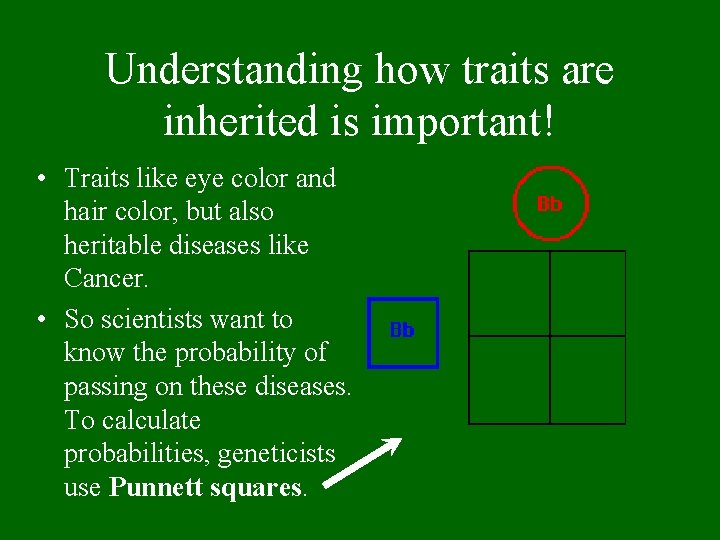
Understanding how traits are inherited is important! • Traits like eye color and hair color, but also heritable diseases like Cancer. • So scientists want to know the probability of passing on these diseases. To calculate probabilities, geneticists use Punnett squares.
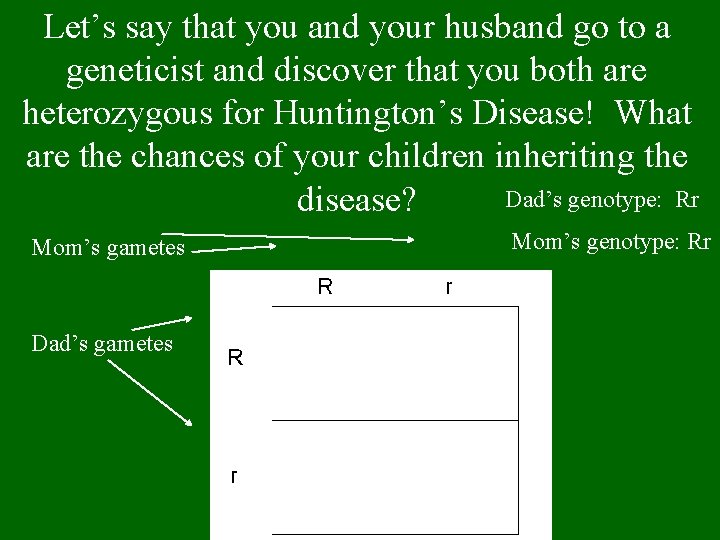
Let’s say that you and your husband go to a geneticist and discover that you both are heterozygous for Huntington’s Disease! What are the chances of your children inheriting the Dad’s genotype: Rr disease? Mom’s gametes Dad’s gametes Mom’s genotype: Rr
Let’s analyze this Punnett Square!
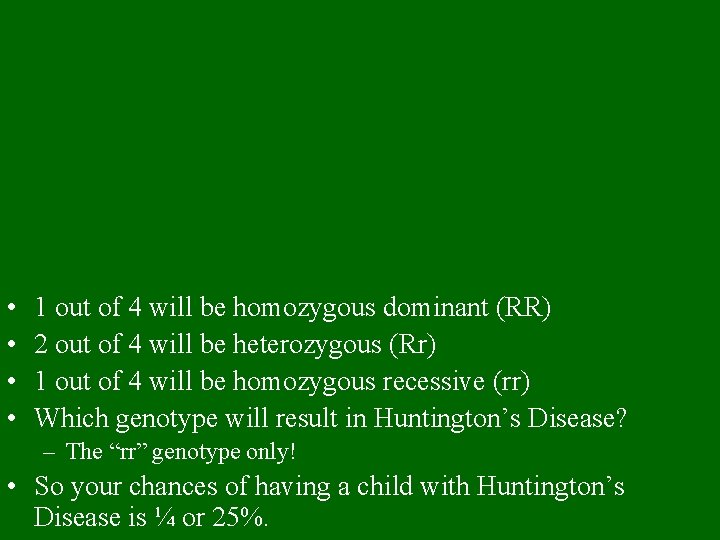
• • 1 out of 4 will be homozygous dominant (RR) 2 out of 4 will be heterozygous (Rr) 1 out of 4 will be homozygous recessive (rr) Which genotype will result in Huntington’s Disease? – The “rr” genotype only! • So your chances of having a child with Huntington’s Disease is ¼ or 25%.
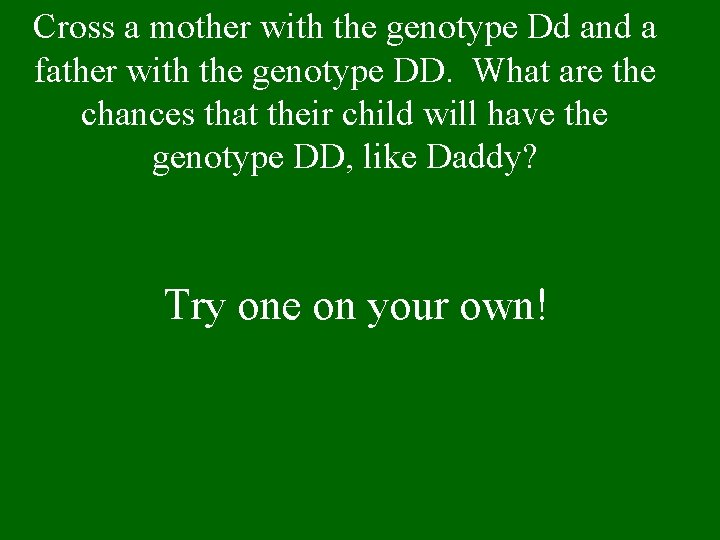
Cross a mother with the genotype Dd and a father with the genotype DD. What are the chances that their child will have the genotype DD, like Daddy? Try one on your own!