
Genetics Quick Review Mitosis Formation of Body cells
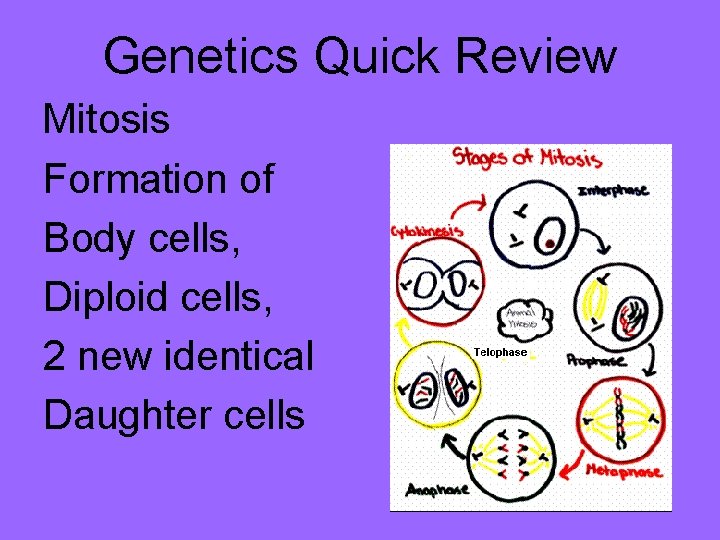
Genetics Quick Review Mitosis Formation of Body cells, Diploid cells, 2 new identical Daughter cells
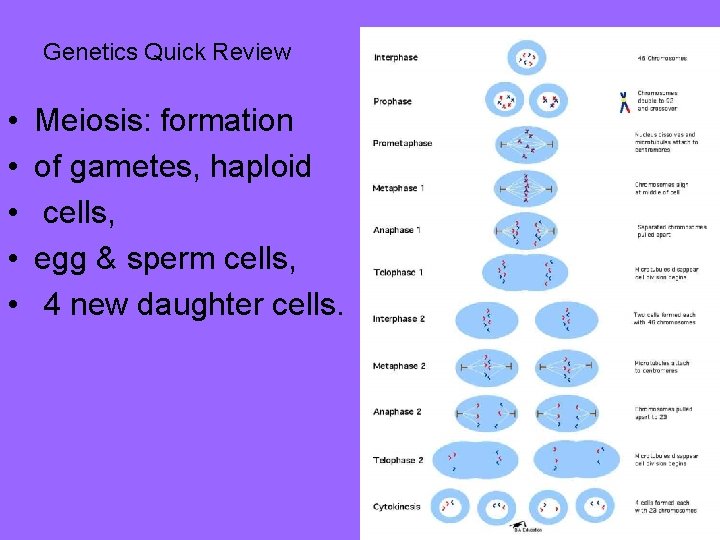
Genetics Quick Review • • • Meiosis: formation of gametes, haploid cells, egg & sperm cells, 4 new daughter cells.
Genetics • Gregor Mendel father of Genetics, studied pea plants, identified dominant and recessive traits. • Started to develope the Law of segregation
Genetics • Dominant & Recessive Genes (alleles) traits, represented by capital & lower case letters. Dominant trait will mask (hide recessive trait if organism has one gene for each trait. • Tall trait =T, short trait=t • Organism with the genotype TT or Tt will be tall • Organism with the genotype tt will be short • Geneticist use a punnett square to show probability and possibility of offspring traits.

Dominant and Recessive Traits 1 Gene cross • T= tall dominant t= short recessive

F 1 generations

Co-dominant Traits • Both traits show up usually use 2 capital letters: RR=red (homozygous / pure bred), WW=white homozygous / pure bred), RW= red & white petals (heterozygous / hybred) on flower. Roan cattle red and White fur (RW)

Co-dominant Traits Both traits show up roan cattle has both reddish and white fur.
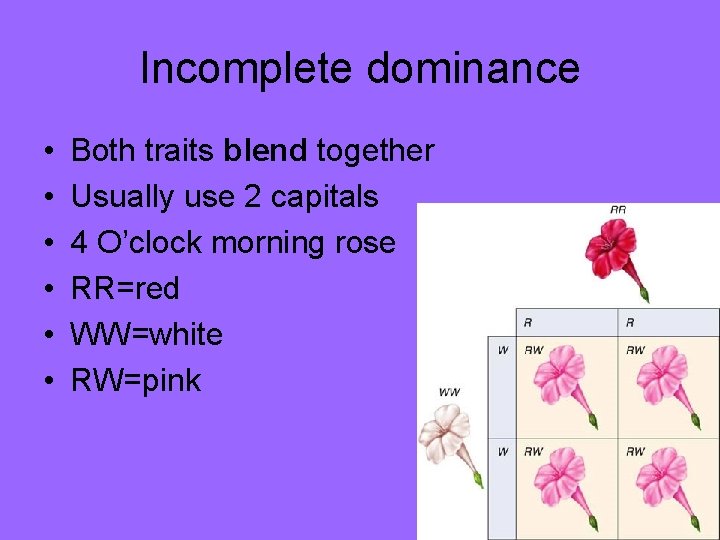
Incomplete dominance • • • Both traits blend together Usually use 2 capitals 4 O’clock morning rose RR=red WW=white RW=pink
Multiple Alleles BLOOD TYPE • A is co-dominant to type B-blood but dominant over type o-blood genotypes for type A-blood are AA or Ao • B is co-dominant to type A-blood but dominant over type o-blood genotypes for type B-blood are BB or Bo • O-blood is recessive to type A or type B therefore the only genotype o-blood has is oo, it is the universal donor. • AB are codominant to one anotherefore the genotype is AB both traits show up, this blood type is the universal recipient.

Blood Type
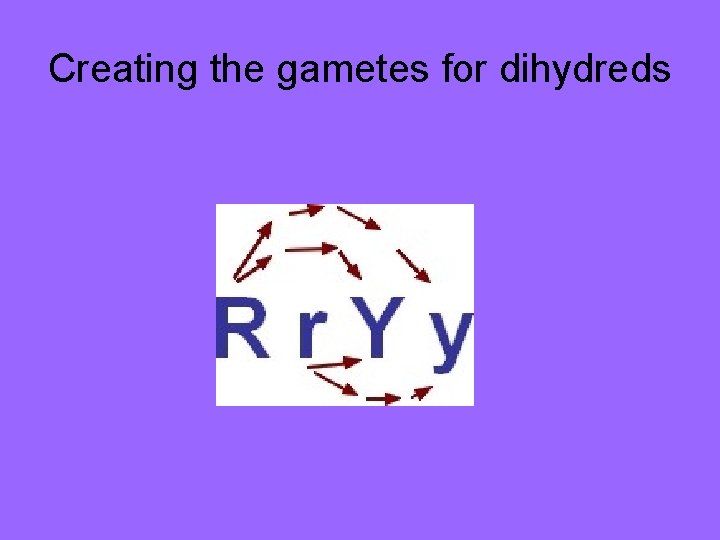
Creating the gametes for dihydreds
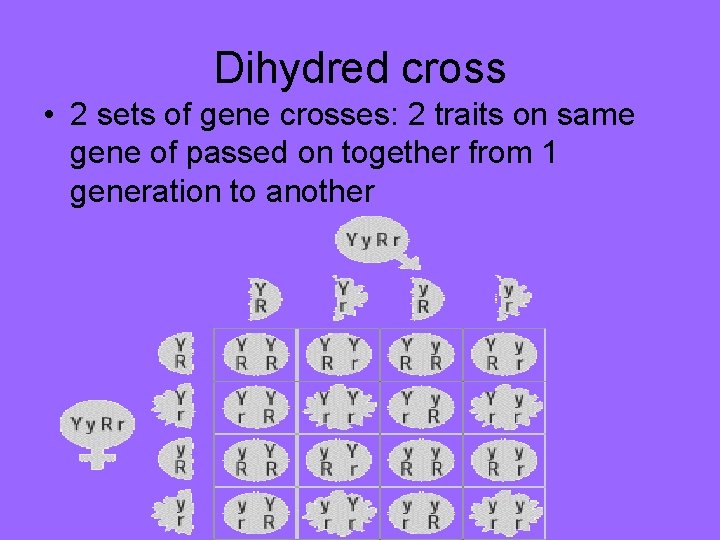
Dihydred cross • 2 sets of gene crosses: 2 traits on same gene of passed on together from 1 generation to another
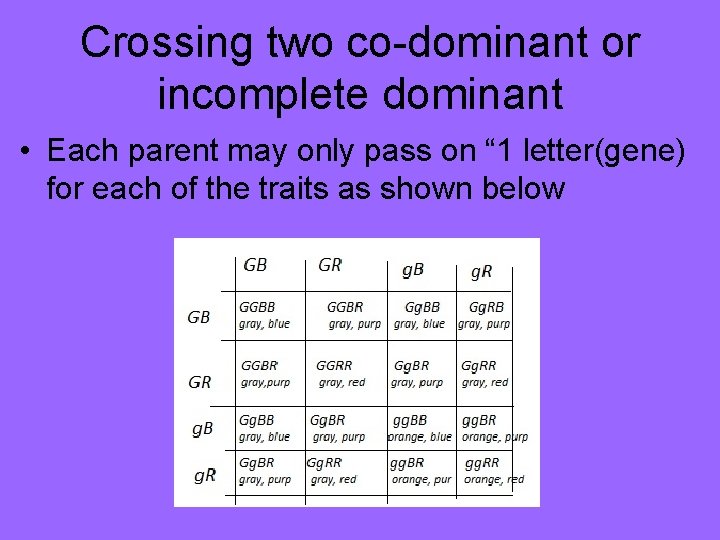
Crossing two co-dominant or incomplete dominant • Each parent may only pass on “ 1 letter(gene) for each of the traits as shown below
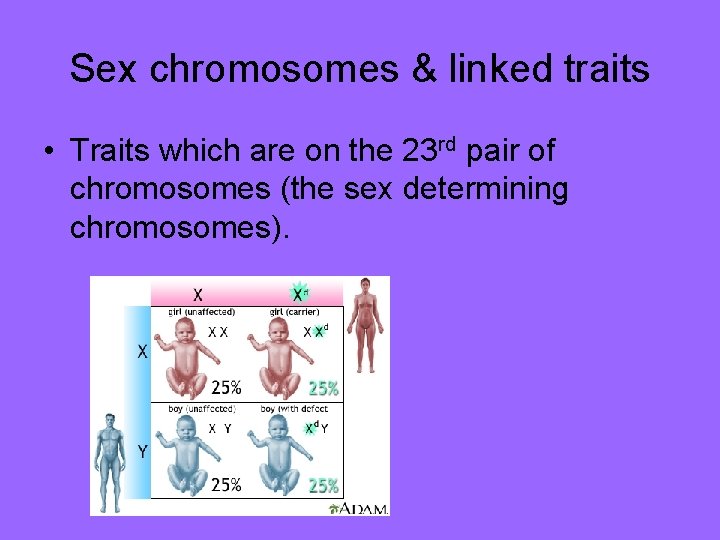
Sex chromosomes & linked traits • Traits which are on the 23 rd pair of chromosomes (the sex determining chromosomes).
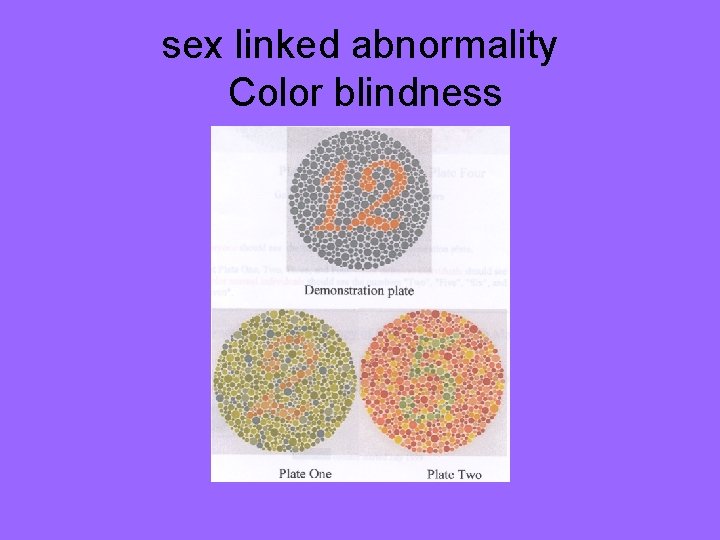
sex linked abnormality Color blindness
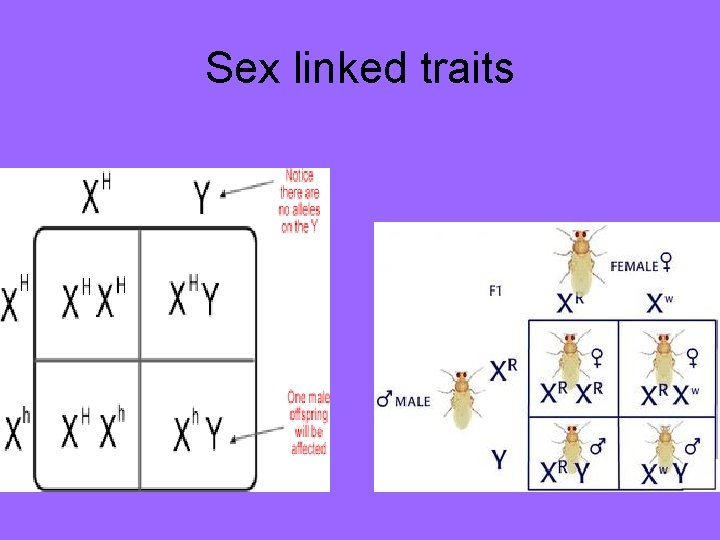
Sex linked traits
Genetic Testing • Testing is often done to check for the wellness of the offspring • Amniocentesis • Karyotype • Chorionic Villi Sampling • Pedigree
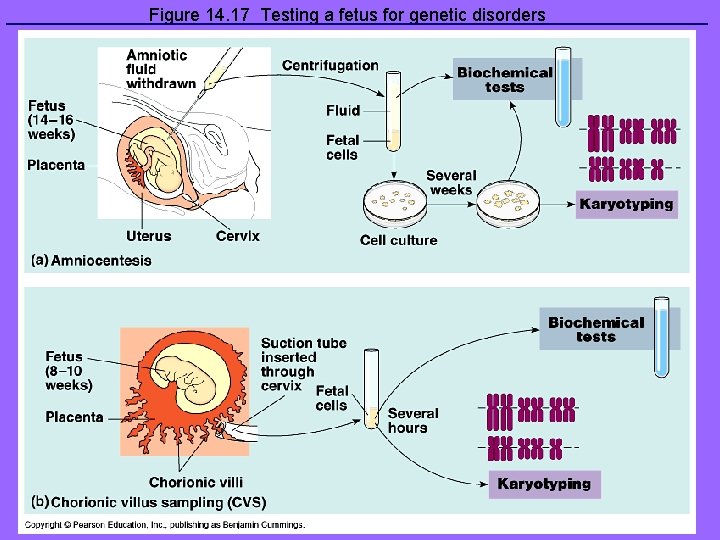
Figure 14. 17 Testing a fetus for genetic disorders

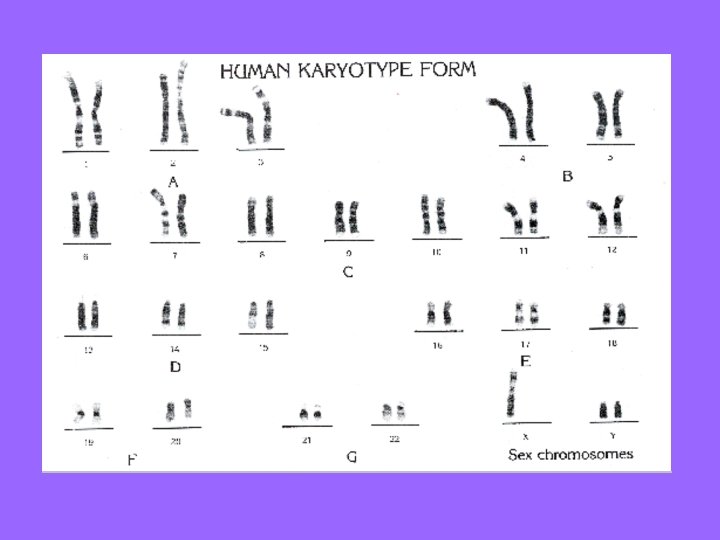
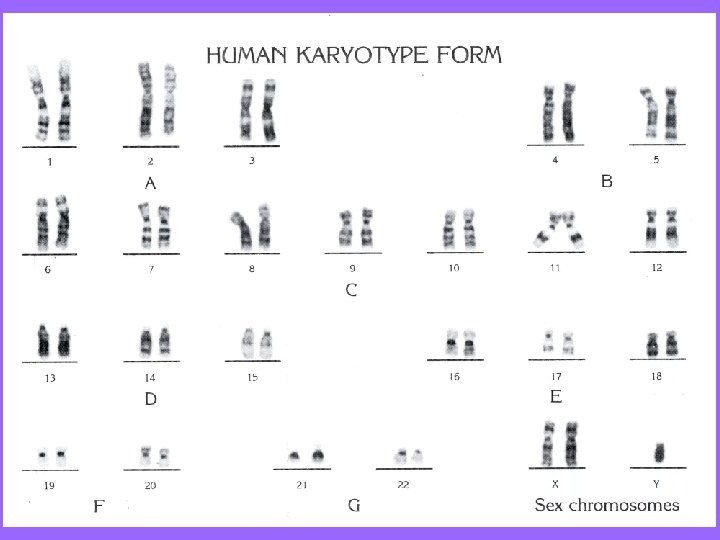
Karyotype
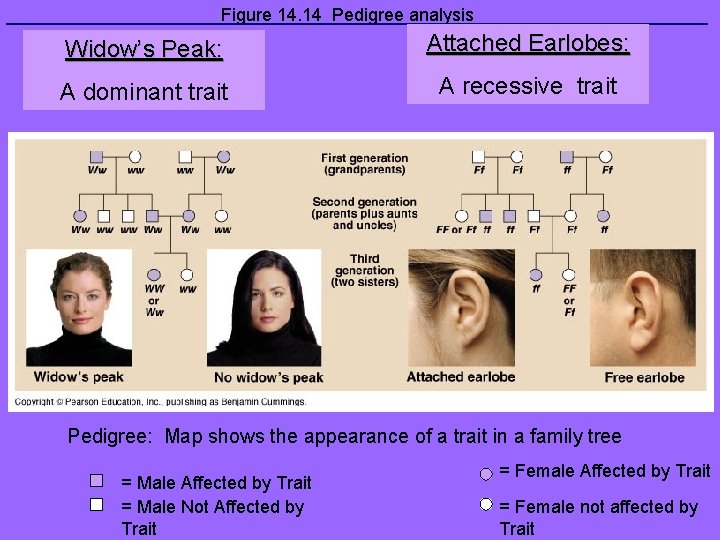
Figure 14. 14 Pedigree analysis Widow’s Peak: Attached Earlobes: A dominant trait A recessive trait Pedigree: Map shows the appearance of a trait in a family tree = Male Affected by Trait = Male Not Affected by Trait = Female not affected by Trait
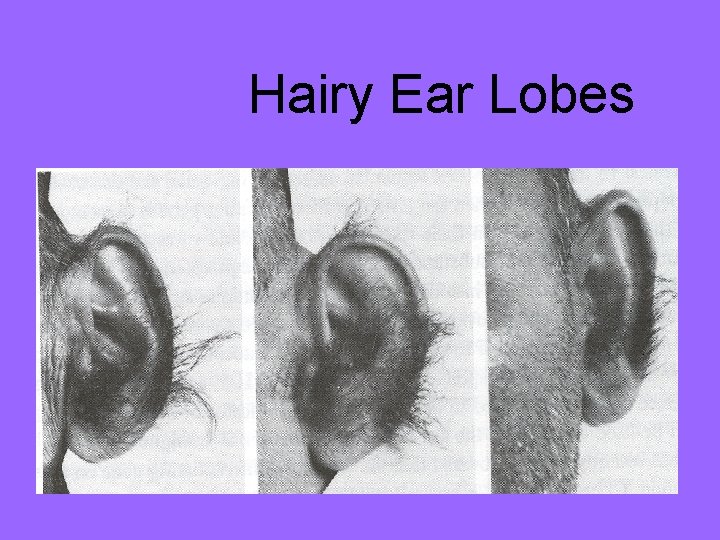
Hairy Ear Lobes
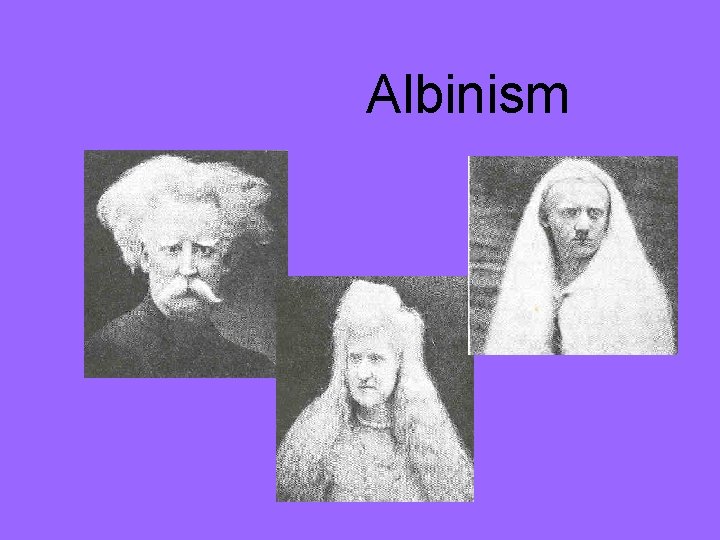
Albinism

Color Blindness
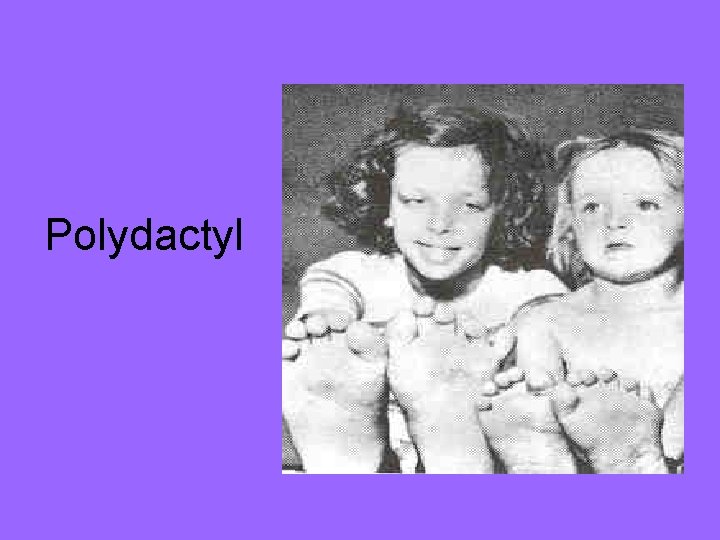
Polydactyl
Extra Y • • • Male 1: 1000 births Normal in appearance Usually tall Often exhibit aggressive behavior
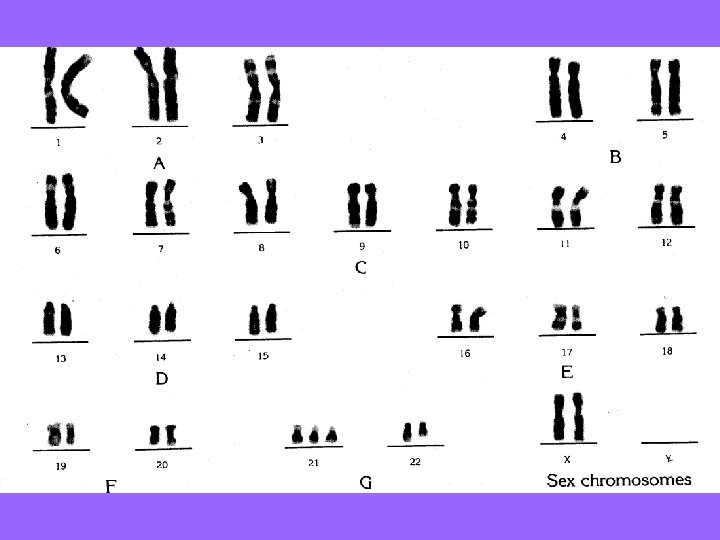

Trisomy 21 • Down’s Syndrome • Mental retardation • Flattened facial features • Thick tongue
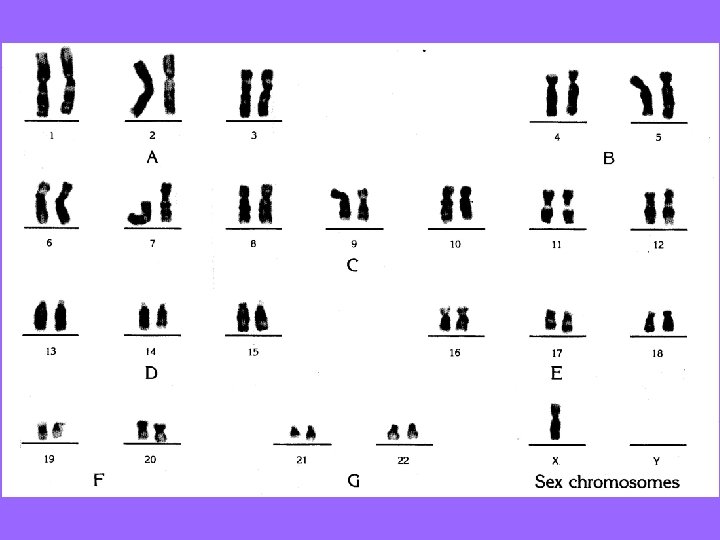

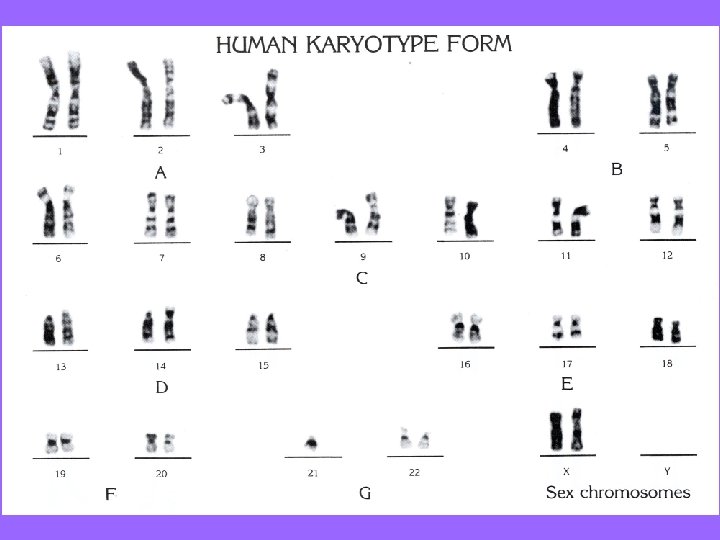
Turner’s Syndrome • Short webbed neck • Do not mature sexually • 99% spontaneously aborted
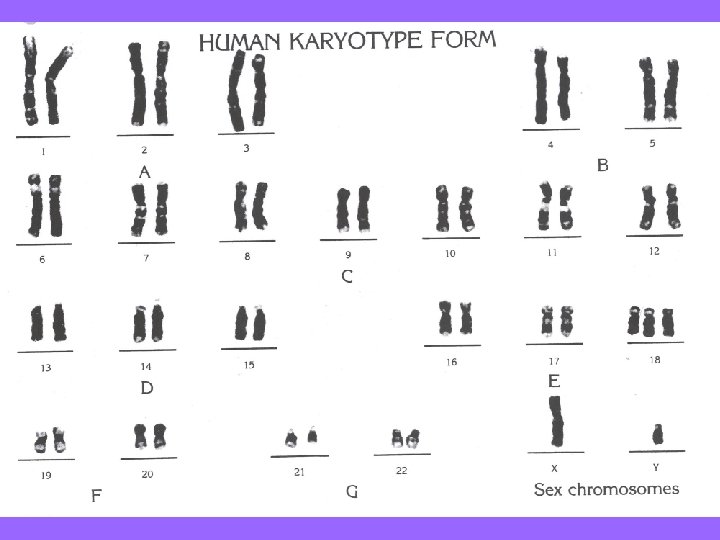

Trisomy 18 • • • Edward’s syndrome Mentally deficient Low set ears Short sternum Growth retardation 1: 8000
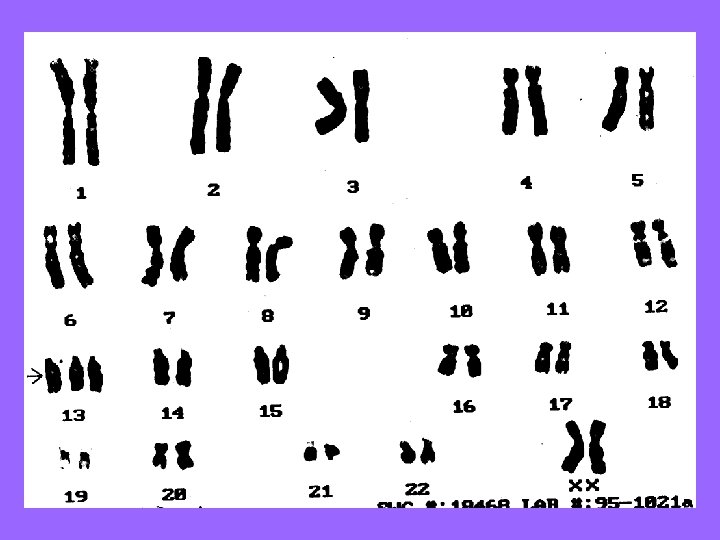

Trisomy 13 • Patau Syndrome • Severe malformations of facial and nervous system • mental deficiency • 1: 25, 000
Klinefelter’s Syndrome • • • Extra X 1: 1000 births Tall Lower intelligance Often infertile male
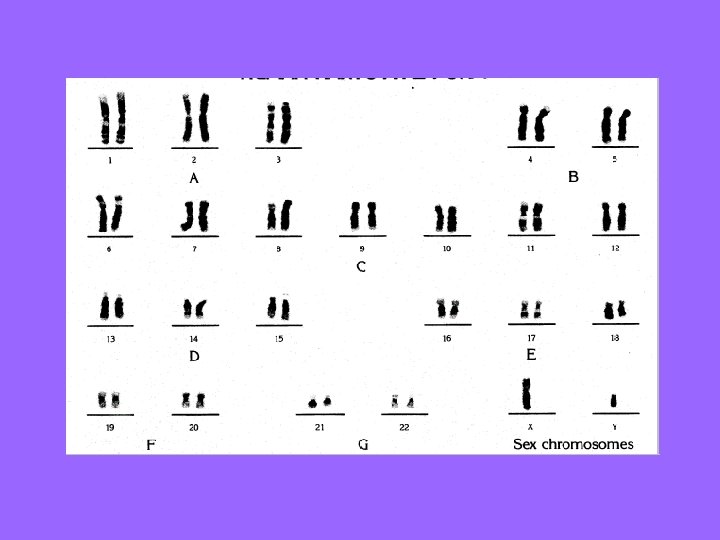

Cri du Chat • • • Deletion of 5 p Cat like cry feeding problems low birth weight severe cognitive, speech, and motor delays. • behavioral problems • unusual facial features.
- Slides: 40