
GENETICS PROJECT 2 By Jessica Dagenhart Hallee Robinson
GENETICS PROJECT 2 By: Jessica Dagenhart, Hallee Robinson and Mallory Fleagle
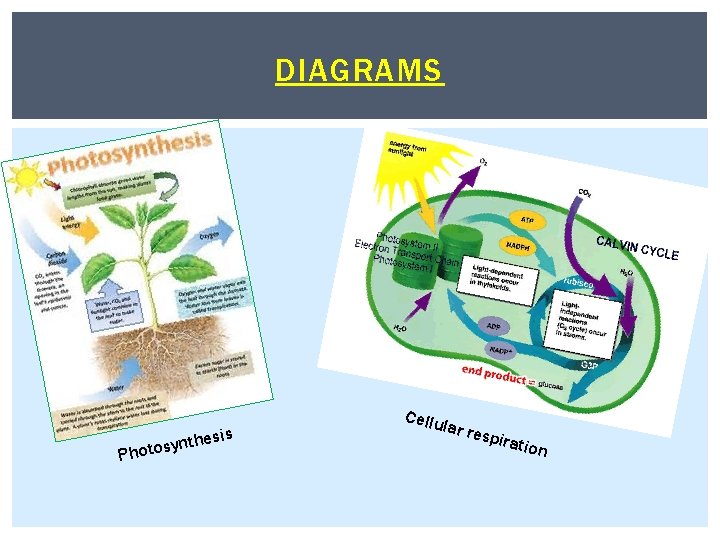
DIAGRAMS P thesis n y s o t ho Cellu lar re spira tion
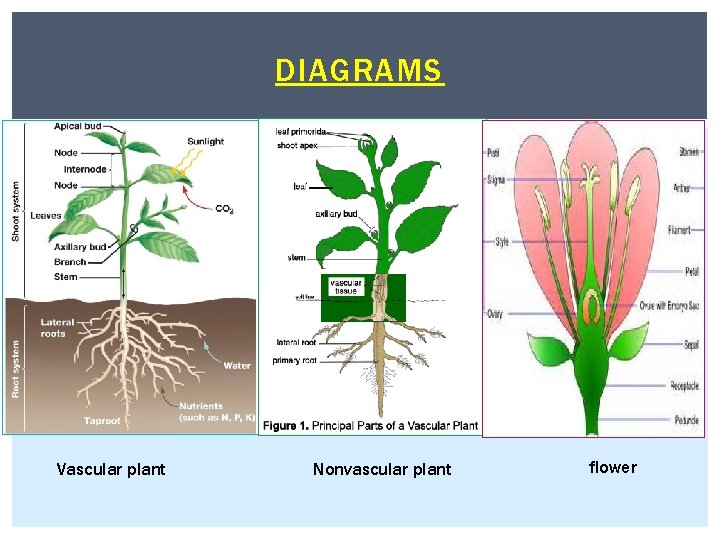
DIAGRAMS Vascular plant Nonvascular plant flower
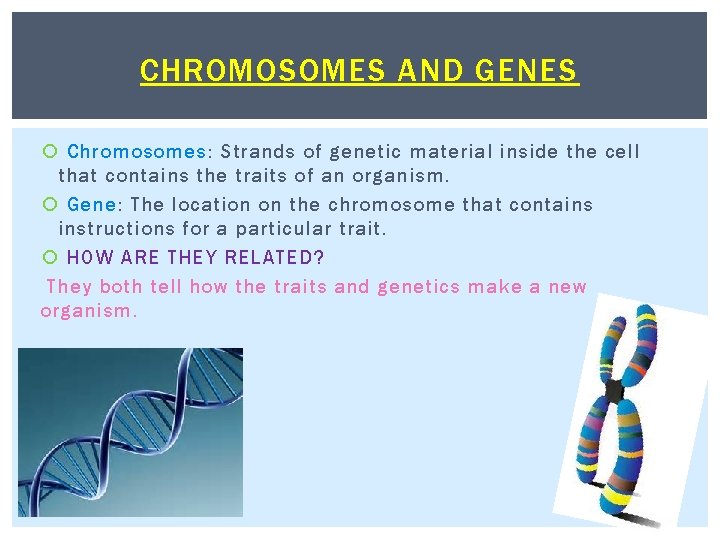
CHROMOSOMES AND GENES Chromosomes: Strands of genetic material inside the cell that contains the traits of an organism. Gene: The location on the chromosome that contains instructions for a particular trait. HOW ARE THEY RELATED? They both tell how the traits and genetics make a new organism.
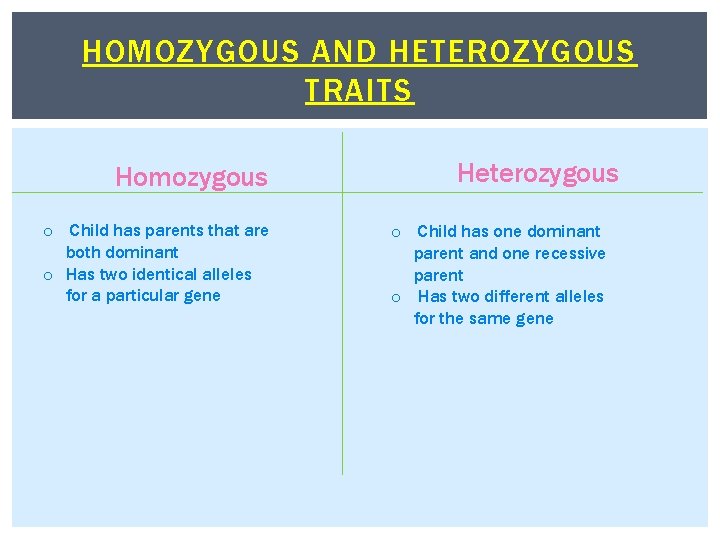
HOMOZYGOUS AND HETEROZYGOUS TRAITS Homozygous o Child has parents that are both dominant o Has two identical alleles for a particular gene Heterozygous o Child has one dominant parent and one recessive parent o Has two different alleles for the same gene
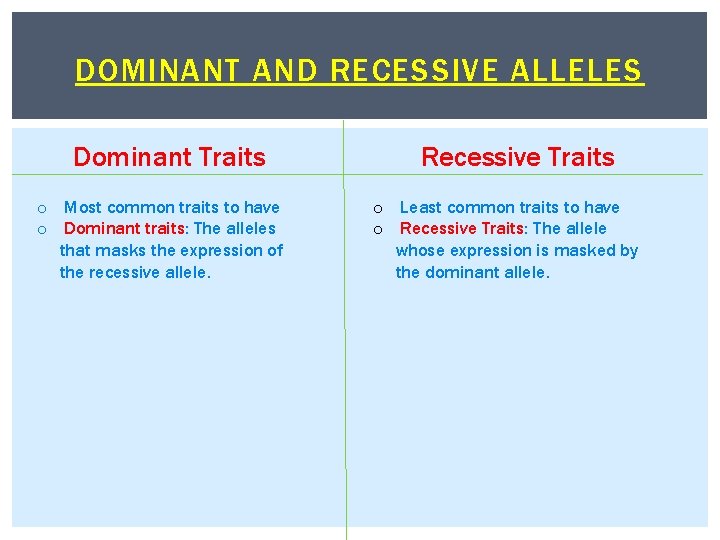
DOMINANT AND RECESSIVE ALLELES Dominant Traits o Most common traits to have o Dominant traits: The alleles that masks the expression of the recessive allele. Recessive Traits o Least common traits to have o Recessive Traits: The allele whose expression is masked by the dominant allele.
SAMPLE & SAMPLING Sample: A piece or part taken from the whole group, whose properties are studied to gain information about the whole group. Sampling: The process of selecting a suitable sample, or representative part, of the whole group. How are they related? They are both dealing with the different food groups with different processes. How are they different? They are dealing with different food groups, but they are dealing with them in different ways.
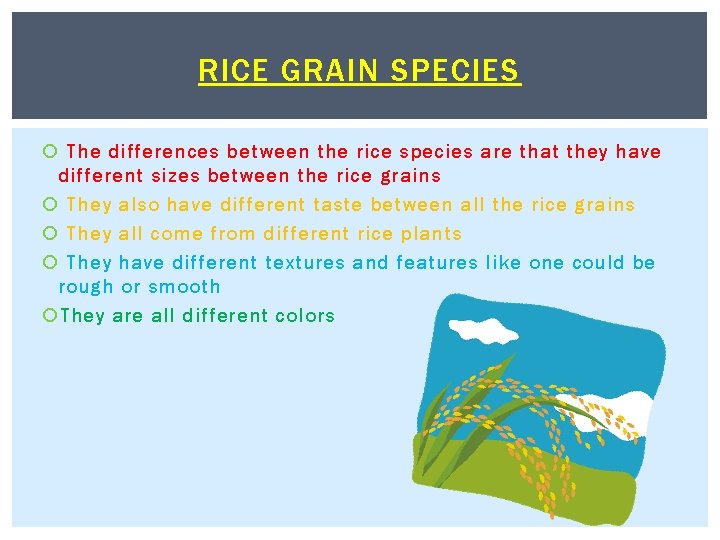
RICE GRAIN SPECIES The differences between the rice species are that they have different sizes between the rice grains They also have different taste between all the rice grains They all come from different rice plants They have different textures and features like one could be rough or smooth They are all different colors
HOW RICE IS CLASSIFIED IN THE WORLD They are classified as a staple food is a basic or necessary food item. It is used in so many places because it is nutritious and without rice people in different places around the world could starve.
CHARACTERISTICS OF PLANTS Plants are prokaryotic Plants have no nucleus Chlorophyll makes them green They have a stem, root, leaf Vascular and Non-Vascular
PLANT ADAPTION TO LAND Sun Roots to suck up the nutrients and water Leaves give off oxygen Photosynthesis Soil Water
PHOTOSYNTHESIS AND CELLULAR RESPIRATION Photosynthesis is the process by which some bacteria use the energy from sunlight to produce sugar which cellular respiration converts into A. T. P. Cellular Respiration is the process by which CO 2 and H 2 O and in the process A. T. P. is made, that can then be used for cellular work. How are they related? They are related because they both use nutrients to make sugars and A. T. P.
VASCULAR AND NON-VASCULAR PLANTS Non-vascular plants: any of the numerous plants of the division of bryophyta Vascular Plants: A plant that is characterized by the presence of conducting tissue How are they related? They both make their own food through photosynthesis. They both have a cell wall that protects the plant from damage and environmental stress They both reproduce by sexual fertilization Are they different? Vascular plants have a system that is intricate Non vascular plants do not have a very complex water distribution and for this reason cannot support large growth
SEED AND SEEDLESS PLANTS Seed plants: A seed bearing plant Seedless plants: A non- seed bearing plants How are they similar? They both produce food and energy with the process known as photosynthesis. They also both have the same basic structures to survive How are they different? They are different because seedless plants don’t have seeds and seed plants contain seeds.
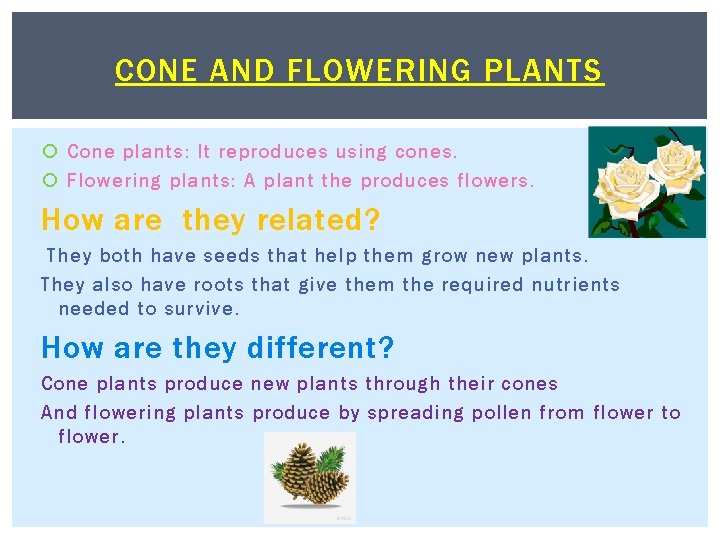
CONE AND FLOWERING PLANTS Cone plants: It reproduces using cones. Flowering plants: A plant the produces flowers. How are they related? They both have seeds that help them grow new plants. They also have roots that give them the required nutrients needed to survive. How are they different? Cone plants produce new plants through their cones And flowering plants produce by spreading pollen from flower to flower.
MONOCOTS AND DICOTS FLOWERING PLANTS Monocots: A monocotyledon Dicots: A dicotyledon How are they similar? Both characterized both as plants and can make food and energy using photosynthesis and both are apart of the angiosperm group How are they different? Monocots have one seed and have flowers in multiples of three And dicots have two seeds and have flowers in multiples of four of five
- Slides: 16