
Genetics of Blood Types Your blood type is

Genetics of Blood Types • Your blood type is established by specific GENES inherited from your parents. • These genes determine your blood type by causing proteins called ANTIGENS to exist on the surface of all of your red blood cells. • Antigens are also called agglutinogens because they can cause your blood to clump (agglutinate) if they meet up with antibodies
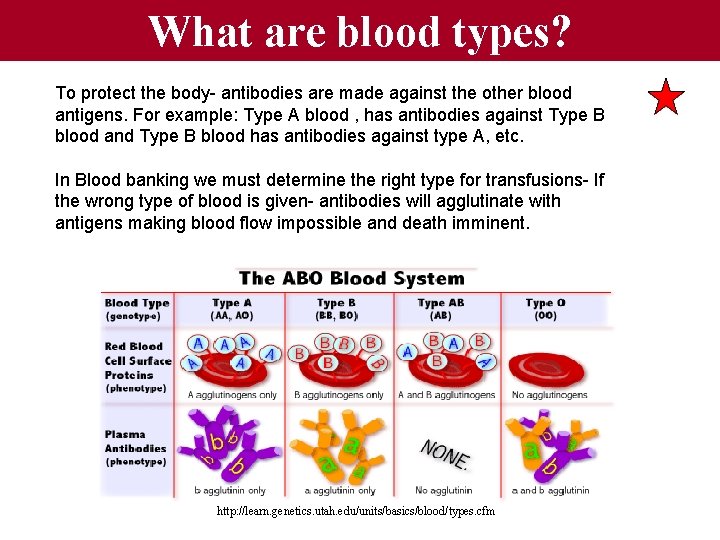
What are blood types? To protect the body- antibodies are made against the other blood antigens. For example: Type A blood , has antibodies against Type B blood and Type B blood has antibodies against type A, etc. In Blood banking we must determine the right type for transfusions- If the wrong type of blood is given- antibodies will agglutinate with antigens making blood flow impossible and death imminent. http: //learn. genetics. utah. edu/units/basics/blood/types. cfm
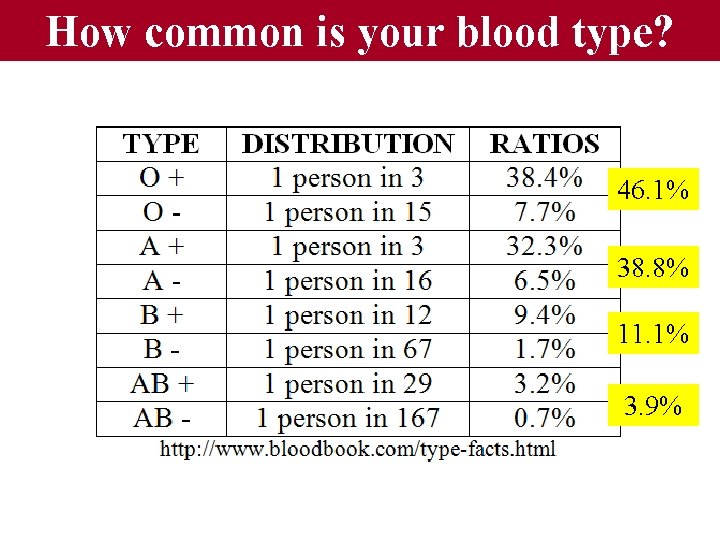
How common is your blood type? 46. 1% 38. 8% 11. 1% 3. 9%
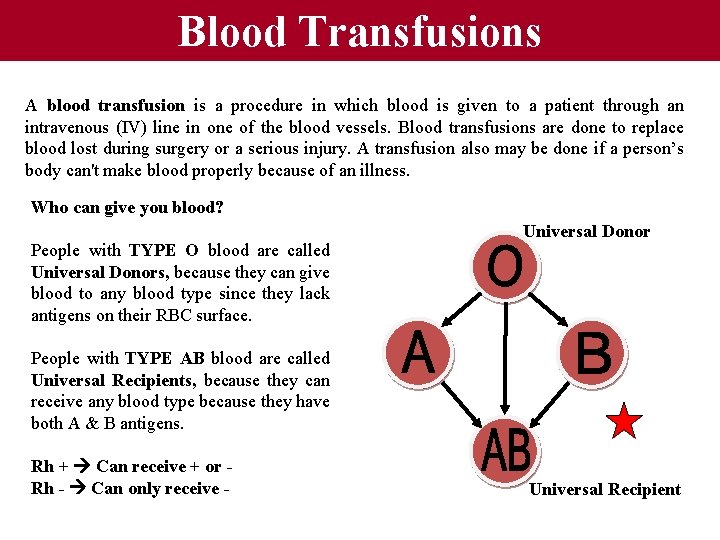
Blood Transfusions A blood transfusion is a procedure in which blood is given to a patient through an intravenous (IV) line in one of the blood vessels. Blood transfusions are done to replace blood lost during surgery or a serious injury. A transfusion also may be done if a person’s body can't make blood properly because of an illness. Who can give you blood? People with TYPE O blood are called Universal Donors, because they can give blood to any blood type since they lack antigens on their RBC surface. Universal Donor People with TYPE AB blood are called Universal Recipients, because they can receive any blood type because they have both A & B antigens. Rh + Can receive + or Rh - Can only receive - Universal Recipient
- Slides: 5