
Genetics Is the study of how traits are
- Slides: 76
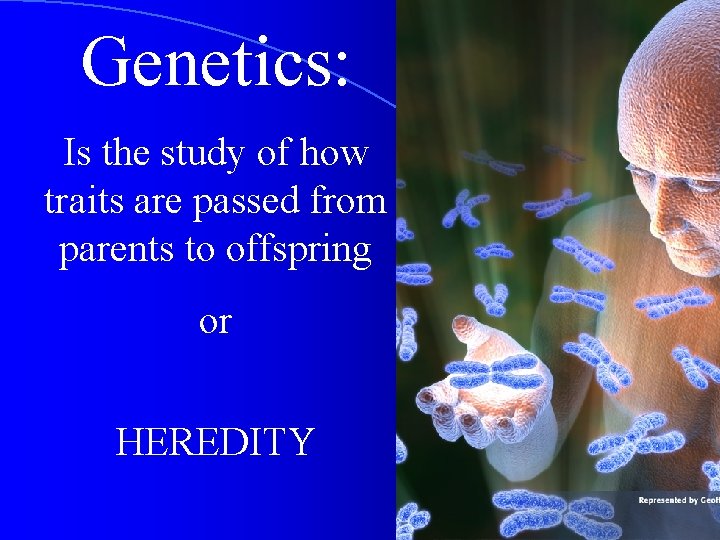
Genetics: Is the study of how traits are passed from parents to offspring or HEREDITY
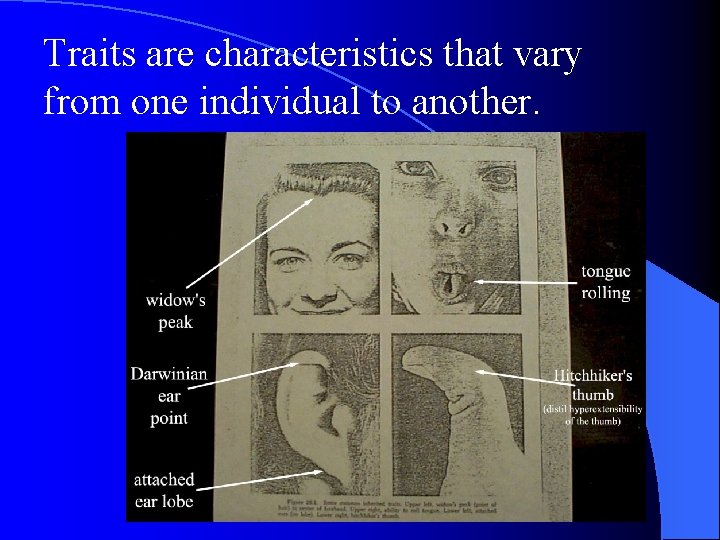
Traits are characteristics that vary from one individual to another.
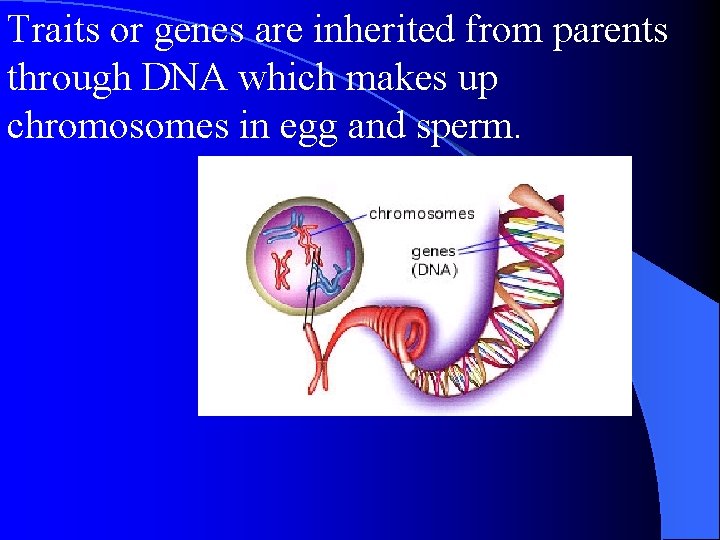
Traits or genes are inherited from parents through DNA which makes up chromosomes in egg and sperm.
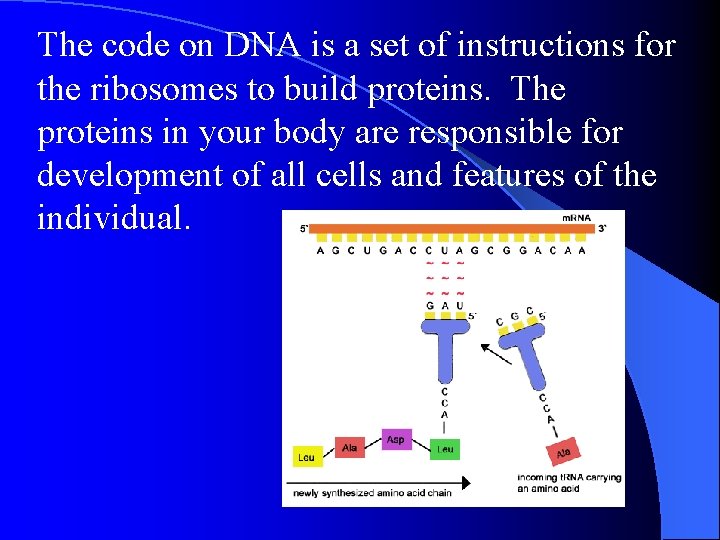
The code on DNA is a set of instructions for the ribosomes to build proteins. The proteins in your body are responsible for development of all cells and features of the individual.
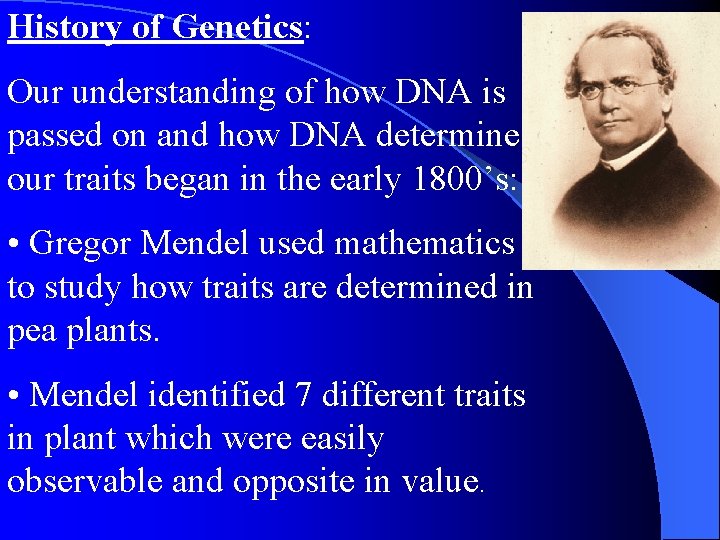
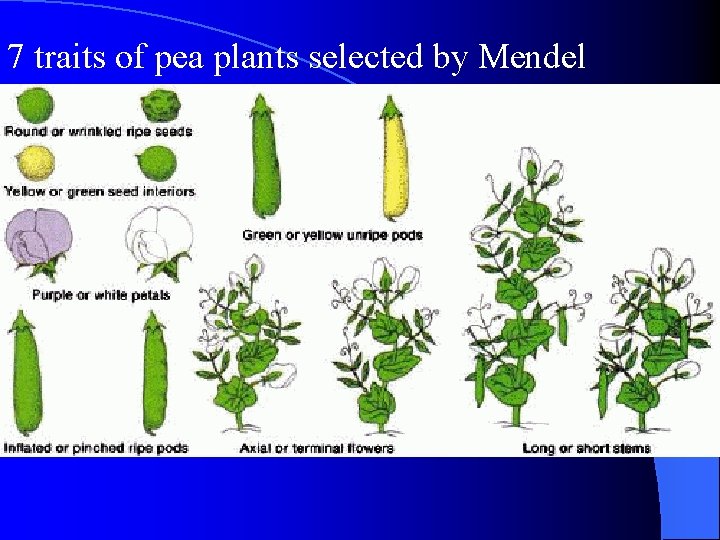
History of Genetics: Our understanding of how DNA is passed on and how DNA determines our traits began in the early 1800’s: • Gregor Mendel used mathematics to study how traits are determined in pea plants. • Mendel identified 7 different traits in plant which were easily observable and opposite in value.
7 traits of pea plants selected by Mendel
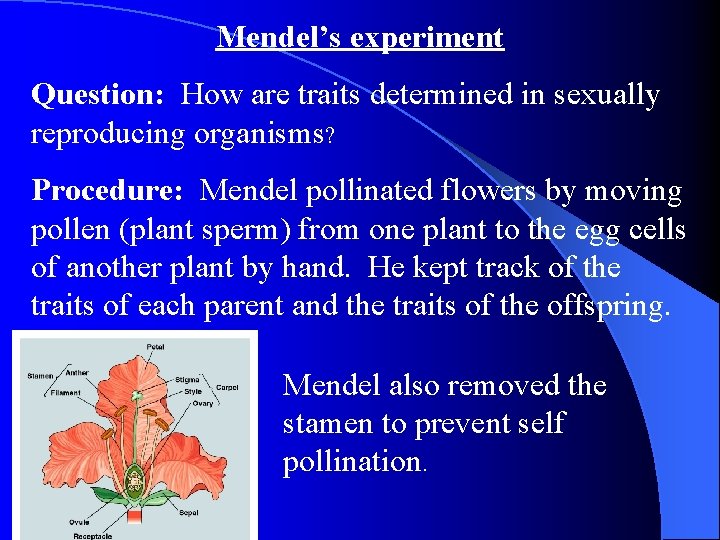
Mendel’s experiment Question: How are traits determined in sexually reproducing organisms? Procedure: Mendel pollinated flowers by moving pollen (plant sperm) from one plant to the egg cells of another plant by hand. He kept track of the traits of each parent and the traits of the offspring. Mendel also removed the stamen to prevent self pollination.
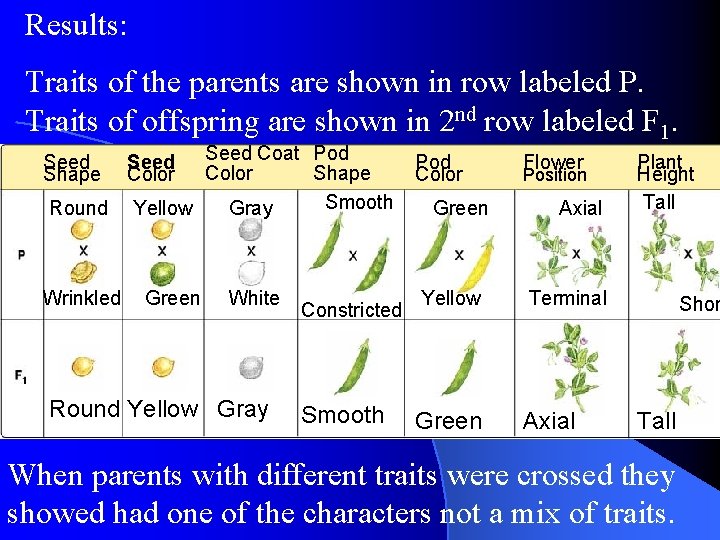
Results: Traits of the parents are shown in row labeled P. Traits of offspring are shown in 2 nd row labeled F 1. Section 11 -1 Seed Shape Round Wrinkled Seed Coat Pod Color Shape Smooth Yellow Gray Seed Color Green White Round Yellow Gray Constricted Smooth Pod Color Green Flower Position Axial Yellow Terminal Green Axial Plant Height Tall Shor Tall When parents with different traits were crossed they showed had one of the characters not a mix of traits.
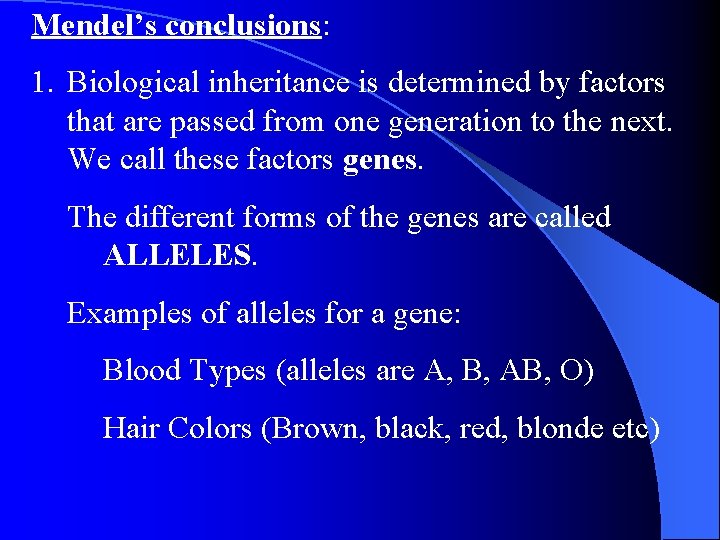
Mendel’s conclusions: 1. Biological inheritance is determined by factors that are passed from one generation to the next. We call these factors genes. The different forms of the genes are called ALLELES. Examples of alleles for a gene: Blood Types (alleles are A, B, AB, O) Hair Colors (Brown, black, red, blonde etc)
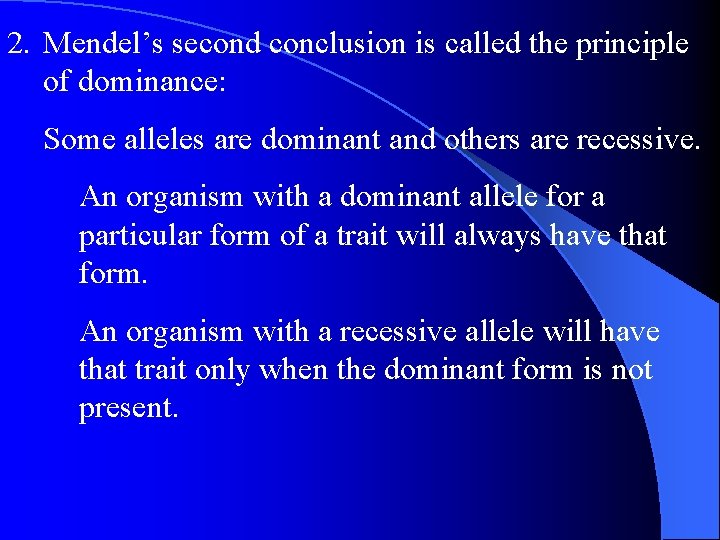
2. Mendel’s second conclusion is called the principle of dominance: Some alleles are dominant and others are recessive. An organism with a dominant allele for a particular form of a trait will always have that form. An organism with a recessive allele will have that trait only when the dominant form is not present.
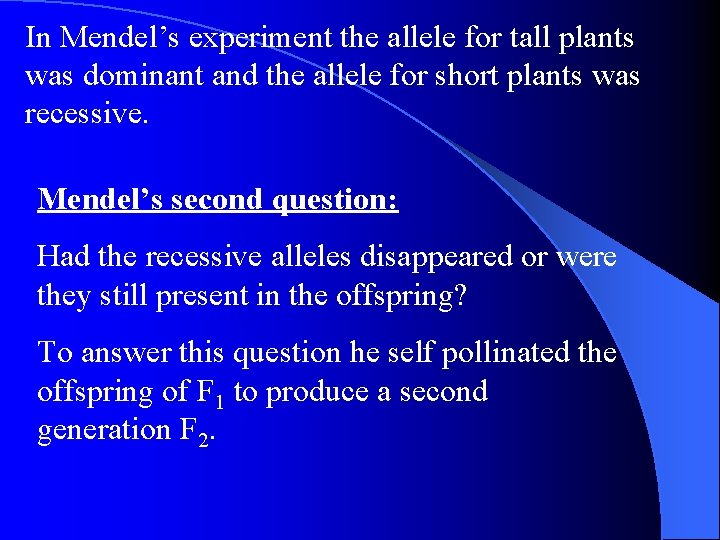
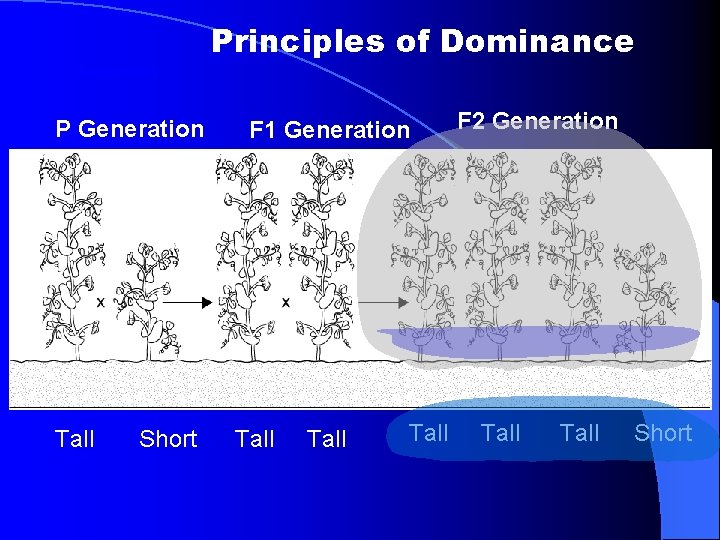
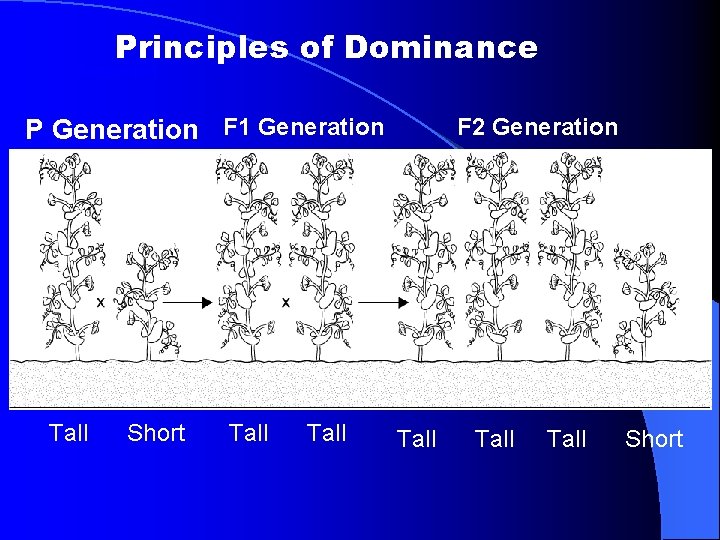
In Mendel’s experiment the allele for tall plants was dominant and the allele for short plants was recessive. Mendel’s second question: Had the recessive alleles disappeared or were they still present in the offspring? To answer this question he self pollinated the offspring of F 1 to produce a second generation F 2.
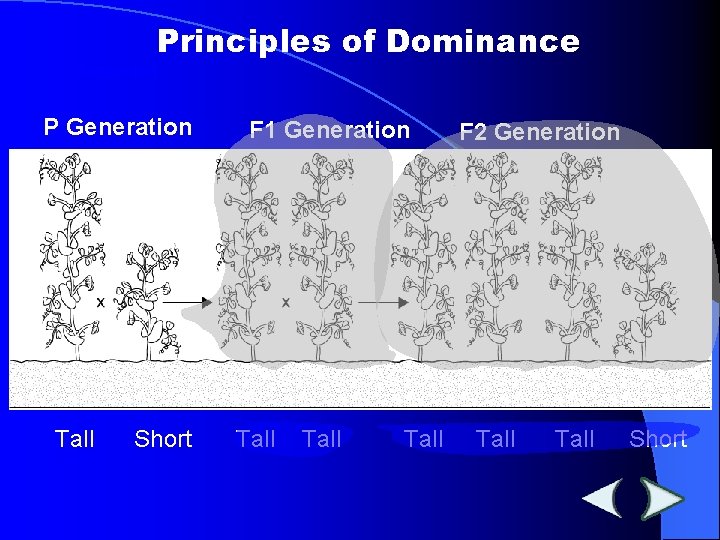
Principles of Dominance Section 11 -1 P Generation F 1 Generation F 2 Generation P Generation Tall Short Tall Tall Short
Principles of Dominance Section 11 -1 P Generation Tall Short F 1 Generation Tall F 2 Generation Tall Short
Principles of Dominance Section 11 -1 P Generation F 1 Generation Tall Short Tall F 2 Generation Tall Short
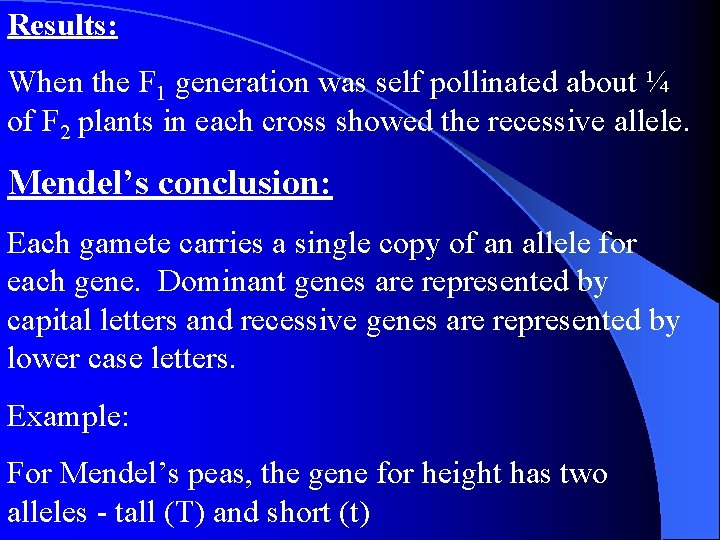
Results: When the F 1 generation was self pollinated about ¼ of F 2 plants in each cross showed the recessive allele. Mendel’s conclusion: Each gamete carries a single copy of an allele for each gene. Dominant genes are represented by capital letters and recessive genes are represented by lower case letters. Example: For Mendel’s peas, the gene for height has two alleles - tall (T) and short (t)
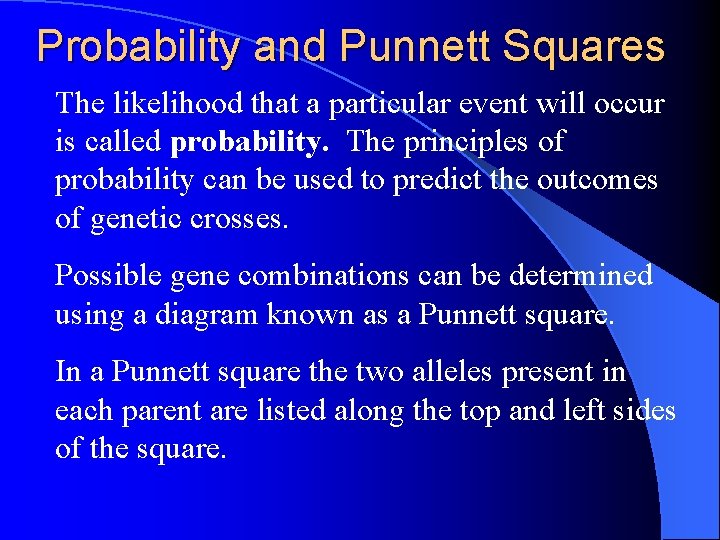
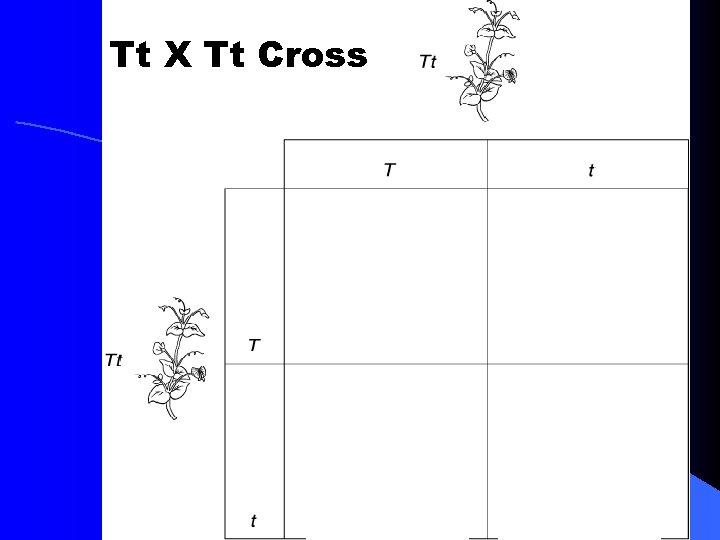
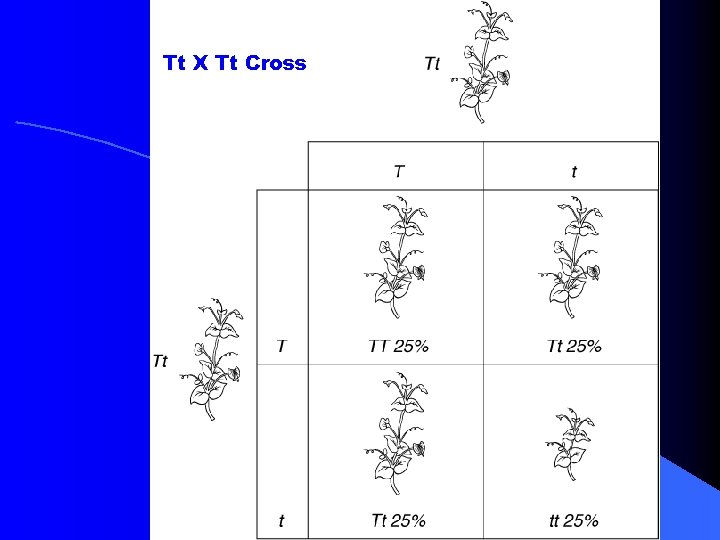
Probability and Punnett Squares The likelihood that a particular event will occur is called probability. The principles of probability can be used to predict the outcomes of genetic crosses. Possible gene combinations can be determined using a diagram known as a Punnett square. In a Punnett square the two alleles present in each parent are listed along the top and left sides of the square.
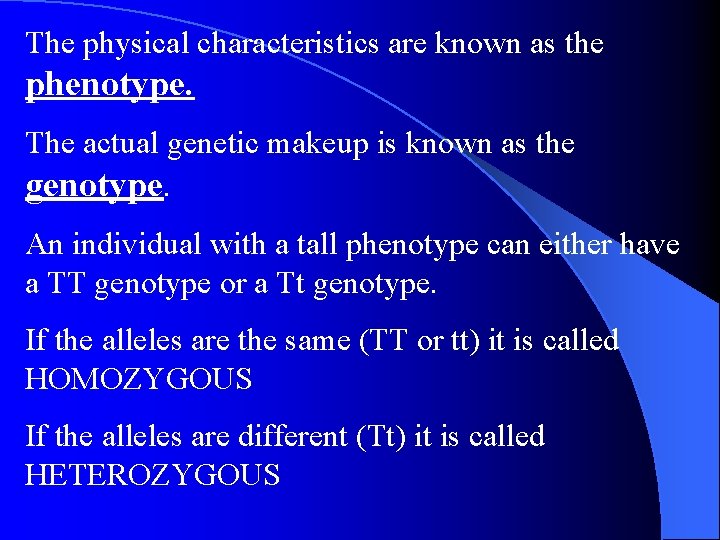
The physical characteristics are known as the phenotype. The actual genetic makeup is known as the genotype. An individual with a tall phenotype can either have a TT genotype or a Tt genotype. If the alleles are the same (TT or tt) it is called HOMOZYGOUS If the alleles are different (Tt) it is called HETEROZYGOUS
Tt X Tt Cross
Tt X Tt Cross
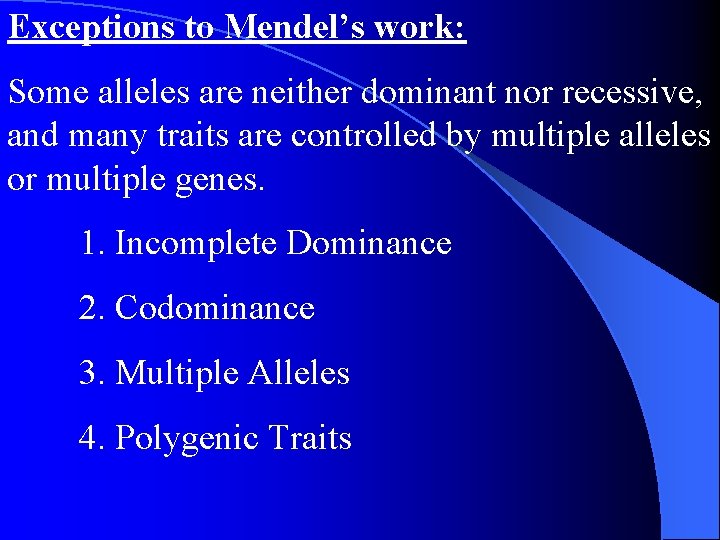
Exceptions to Mendel’s work: Some alleles are neither dominant nor recessive, and many traits are controlled by multiple alleles or multiple genes. 1. Incomplete Dominance 2. Codominance 3. Multiple Alleles 4. Polygenic Traits
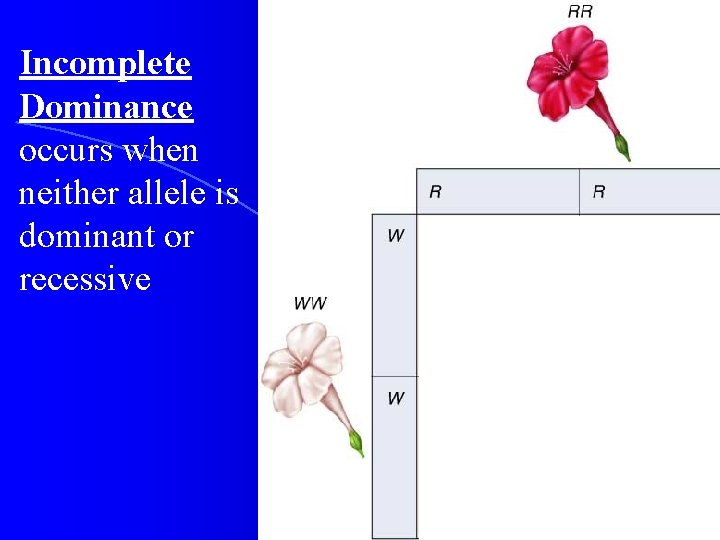
Incomplete Dominance occurs when neither allele is dominant or recessive
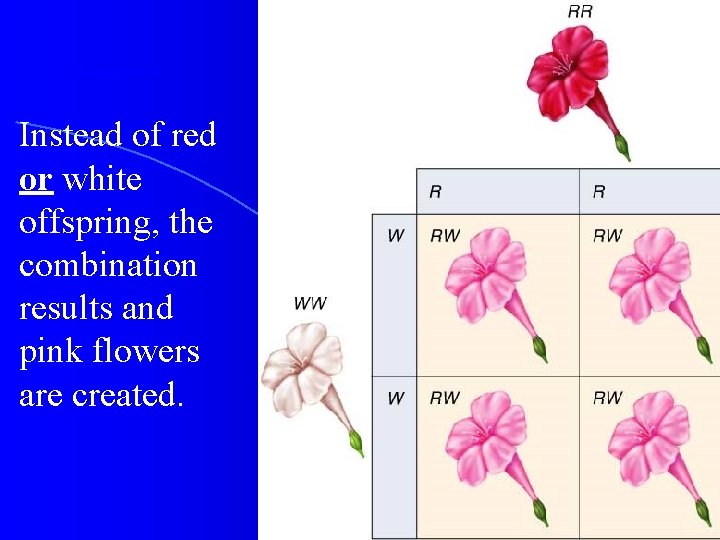
Section 11 -3 Instead of red or white offspring, the combination results and pink flowers are created.
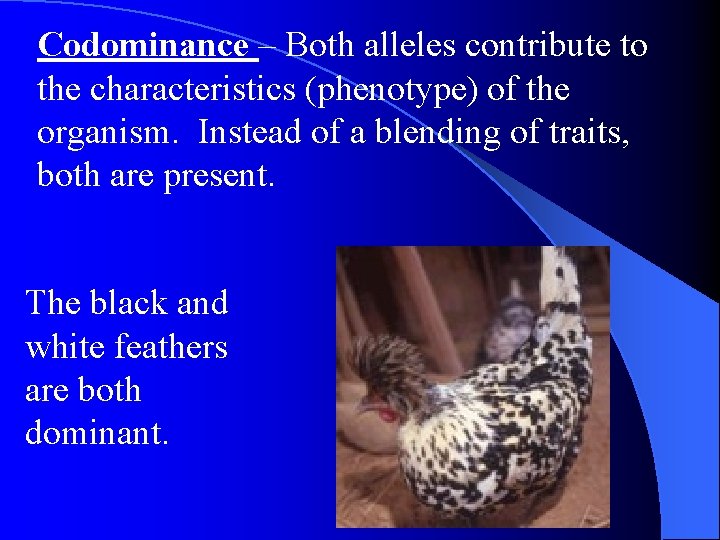
Codominance – Both alleles contribute to the characteristics (phenotype) of the organism. Instead of a blending of traits, both are present. The black and white feathers are both dominant.
Multiple Alleles: More than two alleles exists. An individual can only have two alleles but there are lots of options. Examples: Human eye color, hair color, blood type Eye color Alleles
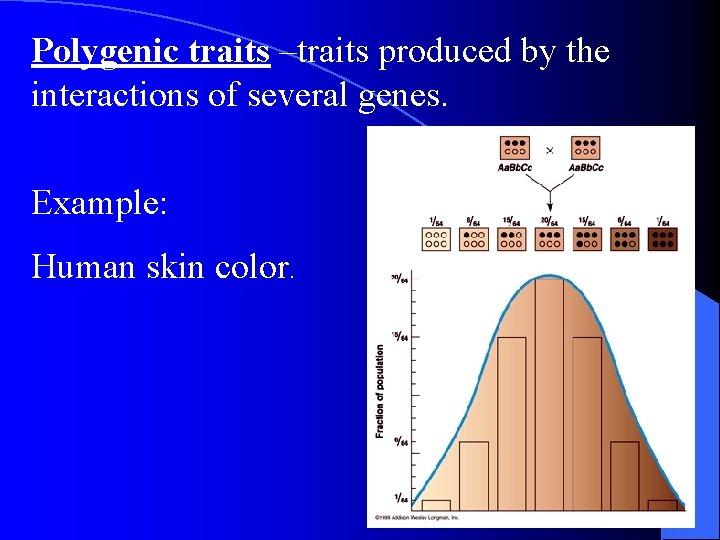
Polygenic traits –traits produced by the interactions of several genes. Example: Human skin color.
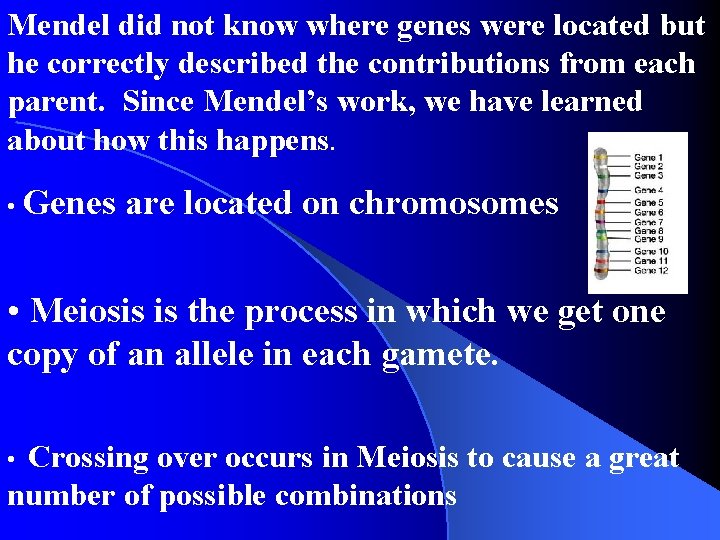
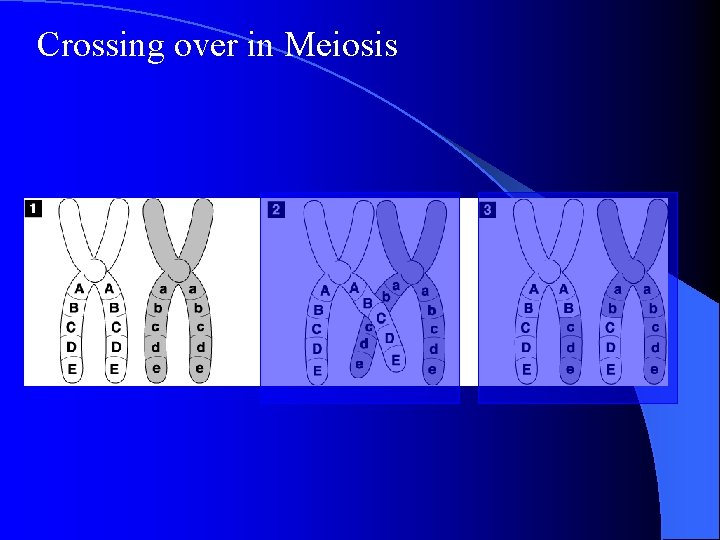
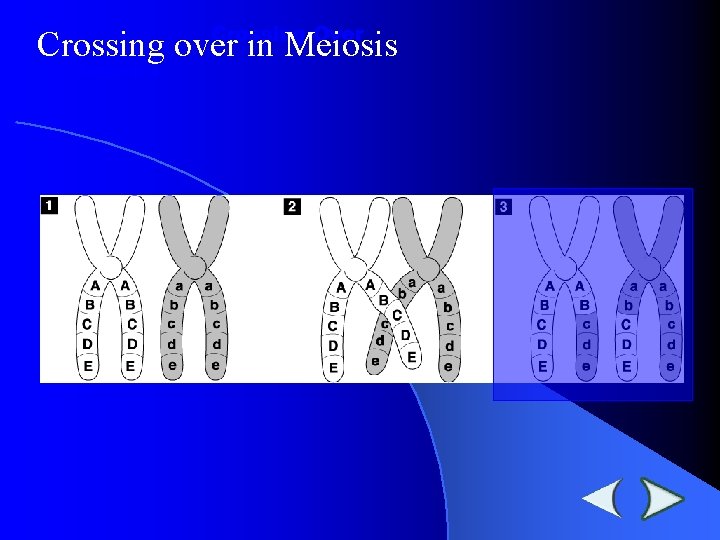
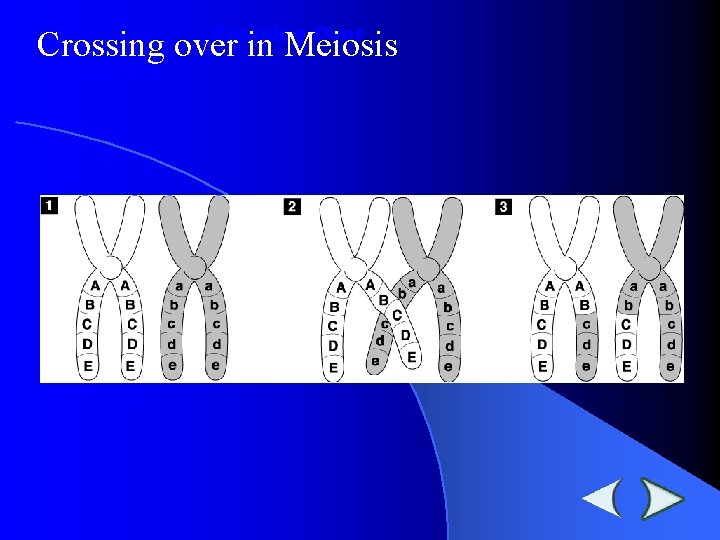
Mendel did not know where genes were located but he correctly Section 11 -4 described the contributions from each parent. Since Mendel’s work, we have learned about how this happens. • Genes are located on chromosomes • Meiosis is the process in which we get one copy of an allele in each gamete. Crossing over occurs in Meiosis to cause a great number of possible combinations •
Crossing over in Meiosis
Crossing-Over Crossing over in Meiosis Section 11 -4
Crossing-Over Crossing over in Meiosis Section 11 -4
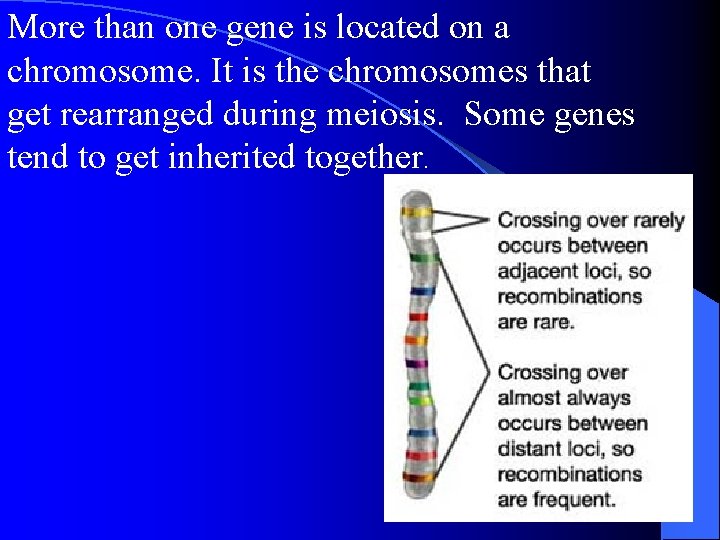
More than one gene is located on a chromosome. It is the chromosomes that get rearranged during meiosis. Some genes tend to get inherited together.
Genes are really just a code. A code for what? Proteins! Enzymes are proteins needed for reactions. These reactions could produce pigment for flowers, control growth, determine the shape of a leaf, or even the sex of a baby. Proteins are the keys to everything that living cells do!
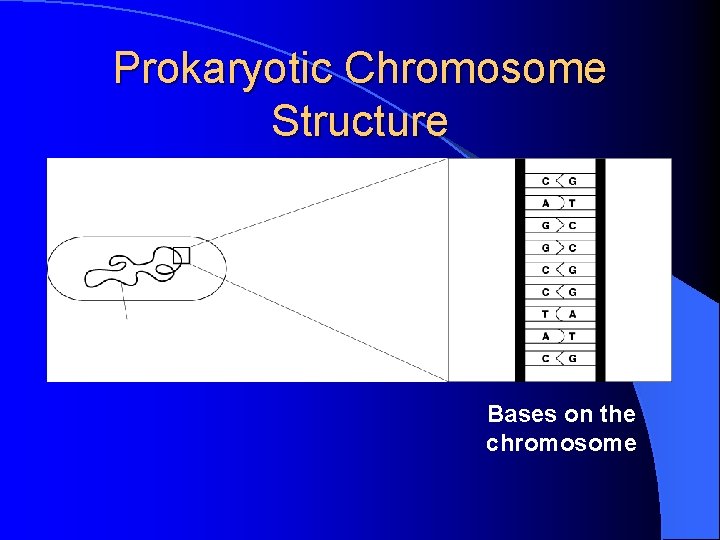
Prokaryotic Chromosome Structure Bases on the chromosome
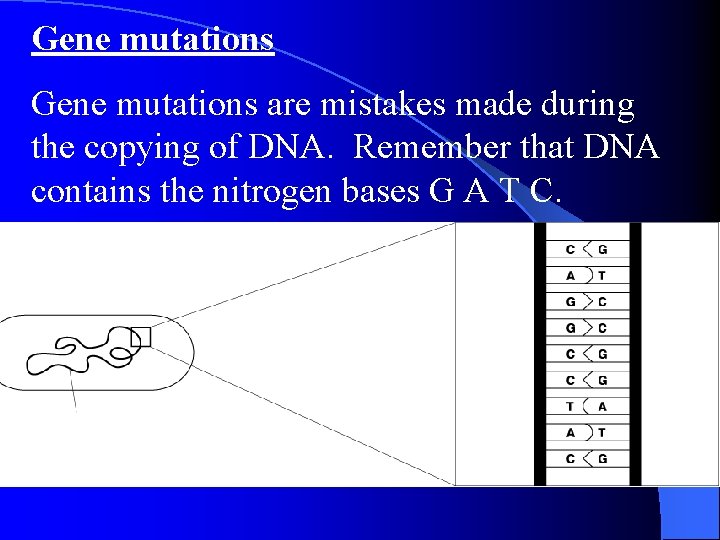
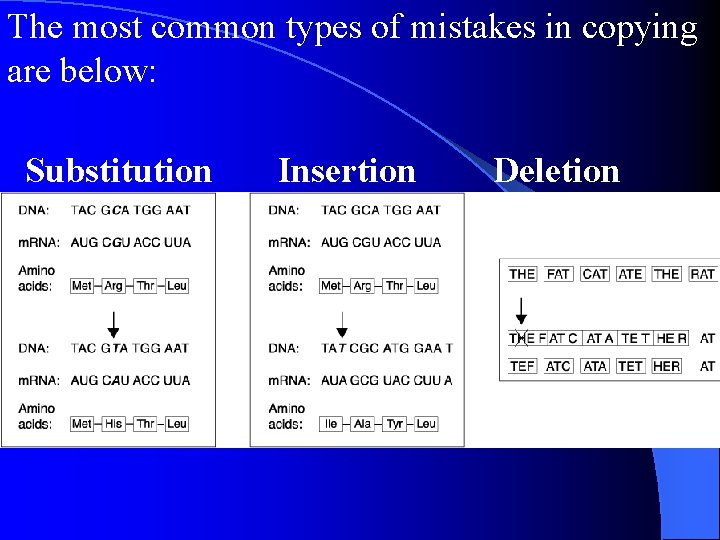
Gene mutations are mistakes made during the copying of DNA. Remember that DNA contains the nitrogen bases G A T C.
The most common types of mistakes in copying are below: Substitution Insertion Deletion
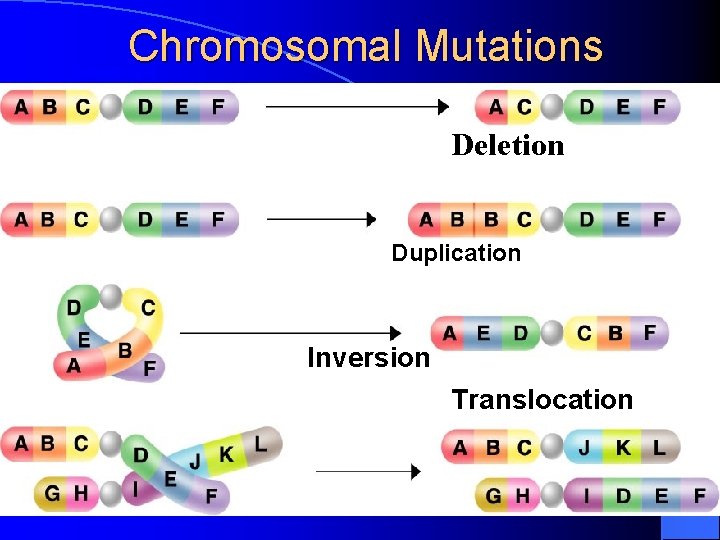
Chromosomal Mutations Section 12 -4 Deletion Duplication Inversion Translocation
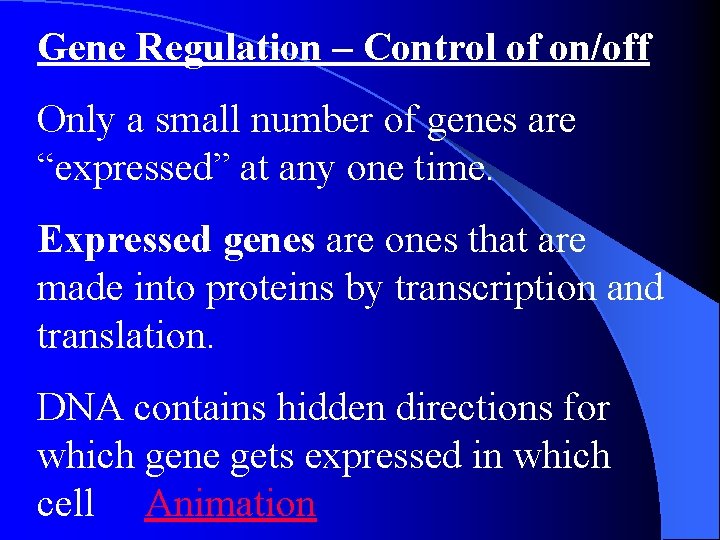
Gene Regulation – Control of on/off Only a small number of genes are “expressed” at any one time. Expressed genes are ones that are made into proteins by transcription and translation. DNA contains hidden directions for which gene gets expressed in which cell Animation
Genes are controlled by the environment as well as the DNA. If a protein requires an amino acid that is not available the DNA has a method for checking before it starts building. A gene will not be “expressed” if it is not needed. Example: You will not make the enzyme lactase unless lactose is present. Genes have “on/off” switches to control making of lactase.
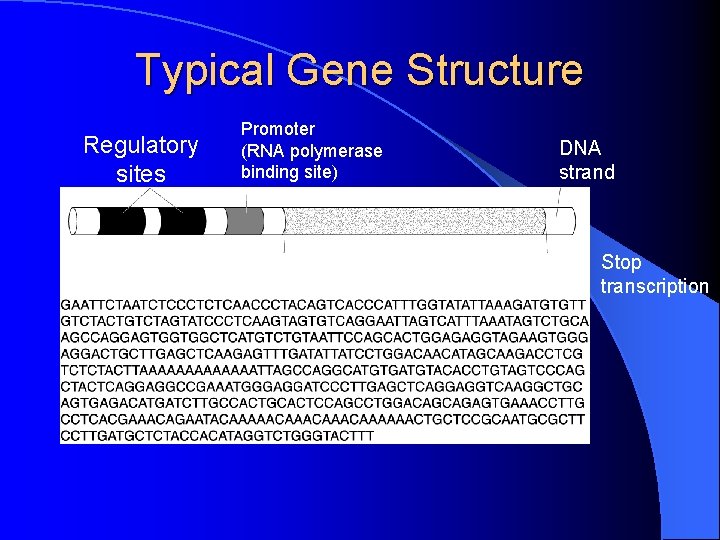
Typical Gene Structure Regulatory sites Promoter (RNA polymerase binding site) Start transcription DNA strand Stop transcription
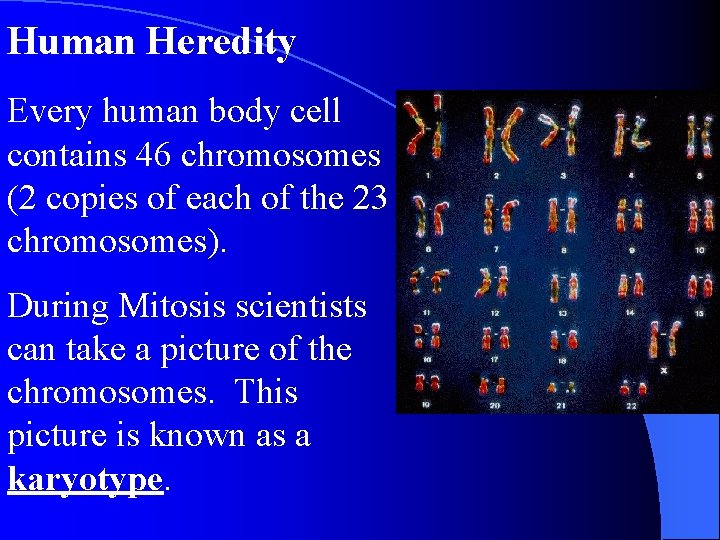
Human Heredity Every human body cell contains 46 chromosomes (2 copies of each of the 23 chromosomes). During Mitosis scientists can take a picture of the chromosomes. This picture is known as a karyotype.
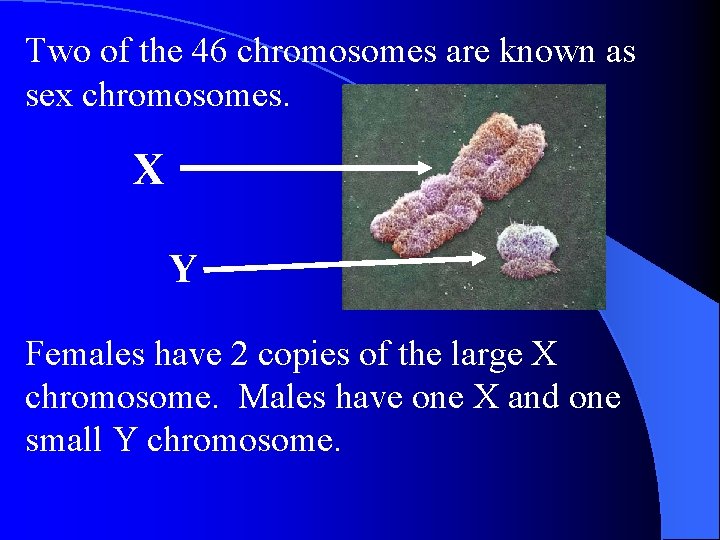
Two of the 46 chromosomes are known as sex chromosomes. X Y Females have 2 copies of the large X chromosome. Males have one X and one small Y chromosome.
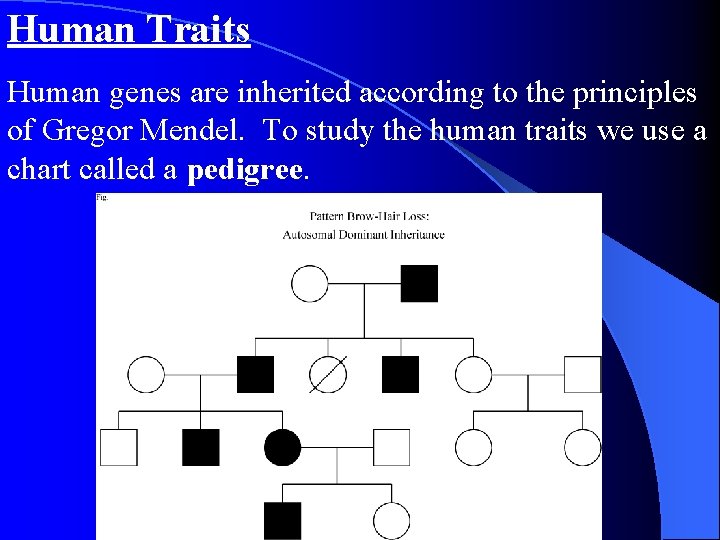
Human Traits Human genes are inherited according to the principles of Gregor Mendel. To study the human traits we use a chart called a pedigree.
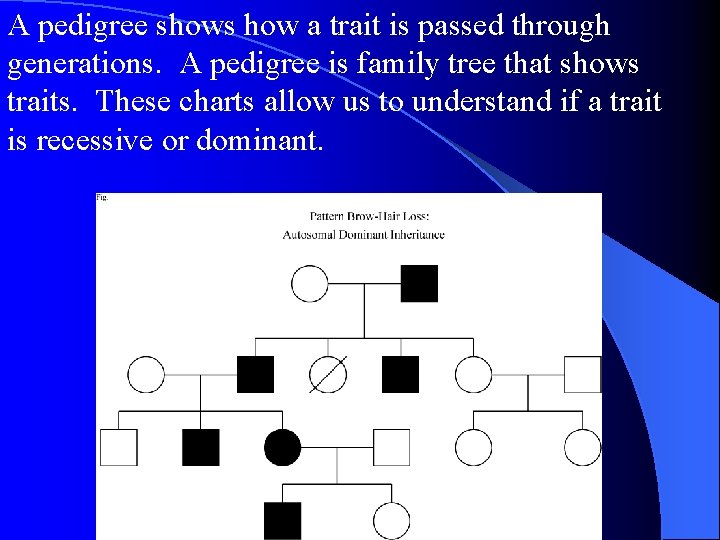
A pedigree shows how a trait is passed through generations. A pedigree is family tree that shows traits. These charts allow us to understand if a trait is recessive or dominant.
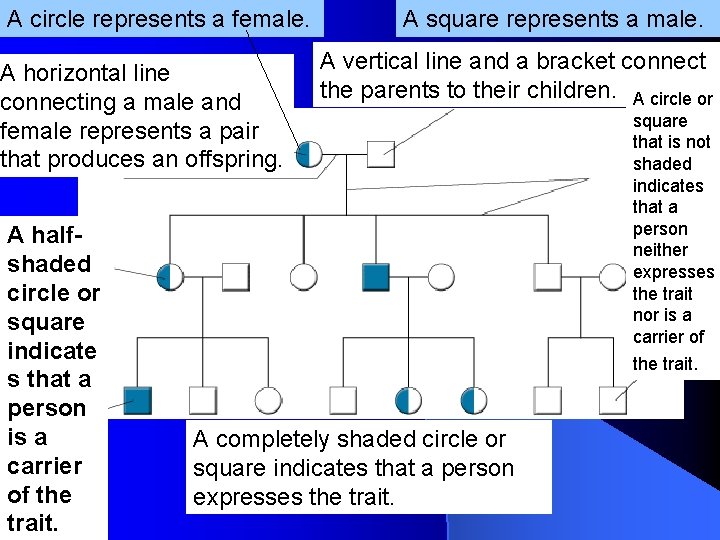
A circle represents a female. A horizontal line connecting a male and female represents a pair that produces an offspring. A halfshaded circle or square indicate s that a person is a carrier of the trait. A square represents a male. A vertical line and a bracket connect the parents to their children. A circle or square that is not shaded indicates that a person neither expresses the trait nor is a carrier of the trait. A completely shaded circle or square indicates that a person expresses the trait.
Many human traits are controlled by more than one gene as well as by environmental factors. For example: The average height of a human has increased over the last century as nutrition improved.
Human Genome A library of all the genes contained on the 46 chromosomes in a human cell is being made. A library of genes for a species is called a genome. A draft of the Human Genome was completed in 1992 and an improved copy was completed in 2003. Based on the results of the Human Genome Project it is thought that Humans contain between 20, 000 -25, 000 genes. These genes are coded in DNA by about 4 billion bases (remember those G, A, T, C’s)
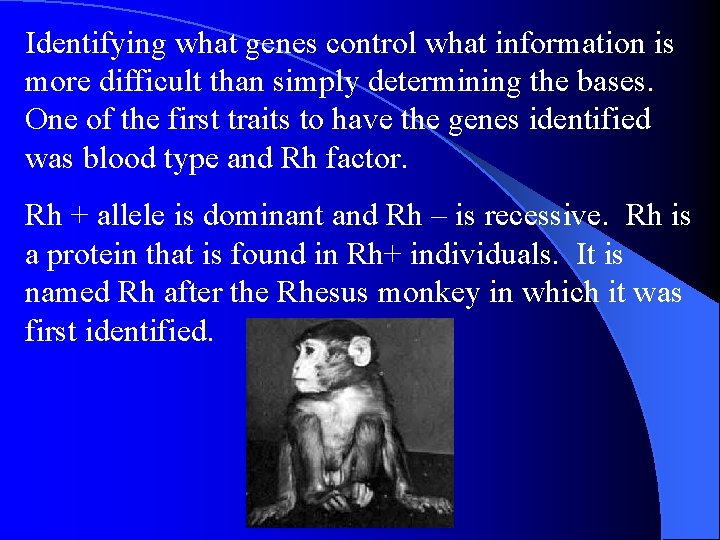
Identifying what genes control what information is more difficult than simply determining the bases. One of the first traits to have the genes identified was blood type and Rh factor. Rh + allele is dominant and Rh – is recessive. Rh is a protein that is found in Rh+ individuals. It is named Rh after the Rhesus monkey in which it was first identified.
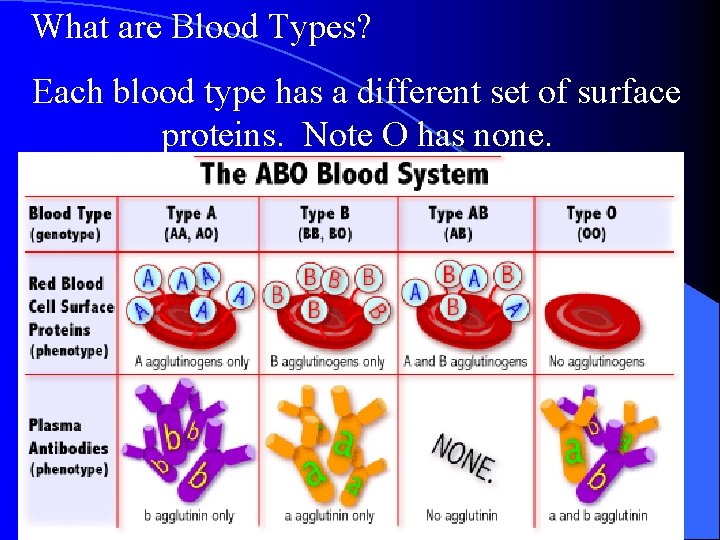
What are Blood Types? Each blood type has a different set of surface proteins. Note O has none.
Inherited Genetic Disorders in Humans Mistakes in the code of DNA cause problems for Homeostasis. The change in DNA changes the protein that gets synthesized. The change in the protein or enzyme can cause a significant health problem. Examples 1. Tay-Sachs disease – Lipid (fat) accumulation in brain; death in early childhood. (recessive) 2. Huntington’s disease – uncontrollable movements, appears in middle age (dominant alleles)
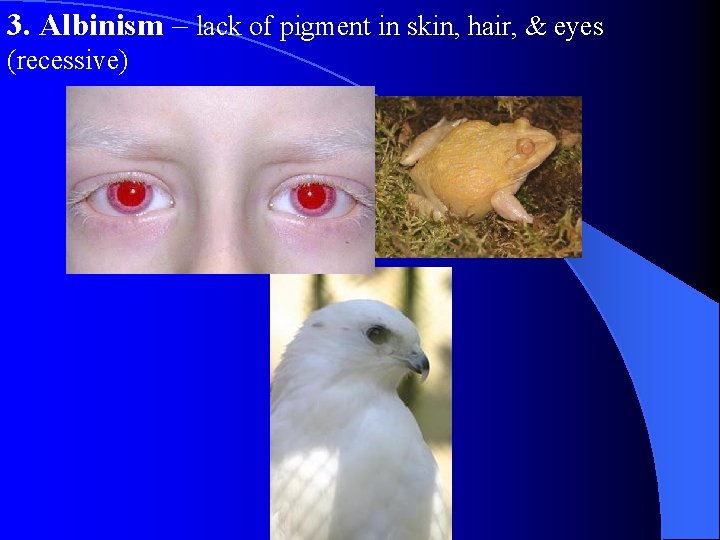
3. Albinism – lack of pigment in skin, hair, & eyes (recessive)
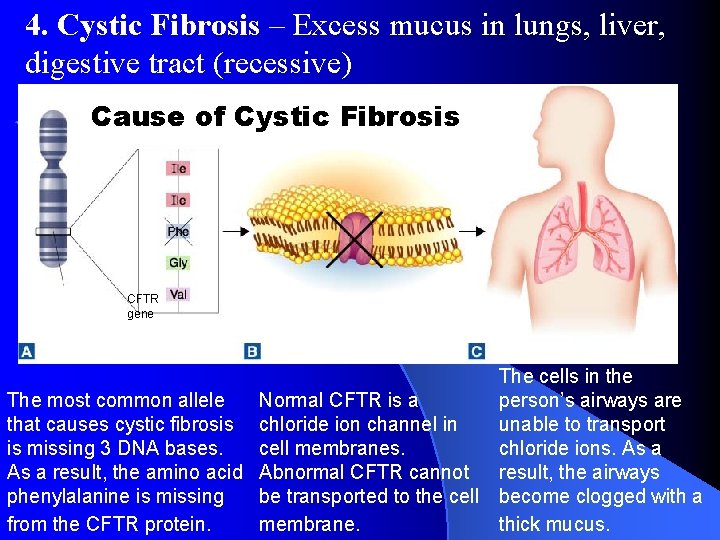
4. Cystic Fibrosis – Excess mucus in lungs, liver, digestive tract (recessive) Cause of Cystic Fibrosis CFTR gene The most common allele that causes cystic fibrosis is missing 3 DNA bases. As a result, the amino acid phenylalanine is missing from the CFTR protein. Normal CFTR is a chloride ion channel in cell membranes. Abnormal CFTR cannot be transported to the cell membrane. The cells in the person’s airways are unable to transport chloride ions. As a result, the airways become clogged with a thick mucus.
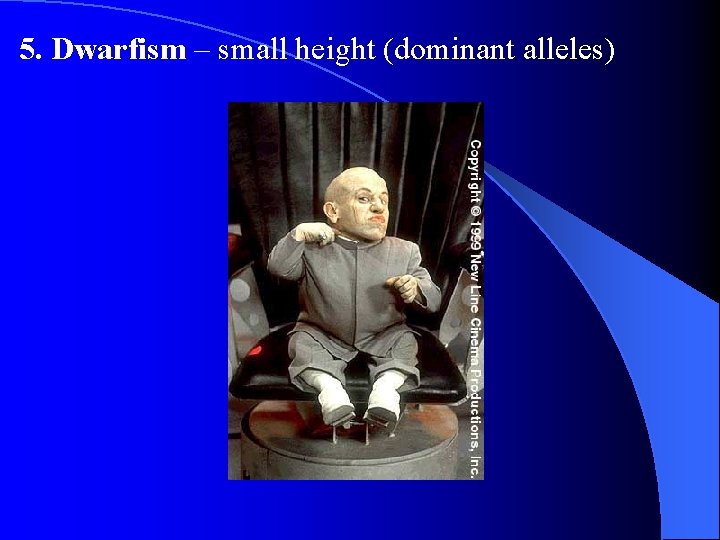
5. Dwarfism – small height (dominant alleles)
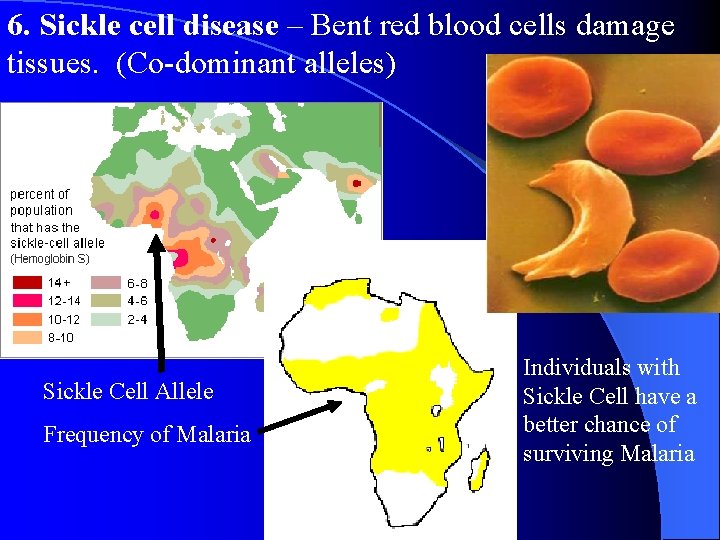
6. Sickle cell disease – Bent red blood cells damage tissues. (Co-dominant alleles) Sickle Cell Allele Frequency of Malaria Individuals with Sickle Cell have a better chance of surviving Malaria
Sex-Linked traits are disorders that are carried on the X or Y chromosome. More disorders are linked to the X chromosome because it is larger. Color blindness – 3 genes carried on the X chromosome. Is more common in males because they only have one X chromosome. Hemophilia – two genes on X carry information for normal blood clotting. More common in males. Causes excessive bleeding from minor injury. Muscular Dystrophy – defective gene for a muscle protein carried on the X chromosome. Causes weakening of the skeletal muscles and early death.
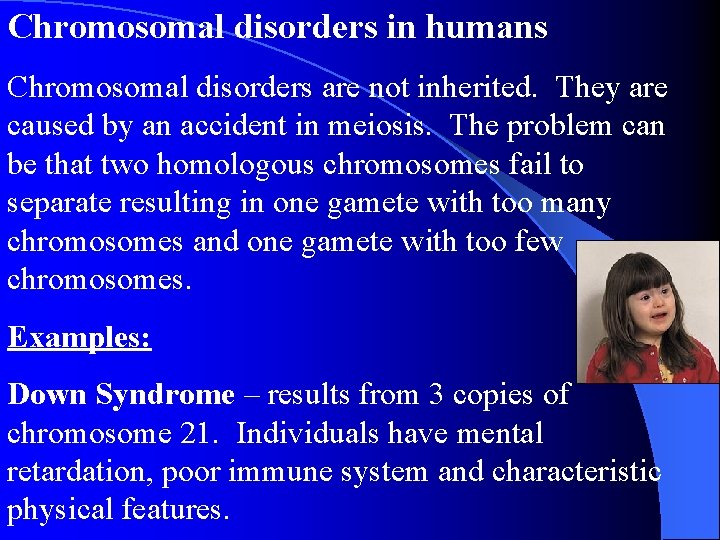
Chromosomal disorders in humans Chromosomal disorders are not inherited. They are caused by an accident in meiosis. The problem can be that two homologous chromosomes fail to separate resulting in one gamete with too many chromosomes and one gamete with too few chromosomes. Examples: Down Syndrome – results from 3 copies of chromosome 21. Individuals have mental retardation, poor immune system and characteristic physical features.
Turner’s Syndrome – occurs in females with only 1 X chromosome. Causes sterility because sex organs do not develop. Klinefelter’s syndrome – Occurs in males with an extra X chromosome. Causes sterility, male breasts and rounded body. NOTE: An extra of any other chromosomes besides X, Y or 21 cause death of embryo or infant. A lack of an X chromosomes causes early miscarriage.
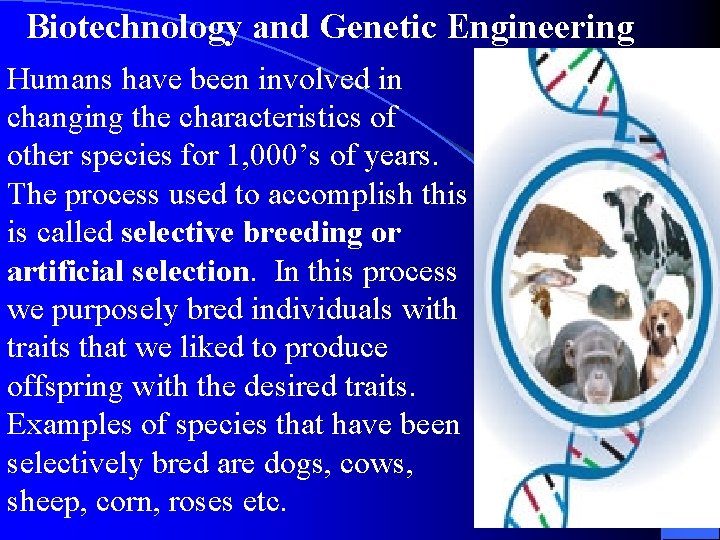
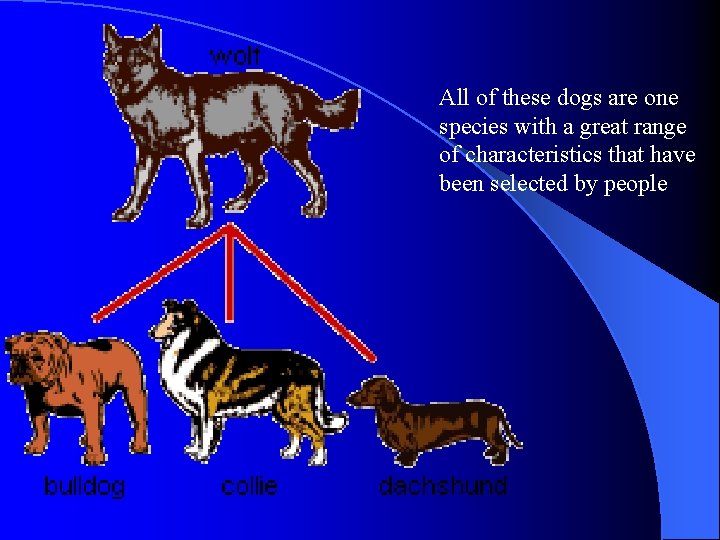
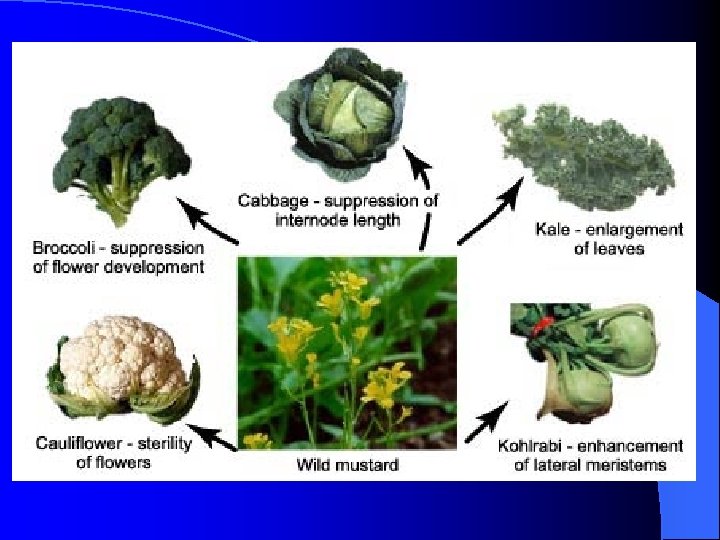
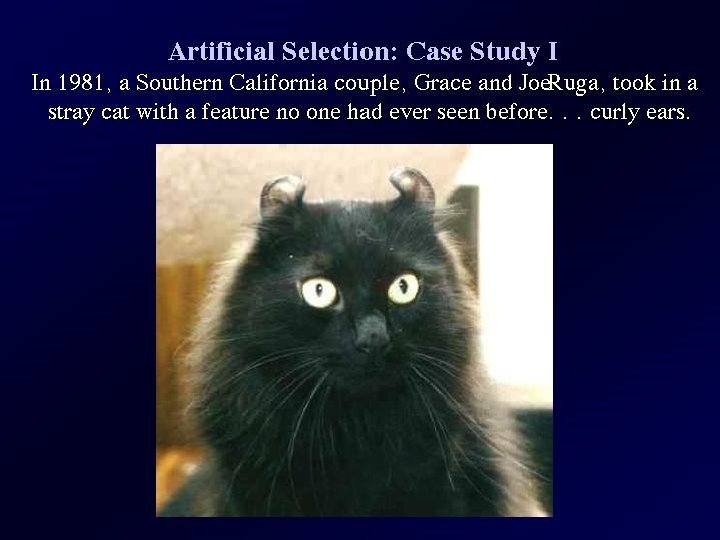
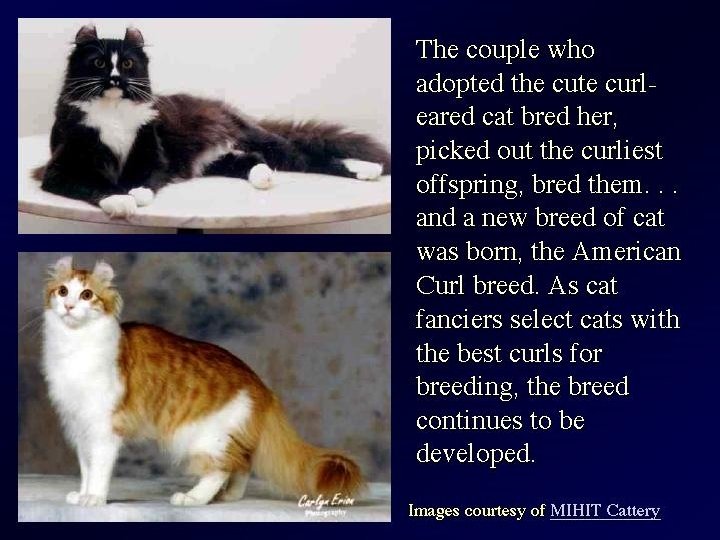
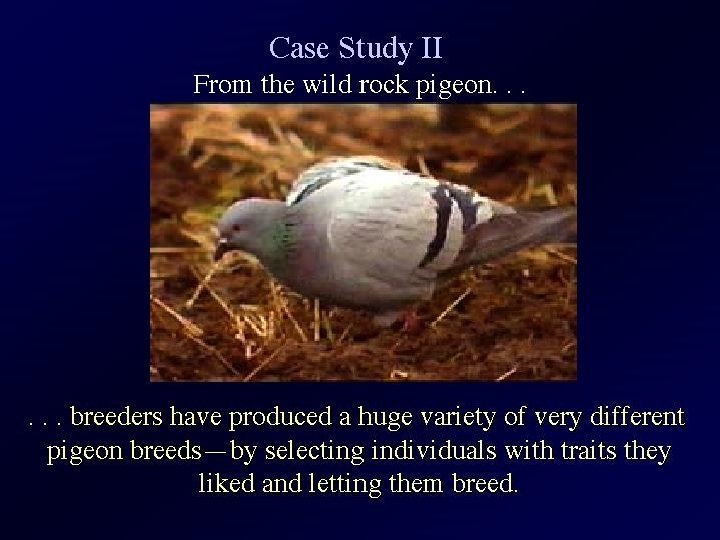
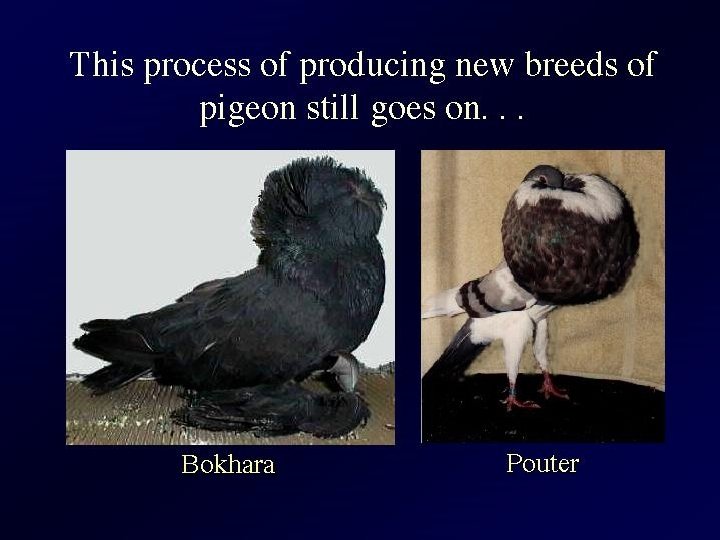
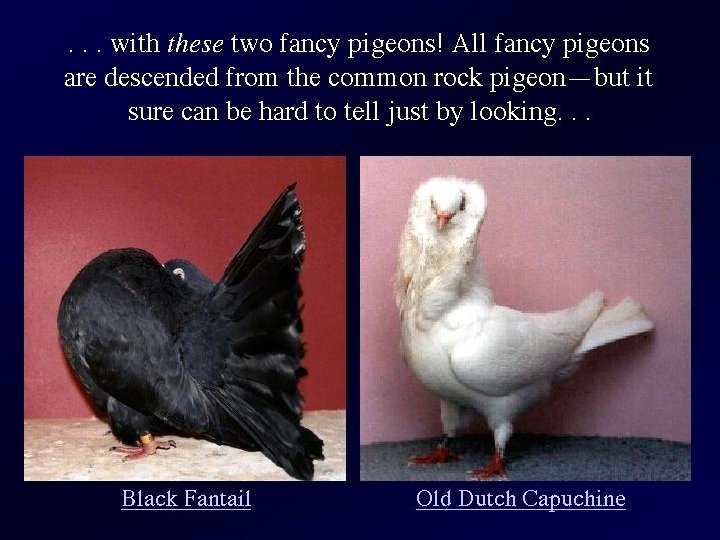
Biotechnology and Genetic Engineering Humans have been involved in changing the characteristics of other species for 1, 000’s of years. The process used to accomplish this is called selective breeding or artificial selection. In this process we purposely bred individuals with traits that we liked to produce offspring with the desired traits. Examples of species that have been selectively bred are dogs, cows, sheep, corn, roses etc.
All of these dogs are one species with a great range of characteristics that have been selected by people
Characteristics of species have also changed over time without human influence. Instead of traits being “selected” by human choices the traits are “selected” by nature through which characteristics help species survive. Designs which help survival get passed on to the next generation. This process is known as NATURAL SELECTION and is a main idea in theory of EVOLUTION (change in species traits over time).
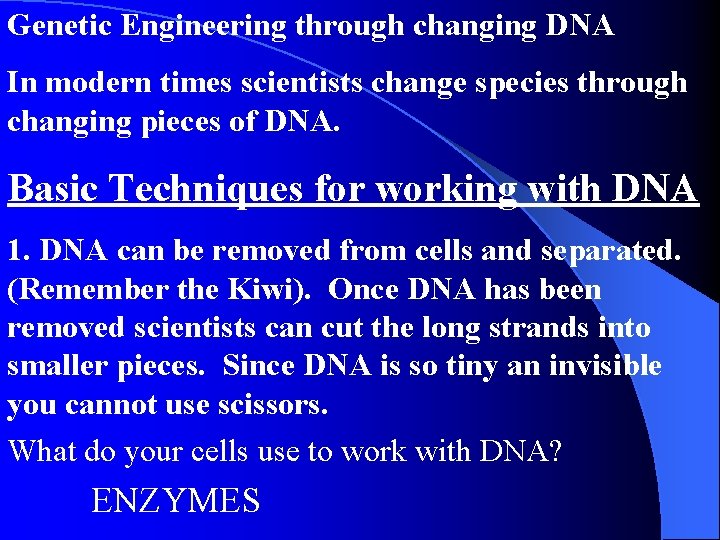
Genetic Engineering through changing DNA In modern times scientists change species through changing pieces of DNA. Basic Techniques for working with DNA 1. DNA can be removed from cells and separated. (Remember the Kiwi). Once DNA has been removed scientists can cut the long strands into smaller pieces. Since DNA is so tiny an invisible you cannot use scissors. What do your cells use to work with DNA? ENZYMES
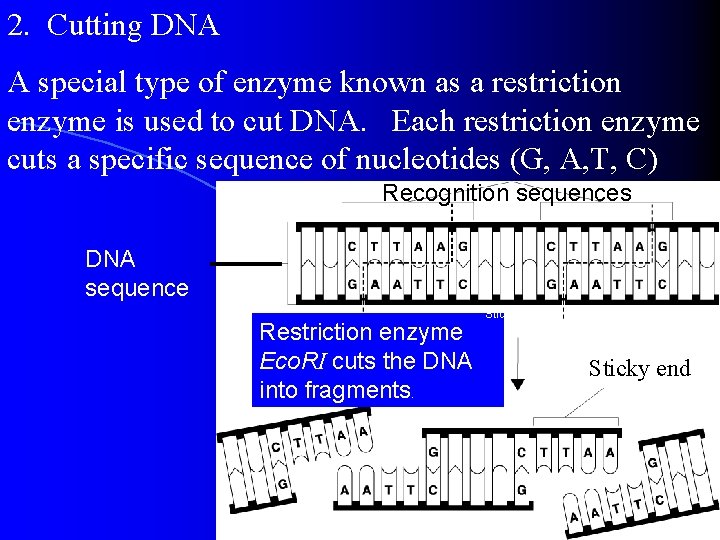
2. Cutting DNA A special type of enzyme known as a restriction enzyme is used to cut DNA. Each restriction enzyme cuts a specific sequence of nucleotides (G, A, T, C) Section 13 -2 Recognition sequences DNA sequence Restriction enzyme Eco. RI cuts the DNA into fragments. Sticky end
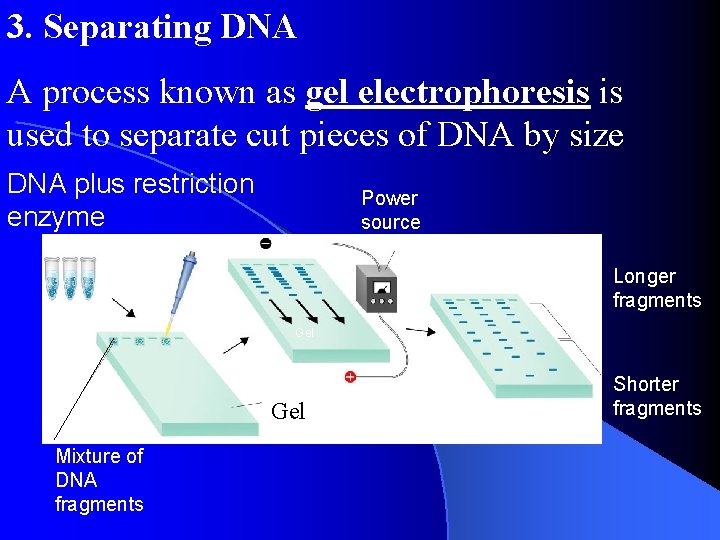
3. Separating DNA A process known as gel electrophoresis is used to separate cut pieces of DNA by size DNA plus restriction enzyme Power source Longer fragments Gel Mixture of DNA fragments Shorter fragments
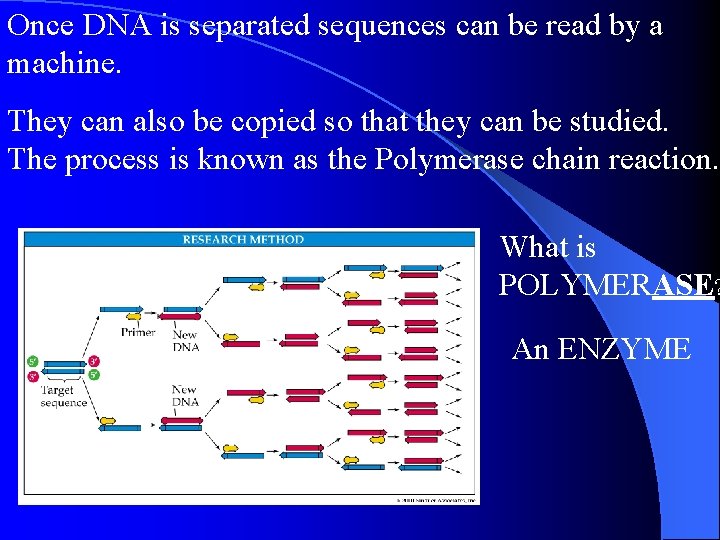
Once DNA is separated sequences can be read by a machine. They can also be copied so that they can be studied. The process is known as the Polymerase chain reaction. What is POLYMERASE? An ENZYME
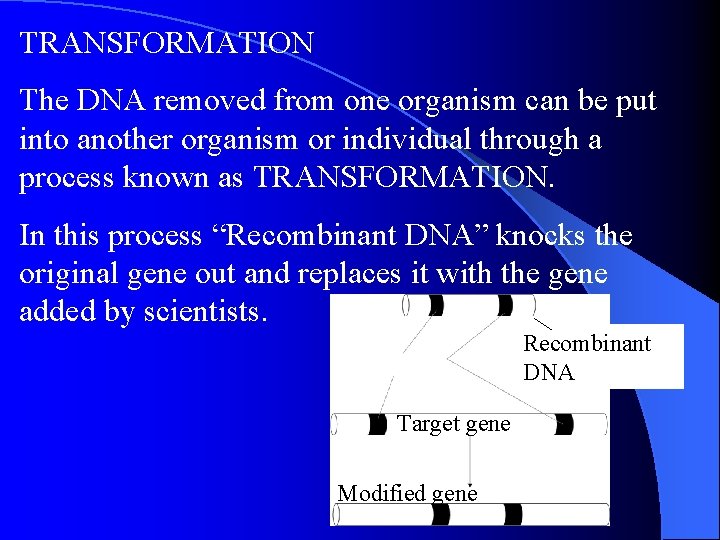
TRANSFORMATION The DNA removed from one organism can be put into another organism or individual through a process known as TRANSFORMATION. In this process “Recombinant DNA” knocks the original gene out and replaces it with the gene added by scientists. Recombinant DNA Target gene Modified gene
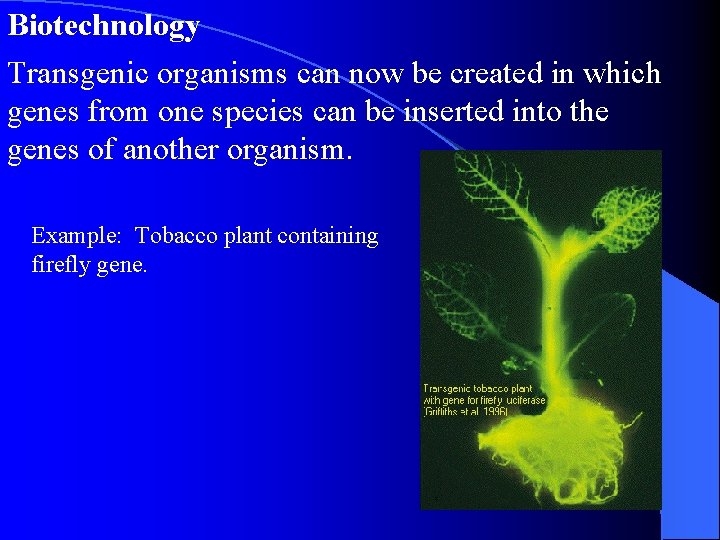
Biotechnology Transgenic organisms can now be created in which genes from one species can be inserted into the genes of another organism. Example: Tobacco plant containing firefly gene.
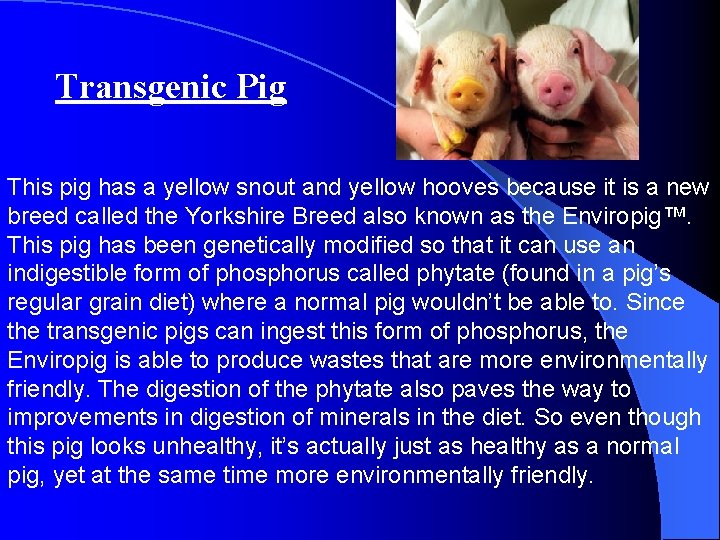
Transgenic Pig This pig has a yellow snout and yellow hooves because it is a new breed called the Yorkshire Breed also known as the Enviropig™. This pig has been genetically modified so that it can use an indigestible form of phosphorus called phytate (found in a pig’s regular grain diet) where a normal pig wouldn’t be able to. Since the transgenic pigs can ingest this form of phosphorus, the Enviropig is able to produce wastes that are more environmentally friendly. The digestion of the phytate also paves the way to improvements in digestion of minerals in the diet. So even though this pig looks unhealthy, it’s actually just as healthy as a normal pig, yet at the same time more environmentally friendly.
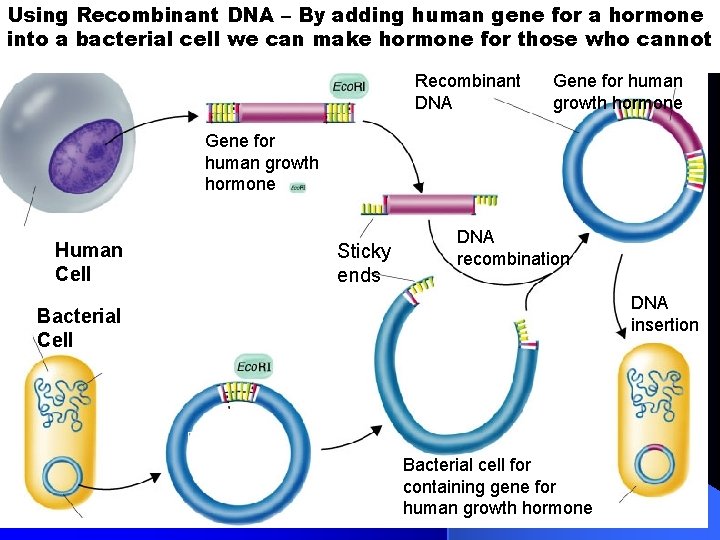
Using Recombinant DNA – By adding human gene for a hormone into a bacterial cell we can make hormone for those who cannot Recombinant DNA Gene for human growth hormone Human Cell Bacterial Cell Sticky ends DNA recombination DNA insertion Bacterial chromosome Plasmid Bacterial cell for containing gene for human growth hormone
Cloning: A clone is a genetic copy of an individual produced from a single diploid cell. For animals that produce sexually cloning is a process which cannot happen naturally. Steps in cloning 1. Remove the nucleus from a body cell. (diploid) 2. Remove the nucleus from an egg cell. 3. Place the nucleus from the body cell into the egg cell. 4. Place egg in uterus of mother.
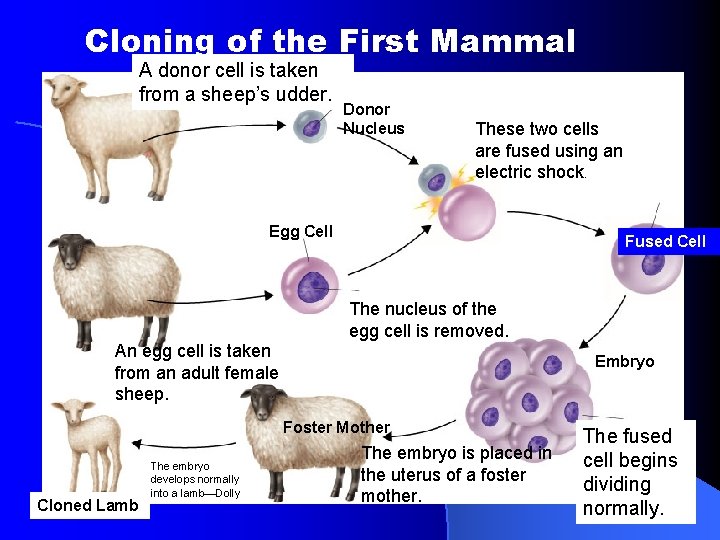
Cloning of the First Mammal A donor cell is taken from a sheep’s udder. Donor Nucleus These two cells are fused using an electric shock. Egg Cell Fused Cell The nucleus of the egg cell is removed. An egg cell is taken from an adult female sheep. Embryo Foster Mother Cloned Lamb The embryo develops normally into a lamb—Dolly The embryo is placed in the uterus of a foster mother. The fused cell begins dividing normally.
Homework: On a separate sheet answer the following questions: 1. If a patient’s bone marrow cells were removed, altered genetically, and reimplanted, would the change be passed on to the patient’s children? Bone marrow 2. Describe one or more advantages of producing needed proteins such as insulin through genetic engineering.