
GENETICS Heredity Passing of traits from parent to





- Slides: 37
GENETICS
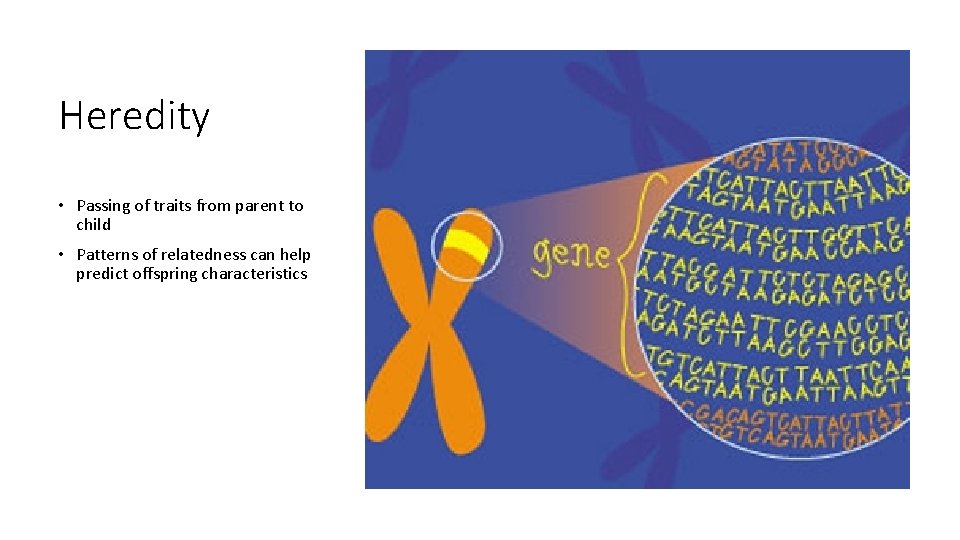
Heredity • Passing of traits from parent to child • Patterns of relatedness can help predict offspring characteristics
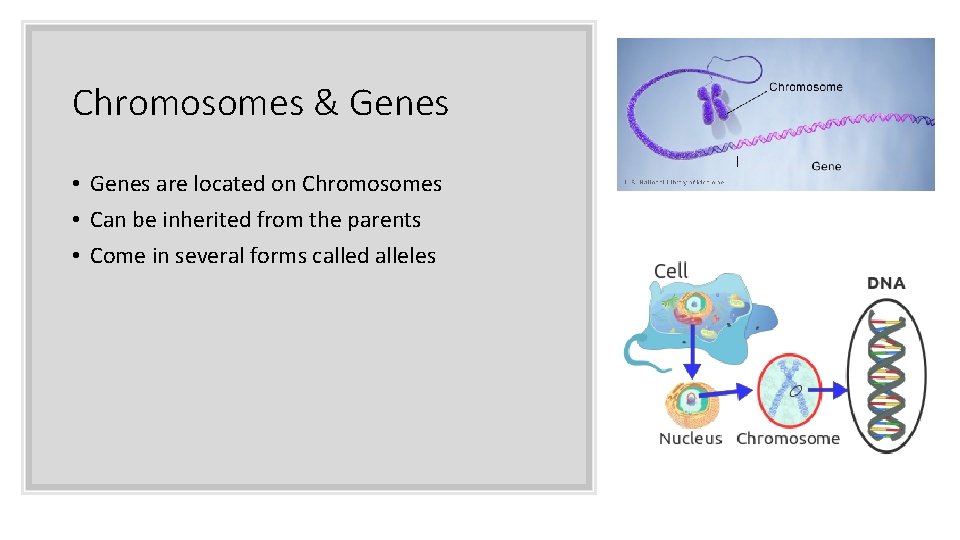
Chromosomes & Genes • Genes are located on Chromosomes • Can be inherited from the parents • Come in several forms called alleles
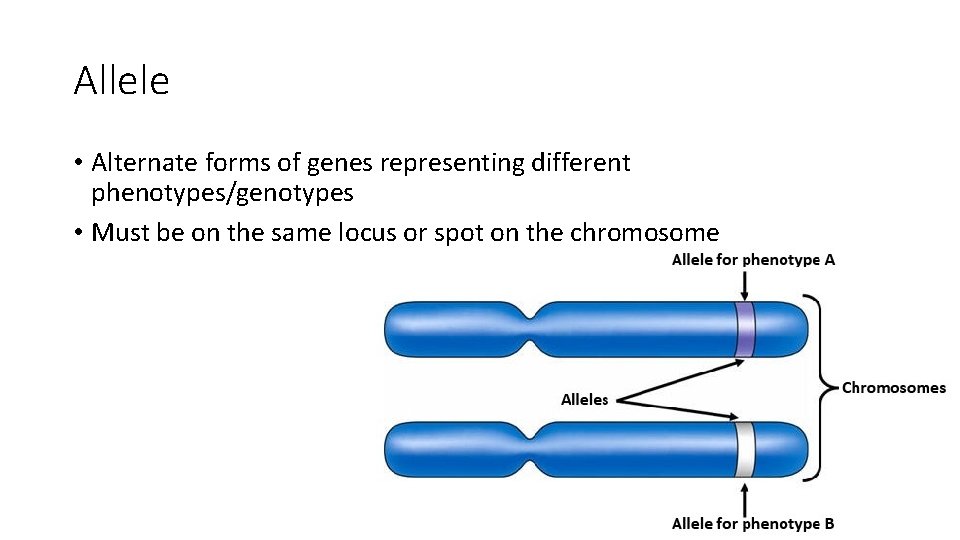
Allele • Alternate forms of genes representing different phenotypes/genotypes • Must be on the same locus or spot on the chromosome
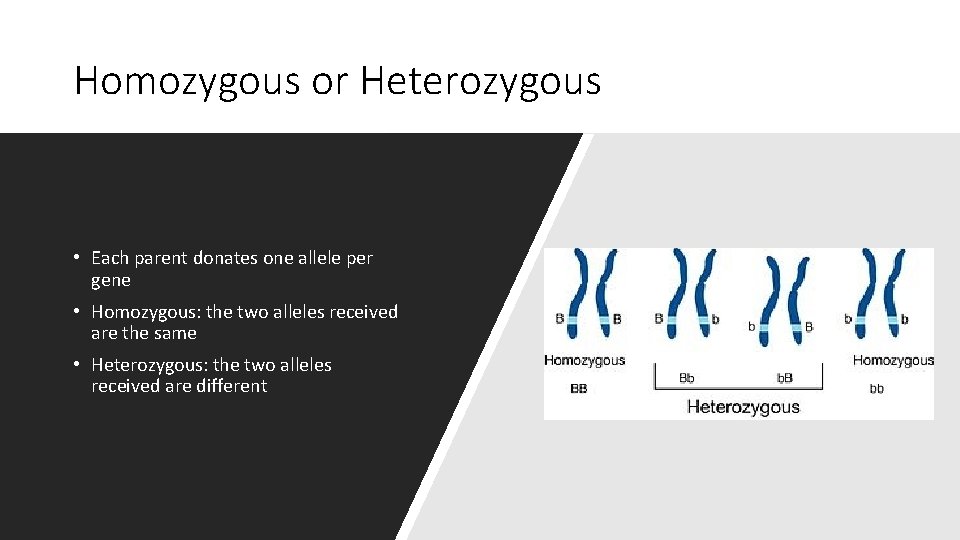
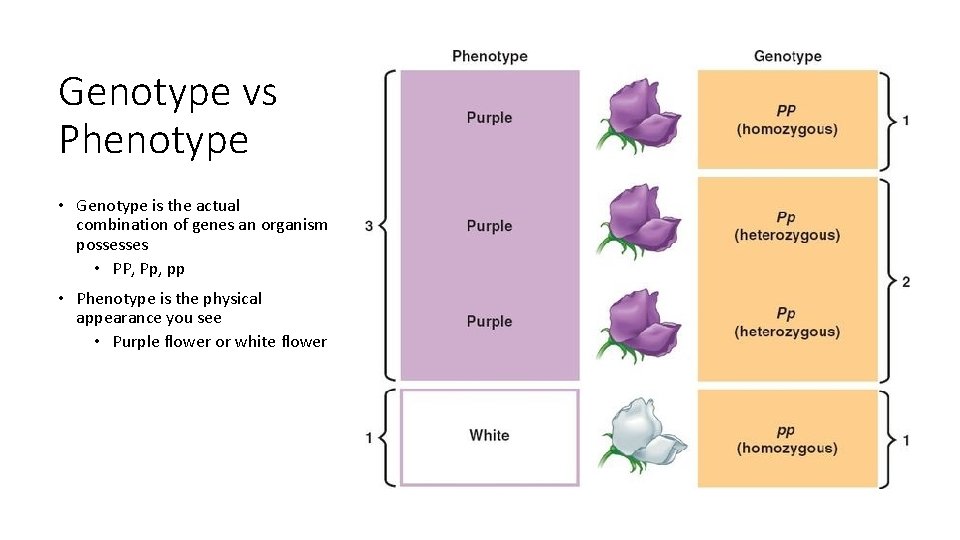
Homozygous or Heterozygous • Each parent donates one allele per gene • Homozygous: the two alleles received are the same • Heterozygous: the two alleles received are different
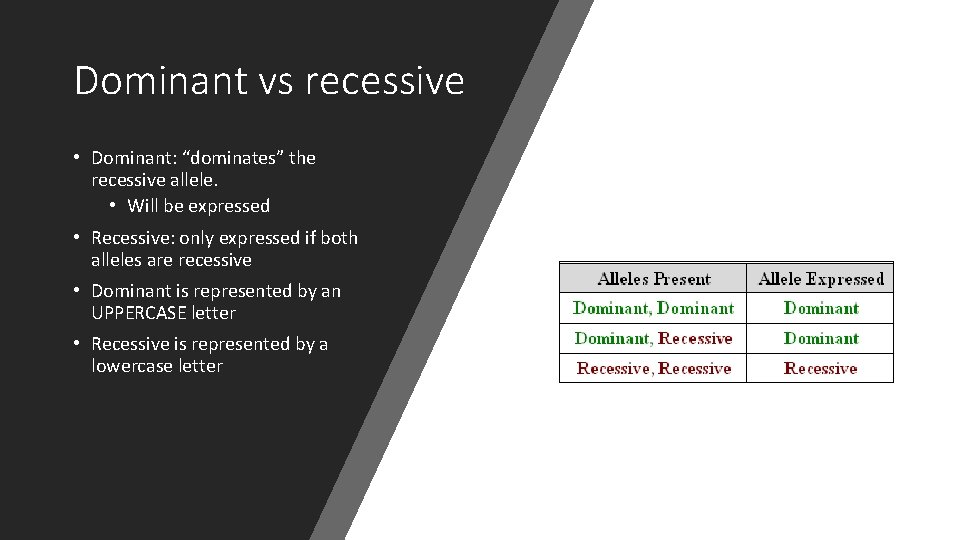
Dominant vs recessive • Dominant: “dominates” the recessive allele. • Will be expressed • Recessive: only expressed if both alleles are recessive • Dominant is represented by an UPPERCASE letter • Recessive is represented by a lowercase letter
Genotype vs Phenotype • Genotype is the actual combination of genes an organism possesses • PP, Pp, pp • Phenotype is the physical appearance you see • Purple flower or white flower
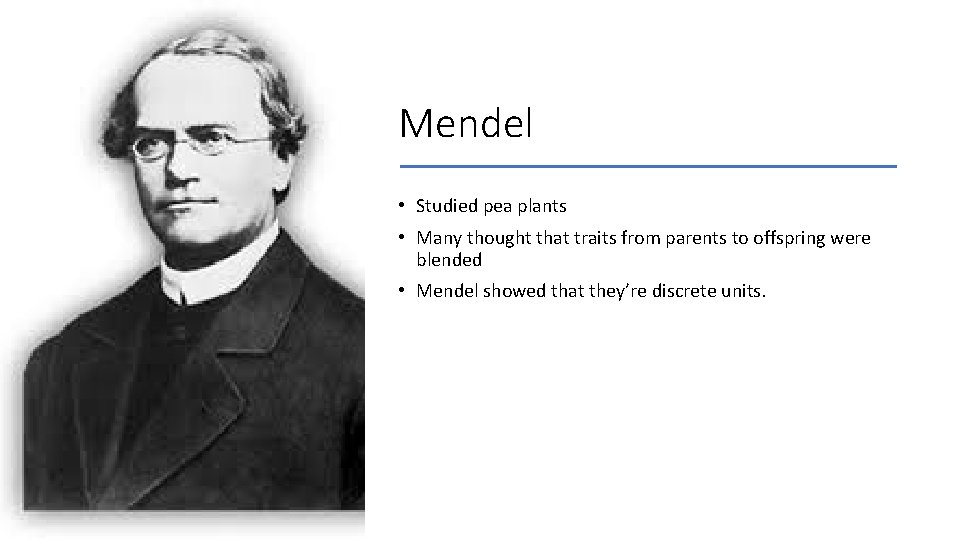
Mendel • Studied pea plants • Many thought that traits from parents to offspring were blended • Mendel showed that they’re discrete units.
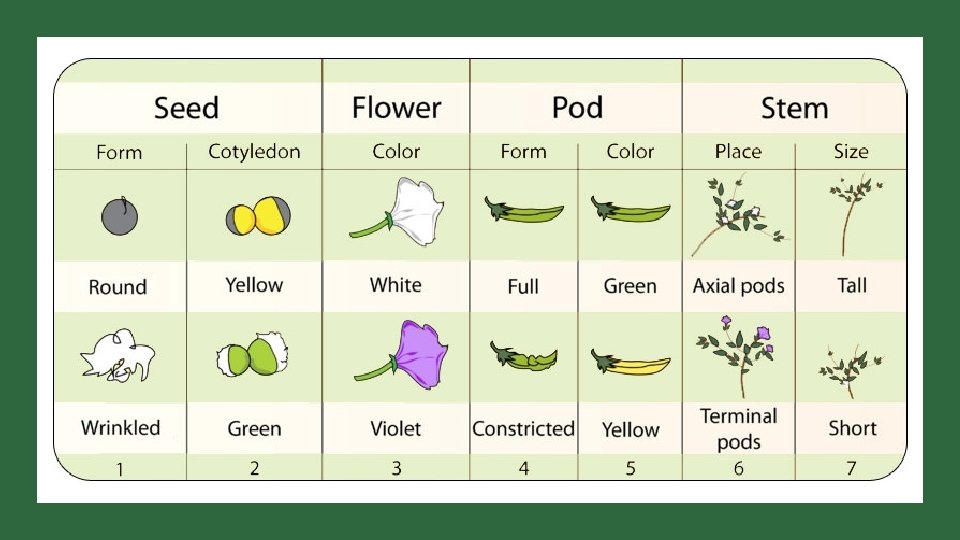
Mendel’s experiment • Used purebred plants • Why does this matter? • He had complete control over breeding • What does this mean? • He observed 7 traits in plants that were discrete phenotypes
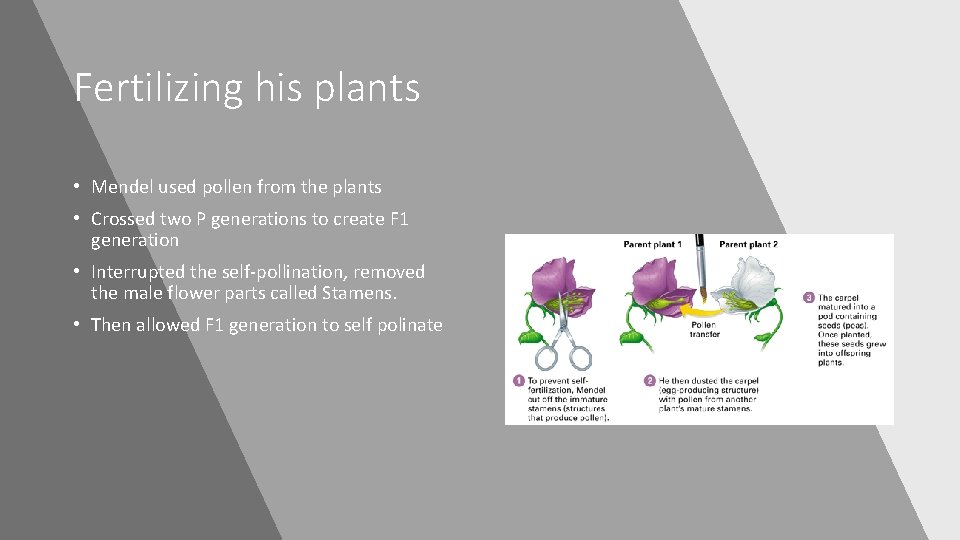
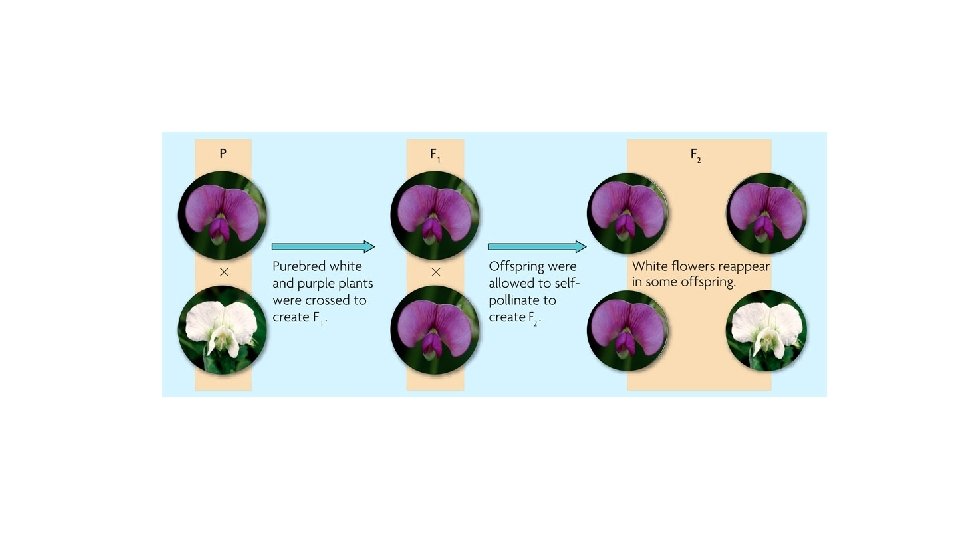
Fertilizing his plants • Mendel used pollen from the plants • Crossed two P generations to create F 1 generation • Interrupted the self-pollination, removed the male flower parts called Stamens. • Then allowed F 1 generation to self polinate
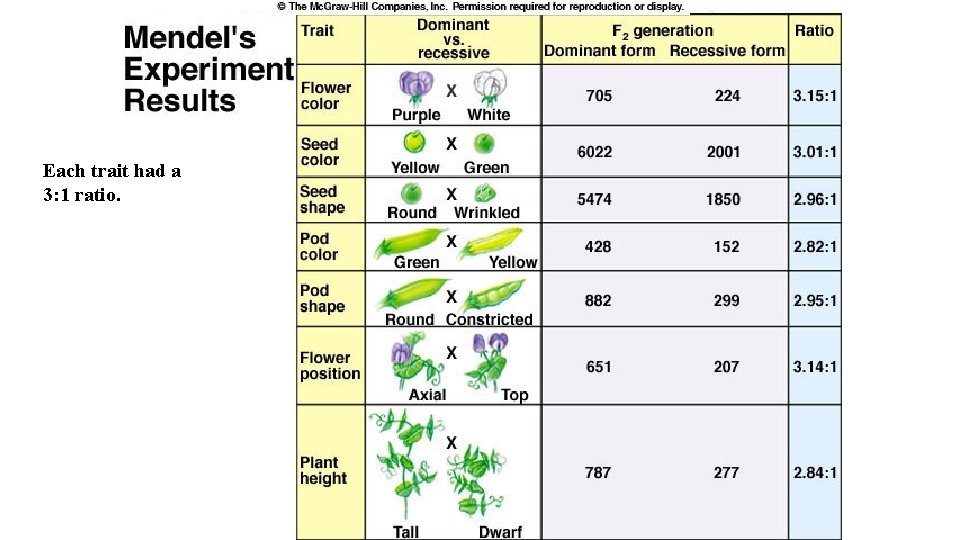
Each trait had a 3: 1 ratio.
Mendel’s 3 conclusions 1) Law of Dominance 2) Traits are inherited as discrete units 3) Law of segregation: the two copies of alleles segregate during gamete formation
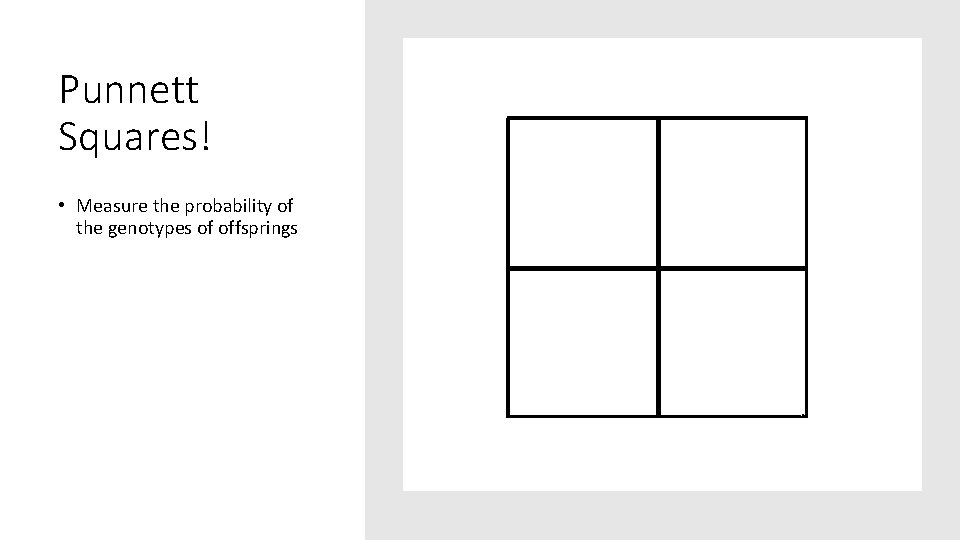
Punnett Squares! • Measure the probability of the genotypes of offsprings
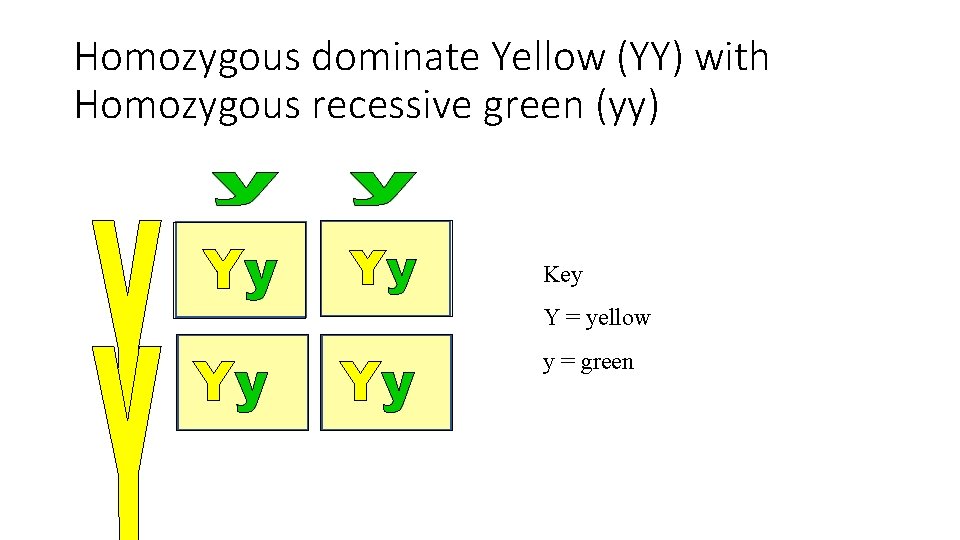
Homozygous dominate Yellow (YY) with Homozygous recessive green (yy) Yy Yy Key Y = yellow y = green
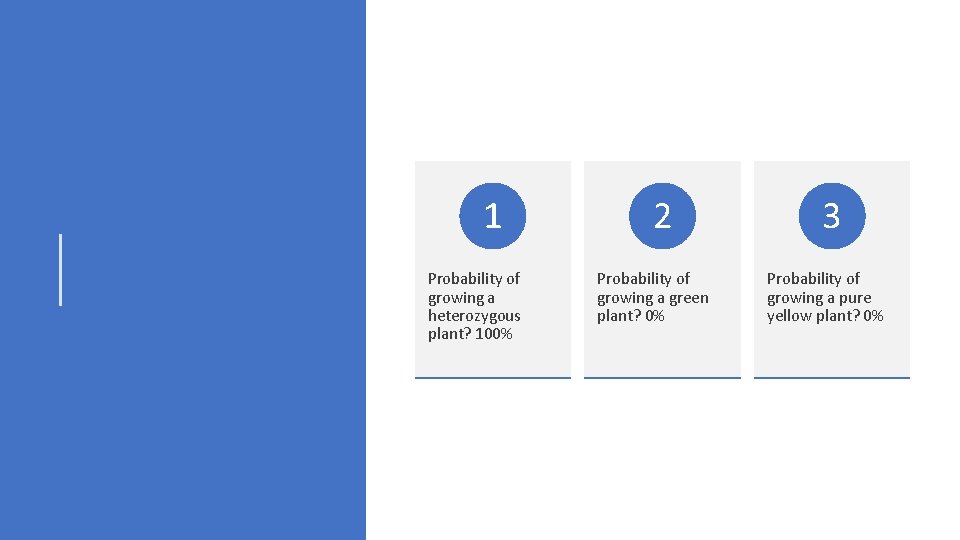
1 Probability of growing a heterozygous plant? 100% 2 Probability of growing a green plant? 0% 3 Probability of growing a pure yellow plant? 0%
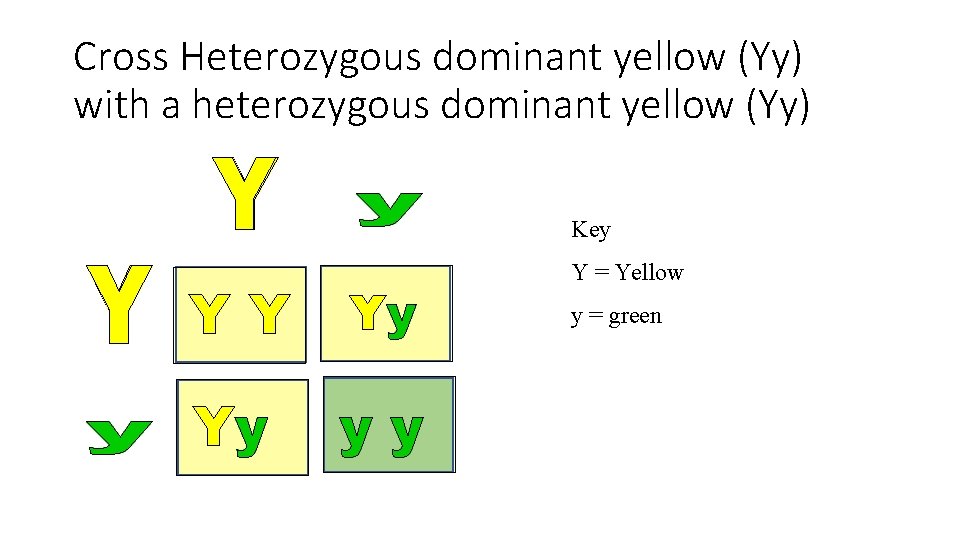
Cross Heterozygous dominant yellow (Yy) with a heterozygous dominant yellow (Yy) Key YY Yy Yy yy Y = Yellow y = green
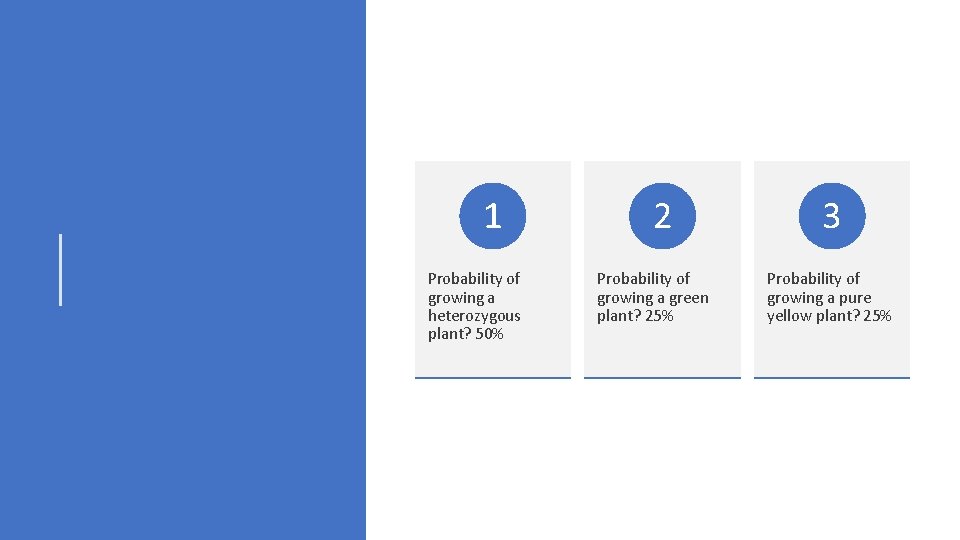
1 Probability of growing a heterozygous plant? 50% 2 Probability of growing a green plant? 25% 3 Probability of growing a pure yellow plant? 25%
Pedigrees
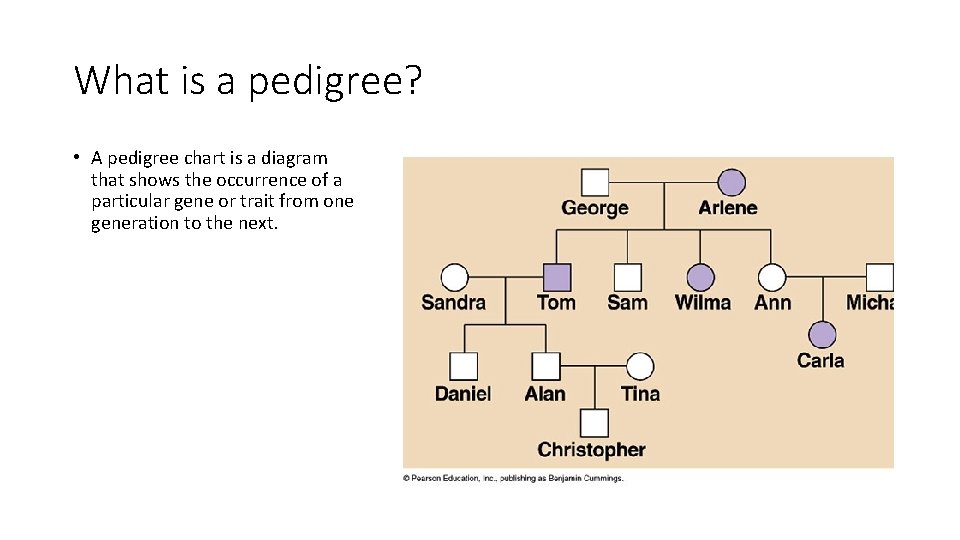
What is a pedigree? • A pedigree chart is a diagram that shows the occurrence of a particular gene or trait from one generation to the next.
• If a trait is expressed in both sexes • Its autosomal • IF a trait is expressed in every generation • Its dominant
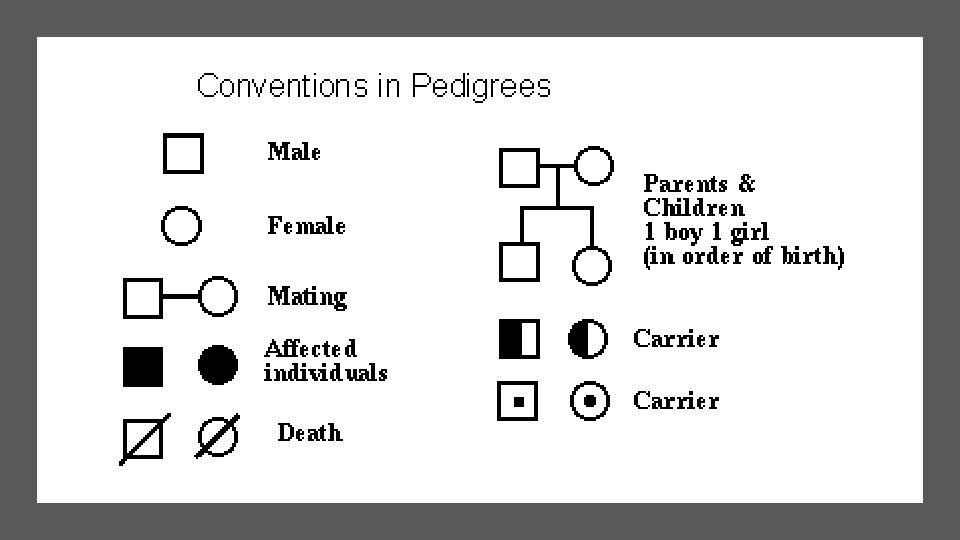
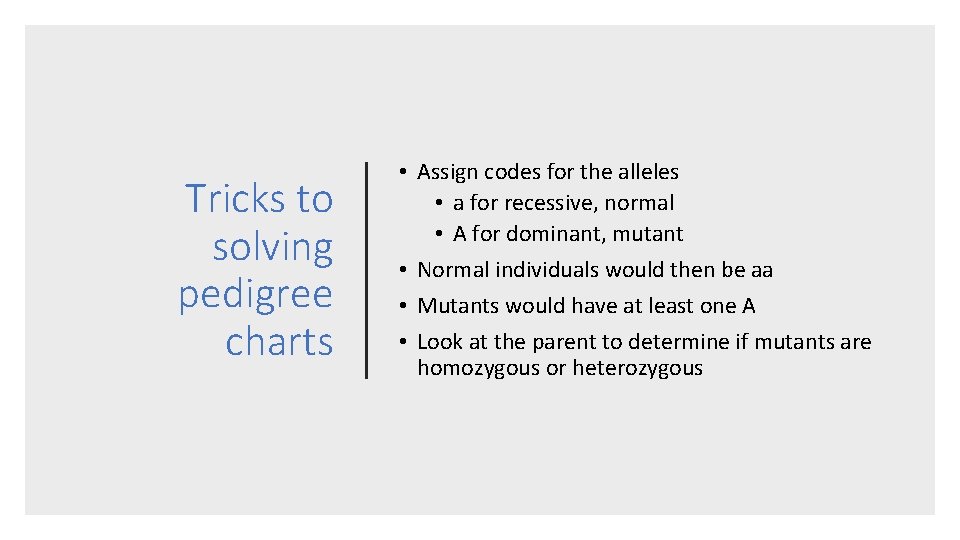
Tricks to solving pedigree charts • Assign codes for the alleles • a for recessive, normal • A for dominant, mutant • Normal individuals would then be aa • Mutants would have at least one A • Look at the parent to determine if mutants are homozygous or heterozygous
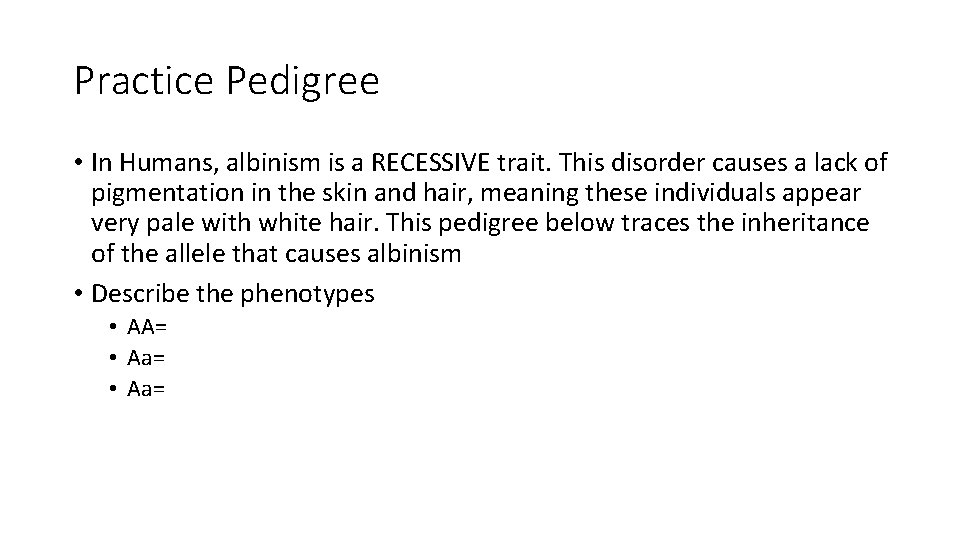
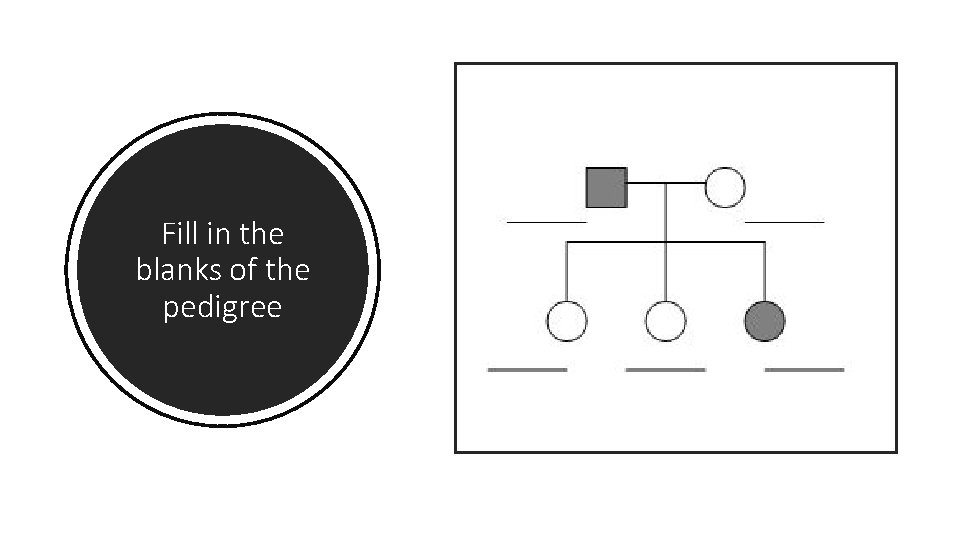
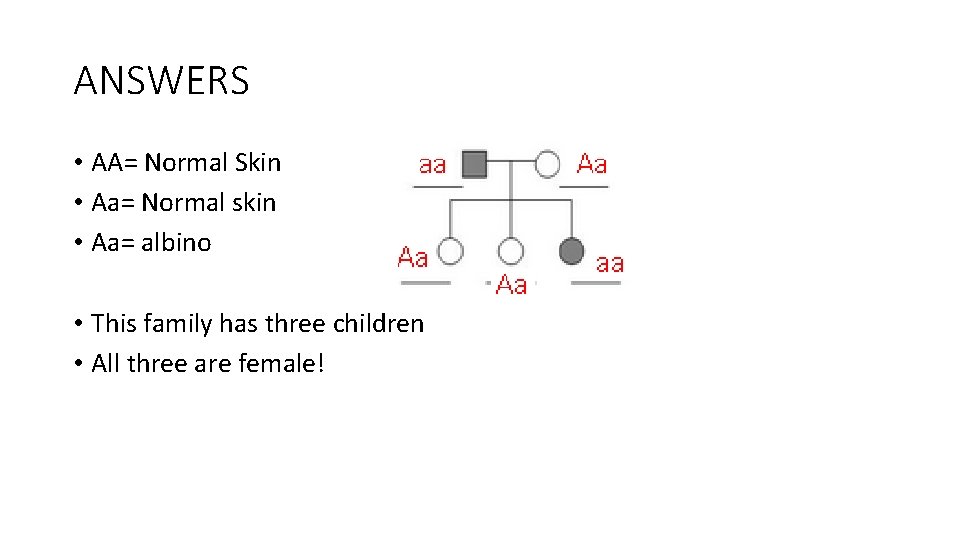
Practice Pedigree • In Humans, albinism is a RECESSIVE trait. This disorder causes a lack of pigmentation in the skin and hair, meaning these individuals appear very pale with white hair. This pedigree below traces the inheritance of the allele that causes albinism • Describe the phenotypes • AA= • Aa=
Fill in the blanks of the pedigree
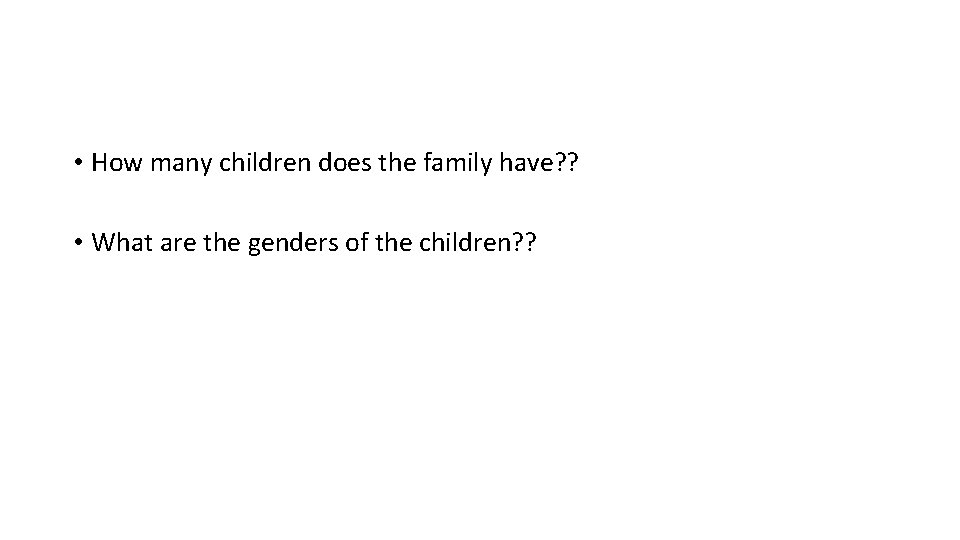
• How many children does the family have? ? • What are the genders of the children? ?
ANSWERS • AA= Normal Skin • Aa= Normal skin • Aa= albino • This family has three children • All three are female!
Incomplete Dominance and Codominance
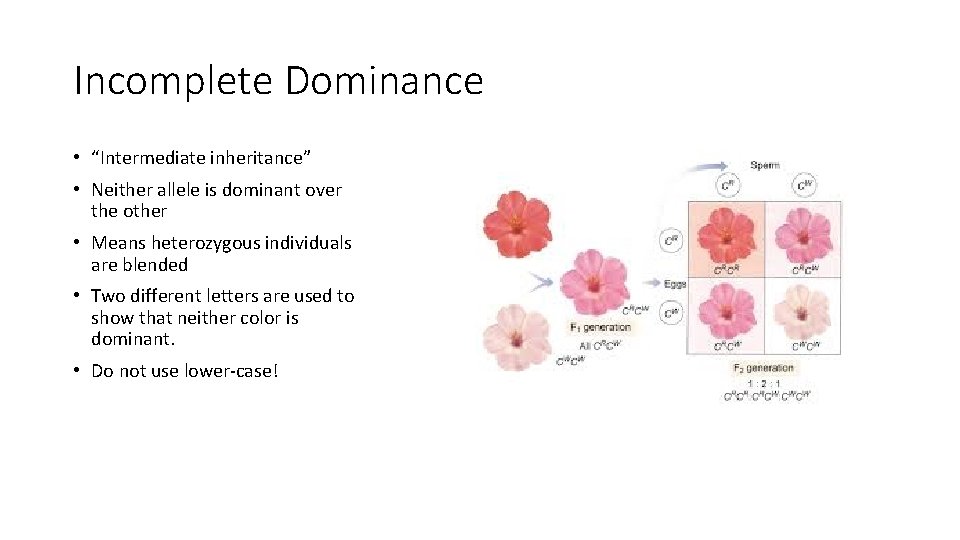
Incomplete Dominance • “Intermediate inheritance” • Neither allele is dominant over the other • Means heterozygous individuals are blended • Two different letters are used to show that neither color is dominant. • Do not use lower-case!
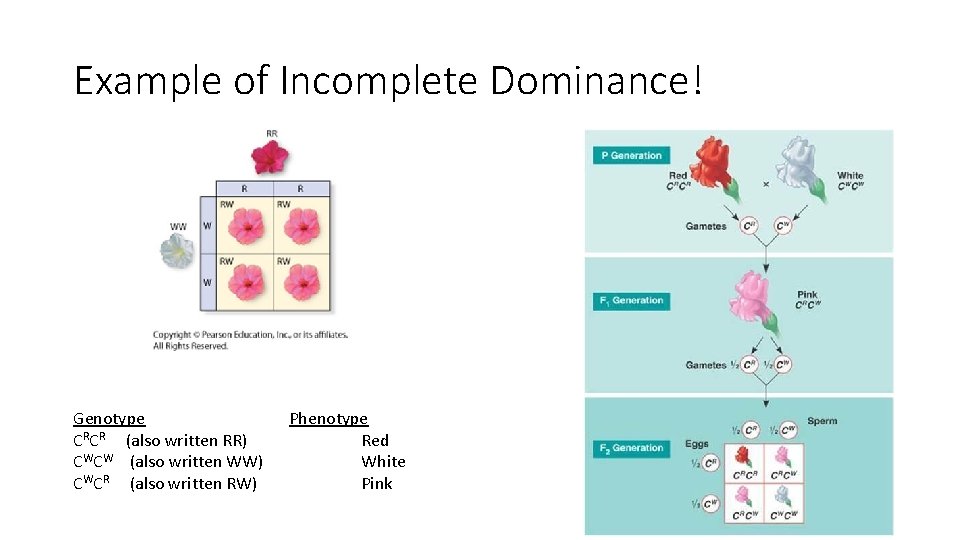
Example of Incomplete Dominance! Genotype CRCR (also written RR) CWCW (also written WW) CWCR (also written RW) Phenotype Red White Pink
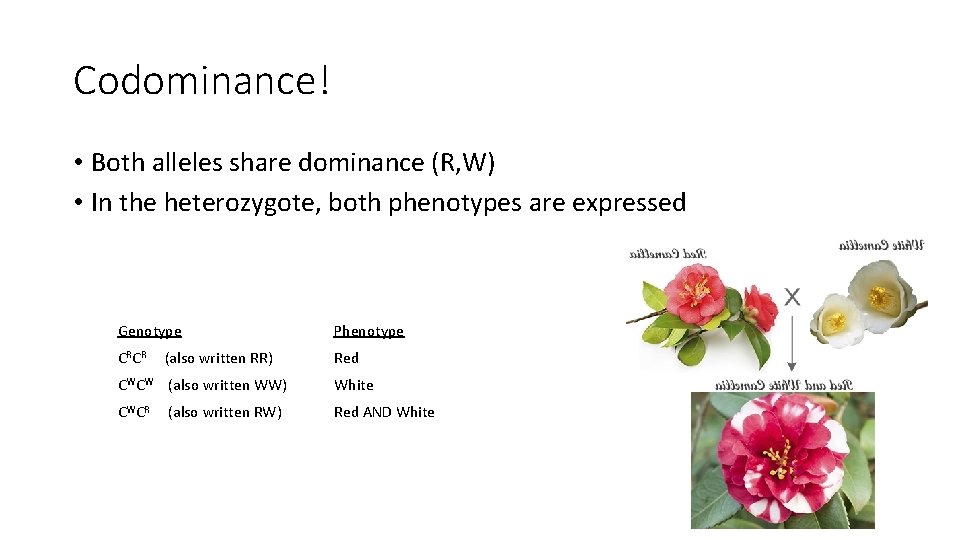
Codominance! • Both alleles share dominance (R, W) • In the heterozygote, both phenotypes are expressed Genotype Phenotype CR CR Red (also written RR) CWCW (also written WW) White CWCR Red AND White (also written RW)
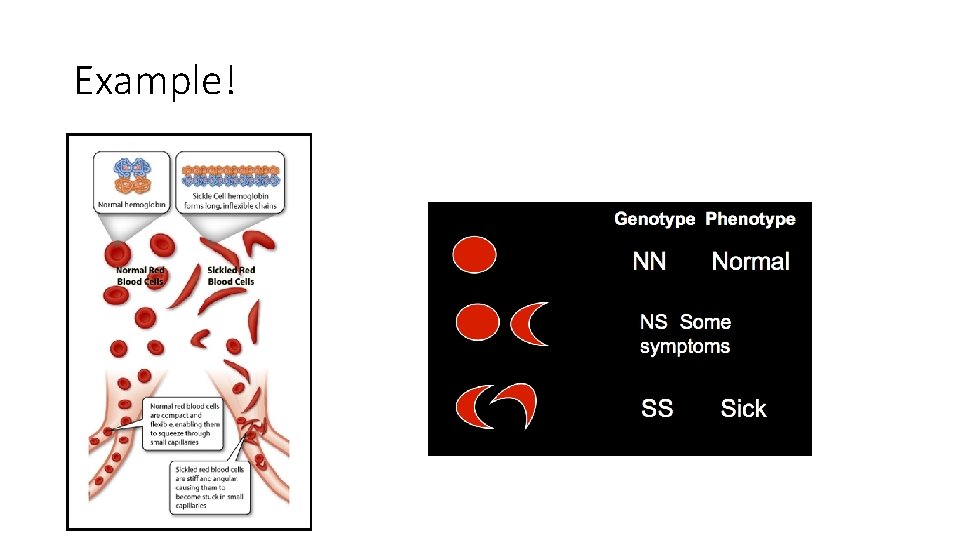
Example!
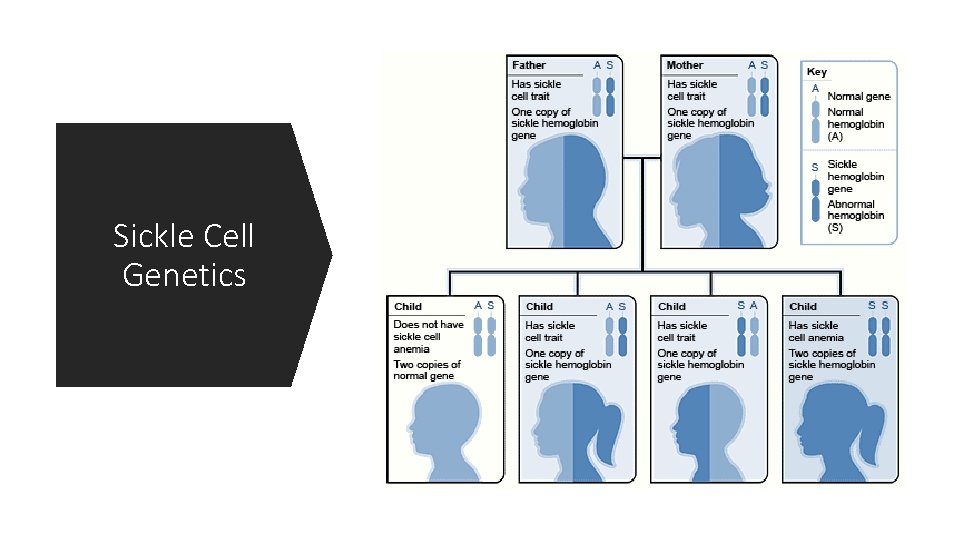
Sickle Cell Genetics
Sex-Linked traits
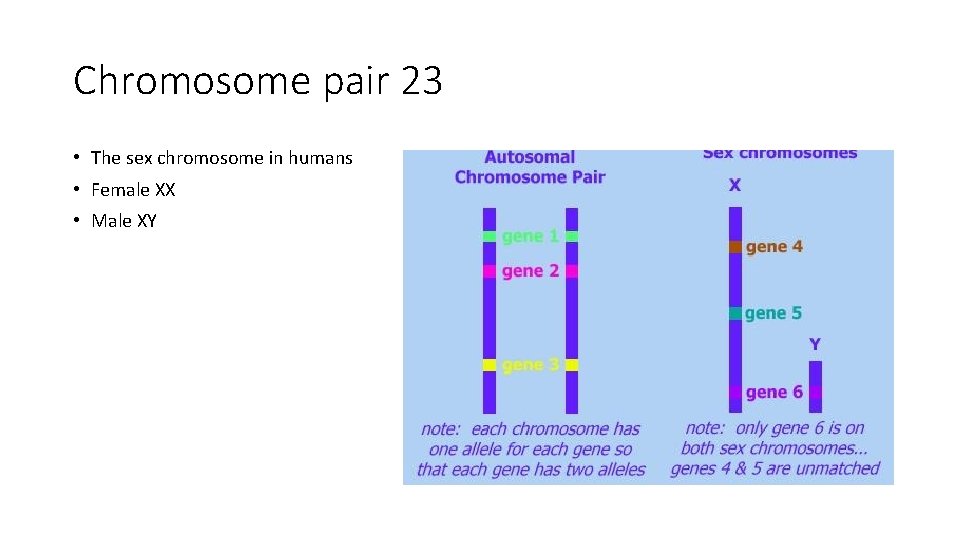
Chromosome pair 23 • The sex chromosome in humans • Female XX • Male XY
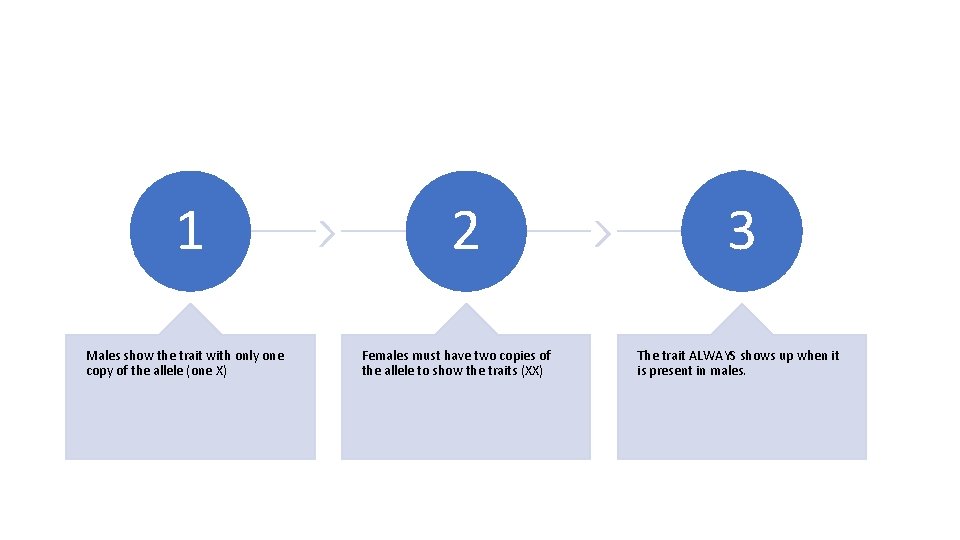
1 Males show the trait with only one copy of the allele (one X) 2 Females must have two copies of the allele to show the traits (XX) 3 The trait ALWAYS shows up when it is present in males.