
Genetics Heredity and Reproduction A look at your



- Slides: 66
Genetics, Heredity, and Reproduction A look at your gender
Sexual Reproduction � Sexual Reproduction 1. 2 parents � 2. Sex cells: sperm and egg � 3. Sperm and egg join= fertilization � 4. Offspring look different from parent (mixed DNA) �
Sexual Reproduction � 5. Examples › Humans, some plants, mammals, fish, reptiles, etc.
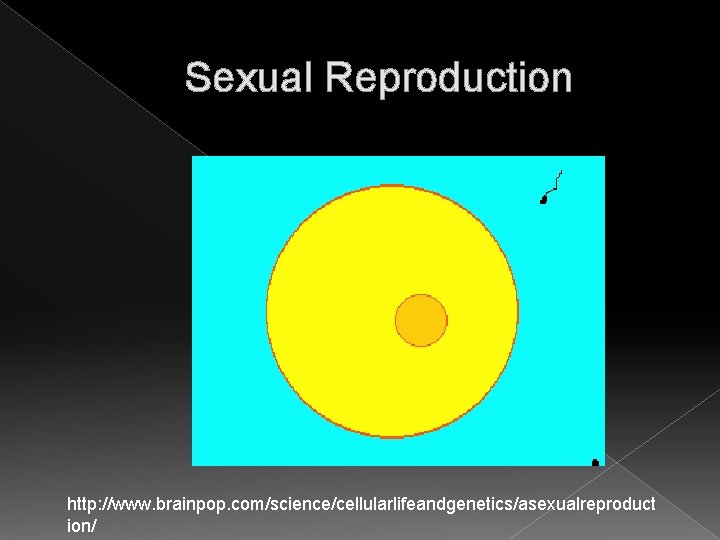
Sexual Reproduction http: //www. brainpop. com/science/cellularlifeandgenetics/asexualreproduct ion/
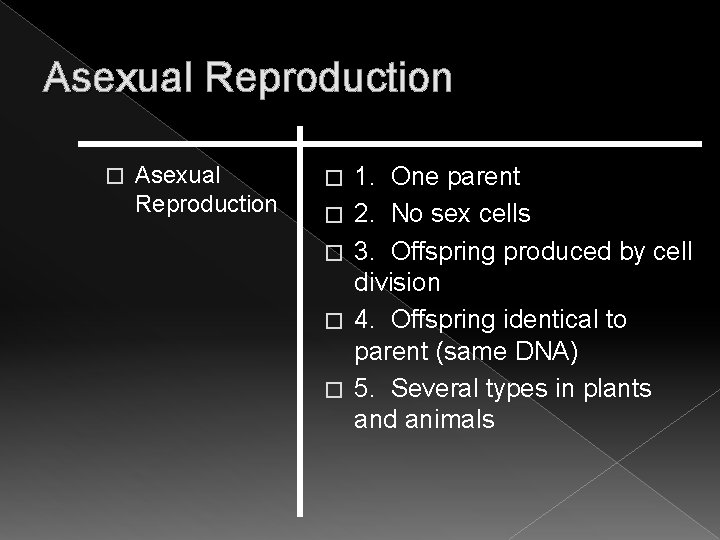
Asexual Reproduction � � � 1. One parent 2. No sex cells 3. Offspring produced by cell division 4. Offspring identical to parent (same DNA) 5. Several types in plants and animals
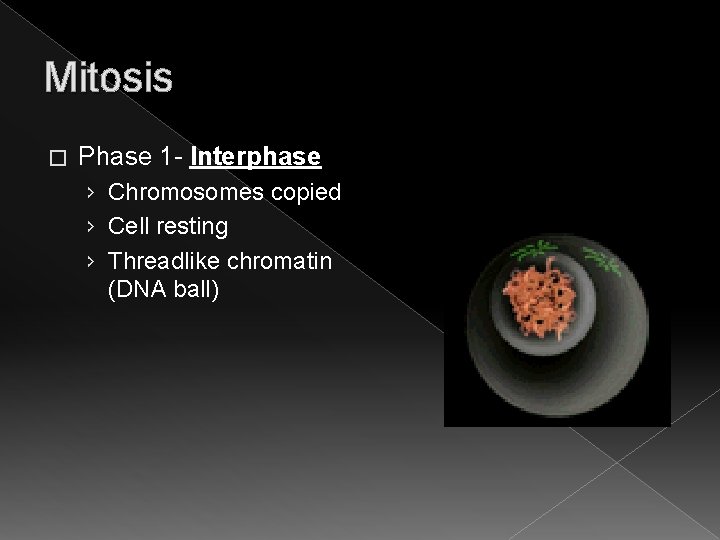
Mitosis � Phase 1 - Interphase › Chromosomes copied › Cell resting › Threadlike chromatin (DNA ball)
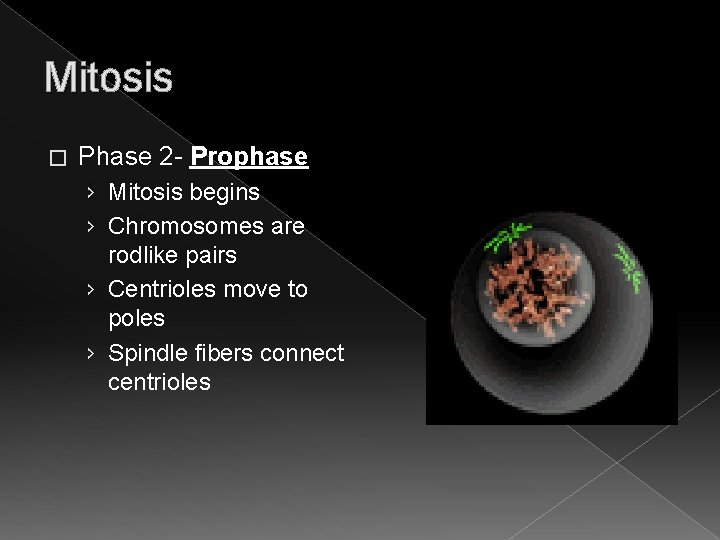
Mitosis � Phase 2 - Prophase › Mitosis begins › Chromosomes are rodlike pairs › Centrioles move to poles › Spindle fibers connect centrioles
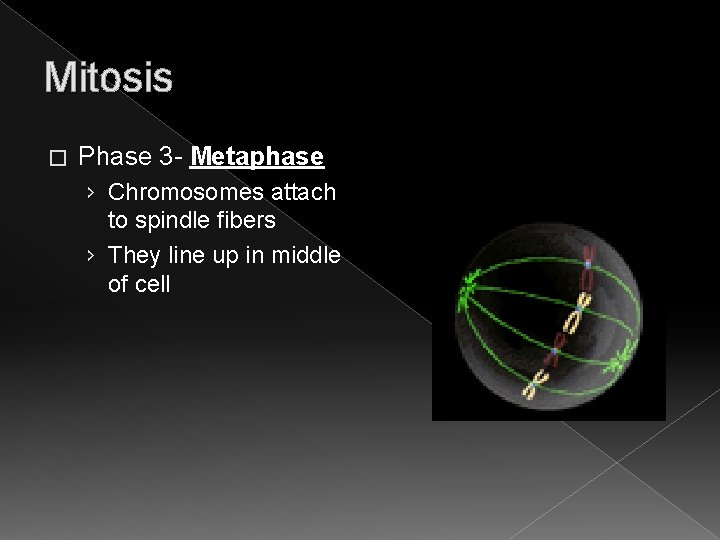
Mitosis � Phase 3 - Metaphase › Chromosomes attach to spindle fibers › They line up in middle of cell
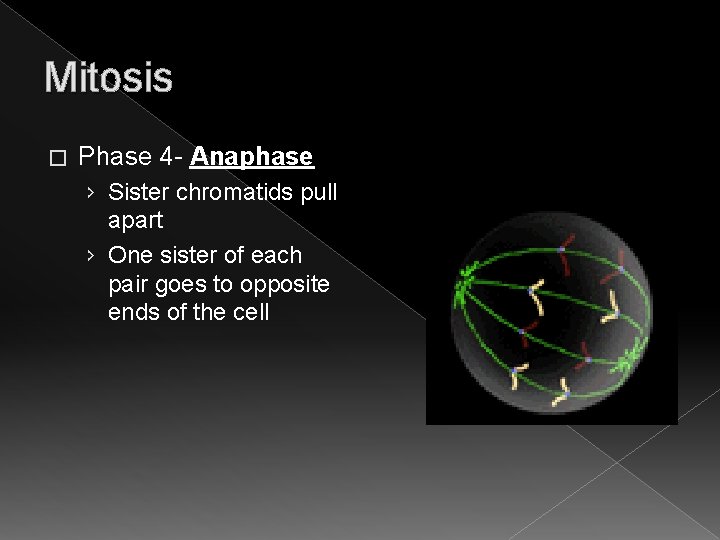
Mitosis � Phase 4 - Anaphase › Sister chromatids pull apart › One sister of each pair goes to opposite ends of the cell
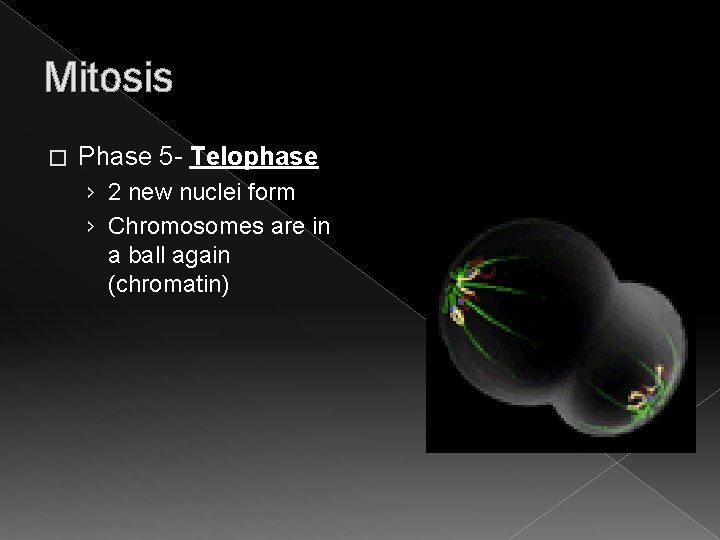
Mitosis � Phase 5 - Telophase › 2 new nuclei form › Chromosomes are in a ball again (chromatin)
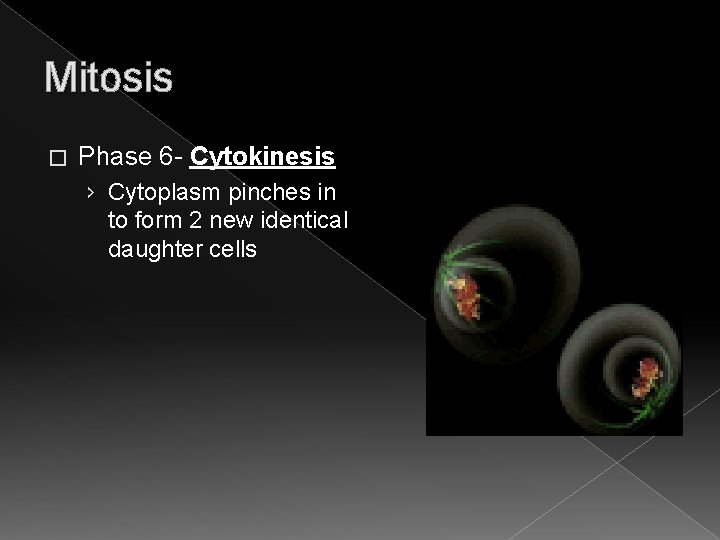
Mitosis � Phase 6 - Cytokinesis › Cytoplasm pinches in to form 2 new identical daughter cells
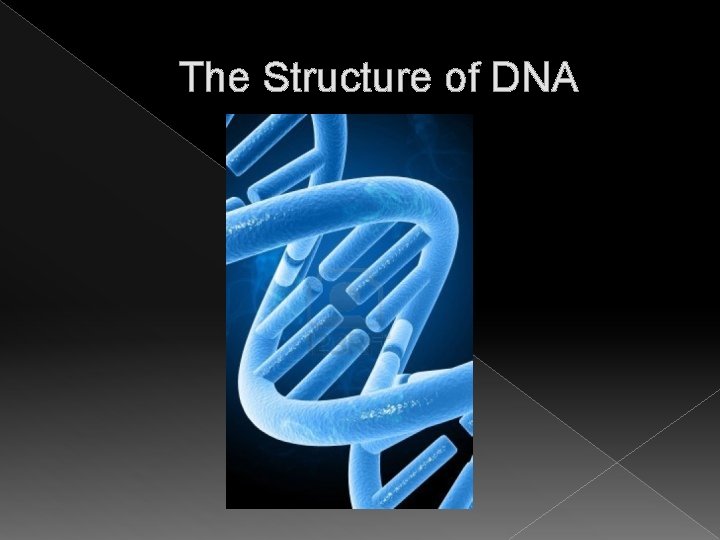
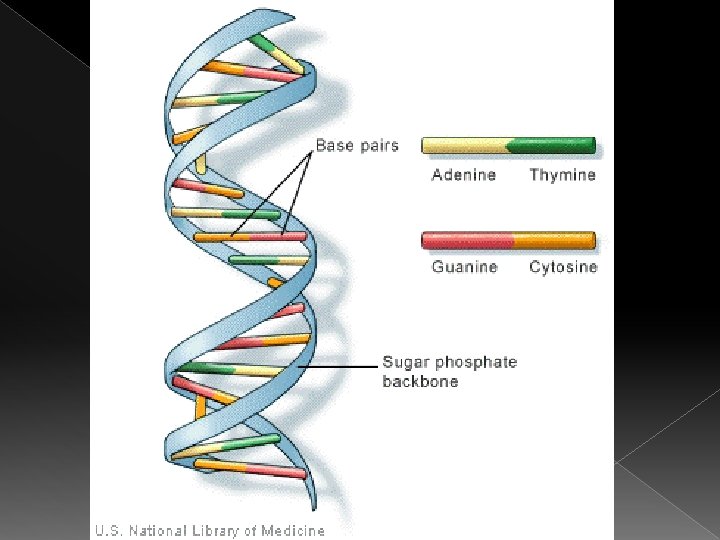
The Structure of DNA �A DNA molecule looks like a twisted ladder or spiral staircase. � The two sides of DNA are made of deoxyribose, a sugar, alternating with phosphates
The Structure of DNA
The Structure of DNA � Each rung is made up of a pair of molecules called nitrogen bases. � DNA has four kinds of nitrogen bases: adenine, thymine, guanine, and cytosine. › › Adenine=A Thymine=T Guanine=G Cytosine-C
The Structure of DNA � The bases on one side of the ladder pairs with the bases on the other side. � Adenine pairs with Thymine only � Guanine pairs with Cytosine only
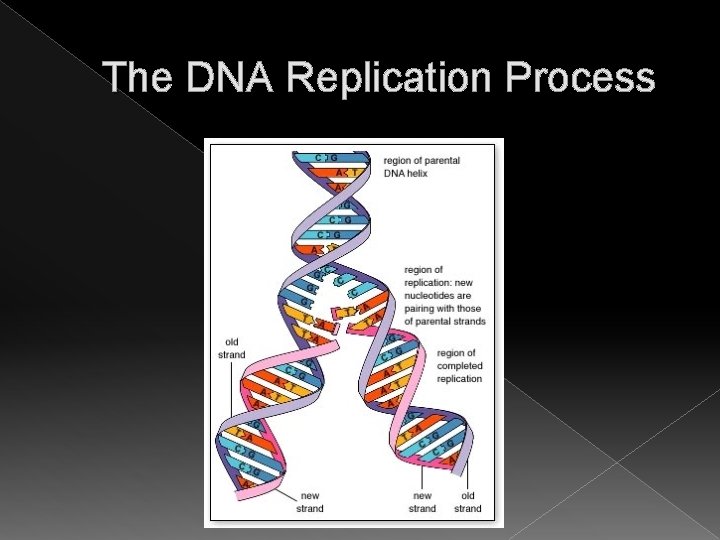
The DNA Replication Process Two side of DNA unwind and separates between the pairs of nitrogen bases 2. Nitrogen bases that are floating in the nucleus pairs up with the bases on each half of the DNA molecule. 1.
The DNA Replication Process
The DNA Replication Process � Because of the way in which the nitrogen bases pair with one another the order of the bases in each new DNA molecule exactly matches the order in the original DNA molecule.
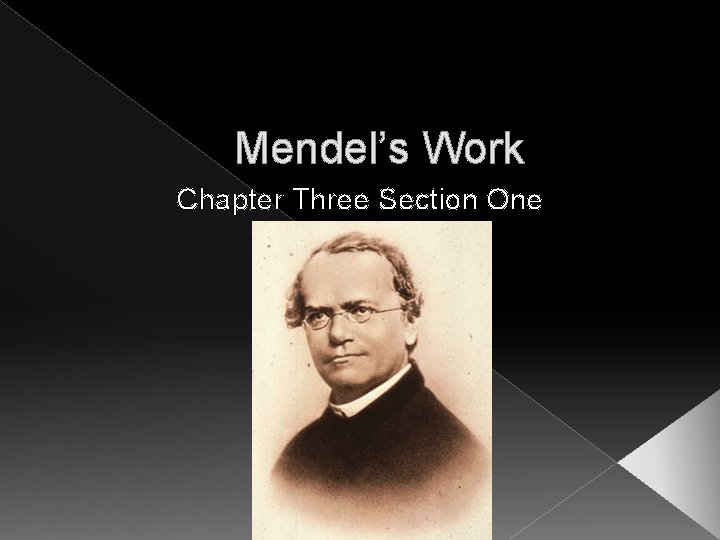
Mendel’s Work Chapter Three Section One
Background � In the mid 1800 s a priest named Gregor Mendel wondered why different pea plants had different characteristics. � The passing of physical characteristics from parents to offspring is called Heredity � Genetics is the study of heredity
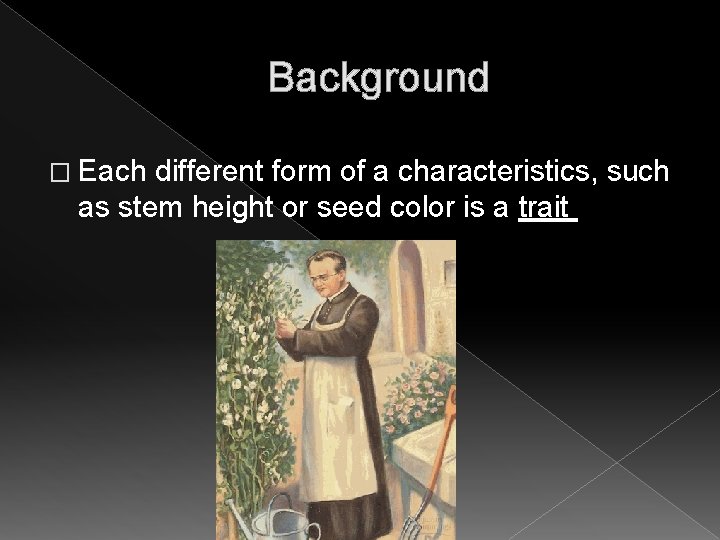
Background � Each different form of a characteristics, such as stem height or seed color is a trait
Mendel’s Experiment �A new organism begins to form when egg and sperm join in a process called Fertilization � Pea plants are normally self pollinating plants � In self-pollination, pollen from a flower lands on the pistil of the same flower.
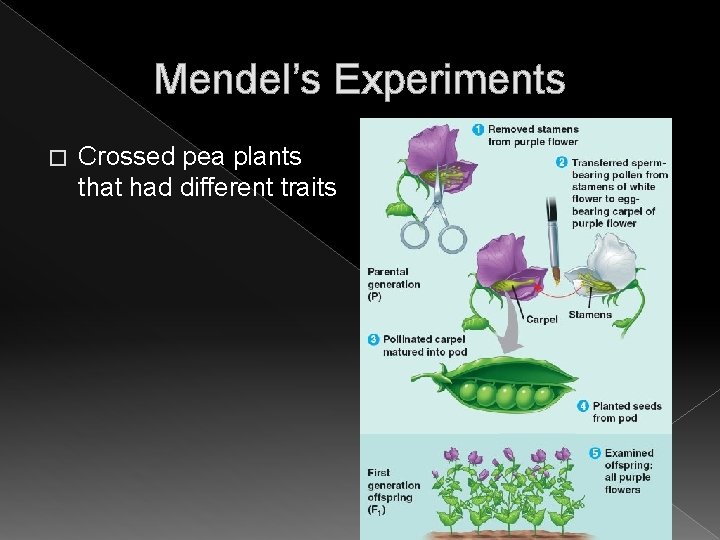
Mendel’s Experiments � Crossed pea plants that had different traits
Crossing Pea Plants � Mendel cross his plant with a plant of different traits › Example: tall plant, short plant � He started with a purebred plant › A purebred organism is the offspring of many generations that have the same trait
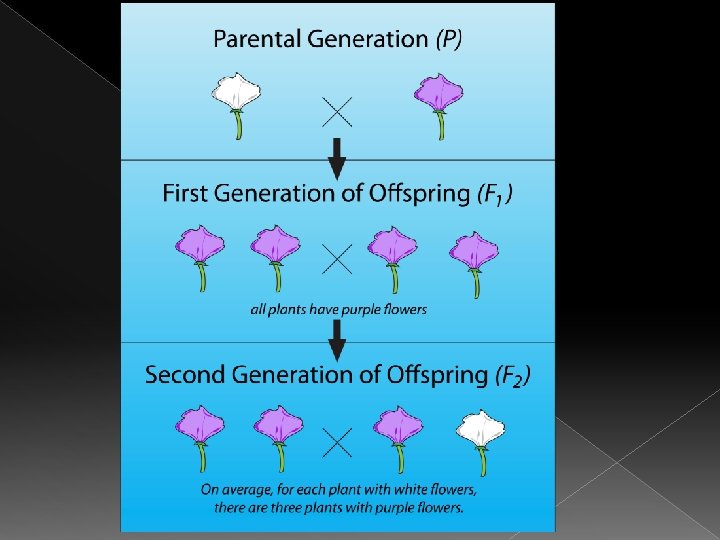
The F¹ Offspring � Mendel used purebred plants in his experiments, but today scientists call those parent plants the PARENTAL GENERATION or P generation � The offspring produced by the P generation are called the first filial or F¹generation
The F² Offspring � Mendel’s F¹ generation plants self-pollinated the F² generation of plants were a mix of tall and short plants � The �¾ SHORTNESS TRAIT REAPPEARED!!! were tall ¼ were short
The Experiments With Other Traits � In all of Mendel’s crosses, only form of the trait appeared in the F¹ Generation. However, in the F² Generation, the lost form of the trait always reappeared in about ¼ of the plants
Dominant and Recessive Alleles � After Mendel’s experiments, he came to the conclusion that the factors that control traits exist in pairs � One � BUT factor comes from each parent one factor in a pair can mask or hid the other factor
Genes and Alleles � Today scientists use the word gene for the factors that control a trait. � Alleles are the different forms of a gene � Example: › A gene controls height has one allele for tall and an allele for short
Genes and Alleles � An organism’s trait are controlled by the alleles it inherits from its parents. Some alleles are dominant, while other alleles are recessive.
Genes and Alleles �A dominant allele is one whose trait always show up in the organism when the allele is present �A recessive allele is hidden whenever the dominant allele is present › A trait controlled by a recessive allele will only show up if the organism does not have the dominant allele
Alleles in Mendel’s Crosses �A hybrid organism has two different alleles for the trait � P generation = purebred � F¹ = hybrid
Symbols for Alleles � Geneticists use letters to represent alleles › Dominate = T › Recessive = t � When a plant inherits: › 2 dominate genes = TT › 2 recessive genes = tt › 1 dominate and one recessive = Tt
Probability and Heredity 3. 2
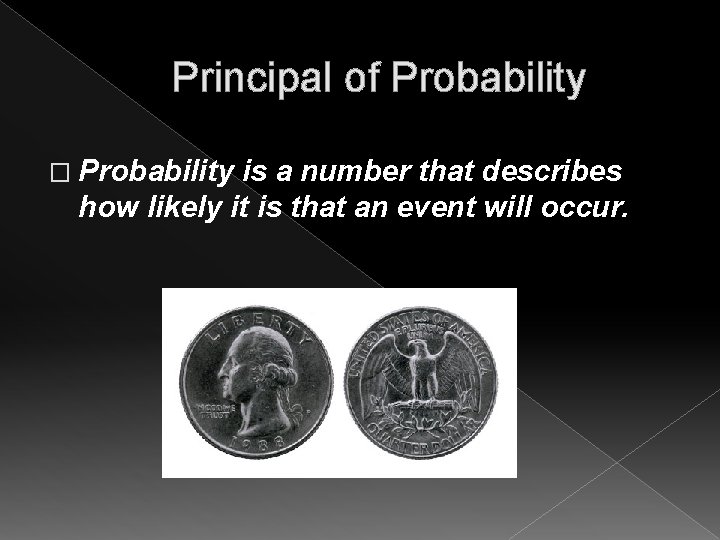
Principal of Probability � Probability is a number that describes how likely it is that an event will occur.
Principal of Probability � The laws of probability predict what is likely to occur not what necessarily what will occur. � The higher the number of tests the closer the actual results will be to the results predicted
Probability and Genetics � Mendel was the first scientist to recognize that the principal of probability can be used to predict the results of genetic crosses
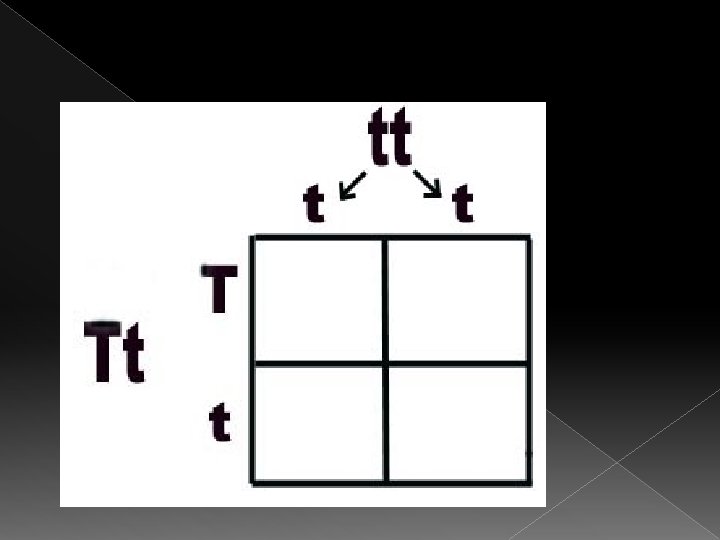
Punnet Squares �A tool that can help you understand how the laws of probability apply to genetics is called a Punnet square. �A Punnet Square is a chart that shows all the possible combinations of alleles that can result from a genetic cross.
Punnet Squares � Geneticists use Punnet square to show all the possible outcome and determine the probability of a particular outcome
Using Punnet Square � Calculate the probability that offspring with a certain combination of alleles will result � In genetic cross, the allele that each parent will pass on to its offspring is based on probability
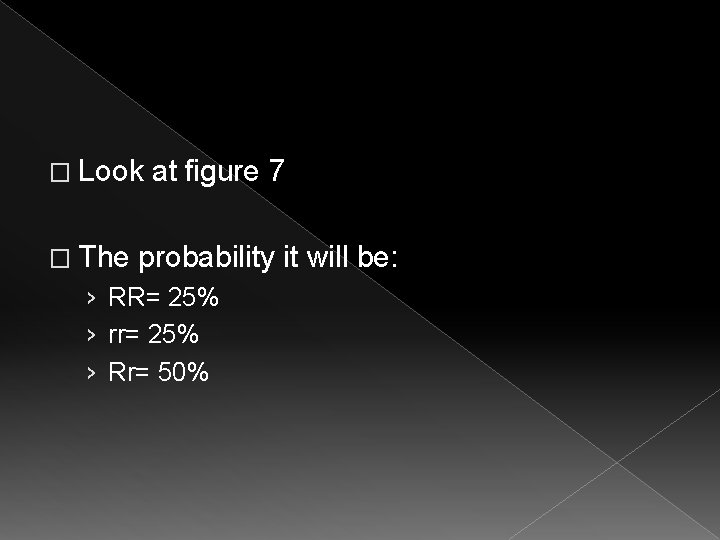
� Look � The at figure 7 probability it will be: › RR= 25% › rr= 25% › Rr= 50%
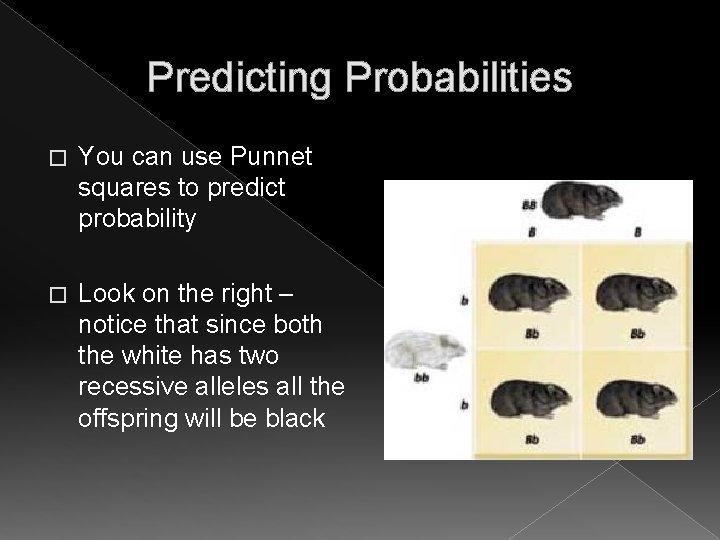
Predicting Probabilities � You can use Punnet squares to predict probability � Look on the right – notice that since both the white has two recessive alleles all the offspring will be black
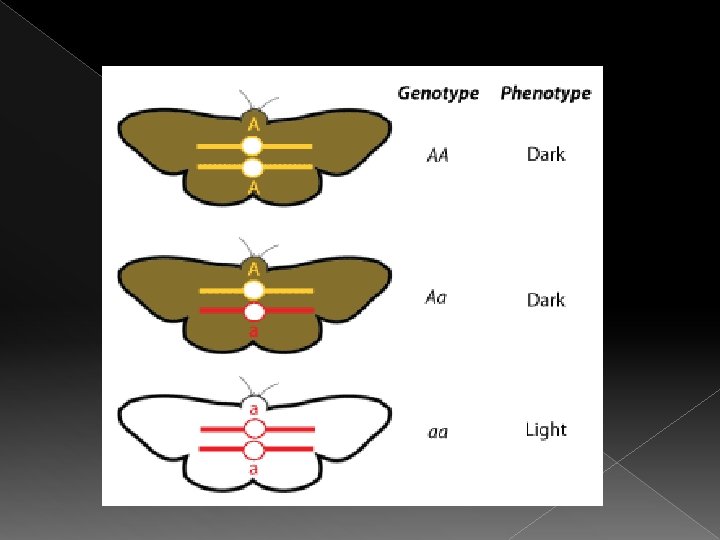
Phenotypes and Genotypes � An organisms phenotype is its physical appearance, or visible trait � An organism’s genotype is its genetic makeup, or allele combinations
Phenotypes and Genotypes � An organism that has two identical alleles for a trait is said to be homozygous › Example �a smooth-pod plant that alleles SS and a pinched pod that has alleles ss are both homozygous
Phenotypes and Genotypes � An organism that has two different alleles for its trait is called heterozygous › Example: �A smooth pod plant with the alleles Ss is heterozygous � Mendel used the term hybrid to describe heterozygous pea plants
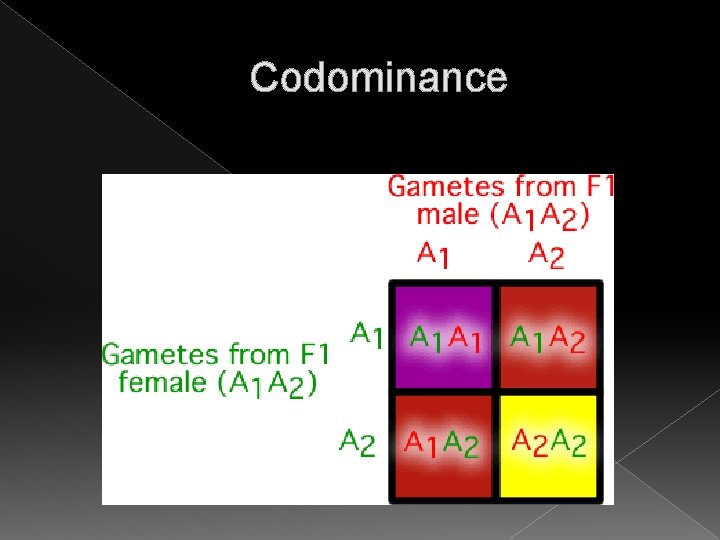
Codominance � In codominance the alleles are neither dominant nor recessive. � As a result both alleles are expressed in the offspring
Codominance
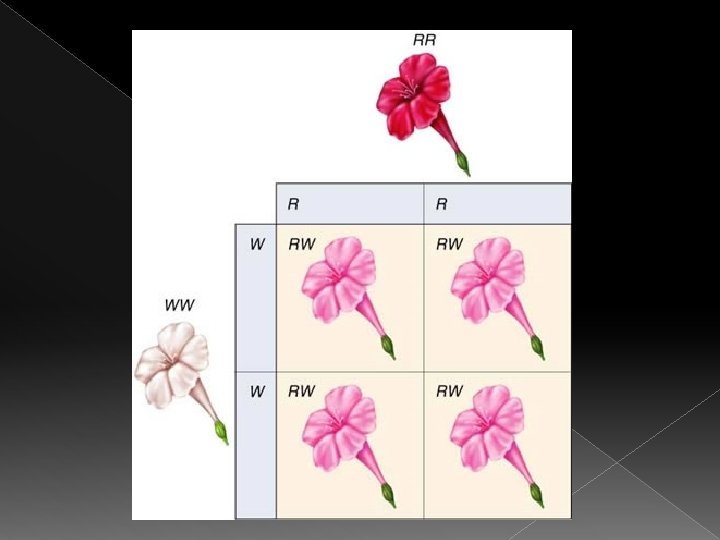
Incomplete Dominance � Incomplete dominance when one allele for a specific trait is not completely dominant over the other allele � This results in a third phenotype in which the expressed physical trait is a combination of the dominant and recessive phenotypes.
The Cell and Inheritance Chapter Three Section Three
Background � In 1903, Walter Sutton, an American geneticist was studying the cells of grasshoppers � He wanted to understand how sex cells form › Focusing on the movement of chromosomes � He hypothesized chromosomes were responsible for passing on traits to offspring
Chromosomes and Inheritance � Sutton needed evidence to support his hypothesis, he found it in grasshopper cells � The body cells of a grasshopper have 24 chromosomes � The grasshopper’s sex cells only have 12 chromosomes › A grasshopper’s sex cell chromosomes are ½ the number of chromosomes in body cells
Chromosomes Pairs � When a sperm cell and an egg joined during fertilization, the fertilized egg that formed had 24 chromosomes � The � 12 24 chromosomes existed in 12 pairs from male parent, 12 from female parent
Gene on Chromosomes � Alleles exist in pairs in an organism � One allele in a pair comes from the organism’s female parent, and the other allele comes from the male parent. � According to the chromosome theory of inheritance, genes are carried from parents to their offspring on chromosomes
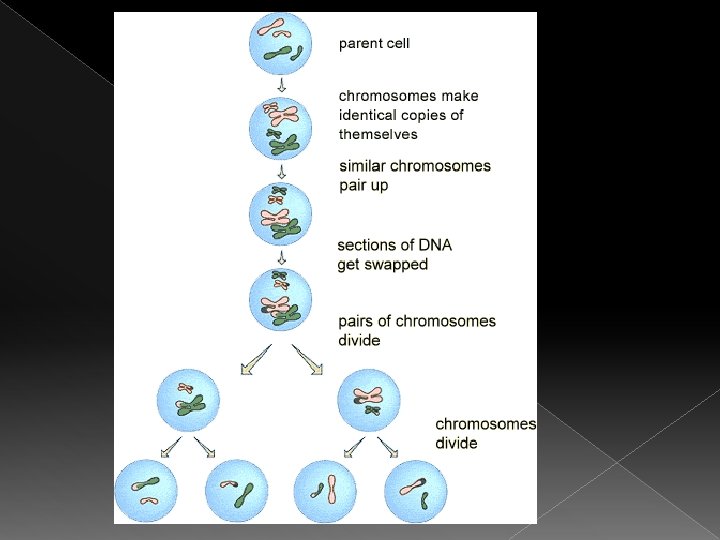
How do sex cells end up with half the number of chromosomes as body cells? Meiosis
What Happens During Meiosis � During Meiosis, the chromosome pairs separate and are distributed to two new different cells � The resulting sex cells have only half as many chromosomes as the other cells in the organism
What Happens During Meiosis � During Meiosis, the chromosome pairs separate and are distributed to two new different cells � The resulting sex cells have only half as many chromosomes as the other cells in the organism
What Happens During Meiosis � When sex cells combine to form an organism, each sex cell contributes half the normal number of chromosomes –half from each parents
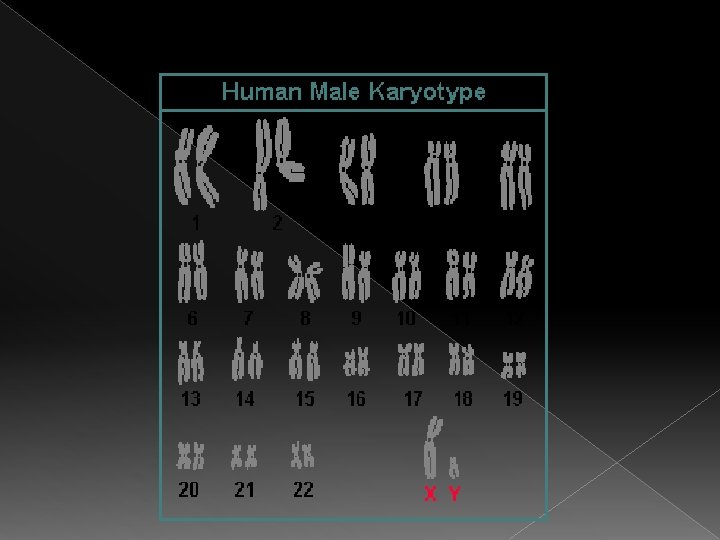
Lineup of Genes � The body cells of humans contain 23 chromosomes pairs or 46 chromosomes � Chromosomes are made up of many genes joined together like beads on a string
Lineup of Genes � Your body cells each contain between 20, 000 and 25, 000 genes � One chromosome in the pair came from the female parent, the other from the male parent › Each chromosome in the pair has the same genes › The genes are lined up in the same order on both chromosomes