
Genetics Gregor Mendel 1822 1884 Austrian Monk Spent
- Slides: 26
Genetics
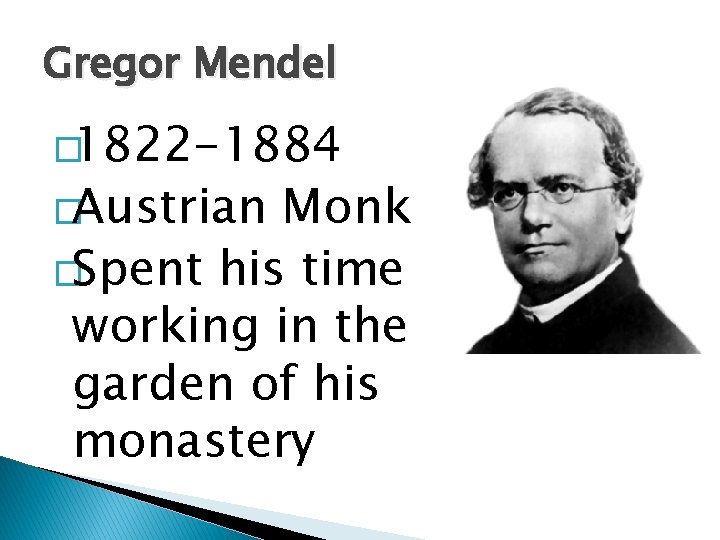
Gregor Mendel � 1822 -1884 �Austrian Monk �Spent his time working in the garden of his monastery
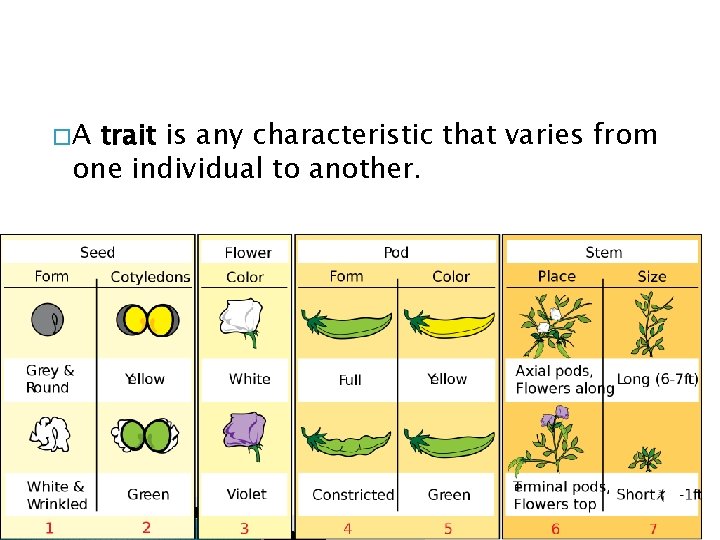
�Mendel became interested in the pea plants of his garden �Experimented on true breeding pea plants, those that had the same traits if they self-polinated
�A trait is any characteristic that varies from one individual to another.
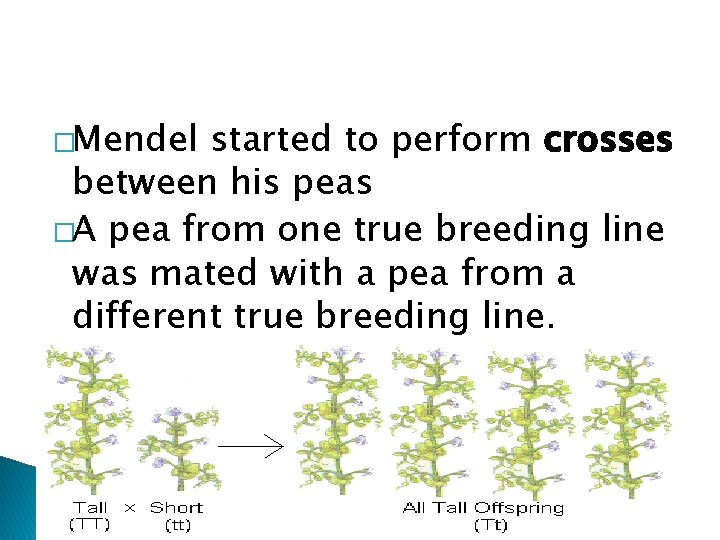
�Mendel started to perform crosses between his peas �A pea from one true breeding line was mated with a pea from a different true breeding line.
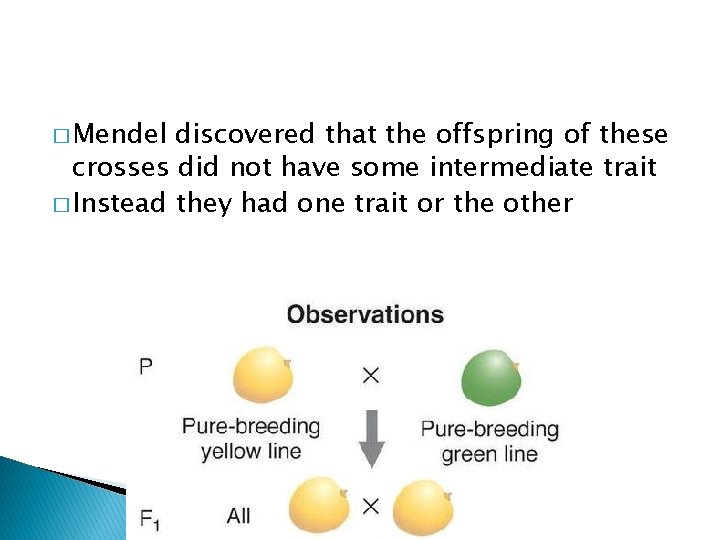
� Mendel discovered that the offspring of these crosses did not have some intermediate trait � Instead they had one trait or the other
�Each trait was determined by factors passed from parent to offspring �Each individual possesses a single factor from its mother and its father �These factors determine an organism’s traits.
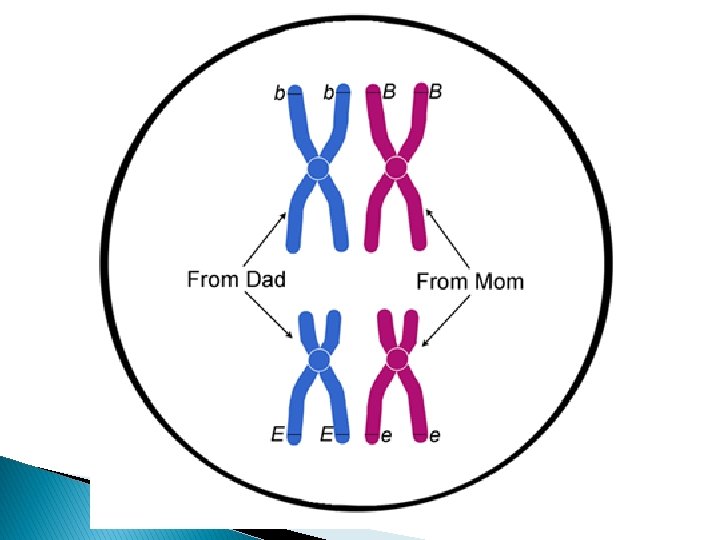
Genes and Alleles �We now call Mendel’s factors genes �We now also call the different versions of traits that Mendel studied alleles. An allele is any different form of a gene.
Genes vs. Traits �Genes are segments of DNA that encode proteins �Alleles are variations of that segment found on different chromosomes �Traits are visible characteristics
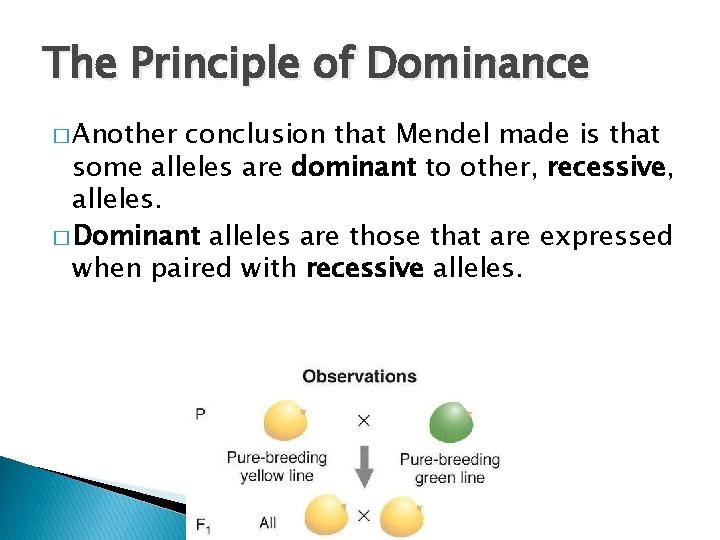
The Principle of Dominance � Another conclusion that Mendel made is that some alleles are dominant to other, recessive, alleles. � Dominant alleles are those that are expressed when paired with recessive alleles.
Nomenclature �By tradition, the dominant allele is written in capital letters and the recessive in lowercase letters. �T = Tall �t = Short
Zygosity �Homozygous – Have the same allele at a locus (pl. loci), a spot on the chromosome. TT, tt �Heterozygous – Alleles at a locus are different. Tt
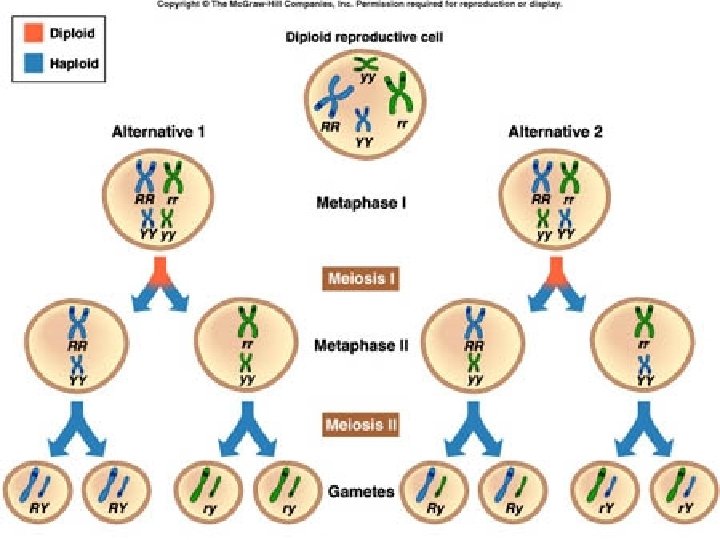
Segregation �The Principal of Segregation states that at some point before fertilization homologous chromosomes separate �When do homologous chromosomes separate?
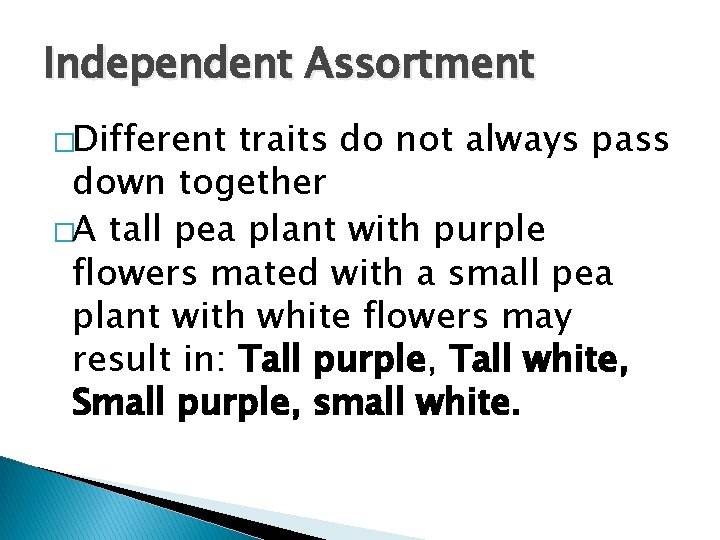
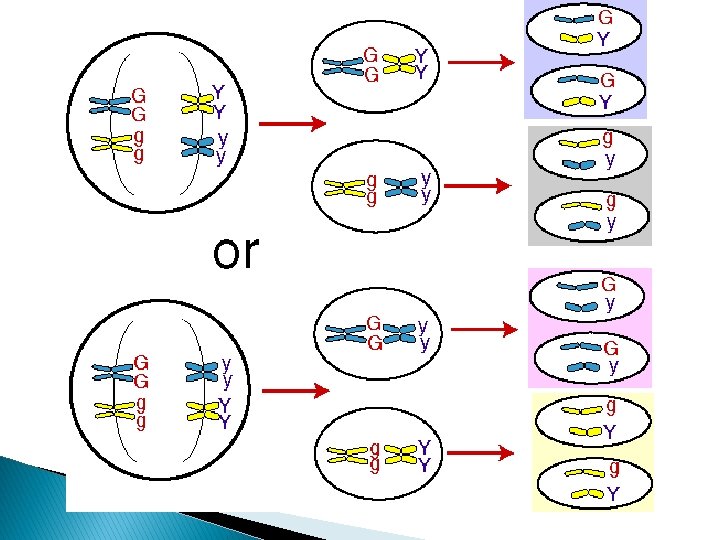
Independent Assortment �Different traits do not always pass down together �A tall pea plant with purple flowers mated with a small pea plant with white flowers may result in: Tall purple, Tall white, Small purple, small white.
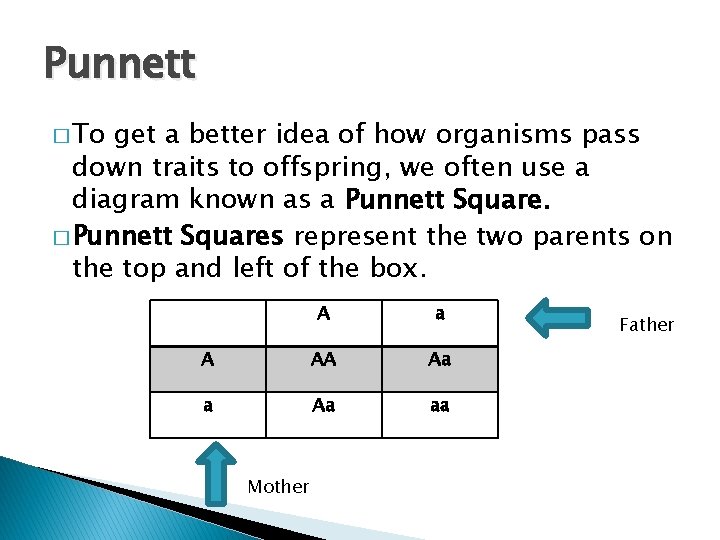
Punnett � To get a better idea of how organisms pass down traits to offspring, we often use a diagram known as a Punnett Square. � Punnett Squares represent the two parents on the top and left of the box. A a A AA Aa aa Mother Father
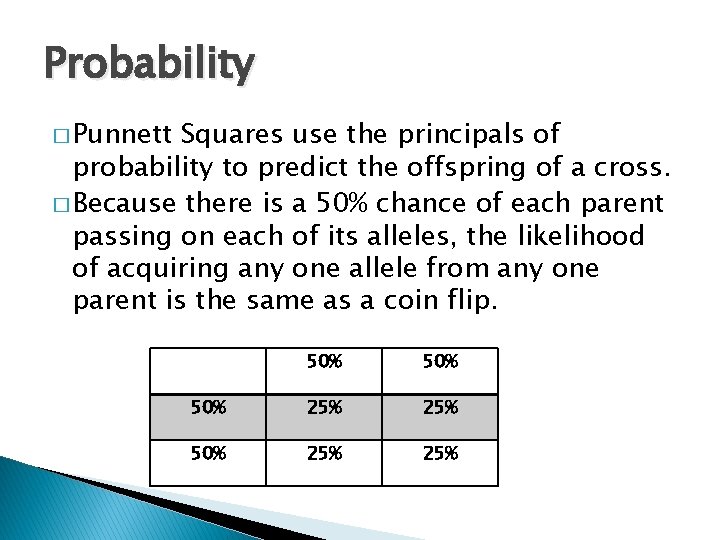
Probability � Punnett Squares use the principals of probability to predict the offspring of a cross. � Because there is a 50% chance of each parent passing on each of its alleles, the likelihood of acquiring any one allele from any one parent is the same as a coin flip. 50% 50% 25% 25%
The product rule �The probability of two independent events occuring simultaneous is the probability of Event 1 X probability of Event 2 �½ x ½ = ¼
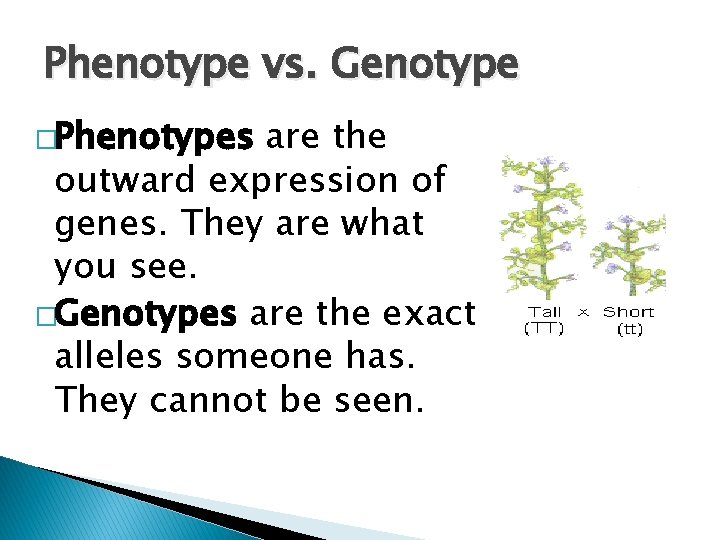
Phenotype vs. Genotype �Phenotypes are the outward expression of genes. They are what you see. �Genotypes are the exact alleles someone has. They cannot be seen.
Recessive alleles often cause disease � PKU – Phenylketonuria � PP = Normal � Pp = Normal � pp = Individual with PKU � PKU causes intellectual disability, seizures, and other sometimes life threatening conditions � PKU is caused by failure to properly break down phenylalanine
Heterozygotes are carriers �If a trait is recessive, we can call the heterozygotes carriers �They do not express the disorder themselves, but they do have the potential to carry it on to their offspring
�Other conditions caused by recessive traits: �Hemophilia �Color Blindness �Sickle Cell Anemia
Some conditions are caused by dominant alleles �Huntington’s disease �Causes cognitive impairment and can lead to psychiatric problems �HH – Huntingon’s �Hh – Huntingon’s �hh – Normal