
Genetics Genetics science of hereditary how traits are

- Slides: 28
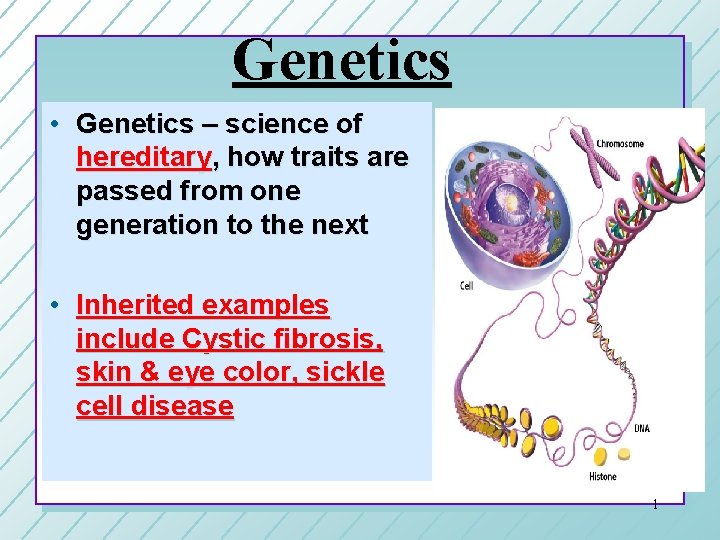
Genetics • Genetics – science of hereditary, how traits are passed from one generation to the next • Inherited examples include Cystic fibrosis, skin & eye color, sickle cell disease 1
Gregor Mendel • “Father of Genetics” - (1860’s) discovered that the fundamental principles of genetics by breeding pea plants SMP - 2013 2
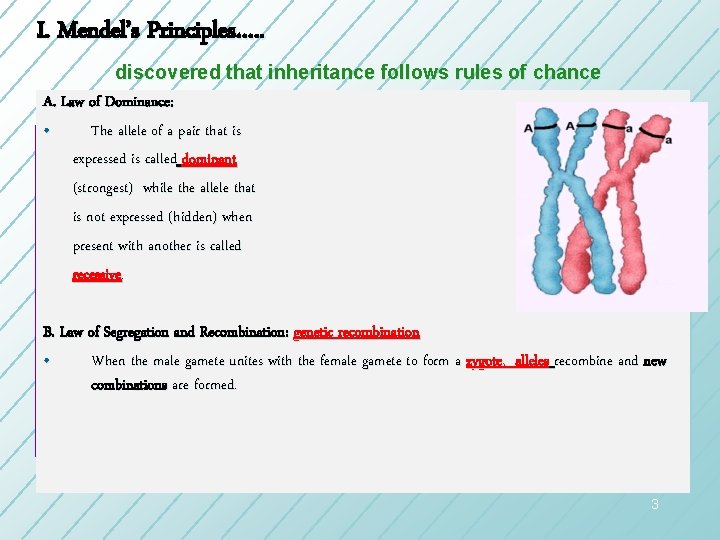
I. Mendel’s Principles…. . discovered that inheritance follows rules of chance A. Law of Dominance: • The allele of a pair that is expressed is called dominant (strongest) while the allele that is not expressed (hidden) when present with another is called recessive. B. Law of Segregation and Recombination: genetic recombination • When the male gamete unites with the female gamete to form a zygote, alleles recombine and new combinations are formed. 3
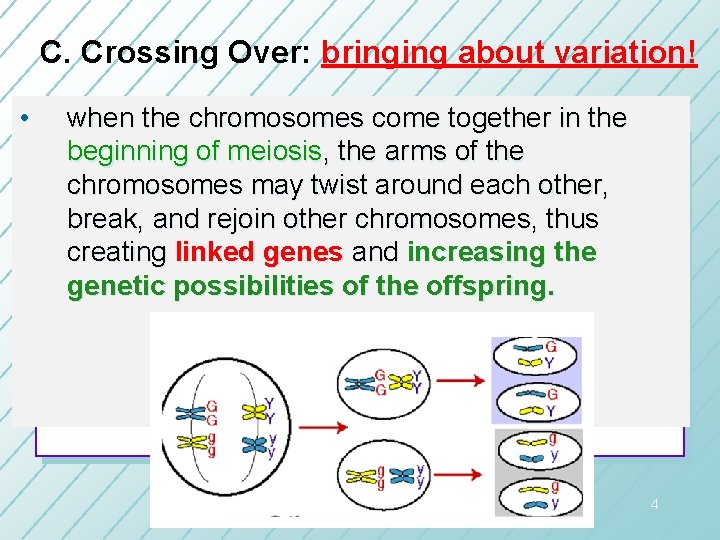
C. Crossing Over: bringing about variation! • when the chromosomes come together in the beginning of meiosis, the arms of the chromosomes may twist around each other, break, and rejoin other chromosomes, thus creating linked genes and increasing the genetic possibilities of the offspring. 4
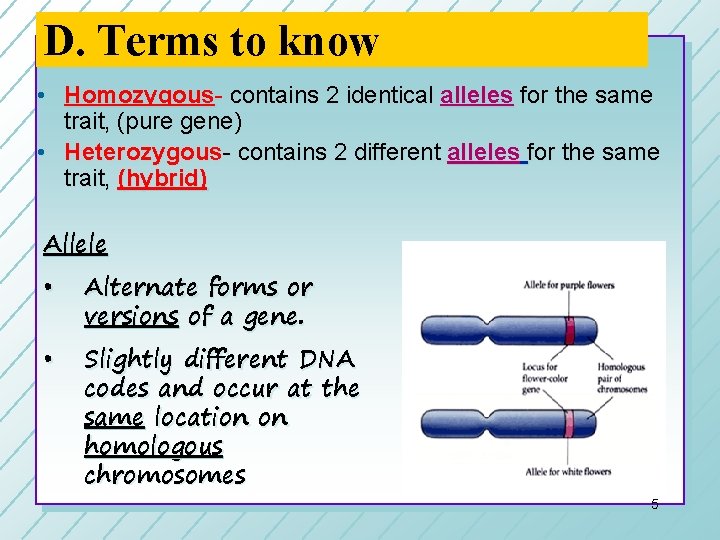
D. Terms to know • Homozygous- contains 2 identical alleles for the same trait, (pure gene) • Heterozygous- contains 2 different alleles for the same trait, (hybrid) Allele • • Alternate forms or versions of a gene. Slightly different DNA codes and occur at the same location on homologous chromosomes 5
Dominant allele • The version of the gene that is expressed (observed) when both alleles are present. • Symbolized with a capital letter: Ex: A SMP - 2013 6
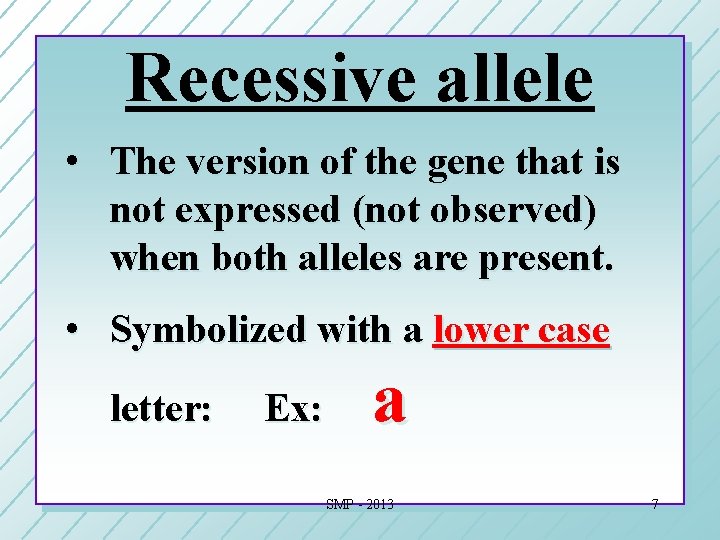
Recessive allele • The version of the gene that is not expressed (not observed) when both alleles are present. • Symbolized with a lower case letter: Ex: a SMP - 2013 7
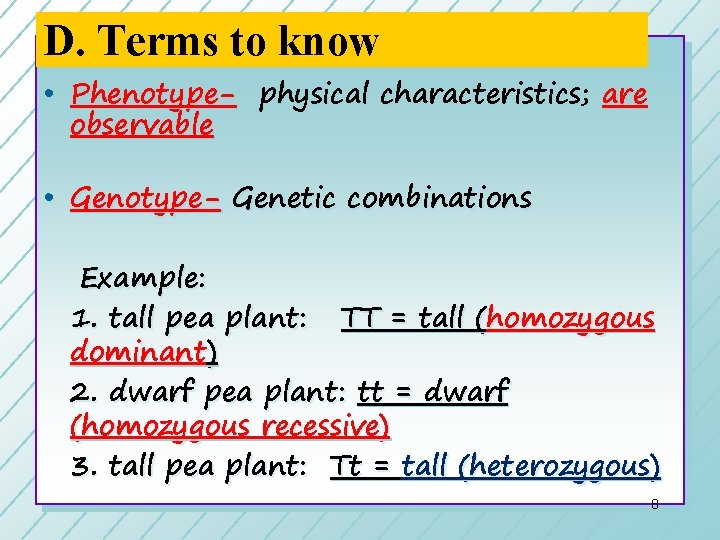
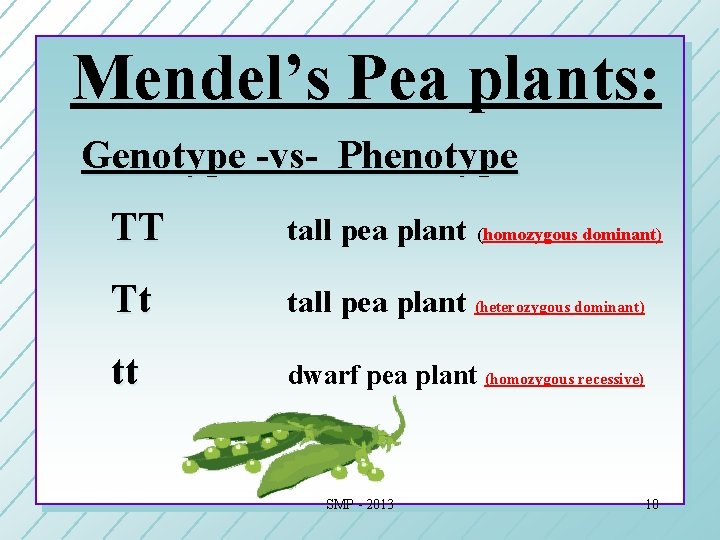
D. Terms to know • Phenotype- physical characteristics; are observable • Genotype- Genetic combinations Example: 1. tall pea plant: TT = tall (homozygous dominant) 2. dwarf pea plant: tt = dwarf (homozygous recessive) 3. tall pea plant: Tt = tall (heterozygous) 8
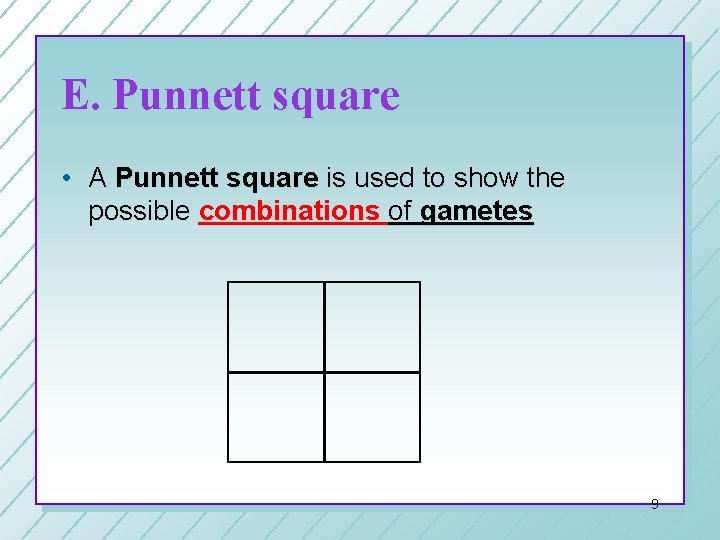
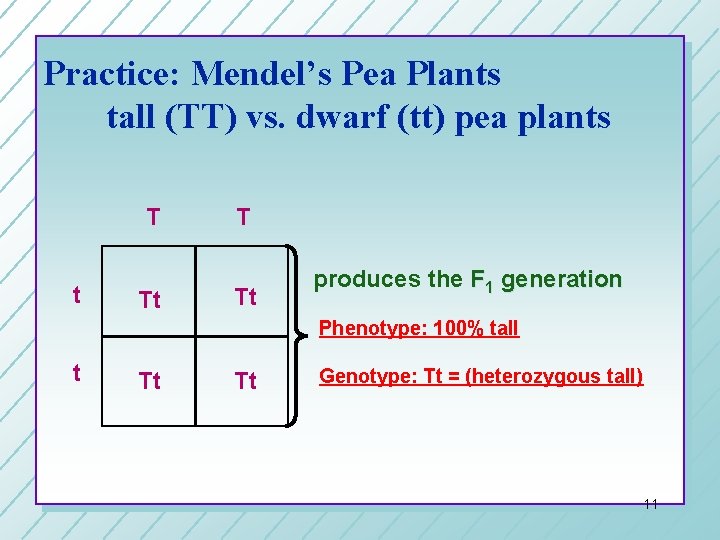
E. Punnett square • A Punnett square is used to show the possible combinations of gametes 9
Mendel’s Pea plants: Genotype -vs- Phenotype TT tall pea plant Tt tall pea plant (heterozygous dominant) tt dwarf pea plant (homozygous recessive) SMP - 2013 (homozygous dominant) 10
Practice: Mendel’s Pea Plants tall (TT) vs. dwarf (tt) pea plants T t Tt T Tt produces the F 1 generation Phenotype: 100% tall t Tt Tt Genotype: Tt = (heterozygous tall) 11
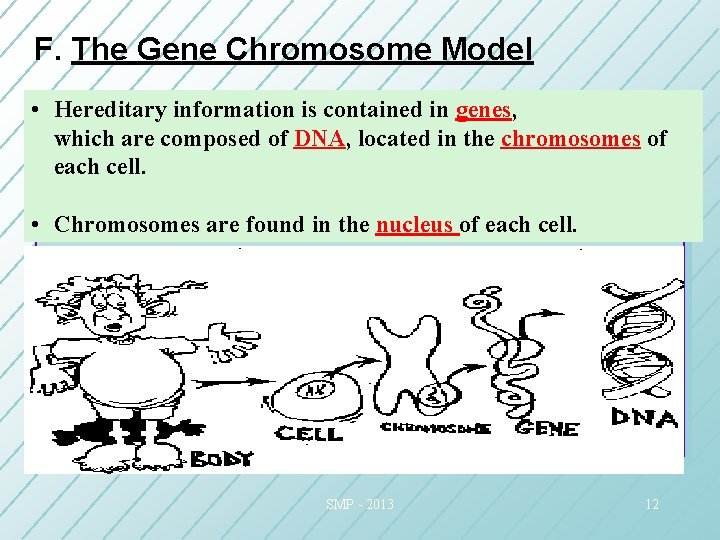
F. The Gene Chromosome Model • Hereditary information is contained in genes, which are composed of DNA, located in the chromosomes of each cell. • Chromosomes are found in the nucleus of each cell. SMP - 2013 12
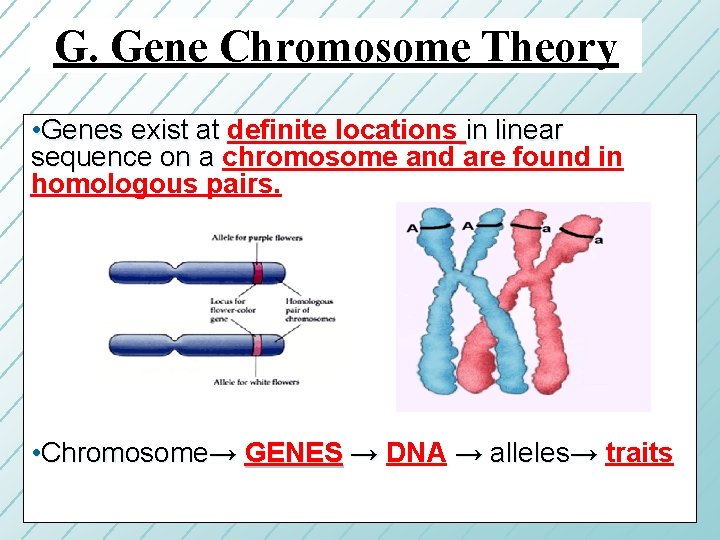
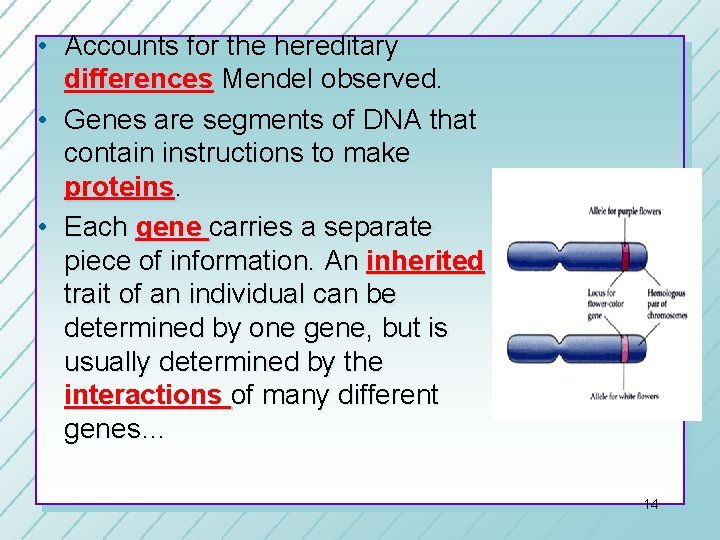
G. Gene Chromosome Theory • Genes exist at definite locations in linear sequence on a chromosome and are found in homologous pairs. • Chromosome→ GENES → DNA → alleles→ traits SMP - 2013 13
• Accounts for the hereditary differences Mendel observed. • Genes are segments of DNA that contain instructions to make proteins. • Each gene carries a separate piece of information. An inherited trait of an individual can be determined by one gene, but is usually determined by the interactions of many different genes… 14
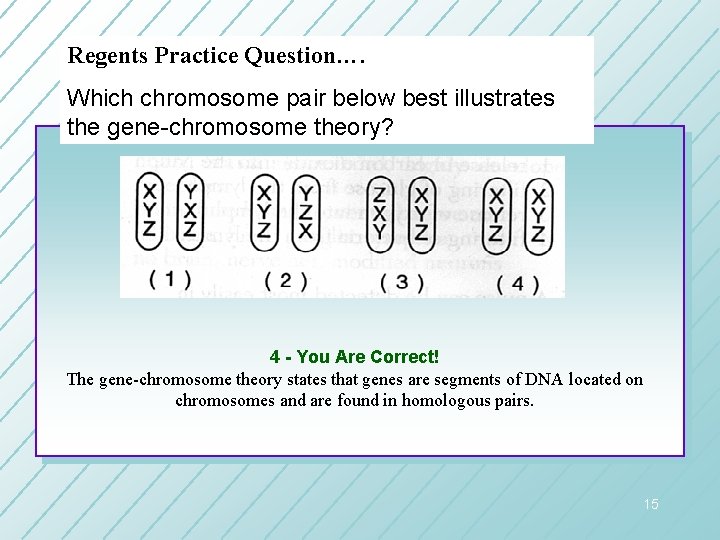
Regents Practice Question…. Which chromosome pair below best illustrates the gene-chromosome theory? 4 - You Are Correct! The gene-chromosome theory states that genes are segments of DNA located on chromosomes and are found in homologous pairs. 15
Bellwork – turn to your table partner and discuss the questions below. . 1. What organelle is known as the “control center” of the cell? 2. What structures are found in the nucleus? 3. What are located on chromosomes? 4. What are genes composed of? SMP - 2013 16
All ABOUT DNA: The Intro Clip SMP - 2013 17
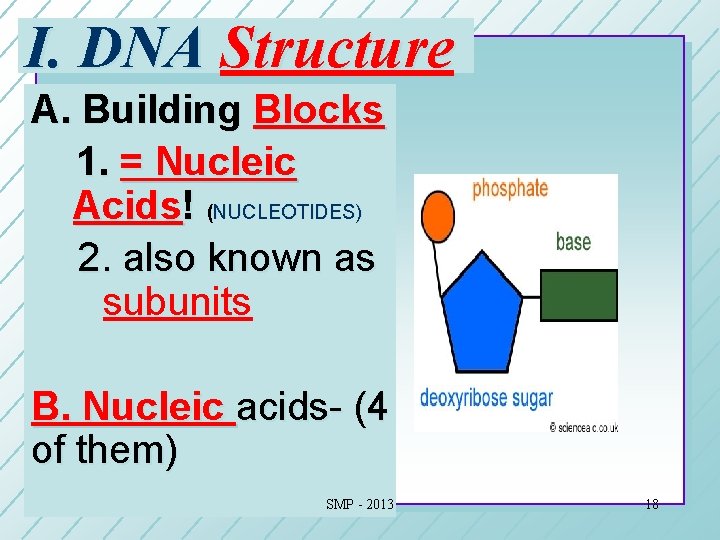
I. DNA Structure A. Building Blocks 1. = Nucleic Acids! (NUCLEOTIDES) 2. also known as subunits B. Nucleic acids- (4 of them) SMP - 2013 18
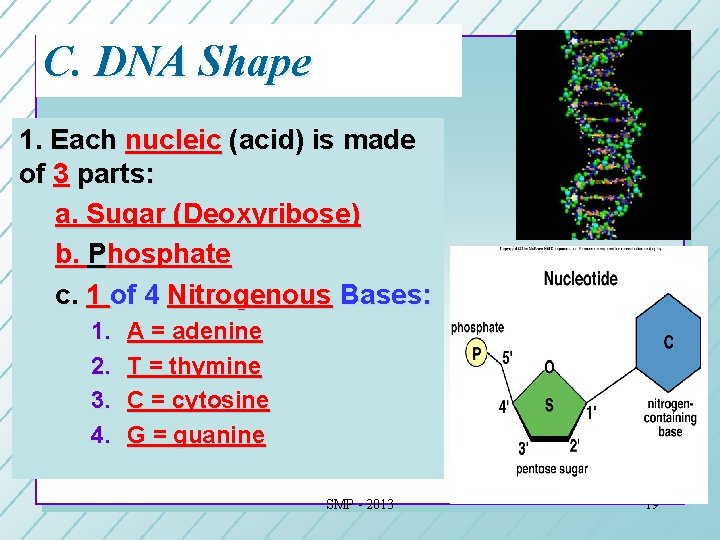
C. DNA Shape 1. Each nucleic (acid) is made of 3 parts: a. Sugar (Deoxyribose) b. Phosphate c. 1 of 4 Nitrogenous Bases: 1. 2. 3. 4. A = adenine T = thymine C = cytosine G = guanine SMP - 2013 19
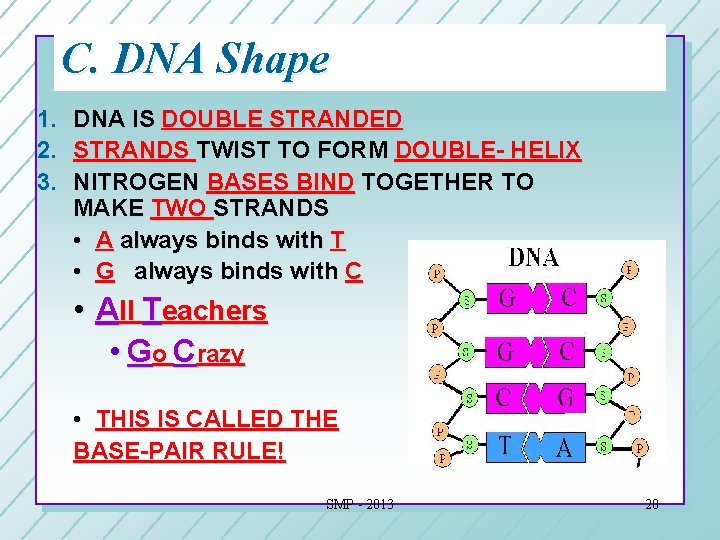
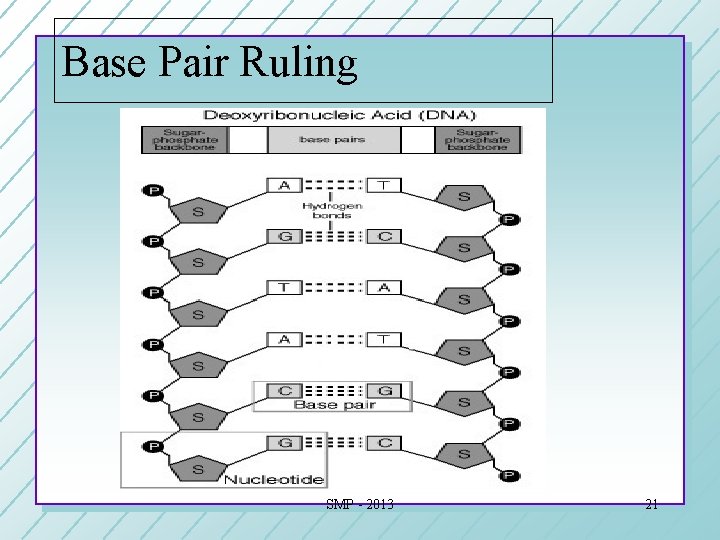
C. DNA Shape 1. DNA IS DOUBLE STRANDED 2. STRANDS TWIST TO FORM DOUBLE- HELIX 3. NITROGEN BASES BIND TOGETHER TO MAKE TWO STRANDS • A always binds with T • G always binds with C • All Teachers • Go Crazy • THIS IS CALLED THE BASE-PAIR RULE! SMP - 2013 20
Base Pair Ruling SMP - 2013 21
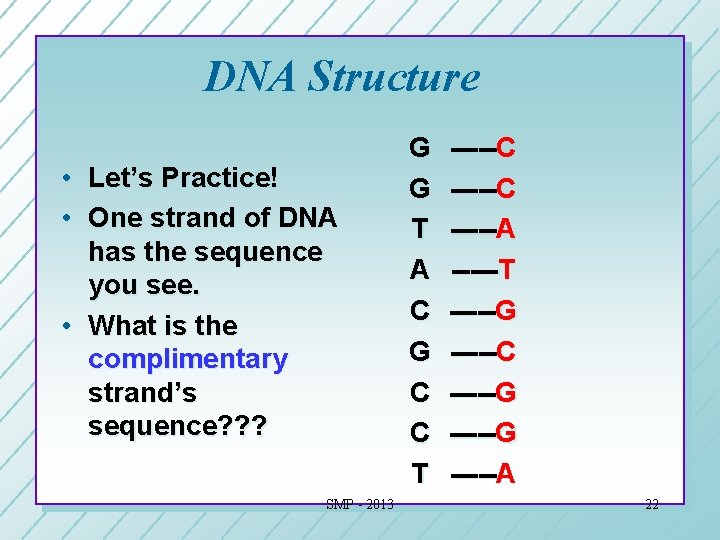
DNA Structure • Let’s Practice! • One strand of DNA has the sequence you see. • What is the complimentary strand’s sequence? ? ? SMP - 2013 G G T A C G C C T -----C -----A -----T -----G -----C -----G -----A 22
Replication: The Video Clip (1: 02) http: //www. youtube. com/watch? v=z 685 FF qmrpo
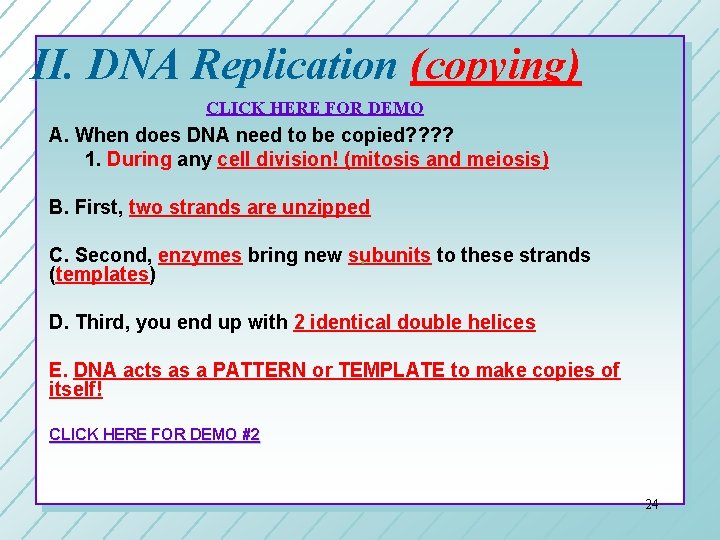
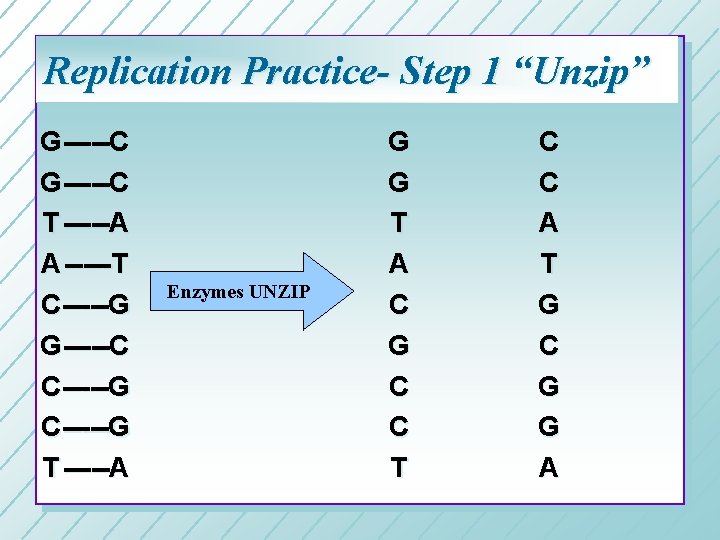
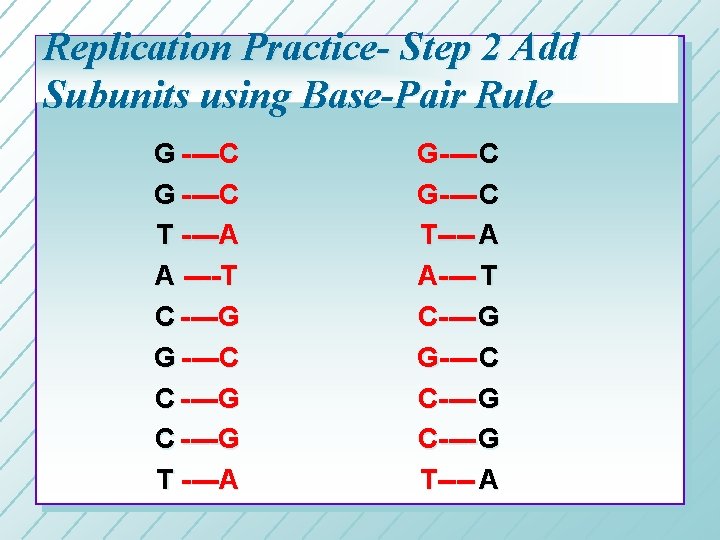
II. DNA Replication (copying) CLICK HERE FOR DEMO A. When does DNA need to be copied? ? 1. During any cell division! (mitosis and meiosis) B. First, two strands are unzipped C. Second, enzymes bring new subunits to these strands (templates) D. Third, you end up with 2 identical double helices E. DNA acts as a PATTERN or TEMPLATE to make copies of itself! CLICK HERE FOR DEMO #2 24
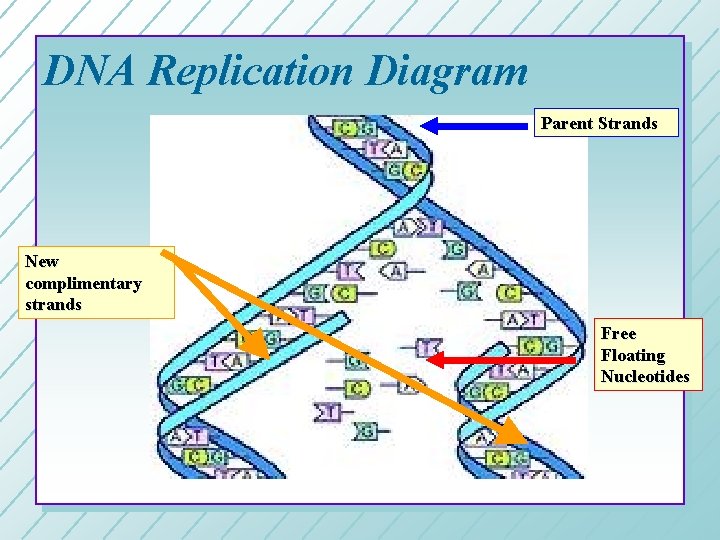
DNA Replication Diagram Parent Strands New complimentary strands Free Floating Nucleotides
Replication Practice- Step 1 “Unzip” G-----C T -----A A -----T C-----G G-----C C-----G T -----A Enzymes UNZIP G G T A C G C C T C C A T G C G G A
Replication Practice- Step 2 Add Subunits using Base-Pair Rule G ----C T ----A A ----T C ----G G ----C C ----G T ----A G---- C T---- A A---- T C---- G G---- C C---- G T---- A
THE DNA RAP!!!! • http: //www. youtube. com/watch? v=d 1 UP f 7 l. Xe. O 8