
Genetics Crash Course 7 th grade science Traits

- Slides: 30
Genetics Crash Course 7 th grade science
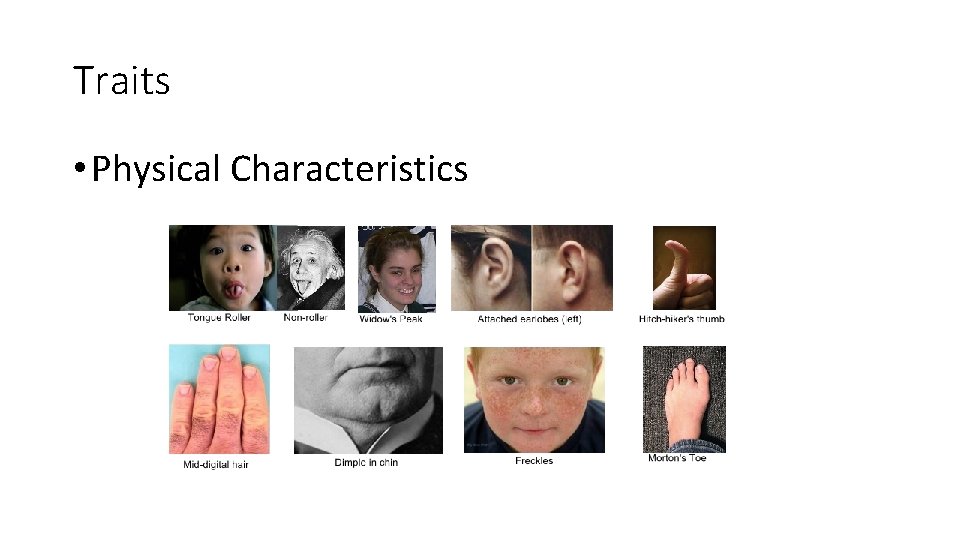
Traits • Physical Characteristics
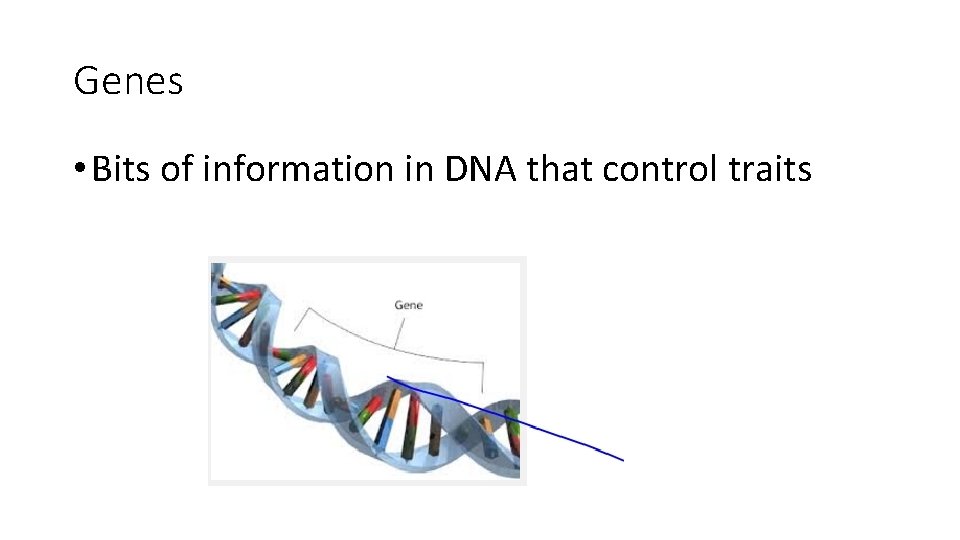
Genes • Bits of information in DNA that control traits
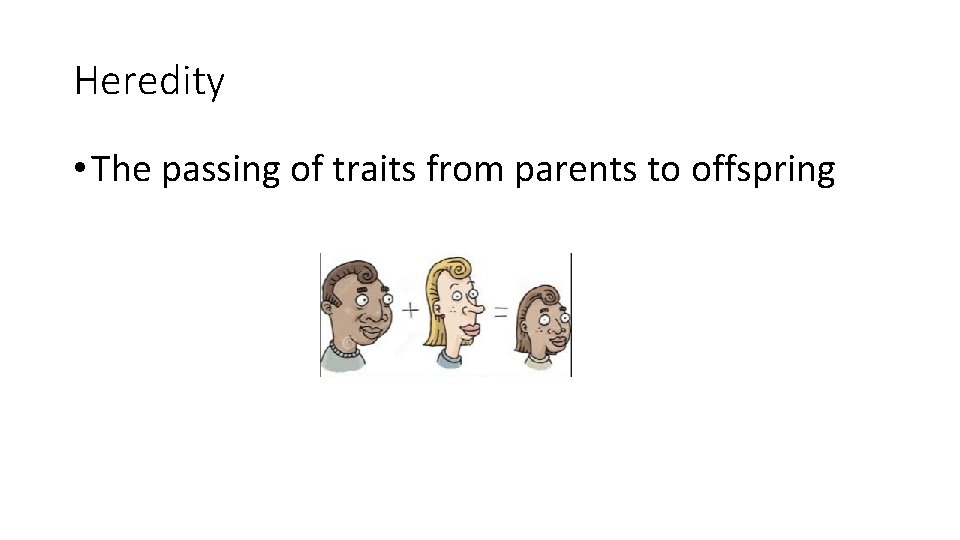
Heredity • The passing of traits from parents to offspring
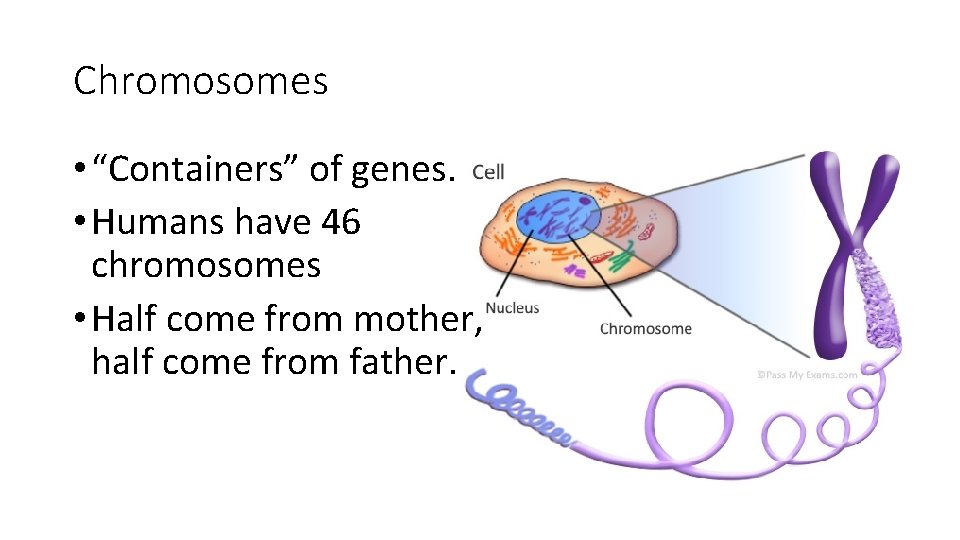
Chromosomes • “Containers” of genes. • Humans have 46 chromosomes • Half come from mother, half come from father.
Checkpoint 1. What is heredity? 2. How many total chromosomes do humans have? 3. Why are your chromosomes arranged in pairs?
Two Types of Reproduction • Asexual and Sexual
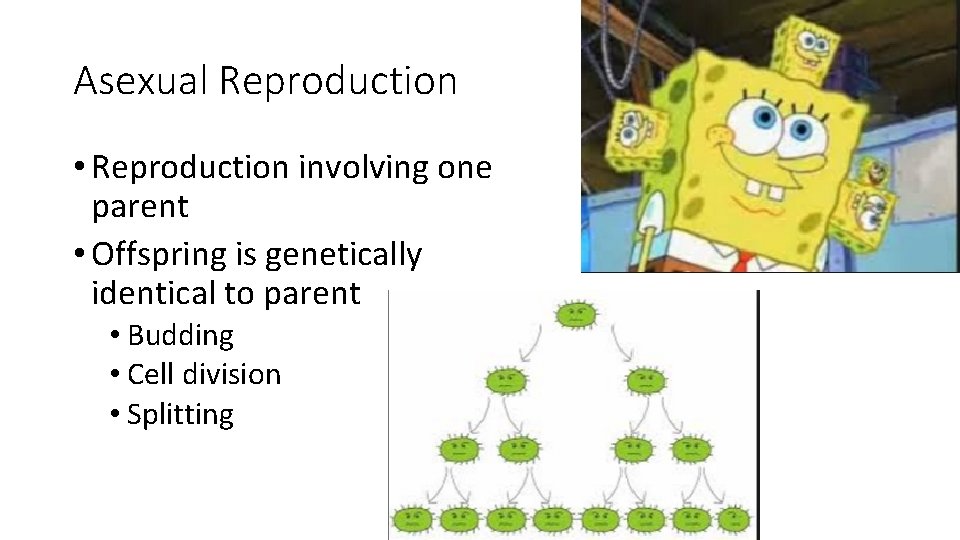
Asexual Reproduction • Reproduction involving one parent • Offspring is genetically identical to parent • Budding • Cell division • Splitting
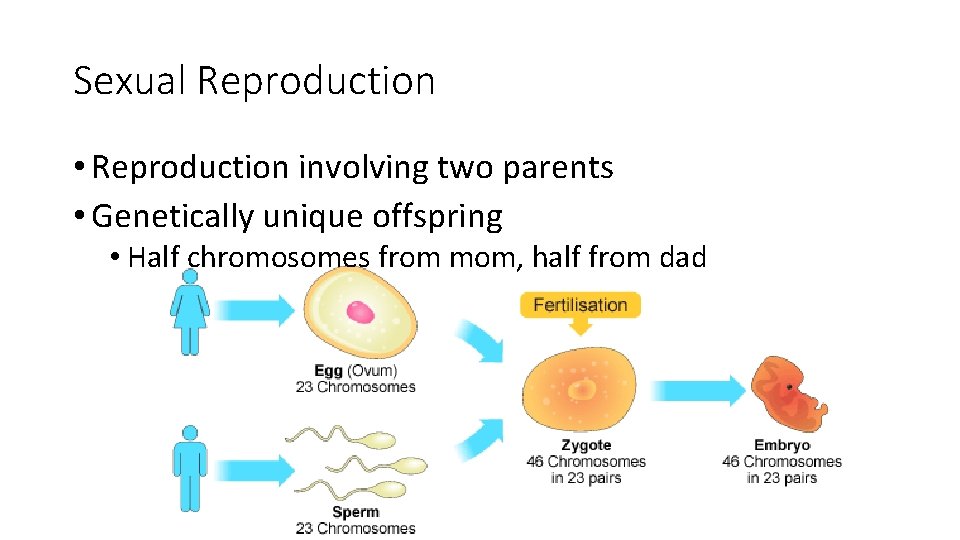
Sexual Reproduction • Reproduction involving two parents • Genetically unique offspring • Half chromosomes from mom, half from dad
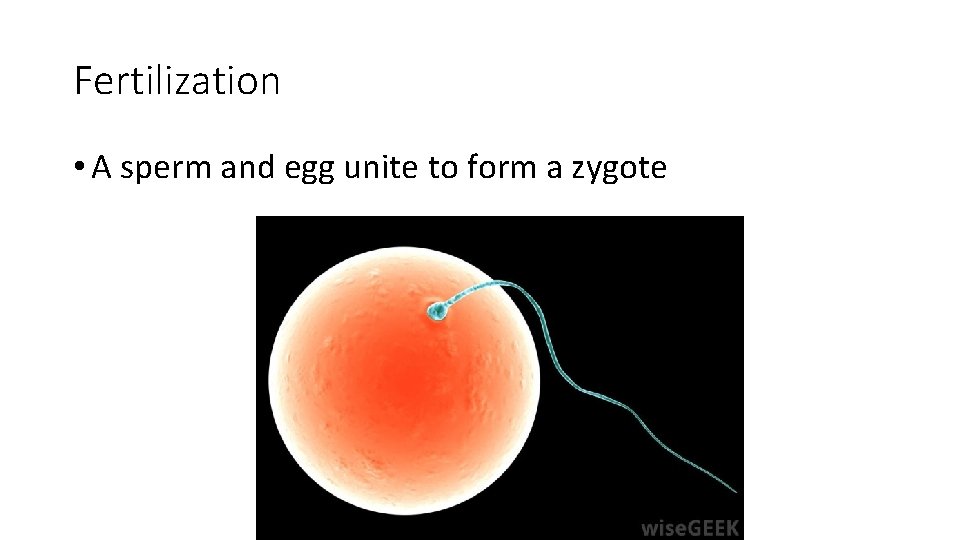
Fertilization • A sperm and egg unite to form a zygote
Checkpoint • Which type of reproduction results in genetically identical offspring? • Which type of reproduction involves two parents? • Which type of reproduction? A red flower is bred with a white flower in hopes of producing a pink flower.
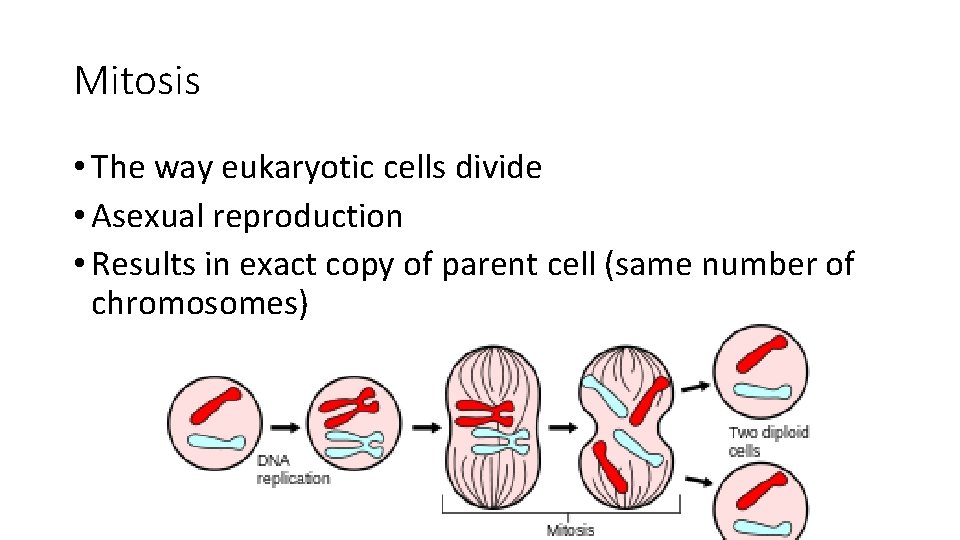
Mitosis • The way eukaryotic cells divide • Asexual reproduction • Results in exact copy of parent cell (same number of chromosomes)
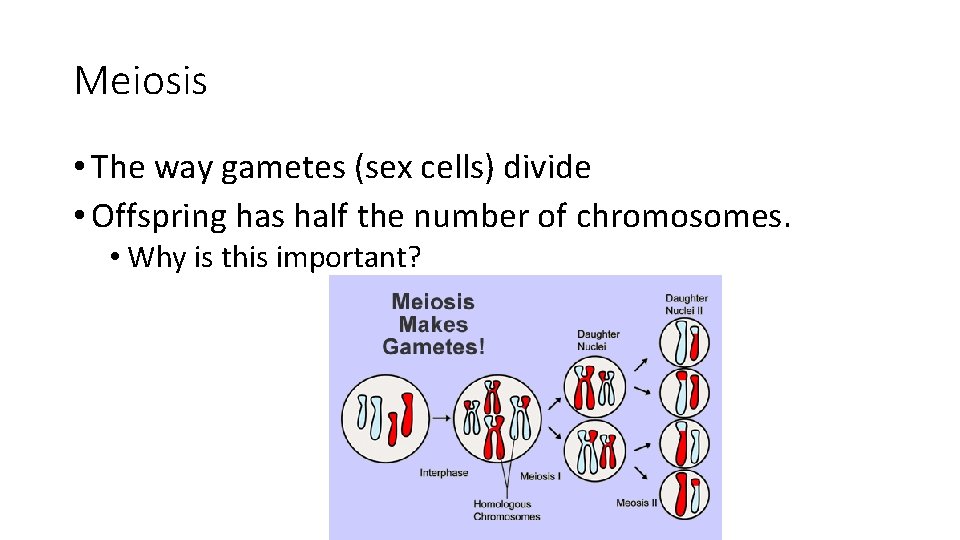
Meiosis • The way gametes (sex cells) divide • Offspring has half the number of chromosomes. • Why is this important?
Checkpoint • Mitosis or Meiosis? • New human cells have 23 chromosomes • Makes exact copies • New human cells have 46 chromosomes • Makes gametes
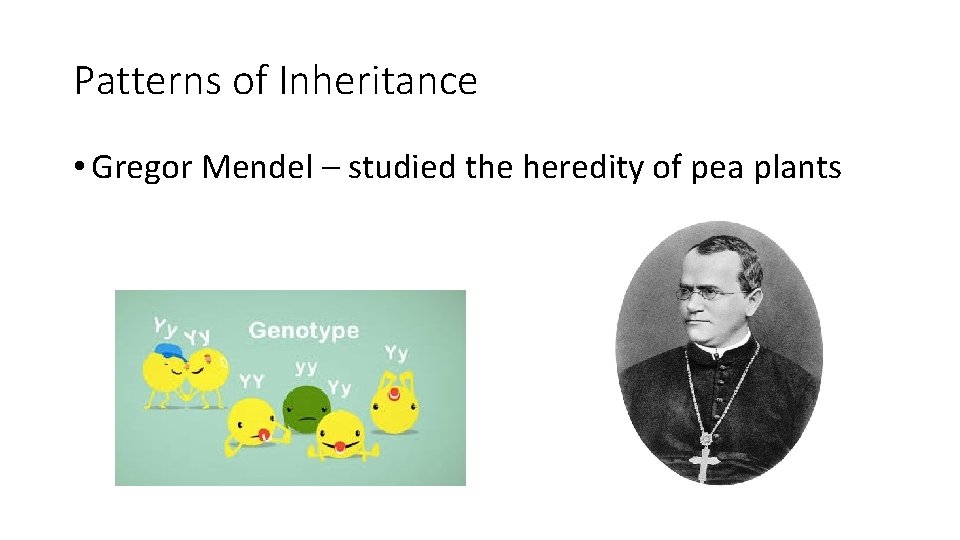
Patterns of Inheritance • Gregor Mendel – studied the heredity of pea plants
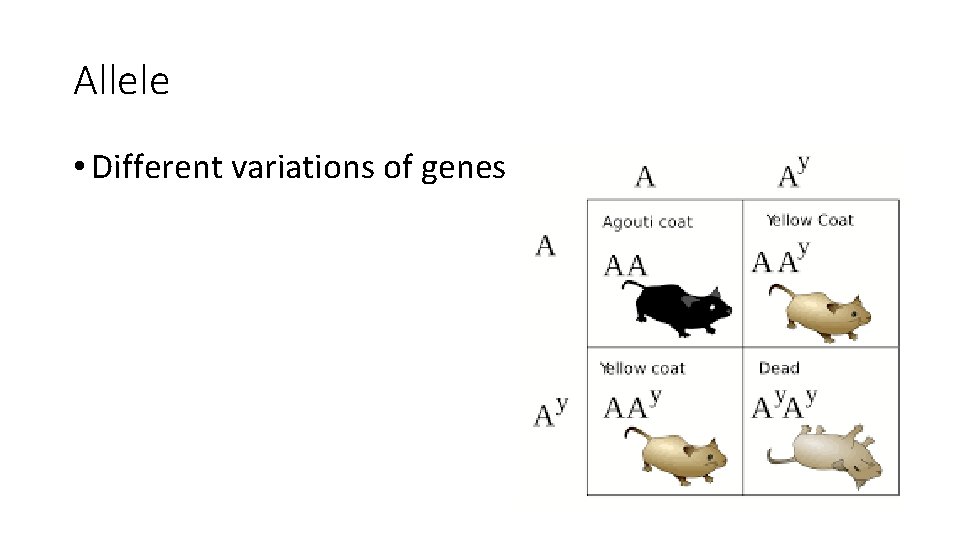
Allele • Different variations of genes
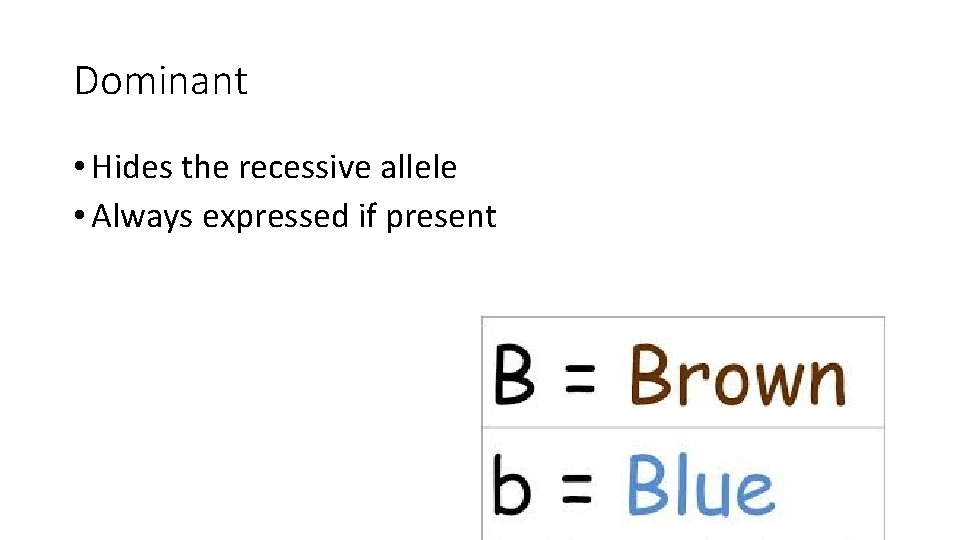
Dominant • Hides the recessive allele • Always expressed if present
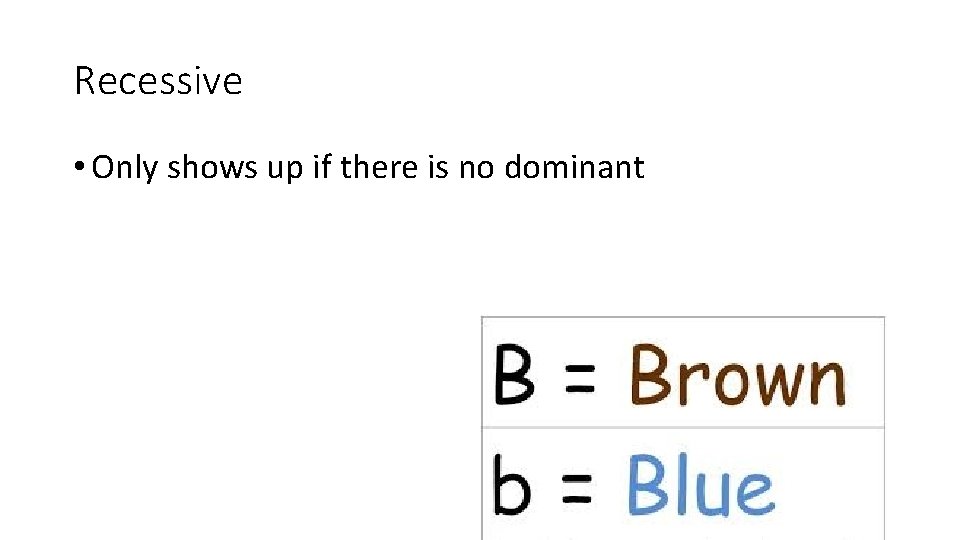
Recessive • Only shows up if there is no dominant
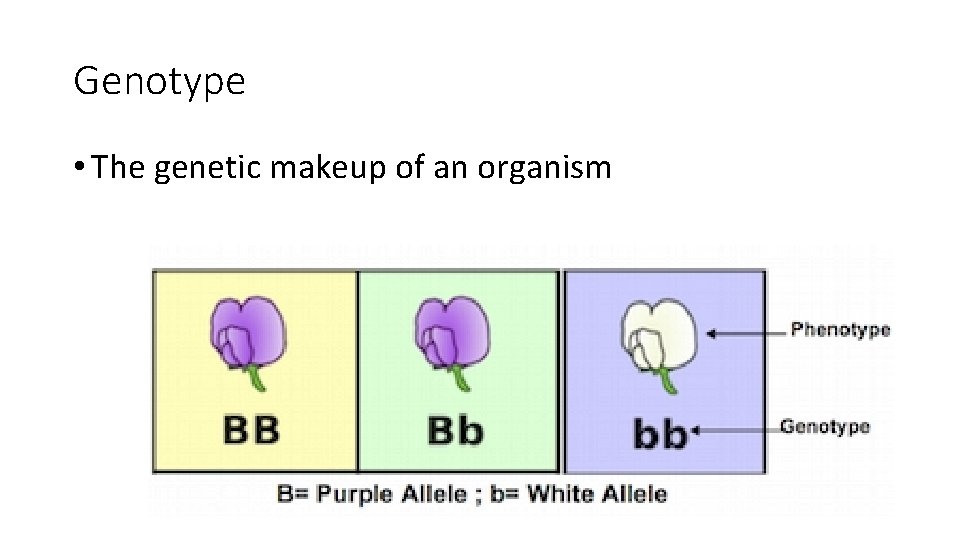
Genotype • The genetic makeup of an organism
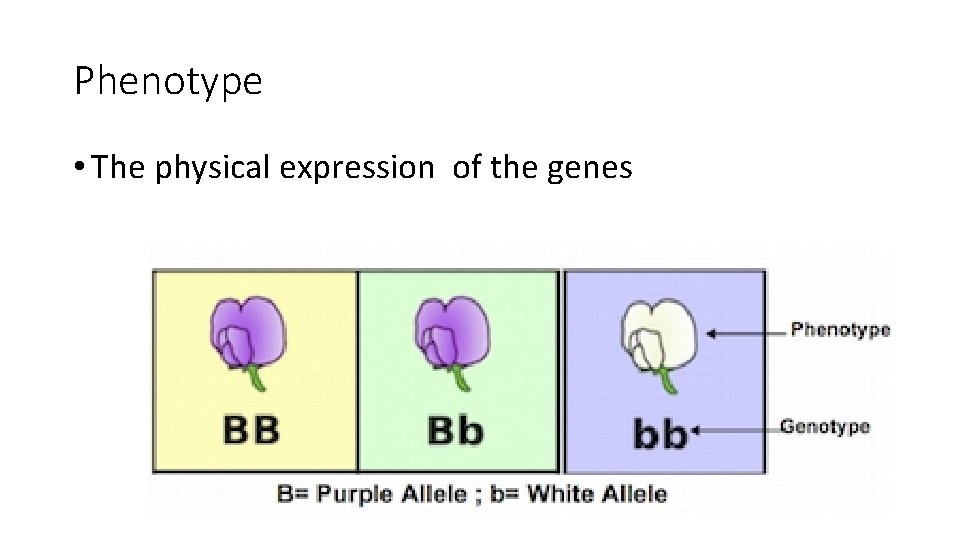
Phenotype • The physical expression of the genes
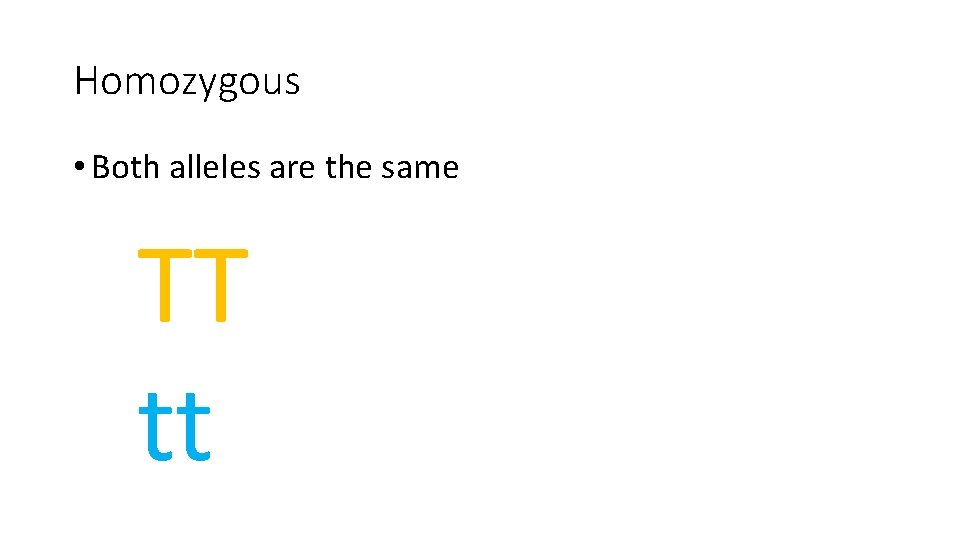
Homozygous • Both alleles are the same TT tt
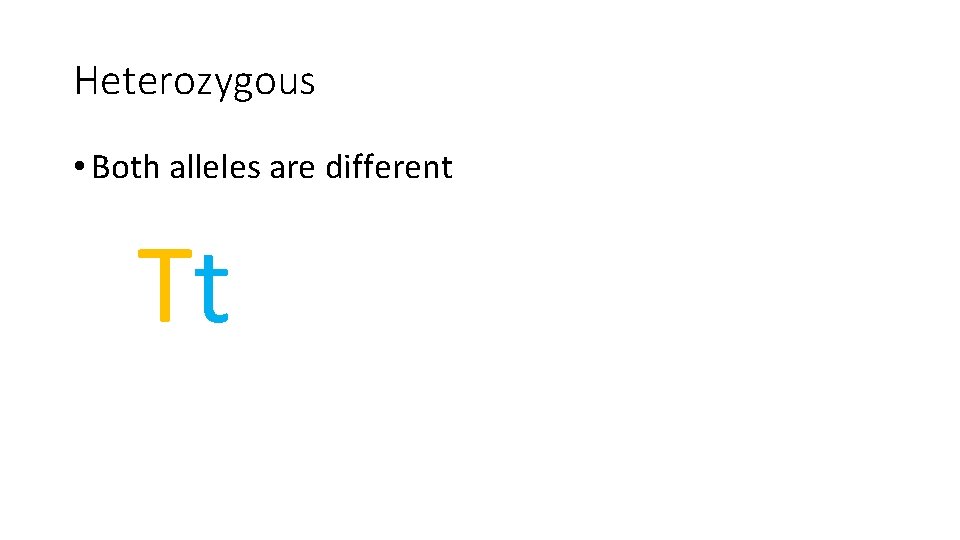
Heterozygous • Both alleles are different Tt
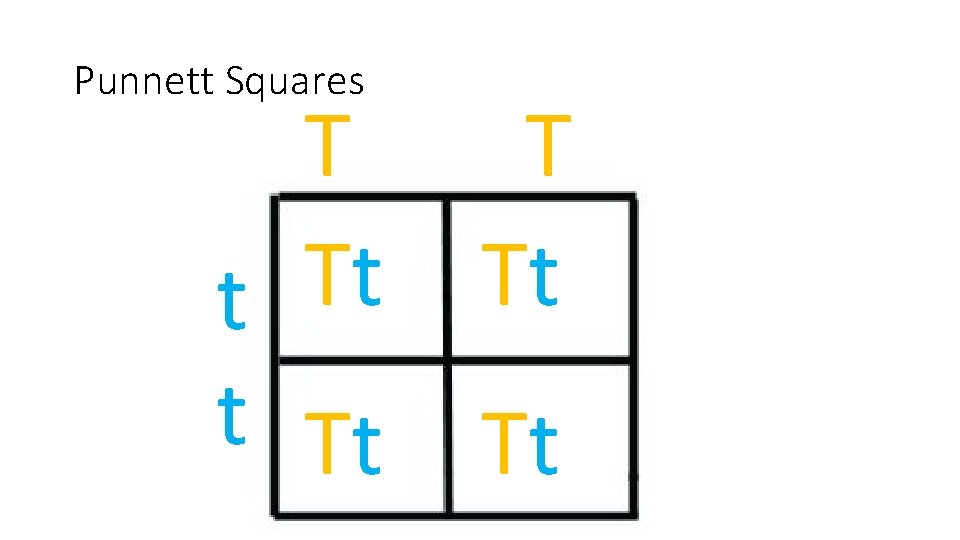
Punnett Squares T Tt t t Tt Tt
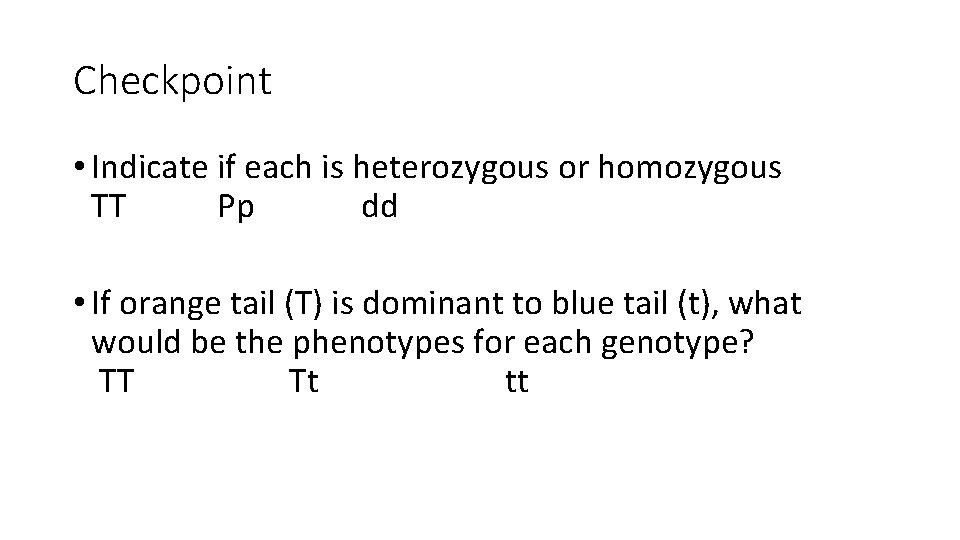
Checkpoint • Indicate if each is heterozygous or homozygous TT Pp dd • If orange tail (T) is dominant to blue tail (t), what would be the phenotypes for each genotype? TT Tt tt
Checkpoint • If orange tail is dominant to blue, what are the chances of two heterozygous parents producing an orange tail offspring?
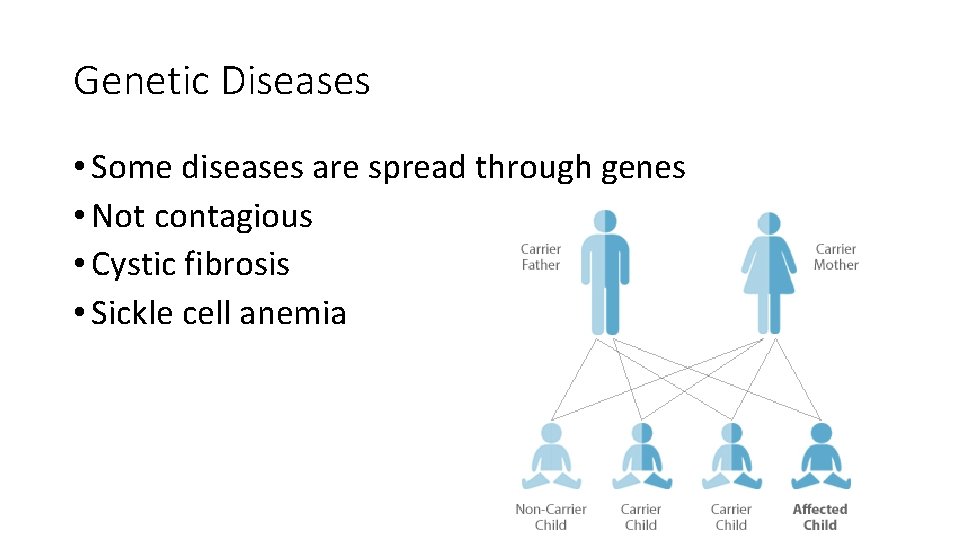
Genetic Diseases • Some diseases are spread through genes • Not contagious • Cystic fibrosis • Sickle cell anemia
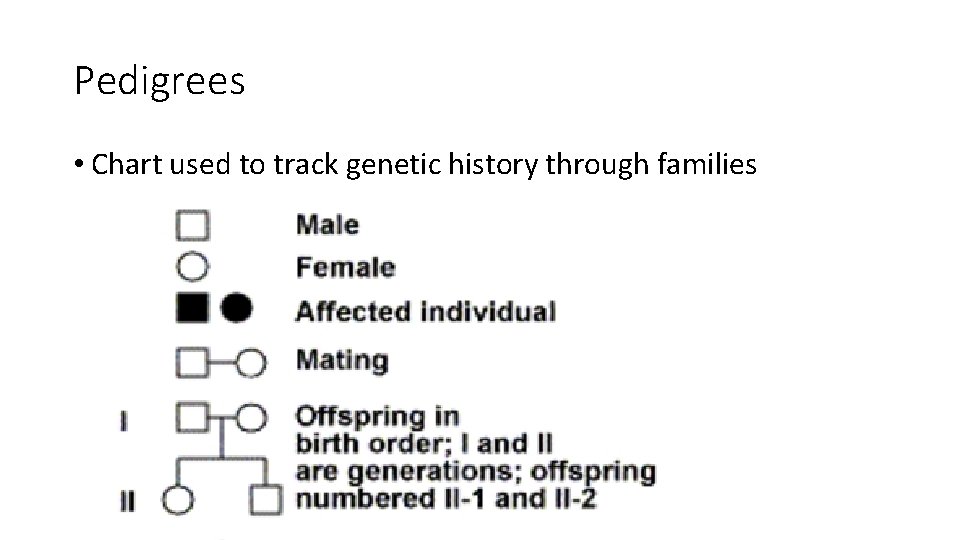
Pedigrees • Chart used to track genetic history through families
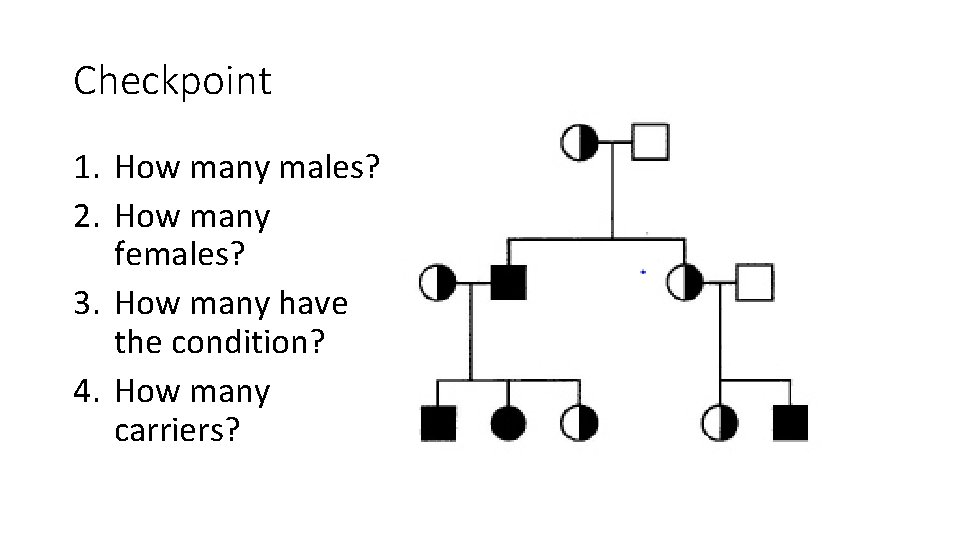
Checkpoint 1. How many males? 2. How many females? 3. How many have the condition? 4. How many carriers?
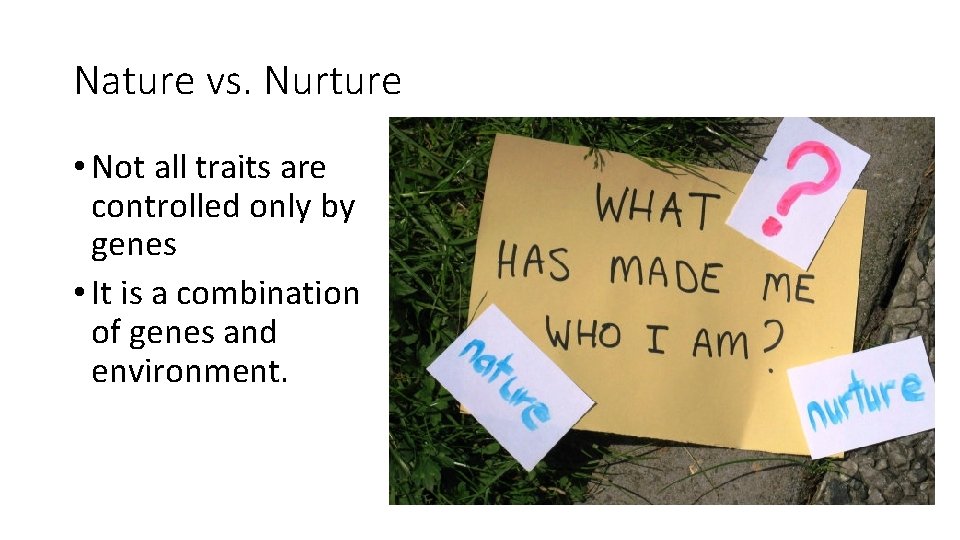
Nature vs. Nurture • Not all traits are controlled only by genes • It is a combination of genes and environment.