
Genetics Big Picture Review Framework 3 DNA DEOXYRIBONUCLEIC
Genetics Big Picture Review Framework 3
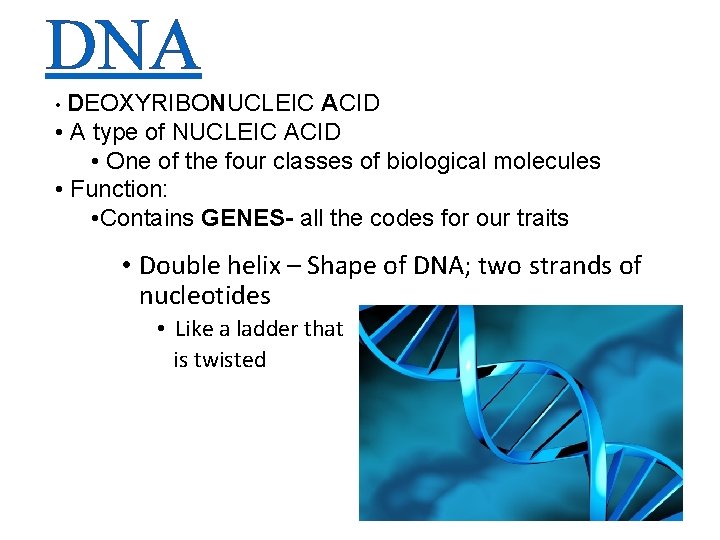
DNA • DEOXYRIBONUCLEIC ACID • A type of NUCLEIC ACID • One of the four classes of biological molecules • Function: • Contains GENES- all the codes for our traits • Double helix – Shape of DNA; two strands of nucleotides • Like a ladder that is twisted
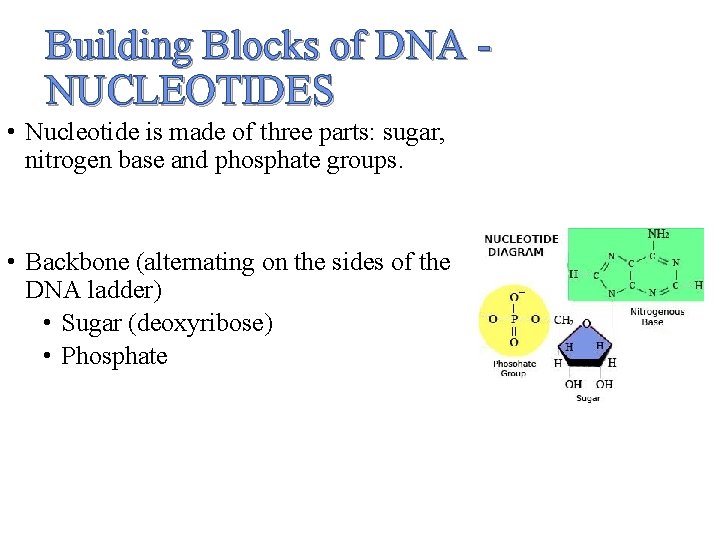
Building Blocks of DNA NUCLEOTIDES • Nucleotide is made of three parts: sugar, nitrogen base and phosphate groups. • Backbone (alternating on the sides of the DNA ladder) • Sugar (deoxyribose) • Phosphate
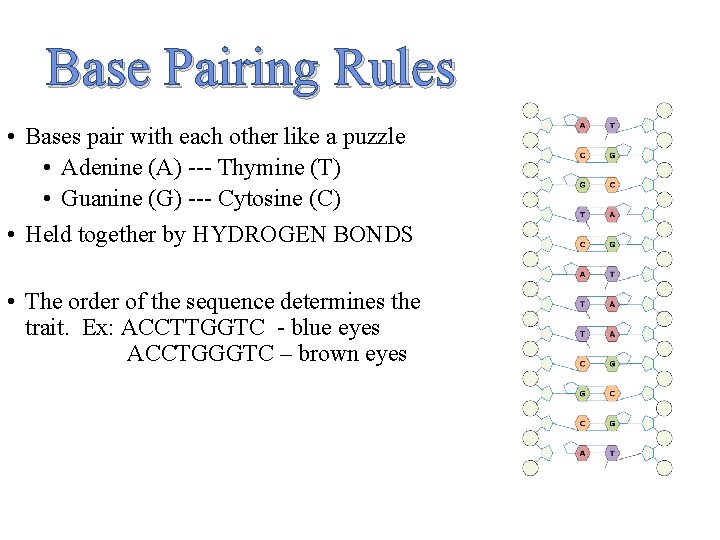
Base Pairing Rules • Bases pair with each other like a puzzle • Adenine (A) --- Thymine (T) • Guanine (G) --- Cytosine (C) • Held together by HYDROGEN BONDS • The order of the sequence determines the trait. Ex: ACCTTGGTC - blue eyes ACCTGGGTC – brown eyes
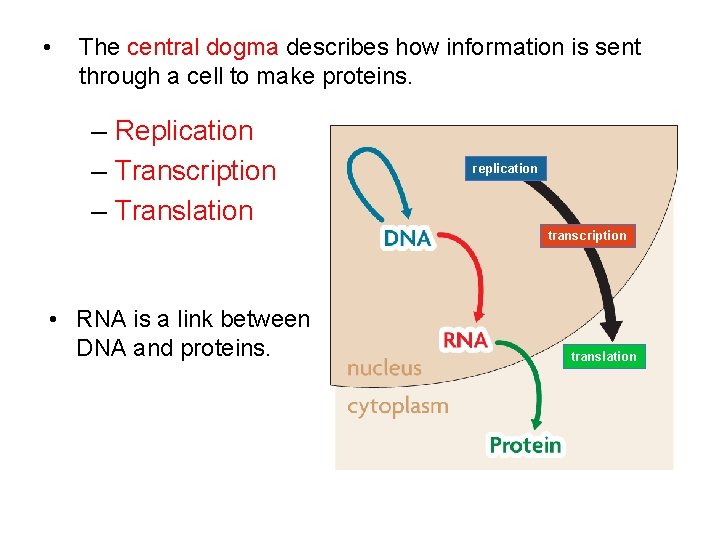
• The central dogma describes how information is sent through a cell to make proteins. – Replication – Transcription – Translation replication transcription • RNA is a link between DNA and proteins. translation
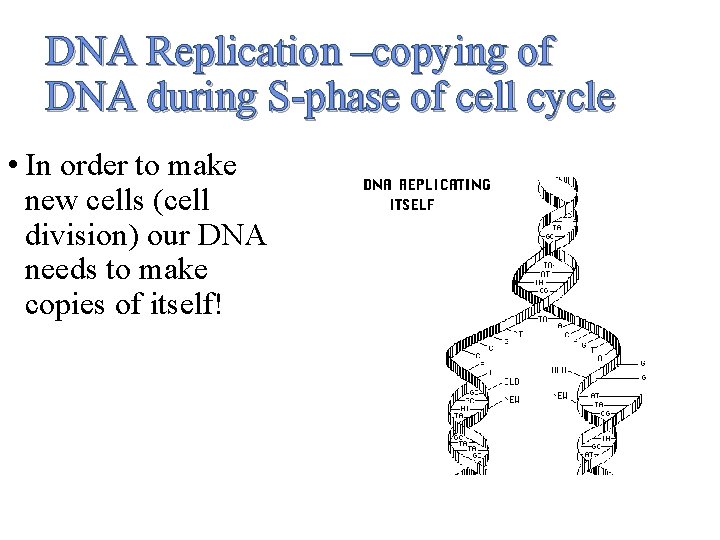
DNA Replication –copying of DNA during S-phase of cell cycle • In order to make new cells (cell division) our DNA needs to make copies of itself!
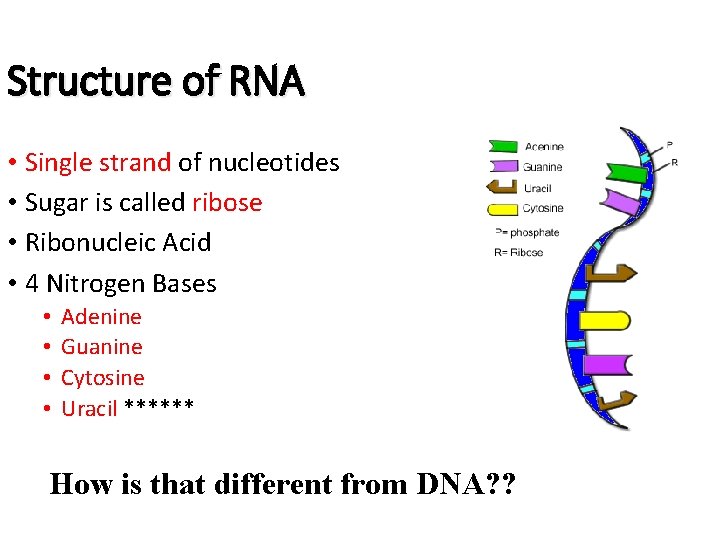
Structure of RNA • Single strand of nucleotides • Sugar is called ribose • Ribonucleic Acid • 4 Nitrogen Bases • • Adenine Guanine Cytosine Uracil ****** How is that different from DNA? ?
TWO types of RNA • Messenger RNA (m. RNA) – created during transcription. Carries message from nucleus to ribosome. • Transfer RNA (t. RNA) - transfers a specific active amino acid to a growing protein chain on a ribosome during protein synthesis.
DNA to RNA - Transcription • DNA cannot leave the nucleus, so it must copy it’s message to messenger RNA (m. RNA). THIS IS CALLED TRANSCRIPTION • m. RNA then goes from nucleus to the ribosomes in cytoplasm. • m. RNA nucleotide triplicates are known as codons • Only 3 nucleotide “letters” long • Ex: AUG, CCG, UAC • Remember RNA has uracil (U) instead of thymine (T)!
Protein Synthesis (Translation) • m. RNA on ribosome is “translated” into protein. • Process uses t. RNA and genetic code to create proteins. • Each codon (3 nitrogen bases) codes for one amino acid • Ex – AUGCCGACUCCUGAA • CCG: proline ACU: threonine
Bio Molecule: Proteins • Function – Structure, support, speed up chemical reactions.
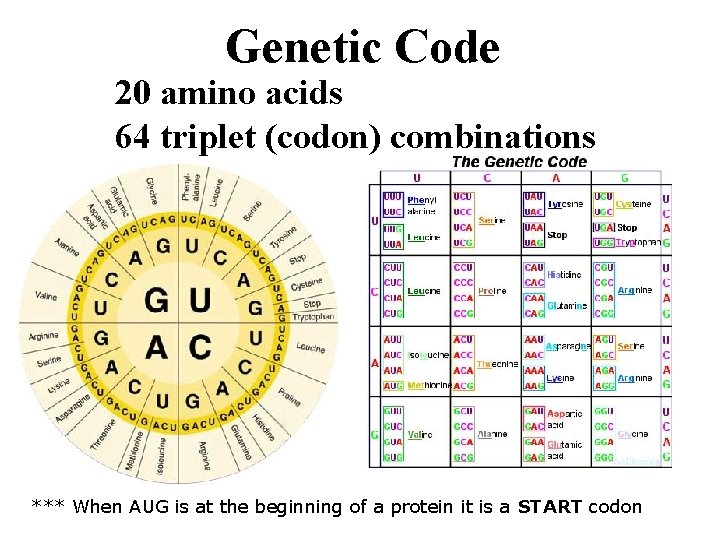
Genetic Code 20 amino acids 64 triplet (codon) combinations *** When AUG is at the beginning of a protein it is a START codon
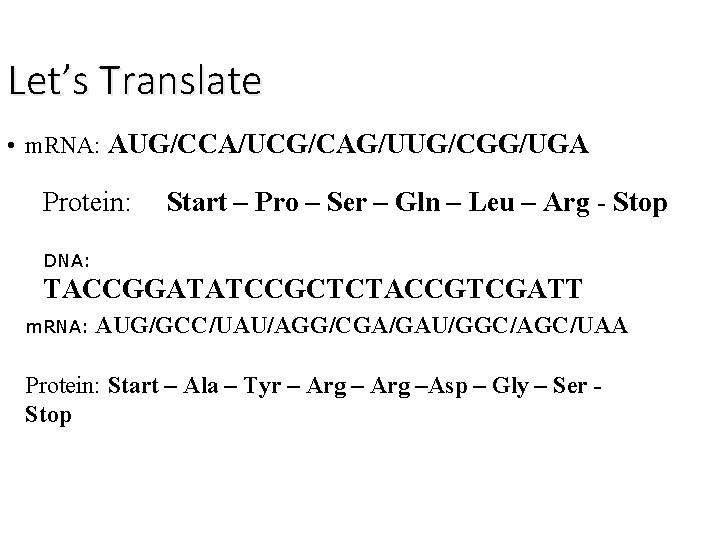
Let’s Translate • m. RNA: AUG/CCA/UCG/CAG/UUG/CGG/UGA Protein: Start – Pro – Ser – Gln – Leu – Arg - Stop DNA: TACCGGATATCCGCTCTACCGTCGATT m. RNA: AUG/GCC/UAU/AGG/CGA/GAU/GGC/AGC/UAA Protein: Start – Ala – Tyr – Arg –Asp – Gly – Ser Stop
Mendel noticed that genes have “FORMS” He named them: ALLELES Example of alleles: Gene for hair color Blonde allele Brown allele Gene for eye color Blue allele Brown Allele Variations of Genes
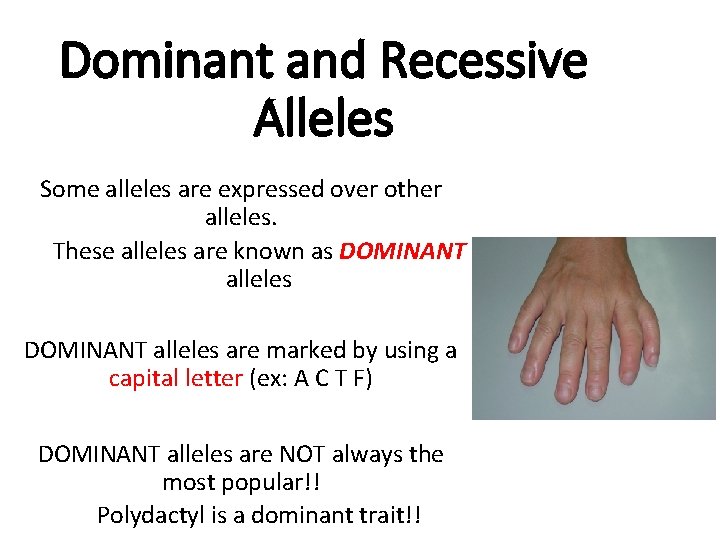
Dominant and Recessive Alleles Some alleles are expressed over other alleles. These alleles are known as DOMINANT alleles are marked by using a capital letter (ex: A C T F) DOMINANT alleles are NOT always the most popular!! Polydactyl is a dominant trait!!
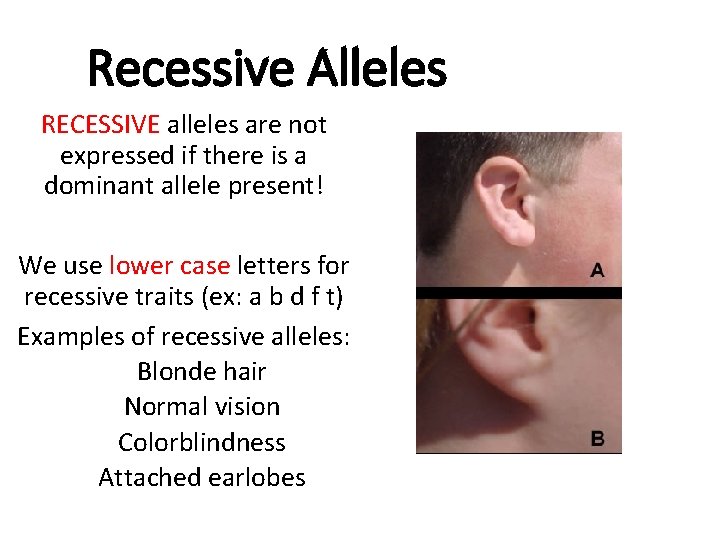
Recessive Alleles RECESSIVE alleles are not expressed if there is a dominant allele present! We use lower case letters for recessive traits (ex: a b d f t) Examples of recessive alleles: Blonde hair Normal vision Colorblindness Attached earlobes
Inheritance Because you receive ONE set of chromosomes from your mother and ONE set from your father…. YOU MUST HAVE 2 ALLELES FOR EVERY GENE! 1 from mom and 1 from dad! Example: Mom gives you an allele for brown hair (B) and Dad gives you an allele for blonde hair (b) your genes for hair color…. . Bb What color hair do you have? ?
GENETIC POSSIBILITIES Keeping in mind that you have 2 alleles for every gene, the following combinations can result: HOMOZYGOUS DOMINANT Both copies are dominant (DD) Also known as a “purebred” dominant HOMOZYGOUS RECESSIVE Both copies are recessive (dd) ONLY time you will actually SEE a recessive trait! HETEROZYGOUS Having one copy that is dominant and one that is recessive (Dd) Appears as a DOMINANT trait!
Describing Genetic Inheritance There are two different ways of describing someone’s genetics! 1. GENOTYPE • What the two alleles, or GENES, are that control a specific characteristic Ex: Aa, bb, CC, Ff, tt 2. PHENOTYPE • What the organism physically looks like Ex: Tall, blue, red, freckles, blonde
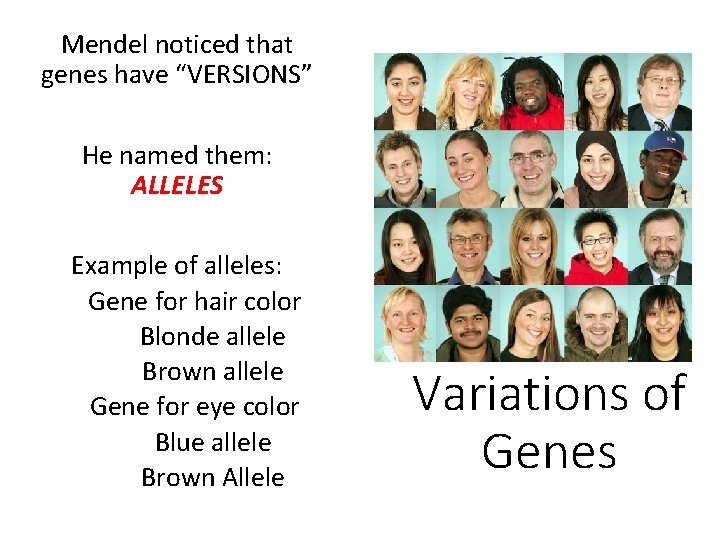
Mendel noticed that genes have “VERSIONS” He named them: ALLELES Example of alleles: Gene for hair color Blonde allele Brown allele Gene for eye color Blue allele Brown Allele Variations of Genes
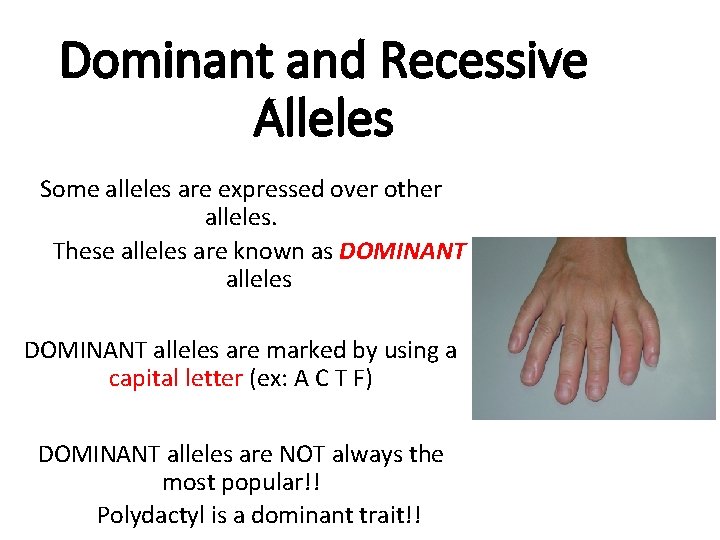
Dominant and Recessive Alleles Some alleles are expressed over other alleles. These alleles are known as DOMINANT alleles are marked by using a capital letter (ex: A C T F) DOMINANT alleles are NOT always the most popular!! Polydactyl is a dominant trait!!
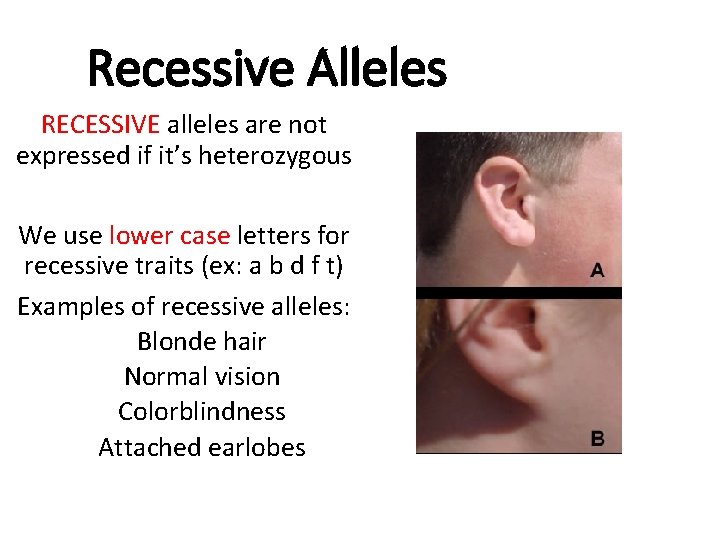
Recessive Alleles RECESSIVE alleles are not expressed if it’s heterozygous We use lower case letters for recessive traits (ex: a b d f t) Examples of recessive alleles: Blonde hair Normal vision Colorblindness Attached earlobes
Inheritance Because you receive ONE set of chromosomes from your mother and ONE set from your father…. YOU MUST HAVE 2 ALLELES FOR EVERY GENE! 1 from mom and 1 from dad! Example: Mom gives you an allele for brown hair (B) and Dad gives you an allele for blonde hair (b) your genes for hair color…. . Bb What color hair do you have? ?
GENETIC POSSIBILITIES Keeping in mind that you have 2 alleles for every gene, the following combinations can result: HOMOZYGOUS In the genotype, both alleles are the same. (dominant or recessive). Ex: AA bb CC HETEROZYGOUS In the genotype, the two alleles are different. (one dominate & one recessive) Ex: Aa Bb Cc
Describing Genetic Inheritance There are two different ways of describing someone’s genetics! 1. GENOTYPE • Describes the actual GENES that are inherited Ex: Aa, bb, CC, Ff, tt 2. PHENOTYPE • Describes the PHYSICAL look of the trait Ex: Tall, blue, red, freckles, blonde
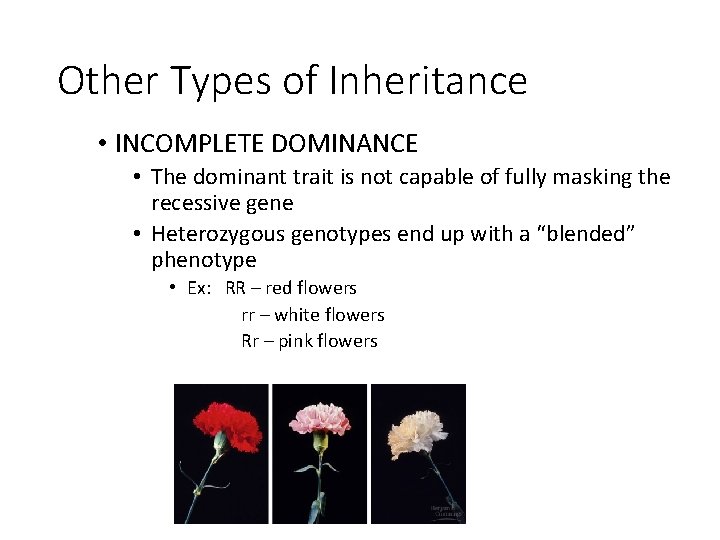
Other Types of Inheritance • INCOMPLETE DOMINANCE • The dominant trait is not capable of fully masking the recessive gene • Heterozygous genotypes end up with a “blended” phenotype • Ex: RR – red flowers rr – white flowers Rr – pink flowers
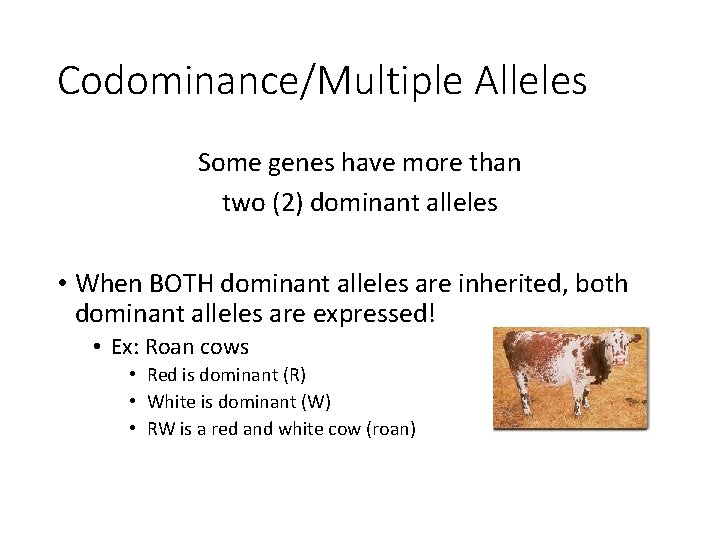
Codominance/Multiple Alleles Some genes have more than two (2) dominant alleles • When BOTH dominant alleles are inherited, both dominant alleles are expressed! • Ex: Roan cows • Red is dominant (R) • White is dominant (W) • RW is a red and white cow (roan)
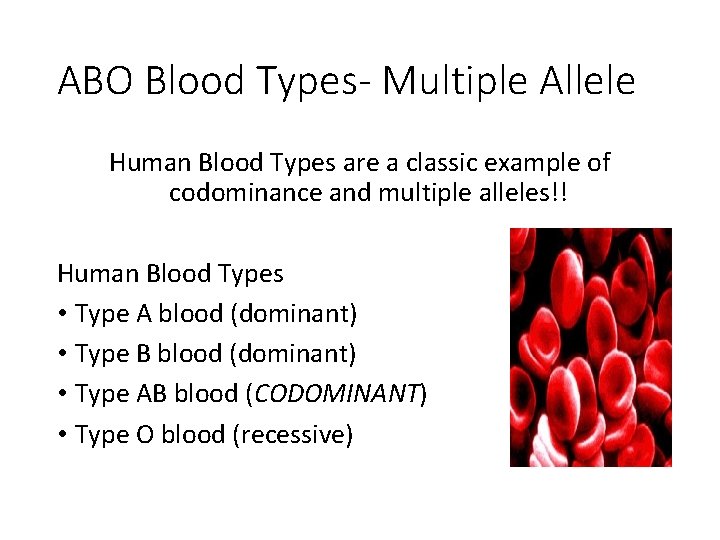
ABO Blood Types- Multiple Allele Human Blood Types are a classic example of codominance and multiple alleles!! Human Blood Types • Type A blood (dominant) • Type B blood (dominant) • Type AB blood (CODOMINANT) • Type O blood (recessive)
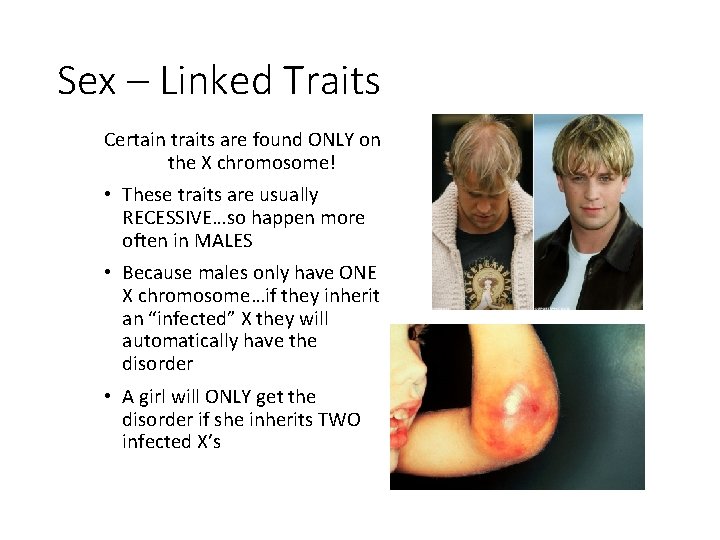
Sex – Linked Traits Certain traits are found ONLY on the X chromosome! • These traits are usually RECESSIVE…so happen more often in MALES • Because males only have ONE X chromosome…if they inherit an “infected” X they will automatically have the disorder • A girl will ONLY get the disorder if she inherits TWO infected X’s
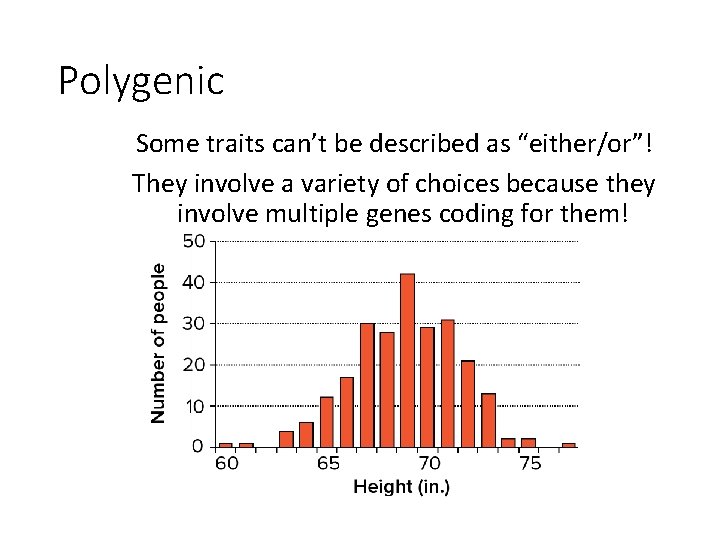
Polygenic Some traits can’t be described as “either/or”! They involve a variety of choices because they involve multiple genes coding for them!
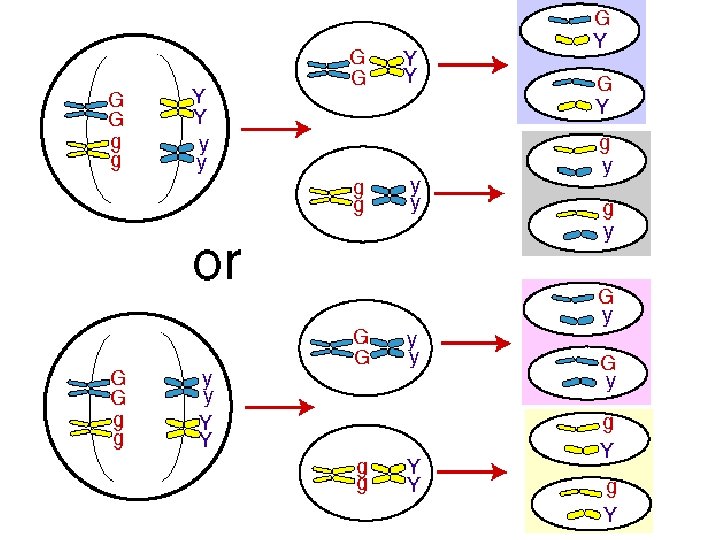
Mendel’s Laws After his work with pea plants, Mendel developed two important genetic laws…. . 1. Law of Independent Assortment • When chromosomes line up in pairs during MEIOSIS they do it RANDOMLY • Causes VARIATION
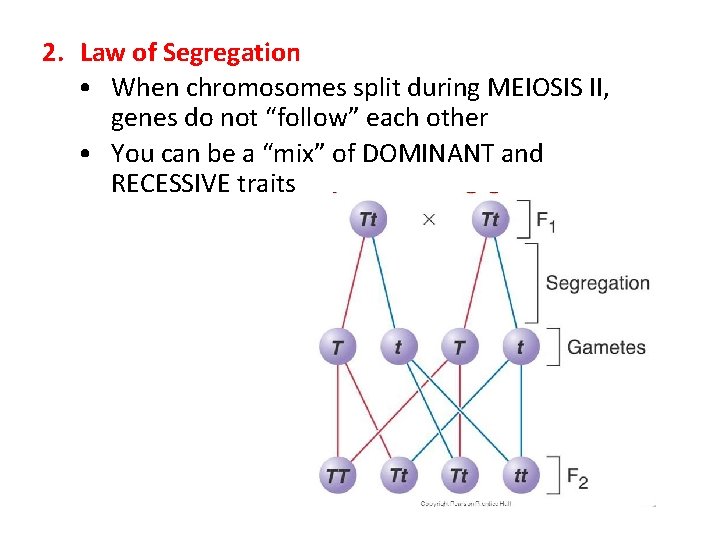
2. Law of Segregation • When chromosomes split during MEIOSIS II, genes do not “follow” each other • You can be a “mix” of DOMINANT and RECESSIVE traits
- Slides: 33