
GENETICS AND YOU define heredity as the passage

- Slides: 26
GENETICS AND YOU define heredity as the passage of genetic instructions from one generation to the next generation. [7. 14 A]
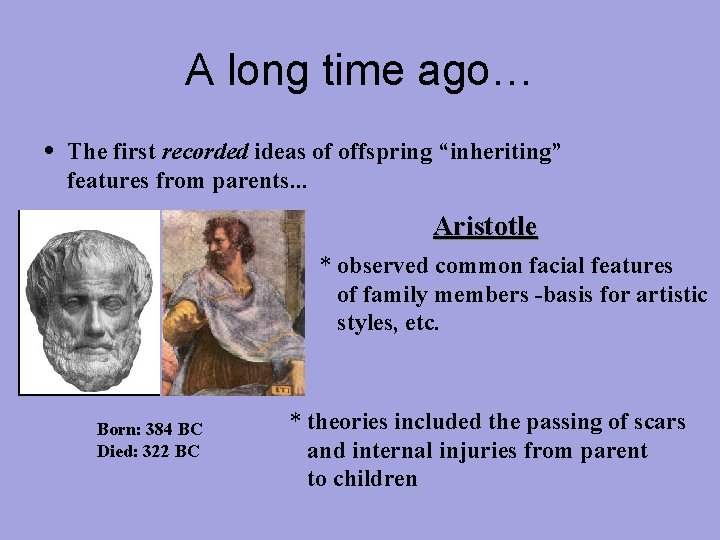
A long time ago… • The first recorded ideas of offspring “inheriting” features from parents. . . Aristotle * observed common facial features of family members -basis for artistic styles, etc. Born: 384 BC Died: 322 BC * theories included the passing of scars and internal injuries from parent to children
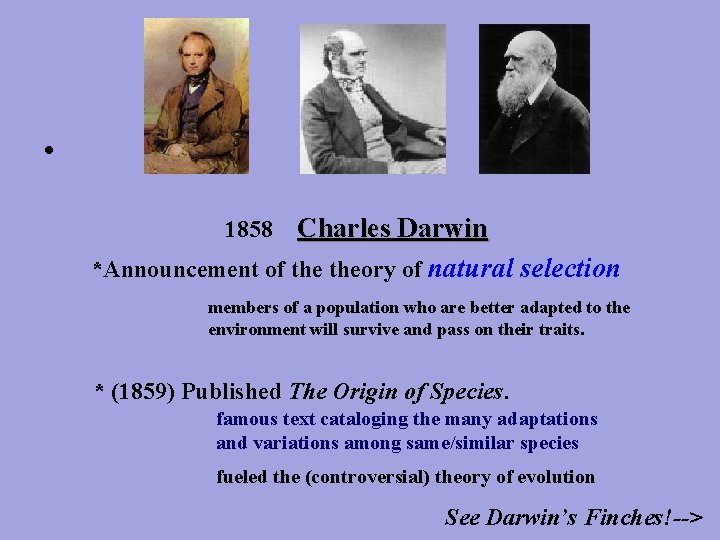
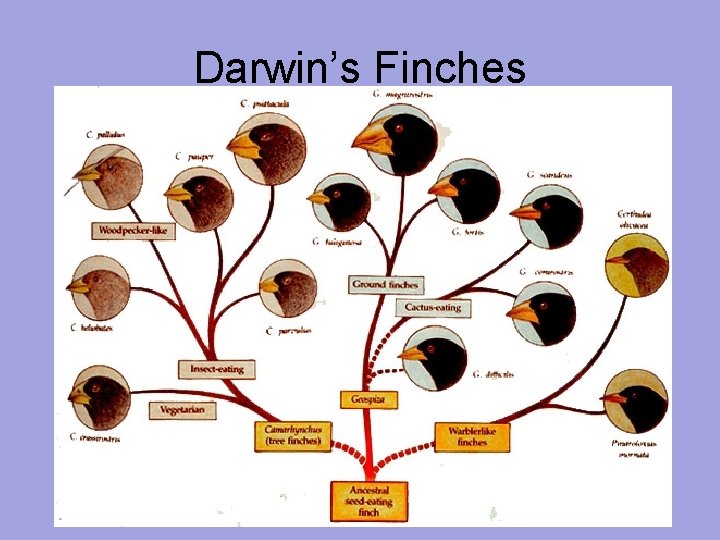
• Charles Darwin *Announcement of theory of natural selection 1858 members of a population who are better adapted to the environment will survive and pass on their traits. * (1859) Published The Origin of Species. famous text cataloging the many adaptations and variations among same/similar species fueled the (controversial) theory of evolution See Darwin’s Finches!-->
Darwin’s Finches
The science we call Genetics * is the study of heredity - passing of traits from parent to offspring • - has more than one theory (“point of view”) --> most common/accepted is Mendelian Genetics is based upon the research of Now credited as the “Father of Genetics”
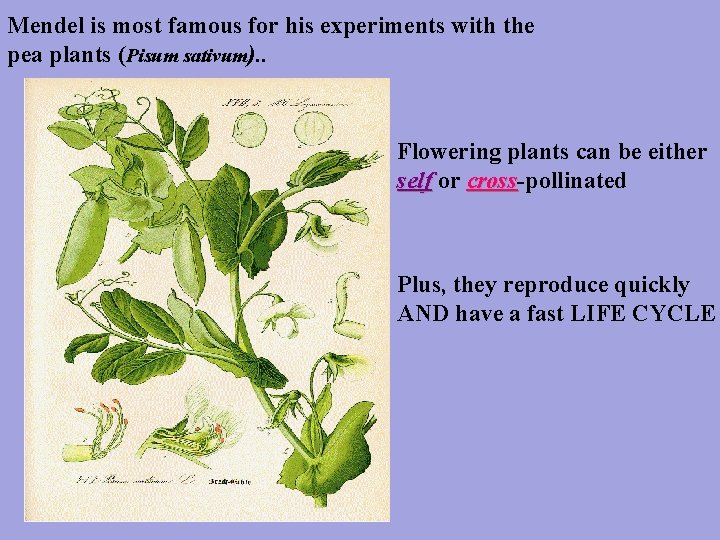
Mendel is most famous for his experiments with the pea plants (Pisum sativum). . Flowering plants can be either self or cross-pollinated cross Plus, they reproduce quickly AND have a fast LIFE CYCLE
So What does it all mean to me? • First you need to realize you are ½ of your mom and ½ of your dad. • One gamete (reproductive cell) is 23 chromosomes for humans • ALL other cells in your body have 46 chromosomes • It all starts with your conception and the passing of their genes to you.
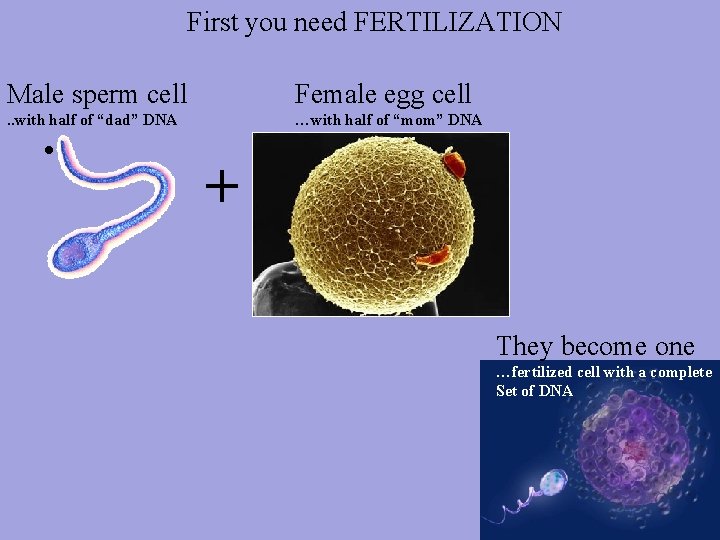
First you need FERTILIZATION Male sperm cell Female egg cell . . with half of “dad” DNA …with half of “mom” DNA • + They become one …fertilized cell with a complete Set of DNA
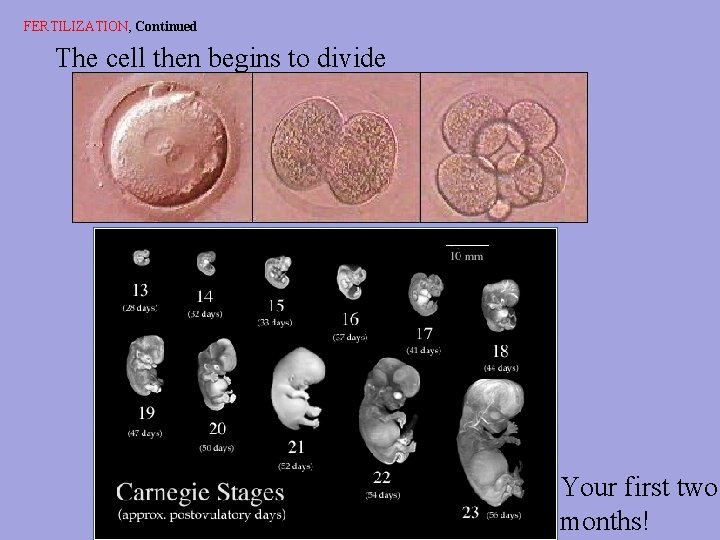
FERTILIZATION, Continued The cell then begins to divide Your first two months!
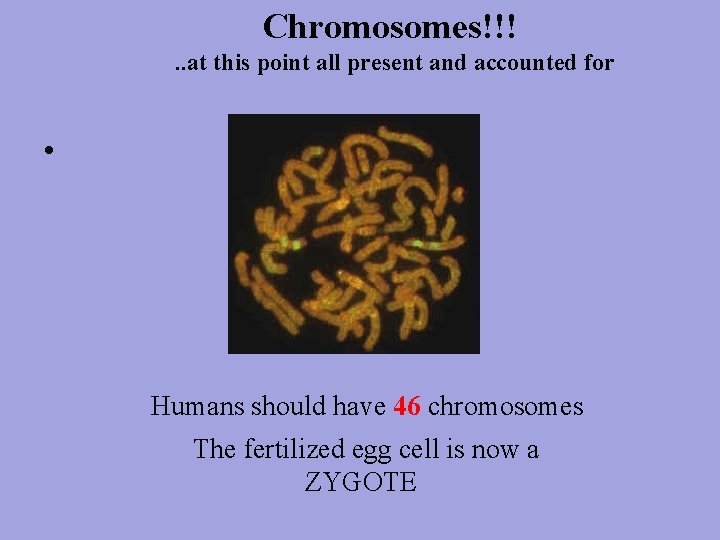
Chromosomes!!!. . at this point all present and accounted for • Humans should have 46 chromosomes The fertilized egg cell is now a ZYGOTE
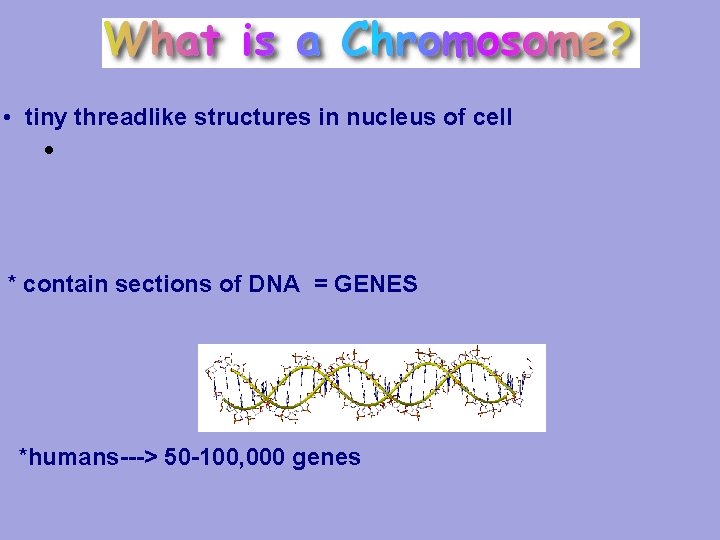
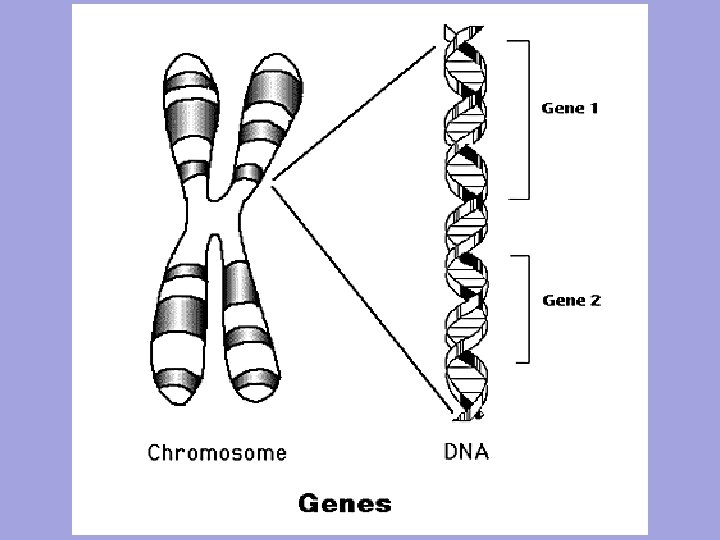
• tiny threadlike structures in nucleus of cell • * contain sections of DNA = GENES *humans---> 50 -100, 000 genes
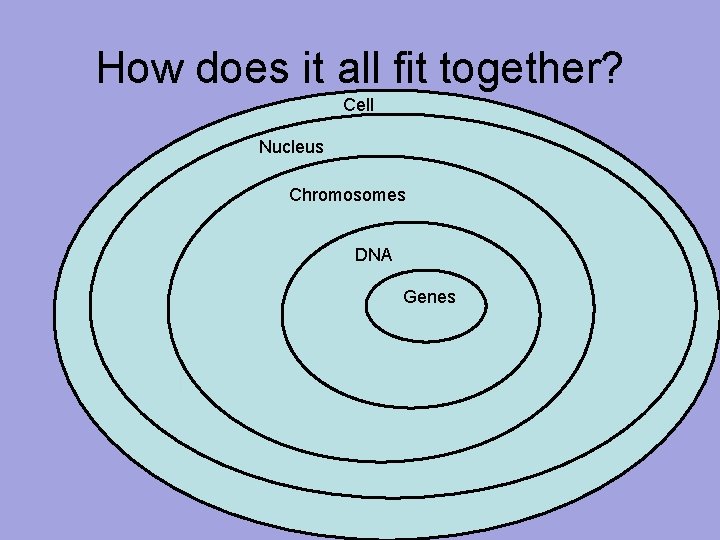
How does it all fit together? Cell Nucleus Chromosomes DNA Genes
4. Some genes are dominant, while others are recessive. • “Stronger” traits are called dominant. • “Weaker” traits are called recessive. • Geneticists use symbols (letters) to represent the different forms of a gene.
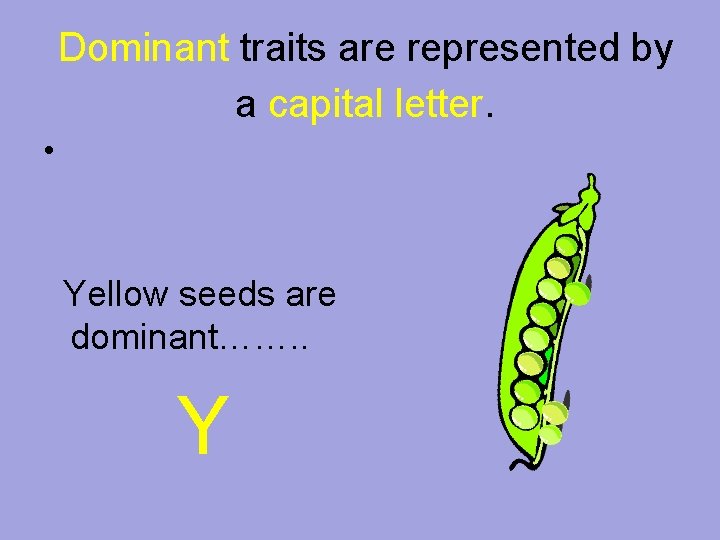
Dominant traits are represented by a capital letter. • Yellow seeds are dominant……. . Y
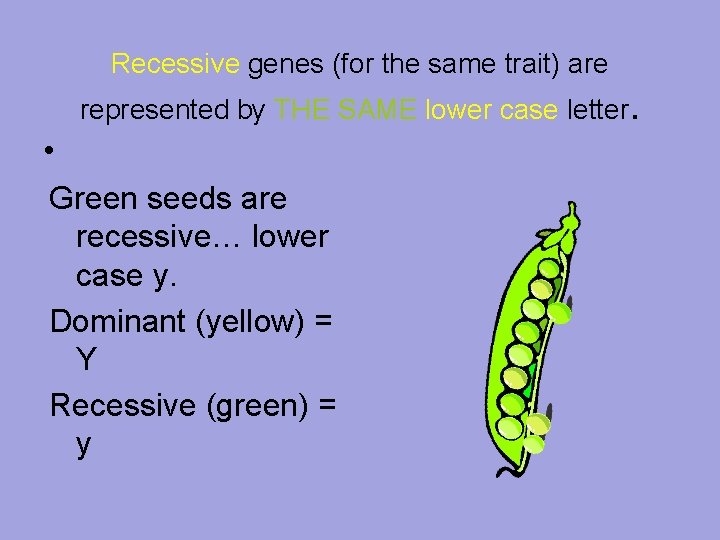
Recessive genes (for the same trait) are represented by THE SAME lower case letter. • Green seeds are recessive… lower case y. Dominant (yellow) = Y Recessive (green) = y
• In pea plants, tall is dominant • over short. The letter used to represent the tall gene is T. • The short gene is represented by t. Tall =T Short = t
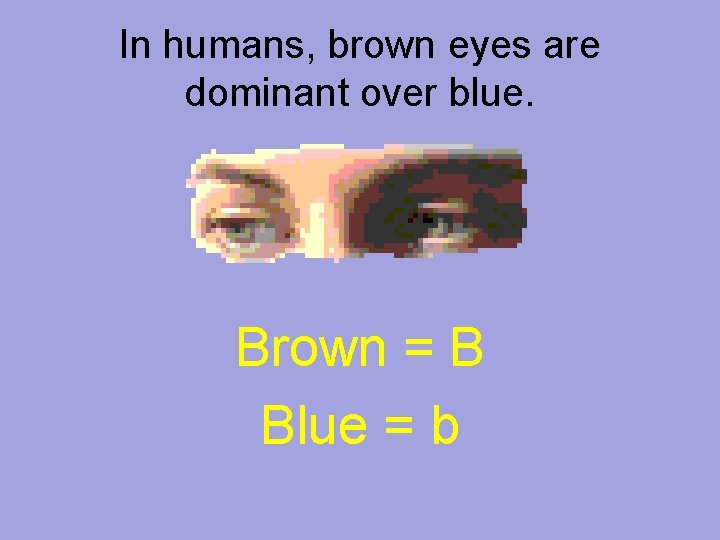
In humans, brown eyes are dominant over blue. Brown = B Blue = b
5. Dominant genes hide recessive genes when both are inherited by an organism. • Y + y = yellow seeds (yellow is dominant) • T + t = tall plant (tall is dominant) • B+ b = brown eyes (brown is dominant)
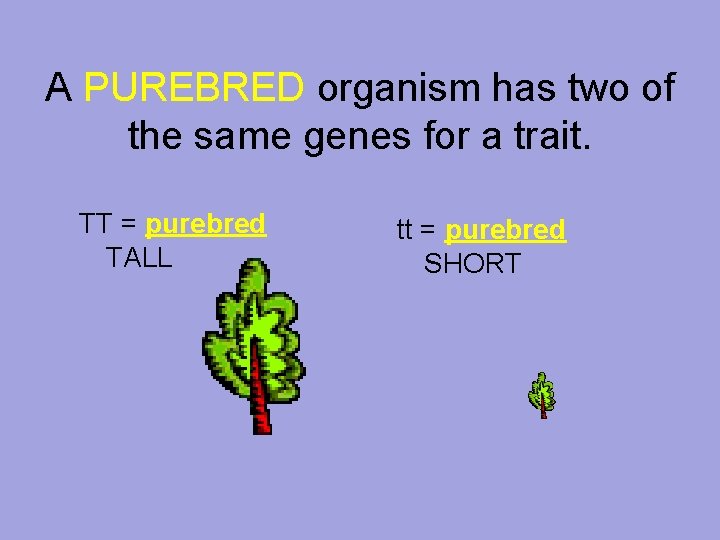
A PUREBRED organism has two of the same genes for a trait. TT = purebred TALL tt = purebred SHORT
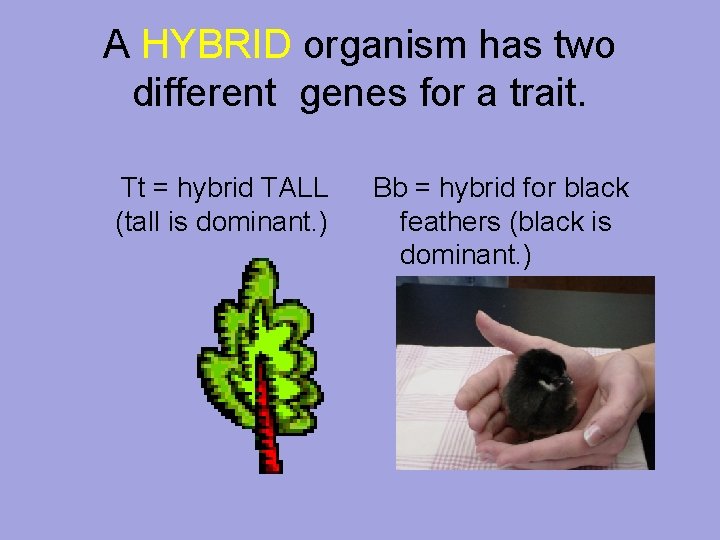
A HYBRID organism has two different genes for a trait. Tt = hybrid TALL (tall is dominant. ) Bb = hybrid for black feathers (black is dominant. )
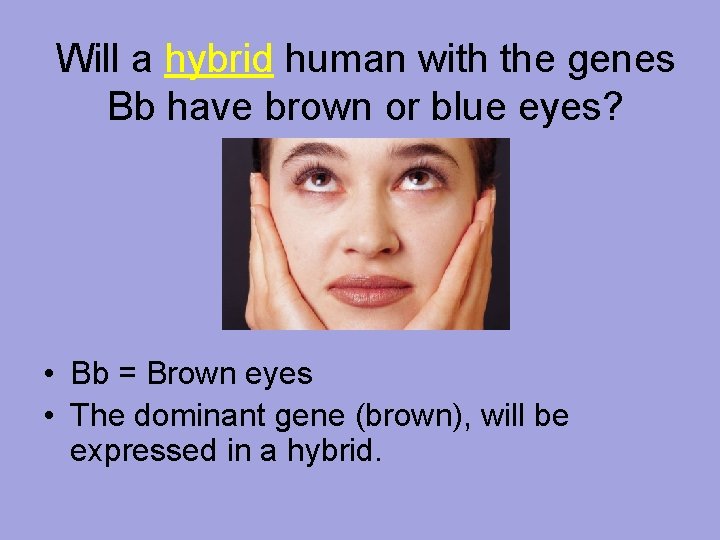
Will a hybrid human with the genes Bb have brown or blue eyes? • Bb = Brown eyes • The dominant gene (brown), will be expressed in a hybrid.
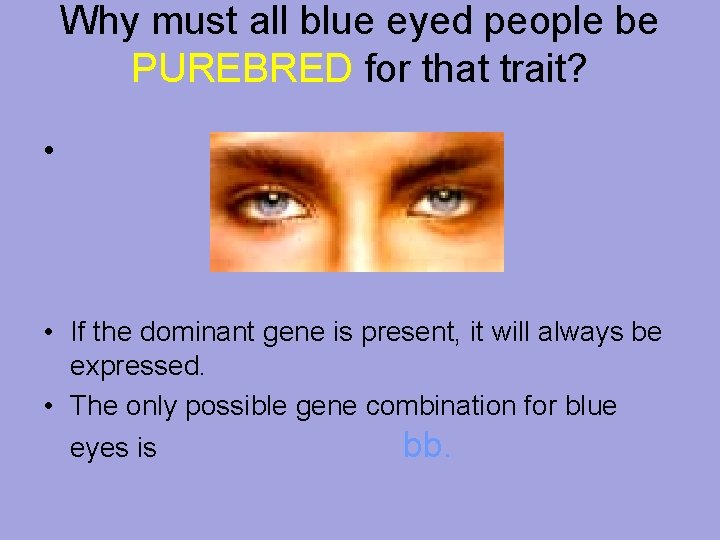
Why must all blue eyed people be PUREBRED for that trait? • • If the dominant gene is present, it will always be expressed. • The only possible gene combination for blue eyes is bb.
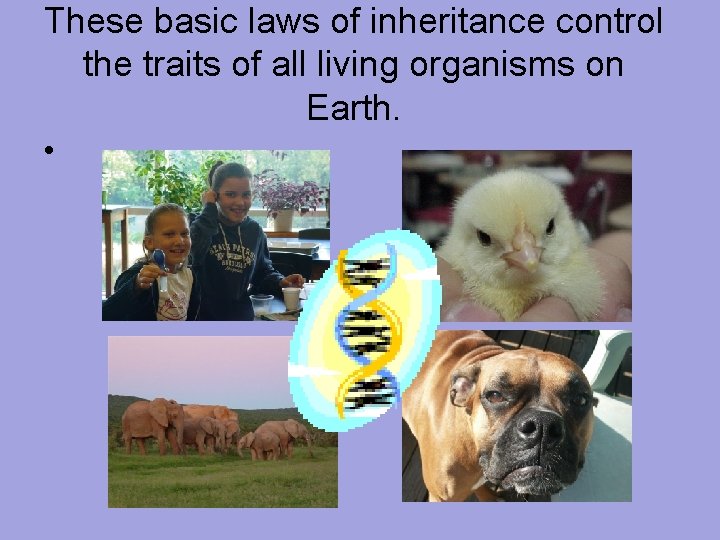
These basic laws of inheritance control the traits of all living organisms on Earth. •
Can behavior be inherited too? • Scenario 1 – Chimpanzee A has a very good technique for getting a banana out of a tree. This chimpanzee has an offspring which is taken away and raised in isolation. The offspring is not able to get the banana out of the tree. • Scenario 2 – Bird A has a very specific way that it makes its nest. The bird has several offspring. One of the offspring is taken away and raised in isolation. The offspring begins making a nest in the exact same way as its parent.
• Scenario 1 is a learned behavior that a parent would pass on through teaching. • Scenario 2 is an example of a behavior being inherited genetically • Can you think of any examples of INHERITED behavior?