
Genetics and Prenatal Development Child Development A Genetics
- Slides: 36
Genetics and Prenatal Development Child Development
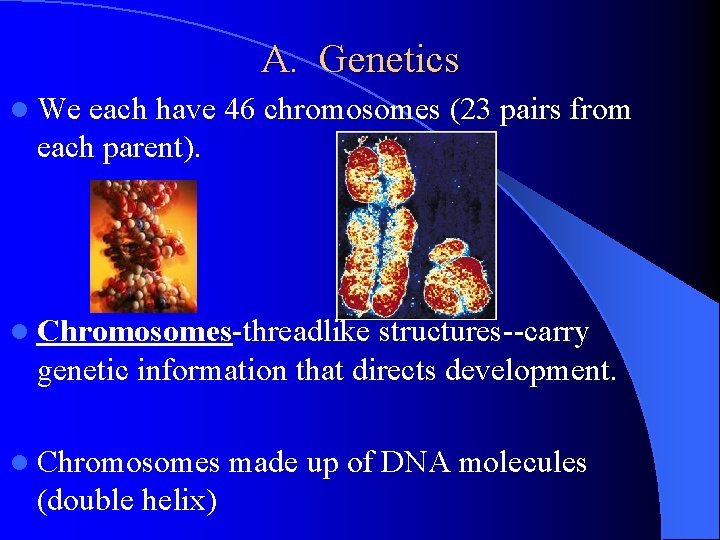
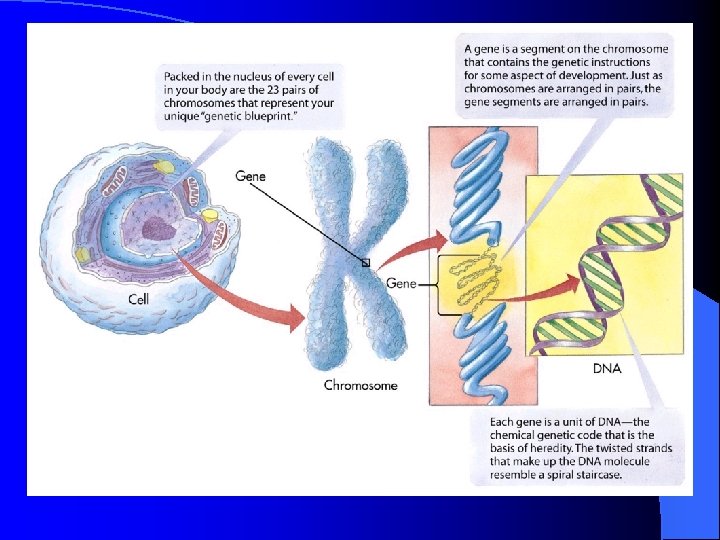
A. Genetics l We each have 46 chromosomes (23 pairs from each parent). l Chromosomes-threadlike structures--carry genetic information that directs development. l Chromosomes (double helix) made up of DNA molecules
What is DNA (deoxyribonucleic acid): l. A long, double-stranded molecule that looks like a twisted ladder. l Each of the latter consists of a specific pair of chemical substances called bases, joined together between the two sides. l Humans have 4 base pairs. – A-T (Adenine and Thymine) – C-G (Cytosine and Guanine)
What is a gene? l. A segment of DNA along the length of the chromosome. l DNA can replicate itself, leading to the development of a human being from 1 cell. l This process is mitosis.
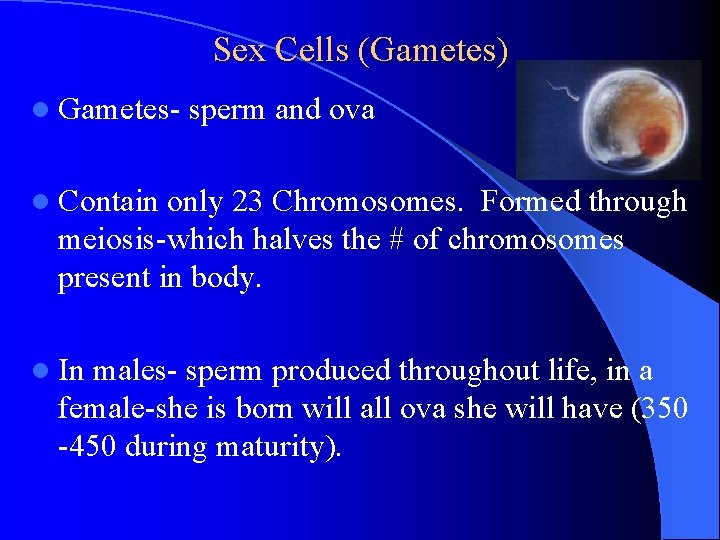
Sex Cells (Gametes) l Gametes- sperm and ova l Contain only 23 Chromosomes. Formed through meiosis-which halves the # of chromosomes present in body. l In males- sperm produced throughout life, in a female-she is born will all ova she will have (350 -450 during maturity).
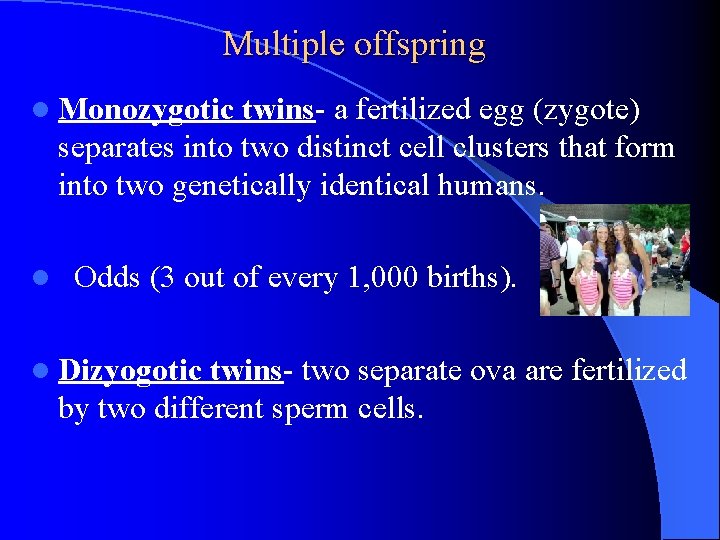
Multiple offspring l Monozygotic twins- a fertilized egg (zygote) separates into two distinct cell clusters that form into two genetically identical humans. l Odds (3 out of every 1, 000 births). l Dizyogotic twins- two separate ova are fertilized by two different sperm cells.
Is it a boy or girl? l 22 of our 23 chromosome pairs can be distinguished from one another. These are called autosomes. The 23 rd pair consists of sex chromosomes. l Females-XX and males-XY. The X is long, the Y short and carries less genetic material.
Who determines the sex? l Males- the X and Y-chromosomes separate into different sperm cells. l X- sperm cells; Y-sperm cells. l Females-gametes l Male’s carry X chromosomes only. sperm determines baby’s sex.
What is the default? l To be female!!! l. A genetic male will only develop into a male infant if testosterone is presented during prenatal development. l Deficient male hormones will lead to development of female infant.
Becoming male l Testes in male fetuses: Wolffian system to develop & Mullerian inhibiting hormone (MIH) is released. l Hormones—must be present during 3 rd and 4 th months of pregnancy.
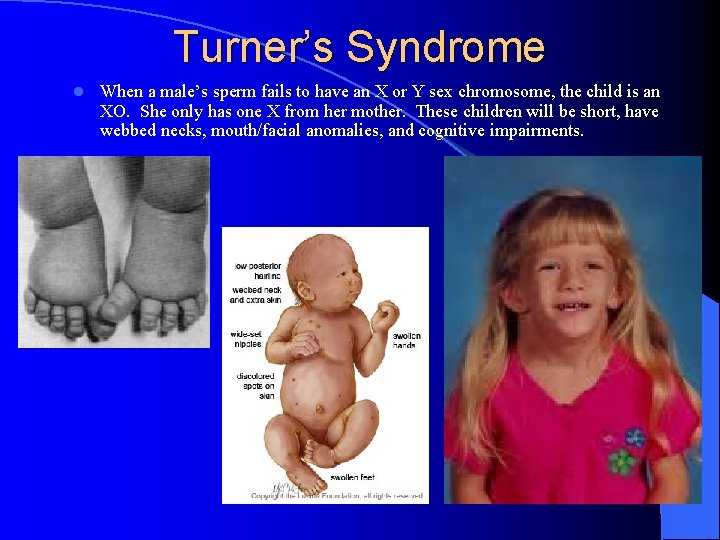
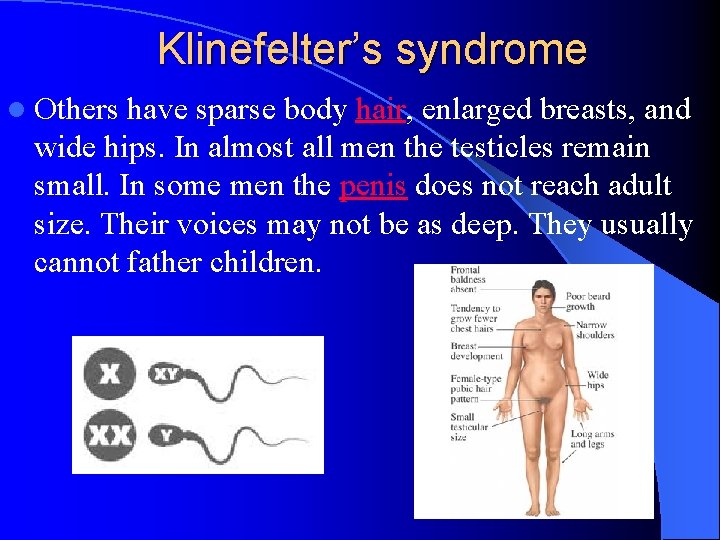
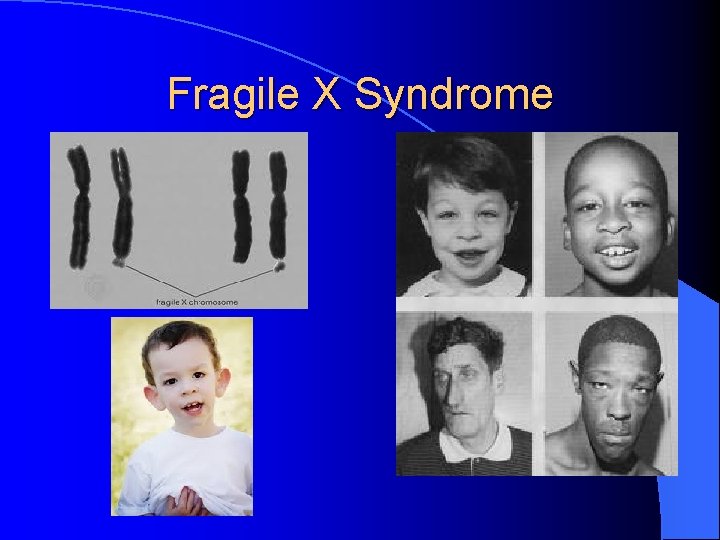
Sex Chromosome anomalies l Turner’s Syndrome: When a male’s sperm fails to have an X or Y sex chromosome, the child is an XO. She only has one X from her mother. These children will be short, have webbed necks, mouth/facial anomalies, and cognitive impairments. l Klinefelter’s syndrome: Occurs when a male child has an extra X chromosome (XXY), and displays female secondary sex characteristics and some cognitive impairments. l XXY males—appear to be significantly taller than normal males and may have cognitive impairments. l Fragile X- occurs in male children only in which the X is fragmented or broken. Leads to facial anomalies and mental retardation which gets progressively worse with age.
Turner’s Syndrome l When a male’s sperm fails to have an X or Y sex chromosome, the child is an XO. She only has one X from her mother. These children will be short, have webbed necks, mouth/facial anomalies, and cognitive impairments.
Klinefelter’s syndrome l Others have sparse body hair, enlarged breasts, and wide hips. In almost all men the testicles remain small. In some men the penis does not reach adult size. Their voices may not be as deep. They usually cannot father children.
Fragile X Syndrome
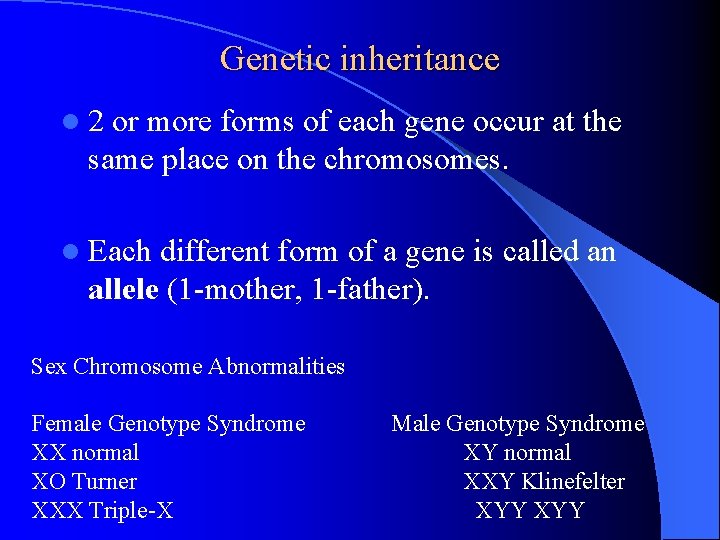
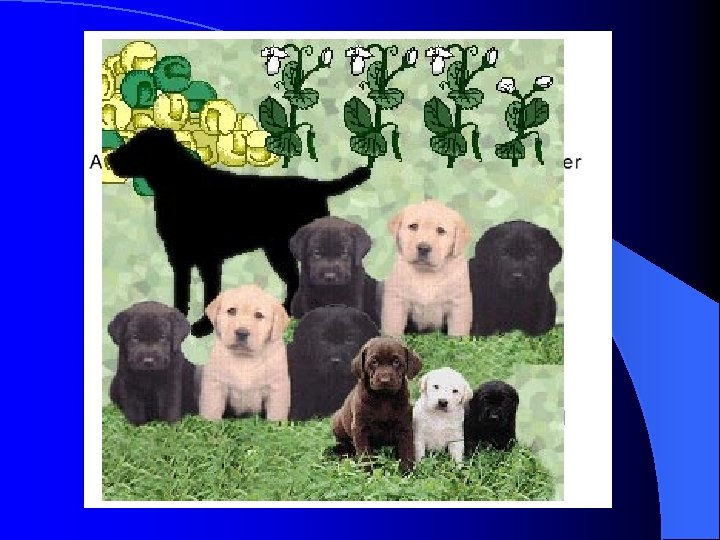
Genetic inheritance l 2 or more forms of each gene occur at the same place on the chromosomes. l Each different form of a gene is called an allele (1 -mother, 1 -father). Sex Chromosome Abnormalities Female Genotype Syndrome XX normal XO Turner XXX Triple-X Male Genotype Syndrome XY normal XXY Klinefelter XYY
Alleles l If alleles from both parents are alike the child will be homozygous (AA, aa) for that characteristic. l If alleles are different, the child will be heterozygous (Aa, a. A) for that characteristic. l Here, relationships between alleles determine if trait will appear.
What happens if a child is heterozygous? e. g. , eye color, Bb (B-brown, b-blue) l One allele will be dominant for a trait, whereas the other will be recessive. l This child will have Brown eyes!
Possible Outcomes with heterozygous Allele patterns: l 1. Dominant allele will be expressed, while the recessive allele will not (e. g. , brown eyes winning out over blue. ) l 2. The trait expressed may be in between the dominant and recessive alleles (a dominant dark skin allele and recessive light skin allele, may yield a child with skin color in between the two). l 3. Both alleles may be expressed simultaneously at full intensity (called codominance). A child with an allele for A blood an allele for B blood, may have both AB antigens expressed in their blood.
Carriers of recessive genes Heterozygous individuals with just one recessive allele (Bb) can pass that trait to their children. These are carriers (blue eyes, blond hair, cystic fibrosis)
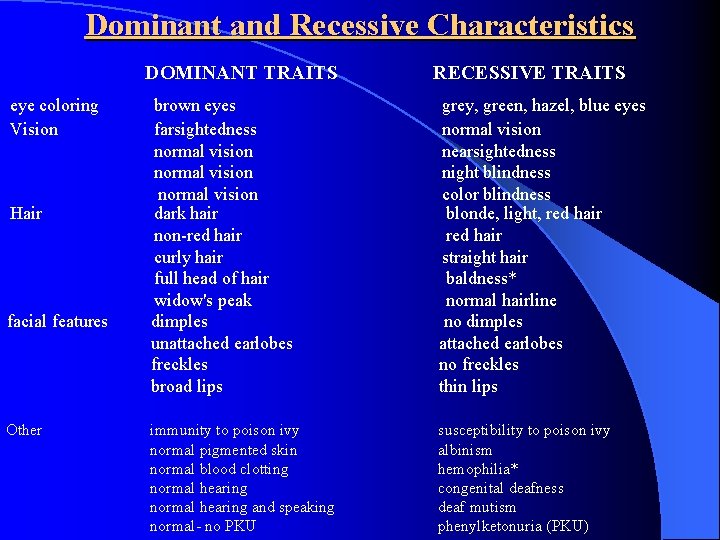
Dominant and Recessive Characteristics DOMINANT TRAITS eye coloring Vision Hair facial features Other RECESSIVE TRAITS brown eyes farsightedness normal vision dark hair non-red hair curly hair full head of hair widow's peak dimples unattached earlobes freckles broad lips grey, green, hazel, blue eyes normal vision nearsightedness night blindness color blindness blonde, light, red hair straight hair baldness* normal hairline no dimples attached earlobes no freckles thin lips immunity to poison ivy normal pigmented skin normal blood clotting normal hearing and speaking normal- no PKU susceptibility to poison ivy albinism hemophilia* congenital deafness deaf mutism phenylketonuria (PKU)
PKU-a recessive disease l Phenylketonuria – lack an enzyme that converts one of the basic amino acids that make up proteins (phenylalanine). l phenylalanine quickly builds to toxic levels in brain l Will lead to mental retardation, but if caught early can be treated with diet restrictions. l Infants with classic PKU appear normal until they are a few months old. Without treatment, these children develop permanent intellectual disability. Seizures, delayed development, behavioral problems, and psychiatric disorders are also common. Untreated individuals may have a musty or mouse-like odor as a side effect of excess phenylalanine in the body. Children with classic PKU tend to have lighter skin and hair than unaffected family members and are also likely to have skin disorders such as eczema.
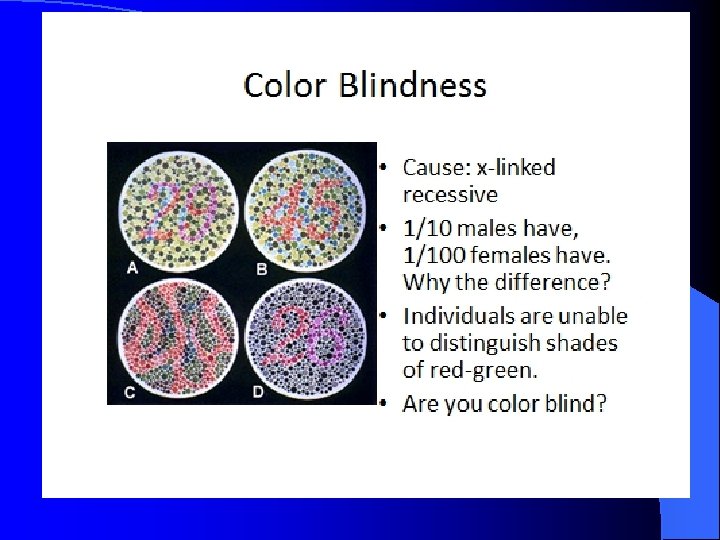
What if a harmful recessive gene occurs on the X-chromosome? l Females may have an extra allele that will cancel -out the effects of the harmful allele. l Males only have 1 X on 23 rd pair, so they don’t have any extra alleles to cancel-out effects. l (E. g, color blindness)
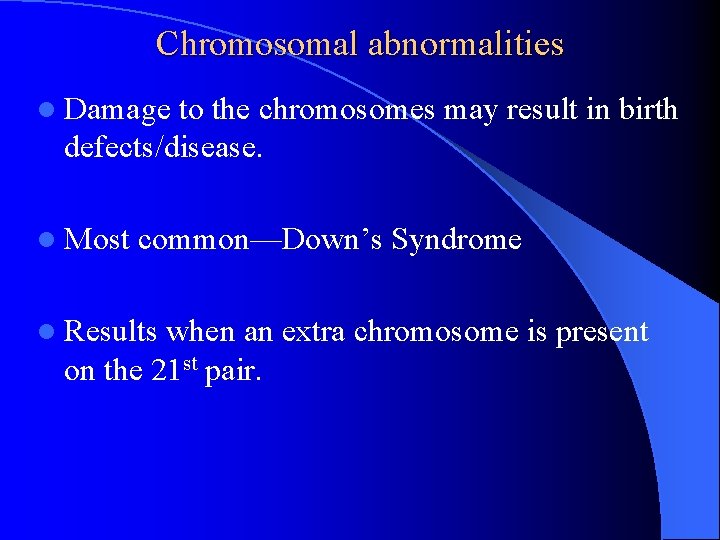
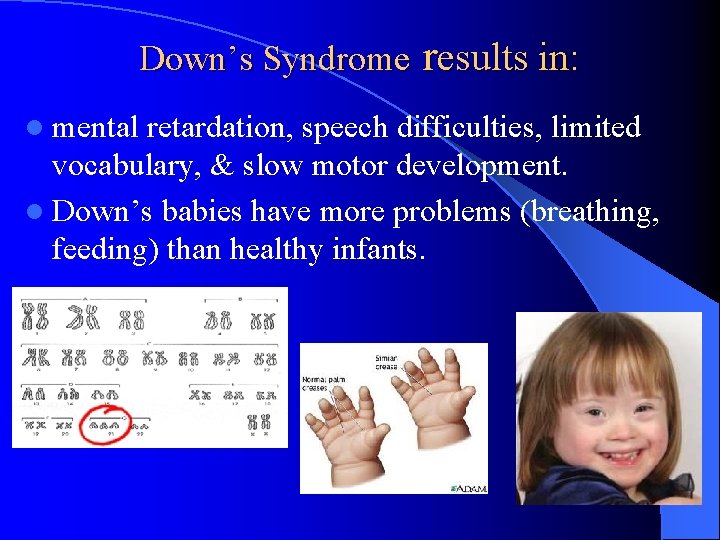
Chromosomal abnormalities l Damage to the chromosomes may result in birth defects/disease. l Most common—Down’s Syndrome l Results when an extra chromosome is present on the 21 st pair.
Down’s Syndrome results in: l mental retardation, speech difficulties, limited vocabulary, & slow motor development. l Down’s babies have more problems (breathing, feeding) than healthy infants.
Cystic Fibrosis l ONLY 3 MISSING Letters on Chromosome 7!! l Cystic fibrosis is an inherited chronic disease that affects the lungs and digestive system of about 30, 000 children and adults in the United States – clogs the lungs and leads to life-threatening lung infections; and – obstructs the pancreas and stops natural enzymes from helping the body break down and absorb food.
Predisposing factors l Maternal age (35 +) l Paternal- Marijuana smoking increases likelihood of Down’s syndrome. l As you get older, there’s a greater chance of having a baby with certain chromosomal conditions, like Down syndrome. For example, at age 35, your chances of having a baby with a chromosomal condition are 1 in 192. At age 40, your chances are 1 in 66.
B. Prenatal Diagnosis l Good l 95 News!!! % of fetuses examined through prenatal diagnosis are normal.
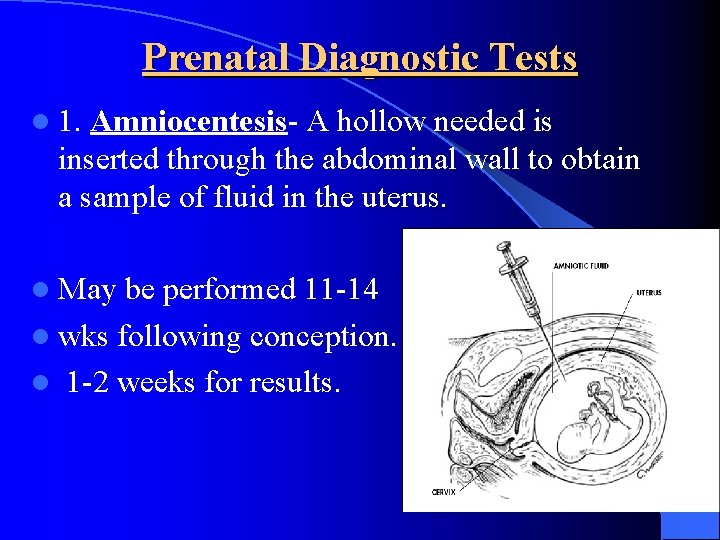
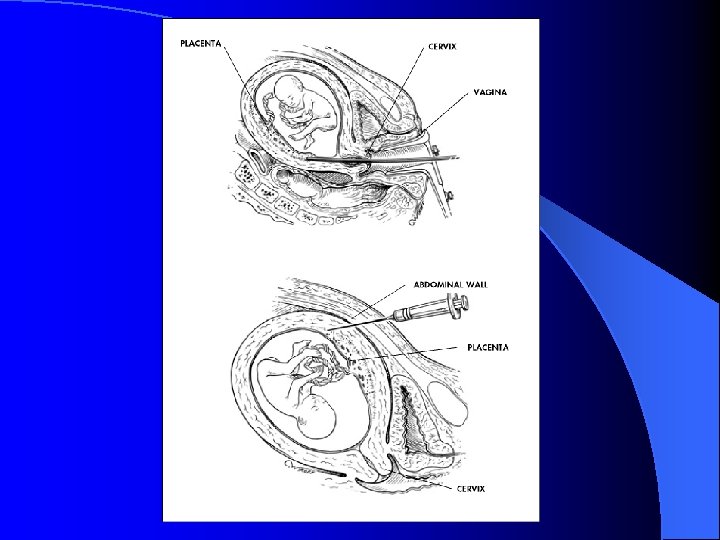
Prenatal Diagnostic Tests l 1. Amniocentesis- A hollow needed is inserted through the abdominal wall to obtain a sample of fluid in the uterus. l May be performed 11 -14 l wks following conception. l 1 -2 weeks for results.
2. Chorionic Villi sampling l. A hollow probe is inserted through the vagina. Sample collects chorionic villi, hairlike projections surrounding organism. l Performed (6 to 8 weeks following conception), results known within 24 hours.
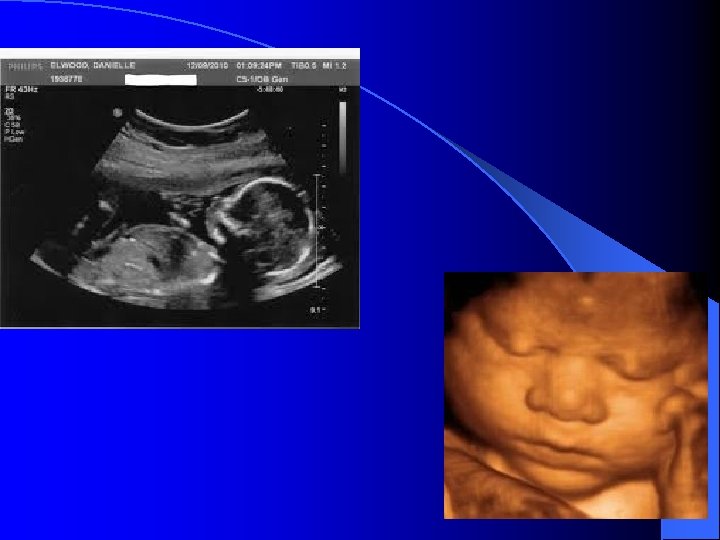
4. Ultrasound l High-frequency sound waves beamed at the uterus & their reflection is recorded. l Provides l Detects picture of fetus. fetal age, multiple pregnancies, & identification of gross physical defects.
5. Maternal Blood Analysis l. A blood test done at 2 nd month of pregnancy. l Looks for elevated levels of alpha-fetoprotein -may detect neural tube defects & Down’s Syndrome l Genetics