
GENETICS AND EVOLUTION A population is a group
- Slides: 14
GENETICS AND EVOLUTION
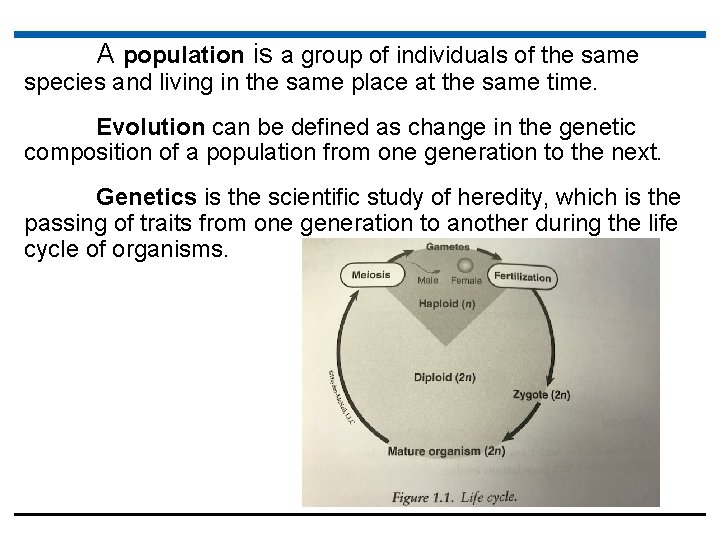
A population is a group of individuals of the same species and living in the same place at the same time. Evolution can be defined as change in the genetic composition of a population from one generation to the next. Genetics is the scientific study of heredity, which is the passing of traits from one generation to another during the life cycle of organisms.
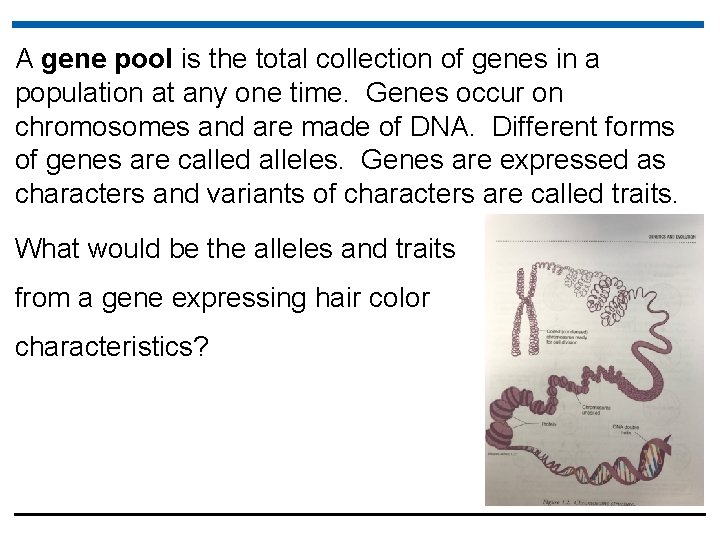
A gene pool is the total collection of genes in a population at any one time. Genes occur on chromosomes and are made of DNA. Different forms of genes are called alleles. Genes are expressed as characters and variants of characters are called traits. What would be the alleles and traits from a gene expressing hair color characteristics?
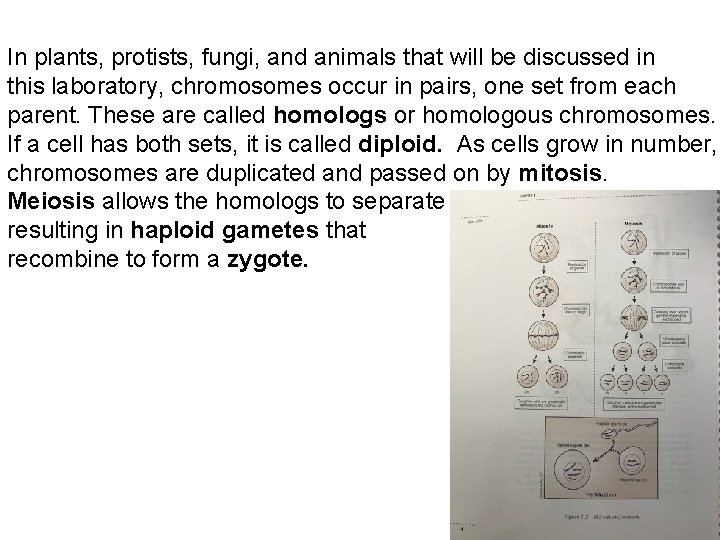
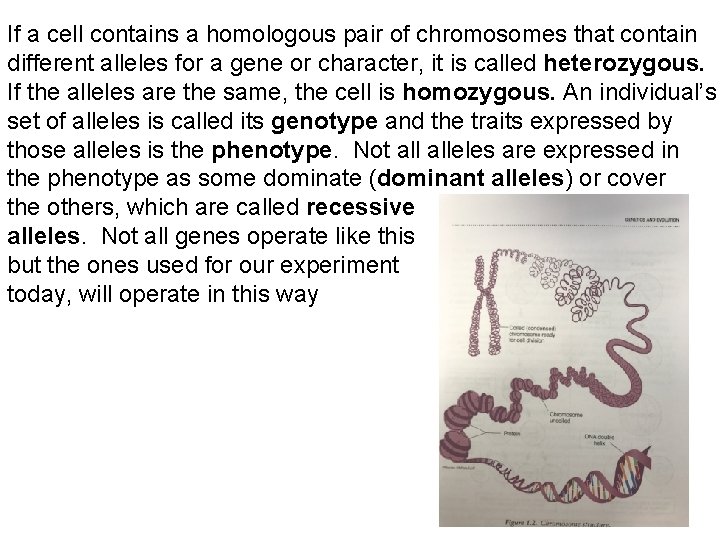
In plants, protists, fungi, and animals that will be discussed in this laboratory, chromosomes occur in pairs, one set from each parent. These are called homologs or homologous chromosomes. If a cell has both sets, it is called diploid. As cells grow in number, chromosomes are duplicated and passed on by mitosis. Meiosis allows the homologs to separate resulting in haploid gametes that recombine to form a zygote.
If a cell contains a homologous pair of chromosomes that contain different alleles for a gene or character, it is called heterozygous. If the alleles are the same, the cell is homozygous. An individual’s set of alleles is called its genotype and the traits expressed by those alleles is the phenotype. Not alleles are expressed in the phenotype as some dominate (dominant alleles) or cover the others, which are called recessive alleles. Not all genes operate like this but the ones used for our experiment today, will operate in this way
MECHANISMS OF EVOLUTION © 2012 Pearson Education, Inc.
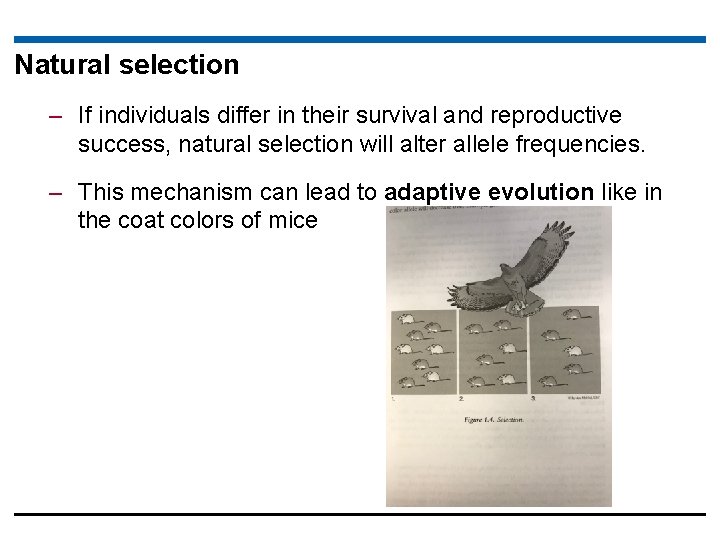
Natural selection – If individuals differ in their survival and reproductive success, natural selection will alter allele frequencies. – This mechanism can lead to adaptive evolution like in the coat colors of mice
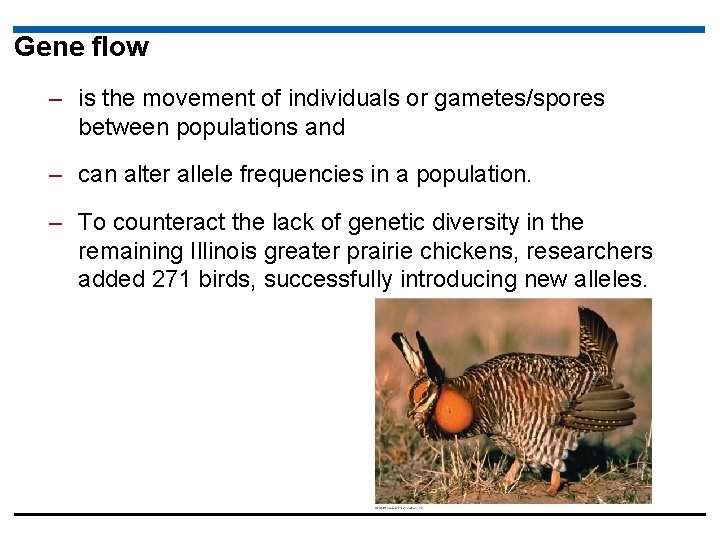
Gene flow – is the movement of individuals or gametes/spores between populations and – can alter allele frequencies in a population. – To counteract the lack of genetic diversity in the remaining Illinois greater prairie chickens, researchers added 271 birds, successfully introducing new alleles.
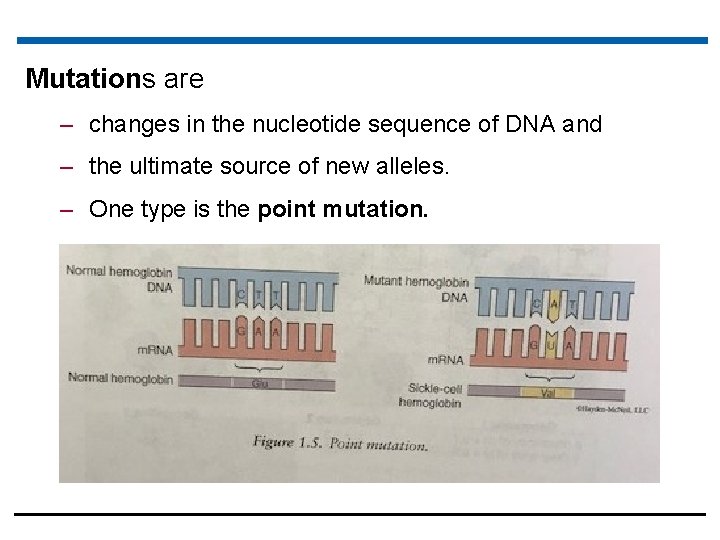
Mutations are – changes in the nucleotide sequence of DNA and – the ultimate source of new alleles. – One type is the point mutation.
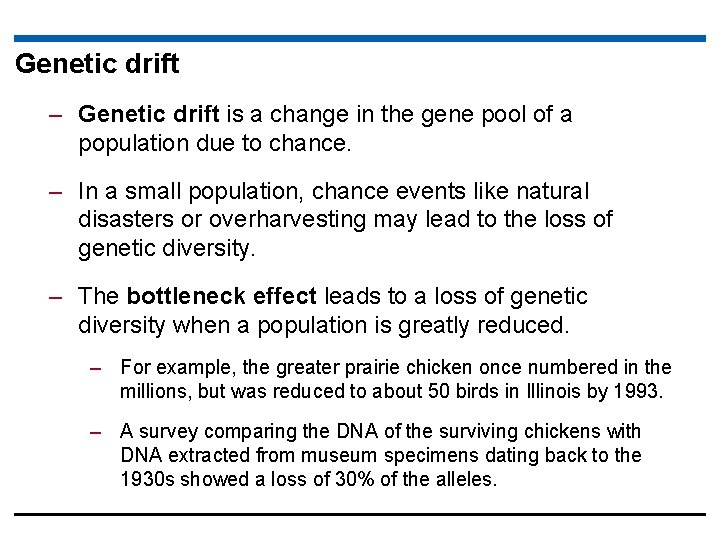
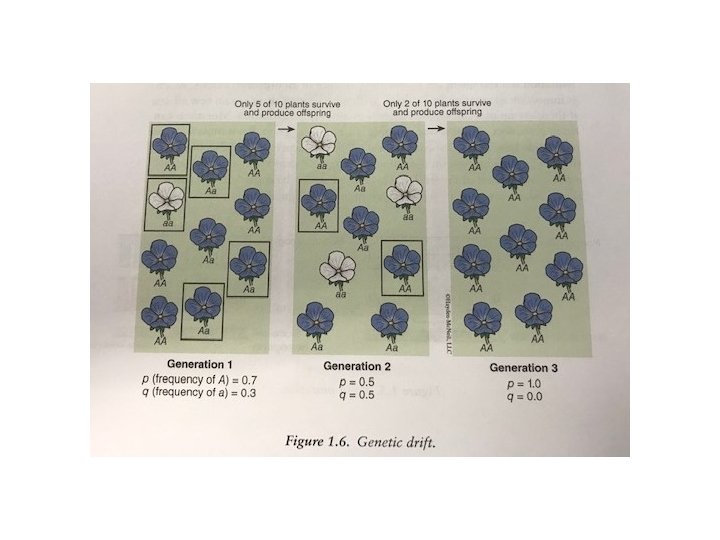
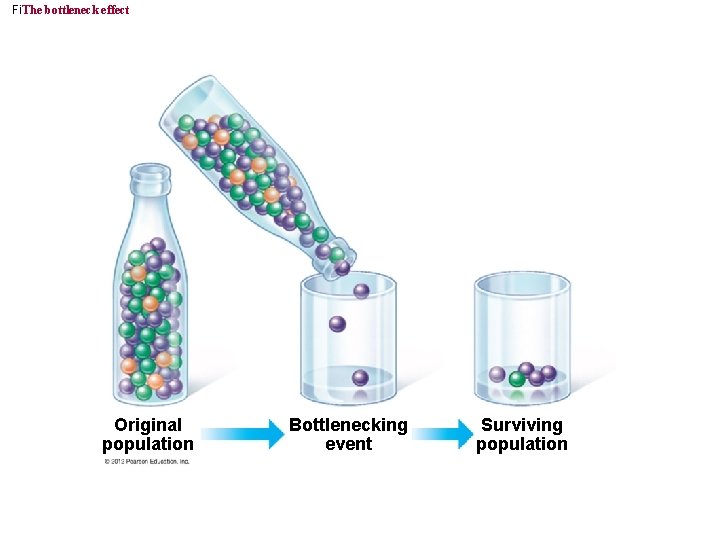
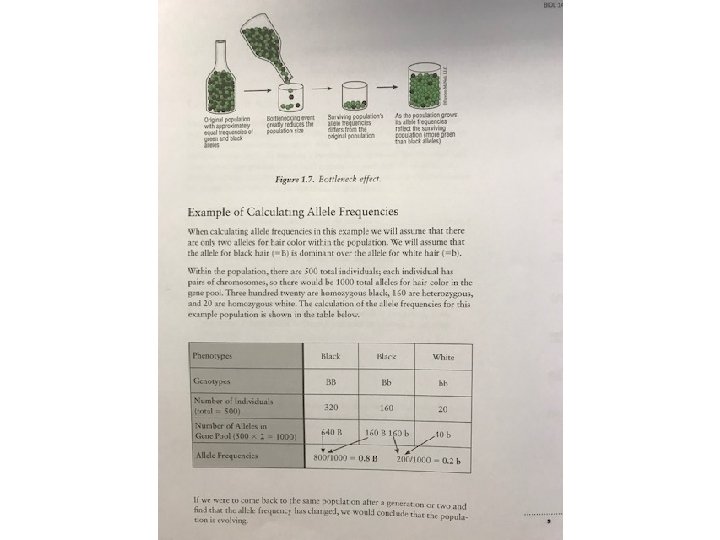
Genetic drift – Genetic drift is a change in the gene pool of a population due to chance. – In a small population, chance events like natural disasters or overharvesting may lead to the loss of genetic diversity. – The bottleneck effect leads to a loss of genetic diversity when a population is greatly reduced. – For example, the greater prairie chicken once numbered in the millions, but was reduced to about 50 birds in Illinois by 1993. – A survey comparing the DNA of the surviving chickens with DNA extracted from museum specimens dating back to the 1930 s showed a loss of 30% of the alleles.
Fi. The bottleneck effect Original population Bottlenecking event Surviving population
Genetic drift – Genetic drift also results from the founder effect, when a few individuals colonize a new habitat. – A small group cannot adequately represent the genetic diversity in the ancestral population such as those dispersed to an island. – The frequency of alleles will therefore be different between the old and new populations.