
Genetics An Introduction BIOLOGY 12 A little motivational
Genetics: An Introduction BIOLOGY 12

A little motivational video: �http: //www. youtube. com/watch? v=B_PQ 8 q. Yt. UL 0
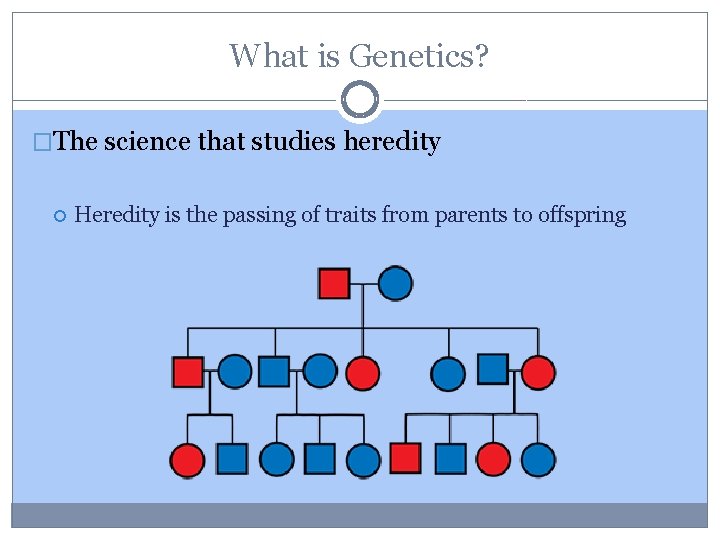
What is Genetics? �The science that studies heredity Heredity is the passing of traits from parents to offspring
Joke of the day:
Variation: �Genetic variation describes naturally occurring genetic differences among individuals of the same species �Why? Recombination of chromosomes that occurs during sexual reproduction (called independent assortment) Crossing over during meiosis
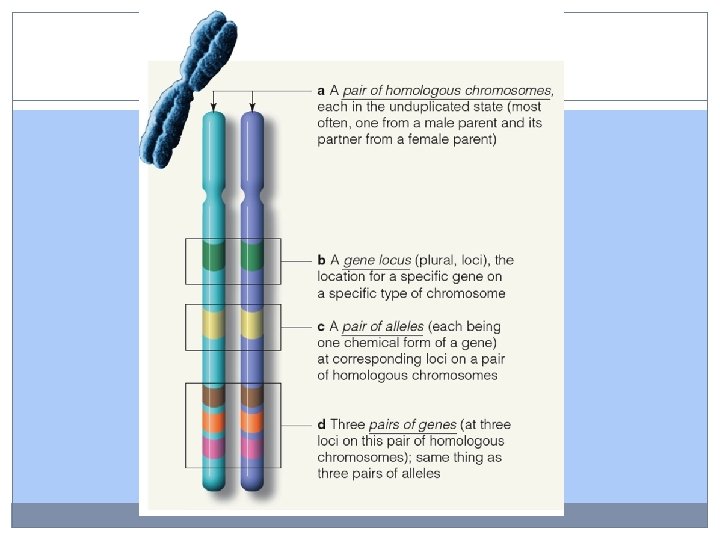
Some vocabulary: �Genes Humans have ~21, 500 Chemical instructions for building proteins Locus/loci: specific location on a chromosome �Diploid cells contain two copies of each gene on pairs of homologous chromosomes �Allele: each version of a gene
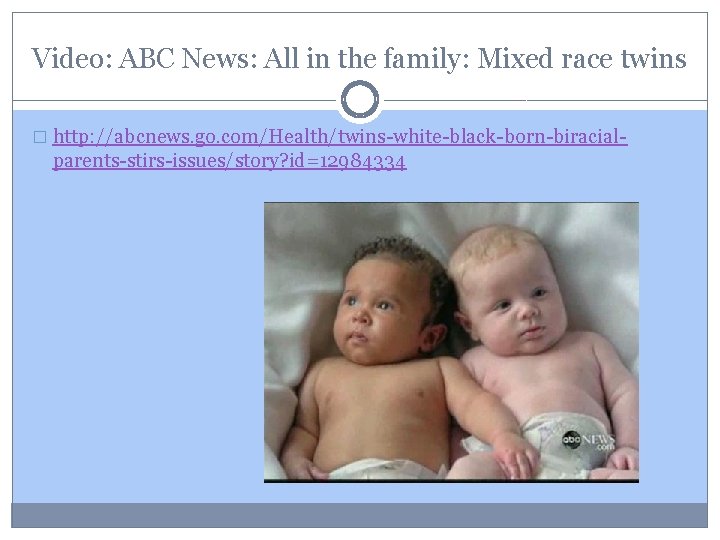
Video: ABC News: All in the family: Mixed race twins � http: //abcnews. go. com/Health/twins-white-black-born-biracial- parents-stirs-issues/story? id=12984334
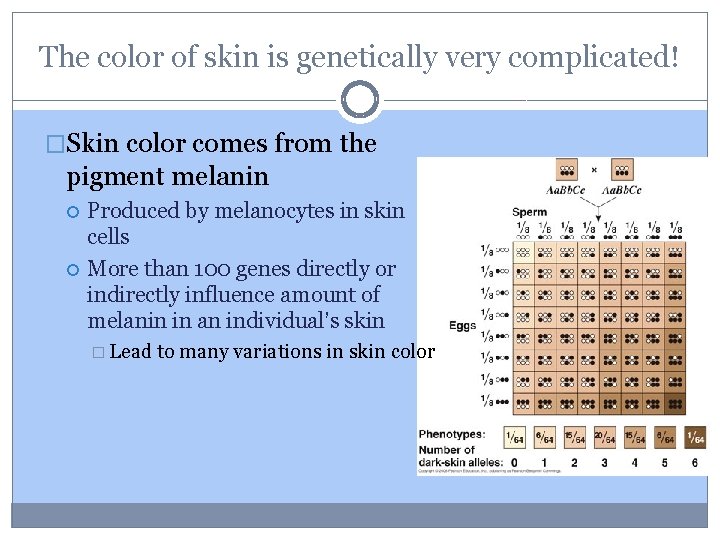
The color of skin is genetically very complicated! �Skin color comes from the pigment melanin Produced by melanocytes in skin cells More than 100 genes directly or indirectly influence amount of melanin in an individual’s skin � Lead to many variations in skin color
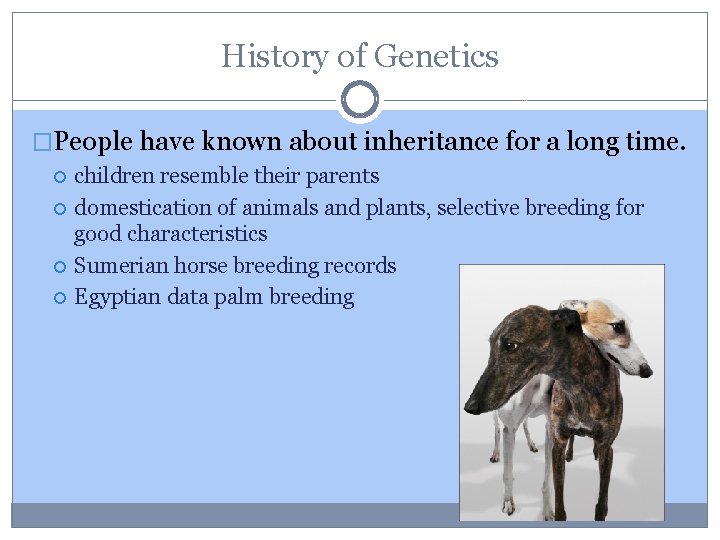
History of Genetics �People have known about inheritance for a long time. children resemble their parents domestication of animals and plants, selective breeding for good characteristics Sumerian horse breeding records Egyptian data palm breeding
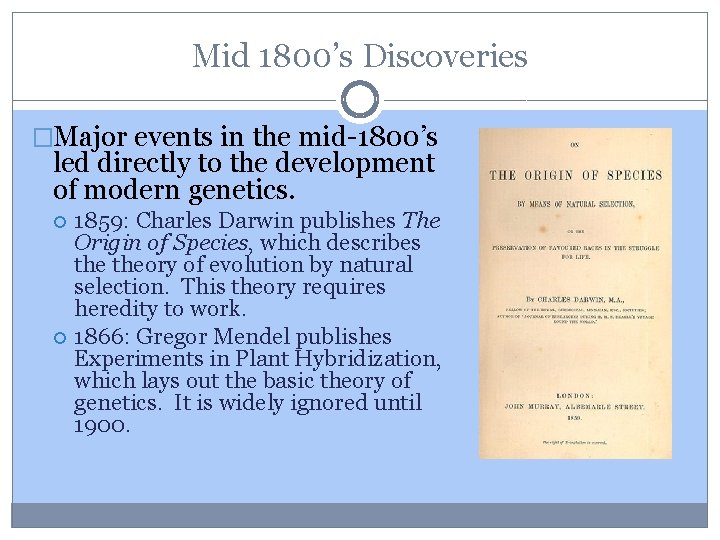
Mid 1800’s Discoveries �Major events in the mid-1800’s led directly to the development of modern genetics. 1859: Charles Darwin publishes The Origin of Species, which describes theory of evolution by natural selection. This theory requires heredity to work. 1866: Gregor Mendel publishes Experiments in Plant Hybridization, which lays out the basic theory of genetics. It is widely ignored until 1900.
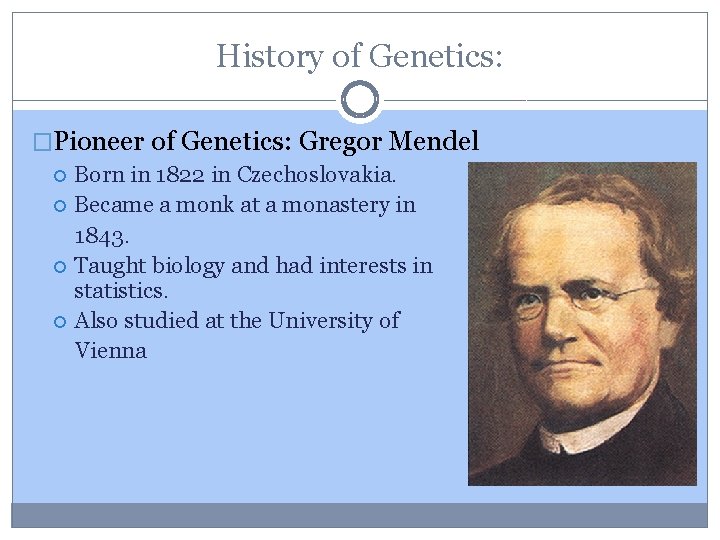
History of Genetics: �Pioneer of Genetics: Gregor Mendel Born in 1822 in Czechoslovakia. Became a monk at a monastery in 1843. Taught biology and had interests in statistics. Also studied at the University of Vienna
Major Events in the 20 th Century � 1900: rediscovery of Mendel’s work by Robert Correns, Hugo de Vries, and Erich von Tschermak. � 1904: Gregory Bateson discovers linkage between genes. Also coins the word “genetics”. � 1910: Thomas Hunt Morgan proves that genes are located on the chromosomes (using Drosophila). � 1944: Oswald Avery, Colin Mac. Leod and Maclyn Mc. Carty show that DNA can transform bacteria, demonstrating that DNA is the hereditary material. � 1953: James Watson and Francis Crick determine the structure of the DNA molecule, which leads directly to knowledge of how it replicates � 1966: Marshall Nirenberg solves the genetic code, showing that 3 DNA bases code for one amino acid. � 1972: Stanley Cohen and Herbert Boyer combine DNA from two different species in vitro, then transform it into bacterial cells: first DNA cloning. � 2001: Sequence of the entire human genome is announced.
To do : �Read pages 130 and 131. �Read Mendel biography articles and answer the questions at the bottom based on both readings!
- Slides: 14